Roadhouse Album Review: Kim Wilson sparks “Slow Burn” with fiery harp and torchy vocals; new box set from the Jimmie Vaughan years of the Fabulous Thunderbirds

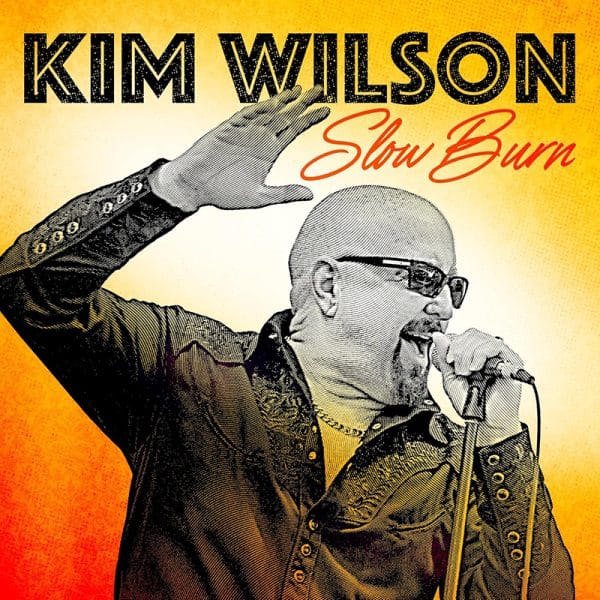
Kim Wilson — “Slow Burn” — M.C. Records

For a half-century and change, Kim Wilson’s harp and vocals have led The Fabulous Thunderbirds, the rugged blues band he co-founded in Austin, Texas, in 1974 with Jimmie Vaughan, that supercharged blues music with Wilson’s soaring harp and Vaughan’s superb guitar prowess.

He’s the only original member of the T-Birds still with the band, with Wilson now sometimes stepping out on his own.

“Slow Burn” is his latest solo effort. The songs are taken from two earlier sessions in 2014 and 2020 that featured three outstanding musicians who have since died: drummer Richard Innes, piano player Barrelhouse Chuck, and bassist Larry Taylor.

Eight of the twelve tracks here are classic blues from legendary bluesmen, re-imagined and channeled through Wilson’s prodigious harp and vocals that are more than tuff-enuff for the task. The four originals, especially two instrumentals, show off Wilson’s own powerful classic stylings.

Everything begins with a romp through Little Milton’s “I’m Trying,” with a layer of horns endorsing Wilson’s ever-so-smooth vocal. Wilson’s “Leaving You on My Mind” adds gut-bucket attitude to a down-home trio of harp, guitar and drums.

Wilson gives B.B. King’s “Sweet Little Angel” a convincing vocal workout, with Bob Welsh adding just-right guitar, and Barrelhouse Chuck on piano. “Boogie in E” is Wilson’s first instrumental, a flashy bit of harmonica virtuosity. “Howlin’ For My Darlin’” is appropriately down and dirty Howlin’ Wolf (Chester Burnett), followed the harp wizardry and vocal richness of “Keep Our Business To Yourself” Alex Miller (who performed as Sonny Boy Williamson II).

Wilson reaches deep into the blues for the first of two songs from Robert Nighthawk, who doesn’t often get the recognition he deserves. The first is the swampy “The Time Has Come” that speaks eloquently of its deep blues roots. Wilson’s “Lowdown Woman” shuffles along before Magic Sam’s “Easy Baby” stirs its simmering blues into the mix. “Gotta Have A Horse” is the second Wilson instrumental, another relentless harmonica blowout. Wilson aces another Nighthawk gem, a rollicking “Kansas City” (from 1951, not the 1952 Leiber-Stoller creation).

The closer is nine-minute tour-de-force version of Otis Rush’s classic “So Many Roads,” with a gorgeous two-minute harp intro followed by Wilson’s aching vocal, and more harp woven elegantly throughout.

Wilson, talking about making this album, says:
“The tracks on this album are very special because several of the songs include some of the last
performances in the studio by three great blues giants, Richard Innes, Larry Taylor, and
Barrelhouse Chuck. Basically, everything was recorded the same way they did it in the old days.
Some great blues for you fans, and I hope you enjoy it as much as we did making it.”

“Slow Burn” is a great title for this session of fiery blues, torrid harp work and soulful, torchy vocals. Kim Wilson has added this music to his tough, hard-working blues legacy that thankfully shows no sign of slowing down.


More Thunderbirds news:

If you’re a T-Birds fan, or if you just want a treasure trove of their musical history, a new box set of their music is now available.

It’s The Jimmie Vaughan Years: Complete Studio Recordings 1978-1989, a comprehensive four-CD box set available through The Last Music Co.

The Jimmie Vaughan Years captures Grammy-winning Vaughan’s blues journey after he cut his teeth in Austin’s late-60s blues scene, including an early recording produced by legendary American songwriter Doc Pomus and Joel Dorn.

“It begins with 13 super-rare unreleased cuts from sessions the T-Birds did for Doc Pomus in 1978 for the potential album that never saw daylight, until now,” says Last Music founder Malcolm Mills. “The five-hour music compilation then follows their career through all the subsequent releases they made on Takoma, Chrysalis, and Epic until Jimmie left the band to pursue his solo career in 1989 — a total of eight albums.”

The Jimmie Vaughan Years includesThe Doc Pomus Recordings 1978, The Fabulous Thunderbirds (Girls Go Wild), What’s The Word?, Butt Rockin’, T-Bird Rhythm, Tuff Enuff, Hot Number, and Powerful Stuff. The box set is packaged as a 12-inch hardback book written and annotated by Bill Bentley, who was an eyewitness to the band’s emergence and rise to fame. His notes, combined with pages full of never-before-seen photos and images, bring to life the story of this band in their heyday.  

“This is the only collection of its kind of Vaughan’s years in the Fabulous Thunderbirds and begins with an album that never saw a release,” Bentley says. “In the late 1970s, celebrated songwriter Doc Pomus heard about the Austin band and brought them to New York to record. Pomus felt something important was there in their music and wanted to share it with the world. Noted producer Joel Dorn signed on to participate and they recorded a full album. Unfortunately, it was an incredible set of songs that never saw the light of day.”


Here’s a Kim Wilson interview with Blues Blast Magazine


“Leaving You On My Mind” from the album:

Just for fun, here’s the Robert Nighthawk version of “Kansas City”:

Tracklist & credits:
Track 1 – I’m Trying (Milton Campbell)
Vocals/Harmonica: Kim Wilson
Guitar: Billy Flynn
Piano: Barrelhouse Chuck
Drums: Marty Dodson
Horns: Johnny Viau

Track 2 – Leaving You On My Mind (Kim Wilson)
Vocals/Harmonica: Kim Wilson
Guitar: Billy Flynn
Drums: Malachi Johnson

Track 3 – Sweet Little Angel (B.B. King)
Vocals/Harmonica: Kim Wilson
Guitar: Bob Welsh
Piano: Barrelhouse Chuck
Bass: Troy Sandow
Drums: Marty Dodson

Track 4 – Boogie in E (Kim Wilson)
Vocals/Harmonica: Kim Wilson
Guitar: Billy Flynn
Bass: Troy Sandow
Drums: Malachi Johnson

Track 5 – Howlin’ For My Darlin’ (Chester Burnett)
Vocals/Harmonica: Kim Wilson
Guitar: Bob Welsh
Piano: Barrelhouse Chuck
Bass: Troy Sandow
Drums: Marty Dodson

Track 6 – Keep Our Business To Yourself (Sonny Boy Williamson II/Rice Miller)
Vocals/Harmonica: Kim Wilson
Guitar: Billy Flynn
Drums: Marty Dodson

Track 7 – The Time Has Come (Robert Nighthawk)
Vocals/Harmonica: Kim Wilson
Guitar: Bob Welsh
Piano: Barrelhouse Chuck
Bass: Troy Sandow
Drums: Marty Dodson

Track 8 – Lowdown Women (Kim Wilson)
Vocals/Harmonica: Kim Wilson
Guitar: Billy Flynn
Bass: Troy Sandow
Drums: Malachi Johnson

Track 9 – Easy Baby (Samuel Maghett)
Vocals/Harmonica: Kim Wilson
Guitar & Piano: Barrelhouse Chuck
Guitar: Billy Flynn
Bass: Troy Sandow
Drums: Malachi Johnson

Track 10 – Gotta Have A Horse (Kim Wilson)
Vocals/Harmonica: Kim Wilson
Guitar: Billy Flynn
Bass: Troy Sandow
Drums: Malachi Johnson

Track 11 – Kansas City (Robert Nighthawk)
Vocals/Harmonica: Kim Wilson
Guitar: Bob Welsh
Piano: Barrelhouse Chuck
Bass: Troy Sandow
Drums: Marty Dodson

Track 12 – So Many Roads (Otis Rush)
Vocals/Harmonica: Kim Wilson
Guitar: Billy Flynn
Bass: Troy Sandow
Drums: Malachi Johnson

Key contributors:
Nathan James – mixing, mastering, production, and performance.
Billy Flynn – guitar and bass on multiple tracks.
Troy Sandow – bass on several tracks.
Marty Dodson, Malachi Johnson, Richard Innes – drums across different sessions.
Barrelhouse Chuck, Bob Welsh, Johnny Viau – piano, guitar, and horns.
The Rhythm Scratchers (Wilson’s bandmates) are highlighted for their one-take quartet recordings.

Roadhouse Album Review: Sean McDonald shows no mercy for the blues with his debut, “Have Mercy”

Sean McDonald — “Have Mercy” — Little Village Foundation

Sean McDonald, just 23, is one of those young new artists, who, when you close your eyes, sounds like he’s been aging in a cask of blues for decades.

“Have Mercy” is McDonald’s first album, a modest collection of nine covers and originals that plays to his strengths as a singer, songwriter and guitarist.

But there’s nothing modest about his talents. A native of Augusta, Ga., McDonald sang in the church as a youngster and learned to play multiple instruments.

McDonald co-produced this sparkling session with Christoffer “Kid” Andersen at Andersen’s Greaseland U.S.A. Studio, with the outstanding studio musicians from the Little Village label who back McDonald with their usual excellence: Jim Pugh on keyboards, June Core on drums, bassist D’Quantae “Q” Johnson, saxmen Eric Spaulding and Jack Sanford, and trombonist Mike Rinta. The Morgan Brothers (formerly the Sons of the Soul Revivors) and Marcel Smith add eloquent backing vocals to the gospel tracks. Sometimes it just takes a Little Village to help make great music.

A rocking cover of Rudy Moore’s “My Soul” opens the album, with McDonald’s upbeat? ? vocal turn a spirited album preview. A pair of originals follows: The tastily R&B-flavored “Fakin’ It” features killer sax with a fierce guitar break; “Killing Me” finds McDonald reaching deep into a sexy slow blues, complete with sensuous sax.

“Rocking in the Same Old Boat” is a gorgeous slow blues recorded by Bobby “Blue” Bland in 1968, and McDonald’s smooth rendition dares to stand on its own. (The composer is credited as Deadric Malone, but that was the penname for influential Duke/Peacock records owner Don Deadric Robey, who often took the credit for songs written by his artists. The interwebs reveal that Vernon Elbert Morrison may have been a composer.)

“Shuffleboard Swing” is a rollicking instrumental that swings the blues behind McDonald’s blistering single-note guitar work. “Angel Baby” is McDonald’s fast and furious Little Richard-inspired rocker, complete with vocal scream and raunchy sax. McDonald testifies mightily with the gospel of “Don’t Let the Devil Ride,” an Oris Mays creation, with a fervent chorus from the Morgan Brothers and Marcel Smith.

The rousing “That’s All I Need” captures the rocking flavor of Ike Turner’s 1959 version complete with call-and-response backup singers. The closer is the elegant Henry Glover blues ballad, “Let’s Call It A Day,” with McDonald smooth as silk on the vocal, and tough as nails on his wicked guitar.

With “Have Mercy,” a youthful Sean McDonald emerges as a full-grown talent. His smart songwriting, rich vocals and stunning guitar all speak eloquently of his musical future, not to mention the future of the blues and our own listening pleasure.

Have mercy, indeed!


Here’s “Rocking in the Same Old Boat” from the album:

Tracklist:

  1. My Soul 3:20 (Rudy Moore)
  2. Fakin’ It 3:56 (S. McDonald)
  3. Killing Me 5:06 (S. McDonald)
  4. Rocking in the Same Old Boat 4:51 (Deadric Malone)
  5. Shuffleboard Swing 4:05 (S. McDonald)
  6. Angel Baby 3:00 (S. McDonald)
  7. Don’t Let the Devil Ride 5:14 (Oris Mays)
  8. That’s All I Need 3:10 (Ike Turner)
  9. Let’s Call It A Day 3:58 (Henry Glover)

Sean “Mack” McDonald – Vocals, guitar
The Morgan Brothers – Vocals
Marcel Smith – Vocals
Jim Pugh – Piano, organ
D’Quantae “Q” Johnson – Bass
June Core – Drums
Eric Spaulding – Tenor Sax
Jack Sanford – Bari Sax
Mike Rinta – Trombone (4)
Kid Andersen – Guitar (4)
Lisa Leuschner Andersen – Vocal (2)

Roadhouse Ramblings: Hank Ballard and the Midnighters put guitars – and raunch – into rock ‘n’ roll

Hank Ballard and the Midnighters have always been one of my favorite groups, ever since they caught my teenage hormones’ attention, ‘way back in the middle of the 20th century — the 1950s, to be precise.

Their “Greatest Hits” album, released in 1956 on the Federal label, was my first album purchase. I was already hooked on classic doo-wop and early R&B, thanks to Pittsburgh DJ, the Daddio of the Raddio, The Bossman — Porky Chedwick.

But the Midnighters aroused my teen blue genes from their musical slumber. Their furiously styled music was great for dancing, their lyrics magnificently raunchy, giving hope to teens everywhere that there might be, according to one account, “life below the waist,” despite much of the soporific pop from earlier years.

Ballard augmented the horns of more traditional R&B with guitars, driving the music hard behind soaring vocals. The band played a pivotal role in bridging the gap between traditional rhythm and blues and early rock and roll, turning out a series of hits in 1954. Those early sides included a set of deliciously salacious and unabashedly sexual recordings built around the “Annie” songs: “Work With Me Annie” (It sold more than a million copies despite being banned from many radio stations) and “Annie Had a Baby.” But even without that notoriety, the Midnighters created cutting edge R&B that bled into rock ‘n’ roll. Even their more sensitive ballads (“Teardrops on Your Letter,” “Rain Down Tears”) churned with emotion. Ballard would write “The Twist” in 1959, which was turned into a Chubby Checker hit by Dick Clark, earning Ballard royalties, if not fame.

The Midnighters’ eventually faded into the 1960s, and even though they continued to record, their R&B stylings became less relevant. I hadn’t played any of their music for years, and they were unlikely to be found on many modern streaming playlists.

Radio.

Then a few years ago, radio came back into my life.

I discovered WMNF, a public radio station in Tampa, Fla., and its three weekly hours of music that I loved – The Rhythm Revival, hosted by the Rev. Billy C. Wirtz (William Wirths) and Marvelous Marvin Boone (Marvin Boone). They play great old post-war blues, R&B, country and gospel, and displaying their encyclopedic musical knowledge, connect the dots between all those genres.

The Revival claims several groundbreaking artists as its “patron saints,” including Patsy Cline, Wynonie Harris, and much to my delight, Hank Ballard and the Midnighters. The inspiration for this post comes from the Revival’s recent birthday tribute to Ballard (born John Henry Kendricks on Nov. 18, 1927, in Detroit).

The early years of Ballard and the Midnighters’ were filled with much of the shape-shifting, name and personnel changing common to much of the industry. Here are some details of their illustrious career, shamelessly copied from Wikipedia:

In 1953, Ballard joined doo-wop group the Royals, which had previously been discovered by Johnny Otis and signed to Federal Records (a division of King Records), in Cincinnati. Ballard joined Henry Booth, Charles Sutton, Sonny Woods and Alonzo Tucker in the group, replacing previous singer Lawson Smith, who went on service in the Army.

The Royals released “Get It” which Ballard wrote (1953), an R&B song with possibly sexually oriented lyrics, which some radio stations refused to play, although it still made it to number 6 on the US Billboard R&B chart.

Hank Ballard and the Midnighters.

The group then changed its name to the Midnighters to avoid confusion with the “5” Royales. In 1954, Ballard wrote a song called “Work with Me, Annie” that was drawn from “Get It”. It became the Midnighters’ first major R&B hit, spending seven weeks at number 1 on the R&B chart and also selling well in mainstream markets, along with the answer songs “Annie Had a Baby” and “Annie’s Aunt Fannie”; all were banned by the FCC from radio airplay. Their third major hit was “Sexy Ways”, a song that cemented the band’s reputation as one of the most risqué groups of the time.

Between 1953 and 1962, the Midnighters had several hits on the U.S. pop and R&B charts. Their hits included the million-selling Billboard top 10 pop hits “Finger Poppin’ Time” (for which they received a 1961 Grammy Award nomination),[1] and “Let’s Go, Let’s Go, Let’s Go”. The Midnighters also had 13 top 10 R&B hits, including three that reached number 1. Their top 10 R&B hits included “Work with Me, Annie”, “It’s Love Baby (24 Hours a Day)”, “Annie Had a Baby”, “The Hoochi Coochi Coo”, “Teardrops on Your Letter”, “Get It”, “The Float” and “Nothing but Good”.

They received the Rhythm and Blues Foundation’s prestigious Pioneer Award in 1992, and were inducted into the Vocal Group Hall of Fame in 1999. The Midnighters are also noted for achieving a music industry milestone in 1960, by becoming the first group in history to place 3 singles on the Billboard Hot 100 at the same time. The group’s lead singer, Hank Ballard, was inducted into the Rock and Roll Hall of Fame in 1990. The Midnighters as a group were inducted into the Rock and Roll Hall of Fame on April 14, 2012.

Hank Ballard and the Midnighters deserve a unique place in American musical history. They created a sound that would shake rhythm and blues, rattle its bones, and roll it into the primitive days of rock ‘n’ roll.

Best of all, the Midnighters still sound damn fine!


Here are three songs that helped define Hank Ballard and the Midnighters:

Roadhouse Album Review: Erin Harpe’s authentic acoustic blues define “Let the Mermaids Flirt With Me: A Tribute to Mississippi John Hurt”

Erin Harpe — “Let the Mermaids Flirt With Me: A Tribute to Mississippi John Hurt” —
VizzTone / Juicy Juju Records

The music of Mississippi John Hurt has always been a favorite of mine. I first heard his music when I saw him perform a year or so before his 1966 death, still working blues magic with his gentle, finger-picking style.

The timeless, universal quality of Hurt’s blues gives it an air of effortless simplicity, but his syncopated rhythms and lyrical sophistication make it difficult to capture Hurt’s musical style.

At least until someone like Erin Harpe comes along.

Harpe and her husband and co-performer, bassist Jim Countryman, have pulled together a gorgeous tribute to Hurt’s music with Harpe channeling the Mississippi guitarist’s inventive essence into this elegant album.

The Boston-based Harpe has released “Mermaid” on her own label, Juicy Juju Records, her fifth release through the VizzTone group. It follows another acoustic album, “Meet Me in the Middle,” which won Album of the Year honors from the New England Music Awards. Of that effort, she says, “When I listen to the blues, it makes me want to cry — it’s a part of me. But before making this album, I felt I was neglecting the acoustic blueswoman in me.”

About “Mermaid,” Harpe says: “This album was a real labor of love. I’ve always loved Mississippi John Hurt’s music, since I was a little girl! Listening to my dad play his songs around the house. I learned several of Hurt’s songs as a teenager, and his guitar style has greatly influenced my playing, with its alternating bass thumb-picking and syncopated melodic runs.”

Harpe has picked nine of Hurt’s instantly recognizable songs for the session, and one lesser-known but no less impressive song, the eloquently fatalistic title track: When my earthly trials are over / Cast my body out in the sea / Save the undertaker bills / Let the mermaids flirt with me.”

The opener is “Candy Man,” the slyly salacious song that may be Hurt’s most well-known effort, no doubt in large part to its whimsical eroticism: “His candy stick don’t melt away / It just gets better, so the ladies say.” Harpe’s tasty take is simply delicious.

The rest of the tracks flow effortlessly and gorgeously through Harpe’s finger-picking and vocal passion for her music. They come together like a miniature greatest hits album, which could easily be expanded to dozens more songs. The album was recorded live at Harpe’s home studio, giving it a casually intimate vibe.

The remaining classic Hurt songs here include “Casey Jones,” “I Got The Blues (Can’t Be Satisfied),” “Richland Woman,” “Make Me A Pallet On Your Floor,” “Frankie,” “Nobody’s Dirty Business,” “Stagolee” and “You Are My Sunshine.” Each one resonates with authenticity this music deserves.

With “Let the Mermaids Flirt With Me,” Erin Harpe reminds us of the timeless greatness of Mississippi John Hurt while simultaneously establishing herself on the top shelf of acoustic blues performers. Do yourself a favor and enjoy both of them in this marvelous recording.


Here’s “Candy Man” from the album:

Tracks:
01. Candy Man
02. Casey Jones
03. Let The Mermaids Flirt With Me
04. I Got The Blues (Can’t Be Satisfied)
05. Richland Woman
06. Make Me A Pallet On Your Floor
07. Frankie
08. Nobody’s Dirty Business
09. Stagolee
10. You Are My Sunshine

Roadhouse Album Review: Robbin Kapsalis’ sultry vocal prowess powers her solo debut, “The Blues Is In The House”

Robbin Kapsalis — “The Blues Is In The House” — Blues House Productions

Robbin Kapsalis is new to me. “The Blues Is In The House,” her excellent debut album as a solo artist, is the first I’ve heard her. My loss, up until now.

Kapsalis was born in Chicago and raised in Atlanta, but her first recordings came as a vocalist with Vintage #18, a Washington, D.C., band, starting about 2013.

Now based in Europe, Kapsalis is married to UK harmonica wizard Giles Robson, who produced and plays magical harp on this session. It was recorded in Nantes, France, with a sharp all-French band: François Nicolleau and Nicolas Deshayes on guitar, Arnaud Gobin on bass and Cyril Durand on drums. The late, very great Joe Louis Walker plays lead guitar on the title track. Blues House Productions is John Primer’s record label. Primer often performs with Robson when touring Europe.

Kapsalis’ vocal style is a blend of classic Chicago blues with a side of soul, all in a sultry blues voice that’s filled with a smoky back-room vibe. These tracks include originals from Kapsalis and songwriting veterans Terry Abrahamson and Derrick Procell, plus a handful of covers that are much more than covers. Kapsalis has absorbed this music and reworked it through her own sharply honed sensibilities. Her selection is also a fascinating look into blues styles, ranging from Bobby “Blue” Bland to Screamin’ Jay Hawkins.

The title track opener is the first of two Abrahamson/Procell songs, a tough blues shuffle with Walker on guitar and Kapsalis driving hard with the message that the “blues is in the house” and ready to be heard. That’s followed by Little Walter’s “Up the Line,” wrapped in Robson’s tasty harp work. On Bland’s 1960 “Lead Me On,” Kapsalis delivers a torchy, late-night gem just right for a belt-buckle-polishing slow dance. Memphis Slim’s “The Comeback” gets an updated gently rolling treatment.

Kapsalis joyfully recreates The Memphis Sheiks’ “Sittin’ On Top Of The World” from 1930, with outstanding harp backing from Robson. Reaching back even further, Kapsalis rocks through the blues chestnut “Rollin’ And Tumblin’” recorded for the first of multitudinous times by Hambone Willie Newbern in 1929.

“Love Hangover (Redux),” returns from a Vintage #18 recording, a hard-driving original with stinging guitar fills; “I Wanna Know” is smoother, sexier version of a little-known song from Screamin’ Jay Hawkins. Next, Robson’s harp leads the charge into a rocking version of Slim Harpo’s swampy “Shake Your Hips.”

“Gotta Hear The Blues,” another Abrahamson/Procell song, closes the album in a gently swinging style, with nod to the album’s opening theme: If the blues is in the house, you gotta hear the blues.

“The Blues Is In The House” is a superb collection of songs and styles from Robbin Kapsalis, whose voice needs to be added to the premier ranks of contemporary blues singers. Everything here crackles with vitality and authenticity, from the razor-sharp backing band to Kapsalis’ honey-dripping vocals.

Enjoy this album soon and often.


Here’s a recording of the “The Blues Is In The House”:

Tracklist:
1) THE BLUES IS IN THE HOUSE
2) UP THE LINE
3) LEAD ME ON
4) THE COMEBACK
5) SITTIN’ ON TOP OF THE WORLD
6) ROLLIN’ & TUMBLIN’
7) LOVE HANGOVER (Redux)
8) I WANNA KNOW
9) SHAKE YOUR HIPS
10) GOTTA HEAR THE BLUES

SONG LIST: 1) THE BLUES IS IN THE HOUSE 2) UP THE LINE 3) LEAD ME ON 4) THE COMEBACK 5) SITTIN’ ON TOP OF THE WORLD 6) ROLLIN’ & TUMBLIN’ 7) LOVE HANGOVER (Redux) 8) I WANNA KNOW 9) SHAKE YOUR HIPS 10) GOTTA HEAR THE BLUES

ARTISTS: ROBBIN KAPSALIS: Vocals, GILES ROBSON: Harmonica, FRANÇOIS NICOLLEAU: Guitar, NICOLAS DESHAYES: Guitar, ARNAUD GOBIN: Bass & CYRIL DURAND: Drums

SPECIAL GUEST: JOE LOUIS WALKER on The Blues is in the HOUSE

Roadhouse Book Review: Joe Rosen’s magical photography brings music to life in “Inside the Moment”

Joseph A. Rosen“Inside the Moment”Shiffer Publishing

Joe Rosen has been making music come to life through his photojournalism for nearly half a century.

As the subtitle of his new book, “Inside the Moment” notes, that’s the music of blues, soul, jazz, rock, and R&B — and dozens of artists whose names are synonymous with those styles.

It’s also a book of Rosen’s vivid memories connected to those images, detailing his first-person experiences with the artists and adding historical context to the vitality of their music. The result is a fascinating journey through nearly 50 years of some of the greatest artists in their fields.

One very striking element of Rosen’s photography in “Moment” is that all the artists are presented in stark black and white imagery. It’s a magical choice, adding primeval power and vitality to his subjects. He says in the introduction that black-and-white photography was his first love, and the images here clearly are filled with that love — and much respect — for his subjects and their music.

Just a few of his subjects here include John Lee Hooker, Lightnin’ Hopkins, B.B. King, Ray Charles, Little Richard, Fats Domino, Dexter Gordon, Chet Baker, Eric Clapton, Robert Cray, and Buckwheat Zydeco. There are well-known stars and lesser-known artists, offering the reader a chance to revisit favorites and discover new faces and investigate their music. If you’ve seen any of them perform, Rosen’s photos offer a musical journey back into your own memories. These powerful, moving images represent Rosen’s life’s work capturing the spirit of music he loves.

Rosen continues to work as the photographer documenting performers on the annual Legendary Rhythm and Blues Cruises, as well as at numerous music festivals and shows, capturing the essence that’s defined his career — the passion, energy, and storytelling power of live music.

This isn’t the New York City-based Rosen’s first publishing effort: “Blues Hands” was an impressive catalogue of close-ups of the hands of blues musicians working their instruments.

On a personal note, I’m honored to have known Joe Rosen since he set out on his photographic journey in Pittsburgh in the late 1970s, when we met at blues shows in local clubs. Our paths have since crossed on some of the blues cruises, and I’ve never failed to be impressed with his professionalism, his enthusiasm, and, of course, the wonderous quality of his work.

It’s easy to just take “pictures,” it’s difficult, and necessary, to get “Inside the Moment.” Joe Rosen does that magnificently. It’s easy to recommend this elegant work.

Roadhouse Album Review: “Live in Louisville 1992” a great concert find from Lonnie Mack

Lonnie Mack — “Live in Louisville 1992” — Last Music Co.

The first time I heard a Lonnie Mack recording, he was playing the whimsical “Oreo Cookie Blues.” Another time was in a video of Mack, Albert Collins and Roy Buchanan in a Carnegie Hall concert. A great performance.

He was a captivating, innovative guitar player and impressive singer — a musical force that was hard to ignore. He was also the guitar hero for a generation of young players who followed.

This album is from a recording made when Mack filled in as a last-minute replacement in the summer concert series at Louisville’s Kentucky Center for the Arts. Tapes of that show were recently discovered and restored. The result is this live album — the first commercial release of Mack’s music since his death in 2016.

The album is fill with a sort of greatest hits, songs that he showcased. The sound is just a little muffled, but that’s okay. Mack’s essence comes through just fine.

I could ramble on about each song, but instead I’m going to copy the liner notes here — an excellent summary of his career. There are also some links below to videos of several of his performances.

If you’re a Lonnie Mack fan, this is fine look back at some of his work. If not, you’re in for a treat! Enjoy it either way!

Liner notes:

It’s a great honor to be able to [inspire other artists]. What you do in this business, your whole thing is givin’ stuff away. But that makes you feel good, makes you feel like you’ve really done something.” ~ Lonnie Mack

Years from now, when the history of electric guitar-driven music is finally written, Lonnie Mack will be remembered as its first hero. He was never a household name, but his tone, technique, and fearless fusion of styles laid the groundwork for many, including some of his more famous friends. Eric Clapton, Jeff Beck, Jimmy Page, Stevie Ray Vaughan, Duane Allman, Dicky Betts, Neil Young, and Danny Gatton are among the many that have said as much. The thing is, Lonnie didn’t just play the guitar, he redefined what it could do.

Born in 1941 in West Harrison, Indiana, Lonnie was the son of sharecroppers. He grew up on the banks of the Ohio River and began playing guitar at the age of seven, after his mother taught him a few chords. It wasn’t long before he was playing bluegrass in the family band. At home, they would listen to The Grand Ol’ Opry in the evening, and then Lonnie would spin the dial to the rhythm and blues of WLAC when the rest of the family went to bed. He became a fan of rhythm and blues and gospel music, and at the age of ten, began learning how to play Robert Johnson style guitar. He soon merged that with country style fingerpicking to create his own sound. As he grew into his teens, his singing and playing had developed so much that by the age of fourteen, he had dropped out of school, and armed with a fake ID, was playing regularly in nightclubs and roadhouses. When he was seventeen, he bought the seventh Gibson Flying V off the first-year production line, because he loved the arrow-like shape of the guitar. Lonnie would play “Number 7” throughout the rest of his career.

By the early 1960s, Lonnie was playing on recording sessions for the Cincinnatti-based Fraternity label, behind Hank Ballard, James Brown, Freddie King and others. At the end of one of those sessions, he was offered the remaining twenty minutes of recording time. He used it to record an instrumental version of Chuck Berry’s “Memphis,” which he later realized had been released when he heard it on the radio. “Memphis” hit the Top 5 nationally and sold over a million copies. That record, along with its follow-up “Wham!”, and 1964’s “Chicken Pickin’” established Lonnie’s signature style. By that time, he had added a Bigsby vibrato bar (thereafter called a “Whammy bar”) to his “Flying V” guitar. Lonnie’s lightning fast flatpicking, tremolo bar effects, and melodic solos raised the stakes and galvanized guitar players all over the world. Today, his debut album, The Wham of That Memphis Man! is considered one of The 100 Best Rock ’n’ Roll Records of All Time.

While best known for his instrumental prowess, Lonnie was also a powerful singer. He had a singular ability to alternate between soaring gospel-tinged vocals and red-hot guitar work. In 1968, a Rolling Stone feature revived interest in Lonnie, and with Fraternity out of the picture, he signed to Elektra, for whom he recorded three albums—Glad I’m in the Band (1969), Whatever’s Right (1969) and The Hills of Indiana (1971)—all of which centered on his vocals instead of his guitar work. Despite modest success, Lonnie grew disenchanted, and eventually withdrew from national attention, spending much of the 1970s playing in local clubs, fishing, and living in rural Indiana.

Lonnie’s major comeback came in the mid 1980s after moving to Texas at Stevie Ray Vaughan’s urging. In 1985, he released Strike Like Lightning on Alligator Records, co produced by, and featuring Vaughan on several tracks. The album reignited his career, and he toured widely with guest appearances by Keith Richards, Ron Wood, Ry Cooder, and Vaughan, culminating in a performance at Carnegie Hall alongside Albert Collins and Roy Buchanan later that year.

Second Sight (1986), Roadhouses & Dance Halls(1988), and Live! Attack of the Killer V (1990) followed, and then after more than a decade on the road, Lonnie mostly retired from touring, although he continued to write. All in all, Lonnie recorded a total of 11 solo albums. He was inducted into the International Guitar Hall of Fame in 2001, and The Rockabilly Hall of Fame in 2005.

Live From Louisville is Lonnie’s first commercial release since 1990. It was performed over the airwaves in front of an enthusiastic audience in July of 1992, on the back of the Live! Attack of the Killer V album. The performance features four songs from that album in expanded, unfettered form: “Camp Washington Chili/If You Have To Know,” “Satisfy Suzie,” “Stop,” and the autobiographical self-penned “Cincinnatti Jail.” He also performs a medley of his classic 1963 hits “Memphis” and “Wham,” and stripped-down guitar/vocal performances of “Oreo Cookie Blues,” and “Tough On Me, Tough On You” are part of this session.

The set runs a little under an hour and is a rare snapshot of the raw intensity of one of the many gobsmacking performances that Lonnie gave on a regular basis on the road in those days, and what it felt like to be in the audience. As was typical during that time, live on-air recording did not use many microphones, but the recording has been recovered and restored as best it can, and stands as a part of this rich history.

Lonnie is joined on this set by Louisville’s own Jeff McAllister on drums, who played on and off with Lonnie for many years. Denzil “Dumpy” Rice appears here on piano and keyboards. Dumpy had played with Lonnie since 1957, well before his time at Fraternity Records. A hit songwriter in his own right, he was a world class pianist, as this recording will attest. He passed away in 2003.

Bucky Lindsey appears here on bass and vocals. Lonnie first met Bucky in Nashville in the early 1980s. The story as Bucky would later tell it, was that Lonnie’s bus was parked outside of what was once known as Quadrafonic Studios, when they met. Lonnie invited him in and offered him a choice of homemade wine—“Strawberry Asskicker or Blueberry Motherfucker.” The two became fast and close friends, and remained so for the rest of their lives. They wrote many songs together, along with Dumpy and others, some of which are spread across several of Lonnie’s albums. Bucky played bass on the road with Lonnie many times over the years. In the early 90s, he joined Lonnie for his European tour. They also did a lot of fishing.

When Lonnie first came to Nashville, Bucky helped open the door for him by introducing him to his friends—many of the top songwriters and musicians in town. This re-ignited Lonnie’s passion for writing, and the songs on his recordings, more and more, were comprised almost exclusively of his own material, as time went on. Shortly after Lonnie’s death in 2016, his daughter Holly found an audio tape. On it, Lonnie had a message for Bucky. It simply said, “I couldn’t have done it without you.” Bucky passed away in June 2025. Lonnie’s estate has dedicated this album to his memory.


“Oreo Cookie Blues” from Carnegie Hall:

Tracklist and credits:
Camp Washington Chili
Writers: Lonnie Mack/Tim Drummond, Pub:  Mack’s Flying V Music, (BMI)
If You Have To Know
Writers: Lonnie Mack/Tim Drummond/Will Jennings, Pub: Mack’s Flying V Music (BMI), My Dragon Heart (ASCAP) Blue Sky Rider Songs (BMI)
Satisfy Suzie
Writers: Lonnie Mack / Tim Drummond, Pub: Mack’s Flying V Music (BMI), My Dragon Heart (ASCAP)
Stop
Writer: Lonnie Mack, Pub: Mack’s Flying V Music (BMI)
Memphis
Writer: Chuck Berry. Pub: Isalee Music Publishing Company c/o Drive Music Publishing (BMI)
Wham
Writer: Lonnie Mack, Pub: Flying V Music (BMI)
Oreo Cookie Blues
Writers: Lonnie Mack / Mike Wilkerson, Pub: Mack’s Flying V Music (BMI), Milky Way Music (BMI)
Tough On Me, Tough On You
Writers: Lonnie Mack/Hoy Lindsey, Pub: Mack’s Flying V Music (BMI), Hoy Lindsey Music (BMI)
Cincinnatti Jail
Writer: Lonnie Mack, Pub: Mack’s Flying V Music (BMI)

Videos:
Official Video: “Too Rock for Country, Too Country for Rock and Roll” from Roadhouses and Dancehalls
https://youtu.be/Dwpd_f4t8U8?si=OA-L7H5pVlRtCdze
Written by Lonnie, Dan Penn, Bucky Lindsey and Dumpy Rice

Lonnie at Carnegie Hall
“Satifsy Suzie”
https://youtu.be/xhX1lfWZaNw?si=ywl8GchG1FtfYwzV

Lonnie with Albert Collins and Roy Buchanan at Carnegie Hall
“Further on Down the Road”
https://youtu.be/yIeZSUevSuc?si=gxV4mLqaPby_n9Ge

Lonnie and Stevie, American Caravan taping Memphis 1986
“Double Whammy” and “Oreo Cookie Blues”
https://youtu.be/IkBqTWBIkKw?si=nqQW_On9nOcQv5oj

and “Oreo Cookie Blues” w/Stevie
https://www.youtube.com/watch?v=Cs6Mpq_iufA

Bootsy Collins on meeting Lonnie Mack for Grammy Museum
https://youtu.be/US1658nBJow?si=sGUEaduQKcAGxy4d

Lonnie Mack Audio Interview 2000
https://youtu.be/BLhZIMw99go?si=wrvoXiwrFotJmGeO

Roadhouse Album Review: Mike Bourne jumps back in time with “Kansas City O’Clock”

Mike Bourne — “Kansas City O’Clock — Overton Music

Kansas City has been fertile ground for great American music for the past century – creating feisty blues with an attitude that’s shaped big bands, jazz, rhythm and blues, jump blues, and even the formative years of real-deal rock ‘n’ roll in the 1950s.

Those are the deep roots that nourish the music of the Mike Bourne Band. Inspired by the genre-defining music of Louis Jordan, T-Bone Walker and other blues giants, Bourne has recorded and performed with the legendary likes of Otis Rush, Sam Lay, Barrelhouse Chuck and beyond.

As Bourne explains: “Blues and roots music is empathetic and real. I relate to the songs that inspire me and lyrics like ‘Don’t worry about a thing, cause nothing’s gonna be alright’.” That inspiration is what drives his latest swinging album, Kansas City O’Clock, a joyous romp filled with KC musical styles – 12 sparkling originals and a pair of classic covers. Bourne has gathered a supporting cast of more than 20 excellent musicians whose mission was to pump the necessary effervescence into all these tracks. Musical mission accomplished!

The fun begins with the rocking “Can’t Be Anybody But Myself,” with its self-explanatory message and a furious sax solo from KC’s Dougan Smith. “Beer in the Morning” shares its hard-rocking plea for “barley and hops” to start the day: “Give me a Coors, Miller or Bud, cause all I want is my breakfast suds.” The relaxed swing of “Too Old To Be Young” explores an age-old dilemma” “I’m too young to be old, too old to be young.” Lyrical piano by KC vet Jim Beisman introduces the New Orleans rhythms of “Caffeine Blues,” percolating with a rollicking lament for his morning joe.

“Kansas City O’Clock” kicks open the door to a swinging Kansas City world: “A whole big kingdom of a really good time,” closing with a few bars from Leiber and Stoller’s classic, “Kansas City,” Wilbert Harrison’s giant 1952 hit. “Kick’n A Deuce” is a tough R&B instrumental fueled by Bourne’s swampy guitar. “YOLO” is lively, lighthearted advice wrapped up in one sentence: “You only live once, so don’t think twice.” The very traditional “Three Blind Mice” gets a rollicking update with clever contemporary wordplay and a new ending: “You better run now mouse … you busted.”

A slow-burning blues intro sparks the torchy “Really Nice Girl,” who sounds anything but: “A really nice girl, in a vague kinda way.” A cover of John Hahn’s jumping “Dive Bar Romance” raises a glass to looking for something like love: “I had me some beer, had me some hooch, now I need that girl to give me a smooch.” The other cover is a delicious rendition of the wryly salacious “Fore Day Rider” by legendary pianoman and Kansas City bandleader Jay McShann. Austin Barry’s wicked trumpet, Smith’s sexy sax and Beisman’s barrelhouse piano drive this one home behind Bourne’s sly vocal turn.

“Truth Dressed Up Like a Lie” is a tough and bluesy, sax-filled eternal question: “Why does your truth look like a dressed up lie?” The jump blues of “Martini Legs” is a witty look at the difficulty of perambulation following over-libation. The closer is the heartfelt “People Not Politics,” a gently rolling bit of R&B featuring Johnny Burgin on guitar that preaches its title: ”You don’t need funding to build the next building, you only need love to build your children.”

With Kansas City O’Clock, Mike Bourne and his talented sidekicks take us on a vibrant musical odyssey through the storied music of Kansas City. Bourne’s vocals shout his exuberance, the skin-tight band sounds gorgeously loose, and the entire session captures KC lightning in a bottle. We’re left with a vivid image of Bourne, “standing on the corner of Twelfth Street and Vine, with his Kansas City baby and a bottle of Kansas City wine.”


Here’s an interview with Mike Bourne by Michael Limnios at Blues Gr


Roadhouse Album Review: Jimmy Burns breathes new life into his soulful past on “Full Circle”

Jimmy Burns — “Full Circle” — Delmark Records

“Full Circle” is such a great name for this fine album by soulful blues singer Jimmy Burns, aging ??? who at the age of 83, has revisited the still-potent music he recorded as long as a half-century ago. ??

This excellent 10-song session gives this splendid vintage music fresh vitality with the Soul Message Band. Burns’ vocals are strong and smooth; the band’s supple soul message behind him lays down a gorgeous late-night club vibe.

Burns was born in Dublin, Miss., where he sang in a church choir (the sanctified origin of much blues and soul music) and learned to play guitar. His favorite blues musician was Lightnin’ Hopkins. Burns’s father was a sharecropper who performed as a singer in medicine shows.

When he was 12, Burns’ family moved to Chicago, where he later recorded some doo-wop with The Medallionaires. He went on to record mostly solo singles in the 1960s, the source for much of the music on this album. Burn’s 1972 single, “I Really Love You,” included here, was named in the top 500 singles of Northern soul in 2000.  Burns took a long break from the music industry after the early 1970s to raise his family and run a barbecue stand.

He performed infrequently until the early ’90s, when he returned for a lengthy stint at Chicago’s Smokedaddy Club, when he was signed by Delmark Records and released his debut album in 1996 — “Leaving Here Walking.” The album won Best Blues Record of the Year award from National Association of Independent Record Distributors, and won two W.C. Handy Award nominations (the Handys have since become the Blues Music Awards).

For the retrospective “Full Circle,” Burns suggested a list of some of his favorite songs, and teamed up with the Soul Message Band, featuring Burns on lead vocals and guitar; Lee Rothenberg, guitar; Chris Foreman, Hammond B-3; Geof Bradfield, tenor sax; Greg Jung, alto sax; Greg Rockingham, drums; and Typhanie Monique, vocals.

They open the session with “Express Yourself,” with a soulful Latin groove from 1970, and Burns expressing himself with considerable vigor on the vocals. “World of Trouble” follows, written by Big Joe Turner in 1957, with Foreman swinging a bluesified B3 and a sensual sax solo from Bradfield, all behind Burns’ soulful pipes.

Next is a remastered version of Burns’ uptempo Northern Soul classic “I Really Love You,” written by Robert Newsome in 1970, with Burns’ emotional pleading over Monique’s backing vocals. “Ain’t That Funk For You” is a jazzy instrumental, with Foreman’s B3 dancing merrily with Jung’s alto sax.

“Too Much Lovin’,” written by Lowman Pauling of the fabulous “5” Royales in 1953, gives Burns a chance to soar on vocals again with Monique. “Give Her Love To Me,” written by Charles Colbert, is playful early soul, originally recorded by Burns in 1965. “It Used to Be” is a Burns original with a jazzy guitar interlude and a sassy duet with Monique.

The classic “Since I Fell For You” from Buddy Johnson in 1945 is rendered as a simply gorgeous instrumental; an elegant slow-burning piece of jazz haunted by the blues. Burns churns out “Rock Me Mama,” by Melvin ‘Lil’ Son’ Jackson from 1950, in blues-shouter style, as the band rocks steady behind him. The closer, “Where Does That Leave Me,” by Barry George Despenza and Gregory C. Washington, is another soulful pleasure, leaving us wanting still more.

“Full Circle” not only revisits the early years of Jimmy Burns; it reshapes this powerful music with a modern sensibility without losing its essence. Burns sounds terrific. The Soul Message Band rolls majestically around him; the sultry Hammond B3 pulses throughout. Burns’ vocals, and his choice of songs, are a welcome reminder of just how thoroughly enjoyable a great soul-blues vocalist can be.

Let’s have some more.


Here’s “It Used To Be” from the album:

Tracks and credits:
EXPRESS YOURSELF 4:19
Charles W. Wright (Music Power, Warner-Tamerlane
Publishing Group Corp, BMI)
2 WORLD OF TROUBLE 6:28
Big Joe Turner (BMI)
3 I REALLY LOVE YOU 4:28
Robert Newsome, Moo-Lah Publ. Co., BMI
4 AIN’T THAT FUNK FOR YOU 5:41
Albert Grey, Second Floor Music, BMI
5 TOO MUCH LOVIN’ 4:26
Lowman Pauling (Fort Knox Music Inc,
Trio Music Company, BMI)
6 GIVE HER TO ME 4:38
Charles Colbert (Author Music, Inc., BMI)
7 IT USE TO BE 4:32
James Olin Burns (Silver Fox Productions Inc, BMI)
8 SINCE I FELL FOR YOU 6:46
Woodrow Buddy Johnson (Warner Bros. Inc, ASCAP)
9 ROCK ME MAMA 4:29
Melvin Jackson (EMI Unart Catalogue Inc, BMI)
10 WHERE DOES THAT LEAVE ME?

JIMMY BURNS: VOCALS (ALL TRACKS), GUITAR (9)
SOUL MESSAGE BAND
CHRIS FOREMAN: HAMMOND B3 ORGAN
GREG ROCKINGHAM: DRUMS
LEE ROTHENBERG: GUITAR (ALL TRACKS, EXCEPT 4, 8)
GEOF BRADFIELD: TENOR SA X (2, 3, 7, 9)
GREG JUNG: ALTO SA X (4, 8)
GUEST MUSICIANS
STEVE EISEN: BARITONE SA X (1, 5, 6), TENOR SA X (1, 6)
TYPHANIE MONIQUE: VOCALS (3, 5, 6, 7)