Roadhouse Album Review: Albert Castiglia and Mike Zito bring a special energy to “Blood Brothers Live in Canada”

Albert Castiglia & Mike Zito — “Blood Brothers Live in Canada” — Gulf Coast Records

Albert Castiglia and Mike Zito separately are two of the best blues-rockers around these days.

Put them together in an album, and you have the excellent “Blood Brothers” studio effort from last March. Put them together on stage and create a live album, and you’ve added the ingredients for this special high-energy session.

“Blood Brothers Live in Canada” takes 10 of the 11 songs from the Blood Brothers album and adds two more, and when you add them all up, it’s an exciting live show, doubling down on the raw musical energy you’ve come to expect from each of these artists.

This show was recorded in a single session at Blue Frog Studios, which does double duty as a performance venue, providing a live venue without having to make the audio compromises needed to produce a concert recording.

They open this set with the pile-driving rocker “Hey Sweet Mama,” complete with a taste of the fiery guitar work that’s roaring down the line. “Tooth & Nail” is a scorching back-and-forth effort; “In My Soul” is a gentle acoustic-sounding track with orchestral overtones. “Fool Never Learns” takes a soulful vocal turn, and “A Thousand Heartaches” is indeed a slow-burning heartache. “No Good Woman” exudes toughness and the sharp lyrical observation: “A no good woman needs a no good man.”

John Hiatt’s “My Business” gets an edgy treatment as the pair trades vocals amid raw guitar riffs; “Hill Country Jam” throws intense organ riffs into an expansive musical tapestry. “You’re Gonna Burn” is a torchy blue flame of a song, and the rollicking “Bag Me, Tag Me, Take Me Away,” is introduced as a happy love song, but with devilish overtones. “Gone To Texas” is rich with guitar and vocal byplay, and the album closer is an appropriately soaring cover of Neil Young’s classic “Rockin’ In the Free World.”

If you’ve ever heard this dynamic pair individually, as I have, you already know they are both exciting performers. But it’s hard to match the sheer exuberance of this combination live, especially the obvious energy and chemistry that takes it all to another level.


Here’s “In My Soul” from the album:

Track Listing and Songwriting Credits:
1. Hey Sweet Mama (Mike Zito)
2. Tooth and Nail (Tinsley Ellis)
3. In My Soul (Mike Zito)
4. Fool Never Learns (Fred James)
5. A Thousand Heartaches ( Albert Castiglia)
6. No Good Woman (Mike Zito)
7. My Business (John Hiatt)
8. Hill Country Jam (Mike Zito,. Josh Smith)
9. You’re Gonna Burn (Fred James, Berry Hill)
10. Bag Me, Tag Me, Take Me Away ((Graham Wood Drout)
11. Gone To Texas (Mike Zito)
12. Rockin’ in the Free World (Neil Young, Franks Sampedro)
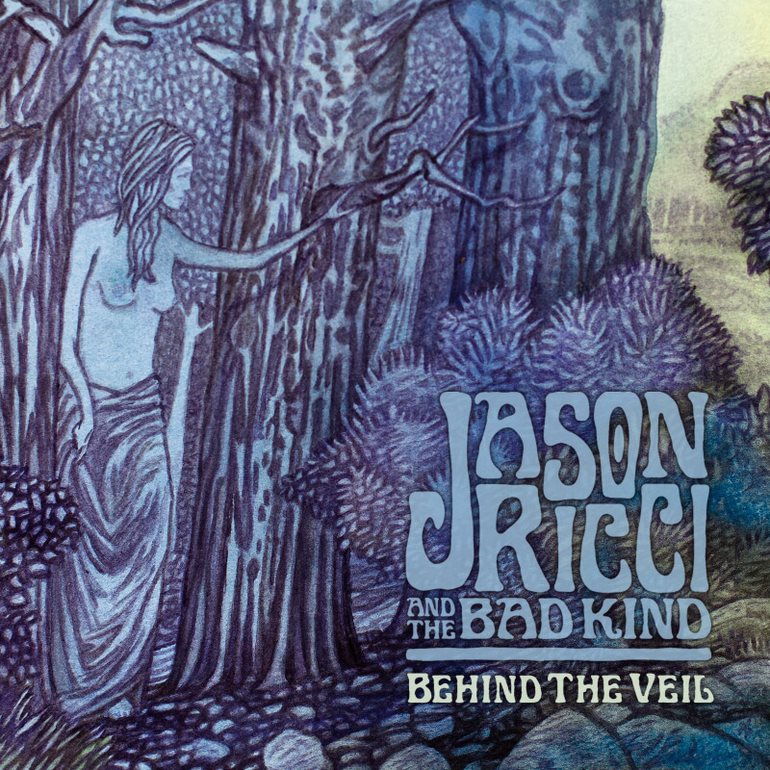
Roadhouse Album Review: Jason Ricci creates harmonica magic in “Behind the Veil”

Jason Ricci — “Behind the Veil” — Gulf Coast Records

Jason Ricci is simply one the best harp players on today’s music scene.

His latest, and very fine album recorded with his band, the Bad Kind, is “Behind the Veil,” and it provides ample evidence of Ricci’s prowess in both its musical excellence and its heady eclecticism.

This edition of the Bad Kind includes Brent Johnson, who replaces John Lisi on guitar, Jack Joshua on bass and vocals, and drummer John Perkins. Singer (and Ricci’s wife) Kaitlin Dibble wrote two of the songs, handles a couple of vocals, as well as backing vocals. Joe Krown guests on piano and Hammond B3, Lauren Mitchell provides backup vocals, and guitarist Joanna Connor shows up on Dibble’s “No Way.” And, of course, Ricci on harp and vocals, as well as songwriter on two tracks.

The album opens with an unusual but elegant waltz, Ricci’s original “Casco Bay,” with a gently swinging harp intro and which gives us the title: “I set sail cross the water dark and black from behind the veil….” Dibble’s background vocals give it a majestic choral feeling.

That’s followed by “5-10-15,” a tough version of the 1952 R&B classic “5-10-15 Hours,” written by Rudy Toombs and recorded by Ruth Brown. Dibble’s vocals with Ricci’s soaring harp solo take no prisoners on this rocking remake.

Ricci says that “5-10-15” was the spark for this entire album: “Singer Kaitlin Dibble has been singing this number for a few years and the wheels in my mind started turning on how to capture it the way I heard it so many times on Bob Murret’s WWOZ show. I love the New Orleans R&B feel and I really think we captured it here thanks to Tony Daigle, Kid Andersen and the band, of course. The whole reason we recorded this CD live in one room was centered around this number.”  

That’s really a sweet inspiration!

“Baked Potato” is another Ricci track, an instrumental that gives him a chance to stretch his considerable harp skill. “Cirque du Soleil” is another rolling R&B cut, richly flavored with the sound of Ricci’s current home, New Orleans.

“Wrong Kind of Easy” is a Dibble original, sparkling with her vocals, offering more New Orleans flair. That’s paired in a medley with “Nobody But You,” with a tasty Ricci/Dibble duet. “Ain’t She Fine” is a funky take on the Bobby Rush tune, with strong Ricci vocals.

The dirge-like classic, “St James Infirmary” is eloquently done here, with heartfelt Ricci vocals, and a sensitive guitar solo. Of this track, Ricci says: “This old standard is almost the ‘Mustang Sally’ of New Orleans music, so if I didn’t think we had something really special here I would have never let it on stage – much more this record.”  And it is indeed special.

“Why Don’t We Sleep On It” is an enthusiastic vocal romp with Ricci and Dibble trading lines over a sharp guitar solo, adding some B3 power to the mix. Ricci says: “Kate and I were having a rare argument and the band was in need of some more music. So I sat down to write a tune about how much better I would be doing without her and then kept hearing her voice or my own telling me the truth or her side… So I wrote both our parts; she loved it; we made up and had this fun duet. “ 

“Terrors Of Nightlife” is a powerful ballad, again with Dibble’s tasteful backing phrases completing the ethereal sound. “No Way” is another excellent contribution by Dibble, both writer and singer; her wordplay conjures a potent tapestry of images. “Shipwreck” (“Can I shipwreck on you some night”) rides a stinging guitar behind Ricci’s vocals.

“Hip Hug-Her,” takes the Memphis soul of Booker T. & The M.G.’s. chestnut, adds Ricci’s melodic harp lines over the deep bottom, and rides this session to a rousing close.

This is an excellent Jason Ricci outing, drawing not only on his own formidable skills, but adding an excellent cast around him. Its fresh, authentic sound is a tribute to recording the album live, in one room, as Ricci has noted. An outstanding session.


Here’s an interesting recent interview with Ricci on Blues Gr, the Michael Limnios blog.


“St. James Infirmary” from the album:

Tracklist & credits:
Casco Bay – Jason Ricci
5 -10 -15 – Rudy Toombs 
Baked Potato – Jason Ricci / Stachurski Shawn Dustin 
Cirque du Soleil – Jack Joshua 
Wrong Kind of Easy / Nobody But You – Kaitlin Dibble (Wrong Kind Of Easy) – Walter Spriggs (Nobody But You)
Ain’t She Fine – Bobby Rush 
St. James Infirmary – Irving Mills / Don Redman 
Why Don’t We Sleep On It – Jason Ricci (Lyrics & Music) / Brent Johnson (Music) 
Terrors Of Nightlife – Dax Riggs 
No Way – Kaitlin Dibble  
Shipwreck – Jeff Turmes  
Hip Hug-Her – Booker T. & The M.G.’s. (Steve Cropper, Donald “Duck” Dunn, Al Jackson Jr., Booker T. Jones) 

Roadhouse Ramblings: Remembering Arlo Guthrie and the Thanksgiving of “Alice’s Restaurant Massacree”

As this Thanksgiving holiday draws to a close, my mind wanders back — not to Pilgrims and Native Americans, or even the Civil War, which is when the Thanksgiving holiday officially began, but instead, my own personal guidepost — Arlo Guthrie’s very famous song, “Alice’s Restaurant Massacree.”

The song, and its creation are summarized in this excellent Smithsonian article, which says in part:

“Guthrie’s beloved musical ode to garbage, small town policing, and military conscription, celebrates many anniversaries. The song – its full name is “Alice’s Restaurant Massacree” – has its conception on Thanksgiving Day, 1965, when Guthrie, then 18, and friend Rick Robbins, 19, were clearing out the Stockbridge, Massachusetts, home of Alice and Ray Brock.”

Guthrie almost immediately began to work the episode into a song, and tinkered with it for a couple of years in coffee house and clubs. Its more or less final incarnation was first broadcast on New York City’s WBAI-FM radio station in February of 1967.

The next stop was the 1967 Newport Folk Festival. After performing “Alice” to a handful of people at a Saturday afternoon workshop at the July fest, Guthrie repeated it for a Sunday afternoon audience of 3,500. Their reception was overwhelming, so producers added Guthrie to the evening finale, this time before an audience of about 9,500.

And after all that rambling by me, the main reason this is a personal milestone is that I was in the audience that night, reporting on the festival for the Worcester (Mass.) Telegram. It was indeed a magical event. Guthrie’s delivery was clever and whimsical, as his drawn-out pauses between verses added to the surprise of the song itself, while running on for about 20 minutes. The audience loved it.

So here it is again. Happy Thanksgiving to all.

Roadhouse Album Review: Tom Buenger explores his musical roots in delightful “Blues From Caucasia”

Tom Buenger — “Blues From Caucasia” — Self-Release

Tom Buenger’s second album, “Blues From Caucasia,” has been around for a few months, and it’s well past time that I should bring this delightful effort to your attention.

Buenger is a singer / songwriter based in the Seattle, Wash., area, who performs solo, or with a few other talented musicians, all well-suited to the direction of his music. His original style is mined from basic blues and gospel, but goes wherever his rootsy musical spirit takes him, often into rock, soul and Americana. This session expands on his debut album, “Suburban Gospel.”

Buenger’s musical companions here are guitarists Teresa Russell from Los Angeles and
Rafael Tranquilino from Mexico City, plus guitarist Chris Eger, bassist Richard Williams and drummer Cyrus Zerbe. Even though there’s a taste here and there of lively electric guitar, it seems fair to call this primarily an acoustic album, which gives it a more intimate feeling and a down-home, old-timey touch.

The album opens with the spirited light-blues “Above The Sun,” with a hand-clapping gospel feel punctuated by Buenger’s floating harp lines. “Start a Fire” is a torchy love song that showcases Buenger’s multi-instrumental skills on piano, acoustic guitar and harp. plus a soulful vocal turn.

“That Ain’t Right,” is a tough blues with tougher vocals and a percussive backbeat behind Buenger’s vivid acoustic guitar. “What You Gonna Do” is a little soulful philosophy about life’s indifference, as “the world don’t give a damn about your big master plan…. so “when it comes right down to livin’, do what you’re gonna do.”

“Mean Things” is an easy-riding blues that adds a light electric touch in a gentle counterpoint as the music makes his demons sing and dance. “Get With Me” is two-step plea to a woman he’s got his eye on, flavored with a little honky-tonk kazoo. The vocal showcase, “Don’t Stop” draws on lovely vocal harmonies with a hopeful message: “Don’t stop till you reach the other side.”

“Feel Alright” is a soulful love ballad with a touch of classic R&B at its heart. “Fight No More” finds Buenger in an intricate tapestry of delicate harp, acoustic guitar and vocal harmonies with himself in a terrific call-and-response style.

Two solo acoustic blues tracks close it all out: The first is Buenger’s own finger-picking creation, “Talk To Me,” with a sweetly sensitive vocal. The final cut is the classic “Soul Of A Man,” by Blind Willie Johnson, which Buenger beautifully shapes into a vocal duet and an elegant phrasing of music that is the soul of a man.

This is an excellent album, filled with finely tuned original music, rooted in the spirit of the finest blues traditions. You should enjoy it soon.


“That Ain’t Right” from the album:

Tracklist and credits:

Above the Sun – 2:43
Recorded and Mixed at Plumtree Studios,
Mastered by Rafael Tranquilino
Tom Buenger: 90% — Vocals, Harmonica
Chris Eger: 5% — Electric Guitar, Bass
Richard Williams: 5% — Drums

Start a Fire – 5:31
Mixed & Mastered by Rafael Tranquilino
Tom Buenger: 80% — Vocals, Piano, Acoustic
Guitar, Harmonica
Teresa Russell: 15% — Electric Guitar
Cyrus Zerbe: 5% — Drums

That Ain’t Right – 3:12
Recorded and Mixed at Plumtree Studios
Tom Buenger: 90% — Acoustic Guitar,
Harmonica, Vocals
Richard Williams: 10% — Drums, Bass

What You Gonna Do – 4:43
Mixed & Mastered by Rafael Tranquilino
Tom Buenger: 85% — Acoustic Guitar, Vocals
Rafael Tranquilino: 15% — Electric Guitar

Mean Things – 3:21
Recorded and Mixed at Plumtree Studios
Tom Buenger: 90% — Acoustic Guitar, Vocals
Chris Eger: 5% — Bass, Electric Guitar
Richard Williams: 5% — Drums

Get With Me – 3:46
Recorded and Mixed at Plumtree Studios
Tom Buenger: 80% — Acoustic Guitar, Vocals,
Kazoo
Chris Eger: 10% — Electric Guitar, Bass
Richard Williams: 10% — Drums

Don’t Stop – 3:30
Mixed and Mastered by Rafael Tranquilino
Tom Buenger: 100% — Acoustic Guitar, Vocal

Feel Alright – 3:49
Mixed and Mastered by Rafael Tranquilino
Tom Buenger: 60% — Acoustic Guitar, Vocals
Rafael Tranquilino: 40% — Drums, Bass, Electric
Guitar

Fight No More – 2:45
Mixed and Mastered by Rafael Tranquilino
Tom Buenger: 100% — Acoustic Guitar, Vocals

Talk To Me – 3:58
Recorded and Mixed at Plumtree Studios
Tom Buenger: 100% — Acoustic Guitar, Vocals

Soul of a Man – 3:26
Mixed and Mastered by Rafael Tranquilino
“Blind” Willie Johnson: 100%; Columbia
Tom Buenger: 0% — Acoustic Guitar, Vocal

Roadhouse Album Review: Dig it: The Dig 3 breathes new life into old blues with the raw authenticity of “Damn the Rent”

The Dig 3 — “Damn the Rent”

This album has been around for a couple of months now, and much to my chagrin, I’m just getting around to it. My very bad, since it’s easily one of the finest blues efforts I’ve heard this year.

What makes it special is a rare combination of musical style and substance, performed with considerable skill and gritty authenticity.

The Dig 3 is sort of an old-timey, gutbucket trio featuring guitar and smart vocals by Andrew Duncanson of Kilborn Alley Blues Band, sharp harp by Ronnie Shellist, and the one-man-band that is Gerry Hundt — he plays Farmer FootDrums and percussion, bass, guitar, harmonica, and mandolin. They got together during the pandemic, released their splendid rootsy debut album, “The Dig 3,” last year, and their sophomore effort, “Damn the Rent,” is hot on its heels.

The production here is clean and pure, with the first 10 tracks all being cut live in the studio in a day. It’s clean and pure, but at the same time raw and gritty, with unmistakable passion for the music. And the music, all original, feels just like it’s been freshly dredged from its swampy origins.

The set opener “Take a Ride” drives along over a wicked Bo Diddley beat with plaintive harp fills all wrapped in a torrent of percussion. “All the Love That I Got” is soul with a beat stirred into a winsome blues shuffle. “Big Water” is a rolling boogie with Shellist adding tough harp lines.

“Big Toe” adds bluesy fuel as Duncanson wails “just dip my toe in gasoline.” The instrumental “Chuck and Willie” adds organ riffs to fierce guitar and soaring harp. It’s a gem of a blues track.

“Coconut Curry Dance” is a rollicking upbeat track, as tasty as its title. “Gold Tooth” is another slow boogie with Hundt on mandolin and introducing a line that contains the album title, “damn the rent.” “Blanco Boogaloo” is another instrumental, featuring a snaky harp by Shellist. “Red-Tailed Hawks” is an open-road song, driving hard on a “cold hard road and them red-tailed hawks.” The vintage sound of a raspy kazoo resonates in a snaky tribute to the “Old Dog.”

The final two cuts are very different. Recording at a different studio as the The Dig 3 BIG, a quintet without Shellist adds backup singer Lauren Dukes, bassist Aaron Whittier and drummer Rick King. Hundt plays guitar and organ. “Southern Fantasy,” from their debut album, has a thumping bass and a funky counterpoint to all that’s gone before. “All the Love That I Got” is a smooth soulful take by Duncanson, again in a different vein, but still stemming from the same musical roots.

How to best say it? “Damn the Rent” is a damn fine album. If you’ve never heard The Dig 3, you need to. If you have, do it again. Dig it.


Minor partially related digression:

The name of The Dig 3 got me to thinking (no snark, please): It reminded me of the Big Three Trio, the group that in 1946 launched the career of the legendary Willie Dixon (The three were Dixon plus pianist Leonard “Baby Doo” Caston and guitarist Bernardo Dennis (later replaced by Ollie Crawford).

A quick search of the interwebs also revealed that in 1962, Cass Elliot, Tim Rose and James Hendricks formed a group called The Big Three and began playing clubs and coffeehouses in New York City. That led to, among other things, the Mugwumps, and later, the Mamas and Papas.

Aren’t you glad you read this far?


“Big Water” from the album:

Tracklist:

1. Take A Ride
2. All The Love That I Got
3. Big Water
4. Dip My Toe
5. Chuck & Willie
6. Coconut Curry Dance
7. Gold Tooth
8. Blanco Boogaloo
9. Red Tailed Hawks
10. Old Dogs
11. Southern Fantasy
12. All The Love That I Got

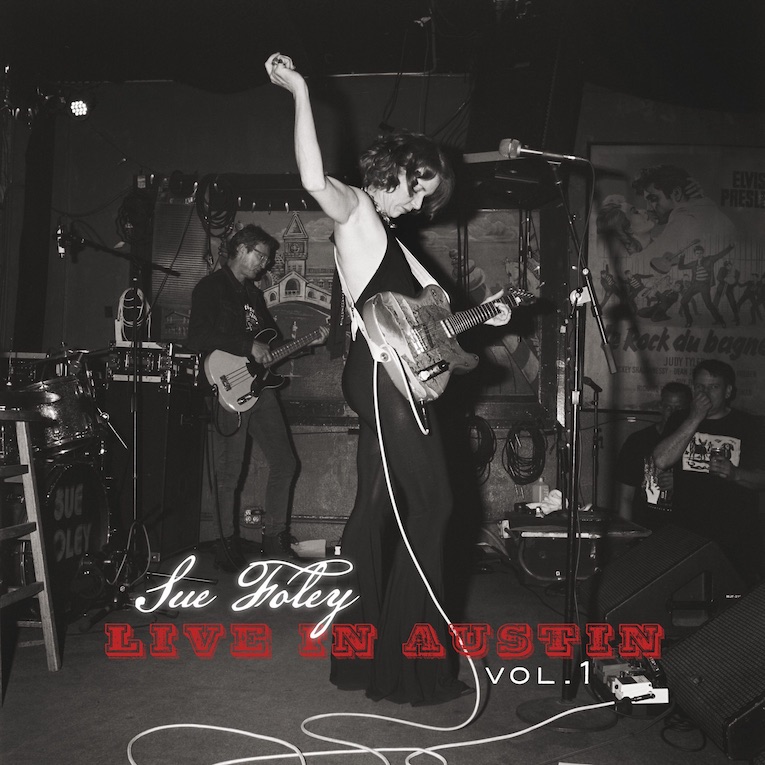
Roadhouse Album Review: Sue Foley’s “Live in Austin Vol. 1” is a powerful summary of her musical talents

Sue Foley — “Live in Austin Vol. 1 — Stony Plain Records

“Blues is the soul of music. Period.”

That’s how Sue Foley described the music in 1993, in a brief video remembrance of her attraction to the blues and her arrival in Austin, Texas, from Canada a few years earlier (watch the video here).

Since then, Foley has made her mark on the blues world with fiery guitar work, tough vocals, plus a sensitivity and passion for the blues and roots music that livens every note.

Foley is a multiple award-winning singer/songwriter/guitarist who’s been featured on dozens of her own and other albums and tours extensively, but also writes about the blues, teaches guitar, and brings to her music an understanding of its rich history.

All of that has led to her latest album, “Live in Austin Vol. 1,” as she pulls together eleven original songs and covers in a sparkling live performance that illustrates the bright arc of her musical career. Recorded live at Austin’s Continental Club last May, Foley gives us some first-ever live recordings of early hits, plus some sharp covers.

Foley’s band here is made up of her usual mates, Corey Keller on drums and Jon Penner on bass, with the stellar addition of Austin guitarist Derek O’Brien, who coproduced Foley’s first two albums.

For the session opener, Foley reaches back into her 2006 alubum of the same name for the auto-erotic, hard-driving “New Used Car,” with typically tough solos, followed by another original, the equally ferocious “Walkin’ Home.”

“Highwayside” has a country-rock twang, but Foley’s sensuous take on Howlin’ Wolf’s “Howlin For My Darlin'” puts her squarely back into a historic blues vein as she calls out a fiery solo by guitarist Derek O’Brien. Her “Queen Bee” is a smoothly honeyed version of the Sim Harpo swamp classic, “King Bee.”

The instrumental “Hooked on Love (Lucky Lou)” lets Foley stretch out on a guitar showcase rich with tone and notes wound tightly for maximum pleasure. Her version of Bob Dylan’s “Positively 4th Street” replaces his sharp-edged vocals with a slightly softer lyrical take and elegant guitar solo.

Foley moves back into deep blues history with another cover — the Memphis Minnie chestnut, “Me and My Chauffeur Blues,” which could easily have been paired with the attitude of the opener, “New Used Car” as its driving wheel. The sultry shuffle of Foley’s original “Better” is another sensual take — “I will love you better than your other girls can…”

The set closer is a strong cover of Cheap Trick’s ’70s rocker, “High Roller,” as Foley leaves us breathless with its furious pacing.

This terrific live album is a capsule version of Sue Foley’s wide-ranging talents that have brought her to her current spot — just sittin’ on top of the world of blues music. Let’s hope volume two isn’t far behind.


Sue Foley video bio from 1993:


“New Used Car” from the album:

Tracklist and credits:

1: Introduction by Steve Wertheimer (00:29)
2: New Used Car (3:47) (Sue Foley, Mechanicsville Music SOCAN/ASCAP)
3: Walkin’ Home (3:22) (Sue Foley, Robert Grant, Mechanicsville Music SOCAN/ASCAP)
4: Highwayside (4:03) (Sue Foley, Mechanicsville Music SOCAN/ASCAP)
5: Howlin For My Darlin (4:59) (Willie Dixon, Chester Burnett, Hoochie Coochie Music, Arc Music BMI)
6: Queen Bee (4:19) (James Moore, Embassy Music Corp, BMI)
7: Hooked On Love (aka Lucky Lou) (4:07) (Jodi Williams, ARC Music, BMI)
8: Positively 4th Street (5:25) (Bob Dylan, Sony Music Entertainment)
9: Me and My Chauffeur Blues (4:27) (Ernest Lawler, Songs of Universal Inc., Wabash Music Company, BMI)
10: Better (4:52) (Sue Foley, Mechanicsville Music, SOCAN/ASCAP)
11: High Roller (5:01) (Richard Alan Nielsen, Tom Petersson, Robin W Zander, Adult Music, Screen Gems-EMI Music Inc., BMI, SESAC)
Recorded Live at The Continental Club, Austin, TX, May 19, 2023
Produced by Mike Flanigin
Featuring:
Sue Foley – Guitar, Vocals
Jon Penner – Bass
Corey Keller – Drums
Derek O’Brien – Guitar
Angela Miller – Background Vocals, Tambourine
Lauren Cervantes – Background Vocals

1: Introduction by Steve Wertheimer (00:29)

2: New Used Car (3:47)
(Sue Foley, Mechanicsville Music SOCAN/ASCAP)

3: Walkin’ Home (3:22)
(Sue Foley, Robert Grant, Mechanicsville Music SOCAN/ASCAP)

4: Highwayside (4:03)
(Sue Foley, Mechanicsville Music SOCAN/ASCAP)

5: Howlin For My Darlin (4:59)
(Willie Dixon, Chester Burnett, Hoochie Coochie Music, Arc Music BMI)

6: Queen Bee (4:19)
(James Moore, Embassy Music Corp, BMI)

7: Hooked On Love (aka Lucky Lou) (4:07)
(Jodi Williams, ARC Music, BMI)

8: Positively 4th Street (5:25)
(Bob Dylan, Sony Music Entertainment)

9: Me and My Chauffeur Blues (4:27)
(Ernest Lawler, Songs of Universal Inc., Wabash Music Company, BMI)

10: Better (4:52)
(Sue Foley, Mechanicsville Music, SOCAN/ASCAP)

11: High Roller (5:01)
(Richard Alan Nielsen, Tom Petersson, Robin W Zander, Adult Music, Screen Gems-EMI Music Inc., BMI, SESAC)

Recorded Live at The Continental Club, Austin, TX, May 19, 2023

Produced by Mike Flanigin
Featuring:
Sue Foley – Guitar, Vocals
Jon Penner – Bass
Corey Keller – Drums
Derek O’Brien – Guitar
Angela Miller – Background Vocals, Tambourine
Lauren Cervantes – Background Vocals

Roadhouse News: Here are the 2024 Grammy nominations for blues categories

For those of you who are interested, here are the Grammy nominations in the two categories reserved for blues music. If you’re interested in the other 92 Grammy categories, you can check this complete list of all the nominations.

Category 47. Best Traditional Blues Album

For albums containing greater than 75% playing time of new vocal or instrumental traditional blues recordings.

Ridin’
Eric Bibb

The Soul Side Of Sipp
Mr. Sipp

Life Don’t Miss Nobody
Tracy Nelson

Teardrops For Magic Slim Live At Rosa’s Lounge
John Primer

All My Love For You
Bobby Rush

Category 48. Best Contemporary Blues Album

For albums containing greater than 75% playing time of new vocal or instrumental contemporary blues recordings.

Death Wish Blues
Samantha Fish And Jesse Dayton

Healing Time
Ruthie Foster

Live In London
Christone “Kingfish” Ingram

Blood Harmony
Larkin Poe

LaVette!
Bettye LaVette

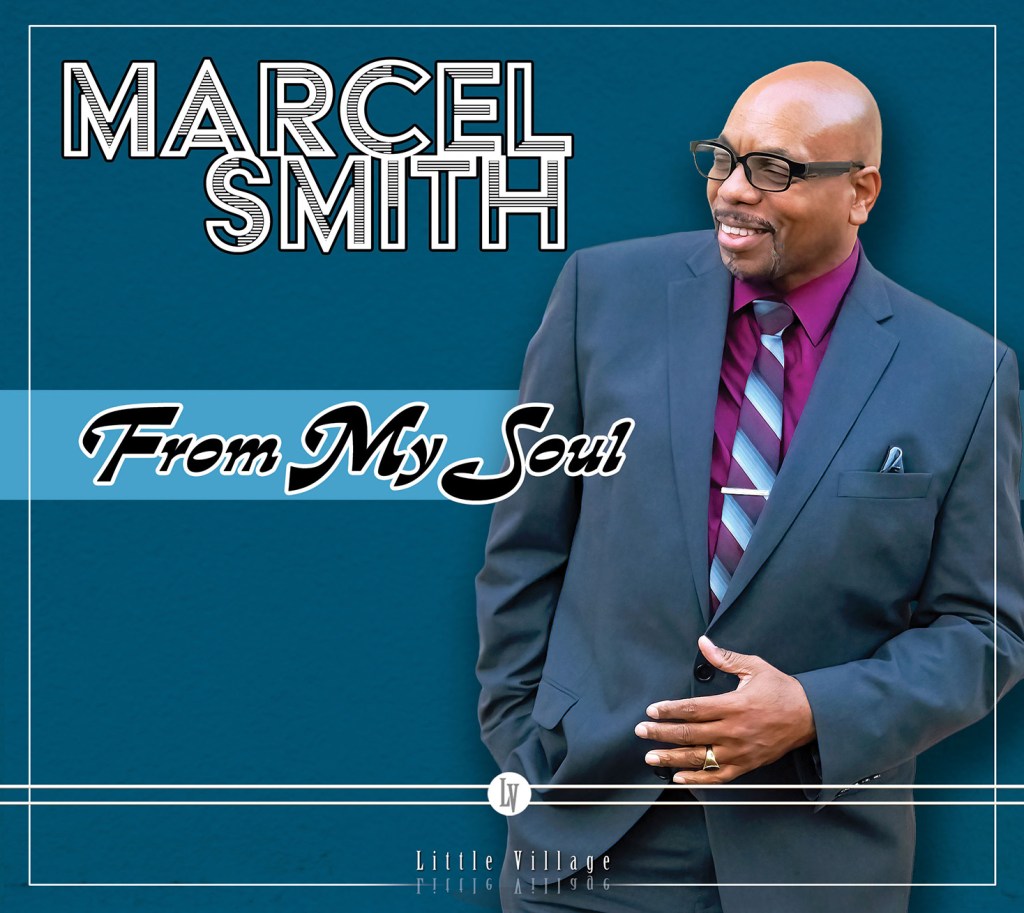
Roadhouse Album Review: Marcel Smith soars with soulful “From My Soul”

Marcel Smith — “From My Soul” — Little Village Foundation

Great soul music isn’t hard to find if you want to visit the old masters, mostly long gone, but whose music still burns brightly — Johnny Adams, Bobby “Blue” Bland, Al Green, Solomon Burke, and many more.

It’s much harder to find someone making contemporary soul music magic that ranks with the classics, and when you find it, it needs to be recognized and appreciated.

That’s why “From My Soul,” a magnificent new album by Marcel Smith, a relative youngster and newcomer to the style, needs to get that recognition and appreciation.

Like many great soul artists, Smith has musical roots deep in the gospel tradition. When  he  was just 15, quartet gospel veteran Willie Washington heard Smith solo in his church. Washington offered him a spot in his new quartet, the WD Gospel Singers. Smith’s history in gospel music since then has given him the professional polish and the vocal chops that fill his secular music with soulful power.

For this album, Smith has returned to Christopher “Kid” Andersen’s Greaseland Studios and the Little Village label for his follow-up to 2018’s “Everybody Needs Love.” Andersen is effusively supportive: “It is that elusive quality of making you believe what he sings, making you care about the story, and care for him as a person, that puts Marcel right up there with the legendary greats of the idiom,” he says.

The musicians who back him here are all notable because of their sharp support of Smith’s vocals. They his include Derrick “D’Mar” Martin on drums; Endre Tarczy on bass; Jim Pugh on organ and piano; Kid Andersen, producer, guitar, and miscellaneous instruments; Rick Estrin on harmonica; Jon Otis on percussion; Jerry Jemmott on bass on track 8; Mike Rinta on trombone and horn arrangements on tracks 6, 8, and 11; Aaron Lington on saxophone, horn arrangements on t racks 1, 9, and 10, and string arrangement on track 3; John Worley on trumpet; Don Dally on strings; Tony Lufrano on organ on track 8; and Eric Spaulding on the sax solo on track 2. Backing vocals are provided by Lisa Leuschner Andersen and Sons of the Soul Revivers.

The album features five songs co-written by Smith, plus eight others that pull from some unlikely sources, but they all come together in a perfect union of sweet soul music.

The album kicks off with the horn-laced, R&B-flavored “I’m Coming Home To You,” with the glorious backing vocals of the Soul Revivers. The carefree lyric and upbeat music set just the right mood for all that follows. “If You Miss Me” follows, a slow, smooth ballad tastefully delivered with a classic small-combo feeling, with Smith’s vocals and lovely falsetto sliding gracefully alongside a sensuous Spaulding sax solo.

“What Can We Do” asks that question about an anxious world, with the Soul Revivers soaring in the background. “Freedom Blues” roars to life with a similar theme, riding on a strong Rick Estrin harmonica line.

A soothing cover of Willie Nelson’s “Wake Me When It’s Over” softens the mood as Smith does a great job of making this song his own. Another cover, this time an audacious take on Jimmy Liggins’ “Drunk” cranks up for the dance floor.

“To Be True” softens the mood again, a lilting love song so smoothly delivered that you know he’ll get the second chance he’s asking for. “Nothing Left To Burn” explores a more rhythmic pulse behind an exciting vocal take.

The great soul man Johnny Rawls joins Smith for two gorgeous songs: “There Goes My Used To Be” and “Turn Back The Hands Of Time,” the first a soaring ballad, the second a Stax-like anthem filled with crackling horns.

Smith pours his heart and considerable into the sweetness of “My Heart Told A Lie,” then sustains the tender mood on “I Don’t Want To Take A Chance.”

The closer is an emotional tribute to the memory of Smith’s mother, delivered with a spoken intro — a powerful nine-minute live version of the Bee Gees “How Can You Mend A Broken Heart.” It’s a soul-powered masterpiece and a fitting finale to this stirring album.

“From My Soul” is simply a great album, rich with the irresistible emotional power of sweet soul music.


Here’s “Turn Back the Hands of Time” with Johnny Rawls:

Tracklist:

  1. Coming Home to You
  2. If You Miss Me
  3. What Can We Do
  4. Freedom Blues
  5. Wake Me When It’s Over
  6. Drunk!
  7. To Be True
  8. Nothing Left to Burn
  9. There Goes My Used to Be
  10. Turn Back the Hands of Time
  11. My Heart Told a Lie
  12. I Don’t Want To Take a Chance
  13. How Do You Mind a Broken Heart

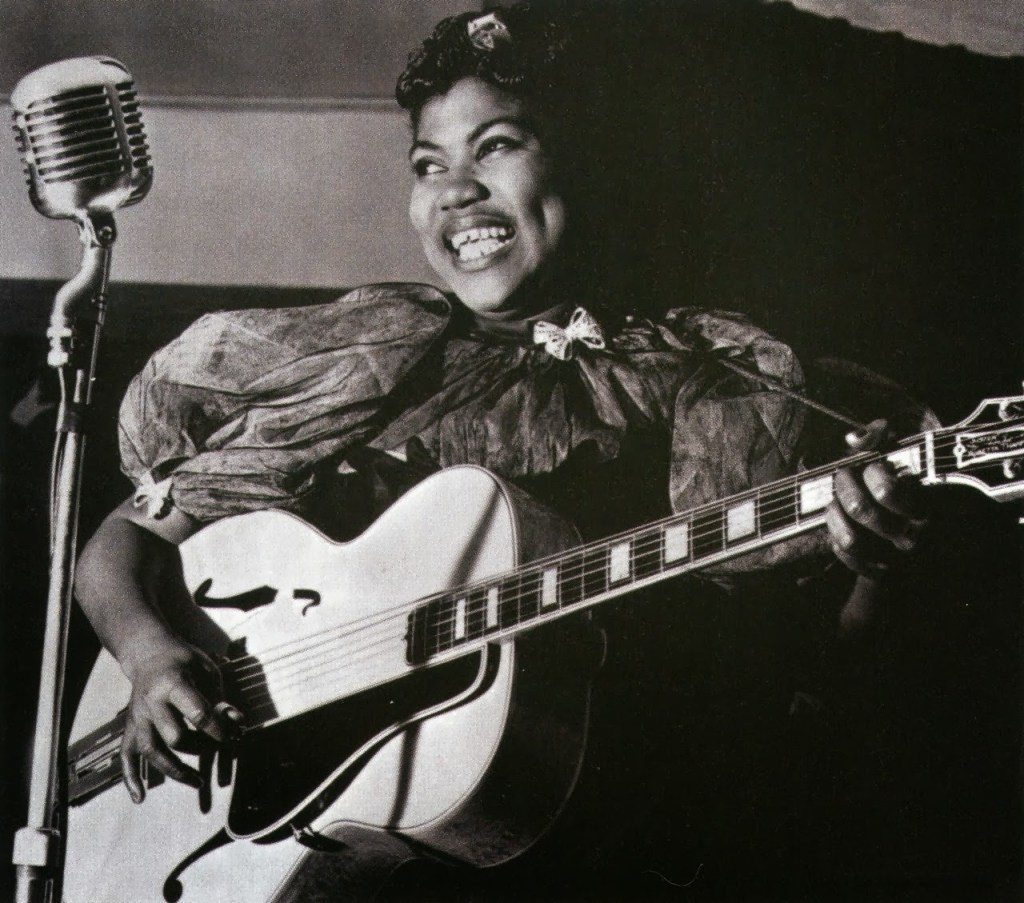
Roadhouse Rambling: Is Sister Rosetta Tharpe really the godmother of rock ‘n’ roll?

Sister Rosetta Tharpe

The short answer to that intriguing question is: Most likely.

Her groundbreaking and influential music — a heavy dose of hard-driving electric guitar backing both spiritual and secular performances with her powerful vocals — has too often been lost in the musical wilderness preceding the 1950’s explosion of the music that came to be called rock ‘n’ roll.

Born in Cotton Plant, Ark., in 1915, as Rosetta Nubin, she was playing guitar at age 6, and attended church conventions with her mother, Katie Bell Nubin. They moved to Chicago, where her mother preached, and Rosetta married another preacher, Thomas Tharpe. By 1938, they moved to New York City, where Tharpe got a spot at The Cotton Club.

She worked with Lucky Millender’s Orchestra, performing and recording both gospel and secular songs such as “Four Or Five Times.” A few years later, Tharpe and pianist Sammy Price recorded her biggest hit, “Strange Things Happening Every Day.”

Tharpe recorded her first four sides in 1938 during a session that included her first hit, “Rock Me,” along with “That’s All.” Four years later, Billboard magazine praised her for “the rock-and-roll spiritual singing” in her re-recording of “Rock Me” with the Lucky Millender Orchestra. Tharpe also recorded with the great boogie-woogie pianist Albert Ammons. And boogie-woogie piano itself laid claim to forming the early underpinnings of rock ‘n’ roll.

After that auspicious beginning, Tharpe’s career lasted well into the 1950s, influencing countless early guitar rockers and many others.

Chuck Berry once said his entire career was “one long Sister Rosetta Tharpe impersonation.” On stage, she did an early version of Berry’s duckwalk. Little Richard called her his greatest influence and Tharpe was the first to put him on stage.  Little Walter Jacobs, the legendary blues harp player, credited his music to one of Tharpe’s biggest hits, “This Train.”

Tharpe finally made it into the Rock And Roll Hall of Fame in 2018, but despite that honor, and despite her massive body of work, her talent and influence are not well known today.

I’d like to help remedy that with the Tharpe documentary that follows. It’s about an hour long, but it’s worth it to sample her long and influential career and help to restore her place in music history. Below that are two early recordings that illustrate her style. Enjoy.

“Up Above My Head”

“This Train”