Roadhouse Album Review: Willie Buck takes us back to the old school with “Live at Buddy Guy’s Legends”

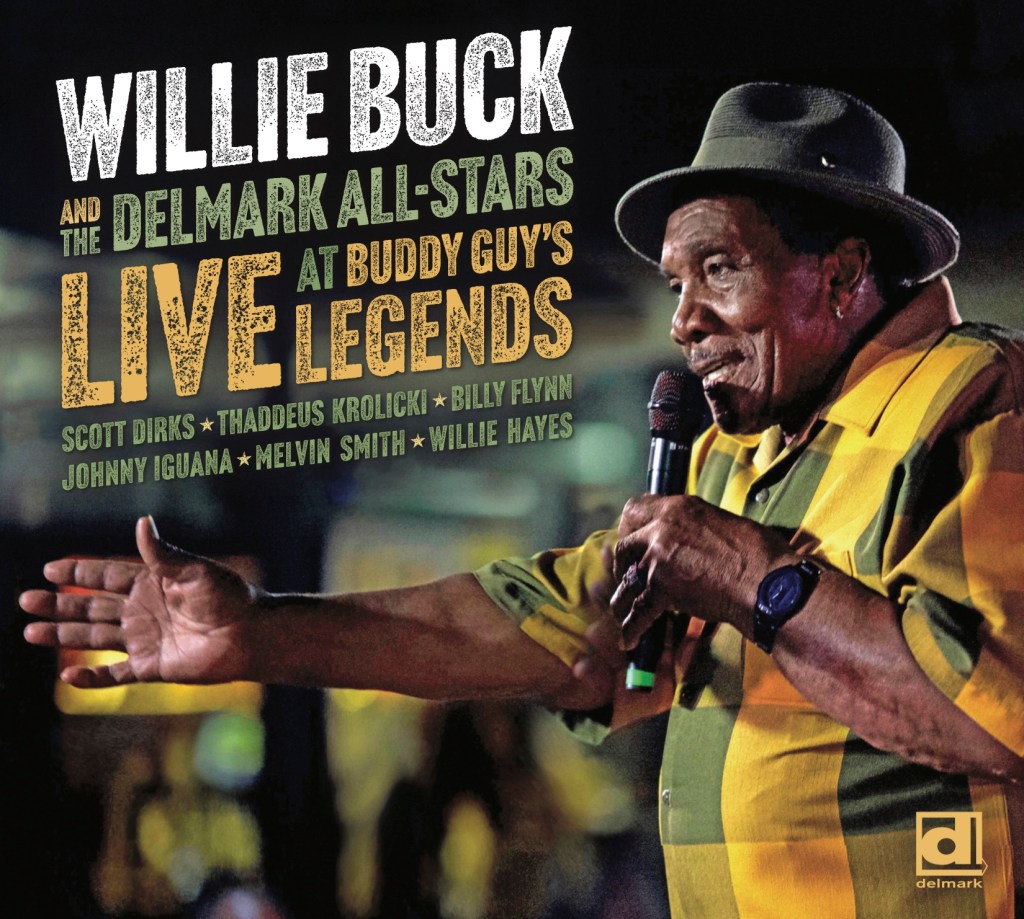
Willie Buck — “Live at Buddy Guy’s Legends” — Delmark Records (Aug. 30 release)
Every once in a while, I like to reach back into the blues for an experience that reminds me of my days hanging out in blues clubs, listening to tough, honest old-school blues. Muddy Waters, Albert Collins, John Lee Hooker, Albert King all come to mind. It’s live music, played with great enthusiasm amid all the raucous, sweaty appreciation that blues fans provide.

If you’re anything like me, that’s as close to blues heaven as you can get. (And if you’re anything like me, you have my sympathies…!)

This new album, the fourth by veteran Chicago bluesman Willie Buck, and a stellar group of backers known here as the Delmark All-Stars, takes me back to just the right place. It was recorded live at Buddy Guy’s Legends, also just the right place for some vintage blues; a handful of six originals, and three classic covers.

Buck was born William Crawford in 1937 (yes, he’s still going strong), in the small town of Houston, Mississippi. The closest “big” town was Tupelo, about 40 miles away. He left for the big town in 1953, becoming one of the regulars at Chicago’s legendary Maxwell Street scene, and gradually worked his way into the club circuit.

Since then, it’s said Buck has played with everybody and knows everybody. Guy has told his club audiences when he and Buck appear together, “When I started playing in Chicago, Willie was one of the guys that was already here.”

The new album launches with a rollicking 6 1/2-minute instrumental blues jam by the All-Stars, all worth a very honorable mention for their solid work: Scott Dirks, harmonica; Billy Flynn, lead guitar; Thaddeus Krolicki, 2nd guitar; Johnny Iguana, piano, and Melvin Smith, bass. This was also the last recording from the drummer, the late Willie “The Touch” Hayes.

What a coincidence! I just happen to have a photo of Little Willie Littlefield at the 2008 Chicago blues festival. (Jim White photo)

Then Buck takes over, as he winds up the R&B classic “Kansas City,” with the All-Stars percolating rhythmically behind him. (Permit me a little digression here, since “Kansas City” has always seemed to me to be an improbable creation. It was written in 1952 by Jerry Lieber and Mike Stoller, two 19-year-old white R&B fans from Los Angeles who had never even been to Kansas City, but said they were inspired by Big Joe Turner records. They wrote the song especially for West Coast pianoman Little Willie Littlefield as “K. C. Loving,” but it wasn’t until 1959 that Wilbert Harrison turned it into the monster hit “Kansas City,” eventually covered by more than 300 versions. And, of course, Lieber and Stoller went on to become giants in the creation of blues, R&B and rock ‘n’ roll music.)

That’s followed by a set of Buck originals: “Tried To Work Something Out” with fine honky-tonk piano from Iguana and lyrical harp from Dirks; the very tough shouter “What We Were Talking About”; the down-home, slow-burning “Let’s See if We Can Come Together”; a slow-blues turn on “Snow”; and then a few remarks from Buck about a book he wants to write about his storied life.

Buck follows with a hard version of the Muddy Waters chestnut, “Rock Me,” then the original, slow and bluesy “Walking and Swimming.” The closer is Buck’s rugged take on “Hoochie Coochie Man,” Waters’ memorable version of the always-fine Willie Dixon creation.

This is one of those albums that captures a musical snapshot in time — a gritty veteran of Chicago blues reaching deep for a piece of his heart to proudly share. Get it while you can.


“Rock Me” from the album:

Tracks and credits:
➊ All-Star jam intro
➋ Kansas City
➌ Tried To Work Something Out
➍ What We Were Talking About
➎ Let’s See if We Can Come Together
➏ Snow
➐ Willie Buck Talking
➑ Rock Me
➒ Walking and Swimming
➓ Hoochie Coochie Man

All songs by William Crawford, (BMI), aka Willie Buck, except:
track 1 –Blues jam intro
track 2 — Leiber & Stoller (Sony/ATV Songs LLC, BMI)
track 8 — McKinley Morganfield (Arc Music, BMI)
track 10 — Willie Dixon (Hoochie Coochie Music, BMI)

Willie Buck: vocals
Scott Dirks: harmonica
Thaddeus Krolicki: guitar
Billy Flynn: guitar
Johnny Iguana: piano
Melvin Smith: bass
Willie “The Touch” Hayes: drums


Roadhouse Album Review: Jontavious Willis celebrates with a joyous “West Georgia Blues”

Jontavious Willis — “West Georgia Blues” — Strolling Bones Records

The first time I saw Jontavious Willis, he was performing on the January, 2020, Legendary Rhythm & Blues Cruise. I was impressed.

He was young, enthusiastic and obviously a student of the classic acoustic blues era. His knowledge easily moved beyond dry history into joyful story-telling and music-making. His acoustic guitar style was a tribute to the old masters, his personal style was lighthearted and friendly, and he had stories to tell – the stories of some of the earliest blues.

Willia already had two fine albums to his credit, and now his third and self-produced album, “West Georgia Blues,” effortlessly combines those traditional styles with an updated musical sensibility on 15 originals, without losing their essence. “Some folks sing the blues cause they know the song / But we singing these blues just to carry tradition on.”

Willis has his own origins in Greenville, Georgia; his family goes back generations — you can hear that story in the church-like, hand-clapping title track. Like many blues singers before him, he started singing in church, but got hooked on a Muddy Waters video, and his life took a new direction. His joyful determination to celebrate this blues history is obvious in his music.

What you’ll hear throughout is a masterful blend of blues guitar styles — Piedmont, Delta, Texas with fingerpicking, slide, and resonator). — that bookend original lyrics that run from the slyly lighthearted “Charlie Brown Blues” to the deep blue lament of “Broken Hearted Moan.”

Jontavious Willis on the Jan. 2020 Legendary Rhythm & Blues Cruise. (Jim White photo)

“Keep Your Worries On the Dance Floor” is a joyous invitation to lose yourself on the dance floor, with rhythms made for moving your feet. “Rough Time Blues” and “Lula Mae” update old-timey sentiments with guitar licks that rock into another time.

Then there’s the lilting melody and gentle lyricism of “A Lift Is All I Need,“ which Willis describes as “a song based in jump blues and early R&B in the key of F, with a full band and myself only on vocals. The song draws inspiration from Amos Milburn. The tune is meant to motivate you in whatever you are in the mood to be motivated for – whether that’s doing sprints or sitting on a couch with the munchies watching cartoons.” Those kinds of thoughts pervade the spirit of the entire album. It’s a direct pipeline to the universal emotions of the blues.

It all wraps up with the raucous instrumental “Jontavious’ West Georgia Grind,” filled with rollicking piano and fuzzy guitar (that’s a good thing). West Georgia musicians Jayy Hopp and Lloyd Buchanan share the musical honors here, adding depth and variety to Willis’s stylings.

I’ve touched on just a few of the album’s highlights for me, but that doesn’t mean that I’m in any way opposed to the rest of the tracks! This is a fine and fun session, filled with music that invokes the spirit of early blues music, and combines it with the joy and enthusiasm of an artist who’s willing to add an eclectic touch to the blues without disturbing its essence.

If you’re a blues fan, you need this music. If you’re not a blues fan, you may need it even more!


Here’s the title track, “West Georgia Blues”:

Tracklist:
1. West Georgia Blues
2. Charlie Brown Blues
3. Broken Hearted Moan
4. Keep Your Worries On the Dance Floor
5. Rough Time Blues
6. Lula Mae
7. Ghost Woman
8. Who’s Gonna Hear It?
9. A Lift Is All I Need
10. Too Close to the Finishing Line
11. Earthworm Basement Blues
12. Squirrlin’ Mama
13. Time Brings About a Change
14. Lost Ball
15. Jontavious’ West Georgia Grind

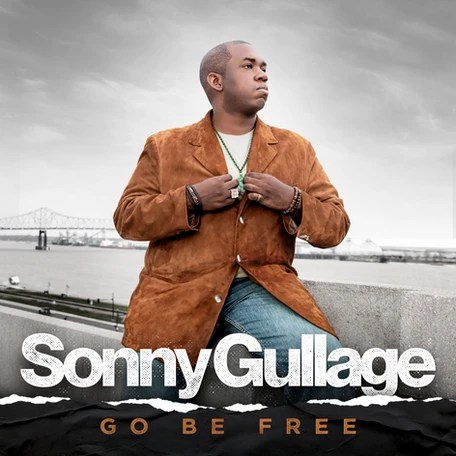
Roadhouse Album Review: Sonny Gullage lives the blues on his debut, “Go Be Free”

Sonny Gullage — “Go Be Free” — Blind Pig Records (Aug. 23 release)

Keepers of the blues flame sometimes just seem to keep disappearing. Then someone like 25-year-old Sonny Gullage comes along, with a little help from an equally 25-year-old Christopher “Kingfish” Ingram, and just like that, the blues flame gets turned up a notch.

“Go Be Free” is Gullage’s debut album, a 12-song collection from the New Orleans native, showing off his considerable songwriting and keyboard skills. Also know that this impressive first effort was produced by the bluesily (well, that should be a word!) omniscient Tom Hambridge.

On a related optimistic musical note, this release helps mark the revival of the Blind Pig record label, originally launched in 1977, and which quickly became one of the best blues and roots labels in the known universe. Welcome back!

The basic message of this exuberant note-perfect album comes in its title song, with a reference to his family’s role in his musical sensibilities. The title track opens with the kind of stomping beat you’d hear in a Southern church. Accompanied by a propulsive groove, Sonny sings: I remember back when I was young/Daddy called me said, “Come here my son”/He said, “If you want to be like me/You gotta learn to keep your mind at ease”/Said, “Go be free.” The song swells with a euphoric feeling that’s equal parts gospel salvation and blues-based self-realization.

The opener is a gorgeous little exercise in funkiness — “Just Kiss Me Baby” — extremely listenable and quite danceable. Just the right beginning for this thoroughly enjoyable first album.

The title track opens with an urgent hand-clapping beat and a moaning backup chorus filled with elation that drives hard as Gullage explains: “I remember back when I was young / Daddy called me said, “Come here my son” / He said, “If you want to be like me / You gotta learn to keep your mind at ease” / Said, “Go be free.” 

“Things I Can’t Control” keeps the beat throbbing behind a strong message of focusing on what you can change, not what you can’t control. “Separate Ways” is a delicate lost-love ballad with a beat. “Worried About the Young” means what it says, as Gullage is joined by Ingram providing a fiery guitar background. The fact that they’re both relative youngsters themselves (at 25) adds a note of urgency.

“Blues All Over You” is tough Chicago-blues with piano that’s equally tough and tasty. Lessons from his grandfather shine in the gentle rhythms of “I’ve Been There.” Rollicking boogie-woogie piano pushes “Stop That Stuff” to a higher level of pure joy, then shifts back to the steamy blues of “Tattooed Wings,” before entering the “Hot House” with stark rhythmic feeling. “File It Under Blues” is an upbeat ending to a relationship, as he’s “gonna close this case of love and file it under blues.”

The fitting close is the plaintive ballad, “Home to You,” a tender spot of soulful longing that highlights yet another aspect of Gullage’s exceptional talents.

“Go Be Free” is an album overflowing with the multiple talents of Kevin “Sonny” Gullage. The songwriting is smart and bright. The music is deliciously inspired. The vocals reflect a maturity of an old blues soul.

Gullage describes his music thoughtfully: “It was almost a revelation when I discovered I could sing the blues — it just flowed out of me — and I realized that’s how I wanted to connect with people,” he says. “When I sing, I don’t sing for people to understand me, I sing for people to understand themselves.”

If that sentiment, and this album, is not at the heart and soul of the blues, nothing is.


Here’s an interesting interview with Sonny Gullage by Michael Limnios at blues.gr.


Here’s “Go Be Free” from the album:

Track list & credits:

1. Just Kiss Me, Baby (Sonny Gullage, Tom Hambridge)
2. Go Be Free (Sonny Gullage, Tom Hambridge)
3. Things I Can’t Control (Jeff Schroedl, Tom Hambridge)
4. Separate Ways (Sonny Gullage, Tom Hambridge, Richard Fleming)
5. Worried About the Young (feat. Christone “Kingfish” Ingram) (Sonny Gullage, Tom Hambridge, Richard Fleming)
6. Blues All Over You (Sonny Gullage, Tom Hambridge, Richard Fleming)
7. I’ve Been There (Sonny Gullage, Tom Hambridge, Richard Fleming)
8. Stop That Stuff (Tom Hambridge, Richard Fleming)
9. Tattooed Wings (Sonny Gullage, Tom Hambridge)
10. Hot House (Sonny Gullage, Tom Hambridge)
11. File It Under Blues (Sonny Gullage, Tom Hambridge, Richard Fleming)
12. Home to You (Sonny Gullage, Tom Hambridge)

SONNY GULLAGE  vocals/piano
TOM HAMBRIDGE drums/background vocals/percussion
KENNY GREENBERG  guitar
KEVIN MCKENDREE piano/keyboards 
ROB CURETON  bass on tracks 1, 2, 4, 5, 7 &10
TOMMY MACDONALD  bass on tracks 3, 6, 8, 9, 11 & 12
Christone “Kingfish” Ingram guitar on “Worried About the Young”
Max Abrams saxophone and Julio Diaz trumpet on tracks 3 and 12

Roadhouse Album Review: Chris Daniels & the Kings offer up a rousing “Blues with Horns Volume II”

Chris Daniels and The Kings — “Blues with Horns Volume II” — Moon Voyage Records (Independent)

In the liner notes of their effervescent new album, “40 – Blues with Horns Volume II,” by Chris Daniels and the Kings, Daniels describes Louis Armstrong’s brilliant 1928 recording of “West End Blues” as the beginning of an era of “horn-band sound.”

The King’s 20th album on their 40th anniversary proves that their magnificent big-band sound is still keeping that era alive.

The Colorado-based Kings have been pumping out music since their 1984 founding by Daniels, with the band membership shape-shifting along the way. The Kings of this album are: Chris Daniels, vocals, electric, acoustic, slide and synth guitars; Freddi Gowdy, vocals; Steve Ivey, drums; John Thornburg, bass and vocals; Colin “Bones” Jones, guitars; Bob Rebholz, alto sax and flute; Darryl “Doody“ Abrahamson, trumpet and vocals; Darren Kramer, trombone. Daniels and Gowdy share the vocals on every track.

Guests adding their talents throughout include Christian Teele, percussion; Mark Oblinger and Linda Lawson, vocals with Robert Johnson and Kenny Andrus; Sam Bush, mandolin and fiddle; Hazel Miller, vocals; Tom Capek, B3 and keyboards; Steve Conn, accordion, B3; and Sonny Landreth, slide guitar.

The multi-award-winning Kings have toured with Albert King, James Taylor, Tom Jones, Al Kooper, David Bromberg and many more, and backed everybody from bluesy Bonnie Raitt to rocking Bo Diddly. The band plays good old-fashioned jump blues with joyous emotion, horns that blaze through ten tracks on this musical romp, and Daniels and Gowdy sharing vocal duties on each one.

It’s fitting, then, that this exuberant session opens with horns blasting into the lively “Jump,” with Daniels and Gowdy on vocals – “Now my baby says jump, jump, jump / And I’ll say how high, high, high you want me to / Jump, jump, jump,” with a swinging Sam Bush fiddle. Background vocals from Miller, Oblinger, Lawson, Johnson and Andrus behind Daniels and Gowdy help put the funk in the highly danceable Gowdy original, “I Like Funky Music” – “I like funky music / Something about the beat / Come on grab your partner now / This music will move your feet.”

The Daniels original “Everybody’s a Millionaire” snaps to life behind lively percussion and sharp horns with its message: “Everybody’s a millionaire / It’s what’s inside, what you can share.” Pulsing rhythms highlight an urgent bid for better times in “I Need Some Good Luck Bad” with the plea: “Sister fortune won’t you smile on me / I’m as ready as a man can be.”

As if you need to be reminded of the album’s purpose, Gowdy’s “Dance, Dance, Dance” steps out: “When I hear that rock and soul music / I want to dance, dance, dance, dance.” Sonny Landreth adds fierce slide guitar to a song he co-wrote, “Congo Square,” where “It might be superstition, but some kind of somethin’ / Goin’ on down there / It’s an old time tradition when they play their drums at night / In Congo Square.”

The gently swinging “Stealin’ Candy” slows the pace with a lilting guitar intro followed by the sweet lyrical vibe of “Stealin’ candy / From my baby / You know it’s easy as can be / And it’s always so delicious / The way she steals it back from me.” Landreth takes another turn in the whimsical “I Like Your Shoes,” co-written by Gowdy – “Now there is no need to go out and plead in the parking lot / No 2 a.m. last ditch routines / You just compliment your partner on those fine-looking shoes.”

“Under Pressure,” also co-written by Gowdy, adds some social commentary to a throbbing beat: “Tryin’ to be the man you are / You know that just can’t be / Systems got you all tied down / Why can’t they let us be free.” The joyous, foot-tapping shuffle “When You’re Cool (The Sun Shines All the Time),” wraps everything up in a blanket of sassy horns and smart lyrics: “You can shuffle right through that rainstorm / Don’t you pay it no never mind / It’s got a lot to do with the attitude / Of leaving your blues behind / When you’re cool, boy, the sun shines all the time.”

Chris Daniels says of his music: “Our goal from the start was to bring the incredible energy of ‘call-and-response’ between a singer and the horn section to a new audience….”

Forty years later, the Kings are still bringing that incredible energy!


“Jump” from the album:

Tracklist:

  1. Everybody’s a Millionaire
  2. I Need Some Good Luck Bad
  3. Dance Dance Dance
  4. Congo Square
  5. Stealin’ Candy
  6. I Like Your Shoes
  7. Under Pressure
  8. When You’re Cool (the Sun Shines All the Time)

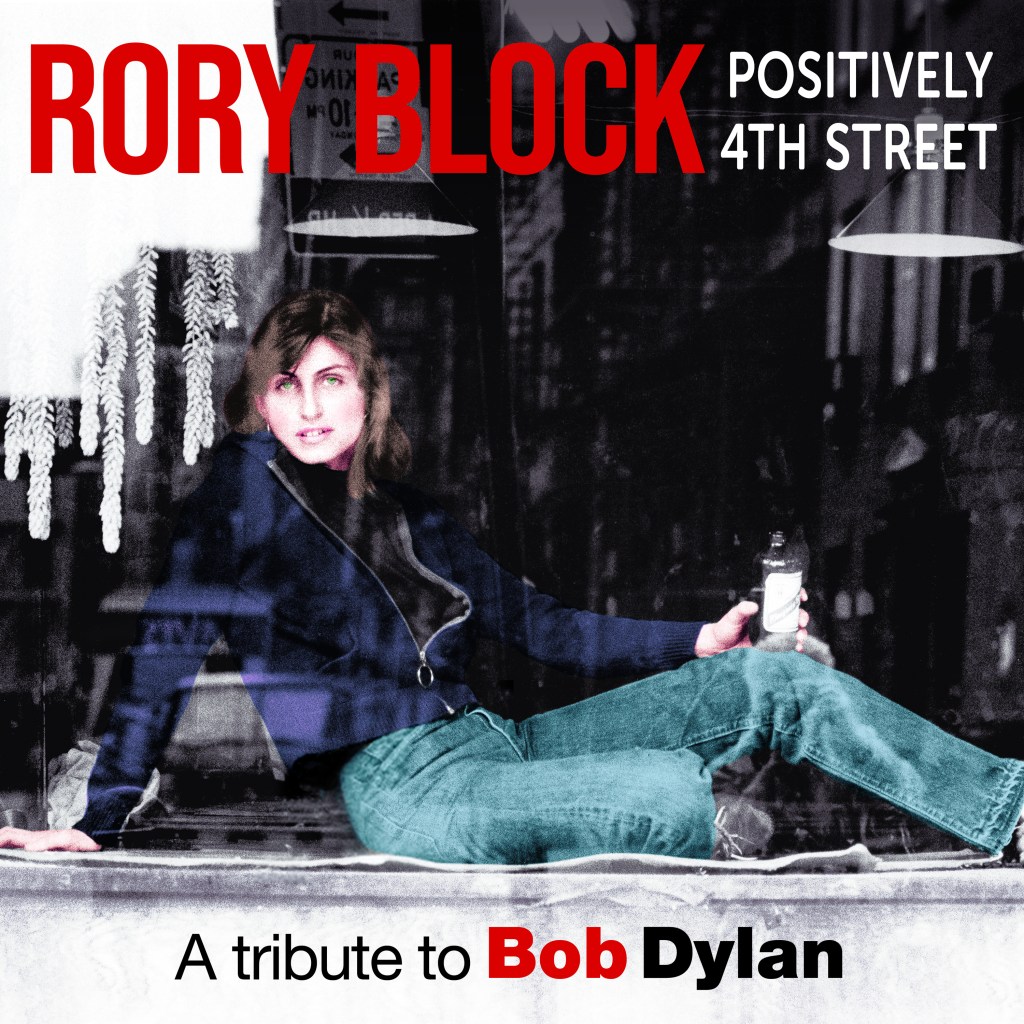
Roadhouse Album Review: Rory Block positively excellent on Dylan-centric “Positively 4th Street”

Rory Block — “Positively 4th Street – A Tribute to Bob Dylan.” — Stony Plain Records

I put off writing about this album for a while. It’s not really blues, I thought, which is my primary focus. It’s just another tribute album, I thought — wrongly, as it turns out. But then, Rory Block is the premier acoustic interpreter of classic blues. And she’s singing Bob Dylan, who was nothing if not the poet laureate of his (and my) generation, and who was inspired by great American folk and blues music — Americana, if you like.

And then I listened again, and more closely. While this IS a tribute album — it says so right on the cover — it’s a damn fine tribute by an artist as accomplished in her field as Dylan is in his. She is, after all, a seven-time Blues Music Award-winning artist, and even that doesn’t do justice to her prolific and masterful career.

But it’s much more than a just a tribute. It’s Rory Block doing what she does best: She’s absorbing the material and recreating it in her own image, with her own inimitable acoustic guitar style. And she has chosen songs that reflect the broad, deep scope of Dylan’s music, not just his greatest hits, or his songs that lean into the blues. Block says that she was choosing tunes that “touched her heart and soul.”

Those songs that moved her are: “Like A Rolling Stone,” “Positively 4th St.,” “A Hard Rain’s Gonna Fall,” “Everything Is Broken,” “Ring Them Bells.” “Not Dark Yet,” “Mother of Muses” and “Murder Most Foul.” They’re songs that span Dylan’s immense body of work, from his early years to his most recent album.

It’s fair to say Block’s vision of Dylan has been informed by their shared environment: Block grew up in Greenwich Village during the early 1960s, where her father was a country fiddle player and owner of a sandal shop just a few doors from where Dylan lived, and her mother was a folk singer. Dylan was still a hopeful young folk singer, and a younger Block was just growing into her teens, absorbing the musical energy of the local musicians who would gather in her dad’s shop.

Here’s how Block describes some of that era in the liner notes:

“To me, Bob Dylan seemed almost like family—a brilliant brother who made it to the top. In the cover photo, taken in the late 1960’s, I am seated in the window of the Allan Block Sandal Shop, 171West 4th Street. The reflection in the glass is a reverse image of Jones Street, where Bob Dylan and Suze Rotolo were photographed for the cover of “The Freewheelin’ Bob Dylan.” They were walking down the middle of the street directly towards the front of the sandal shop….” The photo, she notes, is by the gifted folk and rock photographer David Gahr.

Block’s interpretations here are acoustic and precisely spare, with none of the full band impact of most of the originals. But that spareness, and her unique guitar virtuosity, serves to accentuate her strong vocals, which always lend passion and power to her work. That quality serves her well here, since Dylan’s work has always seemed to be his attempt to find music that matched the power of his magical lyrical imagery.

Block opens with a gritty vocal turn on “Everything is Broken,” a sly Dylan rocker from his 1989 album “Oh Mercy.” It’s lyrically sassy and musically swinging. “Ring Them Bells” comes from the same album, more of a hymn-like dirge that Block leans into with an elegant passion.

The classic “Like A Rolling Stone” follows, a 1965 single that helped Dylan define himself. Its tangled up in blue history is worth a digression here, so bear with me for a few paragraphs, and a little Dylanology here and there (It’s my blog, after all!).

Dylan talked about the song in a 1966 Playboy interview:

“Last spring, I guess I was going to quit singing. I was very drained, and the way things were going, it was a very draggy situation … But ‘Like a Rolling Stone’ changed it all. I mean it was something that I myself could dig. It’s very tiring having other people tell you how much they dig you if you yourself don’t dig you.”

Dylan described the song’s origins to journalist Jules Siegel, thusly:

“It was ten pages long. It wasn’t called anything, just a rhythm thing on paper all about my steady hatred directed at some point that was honest. In the end it wasn’t hatred, it was telling someone something they didn’t know, telling them they were lucky. Revenge, that’s a better word. I had never thought of it as a song, until one day I was at the piano, and on the paper it was singing, “How does it feel?” in a slow-motion pace, in the utmost of slow motion following something.”

The complete recording sessions that produced “Like a Rolling Stone”, including all 20 takes and the individual “stems” that comprise the four-track master, were released in 2015 on the 6-disc and 18-disc versions of “The Bootleg Series Vol. 12: The Cutting Edge 1965–1966.”

It was an epic song; an early masterpiece that helped define Dylan and his audience. Block engages “Rolling Stone” with heart and soul, and despite the lack of the album’s rock background and Al Kooper’s (improvised) rolling Hammond intro, she powers along with her rousing version.

Block gives a spare and haunting reading to the darkness of the ballad, “Not Dark Yet,” from 1997’s “Time Out of Mind,” featuring Cindy Cashdollar’s elegant baritone guitar solo (she’s the only artist besides Block to appear here).  Block delivers a folksy vibe to the extremely well-covered and criminally popular “Mr. Tambourine Man,” from the acoustic side of his 1965 album “Bring It All Back Home.”

One of the best covers here is the title track. Block distills the rock treatment of “Positively 4th Street” into a stark vocal, not unlike Dylan’s, recorded in 1965 for the album “Highway 61 Revisited.”  She follows that with another one of her best, and one of my favorite Dylan songs, “A Hard Rain’s A-Gonna Fall,” recorded in 1962 for his second studio album, “The Freewheelin” Bob Dylan in1963. It’s filled with the symbolic imagery that characterizes so much of Dylan’s great work.

“Mother of Muses” was an acoustic poem from the 2020 album, “Rough and Rowdy Ways,” and Block shifts from Dylan’s gruff rendering to a effective vocal in a higher register. The song offers a paean to Mnemosyne the goddess of memory in Greek mythology, who gave birth to the nine Muses, (the inspirational goddesses of literature, science and the arts). It’s a profound and reverential reading.

The closer is the epic “Murder Most Foul,” the final track on “Rough and Rowdy Ways.” It’s a musical adventure in imagery and wordplay that revolves around the assassination of President John F. Kennedy, with a multitude of political and cultural references. Block’s somber reading is stark and effective, despite her 20+ minute version of the original, a nearly 17-minute opus. In a statement released with the single, Dylan indicated that “Murder Most Foul” was a gift to fans for their support and loyalty over the years.

Rory Block has a uniquely powerful body of work in her own right. She’s the premier acoustic blues artist performing today. “Positively 4th Street” adds an impressive new dimension to her work, covering the premier singer-songwriter of our era. That musical combination demands your attention — and your appreciation.


Don Wilcock, writing in the American Blues Scene, has an insightful conversation with Rory Block about this album. Read it here.


“Ring Them Bells” from the album:

Tracklist:
01 – Everything Is Broken
02 – Ring Them Bells
03 – Like A Rolling Stone
04 – Not Dark Yet
05 – Hey Mr. Tambourine Man
06 – Positively 4th Street
07 – A Hard Rain’s A- Gonna Fall
08 – Mother of Muses
09 – Murder Most Foul

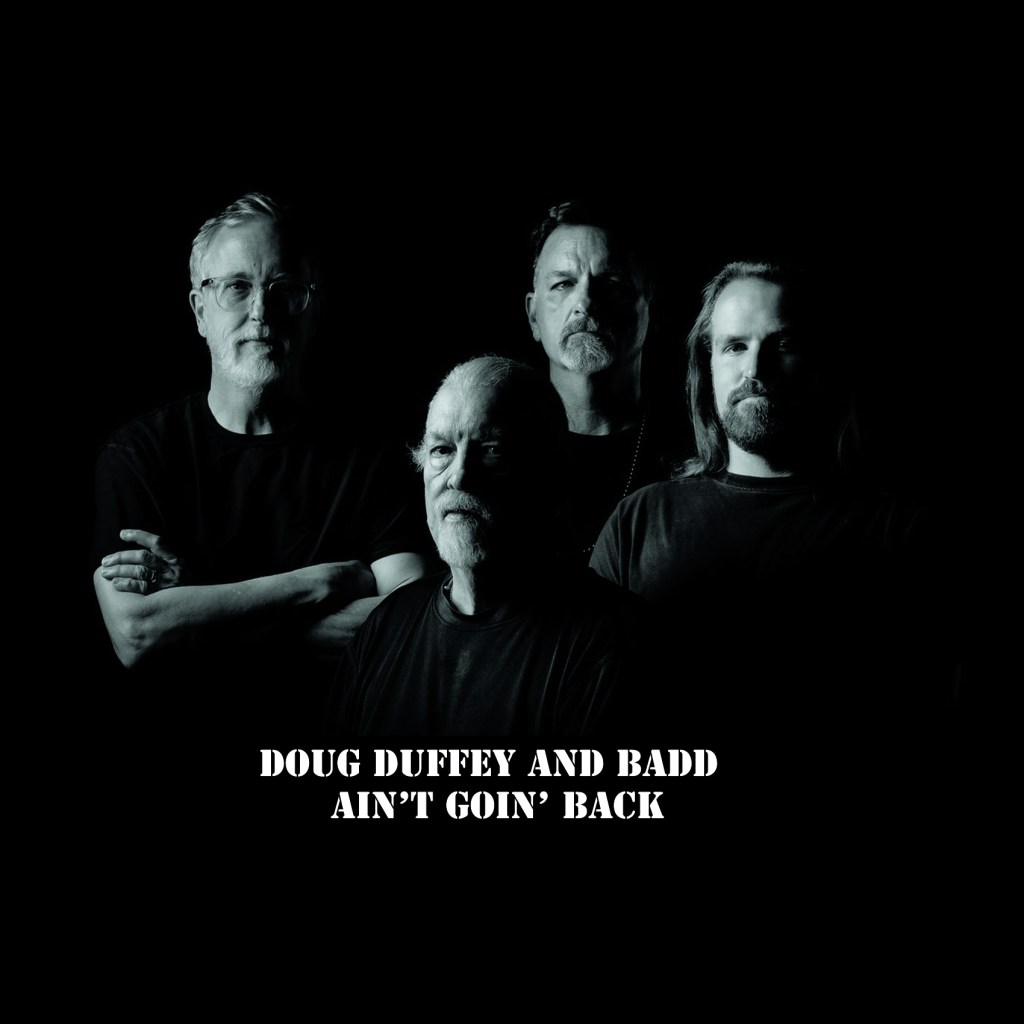
Roadhouse Album Review: Doug Duffey’s splendid “Ain’t Goin’ Back” does go back — to his musical roots

Doug Duffey — “Ain’t Goin’ Back” — Independent

The blues is a rich and primal music, deeply rooted in the swampy soils of the Mississippi Delta and the musical souls of artists like Louisiana native and musical institution Doug Duffey.

Duffey has been mining this musical vein for more than half a century with his singing, songwriting and keyboard work, starting professionally at age 14. He’s carried this soulful gumbo from New Orleans to the rest of the world with national and international performances. Duffey has created his music long enough and powerfully enough to be enshrined in the National Blues and Louisiana Halls of Fame, and the Northeast Louisiana Music Hall of Fame. In short, to paraphrase Willie Dixon, Duffey has dug the roots, and we harvest the sweet fruits.

Now Duffey has dug deep into his traditions for the riches of his latest album, “Ain’t Goin’ Back,” a celebration of his music with his band, BADD (a title carved from the first initials of band members’ first names). BADD includes Duffey on vocals and keyboards; Dan Sumner on guitars and electric and acoustic bass, percussion, vocals and trumpet; Adam Ryland on drums and Ben Ford on bass. A few talented players complete this lineup: Dave P. Moore on harp, Jonathan Patterson on trombone and Bert Windham on trumpet. Duffey and Sumner co-produced.

“Aint Goin’ Back” is tightly packed with eleven bitingly concise and lyrically gorgeous originals from Duffey and Sumner, capturing a range of styles coaxed from the timeless mists of the blues. “Whirlpool” sets the tone for the session, opening with a lonesome guitar, a solid backbeat and ethereal harp leading into Duffey’s deep blue tale of a troubled mind: “I said my mind be like a whirlpool, thoughts be swimmin’ round and round / and I ain’t gone find no peace until I’m on solid ground.”

“You’ve Got What it Takes” slinks along next behind a tough musical backing and carries a straightforward message: “You got what it takes to take everything I got.” The delicate strains of “The Wishing Game” introduce a melancholy tale of unrealized love told with elegant lyricism – “If wishes were horses … beggars could ride away from the wishing game.”

“Rock It All Night” rocks hard as it steps up the pace with the promise of good times: “Well the joint is burnin’ like a house on fire / yeah the joint is jumpin’ and ain’t nobody tired / cause the joint is swinging.”

“Front Porch Blues” conjures a moody blues image of the finality of a solitary existence: “I said I’m just sittin’ here in my ole rockin’ chair / you know I hear a train in the distance but I ain’t goin’ nowhere.” Another fatalistic message about lost love drifts along in the lilting “Get ‘er Outa Yo Head” – “You got to get a grip, and get her outa yo head / if you don’t end this bad trip, you gonna find yourself dead.”

The driving rhythms of “No Mercy” add a feral intensity to his mistreatment: “No mercy, no mercy for me / yeah you’se as hard-hearted as a body can be.” The gentle folksy balladry of “Turn It Around” offers a hopeful note: “Got to make some changes, got to make some plans / got to rearrange everything on hand.”

The heartfelt poetry of “Promised Land” suggests a yearning for something not quite known: “Yeah I’m sittin’ outside the station, an open ticket in my handI / got no real destination, goin’ lookin’ for the promised land.” The title of “Gallus Pole” hints at a traditional song, lost in time, when the phrase was ominously “gallows pole.” Duffey’s take is similarly foreboding — “Well I mortgaged my soul for rock and roll / now the payment is overdue. / Well, ain’t got no silver, I ain’t got no gold / next they’ll be had me down to the gallus pole.”

The title track and closer, “Ain’t Goin’ Back,” is another gentle lyrical gem with a delicate harp tapestry woven throughout as a counterpoint to its finality: ‘Well, I ain’t going back not even in chains / to that two room shack full of torture and pain.”

And just as the words “Ain’t Goin’ Back” suggest, Doug Duffey’s prescient music carries him forward through the shrouded mists where his music lives, into this smartly written album filled with the eternal truths of the blues.


BADD member Dan Sumner was kind enough to send along the first video from “Ain’t Goin’ Back,” a live version of the opening track, “Whirlpool.” I’ll leave the earlier, older video below that one.

TRACKLIST
1.Whirlpool 5:32
2.You Got What it Takes 5:06
3.The Wishing Game 6:09
4.Rock it All Night 3:38
5.Front Porch Blues 5:05
6.Get‘ Er Outa Yo Head 3:59
7.Turn it Around 4:36
8.No Mercy 3:38
9.Promised Land 4:59
10.Gallus Pole 3:20
11.Ain’t Goin Back 4:53