The Blues Foundation has announced its inductees for the 2025 class of the Blues Hall of Fame.
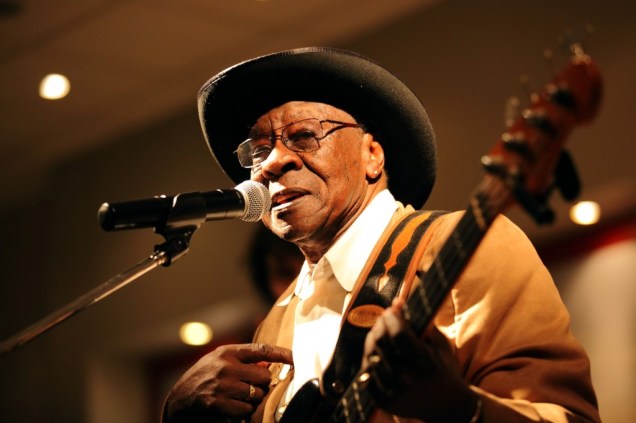
Since 1980, The Blues Foundation has inducted new members annually into its Blues Hall of Fame, based on their historical contribution, impact, and overall influence on the blues, or, as the Foundation states: “Those who have made the blues timeless.”
Members are inducted in five categories: Performers, Individuals, Classic of Blues Literature, Classic of Blues Recording (Song), and Classic of Blues Recording (Album). Since its founding, the Foundation has inducted over four hundred industry professionals, recordings, and literature into the Blues Hall of Fame. The Foundation has inducted over 400 industry professionals, recordings, and literature into the Hall of Fame.
The Blues Hall Of Fame Class Of 2025 inductees include Bob Stroger, William Bell, Blind Willie Johnson, Henry Townsend, and Jessie Mae Hemphill.
Entering the Hall for Classic of Blues Recording – Album is Lightnin’ Hopkins, for the Gold Star Sessions. Classic of Blues Recording – Singles recipients include Irma Thomas, Sylvester Weaver, Bessie Smith, Blind Lemon Jefferson, and B.B. King. For Classic of Blues Literature its Woman With Guitar: Memphis Minnie’s Blues. Individuals – Business/Production/Media/Academic honors go to Bob Geddins.
The Blues Foundation honors The Blues Hall Of Fame Class Of 2025 (45th class) with an Induction Ceremony taking place May 7, 2025, at the Cannon Center For The Performing Arts, Memphis, the night before the annual Blues Music Awards.
This year the inductees include:
Landmark recordings by:
Lightnin’ Hopkins, Irma Thomas, Sylvester Weaver, Bessie Smith, Blind Lemon Jefferson, and B.B. King
Individuals – Business, Production, Media, Academic:
Bob Geddins
Classic of Blues Literature:
Woman with Guitar: Memphis Minnie’s Blues by Beth and Paul Garon (1992)
Classic of Blues Literature:
Woman with Guitar: Memphis Minnie’s Blues by Beth and Paul Garon (1992)
Classic of Blues Recording – Album:
Lightnin’ Hopkins: Gold Star Sessions (Arhoolie CDs, 1990-91, originally released on Arhoolie LPs as Early Recordings, 1963, and Early Recordings Vol 2, 1971)
Classics of Blues Recording – Single or Album Track
Bessie Smith: “Nobody Knows You When You’re Down And Out” (Columbia, 1923)
Sylvester Weaver: “Guitar Rag” (OKeh, 1923)
Irma Thomas: “Don’t Mess With My Man” (Ron, 1959)
B.B. King: “Why I Sing The Blues” (ABC BluesWay, 1969)
Blind Lemon Jefferson: “See That My Grave’s Kept Clean” (Paramount, 1927)
| More Information: Bob Geddins: Robert Lee Geddins was born on February 6, 1913, in Highbank, Texas, near Marlin (the onetime home of fellow 2025 Blues Hall of Fame inductee Blind Willie Johnson). He had heard the blues on records and at Saturday night suppers before he hopped a westbound train in the 1930s. He saw an opportunity to market music in the Bay Area after starting out in Los Angeles, where he worked at a drug store and for the city’s streets department before opening a record store. Bob Geddins produced a treasure trove of records that defined the down-home blues and gospel sounds of the San Francisco/Oakland area in the post-World War II years. While West Coast blues is often associated with smoother, polished urban styles, Geddins’ most memorable records often were raw excursions into desolation and gloom — “Tin Pan Alley” by Roy Hawkins being a prime example. His productions reflected the influences and tastes of many Black workers and musicians who migrated to the Bay Area for jobs during and after the war from Texas, Oklahoma, Arkansas, and Louisiana. Most of Lowell Fulson’s early records were cut for Geddins, who also recorded Jimmy McCracklin, Roy Hawkins, K.C. Douglas, Johnny Fuller, L.C. “Good Rockin’” Robinson, Mercy Dee Walton, Juke Boy Bonner, Saunders King, Sugar Pie DeSanto, Big Mama Thornton, and many gospel groups. The records often spotlighted the guitar exploits of Lafayette Thomas, Ulysses James, or Johnny Heartsman. Woman with Guitar: Memphis Minnie’s Blues by Beth and Paul Garon (1992) Paul and Beth Garon saluted Memphis Minnie’s iconic status as a premier blues artist and symbolic feminist figure in the initial publication of “Woman With Guitar: Memphis Minnie’s Blues” in 1992 by Da Capo Press. A revised edition from City Lights Books in 2014 added considerably to the chapters on her life and career that begin the book, with a foreword by Jim O’Neal and more detailed appendices and documentation based largely on various contributors’ online research into sources not available in 1992. The biographical section brought research up to date on Lizzie Douglas, whose nom du disque became Memphis Minnie when she began recording in 1929. Often teamed with her first husband, Kansas Joe McCoy, or her second, Ernest “Little Son Joe” Lawlars, in Memphis and Chicago, she became one of the most prolific and accomplished blues artists of the 1930s and ‘40s. Famed both for her skills on guitar and her song lyrics, she was a tough, pugnacious, and independent force who held her own in the very male-dominated blues world of her time. Lightnin’ Hopkins: Gold Star Sessions (Arhoolie CDs, 1990-91, originally released on Arhoolie LPs as Early Recordings, 1963, and Early Recordings Vol 2, 1971) Lightnin’ Hopkins was recording at a furious pace for various companies in the early 1960s, utilizing his uncanny ability to improvise new songs and adapt old ones on the spot. He had no bigger fan than Chris Strachwitz, owner of Arhoolie Records, who joined the fray, not only recording Hopkins anew but reissuing classic sides recorded for Bill Quinn’s Gold Star label in Houston from 1947 to 1950. Most of the sides, featuring Hopkins alone on guitar, were first issued on Gold Star 78s but several tracks on the 1963 “Early Recordings” LP and the second 1971 volume had never been released before. Hopkins also took a seat at the organ in one session. Each volume contained 16 tracks, expanded to 24 when later issued on CD (now available from Smithsonian Folkways). Strachwitz’s liner notes illuminated Hopkins’ music and his ways, which included going to Quinn’s studio to cut a few sides when he needed cash. |
| Bessie Smith: “Nobody Knows You When You’re Down And Out” (Columbia, 1923) Blues empress Bessie Smith delivered one of her finest, most expressive performances on “Nobody Knows You When You’re Down and Out,” a classic hard times blues recorded for Columbia in New York on May 15, 1929. Smith evocatively hummed some of the lines with a band including cornetist Ed Allen and pianist Clarence Williams. The song had been recorded earlier by Pine Top Smith and Bobby Leecan, but it was Smith’s rendition that became an influential classic. Sylvester Weaver: “Guitar Rag” (OKeh, 1923) Sylvester Weaver was the Louisville musician who introduced the guitar to blues recording in 1923, first accompanying singer Sara Martin and then on his own solo sides, promoted with a flurry of fanfare about his innovative technique from OKeh Records. He recorded “Guitar Rag” at his first session on November 2, 1923, and again on April 1, 1927, for OKeh in Chicago. Martin received a co-writer credit. The smooth bottleneck/slide number has lived on as a Western swing and country music standard, “Steel Guitar Rag,” after Bob Wills & the Texas Playboys recorded it in 1936 with Leon McAuliffe on steel guitar. Irma Thomas: “Don’t Mess With My Man” (Ron, 1959) “Don’t Mess With My Man,” Irma Thomas’ first record, hit the “Billboard” R&B charts in 1960 and not only established her but also provided plenty of women singers with a song to spice up their repertoire in the years to come. Recorded in 1959 for Joe Ruffino and Ron Records in New Orleans, the song was written by Dorothy LaBostrie, who wrote “Tutti Frutti” for Little Richard. Crescent City stalwarts Justin Adams, Robert Parker, and Eddie Bo played in the session. The song has been recorded also known by its opening line, “You Can Have My Husband.” B.B. King: “Why I Sing The Blues” (ABC BluesWay, 1969) Under the production of Bill Szymczyk, B.B. King updated his blues in both style and subject matter on his March 5, 1969, rendering of “Why I Sing the Blues.” In the pulsating performance, propelled by Gerry Jemmott’s bass, King traced the blues and African-American life back to slave ships and up through ghetto conditions and welfare. Dave Clark, better known for his promotional work with Malaco and other labels but a veteran journalist and songwriter as well, contributed to the opus as co-writer. The New York session band consisted of Jemmott, Paul Harris (piano), Hugh McCracken (rhythm guitar), and Herbie Lovelle (drums). King had recorded an unreleased version in Chicago in 1968 and did a different song with the same title in Los Angeles in 1956. His ABC BluesWay single spent 14 weeks on the “Billboard” R&B charts (15 on “Cash Box”) and generated some crossover pop action as well. The version of King’s “Live & Well” was five minutes longer than the three-and-a-half-minute 45 and featured additional verses and guitar solos by an inspired king of the blues. Blind Lemon Jefferson: “See That My Grave’s Kept Clean” (Paramount, 1927) Blind Lemon Jefferson recorded “See That My Grave’s Kept Clean” for Paramount in Chicago in 1928, following up an earlier version that was issued under a religious pseudonym, Deacon L.J. Bates, 1927 “See That My Grave’s Kept Clean.” His moving performances affected both the secular and the sacred worlds for generations to come. Adding to the lyrical imagery of two white horses, a silver spade, and a golden chain, on one take the Texas blues master plucked a guitar string in imitation of a church bell. Sometimes titled “One Kind Favor,” the song drew from an old folk spiritual and has been recorded by Bob Dylan, Lightnin’ Hopkins, Furry Lewis, Hank Williams Jr., B.B. King, the Grateful Dead, John Lee Hooker, Mavis Staples (who won a GRAMMY for her rendition), and many more. In keeping with the favor Jefferson asked in the song, his grave is kept clean in Wortham, Texas. The first verse is engraved on his headstone and the graveyard is now known as Blind Lemon Memorial Cemetery. B.B. King felt so connected to the song that, per his wishes, his casket was drawn by two white horses. |
 Blues Roadhouse