Roadhouse Album Review: Lil’ Red & the Rooster create joyous music with “7”

Lil’ Red & the Rooster — “7” — Lil’ Red Records
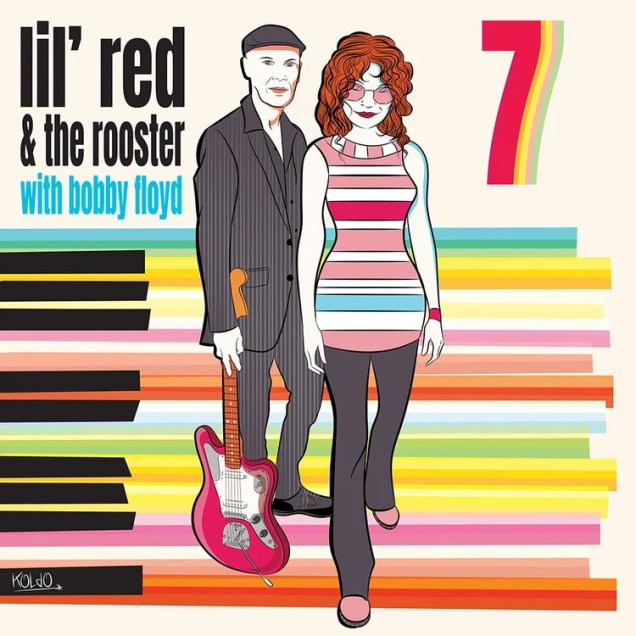
Somewhere in time and space (the last couple of years, anyway), I picked up on the seriously delightful music of Lil’ Red and the Rooster — Jen Milligan (Lil’ Red) and Pascal Fouquet (Rooster). Now it’s time to share that experience, with the release of their latest album, “7.”

Lil’ Red and the Rooster are a happy international union of Milligan (Columbus, Ohio), and Fouquet (France), and a delicious blend of their considerable musical talents.

That blend combines blues, soul, jazz and gospel with smart, thematic songwriting — or as Milligan has described it: “Mix what’s pissing you off with some bounce and swing, sprinkle a pinch of blue notes and bend it all together on six strings and you’re guaranteed a feel-good satisfaction.” 

And there’s a big bunch of satisfaction in the seven original songs here. The music swings easily, bending genres and strings behind Milligan’s sweet, sassy and sultry vocals, floating on her sharp and sensitive lyrics. Fouquet’s guitar work is a masterwork of nuance, never overpowering, making elegant statements, always saying more with less — a talent that seems sadly overlooked these days. Grammy-nominee Bobby Floyd’s finely tuned piano and B3 work complete this joyous ensemble.

The additional cast behind all this effervescent music includes what they describe as their “Parisian rhythm section” — Jean-Marc Despeignes on bass and Pascal Mucci on drums, plus Jeff Morrow (Empire) as Mr. Saboteur, The Governor on bongos, Colin John on lap steel guitar, Bobbi Townes on vocals & tambourine, with Quan Howell and Kara Brooks on vocals. One of the album’s strong points is its fresh, vital sound, having been recorded live in the studio. Everybody sounds like they’re enjoying themselves, and that openness shines through.

The opening track is the magnificently conceived, gospel-drenched optimism of “Wild’s Rising,“ with its rollicking spirituality driven hard by Milligan’s vocals and backup choral tapestry preaching personal freedom. Fouquet’s guitar solo is inspired and inspiring. “Stack ‘Em Up Baby” is a lilting jazz tune with Fouquet’s lyrical guitar and Floyd’s tasty piano filigrees embellishing Milligan’s satin-smooth vocals — all with a smoky late-night club vibe.

“Is This Heart Taken” is a sultry love song with a funky blues flair that allows the group to stretch out midway. The “Melancholy Mood” sounds just like its title; it’s introduced with a gorgeously extended Fouquet solo, punctuated by a rolling B3 solo that drives away with the blues.

The instrumental “Midnight On the Rocks” delivers another gently swinging melody as Fouquet and Floyd play off each other’s tasty grooves. Milligan delivers a delicate, jazzy “Between the Lines,” showing off her meticulous phrasing and delivery. “Mr. Saboteur (aka Do the Donut)” opens with layered Latin rhythm leading into a whimsical tale of swapping a donut addiction for other pleasures that might make your eyes glaze over.

The closer is a deep blue version of the Freddie King classic, “Same Old Blues,” with Milligan’s torchy vocal lamenting its pain and pleasure. Floyd’s piano solo is a highlight, followed by Fouquet’s mood-perfect guitar. It’s a heartfelt tribute that preserves the original while making it their own.

It’s fair to say that Lil’ Red and the Rooster are not exactly household names in today’s blues world, despite their worldwide travels and performances. But it’s very fair to say that they should be. Their consummate musicianship, coupled with their ability to bend new life and style into their music, should put them on everybody’s (I’m looking at you!) short list to hear and thoroughly enjoy.

“7” is simply a gorgeous album, filled with great music, created by these talented artists to deliver their eloquent message of freedom and self-empowerment. Milligan’s philosophy bears repeating: “Mix what’s pissing you off with some bounce and swing, sprinkle a pinch of blue notes and bend it all together on six strings and you’re guaranteed a feel-good satisfaction.” 

I’m feeling very satisfied!


Some closing notes: The CD versions of the album are only available at their live shows. Check their website for ordering a digital version, and just possibly scoring a CD, plus it’s available on all streaming platforms. The title? Not Mickey Mantle’s Number 7, as George Costanza demanded for a newborn’s name. Fouquet initially suggested it, but Milligan relates it to the dominant seventh chords that give blues its distinctive sound.


Here’s “Stack ‘Em Up Baby” from the album;

Tracklist:
1. Wild’s Rising 05:48
2. Stack ‘Em Up Baby 04:42
3. Is This Heart Taken 03:27
4. Melancholy Mood 06:34
5. Midnight On the Rocks 03:18
6. Between the Lines 05:47
7. Mr. Saboteur (aka Do the Donut) 03.48
8. Same Old Blues (Bonus track) 05.28

Musicians:
Jen “Lil’ Red” Milligan – vocals, washboard, claps
Pascal Fouquet – guitars
Bobby Floyd – B3 organ, piano, tambourine, claps
Jean-Marc Despeignes – bass
Pascal Mucci – drums
The Governor – percussion – Tracks 3, 5, 7
Colin John – lap steel guitar – Track 3
Jeff Morrow – vocals – Track 3
Bobbi Townes – vocals, tambourine, claps, – Track 1
Quan Howell – vocals – Track 1
Kara Brooks – vocals – Track 1
Producer – Lil’ Red, Lil’ Red Records
Vocal Arrangements – Bobby Floyd (Track 1), Jeff Morrow (Tracks 3 & Lil’ Red)
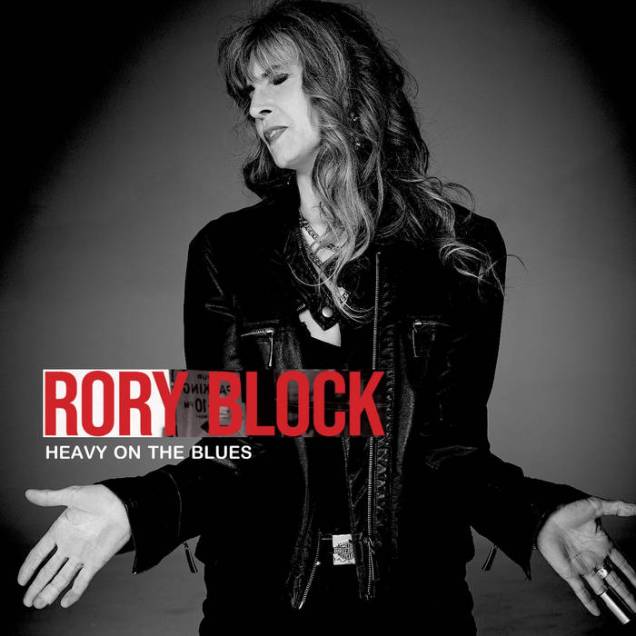
Roadhouse Album Review: Rory Block plugs into electric blues history with impressive “Heavy on the Blues”

Rory Block — “Heavy on the Blues” — M.C. Records

Rory Block — and her magnificent mastery of the country blues idiom — have long placed her in the elite tier of acoustic blues interpreters. But that description doesn’t begin to do her, or her massive recorded output, justice.

She’s paid faithful tribute to the male and female originators in dozens of excellent albums, won awards too countless to list, and performed relentlessly for years, after leaving home at 14 to track down the old blues masters and inhale their essence.

Not that she’s a cover artist. Far from it. Block has absorbed the music, the styles, the vocabulary, and filters it through her own sharply honed sensibilities, often creating new music with its roots deep in her own experience. Her music sounds as though it’s been ripped from the primeval mists that shroud the origins of this great American songbook; her vocals ethereal and haunting. All done while retaining the soulful, emotional integrity and raw beauty of the blues.

“Heavy on the Blues” is Block’s latest effort, and while it’s filled with her traditional soulful stylings, its emphasis is on the work of a handful of electric blues pioneers — Little Milton, Buddy Guy, Koko Taylor and a slice of Jimi Hendrix. This splendid session is filled with nine interpretations, plus one original, and features three great contemporary guitarists who bring extra life to the mix — Ronnie Earl, Jimmy Vivino, and Joanna Connor. The album still includes her powerful trademark acoustic work on several tracks.

I’m going to depart from my usual comments and instead, use Block’s words lifted from the liner notes to describe the songs, the singers and the reasons behind their selection. Her words are better than mine. However, the quotes I’ve used are only a fraction of what she writes, and those complete insights are easily worth the price of admission to her performance here.

“High Heel Sneakers” by Tommy Tucker
“This great little song is one of my all time favs. I think it suits my personality. I sing first about personal experiences — sometimes sorrow, loss and pain. But I can turn suddenly to lighthearted and silly. I love fun, and have a whacky sense of humor. You gotta laugh (just to keep from)…”

“Walking The Back Streets” by Little Milton, featuring Ronnie Earl on guitar
“My inspiration always begins with an overwhelming desire to sing a specific song — this one a killer blues song I first heard performed by Koko Taylor.”

“What Kind Of Woman Is This” by Buddy Guy, featuring Jimmy Vivino on guitar
“So deep, so cool, so slammin’! If it hits hard like this, if it rockets through to the core, it would be wrong not to record it.”

“Hold To His Hand” – Traditional
“I encountered great gospel music at the same time I heard early blues. It was simply the best singing I’d ever heard, pared with spiritual passion that could change a life.”

“The Wind Cries Mary” by Jimi Hendrix, featuring Joanna Connor on guitar
“Jimi Hendrix walked the streets of Greenwich Village when I was growing up — a stunning presence, handsome and incredibly charismatic. Walking past him meant trying not to stare for too long. He always dressed impressively — often brass buttons glinted on his jacket. Hendrix was part of the mystique of the times, the presence of musical greatness at a pivotal time.”

“Down The Dirt Road Blues” by Charley Patton
“Country Blues was my first love, an obsession that has lasted a lifetime. It will never leave me. Charley Patton exemplified the deepest possible soul and power. His music rocked my world. I can’t listen to Charley Patton without getting overwhelmed with emotion.”

“Mississippi Blues” by Willie Brown
“ ‘Mississippi Blues’ is one of the most stunning and beautiful Country Blues songs ever written. While I have recorded it several times before, it is deeply sentimental for me to record it again. It symbolizes the musical energy and inspiration of my formative years.”

“Me And My Chauffeur” by Memphis Minnie
“Memphis Minnie is one of the greats, a classic, and one of the most outstanding Country Blues guitar players as well. As usual the Country Blues women were outspoken and clear about just about everything.”

“Can’t Quit That Stuff” by Rory Block
“The guitar parts were initially inspired by Bukka White’s “Jitterbug Swing,” but then the lyrics veered off totally and the guitar parts were also altered by my rogue slide playing. I found myself telling the story of my backstage conversation with the great Hubert Sumlin, iconic guitar player for Howlin’ Wolf, Muddy Waters and others.”

“Stay Around A Little Longer” by Buddy Guy
“You know how it goes. You’re listening to music online and then one artist pops up front and center, and that’s how I came across “Stay Around A Little Longer.” BB King and Buddy Guy were sitting together trading lyrics and solos on this deeply moving song. I knew at once I had to record it. They say tomorrow is not promised, and as we all know you don’t have to be old to leave this world, which just underscores the beauty of being grateful for every minute. I resonate with this song because I can hardly believe I’m still here, and still making music. What a great gift, to be able to do what I love!”

The powerful statement of “Heavy on the Blues” is a compelling choice for Block, who is primarily an acoustic artist, but fits comfortably into this mixed groove. Her previous album, though, was also a departure — the elegant Bob Dylan tribute, “Positively Fourth Street.” Both show alternative sides of Block’s talent; both are ambitious and welcome additions to her already impressive body of work.

If you’re not already a Rory Block fan (although that’s hard to imagine!), consider this album a starting point for your exploration of her life’s work of breathing new life into this classic American music. Her depth of feeling and emotional commitment to her music is nothing short of extraordinary.


Here’s an older, live performance of “Mississippi Blues,” reprised on this album:

Tracklist:

  1. High Heel Sneakers
    3:33 | TOMMY TUCKER
  2. Walking The Back Streets W/Ronnie Earl
    6:07 | LITTLE MILTON
  3. What Kind Of Woman Is This W/Jimmy Vivino
    3:55 | BUDDY GUY
  4. Hold To His Hand
    4:25 | TRADITIONAL
  5. The Wind Cries Mary W/Joanna Connor
    3:33 | JIMI HENDRIX
  6. Down The Dirt Road Blues
    3:49 | CHARLEY PATTON
  7. Mississippi Blues
    4:16 | WILLIE BROWN
  8. Me And My Chauffeur
    2:48 | MEMPHIS MINNIE
  9. Can’t Quit That Stuff
    3:53 | RORY BLOCK
  10. Stay Around A Little Longer
    4:20 | BUDDY GUY

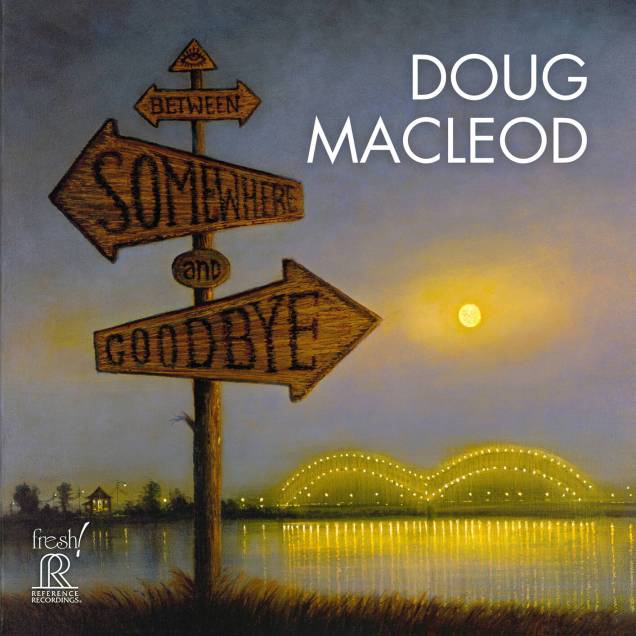
Roadhouse Album Review: Doug MacLeod’s “Between Somewhere and Goodbye” poetic imagery is best seen with the unseen eye

Doug MacLeod — “Between Somewhere and Goodbye” — Reference Recordings

Doug MacLeod is a musical philosopher.

His philosophy lies in his unique musical storytelling built for listening and thinking. It’s poetry set to music. Soul music in the best sense. Music that nourishes the soul with its often-mystical meanderings. And most of all, it’s damn good music.

MacLeod’s music is filled with humor, love and personal vision. All done through his own heartfelt, eloquent lyrics, driven by his elegant acoustic guitar work. All colored with the many shades of the blues.

He credits his highly personal music to his first mentor, Ernest Banks of Toano, Va., of whom he says: “He instilled in me the honesty. He told me ‘Never write or sing about what you don’t know about and never play a note you don’t believe.'” And you only have to listen to a few verses of any of his more than 400 songs to find that personal vision.

It’s that vision you find in the enigmatic title of his latest album, “Between Somewhere and Goodbye, “and the quiet mystery in the lyric of that song: “There’s a place between somewhere and goodbye …. it’s only seen with the unseen eye.” And then: “You take nothing more from this life than you take from a dream.” Combine that with the fluid intensity of his almost otherworldly acoustic picking, and you have music that’s poignant and passionate, whether it’s filled with personal mysteries or sharply tuned humor.

MacLeod’s acoustic work alone provides a rich backup for his vocals — but for this album he’s added some musical heft with the Funky Chester Rhythm Section: Lynn Williams on drums, Mark T. Jordan on piano, Wurlitzer electric piano and B3 organ, and Paul Ossola on bass, plus the vocal harmonies of The Shoals Sisters — Cindy Richardson Walker, Marie Tomlinson Lewey and Carla Russell. Producer Andreas Werner adds rhythm guitar.

The opening song here is “Memphis In Your Soul,” about the city — and the river — that has apparently captured MacLeod’s soul since he moved there in 2019: “Go to the river and watch it flow … Then no matter where your life will take you, you’ll have some Memphis in your soul.” 

That lyricism continues to flow throughout, whether it’s the moody title track, the hopeful “Keep On Walkin’ On,” the down-home flavored, downhearted ”Hard Times,” or the latest version of “Roll Like A River (2025),” with its melodic insistence: “I’m gonna’ roll like the river ’til I’m gone.” The Shoals Sisters backup adds considerably to its eloquence. “I Ain’t No Stranger” takes an ethereal journey: “I know this road will lead me to my soul … I’ve been a witness to the unseen light.”

Delicious shots of wry lubricate the biblical wordplay of “One Rib Short” (Adam and Eve and all those begats) and the whimsical marital warning of “I Don’t Like Your Chances.” The mystical journey continues with the visions of “The Seen And The Unseen,” and the need to let go in “Even Angels Get Too Sad To Fly.” The closer is, fittingly, a quiet gem of haunting memories, “Watching The Sun Go Down.”

Let’s hope the sun is nowhere near setting on Doug MacLeod’s talent that produces this kind of elegant, eloquent music.


Here’s a great interview with Doug by Michael Limnios on the Music Network from July 11, 2025.

And another very thoughtful interview, with Dominic Hartley of Fanfare, in which Doug waxes thoughtfully about his music and some of the inspiration for this album.


Here’s the title song from the album:

Tracklist:
01. Memphis In Your Soul
02. Between Somewhere And Goodbye
03. Keep On Walking On
04. Hard Times
05. Roll Like A River 2025
06. I Ain’t No Stranger
07. One Rib Short
08. The Seen And The Unseen
09. Even Angels Get Too Sad To Fly
10. I Don’t Like Your Chances
11. Watching The Sun Go Down

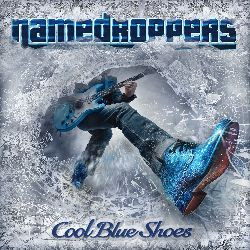
Roadhouse Album Review: Name Droppers kick up the blues in their “Cool Blue Shoes”

Namedroppers — “Cool Blue Shoes” — Horizon Music Group

What would be the best name for a band whose members fondly drop the names of the artists they’ve been mentored by and worked with over the years? The Name Droppers, of course!

Back in the 1980s, that band was Charlie Karp and the Name Droppers, with Connecticut-based Karp being a seasoned guitarist, a prolific songwriter and an Emmy-winning producer. Karp earned the right to namedrop as he left high school to work with Buddy Miles, then got to know Jimi Hendrix and Keith Richards and wrote songs for Joan Jett and Joe Perry. After Karp’s death in 2019, the remaining Name Droppers stuck together: songwriter/guitarist Rafe Klein, Ron Rifkin on piano, Bobby “T” Torello on drums and Scott Spray on bass. Torello and Spray can drop impressive names as well, including the likes of Johnny Winter, Edgar Winter, Michael Bolton, Grace Slick, Felix Cavalier and the Rascals — and many more.

Those names they’ve dropped are more than just names they’ve dropped. They represent a decades-long road of talent and experience the Name Droppers have traveled and are now manifesting in their music, showing off the quartet’s high-octane blend of blues, R&B, soul and good old-fashioned rock ‘n’ roll.

“Cool Blue Shoes” is the current Name Droppers’ fifth album, tightly packed with their energetic style that drives seven smartly crafted original songs and three creative covers. The opener, a full-throttle version of Howlin’ Wolf’s classic “Killing Floor,” fuels the fire to come with its ageless blues lament about his woman: “I should’a quit you long time ago / And I wouldn’t have been down here on the killin’ floor.” “Cool Blue Shoes” by Torello and Klein steps out next, with Klein leading the bluesy vocals with a message designed to put a hole in your sole: “I’ve walked a mile and slept alone in these blue shoes / They’ve carried all my dreams, walked away my blues.” Rifkin then vocalizes his own melodic charmer, “Be Alright,” filled with optimism: “I gave you all I had from me to you / Never again will you and I be blue.”

“Keep Pushin’” by Klein, with angry Rifkin vocals, is a furiously styled rocker about keeping on when the keeping on gets tough: “Most of my friends have died from the war / They never found what they were searching for / Sobriety ain’t always what it seems to be / Keep on pushin’ like my friends told me.” Klein returns for the vocal on the stirring “That’s The Way My Love Is,” dusting off the Foreigner track from Mick Jones: “There are the things I cannot say to you / That’s the way my love is /
But in my heart you’ll always stay with me.” Klein’s tough and spirited “Hard Way” puts Torello out front with the whole band as a backup chorus for a man on the run: “I think she’s gone, she left him in the dirt / She said he lies and that her feelings were hurt / But he’s on the run don’t give a damn.”

Klein, Torello and Rifkin swap vocals on their rocking version of Willie Dixon’s mournful blues on “I Cry For You,” and the lighthearted bluesy shuffle “Think Yiddish” from Klein and Torello gives Torello a vocal turn at some whimsical wordplay: “Well I went to the doctor, the doctor said / Too much pizza and American bread / Too many Budweisers give you a sleepy head / Think Yiddish, dress British that’s what he said.” Rifkin’s vocal soars on Klein’s “Yes I Will,” driven by the band’s call and response and Klein ‘s razor-sharp guitar solo midway: “I’ll be the one you talk to, yes I will / I will ease your worried mind, yes I will.” For the closer, Klein partners with Simone Brown on his torchy “Out of This Blue,” a gorgeous duet wrapped in Rifkin’s roiling B3 and caressed by Bill Holloman’s sensuous sax: “I was such a lonely man with a heart torn in two / Out of this blue I found you.” Their passionate pairing ends the album elegantly tangled up in blue.

The Name Droppers sport their brand new “Cool Blue Shoes” with considerable style and class, laced with true blues grit. Take a walk in those cool blue shoes now!


Title track from the album:

Tracklist:

  1. Killing Floor
  2. Cool Blue Shoes*
  3. Be Alright*
  4. Keep Pushin’
  5. That’s The Way My Love Is
  6. Hard Way
  7. I Cry For You
  8. Think Yiddish*
  9. Yes I Will
  10. Out Of This Blue*

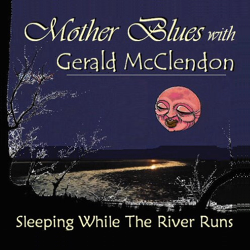
Roadhouse Album Review: Mother Blues and Gerald McClendon stir soulful memories with “Sleeping While the River Runs”

Gerald McClendon — “Sleeping While the River Runs” — Sleeping Dog Records

Sweet soul music – It’s that magical music whose classic sounds made history with such legendary artists as Ray Charles, Bobby “Blue” Bland, Aretha Franklin and Al Green.

Those greats, and most of their contemporaries, have disappeared, leaving only the echoes of their soulful essence.

But there’s one soul stirrer whose voice still caresses a lyric with a lover’s passion – Chicago’s Gerald McClendon. He’s a classic stylist with a voice so smooth and a feeling so deep that he’s known as the “soul keeper.”

McClendon’s been a stalwart keeper of soul for so long, breathing new life into it with every song, that he’s being honored this year by the Jus’ Blues Music Foundation with its Bobby Blue Bland Award for “Outstanding Blues Vocal Stylist and performer in the blues arena.” It’s the 25th anniversary of Jus’ Blues, an organization dedicated to “preserving and promoting the legacy of the Blues.”

In the spirit of that award, McClendon is celebrating the 20th anniversary of one of his early, groundbreaking albums, “Sleeping While the River Runs,” recorded in 2005 on Sleeping Dog Records with a band of Chicago music veterans called Mother Blues, led by songwriter and guitarist Steve Bramer. The album is packed with 14 songs sung by McClendon, mostly written by Bramer, plus two instrumentals and a gorgeous choral finale. The music shapeshifts effortlessly through a variety of musical styles, all brought vividly to life by the soul keeper’s passionate pipes.

The superbly soulful first track, “Pass You By,” launches with McClendon’s pleading vocal, soaring against a melody that builds to a powerful climax, testifying about letting go and moving on: “Time gets the best of most things / And in time this too will pass.” The easy rhythm and smooth vocal of “Smokescreen” combines a stinging guitar solo with lyrical philosophy: “Two things you can count on / You live and then you die.”

Bramer wrote the gentle blues “(Let Daddy) Keep You From Harm” as a lullaby while awaiting the birth of his first child; McClendon’s rendition is beautifully sensitive. “Leaves Tremble on the Tree” turns a harp intro into an R&B tune on deliverance from hardship on the road. “Going Down for the Last Time” is a soulfully sung ballad about a romantic dilemma. “Common Ground” flashes an uptempo R&B delivery: “We’ve had a lifetime to learn / What it means to make the best of things,” then McClendon turns on an achingly passionate vocal in the languorous slow blues of “Bed Down.”

The gorgeous lyrical imagery of the title track, “Sleeping While the River Runs,” floats on an emotional gospel-hued wave that hints at the despair of giving up, but with an undercurrent of constant hope. McClendon’s vocal builds with an elegant chorus behind him: “Find the edge of the shoreline / Under the haze of the Memphis sun / Feel the drift of the water … / sleeping while the river runs.”

“Come To Me” is an easygoing blues shuffle with a sparkling guitar intro. “Thin Line” is smooth, torchy slow blues: “When you toy with affection, you walk a thin line.” “Me & Ian” is the first instrumental, an eloquent jazz-inflected interlude. On “Glory Train,” McClendon’s gospel-infused call-and-response hints at universal deliverance: “And when my time has come, I’m gonna hop that train and ride.”

“Habit of the Heart” is a straight-ahead rocker, leading into the deep-blue darkness of “Chalk Line”: Put your chalk line around him / He’s no longer sleeping with my wife / He was a low-down dirty snake, and it cost him his natural life.” The final McClendon cut is “Walk With Me,” another hard-driving blues, demonstrating his effortless ability to make any song his own. The second Mother Blues instrumental is “Where’s the Fire,” fueled by the majestic harp of Hurtin’ Burt. The perfectly chosen closer is a beautiful choral version of “Sleeping While the River Runs” by the Halsted Street National Uptown Choir, with churchlike organ rolling along behind them.

Gerald McClendon’s breathtaking vocal depth and emotional range on “Sleeping While the River Runs” may be 20 years old, but his sweet soul music is still vital, earning this year’s Jus’ Blues honor. The soul keeper is still keeping on!


Here’s the title track from the album:

Tracklist:
01. Pass You By (3:11)
02. Smokescreen (2:34)
03. Keep You from Harm (3:29)
04. Leaves Tremble on the Tree (3:04)
05. Going Down for the Last Time (4:24)
07. Bed Down (4:47)
08. Sleeping While the River Runs (3:35)
09. Come to Me (2:48)
10. Thin Line (3:32)
11. Me & Ian (2:37)
13. Habit of the Heart (3:30)
14. Chalk Line (5:24)
15. Walk with Me (2:31)
16. Where’s the Fire (2:58)
17. Sleeping (Reprise) (1:34)

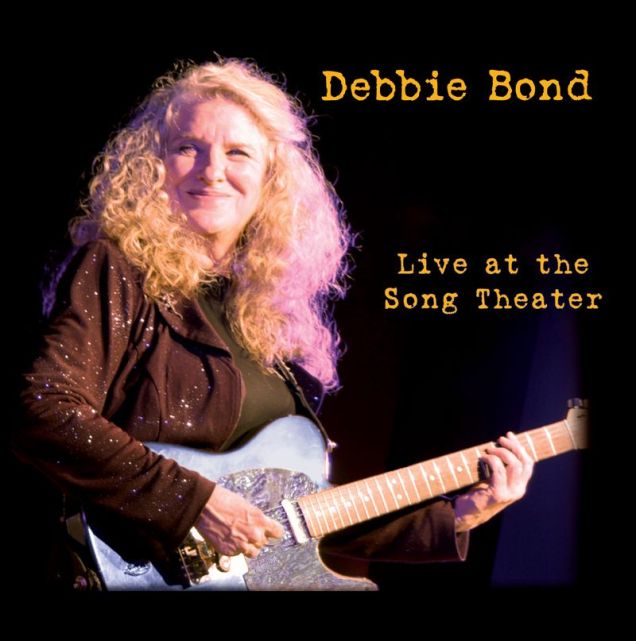
Roadhouse Album Review: “Live at the Song Theatre” is a joyful live session from Debbie Bond

Debbie Bond — “Live at the Song Theatrer” — Blues Root Productions

It’s been a long and winding blues road for Debbie Bond, from her first solo guitar performance in Sierra Leone, West Africa, at age 13, to her present-day deep blues musical life in her sweet home Alabama,

Since moving to Alabama and joining forces with legendary bluesman Johnny Shines in the early1980s until his death a decade later, Bond has immersed herself in the raw power of the blues, and absorbed the influences of Alabama’s famed Muscle Shoals sound. She’s an award-winning blues activist and founder of the Alabama Blues Project, dedicated to promoting and preserving the state’s blues heritage. As if that isn’t enough, Bond also makes memorable music with her band: British-born husband “Radiator” Rick Asherson on keyboards and harp, Marcus Lee on drums, Sam Williams on sax, and Bond adding vocals and her own guitar work.

This album, “Live at the Song Theatre,” was recorded live at the intimate Song Theatre in Columbiana, Ala., and shows off the joyful lyrical and musical interplay of Bond, Asherson and their bandmates on nine of their original songs, with three smartly done covers. This concert performance works the magic of all live blues shows, bringing fresh vitality to the essence of Bond’s music. Bond and Asherson write gorgeous love songs, often with a personal twist, and they tackle social issues with straight-ahead sensitivity. And they do it all with great music.

They open here with “That Thing Called Love,” the title track from an earlier album, an eloquent ode to that thing called love: “Love is a power, you just can’t explain / A mystery and magic, so simple and plain.” Bond’s vocal is supple and soulful, with elegant sax from Sam Williams. “Road Song” shifts into a tough road-warrior vibe, with Asherson echoing the vocals and soaring on harp: “This old road don’t own me / Still got a long way to go.”

“Watch Out for Your Heart” is a torchy blues layered over sensuous sax: “He’ll tell you that he loves you / Swear his love is true / But don’t you turn your back on him / I know what he’ll do.”

The upbeat R&B feel of “Let Me Be” is stirring search for personal freedom: “The path to freedom / Ain’t down this road / Got to leave you far behind / Lighten up my load.” Bond’s stirring vocal turn highlights her version of “Some Kind of Wonderful,” while a Motown vibe and raunchy sax complete the thought: “Me and my baby were so tight / Don’t you know that he is / He’s some kind of wonderful?” The anthemic “Winds of Change” is a larger look at life: “Don’t you feel the winds of change / blowin’ in the wrong direction.” The ageless philosophy of Delbert McClinton’s “Been Around a Long Time” gets a fresh look from Bond, with Asherville’s backup vocals, sharp harp filigrees and tasty honky-tonk piano: “I ain’t old, but I’ve been around a long time.” Bond offers an achingly soulful version of “I’m Gonna Tear Your Playhouse Down,” the Ann Peebles staple from 1972: “You’ve been playing playboy / A little bit too long / Gonna tear your playhouse down.”

Asherson takes the lead on the rollicking New Orleans gumbo of “Going Back,” with Bond on backup, and the band kicking up its Big Easy heels: “We’re gonna dance all night long / To a zydeco beat and a two-stepping Cajun song.” Bond steps out next on the profoundly thoughtful “Nothing But The Blues,” and the contradictions of life: “You claim you’re killing for peace, to set people free / But people are dying is all we can see.” The whimsical, bluesy shuffle of “Wishbone” spotlights Asherson wailing on harp, as Bond laments her emotional condition: “Don’t take extra vision it’s plain to see / Got a wishbone where my back bone should be.” The set closer, the title track from Bond’s 2021 album, is “Blues Without Borders,” an appropriately heartfelt plea for peace, love and understanding, as valid now as it was then: “The whole round world’s in trouble, got to find our common ground / Come together people or we won’t even be around.”

Debbie Bond’s sparkling “Live at the Song Theatre” is testimony that there are many joyful miles ahead on her long and winding musical road through the land of the blues.


Here’s “Winds of Change” from the album: