It produced a generation of singers (most of whom came to the music from their gospel roots), that defined music that was indeed one step from the blues, with all its soulful heritage.
Johnnie Taylor, “The Philosopher of Soul,” was one of those singers, not to mention, one of the greatest. His voice may not have been one of the silkiest, but it was one of the most raw and passionate.
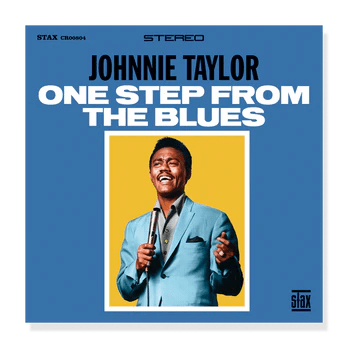
Taylor’s music is being celebrated this year, the 90th anniversary of his birth, with a compilation of his work released on Stax Records / Craft Recordings, “One Step From the Blues.” The album overflows with a dozen of Taylor’s finest, including selections from his prolific Stax Records years, from his signing in 1966 to the label’s closing in 1975. It was Stax who aptly decided that Taylor was the “Philosopher of Soul.”
Taylor’s career included much more than his Stax recordings, but those sides helped to define his sound and his popularity. He was nominated for three Grammys, won a Pioneer Award from the Rhythm and Blues Foundation, and was inducted into the National Rhythm & Blues Hall of Fame and the Blues Hall of Fame.
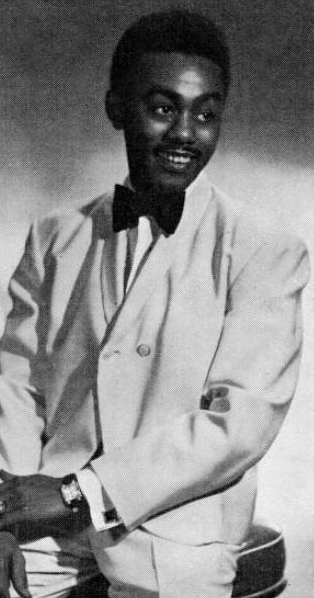
Taylor grew up singing in gospel groups in West Memphis, Ark., and joined the legendary gospel quartet, the Soul Stirrers, in 1957, when he replaced Sam Cooke, who had moved on to his secular career. Taylor later joined Cooke’s SAR label, and then moved to Stax after Cooke’s death. When Stax lost its star, Otis Redding, to a plane crash in 1967, the soul mantle fell to Taylor, who responded with years of great music. (Here’s a photo of Taylor in 1967.)
Those years are represented here with some of Taylor’s best: The breakthrough single in 1968, “Who’s Making Love” (it sold over a million copies), followed by “Steal Away,” “Stop Doggin’ Me,” “Cheaper to Keep Her,” “I Had a Dream” and “Save Your Love for Me.” There are more, and they all paint a picture of one of America’s finest soulmen.
This is a gorgeous collection of some of Taylor’s signature soul. If you’ve never heard his passionate pipes, this a great place to start. If you have, these tracks should add to the magic. They will fill any hole in your soul.
Here’s a live performance of “Who’d Makin’ Love”
Track list: 1. Steal Away 2. I Had a Dream 3. I’d Rather Drink Muddy Water 4. Part Time Love 5. Cheaper to Keep Her 6. Separation Line 7. Doing My Own Thing, Pt. 1 8. Somebody’s Sleeping in My Bed 9. That’s Where It’s At 10. Stop Doggin’ Me 11. Save Your Love for Me 12. Woman Across the River
The long and winding road of the musical career of Turner, the younger brother of legendary blues guitarist Freddie King, has carried him through the highways and byways of gospel, blues, soul and R&B. And Turner’s last ten years have seen a renewal of his still soulful 85-year-old pipes, thanks to the prescience and perseverance of Nola Blue label owner Sallie Bengston (you can hear her handclaps and backup vocals on a couple of songs here!).
Turner started his career playing guitar for The Kindly Shepherds, a gospel group that he joined on guitar and background vocals for several recordings. At that time, Turner also started playing with his brother at Chicago clubs, where he later joined Dee Clark’s R&B band. Turner then toured with Clark and later the Soul Stirrers in the early 1960s, where he played bass for those legendary gospel quartet pioneers. He eventually rejoined his brother’s band and toured on the blues side of the highway.
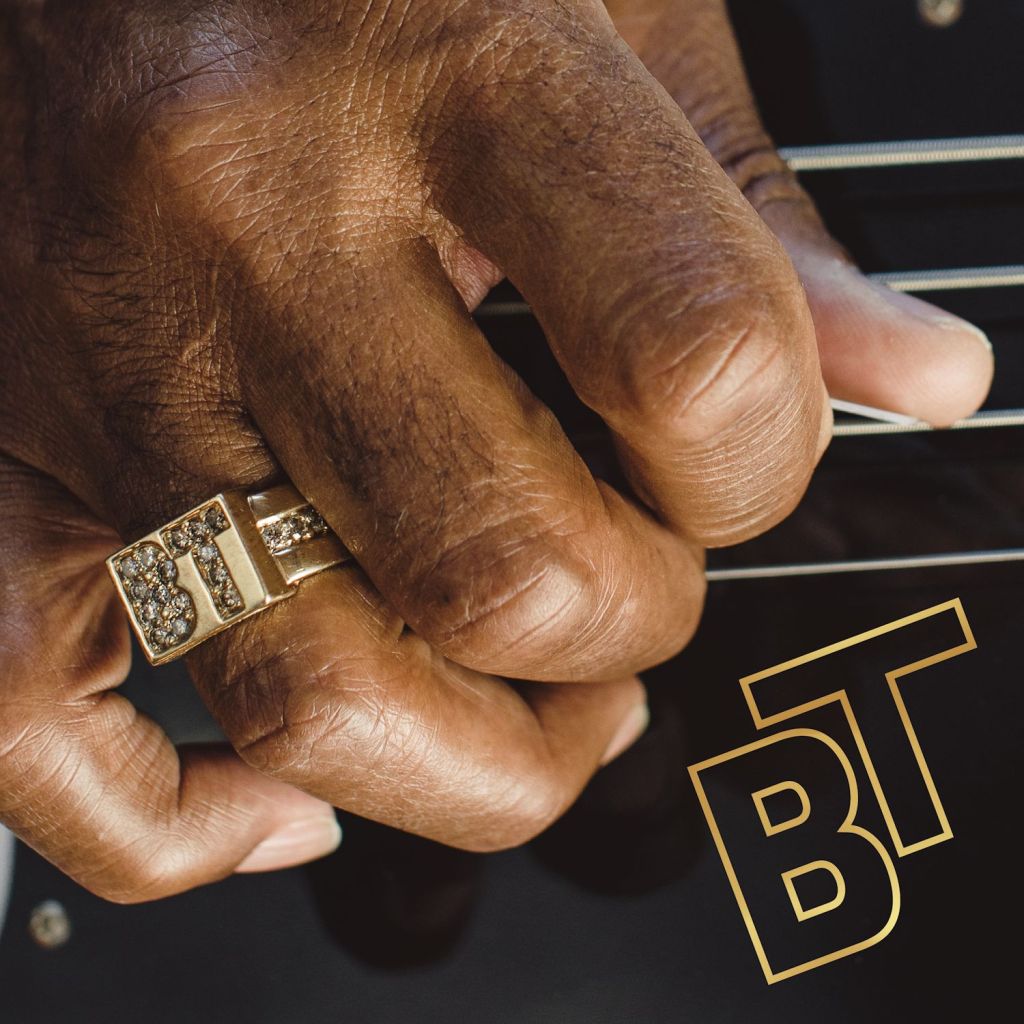
Bengston launched her Nola Blue label with Turner’s album “Journey” 10 years ago on Turner’s 75th birthday. The “BT” release celebrates Turner’s 85th year, and the tenth for Nola Blue. That’s a lot of celebrating, but these new sides are up to the occasion. They run the length of his stellar career and cover a variety of styles that never lose sight of Turner’s deep, old-school gospel and blues roots.
He starts it all off with the raucous “Bump Miss Susie,” written by the great R&B songwriter Rudolph Toombs and recorded by Big Joe Turner. Benny Turner easily handles the uptempo, blues-shouter style before slowing down for the classic, gospel hued “Goin’ Down Slow,” first recorded by its composer, St. Louis Jimmy Oden in 1941.
Turner highlights his funky bass work on “The Walk,” a reminder of the teens doing the stroll on American Bandstand. Then Clayton Ivey’s B3 lends passion to the very soulful “That’s When I Call on You,” a 1958 Dee Clark tune. Next is a strong cover of the little-known Muddy Waters song, “Born in This Time,” with another aching Turner vocal.
Turner adds background vocals behind his own lead to mimic Hank Ballard and the Midnighters’ chestnut, “Finger Poppin’ Time,” with Billy Davis, an original Midnighter, on guitar. “Smoke My Peace Pipe (Smoke It Right)” is an homage to Turner’s New Orleans years with a salute to Big Chief Bo Dollis, and Marva Wright on background vocals. (The “big chief” reference is to a group called the Wild Magnolias, which participated in the local “Indian masking” traditions and performed New Orleans Mardi Gras music. The group’s lead member was called the Big Chief, and Dollis became Big Chief in 1964.)
“”Drunk” is a Turner original, a whimsical ode to the bottle, with a tough Jimmy Reed-style shuffle pouring on the music. Two more Turner songs close the session with his down-home guitar leading the gorgeous instrumental “Sleepy Time in the Barnyard.” The fitting finale, “Who Sang It First” is a tribute to the origins of the blues that Turner so obviously cherishes, a paean to all those early bluesmen and blueswomen who actually did sing it first — creating America’s classical music.
Speaking about this session, Turner says: “I had a great time working on this album with some of my favorite musicians and reminiscing about my musical history, from picking up the guitar again to revisiting my gospel roots, to finally recording some of my favorites….the songs “Born In This Time” and “Who Sang It First” are a very important reminder of the history of slavery and the roots of the blues that should never be forgotten.”
What should also never be forgotten is Benny Turner’s own immeasurable contribution to this music. “BT” is an instant classic, with roots that go deep into the heritage of the blues. Ignore it at your peril!
Track Listing and Credits: Bump Miss Susie 2:52 – Rudolph Toombs; Unichappell Music, Inc. Lead Vocals – Benny Turner; Background Vocals – Charlie Burnett, Bobby Gentilo, Paul Murr, Nate Young Guitar – Bobby Gentilo Upright Bass – Charlie Burnett Piano, B3 – Nate Young Drums – Paul Murr Going Down Slow 5:35 – James Oden; Universal-MCA Music Publishing Division of Universal Music Corp. Lead and Background Vocals – Benny Turner Guitar – Will McFarlane Harmonica – Harrell “Young Rell” Davenport Bass – Benny Turner Keys, B3 – Clayton Ivey Drums – Justin Holde The Walk 4:01- Jimmy McCracklin; Arc/Conrad o/b/o Arc Music, Inc. Vocals – Benny Turner Guitar – Derwin “Big D” Perkins Horns – Sax Gordon Bass – Benny Turner Piano, B3 – Shawn Allen Clavinet – Bobby Gentilo Drums – Jeffery “Jellybean” Alexande When I Call On You 4:12 – Dee Clark; Arc/Conrad o/b/o Conrad Music Lead Vocals – Benny Turner Background Vocals – Tiffany Pollack, Bobby Gentilo Guitar – Will McFarlane Guitar – Bobby Gentilo Upright Bass – Charlie Burnett Wurlitzer, B3 – Clayton Ivey Percussion – Bobby Gentilo, Benny Turner Drums – Christy Enge Born in This Time 4:28 – Willie Boyd and Maurice Jarre; Sony/ATV Harmony and Sony/ATV Melody Lead Vocals – Benny Turner Background Vocals – Tiffany Pollack First Rhythm Guitar – Will McFarlane Second Rhythm Guitar – Bobby Gentilo Banjo – Benny Turner Bass – Benny Turner Upright Bass – Charlie Burnett Piano – Keiko Komaki Wurlitzer, Hammond B-3 – Clayton Ivey Percussion – Bobby Gentilo Drums – Jeffery “Jellybean” Alexande Finger Poppin’ Time 4:11 – Hank Ballard; Embassy Music Corporation Lead and Background Vocals – Benny Turner Guitar – Billy Davis Bass – Benny Turner Piano, B-3 – Keiko Komaki Piano, Wurlitzer – Nate Young Handclaps – Benny Turner, Jeffery “Jellybean” Alexander, Sallie Bengtson, Keiko KomakiDrums – Jeffery “Jellybean” Alexande Smoke My Peace Pipe (Smoke It Right) aka A Tribute to Big Chief Bo Dollis 3:32 -Wilson Turbington; GOPAM Enterprises Inc. o/b/o Turbine Music Lead Vocals – Benny Turner Background Vocals – Warner Williams Background Vocals – Marva Wright Lead Guitar – June Yamagishi Rhythm Guitar – Bobby Gentilo Rhythm Guitar – Jack Miele Bass – Benny Turner Keys and B-3 – Keiko Komaki Clavinet – Nate Young Bass Drum – Norwood “Geechie” Johnson Drums – Jeffery “Jellybean” Alexande Drunk 2:51- Benny Turner; Nola Blue Music Lead Vocals – Benny Turner – Bass and Vocals Background Vocals – Benny Turner, Sallie Bengtson and Bobby Gentilo Guitar – Will McFarlane Guitar – Steve Grills Harmonica – Harrell “Young Rell” Davenport Bass – Benny Turner Piano – Bobby Gentilo Wurlitzer – Clayton Ivey Percussion – Bobby Gentilo Justin Holder – Drum Sleepy Time in the Barnyard 4:59 – Benny Turner; Nola Blue Music Lead Guitar – Benny Turner Guitar – Bobby Gentilo Upright Bass – Charlie Burnett Piano – Nate Young Drums – Paul Mur Who Sang It First 3:59 – James George and Benny Turner; Nola Blue Music Vocals – Benny Turner Background Vocals – Kassie Netherland Miele and Tiffany Pollack Guitar – Will McFarlane 2nd guitar – Jack Miele Bass – Benny Turner Wurlitzer – Clayton Ivey B-3 – Joe Krown Drums – Justin Holder All tracks produced by Benny Turner; Tracks 4, 6, 8 co-produced by Bobby Gentilo
Her weapons are powerhouse vocals that spring from the roots of Koko Taylor and Janis Joplin, and a lyrically passionate message of revival. She wants to tell everybody about the sincerity of the blues – the raw emotion in every note of that music.
Riggins and her band, aptly named the Blues Revival, does all of that and more on “Revival,” the latest album devoted to her mission: “I thank God that my passion is my purpose,” she says, “that is to help preserve this endangered species called the blues.”
“Revival” is the sixth album from Riggins, a Miami native whose gritty vocals and powerful singing style are peppered with generous hints of R&B, soul, gospel and rock ‘n’ roll – but deeply rooted in the blues. Ten original songs by Riggins and producer Tim Mulberry are filled with vivid lyricism that showcases the joyous benefits of the blues. Mulberry is also featured on bass, drums, keys and horns; the remaining Revivalists are Eric Guess on guitar withbackground vocals from Shaelyn Mulberry and Mark Barner. Riggins was nominated as Soul Blues Female Artist for 2024, and she’s been reviving international audiences for years.
“Revival” the album and the musical crusade open at full throttle with the rocking blues “Lucky,” and Riggins’ tough vocals: “I know just what I like / I like to wheel and whine / And bump and grind / And get on down tonight.”
The almost-title track “Revived” carries a message of R&B renewal behind funky organ riffs: “Look at my new walk / I’m stepping high / I got a real good feeling inside / Feeling revived.”
“Southern Soul” keeps the persistent party beat going: “Ain’t nothing like a southern soul / Blues all in my toes / Rockin’ roll folk singing.” There’s a tough new attitude matched by Riggins’ vocals in “New Level” – “I got a new attitude to match my dreams / I’m on a whole new level / And it’s plain to see / I got to be me.” The pace slows for the melodic rhythms and plaintive plea of “Set Me Free”: “Like singing the blues without feeling / Now why oh why keep trying / My patience is dying / Just set me free.”
Riggins has her mojo advice working on “Mojo Thief,” with a warning: “Everybody’s got a mojo / You just gotta let yours work / but don’t you be / no mojo thief.” There’s a bluesy philosophy behind the fierce vocals of “Chasing Time”: “I can’t rush into tomorrow / Or get back yesterday / But I keep / Chasing time.”
A strong statement of personal worth rolls in on the tough rhythms of “Mighty” – “Let the meek take the Earth / The universe / is for the mighty.” “Old Time Way” is a hard-rocking reminder of the musical good old days: “Nowadays the music plays / But the feeling ain’t the same / as the good old days / I wanna go back.”
The thoughtful closer is the optimistic “Healer,” a gently sung ballad with a folk-song feel that slowly builds a message of hope, the ultimate revival: “Maybe I can bring somebody peace / Maybe make somebody feel loved / If I could just provoke a little hope in this world / It’ll spread left, right, below and above.”
Kat Riggins wants to revive the potent spirit of the blues that lives in her soul and share that spirit with every soul within the sound of her magnificent voice. She wants to move your heart – and your hips. “Revival” joyously does both.
Here’s a Kat Riggins live performance:
Tracklist: 01. Lucky 02. Revived 03. Southern Soul 04. New Level 05. Set Me Free 06. Mojo Thief 07. Chasin’ Time 08. Mighty 09. Old Time Way 10. Healer
This fine album has been out for a few months, but I can’t ignore it any longer. It’s too good. Not that I was actually ignoring it, you understand.
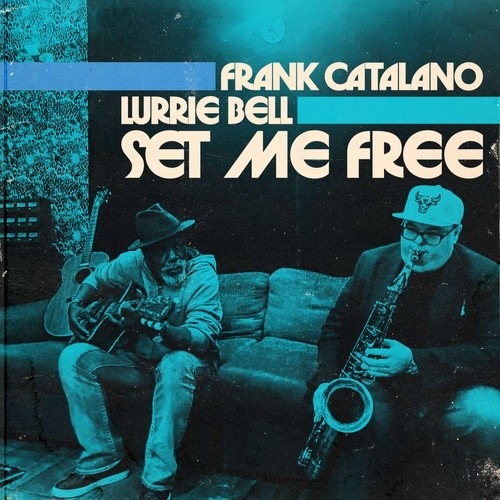
“Set Me Free” combines the elegant jazz phrasings of jazz veteran Frank Catalano’s sax with the toughness of blues stalwart Lurrie Bell’s guitar and vocals. The album, produced by Catalano and released on his own label, is a heady blend of jazz and blues, with a mix of classic covers and originals, plus a sprinkling of sprightly instrumentals. The talented supporting cast consists of Tom Vaitsas on piano, Aaron Mitter on bass, and Kurt Lubbe on drums.
A little background on these talented music veterans is in order here. Both men have worked their way through devastating life events. Catalano and Bell are both Chicago natives and have worked that music scene for decades. Catalano started playing saxophone when he was 7 years old (Pearl Bailey and Louie Bellson at age 12, and Tony Bennett at age 16, for starters), and has since played with numerous artists across a wide spectrum of music, including jazz and blues. He released his first solo album “Cut It Out “on Delmark Records in 1988. At 16, Catalano was in a life-threatening car accident that cut off a finger on his hand. Following reconstructive surgery, he was able to restart his career.
Bell, the son of famed harmonica player Carey Bell, has also had a storied career. In his teens he played with Eddy Clearwater, Big Walter Horton, and Eddie Taylor, and toured with Koko Taylor for four years. His first solo album, “Everybody Wants to Win,”came in 1989. After treatment for debilitating bipolar and schizophrenia illnesses, Lurrie released “Can’t Shake This Feeling”in 2016, which received a Grammy nomination.
They’ve joined forces here to bring you a taste of the best of both their worlds, with magical musical results. This effervescent session opens with a bright, upbeat version of the blues chestnut, “Everyday I Have the Blues,” with Bell’s liquid guitar solo and Vaitsas’ piano floating throughout. Catalano’s honking sax drives everything home.
They follow that with another cover, a smooth and sensuous take on Elmore James’ “The Sky Is Crying,” styled deliciously like the opening track. Bell’s gruff but expressive vocals highlight both cuts. The title track is a glorious jazz-inflected shuffle that lets everyone shine.
“Shaking” is a sax-laced jazzy instrumental tapestry with Bell’s light guitar accents. The classic “Georgia on My Mind” opens with an elegant sax solo followed by Bell’s rich vocal turn. “Tuna Town” is an original instrumental that lets Catalano soar on sax. Bell’s tough vocals enrich “I’m Ready,” the quintessential blues from Willie Dixon/Muddy Waters. “Kicking” is another sprightly jazz/blues instrumental with Catalano’s sax attack and Bell launching sharp blue guitar riffs. Everything comes to a haunting close with Bell’s aching version of Etta James’ “At Last.”
Catalano says of his music: “I love improvising and feeling the vibrations of the music … I’m honored that Lurrie wanted to record together and feel this album is definitely about bringing people together. I think people will really enjoy our versions of “At Last” and “Georgia on My Mind” as well as the blues standards and originals.”
And Bell says: “I’ve been playing since I was 5 or 6 years old. The blues caught my ear and I never looked back. The blues speaks to the facts of life. I wake up and hear the blues in my ear; the blues is always with me.”
Both of these artists have lived their lives through their music, and that spirit shines on “Set Me Free.” You should let it shine on you.
“Set Me Free” from the album:
Tracklist and credits: 01. Everyday I Have The Blues 02. The Sky Is Crying 03. Set Me Free 04. Shakin’ 05. Georgia On My Mind 06. Tuna Town 07. I’m Ready 08. Kicking 09. At Last Lurrie Bell: vocals, guitar Frank Catalano: saxophone Tom Vaitsas – piano Aaron Mitter – bass Kurt Lubbe – drums
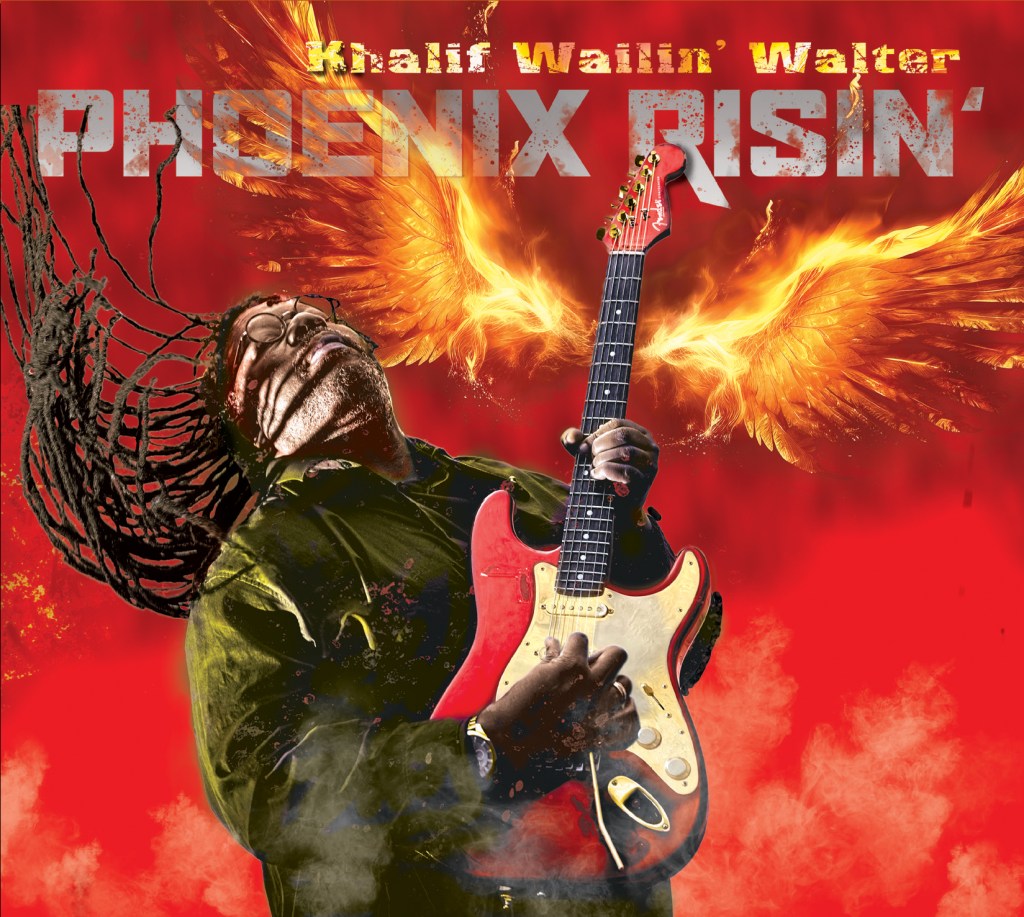
I have to admit that I had never heard the music of Khalif Wailin’ Walter until he sent me his latest album a few months ago. And I have to admit I’m glad that he did. It’s filled with fine old blues styles with a few contemporary twists.
This isn’t exactly Khalif’s first rodeo, or even his first album. It is his first since 2018’s “Nothin’ Left To Lose.” He’s been working in Chicago blues since the late ’80s, when, as he puts it:
“Chicago chose me. I was there for only one day and I visited the Kingston Mines and the Wise Fool’s Pub. The music totally blew my mind. Chicago said that’s where I needed to be, and that is and always will be home for me. I quit the travelling rock band the next day, sold everything, and bought a one-way ticket to Chicago. I had no Plan B.”
Khalif has toured with his uncle and mentor, blues veteran Carl Weathersby and played in the band of legendary bluesman Lonnie Brooks. He’s toured worldwide and put in multiple Chicago blues festival appearances. In short, he’s paid his dues. Most likely, more than his share.
Khalif has put all of that hard work, experience and his multi-faceted talents into this bluesy, ballsy collection on “Phoenix Risin’.” He wrote the songs; recorded, produced, mixed, and mastered the album. He plays guitar and bass, and performs all auxiliary percussion. His excellent backers here are pianist Chris Rannenberg, tenor sax players Martin “Tinez” van Toor and Tommy Schneller, with Paul Jobson on organ, and New Orleans session drummer Barry Wintergarden.
Khalif kicks off the session with “Connie-Lee,” a soulfully sung shuffle with an old-school flavor, kicked gently along by horns and some tasty honky-tonk piano, with a stinging guitar solo. It’s one of my favorites from the album. “Please Lie To Me” follows, a spirited plea with sprightly piano. “The Streets” — “a struggle to survive” — is a slow scorcher that leads into punchy title track, an ode to his musical survival.
“I’m Through Cryin’” features a razor-sharp guitar intro to a sturdy blues and vocals that shift into a toughness that matches his fierce guitar work. “Big Bootyed Woman” chugs into view with a updated take on a traditional blues theme, and “I’m Your Love Doctor” shows off some smooth crooning wrapped in eloquent guitar.
“Stone Cold Busted” adds a modern social media theme to a raunchy horn-filled romp with roadhouse piano, and “Chi-Town Sound Check” is a punchy instrumental that winds up and delivers its own wicked conclusion to a stellar session.
Khalif Wailin’ Walter has poured his heart and soul — and many musical talents — into “Phoenix Risin’,” and the result is this sharply done album with its roots firmly in the fertile Chicago blues soil. Give it a listen. You’ll be better off for this soulful musical experience.
A note on the Timezome record label: The link at the top takes you to the label, a German website that will require you to use a translator, unless your Deutsch is excellent.
Here’s a sample of Khalif at work live:
Tracks and credits: 1) Connie-Lee Khalif: Gtr, Bass, Vocals, Aux Percussion Chris Rannenberg: Piano Barry Wintergarden: Drums Tommy Schneller: Tenor Sax Jürgen Wieching: Bari Sax 2) Baby, Please Lie To Me Khalif: Gtr, Bass, Vocals, Aux Percussion Chris Rannenberg: Piano Barry Wintergarden: Drums Tommy Schneller: Tenor Sax Jürgen Wieching: Bari Sax 3) The Streets Khalif: Gtr, Bass, Vocals, Aux Percussion Jacek Prokopowitz: Organ/Piano Barry Wintergarden: Drums 4) Phoenix Risin’ Khalif: Gtr, Bass, Vocals Gary Winters: Trumpet, Flugelhorn Barry Wintergarden: Drums 5) I’m Through Cryin’ Khalif: Gtr, Bass, Vocals, Aux Percussion Paul Jobson: Organ Barry Wintergarden: Drums Tommy Schneller: Tenor Sax Jürgen Wieching: Bari Sax 6) Big Bootyed Woman Khalif: Gtr, Bass, Vocals Gary Winters: Trumpet, Flugelhorn 7) I’m Your Love Doctor * Khalif: Gtr, Vocals Marcis Kalnins: Bass Rolands “Rolx” Saulietis: Drums Artis Locmelis: Organ 8) Stone Cold Busted Khalif: Gtr, Bass, Vocals, Aux Percussion Chris Rannenberg: Piano Barry Wintergarden: Drums Martin “Tinez” van Toor: Tenor Sax Evert Hoedt: Bari Sax 9) Chi-Town Soundcheck Khalif: Gtr, Bass Barry Wintergarden: Drums All songs written, recorded, mixed and mastered by Khalif except *Recorded by Toms Lisments, Marcis Kalnins, & Khalif
Vaneese Thomas is not only blessed with a deeply soulful singing style, she also has the unerring ability to turn her thoughts and feelings into emotional statements expressed in song – in this case, in her latest album, very appropriately titled “Stories In Blue.”
Thomas has created a musical odyssey on her tenth album that tracks the essence of her music. It’s also a tribute to her multi-talented approach: Thomas’s name is on every song, she co-produced the session, plays piano on the pensive “Wandering,” and, of course, graces us with her marvelous voice.
The seven-song set of original stories in blue is filled with powerful music and gorgeous vocals, all of which reflect a lyrical journey from the origins of the blues to the final bars of a joyful gospel song. The tracks also serve as a sampler of the multiple musical talents of Thomas – she’s very much at home working in styles from blues to R&B to jazz to gospel.
The opening track and first step in this journey asks the question: “Do Y’all (know where the blues comes from?)” It’s a funky history lesson on blues origins in the human spirit: “Do y’all know where the blues comes from do y’all / Well it comes from faces dark as night / Bodies worn from toil and strife.”
A pair of songs follows that illustrate traditional blues themes of lost love. “When You Were My Man” is a vocal treat, rhythmically at odds with its lonely message – “Every day I had peace of mind / But darkness did come, our love was undone.” That’s followed by the gorgeously sung ballad “Wandering,” an album centerpiece with its aching refrain: “Wandering on the street / Head in my hands / Shuffling my feet / What will I do without him / Ain’t nothing left for me.” A sensuous sax solo adds a melancholy refrain.
A rollicking stride piano with its foot-stomping tempo, Dixieland-flavored horns and Thomas scatting along, highlight the smartly sassy “1917.” The song was written by Vaneese as a joyous tribute to her multi-talented entertainer father, Rufus Thomas, the legendary patriarch of Memphis soul, who was born in 1917: “His colorful attire could take you higher / And leave you wanting more / His voice was a jewel and his blues gave you fuel / And shook you to the core.”
“The Last Thing on My Mind” is steady-rolling, hypnotic ode tuned to the troubles of a woman wronged on this journey: “But I found you done me wrong / To my surprise you up and gone / I had a love but now I moan / That was the last thing on my mind.” This blue story nears its end with the plaintive “Seven Miles From Home” – “Seven miles from home / No more to roam / Oh, my soul longs for home.”
The closer and blues stories’ end in spirit and fact is an uplifting a cappella gospel track, “End of the Road,” with only hand-claps for its rousing rhythms, and a solid chorus behind Thomas’s exuberant vocal statement: “I see the end of the road Lord, I’m on my way / On my way to Jordan’s shores maybe it’ll be today.”
Vaneese Thomas shines in her album debut on the brand-new, Memphis-based Overton label. This session is a tribute to her all-around skills as a marvelous story-telling songwriter and joyous, full-throated singer of those songs.
Thomas not only embraces her musical roots, she refreshes them with her passionate “Stories In Blue.”
Track list with comments from Vaneese Thomas:
01. Do Y’all-This song was written with my ancestors in mind. I was hearing and feeling the laments of enslaved Africans who gave the soul and sound to the Blues. Let’s not forget!
02. When You Were My Man-Al and I wrote this song about someone musing over their broken relationship. She’s thinking about the obvious differences in her life then and now. The man “didn’t play nice” and respect their relationship. Much too common!
03. Wandering-the lyrics to this song are reminiscent of the lyrics to “Have You Seen Her” by The Chi-Lites. This is a person feeling so low and feeling unrelenting pain. “Ain’t nothing left for me” could reflect any kind of loss.
04. 1917-This year in the history of the world was tumultuous. War World War 1 was raging, and jazz was being played in clubs and juke joints worldwide. Something else noteworthy happened that year; Rufus Thomas, Jr. was born in Cayce, MS to Rufus, Sr. and Rachel Thomas and was to become a symbol of that era and the future of Black music.
05. The Last Thing On My Mind-another sad story of love lost. This was a surprise to him/her so it’s even sadder. The lover says, “you broke my trust and shook my faith.” That’s some deep hurt!
06. 7 Miles From Home-this song was inspired by a poem written by my friend, Berneta Miles. Her parents’ home was 7 miles from downtown Humboldt, TN. So that phrase was something that her family quoted often. Also, you could say it’s about folks who’ve left home and later returned after times of uplift and defeat. The theme is being welcomed back where you came from.
07. End of the Road-This song wasn’t written with any particular idea of impending death but rather the joy of knowing I’ll someday be relieved of all the stress and pain of life here on Earth.
I’ve seen Ronnie Baker Brooks many times. He’s a fixture on the Legendary Rhythm & Blues Cruise with his band, and in the Legendary late night jams, and I caught a land-locked club show years ago in Pittsburgh. Brooks never disappoints. In fact, he never fails to stimulate my own blue genes, so the blues in his DNA seem almost like a match for my own.
“Blues In My DNA” does not disappoint either. In fact, this is a gutsy, bluesy, smartly done session that highlights Brooks’ Chicago heritage with some nods to adjacent influences — Memphis soul, rock ‘n’ roll, funk, and deep Chicago blues. It’s also just plain great listening.
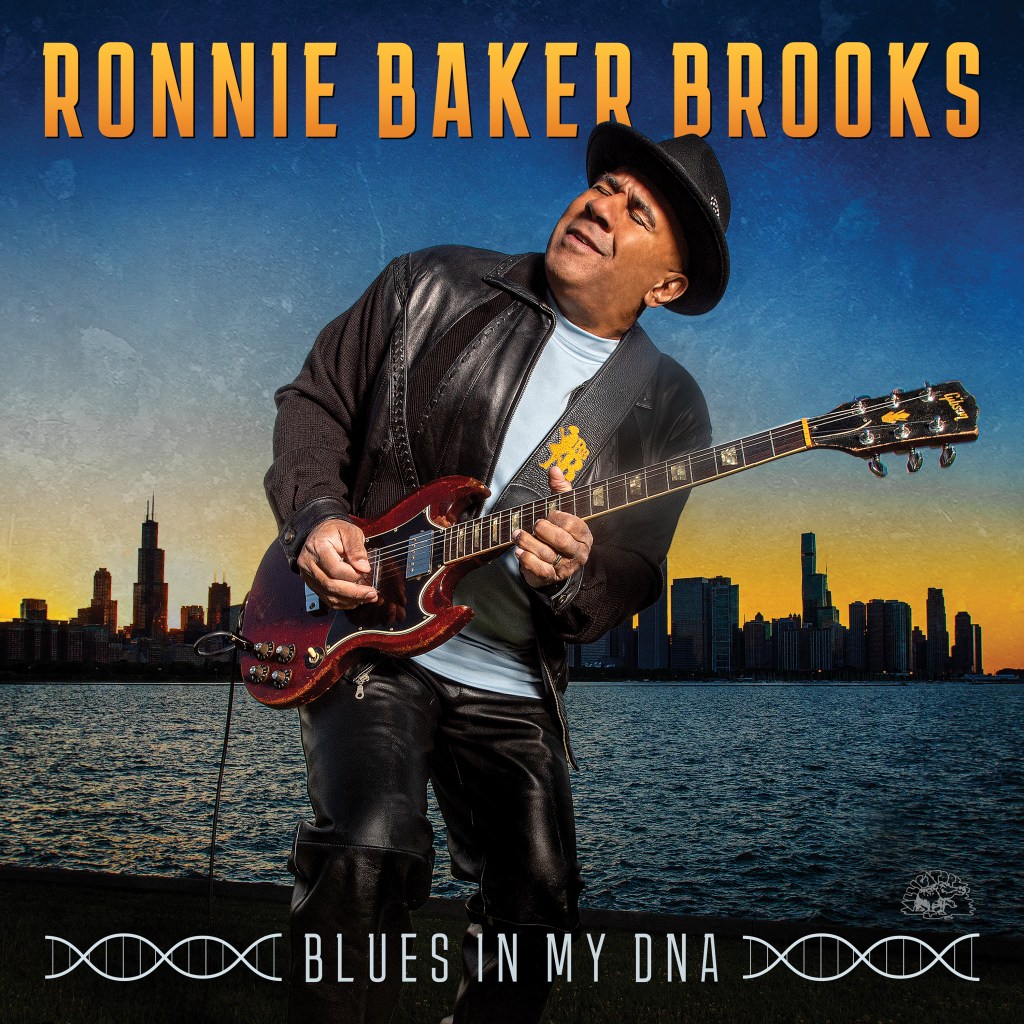
This is only Brooks’ fifth album, despite a performing career that stretches back to 1986, when he joined the band of his legendary bluesman father, Lonnie Brooks. That doesn’t mean that he hasn’t kept busy, writing songs, playing fierce guitar, touring and performing, and winning lots (I hate those technical terms) of critical acclaim. As a tribute to his father, this album cover has Brooks holding the same guitar his father held on the cover of “Bayou Lightning,” Lonnie’s 1979 Alligator debut. This also happens to be Ronnie’s Alligator debut, closing a musical circle with his dad. Musicians on this album of original songs include rhythm guitarist Will McFarlane, electric pianist Rick Steff, bassist Dave Smith, and drummer Steve Potts.
The album roars to life with the funky blues and tough guitar of “I’m Feeling You.” Then “Lonnie Brook’s Blessing” offers a brief recording of Lonnie Brooks’ exhorting Ronnie “to keep these blues alive.” That’s followed hard by the autobiographical title track, “Blues In My DNA,” the album’s focal point, and a song Brooks calls “a bridge between me and my audience.” Its fiery blues solos punctuate the song’s lyrical intensity in describing Brooks’ tale of overcoming racism and poverty: “I’m not complaining, I’m just explaining, I got the blues in my DNA.”
“My Love Will Make You Do Right” follows and adds Clayton Ivey on the Hammond B-3, whose riffs are always welcome in the blues. “Accept My Love” is a sweetly styled, soulful ballad and a tribute to Brooks’ mother, Jeannine Baker, who passed away in 2023. “All True Man” chugs right into the tasty shuffle of “Robbing Peter to Pay Paul,” followed by the hard licks of “Instant Gratification.”
“I Got to Make You Mine” features some inventive guitar work, and “Stuck On Stupid” revives an older original blues with a fierce guitar intro and solos in its eight powerful minutes. “I Found A Dollar Looking For a Dime” and “My Boo” round out the album without any drop-off in passion or power.
Brooks says of his music: “I grew up witnessing and learning from the legends of the blues. I’m excited to continue to create Chicago blues as part of my family legacy and our shared history. I’ll always carry on and represent the blues in everything I do. Dad started the fire, Albert Collins poured the gas on it, and Koko Taylor put the grill on.”
This is a powerful contemporary blues album. Ronnie Baker Brooks is not only keeping the blues alive, he’s pouring himself into his music so that we can share his passion.
Here’s the title track, “Blues in My DNA”
Tracklist & credits:
1. I’m Feelin’ You 2. Lonnie Brooks’ Blessing 3. Blues In My DNA 4. Make You Do Right 5. Accept My Love 6. All True Man 7. Robbing Peter To Pay Paul 8. Instant Gratification 9. I Gotta Make You Mine 10. Stuck On Stupid 11. Looking For A Dime 12. My Boo
All songs by Rodney Dion Baker (Ronnie Brooks Music, BMI) except “All True Man” by Rodney Dion Baker & Todd Park Mohr (Ronnie Brooks Music, BMI / Todd Park Mohr Publishing admin. by Bug Music, BMI)
Ronnie Baker Brooks Vocals and Electric Guitar Will McFarlane Rhythm Guitar Dave Smith Bass Steve Potts Drums with Lonnie Brooks Vocal (2) Rick SteffElectric Piano (3,4,5,6,7,8,9,10,11,12) Clayton Ivey Hammond B3 Organ (4,5,9,10) Brad Quinn Tenor and Baritone Saxophone (5,8) Drew White Trumpet (5,8) Trenicia Hodges and Kimberlie Helton Background Vocals (9)
I don’t know how I could have let this album slip by last December — maybe I was lost in a Christmas haze. I’ve posted a couple of times about Ladyva’s fine boogie-woogie piano music, the first time in June of 2021.
Since then, I’ve been impressed by the fact that this post has received more page views here at the Roadhouse than anything I’ve ever published. Someone, or more than someone, visits it almost every day.
And I just happened to be poking around the interwebs recently and noticed that Ladyva (Vanessa Gnagi – (Very useful bio here) released a new album last December. It’s filled with her rollicking original keyboard stylings, and adds a couple of delicious classics, plus her vocals on three of the ten tracks. So it seems like it’s worth a visit.
She opens with her own sturdy piano/vocal version of the Muddy Waters classic, “Got My Mojo Working,” then chugs along the original “Steam Train” track. A “Lobster Groove 2.0” boogie follows, then she rolls through the Albert Ammons classic, “Boogie Woogie Stomp.” (Ammons was one of the founding fathers of that musical piano style, along with Meade Lux Lewis — Ammons’ long-time friend — and Pete Johnson in the mid-1930s. Ammonds’ “Boogie Woogie Stomp has been described as “the first 12-bar piano-based boogie-woogie, imitated by many jazz bands.)
“To Whom Do I Want to Lie” is a an elegant original, grammatically correct, slow and soulful ballad featuring Ladyva’s vocals again, then the original “Quarantine Boogie” stomps through with “Ladyva’s Stomp” rocking onward. “Return to the Blues” is a gorgeous, torchy slow blues.
“Jumpin’ the 88s,” which does just what it says, and “You’ve Got This,” a sly uptempo vocal, close out this session.
Ladyva is not a newcomer to her music. She’s been pounding the keys since she was 14, but does not seem well-known on this side of the pond. That’s a shame. Her piano work is impeccable, her boogie-woogie style is foot-tapping fun, and her vocals add another dimension to her craft. Listen and tap along.
Here’s a video of “Steam Train Boogie”
Track list & credits: “Got My Mojo Working” (Muddy Waters) “Steam Train Boogie” (Ladyva) “Lobster Groove 2.0” (Ladyva / Silvan Zingg) “Boogie Woogie Stomp” (Albert Ammons) “To Whom Do I Want to Lie” (Ladyva) “Quarantine Boogie” (Ladyva) “Ladyva’s Stomp” (Ladyva) “Return to Blues” (Ladyva) “Jumpin’ the 88s” (Silvan Zingg) “You’ve Got This” (Ladyva / Ryan Tubridy)
Here are the winners in the fan voting for the 2024 Blues Blast Music Awards. Here’s the list of nominees with the winners in bold.
Contemporary Blues Album Shaun Murphy – I’m Coming Home Chris O’Leary – The Hard Line Anthony Geraci – Tears In My Eyes Rick Vito – Cadillac Man Rick Estrin & The Night Cats – The Hits Keep Coming Selwyn Birchwood – Exorcist
Traditional Blues Album Monster Mike Welch – Nothing But Time he Dig 3 – Damn the Rent Fiona Boyes – Ramblified Johnny Burgin – Ramblin’ From Coast to Coast Nick Moss Band – Get Your Back Into It John Primer & Bob Corritore – Crawlin’ Kingsnake
Soul Blues Album Blackburn Brothers – SoulFunkin’Blues Dave Keller – It’s Time to Shine Kevin Burt & Big Medicine – Thank You Brother Bill Marcel Smith – From My Soul Jeff Rogers – Dream Job Eddie Cotton – The Mirror Joakim Tinderholt – Deadlines
Rock Blues Album The Wicked Lo-Down – Out Of Line Mike Zito – Life is Hard Coco Montoya – Writing on the Wall JP Soars – Brick by Brick Canned Heat – Finyl Vinyl Bex Marshall – Fortuna
Acoustic Blues Album EG Kight – Sticks & Stones Sue Foley – One Guitar Woman Arbuckle & Long – Gonna Be Justified Tinsley Ellis – Naked Truth Doug MacLeod – Raw Blues 2 Mick Kolassa – Wooden Music Nic Clark – Everybody’s Buddy
Live Blues Album Deb Ryder – Live & Havin’ Fun Li’l Ronnie & the Grand Dukes – Got it Live from ‘05 Christone “Kingfish” Ingram – Live In London Blood Brothers – Live in Canada Eric Bibb – Live at Scala Theatre Sue Foley – Live In Austin Vol 1.
Historical Or Vintage Recording Bob Corritore – Phoenix Blues Rumble James Harman – Didn’t We Have Some Fun Sometime Paul Oscher – Live At The Tombs House Of Detention, NYC Keef Hartley Band – Live at Essen Magic Slim & John Primer feat. The Teardrops – Slow Blues Omar & The Howlers – Magic Man Live In Bremen 1989
New Artist Debut Album BLUES People – The Skin I’m In Garnetta Cromwell – Time to Shine DK Harrell – The Right Man Joel Astley – Seattle to Greaseland Mathias Lattin – Up Next Nicholas Alexander – Lil Hoochie
Blues Band Of The Year The Dig 3 Blackburn Brothers Nick Moss Band Featuring Dennis Gruenling Rick Estrin & The Nightcats The Cash Box Kings Southern Avenue
Male Blues Artist John Primer Mr. Sipp (Castro Coleman) D.K. Harrell Kevin Burt Christone “Kingfish” Ingram Bobby Rush
Female Blues Artist Shaun Murphy Sue Foley Annika Chambers-DesLauriers Danielle Nicole Fiona Boyes Ruthie Foster
Sean Costello Rising Star Award Harrell “Young Rell” Davenport Mathias Lattin Joel Astley Candice Ivory Stephen Hull
Producer Of The Year Bob Corritore Kid Andersen Joe Bonamassa & Josh Smith Tony Braunagel Tom Hambridge Mike Zito
Electric Guitarist Of The Year Monster Mike Welch Nick Moss Joanna Connor Duke Robillard Christone “Kingfish” Ingram Laura Chavez
Acoustic Guitarist Of The Year Kevin Burt Doug MacLeod Sue Foley Eric Bibb Tinsley Ellis Catfish Keith
Slide Guitarist Of The Year JP Soars Joanna Connor Fiona Boyes Derek Trucks Rick Vito Sonny Landreth
Bass Guitarist Of The Year Jerry Jemmot Bob Stroger Rodrigo Montovani Danielle Nicole Larry Fulcher Michael “Mudcat” Ward
Keyboard Player Of The Year Jim Pugh Anthony Geraci Ben Levin Eden Brent Kenny “Blues Boss” Wayne Mitch Woods
Percussionist Of The Year June Core Derrick D’mar Martin Kenny “Beedy Eyes” Smith Tom Hambridge Tony Braunagel Tony Coleman
Harmonica Player Of The Year Jason Ricci Bob Corritore Dennis Greunling Charlie Musselwhite Billy Branch Kim Wilson
Horn Player Of The Year Jimmy Carpenter Vanessa Collier Sax Gordon Beadle Trombone Shorty Eric Demmer Deanna Bogart
Vocalist Of The Year Ruthie Foster Bobby Rush John Németh Marcel Smith Billy Price D.K. Harrell
Shemekia Copeland needs no introduction. She’s the multi-award-wining, powerhouse blues singer who’s taken her music in new directions while she has climbed effortlessly to the top of her game — all by the tender age of 45.
She is the daughter of the great Texas bluesman Johnny Copeland, toured with him as an opening act, and released her debut album, “Turn the Heat Up!” in 1998, at the age of 18. And that’s just a bare outline of the beginnings of her musical career, filled with ten albums that have established her as simply one of the best blues singers on the planet.
That brings us to her latest album, “Blame It On Eve,” a departure in content and style from her last three albums, themselves a departure from much of her earlier work. Those albums — “America’s Child,” “Uncivil War” and “Done Come Too Far” — all carried strong political and social themes, with Copeland tackling sensitive contemporary issues with her blues sensibilities.
While “Eve” doesn’t take a step back, it at least shuffles sideways without losing any of Copeland’s power and passion. “My last three records have dealt with breaking news,” she says. “This record is for people like me who want a break from the news.”
While Copeland may be taking a break from the news, she’s definitely not taking a break from the blues. The dozen songs here, chosen from a variety of sources, still hit hard, whether she’s deep in the blues, or sharing thoughts on contemporary issues, or both. Producer Will Kimbrough and executive producer John Hahn are responsible for much of the smartly conceived original content.
This doesn’t mean that Copeland has suddenly given up her social conscious. “There’s serious business on the new album,” Copeland says, “but there are a lot of smiles here too, a lot of joyous moments. It’s my blues for sure but it’s the brighter side. Issues are always important to me, but so is rocking, dancing and just having fun. And that’s something we all can all agree on.”
And “Eve” is certainly filled with great music from a cast of fine musicians, including Luther Dickinson and Kevin Gordon on guitar, jazz guitarist Charlie Hunter, Jerry Douglas on guitar and dobro, DaShawn Hickman on pedal steel, guest vocalist Alejandro Escovedo, all produced by Kimbrough in his fourth repeat performance.
The session opener is the title track, as it should be, with a tough musical vibe and a thematic wink and a nod protesting a historical tendency to blame the woman: “Since the Garden of Eden they have you believin’ / When somethin’ goes wrong / You can blame it on Eve.” That sly sharpness expands into a biting contemporary conclusion: “Wanna know how it feels to have the blues / just try losing your right to choose.”
“Tough Mother” follows, with a Mississippi hill country twang behind a sharply autobiographical story, “Only Miss You All the Time” is a powerfully sung emotional ballad’ followed by the rousing climate-change anthem “Broken High Heels,” stomping out another powerful message with a dance-floor beat.
“Wine O’Clock” is a tough, slow-drag-blues tribute to Copeland’s version of mother’s little helper. Escovedo shares the vocals on “Is There Anybody Up There?” a fervent plea for heavenly intervention in worldly problems. “Cadillac Blue” is color of Copeland’s true love’s eyes, a tale of interracial romance told to a slinky lap-steel background.
Copeland shifts into a tender moment with the haunting “Belle Sorciere,” a sad lover’s tale with the haunting melody composed by Pascal Danae of the Paris-based band Delgres. “Tell the Devil (To Go to Hell)” is glorious foot-stomping gospel. “Tee Tot Payne” gets a old-timey country blues feel from Douglas on dobro in a lightly swinging ode to black street musician Rufus “Tee-tot” Payne. He was a bluesman who became a mentor to an itinerant white youngster named Hiram Williams, a would-be singer shining shoes and selling peanuts in a railroad station. Lessons learned, Hiram went on to become country superstar Hank Williams.
Copeland always includes a song from her father on every album; here it’s a scorching version of the deep blue “Down On Bended Knee,” a fierce musical highlight. The closer is the soulful “Heaven Help Us All,” a thoughtful early Stevie Wonder song with Copeland’s voice soaring over the not-so-optimistic message.
“Blame It On Eve” is another impressive outing for Shemekia Copeland. She matches her powerful vocals, rich with stylish vibrato, to the needs of each song. Whether her music is sly, sensuous or soulful, she’s always deeply serious, with meaningful emotional content. This compelling collection helps cement her lofty position atop the world of blues singers. And best of all, it’s a pleasure to hear!
“Tough Mother” from the album:
Tracks and credits:
1. Blame It On Eve (J. Hahn & W. Kimbrough, Avarice and Greed Publ./ Will Kimbrough Music, BMI) 2. Tough Mother (J. Hahn & W. Kimbrough, Avarice and Greed Publ./ Will Kimbrough Music, BMI) 3. Only Miss You All The Time (J. Hahn & W. Kimbrough, Avarice and Greed Publ./ Will Kimbrough Music, BMI) 4. Broken High Heels (J. Hahn & W. Kimbrough, Avarice and Greed Publ./ Will Kimbrough Music, BMI) 5. Wine O’clock (J. Hahn, Susan Werner, & W. Kimbrough, Avarice and Greed Publ., BMI / Frank Chance Music, ASCAP /Will Kimbrough Music, BMI) 6. Is There Anybody Up There? (J. Hahn & W. Kimbrough, Avarice and Greed Publ./ Will Kimbrough Music, BMI) 7. Cadillac Blue (J. Hahn & K.Gordon, Avarice and Greed Publ., BMI/ Little Rain Music, BMI admin. by BMG) 8. Belle Sorciere (J. Hahn & P. Danae , Avarice and Greed Publ., BMI/ Pascal Danae Publ., SACEM) 9. Tell The Devil (J. Hahn & W. Kimbrough, Avarice and Greed Publ./ Will Kimbrough Music, BMI) 10. Tee Tot Payne (J. Hahn & W. Kimbrough, Avarice and Greed Publ./ Will Kimbrough Music, BMI) 11. Down On Bended Knee (Johnny Copeland, Jo’Clyde Music, BMI) 12. Heaven Help Us All (Ronald N. Miller, Sony/ATV Music Publishing LLC)
Shemekia Copeland: Vocals Will Kimbrough: Guitar; Organ on Is There Anybody Up There?, Tell The Devil and Heaven Help Us All; Percussion on Tell The Devil; Mandolin on Tee Tot Payne and Down On Bended Knee Lex Price: Bass Pete Abbott: Drums
Pascal Danae: Vocals on Belle Sorciere Luther Dickinson: Guitar on Blame It On Eve and Tough Mother Jerry Douglas: Lap Steel Guitar on Cadillac Blue; Dobro on Tee Tot Payne Alejandro Escovedo: Vocals on Is There Anybody Up There? Cara Fox: Cello on Belle Sorciere Kevin Gordon: Guitar on Cadillac Blue Dashawn Hickman: Sacred Steel Guitar on Tell The Devil Jim Hoke: Saxophone on Blame It On Eve Charlie Hunter: Guitar on Wine O’Clock Lisa Oliver Gray and Odessa Settles: Background Vocals on Heaven Help Us All; Background Vocals, Percussion on Tell The Devil Lucinda Spence and John Hahn: Percussion on Tell The Devil
Producer: Will Kimbrough Executive Producer: John Hahn Recorded and mixed by Dylan Alldredge at Skinny Elephant. Additional recording engineered by Benj Johnson at Earthtones Recording, Greensboro, NC. Mastered by Alex McCollough at True East Mastering, Nashville.