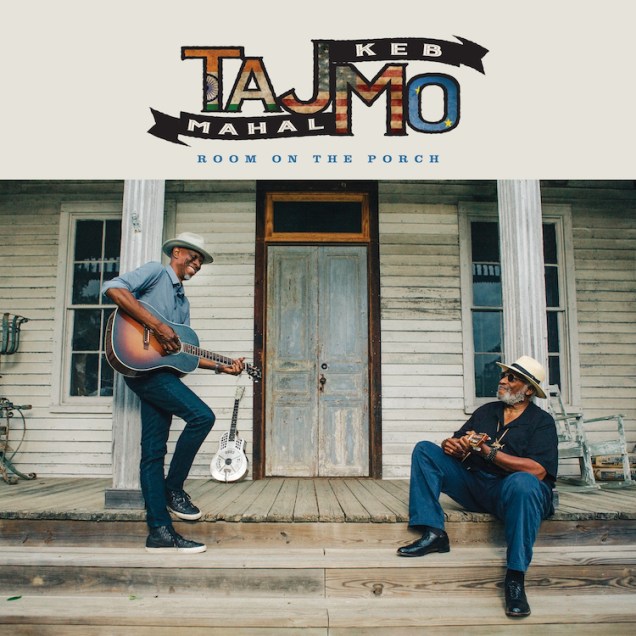
Taj Mahal and Keb’ Mo’ have been sort of a team for a while now, especially since they joined up for the delightful Grammy winning “TajMo” in 2019. They’ve toured together, been on some blues cruises together, and in general, have bought their bluesy, folksy and rootsy styles together in a celebratory collaboration of great American music.
Now they’re at it again with “Room On the Porch,” combining their multi-faceted talents for more of their informal front porch style of original and vintage blues and roots music.
They may be informal, but they’re not alone. They’re joined on vocals on the sprightly title track by Grammy-nominated Ruby Amanfu, and again by jazz-singer Wendy Moten on “Better Than Ever.” And they’ve made room on their porch for a superb supporting cast: Anton Nesbit (bass), Brian Allen (upright bass), David Rodgers (Hammond organ/synth), Jimmy Nichols (Hammond organ/Wurlitzer), K. Roosevelt (drums/bass), Keio Stroud (drums), Jenee Fleenor (violin), Billy Branch (harmonica), Jeff Coffin (sax), John Oates, Robbie Brooks Moore, Lauren Lucas, Michael B. Hicks, Ron Poindexter & Gene Miller.
That’s a lot to pack into one album, but it’s all carried off with a relaxed feeling that makes everything sound musically cool and copasetic. It’s a back porch, or in this case, front porch vibe. The vocals, the instrumentation, the arrangements all weave a magical tapestry. Mo’ and Mahal trade vocals throughout, sometimes joining together, with Taj’s gruffness a gritty counterpoint to Keb’s smoothness on six new songs for the session, plus some smartly recrafted oldies.
The title track opens the album (it’s always a pleasant surprise when that happens) with a friendly invitation from Taj and Keb’ to join this porch party, adding a sparkling vocal contribution by Amanfu: “Come on up there’s room on the porch for everyone.” Next, “My Darling, My Dear,” pairs Mahal and Mo’ in a lovely ballad. Then Mo’ adds his unique sound to open the chestnut, “Nobody Knows You When You’re Down and Out,” leading into a call and response with Mahal, enriched by a striking vocal chorus.
“She Keeps Me Movin’” floats in on an easy, rhythmic shuffle, then the vocal back and forth continues on “Make Up Your Mind.” Make Up Your Mind,” a jaunty, country/folk/pop melody that finds common ground in a cautionary tale with the lyrics “You make no sense, you’re going insane/Do you follow your heart or do you follow your brain.”
“Thicker Than Mud” is a gentle rocker that emphasizes the importance of family ties even after you’re gone: “Blood is thicker than mud.” A deep-throated organ intro opens up the more traditional blues of “Junkyard Dog” with Mahal’s nasty growling “junkyard dog” refrain. The scorching blues of “Blues’ll Give You Back Your Soul,” with Mahal on vocals and ukelele, features an unearthly sax solo in unwinding its primal message: “You like your rock and roll but the blues’ll give you back your soul.” This track should do just that!
Chicago harp legend Billy Branch adds a sharper edge to the Latin-tinged, “Better Than Ever,” with vocal embroidery by Moten, and few concluding verses in French by Mahal with Brach’s harp weaving in and out.
The closer finds Mo’ and Mahal trading vocals and acoustic licks in the down-home “Rough Time Blues,” by Jontavious Willis. The hard-times blues theme is a counterpoint to the general lightness of being that has come before, but its front-porch quality makes it go down easy.
Keb’ Mo’ and Taj Mahal have opened up their front porch once again with their effervescent “Room on the Porch,” where there’s plenty of space for the rest of us to pull up a chair and enjoy.
Here’s “Room on the Porch” from the album:
Tracklist: 1. Room On The Porch with Ruby Amanfu 2. My Darling My Dear 3. Nobody Knows You When You’re Down and Out 4. She Keeps Me Movin’ 5. Make Up Your Mind 6. Thicker Than Mud 7. Junkyard Dog 8. Blues’ll Give You Back Your Soul 9. Better Than Ever with Wendy Moten 10. Rough Time Blues
Musicians – Anton Nesbit (bass), Brian Allen (upright bass), David Rodgers (Hammond organ/synth), Jimmy Nichols (Hammond organ/Wurlitzer), K. Roosevelt (drums/bass), Keio Stroud (drums), Jenee Fleenor (violin), Billy Branch (harmonica), Jeff Coffin (sax), John Oates, Robbie Brooks Moore, Lauren Lucas, Michael B. Hicks, Ron Poindexter & Gene Miller.
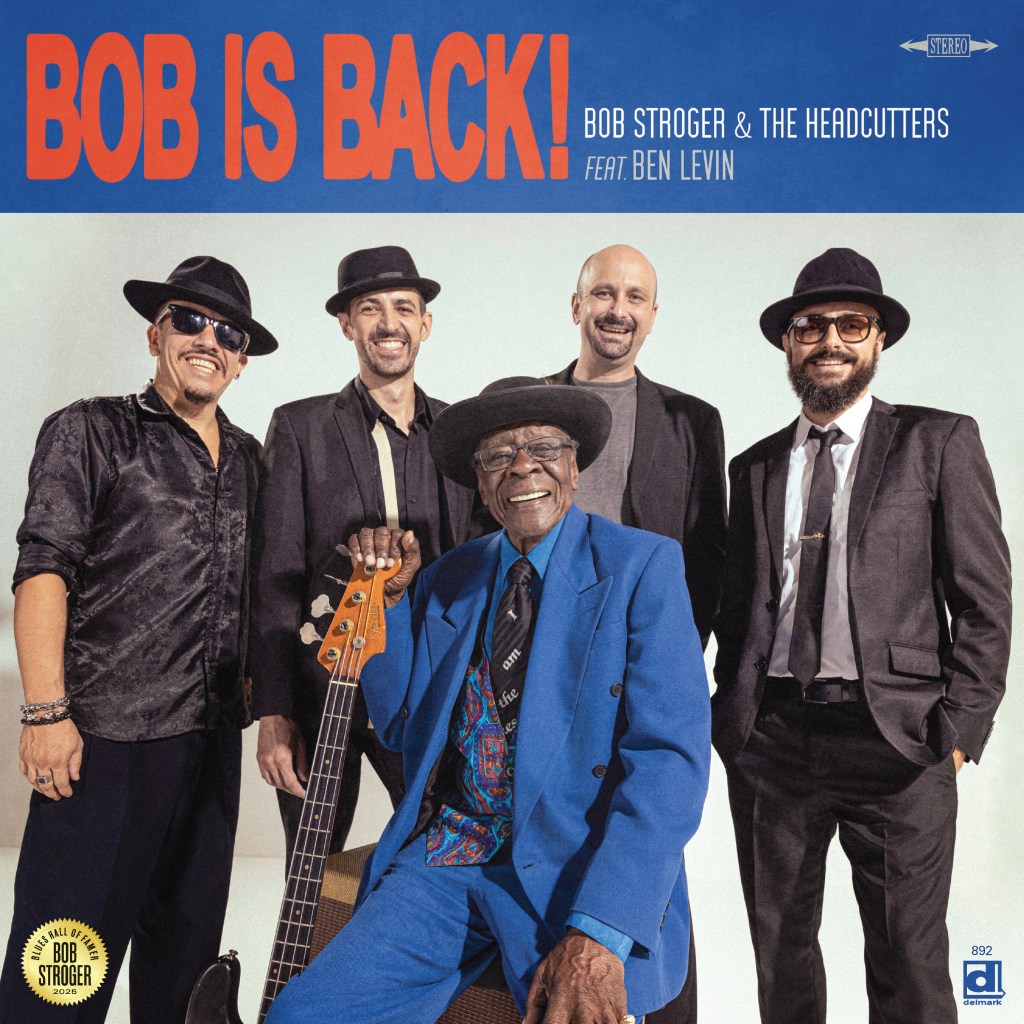
Bob Stroger was born on a farm outside of Hayti, Missouri, on Dec. 27, 1930. That makes him 94 years old.
Stroger, the bass guitarist behind dozens of performers at Delmark Records, has just released a new solo album on Delmark, and was recently inducted into the Blues Halll of Fame. That also makes him something of a blues miracle!
Not too many blues artists (much like the rest of us mortals) make it to their 90s, let alone as a performer. A few come to mind: Pinetop Perkins died at 97 and Honeyboy Edwards at 96. Bobby Rush is still working at 91. And yes, Buddy Guy is still churning, but he’s a mere 88!
For “Bob Is Back!,” his second solo outing at Delmark, Stroger is again paired with the Headcutters, a tough-enough young Brazilian band that provided the backing for Stroger’s first Delmark solo effort, “That’s My Name.” The Headcutters are Joe Marhofer on harp, Ricardo Maca on guitar, Arthur ‘Catuto’ Garcia on bass, Leandro ‘Cavera’ Barbeta on drums and pianist Ben Levin as a special guest. They combine freshness and authenticity here that drives home the spirit of Stroger’s blues.
This album features five Stroger originals, and seven covers, all musical graduates of the classic old-school of the blues (credits at the end of this post). If you need a reminder of just how vital that music was, and still is, check out the cuts included here.
Stroger opens with “Look Over Yonders Wall” by Elmore James and “Champagne and Reefer” by Muddy Waters, two fine vintage blues. Stroger’s own “Jazz Man Blues” follows, heavy on jazz influences with instrumental solos all around: “Jazz ain’t nothin’ but a bluesman blowin’ his horn … “
Tampa Red’s “Don’t You Lie To Me” gets a rhythmic Latin treatment with the Headcutters providing a backup chorus. Stroger contributes the gentle romantic lyricism of the slow blues “My First Love” and then shuffles in with the lover’s lament of “Loan Me Train Fare.” The R&B power of Amos Milburn kicks in with “Thinking and Drinking,” with piano and harp trading sharp solos. Stroger’s “Bob Is Back In Town,” gets a slow and bluesy treatment.
“Love You Baby,” by Joe Brown and Edward Milton, is more deeply felt, down-home blues. An instrumental version of the title track gives the Headcutters a chance to stretch out with a rocking “welcome back” feel. “Gold Tailed Bird” is a slow-burning cover of the Jimmy Rogers song. The closer is a rollicking version of the classic “Let The Good Times Roll.”
Bob Stroger’s “Bob Is Back!” is a fine album of vintage blues from one of the old masters. It’s not just proof that he’s back, but that, more importantly– just like the blues — he’s never gone away.
“Loan Me Train Fare” from the album:
Tracklist and credits:
01 Look Over Yonders Wall 02:50 Elmore James, Marshall E. Seehorn Arc Music, Rhinelander Music Inc (BMI) 02 Champagne And Reefer 03:34 McKinley Morganfield / Watertoons Music (BMI) 03 Jazz Man Blues 03:53 Robert Stroger / Leric Music (BMI) 04 Don’t You Lie To Me 03:35 Hudson Whittaker / Universal Music Corporation (ASCAP) 05 My First Love 03:06 Robert Stroger / Delmark Admin. 06 Loan Me Train Fare 03:29 Robert Stroger / Leric Music (BMI) 07 Thinking And Drinking 03:44 Amos Milburn / EMI Longitude Music (BMI) 08 Bob Is Back In Town 04:35 Robert Stroger / Delmark Admin. 09 Love You Baby 02:57 Joe Brown, Edward Milton / Embassy Music Corp (BMI) 10 Bob Is Back 03:45 Robert Stroger / Delmark Admin. 11 Gold Tailed Bird 04:27 Jimmy Rogers / Cordero Publishing Company (BMI) 12 Let The Good Times Roll 03:54 Fleecie Moore Jordan, Sam Theard RYTVOC Inc, Theard Swanson Publishing (ASCAP)
Bob Stroger BASS AND VOCALS Joe Marhofer HARMONICA Ricardo Maca GUITAR Arthur Catuto BASS Leandro Cavera DRUMS Ben Levin PIANO AND ORGAN (ALL TRACKS EXCEPT TRACK 9) Candice Ivory BACKING VOCALS (TRACK 9) Renée Gros BACKING VOCALS (TRACK 9
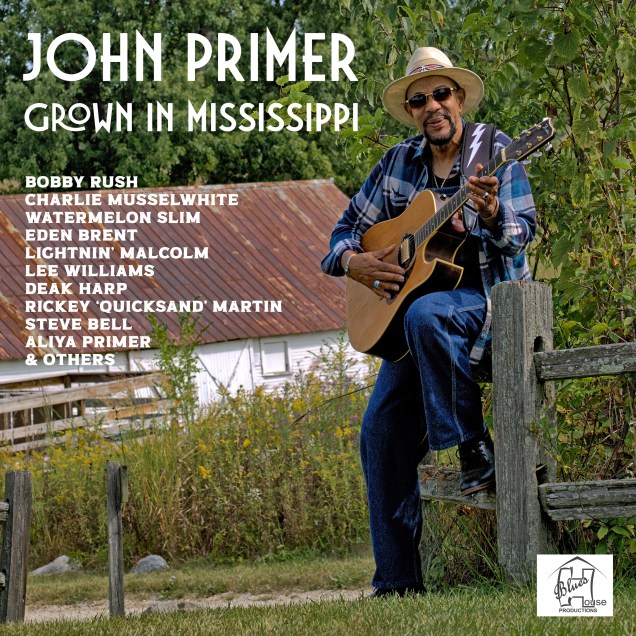
John Primer’s excellent album “Grown in Mississippi” has been around for few weeks, but it’s one I can’t ignore.
At the age of 80, Primer is one of the few real-deal bluesmen still performing, and his authentic music reflects his deep roots in the blues. And it reflects some of the music that I favor when I sit down with some bourbon and blues!
Primer was born into a Camden, Miss., sharecropper family and learned to love the music at a young age — his father and cousin played guitar and sang, and his grandmother’s blues records sparked more interest. He made his first music with a diddley bow on the side of her house.
Primer relocated to Chicago at 18, honed his skills on the streets and in clubs, and in 1974 became a member of the house band at the legendary South Side club, Theresa’s, where Willie Dixon eventually asked Primer to join his Chicago Blues All-Stars in 1979. From there, he grew through the bands of Muddy Waters and Magic Slim before launching his own career. His recordings with and for Bob Corritore have preserved much of his heritage in recent years.
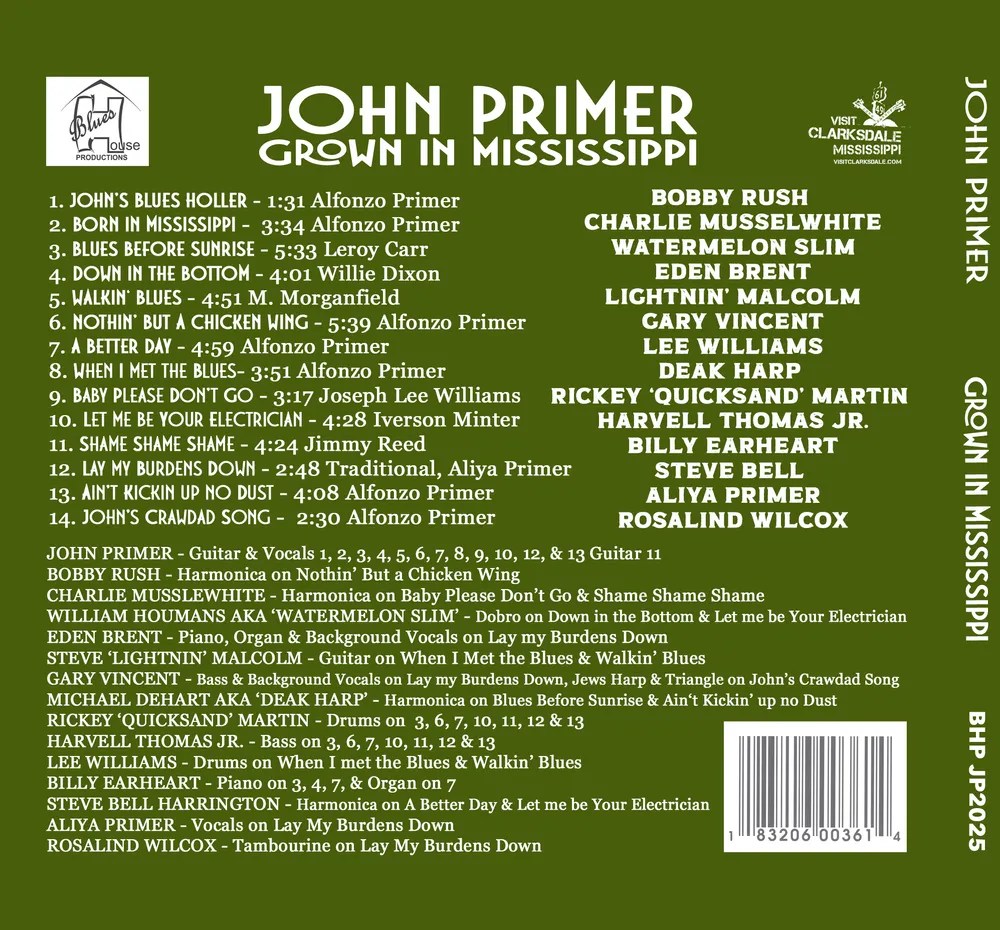
That heritage is on display here from the primitive opening acapella sounds of “John’s Blues Holler,” a field chant from deep in the blues, moving into “Born in Mississippi,” a down-home blues memory of his hard young life with just his voice and eloquent guitar.
A series of classic deep-blue covers includes Leroy’s Carr’s “Blues Before Sunrise,” Muddy Waters’ “Walkin’ Blues” and Willie Dixon’s “Down In The Bottom.” Primer’s own “Nothing But A Chicken Wing” struts with the legendary Bobby Rush, still full of vinegar at 91, on harp. The slow blues “A Better Day” and “When I Met The Blues” round out this set of three originals.
Joe Williams’ “Baby Please Don’t Go” features Charlie Musselwhite on harp followed by Louisiana Red’s hot-wired “Let Me Be Your Electrician” and the Jimmy Reed classic “Shame Shame Shame.” Primer’s daughter Aliya takes over with an elegant vocal on the sweetly traditional “Lay My Burdens Down,” with Eden Brent on piano and organ.
Two more Primer originals close the album: The sprightly “Ain’t Kickin’ Up No Dust” and “John’s Crawdad Song,” the first song Primer learned on the diddley bow.
“Grown in Mississippi” is blues for the ages. Primer’s vocals and guitar dig deep into the essence of Chicago’s blues heritage. His talented guest artists add to the musical magic. Primer has remained faithful to his blues roots, and at the same time made his music part of the contemporary blues conversation with its timeless appeal. Enjoy it soon and often. Let it fill that hole in your soul.
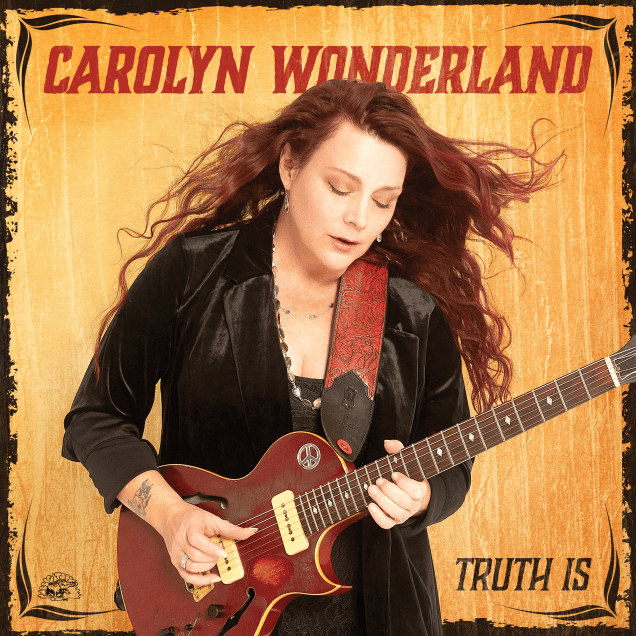
The truth is, Carolyn Wonderland is a powerful vocalist, plays electrifying guitar and writes bright, intense lyrics.
And she’s brought all those skills together again for another fine album, the musically eclectic “Truth Is.” Wonderland has been plying her blues trade and recording since 2001 and is just a few years removed from her coveted stint as lead guitarist for British bluesman John Mayall and The Blues Breakers — a spot that has solidified her standing in the upper ranks of blues guitarists, and a spot previously occupied by Eric Clapton, Mick Taylor, Peter Green, Coco Montoya, and Walter Trout.
Wonderland’s last album, “Tempting Fate,” won the Austin Music Award for Best Blues Artists and Best Guitarist, and she was inducted into the Austin Music Hall of Fame. She has also been nominated for a Blues Music Award three times.
All of which has led to her second album for blues-centric Alligator Records (her 13th overall), showing off her skills on guitar, slide guitar, mandolin, trumpet and piano. Bassist Naj Conklin and drummer Giovanni Carnuccio join a seeming cast of thousands here for ten original tracks and two covers. The music reflects Wonderland’s penchant for exploring music that ranges beyond traditional blues boundaries, and also gives her songwriting skills room to roam.
Wonderland explains: “I’m kind of a weirdo. I have kind of a genre-less approach. So, it never would have occurred to me that I would be good enough for Alligator or that I would be their kind of thing. So, I was really excited,” she says in interview on American Blues Scene.
The opener, “Sooner or Later,” is example of that genre-bending, as Wonderland’s lap steel dances to a countrified psychedelia, with her vocals carrying their own down-home twang. Producer Dave Alvin is featured on guitar (he also produced “Tempting Fate”). Marcia Ball and Ruthie Foster lend backup vocals on the following tracks — “I Ain’t Going Back Again” and the rocking “Truth Is,” explained in the lyric: “Truth is right there in the very air we breathe. So why is it so hard to believe it.”
“Let’s Play a Game” is a smooth, almost dreamy message: “We’ve marched to the capitols. We’ve sang in the holler. Dined with the kings. And lo, Lord, how hard we’ve tried but peace without justice that’s just freedom denied.” The bluesy, easy-swinging “Whistlin’ Past the Graveyard Again” has a distinctive roadhouse flair with Cindy Cashdollar on lap steel and honky-tonk piano from Red Young, plus some concluding Wonderland whistling. “It Should Take” leans toward a bright New Orleans rhythm.
“Wishful Thinking” is the first cover, from Greg Wood and Eddie Hawkins, a gently flowing ballad, with a universal thought: “I wish that everything that ever fell apart could come back together again exploding backwards into perfection but that’s just wishful thinking.”
“Orange Juice Blues” by The Band’s Richard Manuel is a standout track, a fearsome blues riding Wonderland’s guitar and Cindy Cashdollar’s lap steel leads, Shelley King’s acoustic guitar, Young’s B3, Balls’s piano and King on backup harmony. It’s a roughhouse gem of a song, mined from all the rest that glitters here.
“Tattoos as His Talisman,” with Wonderland’s vocals and Alvin’s guitar soaring, is a tough ode to an illustrated man. “Flowers In Bloom” coaxes a slow-dance melody and aching vocals from Wonderland, haunted by a relationship. “Deepest Ocean Blue” floats in on Latin rhythms and leads into the closing deep blue passion of “Blues for Gene,” a tribute to pianist Gene Taylor, a friend of Wonderland’s, who played with the James Harman Band, toured with Canned Heat and The Fabulous Thunderbirds. The song emotionally explains his death during the 2022 power failure amid frigid weather in Texas in 2022. Henri Herbert wraps up his gorgeous piano work here with a raucous boogie-woogie climax. It’s a powerful song, lyrically and musically.
Carolyn Wonderland’s “Truth Is” more than lives up to its title. It’s her musical truth, offered with a splendid rawness and emotion, a passionate exploration of her musical sensibilities and musical skills. Honest. It is.
1. Sooner Or Later 4:13 (Carolyn Wonderland, Wonder Chicken Publ., admin. by Drive Music Publ., ASCAP) 2. I Ain’t Going Back 2:54 (Carolyn Wonderland, Wonder Chicken Publ., admin. by Drive Music Publ., ASCAP) 3. Truth Is 3:39 (Carolyn Wonderland, Wonder Chicken Publ., admin. by Drive Music Publ., ASCAP) 4. Let’s Play A Game 4:00 (Carolyn Wonderland, Wonder Chicken Publ., admin. by Drive Music Publ., ASCAP) 5. Whistlin’ Past The Graveyard Again 4:00 (Carolyn Wonderland & Dave Alvin, Wonder Chicken Publ., admin. by Drive Music Publ., ASCAP / Blue Horn Toad Music admin. by BMG Bumblebee, BMI) 6. It Should Take 2:25 (Carolyn Wonderland, Wonder Chicken Publ., admin. by Drive Music Publ., ASCAP) 7. Wishful Thinking 4:16 (Greg Wood & Eddie Hawkins, Chump Salvage Music, BMI / Muscience Music, ASCAP) 8. Orange Juice Blues 3:37 (Richard Manuel, Universal Tunes, a division of Songs of Universal, BMI) 9. Tattoos As His Talisman 3:29 (Carolyn Wonderland & Dave Alvin, Wonder Chicken Publ., admin. by Drive Music Publ., ASCAP / Blue Horn Toad Music admin. by BMG Bumblebee, BMI) 10. Flowers In Bloom 4:26 (Carolyn Wonderland, Wonder Chicken Publ., admin. by Drive Music Publ., ASCAP) 11. Deepest Ocean Blue 3:52 (Carolyn Wonderland, Shelley King, Naj Conklin & Giovanni Carnuccio III, Wonder Chicken Publ., admin. by Drive Music Publ., ASCAP / Lucky Monday Music, ASCAP / Naj Conklin, BMI / Tyrannoscore, ASCAP) 12. Blues For Gene 6:40 (Carolyn Wonderland & Dave Alvin, Wonder Chicken Publ., admin. by Drive Music Publ., ASCAP / Blue Horn Toad Music admin. by BMG Bumblebee, BMI)
Carolyn WonderlandElectric Guitar, Lap Steel, Vocals, Whistling Naj Conklin Electric and Upright Bass Giovanni “Nooch” Carnuccio Drums, Percussion (2,3,6,7) with Shelley King Harmony Vocals (2,3,4,5,6,7,8,10,11), Acoustic Guitar (4,5,7,8,9,11), ”Pop” (10) Dave Alvin Electric Guitar (1,8,9,12) Red Young B3 Organ (1,2,3,4,8,10,11), Piano (5,10,11) Bukka Allen Piano (1,7), B3 Organ (7,9) Kevin Lance Percussion (1,11) Ruthie Foster Vocals (2,3) Marcia Ball Vocals (2,3,8), Piano (8) Cindy Cashdollar Lap Steel Guitar (5,8) Henri Herbert Piano (6,12) Stuart Sullivan Percussion (7)
Produced by Dave Alvin Recorded and Mixed by Stuart Sullivan at Wire Recording at Point West, Austin, TX Additional Engineers:Drew Potter and Pete Caponi Mastered by Collin Jordan and Bruce Iglauerat The Boiler Room, Chicago, IL Photos by Mary Keating Bruton, MKB Photography Packaging Design by Kevin Niemiec Hair and Makeup by Brandi Cowley Stylist: Cheryl G Smith, Wardrobe Matters
This album is dedicated to the memories of two musicians who changed me for the better, and whom I miss dearly, John Mayall and Gene Taylor. May you find yourself in their music.
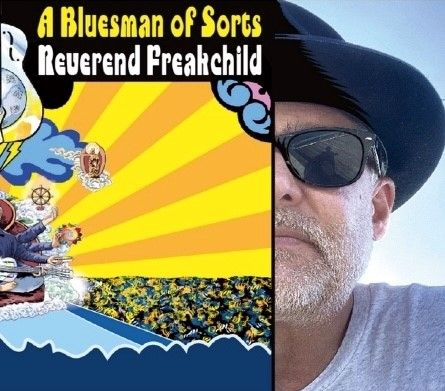
Does the musically devout trafficker in fine vintage blues known, or perhaps formerly known, as the Rev. Freakchild still play and sing among us? The simplest answer to that question is yes. And no.
Although that contradiction is just the kind of paradoxical dichotomy the Rev. would likely revel in, it may explain the parallel existence of his two self-penned “obituaries,” written 12 years apart as album liner notes. The first proclaimed the Rev.’s demise on 2013’s “Chaos & Country Blues.” Apparently ineffective, that obituary gets new life on Freakchild’s latest release, “A Bluesman of Sorts,” that he describes as a “posthumous retrospective collection.” The album lists its producer as Sal Paradise, who was Jack Kerouac’s narrator in Kerouac’s trippy novel “On The Road,” and is apparently one of Freakchild’s alternate realities, as he refuses to limit himself to merely one on this cosmic plane.
So, yes and no can both be correct, as Freakchild or his blues doppelganger offers up this two-album set of 19 songs – a few previously unreleased originals, some old favorites, some classics and some remixes of previously released material. For all of his other-worldliness as a Buddhist bodhisattva, the Rev. is a righteous singer, songwriter and guitarist who works in the traditional country blues format and beyond, to “capture the chaotic coherence and the spirit of a tune,” he says.
The Rev.’s music often defies description when it explores other astral modes, but his blues are a solidly down-to-earth musical vision with vocals rich in historic tradition. The opener on Disc 1 is the gently rhythmic “Green and Brown Blues,” previously unreleased, with Freakchild adding lyrical harp to a stripped-down trio of John Robinson on bass and Patrick Carmichael on drums with a plaintive message: “Yeah I got a million things on my mind, but I still don’t know what to do.”
The furious drive of “Chevrolet” shifts the mood with another unreleased track fueled by rolling organ riffs, adapted by Lonnie and Ed Young in 1959 from the 1930 Memphis Minnie song, “Can I Do It For You.” – “I buy you a ’57 Chevrolet… just to do somethin’ for you.” The Robert Johnson pleading “Come On In My Kitchen,” gets a masterful guitar solo from the Rev., who channels Johnson’s eerie vocals to match the thunderstorm sound effects intro. Muddy Waters’ “I Can’t Be Satisfied” gets a hard-driving Stones-like update. “Roll and Tumble Blues” is another classic blues by Hambone Willie Newbern from 1929 that gets the Freakchild treatment. The starkly gospel-tinted “Jesus Just Left Chicago” finds The Rev. testifying with his National Steel guitar and irreverent lyrics, followed by the sly testimony of “Everybody Wants to Go to Heaven” — “Everybody wanna go to heaven but nobody wanna die.”
The Freakchild original “A Day Late and A Dollar Short” finds him bemoaning his financial plight to a rollicking backbeat, while a world-weary vocal on the slow blues of “Rattling Cages” finds him locked up for being one toke over the line.“Dust Radio,” previously unreleased, is a throbbing version of a Chris Whitley tune that closes out Disc 1.
Disc 2 opens with a rousing version of Jimmy Reed’s “Big Boss Man,” complete with razor-sharp harp by Hugh Pool. The Rev. then pumps a little bit of funk and a lot of vocal energy into Bobbie Gentry’s countrified “Ode to Billie Joe” in another unreleased cut. Robert Johnson turns up again as the fearsome “Hellhound On My Trail,” materializes with a haunting vocal.
The traditional “I Know You Rider” gets a tough Southern rocker treatment in this rousing remixed version.“Yer Blues” is the Rev.’s one-man version of the Lennon/McCartney down-and-dirty blues for the Beatles, with the Freakchilds rocking it hard and tight. “Wish I Was In Heaven” is a riveting trance-like version of the hypnotic Mississippi Hill Country blues by R.L. Burnside, and “Death Bells” is a solo country blues, with Freakchild’s sparsely authentic version of the Lightnin’ Hopkins song.
Two live tracks wrap up this bluesified package: An enthusiastic a cappella version of Son House’s “Grinnin’ In Your Face,” with a rhythm section of audience hand-clapping, and the previously unreleased finale is an achingly soulful version of “As the Years Go Passing By,” by Peppermint Harris.
With this new set, the Rev. Freakchild may have (or may not have) escaped his own karmic cycle, but his blues definitely live on. A frivolous approach to the Freakchild persona masks a serious appreciation for his music.
“A Bluesman of Sorts” is a far-too-modest title for this joyful collection of music that the Rev. obviously loves and creates with unbridled passion and authenticity. Join him on his journey through this blues-filled astral plane, while you share his mantra: “Music is my religion. Through song I seek transcendence!”
2 – Chevrolet (4:57) Reverend Freakchild – Vocals and Guitar / Matt Rae – Lead Guitar / Other Personnel Unknown / Arrangement by Matt Rae / Recorded at Next Door Studios, CT, circa 1998 (Written by Lonnie and Ed Young) Previously Unreleased Track from the Soul Miners Sessions
3 – Come On In My Kitchen (3:20) Reverend Freakchild – Vocals and Guitar / Recorded at Uptown Studios, NYC, circa 2002 (Written by Robert Johnson) Previously Released Track from the Album Chaos & Country Blues
4 – I Can’t Be Satisfied (4:41) Reverend Freakchild – Vocals and National Steel Guitar / Chris Parker – Drums / Recorded at Excello Studios, Brooklyn, NY, circa 2019 / additional overdubs by Aki Kumar – Harmonica / Nick Amodeo – Bass / Steve Sirockin – Organ / Recorded and Mixed at Altitude Recording, Boulder, CO 2024/25 (Written by McKinley Morganfield) Previously Released Track from the Album Bodhisattva Blues, Now with New Overdubs and Remixed
5 – Roll and Tumble Blues (2:34) Reverend Freakchild – Vocals and Guitar / Recorded at Uptown Studios, NYC, circa 2003 / with additional overdubs by Hugh Pool – Harmonica / Recorded at Excello Studios, Brooklyn, NY, circa 2008 / Jason Hann – percussion / Mixed at Altitude Recording, Boulder, CO circa 2024 (Written by Hambone Willie Newbern) Previously Released Track as Rollin’ and Tumblin’ from the Album Chaos & Country Blues, Now with New Overdubs and Remixed
6 – Jesus Just Left Chicago (3:26) Reverend Freakchild – Vocals and National Steel Guitar / Recorded live On Air at WWOZ studios, New Orleans, LA circa 2019 / additional overdubs by Nick Amodeo – Bass / Chris Parker – Drums / Jason Hann – percussion / Recorded and Mixed at Altitude Recording, Boulder, CO 2024 (Written by Billy Gibbons, Dusty Hill and Frank Beard) Previously Released Track from the Album Road Dog Dharma, Now with New Overdubs and Remixed
7 – Everybody Wants to Go to Heaven (2:49) Reverend Freakchild – Vocals and Guitar / Recorded at Peloton Studios, circa 2020 / additional overdubs by Malcolm the Minister of Bass / Jason Hann – percussion / Mark Karan- 12 String lead Guitar / Mixed at Altitude Recording, Boulder, CO circa 2022 (Written by Don Nix) Previously Released Track from the Album Supramundane Blues, Now Remixed
10 – Dust Radio (4:03) Reverend Freakchild – Vocals and National Steel Guitar / Recorded at Peloton Studios, circa 2020 / additional over dubs by Nick Amodeo – Bass / Steve Sirockin – Drums / Recorded and Mixed at Altitude Recording, Boulder, CO, 2024 (Written by Chris Whitley) Previously Unreleased Track
CD2
1 – Big Boss Man (4:12) Reverend Freakchild – Vocals and National Steel Guitar / Hugh Pool – Harmonica / Mark Karan – Lead Guitar / Melvin Seals – Organ / Chris Parker – Drums / Recorded at Excello Studios, Brooklyn, NY, circa 2019 / additional overdubs by Jason Hann – percussion / Remixed at Altitude Recording, Boulder, CO 2024 (Written By Jimmy Reed) Previously Released Track from the Album Bodhisattva Blues, Now with New Overdubs and Remixed
2 – Ode to Billie Joe (6:53) Reverend Freakchild – Vocals and Guitar / Matt Rae – Lead Guitar / Other Personnel Unknown / Arrangement by Matt Rae / Recorded at Next Door Studios, CT, circa 1998 (Written by Bobbie Gentry) Previously Unreleased Track from the Soul Miners Sessions
3 – Hellhound On My Trail (5:42) Reverend Freakchild – Vocals and National Steel Guitar / Chris Parker – Drums / Recorded at Excello Studios, Brooklyn, NY, circa 2016 / additional overdubs by Jason Hann – percussion / Mixed at Altitude Recording, Boulder, CO 2024 (Written by Robert Johnson) Previously Released Track from the Album Illogical Optimism, Now with New Overdubs and Remixed
4 – I Know You Rider (3:11) Reverend Freakchild – Vocals and Guitar / Malcolm the Minister of Bass / Jason Hann – percussion / AJ Fullerton – lead Guitar / Recorded and Mixed at Altitude Recording, Boulder, CO circa 2019 / Remixed 2024 (Traditional) Previously Released Track from the Album Bodhisattva Blues, Now Remixed
5 – Yer Blues (5:41) Reverend Freakchild – Vocals and National Steel Guitar / Hugh Pool – Harmonica / Mark Karan – Lead Guitar / Melvin Seals – Organ / Chris Parker – Drums / Recorded at Excello Studios, Brooklyn, NY, circa 2019 / additional overdubs by Nick Amodeo – Mandolin / Remixed at Altitude Recording, Boulder, CO 2024 (Written by Lennon/ McCartney) Previously Released Track from the Album Bodhisattva Blues, Now with New Overdubs and Remixed
6 – Wish I Was In Heaven (3:36) Reverend Freakchild – Vocals and National Steel Guitar / Chris Parker – Drums / Recorded at Excello Studios, Brooklyn, NY, circa 2014 / Remixed at Altitude Recording, Boulder, CO 2024 (Written by R. L. Burnside) Previously Released Track from the Album Hillbilly Zen-Punk Blues, Original Session without Overdubs
7 – Death Bells (3:14) Reverend Freakchild – Vocals and Guitar / Recorded at Uptown Studios, NYC, circa 2005 (Written by Sam ‘Lightnin’ Hopkins) Previously Released Track from the Album Chaos & Country Blues
Bonus Live Tracks –
8 – Grinnin’ In Your Face (2:43) Reverend Freakchild – Vocals / Recorded Llive at Yorckschlosschen Jazz Cub – Berlin, Germany 2015 (Written by Eddie ‘Son’ House) Previously Released Track from the Album Preachin’ Blues
9 – As the Years Go Passing By (5:30) Reverend Freakchild – Vocals, Lead and Rhythm Guitar / Hugh Pool – Rhythm and Lead Guitar / Malcolm the Minister of Bass / Chris Parker – Drums / Recorded Live at The Cutting Room – NYC 2023 (Written by Peppermint Harris) Previously Unreleased Track
All Tracks Mastered at Airshow by David Glasser / Produced by Sal Paradise
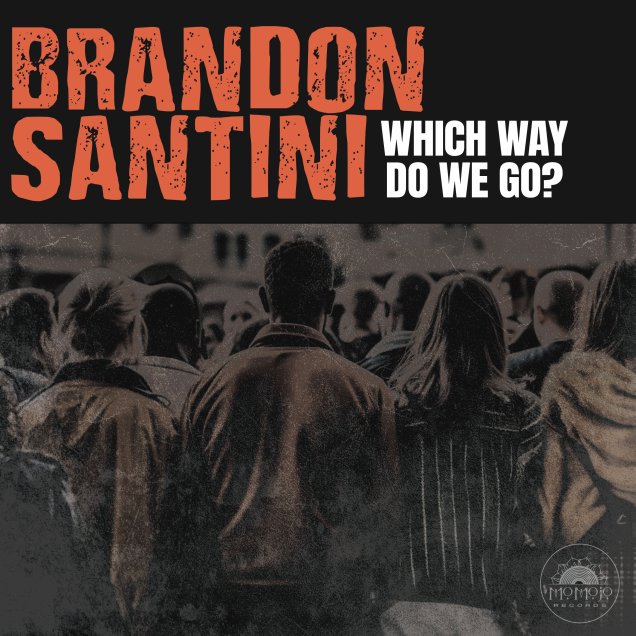
If there ever was an artist whose talents were accurately reflected in the name of his record label, it would be Brandon Santini and MoMojo Records.
Santini’s deeply rich vocals, ethereal harp playing and magical songwriting are as mysterious as they are spiritual — in other words, filled with his personal mojo.
His latest album, “Which Way Do We Go?” is filled with that mojo — it’s a powerful emotional statement issued in a soulful contemporary blues format. And it’s filled with Santini’s original lyricism — his name is on every song.
Recording in Memphis mainly with his touring band and musical sidekick/producer Jeff Jensen, Santini makes a prescient opening statement in the stark question of the first song and title track, laid down to a visceral harp-laced soundtrack: “The world keeps turning with or without us…I want to know brothers and sisters which way do we go?” Its anthemic statement marched headlong into the music that follows.
“The War Ain’t Over One,” sung as though from deep in another dimension, deals with seemingly endless personal struggles amid searing guitar riffs. “See That Pony” is a frisky blues trot with galloping harp. “Ain’t Turning Back” is a slow blues seared in grease and served as soul food. ” A Southern-blues anthem of defiance and survival. A slow-burning soul-blues tune that makes you feel every mile of the road behind you.
“Do What Comes Naturally” is introduced by a piercing harp, followed by a throbbing groove. “Mile After Mile” rides a looping beat along a never-ending journey: “Mind gets worried and my feet get tired / it’s a never ending journey, but one worthwhile.”
“Working on a Mystery” rocks hard and fast, chasing an inexplicably just-out-of-reach woman: “I’m working on a mystery that I can’t seem to understand.” “Trouble Stay Away” is a fast-paced blues warning “trouble” to watch its step. “Blues So Bad” starts out as a gentle acoustic blues, then turns tough enough. “Baby’s Got Soul” is self-explanatory, with a driving beat, leaning nicely into the closer, the sassy, “She Got the Way,” about a groovy kid of woman: “Looking in the mirror while you comb your hair, she comes dancin’ in her underwear…”
Brandon Santini’s “Which Way Do We Go?” is a passionate statement that jumps out from the blues and races headlong into a soulful stew laced with world-wise vocals, swampy harp-led musicality and lyrics that have a magical mystery tour flair. Enjoy it soon and often.
But here’s how Santini explains it: “It felt great to return to my former hometown of Memphis, Tennessee, to record with my touring band and longtime musical comrade and friend, Jeff Jensen. These deeply personal songs were written during the pandemic and its aftermath, and the album features the raw power that this band takes with them wherever we go. This is a moment of reckoning. If we don’t find our way with love and compassion, I fear what lies ahead.”
Tracklist and credits: Which Way Do We Go? (Santini) 4:112. The War Ain’t Over (Santini) 4:023. See That Pony (Santini, Jensen) 3:074. Ain’t Turning Back (Santini) 4:235. Do What Comes Naturally (Santini) 4:246. Mile After Mile (Santini, Jensen) 4:407. Working on a Mystery (Santini, Arthur) 2:438. Trouble Stay Away (Santini) 3:079. Blues So Bad (Santini) 3:5710. Baby’s Got Soul (Santini) 4:5611. She Got the Way (Santini) 3:00
Recorded August & December 2024 at High/Low Recording in Memphis,TN Produced by: Jeff Jensen Mixed by: Pete Matthews & Toby Vest Engineered by: Toby Vest, Pete Matthews, & Ron James Mastered by: Brad Blackwood at Euphonic Masters
Personnel: Brandon Santini-Lead Vocals, Harmonicas, Electric Rhythm Guitar (track #2),Hand Claps Timo Arthur-Electric Guitar (except track #6), Acoustic Guitar (track #9), Hand Claps Jeff Jensen-Electric Guitar (tracks #1, 6, 7), Acoustic Guitar (track #7), Backing Vocals (track#1), Hand Claps Cliff Moore-Bass, Hand claps Ron James-Drums, Percussion, Hand Claps Jesse James Davis-Backing Vocals (tracks #1, 2, 4, 7
Grits may very well be groceries, according to Little Willie John, but they are also one of the primary ingredients in that nourishment for the soul served up as sweet soul music.
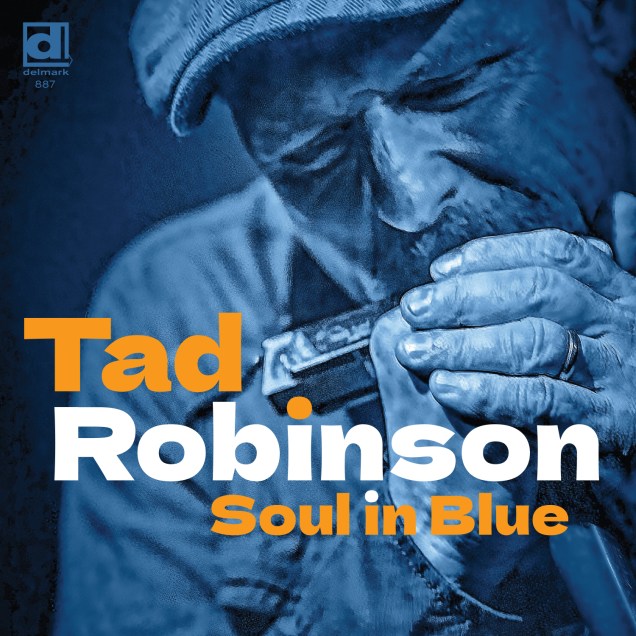
That thought came to mind while I was listening to soulman Tad Robinson’s latest album, the effervescent “Soul in Blue.” On these ten smartly crafted tracks, Robinson digs deep with passionately gritty vocals, shouting, moaning and caressing his blues. It’s exactly that grit that makes it all work — Robinson’s voice is smoky, well-aged whiskey, smooth and sharp as the song demands, with an occasional shot of spine-tingling falsetto.
And the demands here are simple: Rip the musical pain from his soul and pour it into yours.
It all begins with the original “Keep It in the Vault,” as Robinson’s harp-fueled intro eases into a slow rocking blues that sets the stage for what follows. What’s next is an achingly mournful lost-love ballad, also original, “Out of Sight Out of Mind,” and a tearful vocal turn on the melancholy tale.
“Somewhere There’s a Train” rolls in with a more optimistic song, waiting for his lady to get their plans on track, highlighted by a hopeful Roosevelt Purifoy Jr. organ solo. “(I’m) Down to My Last Heartbreak,” a Wilson Pickett chestnut, adds a little funk to Robinson’s soulful cover. “Deeper Than You Think” is another gentle ballad, powered by a silky smooth vocal, a majestic Purifoy organ break, building into a breathtaking falsetto finale. “It’s Private Tonight,” by prolific songwriter Arthur Adams, is another slow-driving soul-blues full of heartache and longing: “I don’t wanna hold nobody but my baby tonight.”
“Keep You Heart Open for Love” opens with funky backbeat, sharp guitar and a message summed up by its title. “Up in the Air” adds a restless harp intro and solo to this upbeat original: “Everything made is up in the air except for you and me.”
“Forgive and Forget” is a gritty pleading for forgiveness: “If you decide to come back home, I’ll be waiting there for you …. love me baby like I love you.” The original closer, “This Time,” is another gorgeous ballad, filled with sensuous anticipation of a new love, swept along on a beautiful melody amidst a tapestry of backup vocals.
Tad Robinson is not a newcomer. He recorded for Delmark in the 1990s, became a regular on the blues circuit in the U.S. and in Europe, and has collected two W.C. Handy Award nominations and eight Blues Music Award nominations. It’s been six years since Robinson’s Blues Music Award-nominated “Real Street,” and the “Soul in Blue” is waiting in the wings as another award-quality session.
It’s a tribute to Robinson’s personal and musical grit that he’s still pouring music from his soul into ours. And that makes “Soul in Blue” some of the tastiest soul food groceries on your plate.
Tracks and credits: ➊ KEEP IT IN THE VAULT 4:47 Tad Robinson (Robinworks Music, BMI) ➋ OUT OF SIGHT AND OUT OF MIND 5:14 Tad Robinson, John P. Bean, Alberto Marsico (Robinworks Music, BMI; Quarter Sawn Music, ASCAP) ➌ SOMEWHERE THERE’S A TRAIN 3:52 Tad Robinson, Alberto Marsico (Robinworks Music, BMI) ➍ (I’M) DOWN TO MY LAST HEARTBREAK 3:49 Di Fosco T. Ervin Jr. , James B. Willingham Jr. (Screen Gems – EMI Music, BMI) ➎ DEEPER THAN YOU THINK 4:56 Steve Gomes, Tad Robinson, Kevin Anker (Gomesong Music, BMI) ➏ IT’S PRIVATE TONIGHT 4:07 Adams, Arthur K. (Stone Agate Music, BMI) ➐ KEEP YOUR HEART OPEN FOR LOVE 4:39 Tad Robinson (Robinworks Music, BMI) ➑ UP IN THE AIR 3:07 Tad Robinson, Steve Gomes (Robinworks Music, BMI; Gomesong Music, BMI) ➒ FORGIVE AND FORGET 4:02 Tad Robinson (Robinworks Music, BMI) ➓ THIS TIME 3:51 Tad Robinson (Robinworks Music, BMI)
TAD ROBINSON vocals and harmonica (ALL TRACKS) KEVIN ANKER keyboards (1, 4, 5, 7, 8, 9, 10) PAUL HOLDMAN guitar (1, 2, 5, 8, 9) BRIAN YARDE drums (1, 2, 3, 5, 8, 9) DAVID MURRAY bass (1, 9) THE DELMARK ALL-STARS ROOSEVELT PURIFOY JR. organ (4, 6, 7, 10) POOKY STYX drums (4, 6, 7, 10) LARRY WILLIAMS bass (4, 6, 7, 10) CARLOS SHOWERS guitar (4, 6, 10) MIKE WHEELER guitar (4, 6, 10) SPECIAL GUESTS ALBERTO MARSICO keyboards (2, 3) STEVE GOMES bass (5, 8) DAVE SPECTER guitar (7) ALEX SCHULTZ guitar, bass (3) TOMI LEINO lead guitar (1) CHRIS VITARELLO rhythm guitar (2) MARK BUSELLI trumpet (5) RICH COHEN tenor saxophone (5) BRANDON MEEKS bass (2) GERALDO DE OLIVEIRA congas (10) DEVIN B. THOMPSON background vocals (2) LORIE SMITH background vocals (2) EXECUTIVE PRODUCTION AND SUPERVISION: Julia A. Miller AND Elbio Barilari
The venerable blues magazine Living Blues has opened the voting for its 2025 Living Blues Awards readers’ poll in its latest edition. (There’s also a critics poll.) Go here to vote for the best of 2025. Just for fun, here are the winners from last year.
Here’s a list of Living Blues Award nominees for musical categories (There’s an additional category for blues books.)
Most Outstanding Musician (Keyboard)
Kenny “Blues Boss” Wayne
Roosevelt Purifoy
Victor Wainwright
Eden Brent
Marcia Ball
Anthony Geraci
Ben Levin
Mitch Woods
Dave Keyes
Bruce Katz
Best Blues Album of 2024 (New Recordings)
Kenny “Blues Boss” Wayne: Ooh Yeah!
Sue Foley: One Guitar Woman: A Tribute to the Female Pioneers of Guitar
Eric Bibb: In the Real World
Rick Estrin and the Nightcats: The Hits Keep Coming
Shemekia Copeland: Blame It on Eve
John Primer & Bob Corritore: Crawlin’ Kingsnake
Cedric Burnside: Hill Country Love
Benny Turner: BT
The Anthony Paule Soul Orchestra Featuring Willy Jordan: What Are You Waiting For?
Ronnie Baker Brooks: Blues in My DNA
Jerron Paxton: Things Done Changed
Chris O’Leary: The Hard Line
Jontavious Willis: West Georgia Blues
Zac Harmon: Floreada’s Boy
Guy Davis: The Legend of Sugarbelly
Toronzo Cannon: Shut Up & Play!
Sugaray Rayford: Human Decency
Tinsley Ellis: Alligator Records
Blues Artist of the Year (Female)
Sue Foley
Rory Block
Shemekia Copeland
Irma Thomas
Kat Riggins
Rhiannon Giddens
Candice Ivory
Anne Harris
Anna Popović
Vanessa Collier
Most Outstanding Musician (Guitar)
Sue Foley (Ottawa)
Duke Robillard
Eric Bibb
Lurrie Bell
Christone “Kingfish” Ingram
Toronzo Cannon
John Primer
Ronnie Baker Brooks
Mr. Sipp
Jimmy “Duck” Holmes
Blues Band of the Year
The Blackburn Brothers
Southern Avenue
The Anthony Paule Soul Orchestra
Altered Five Blues Band
Chicago Blues Lifters
Rising Stars Fife and Drum Band
The Phantom Blues Band
Mississippi Heat
The Bo-Keys
The Nighthawks
Blues Artist of the Year (Male)
Eric Bibb
Taj Mahal
Christone “Kingfish” Ingram
Bobby Rush
Mr. Sipp
Bob Corritore
Ronnie Baker Brooks
John Primer
Cedric Burnside
Rick Estrin
Most Outstanding Musician (Harmonica)
Kim Wilson (Fabulous Thunderbirds)
Billy Branch
Bob Corritore
Big Harp George
Mark Hummel
Brandon Santini
Charlie Musselwhite
Rick Estrin
Jason Ricci
Omar Coleman
Most Outstanding Blues Singer
Shemekia Copeland
Valerie June
Sugaray Rayford
Mavis Staples
Diunna Greenleaf
Oscar Wilson
John Németh
Alabama Mike
William Bell
Jerron Paxton
Best Live Performer
Bobby Rush
Shemekia Copeland
Rick Estrin
Christone “Kingfish” Ingram
Cedric Burnside
John Primer
Mr. Sipp
Southern Avenue
Ronnie Baker Brooks
Anne Harris
Best Blues Album of 2024 (Reissue Recordings)
Pat Hare: I’m Gonna Murder My Baby: In Session, 1952–1960
B.B. King: Live in Japan
John Lee Hooker: Burning Hell
Various Artists: I’m Glad About It: The Legacy of Gospel Music in Louisville, 1958–1981
Various Artists: Home of the Blues (Don’t Stop Lovin’ Me): The Lost Masters Vol. 1, 1960–1962
Roy Brown: Rocks
T-Bone Walker: T-Bone Blues
Skip James: Today!
Albert King: Live Wire / Blues Power
Ray Charles: Modern Sounds in Country and Western Music
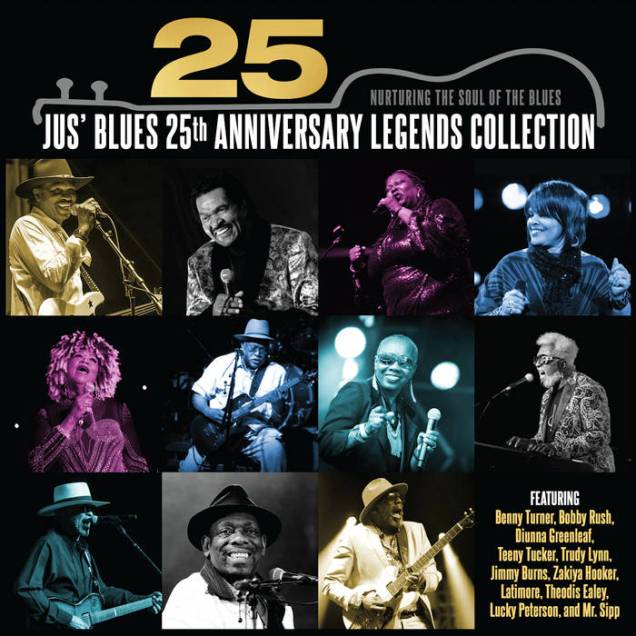
Various Artists — ‘‘Jus’ Blues 25th Anniversary Legends Collection” — Jus’ Blues Records
The Jus’ Blues Music Foundation has been around for 25 years, without much of the national fanfare of larger blues organizations.
That’s a shame, since the nonprofit Jus’ Blues organization has dedicated itself thusly: “Our mission is to nurture the soul of the blues while preserving the legacy of the originators of traditional blues music.”
That’s a heady and worthwhile goal, as the blues originators have been rapidly passing into those primeval mists where recognition can be just another memory, and their music often criminally unheard.
So for its 25th anniversary, Jus’ Blues has released this vital new album of somewhat lesser known but still vital artists. Their work here is just an abbreviated version of the soul and blues talent that digs deep into the rich history of the blues, and that has helped it become nothing less than America’s classical music.
It’s a tremendous lineup: There’s a heady mix of blues and soul by a group of artists who’ve been there and done that, and who are still doing it quite well. Diunna Greenleaf opens with her original “Sunny Day Friends.” an upbeat R&B swinger, followed by the hypnotic deep blues of Jimmy Burns’ “Stranded in Clarksdale,” with a wicked-sounding, stripped-down quartet. “Bluesman’s Journey” is Zakiya Hookers’s tribute to her legendary father, John Lee Hooker.
“Who Sang It First” by Benny Turner looks back at the musical roots of his music, with a nod to those “who sang it first.” Trudy Lynn delivers another R&B fueled track, “Turning the Same Ole Corners,” and the indefatigable Bobby Rush with just his harp revises his classic “Garbage Man.” Ageless veteran Theodis Ealey effortlessly lets us know the “Blues is Calling My Name,” in an easy rocking cut.
“Ain’t That the Blues” is a soulful Teeny Tucker contribution, followed by Lattimore’s slow burner, “Let’s Straighten It Out.” If you wind up with the vinyl album, to be released later, you’ll get the funky “Hold It In the Road” by Mr. Sipp. The closer adds a little more chunky funk to the gospel-themed “See My Way God” from Lucky Peterson.
This 25th anniversary collection was created by recording a song by some of those to be honored at this year’s Jus’ Blues Music Awards & Conference, July 31 in Biloxi, Miss. (where the vinyl LP version will be released).
This scintillating collection is a thoroughly enjoyable sampler of the thoughtful work done at Jus’ Blues to preserve the contributions of some of the originators. It’s great history, and it’s great music.
Here’s the Jus’ Blues kind of music:
Tracks & credits:
Sunny Day Friends (Written by Diunna Greenleaf) Vocals – Diuanna Greenleaf Guitar – Anson Tunderburgh Bass – Johnny Bradley Keys – John Street – B-3 Organ Drums – Wes Starr Horns – Ron Jones
Stranded In Clarksdale (Written by Jimmy Burns) Vocals – Jimmy Burns Guitar – Jimmy Burns Bass – Ron Lasken Keys – Roosevelt Purifoy Drums – Greg Haar
Bluesman’s Journey (Written by Zakiya Hooker, Reginald Estes, Christopher James, Ollan Christopher Bell) Vocals – Zikaya Hooker Guitar- Bobby Young Bass – Ollan Christopher Bell Keys – Janice Maxie – Piano / Keyboards Drums – Marlon Green
Who Sang It First (Written by James George and Benny Turner) Bass – Benny TurnerVocals – Benny Turner Guitar – Will McFarlane Guitar – Jack Miele Wurlitzer – Clayton Ivy Organ – Joe Krown Drums – Justin Holder Background Vocals – Tiffany Pollack and Kassie Netherland Miele
Turning the Same ole’ Corners (Written by Trudy Lynn) Vocals – Trudy Lynn Background Vocals – Trudy Lynn, Versai Sain, Charlie Brown Guitar – Lead guitar & B-3 organ – Lucky Peterson Bass – Frankie Floyd Keys – Haran Griffin Drums – George Mullin
Garbage Man (Written by Bobby Rush) Vocals – Bobby Rush Harmonica – Bobby Rush Bobby Rus – Vocals Bobby Rus – Harmonica
Blues Is Calling My Name (Written by Larry Griffith) Vocals – Theodis Ealey Guitar – Lead guitar – Theodis Ealey Rhythm guitar – Victor Hodge Bass – Lebron “Porky” Scott Keys – David Savage Drums – Lavell Parker Horns – Sultan Mohammad – Tenor Sax, Abdul Ra’ool – Trumpet, Lloyd Oby – Trombone
Ain’t That The Blues (Written by Teeny Tucker and Robert Hughes) Vocals – Teeny Tucker Guitar – Robert Hughes Bass – Robert Blackburn Keys – Linda Dachtyl Drums – Darrell Jumper Background singers – Mary Ashley, and Paula Brown
Let’ Straighten It Out (Written by Benny Latimore) Vocals – Latimore Bass – George Chocolate Perry Keys – Latimore Drums – George Chocolate Perry
See My Way God (Written by Lucky Peterson) Vocals – Lucky Peterson
The winners of the 2025 Blues Music Awards, as announced last night in ceremonies in Memphis, Tenn. (Winners are in bold type.)
BB King Entertainer of the Year
Duke Robillard Mr. Sipp (Castro Coleman) Rick Estrin Shemekia Copeland Sugaray Rayford
Album of the Year
Blame It On Eve, Shemekia Copeland Fine By Me, Curtis Salgado Hill Country Love, Cedric Burnside Person of Interest, Billy Price What Are You Waiting For?, Anthony Paule Soul Orchestra featuring Willy Jordan
Band of the Year
Anthony Paule Soul Orchestra John Nemeth and the Blue Dreamers Nick Moss Band Rick Estrin and the Nightcats Southern Avenue
Song of the Year
“Blues For My Dad” performed and written by Chris Cain
“Blues In My DNA” performed and written by Ronnie Baker Brooks
“Mama, I love you” performed by Albert Castiglia and written by Albert Castiglia, Kevin Burt, & Jerry Jemmott
“Tough Mother” performed by Shemekia Copeland and written by John Hahn & Will Kimbrough
“Watch the World Go By” performed by Eden Brent and written by Bob Dowell & Eden Brent
Best Emerging Artist Album
8000 Miles to the Crossroads, Prakash Slim Carry On, Destini Rawls Drifter, Jovin Webb Go Be Free, Sonny Gullage Revelation, Piper & The Hard Times
Acoustic Blues Album
Naked Truth, Tinsley Ellis One Guitar Woman, Sue Foley Raw Blues 2, Doug Macleod The Legend of Sugarbelly, Guy Davis Things Done Changed, Jerron Paxton
Blues Rock Album
About Time, Dennis Jones Broken, Walter Trout Life is Hard, Mike Zito Righteous Souls, Albert Castiglia Struck Down, The Fabulous Thunderbirds
Contemporary Blues Album
Blame It On Eve, Shemekia Copeland Blues In My DNA, Ronnie Baker Brooks Do It My Own Way, Vanessa Collier Good Intentions Gone Bad, Chris Cain The Hits Keep Coming, Rick Estrin & the Nightcats
Soul Blues Album
Fine By Me, Curtis Salgado Human Decency, Sugaray Rayford Person of Interest, Billy Price REVIVAL, Kat Riggins & her Blues Revival What Are You Waiting For?, Anthony Paule Soul Orchestra featuring Willy Jordan
Traditional Blues Album
Crawlin’ ’Kingsnake, John Primer & Bob Corritore Getaway Blues, Eden Brent HAPPY HOUR, Mitch Woods Hill Country Love, Cedric Burnside Roll With Me, Duke Robillard
Acoustic Blues Artist
Doug MacLeod Eric Bibb Guy Davis Keb’ Mo’ Kevin Burt
Blues Rock Artist
Albert Castiglia Mike Zito Tab Benoit Tommy Castro Walter Trout
 Blues Roadhouse