Blues music in all of its forms has always been intertwined with the music of the church.
Older blues musicians have often told stories about how, as youngsters, they learned that the blues was “the devil’s music,” and encouraged to engage in more sacred musical forms.
Fortunately, they didn’t always follow that advice, and we have been enjoying various takes on the devil’s music for generations.
Some blues musicians found their calling by combining the sacred and the secular in their music, strapping a blues-styled guitar behind a sanctified message. Artists like Blind Lemon Jefferson, Sister Rosetta Tharpe, Son House, Blind Blake, Rev. Gary Davis, and Blind Willie Johnson (a featured artist here) were blues and gospel performers as well as evangelists. The 1920s blues and hokum singer/songwriter Georgia Tom emerged in the early ’30s as the Rev. Thomas A. Dorsey, who almost single-handedly created modern gospel music, and is sometimes referred to as the “father of gospel music.”
In the ’30s and beyond, gospel and jubilee quartets (Blind Boys of Alabama, Blind Boys of Mississippi, Soul Stirrers) carried the same message, while Tharpe gave gospel music an early rock and roll twist with her electric guitar.
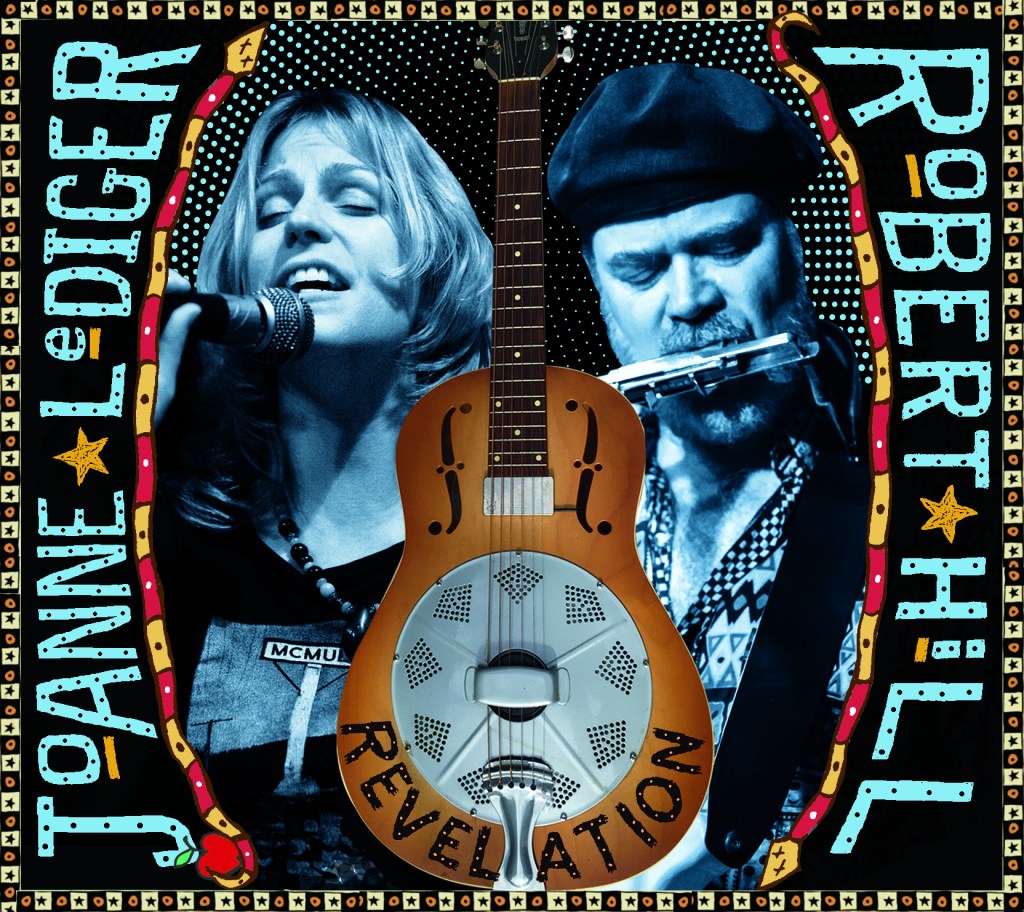
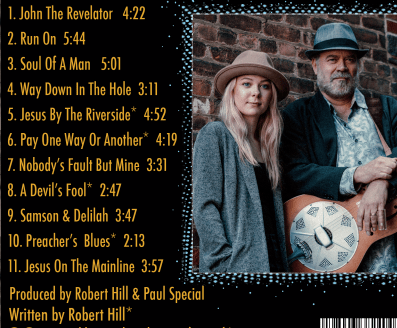
All of this is a long-winded introduction to a fine new album by Robert Hill and Joanne Lediger that offers a contemporary look at gospel blues with six covers of traditional songs, one masterful Tom Wait adaptation, and four originals by Hill. He and Lediger have been performing together for the last fifteen years; Hill a slide wizard and Lediger a passionate vocalist. Hill’s daughter Paulina also joins on vocals.
That’s just the right combination for this fascinating selection of powerful songs. The opener is the dramatic call and response of the traditional “John the Revelator,” first recorded in 1930 by Blind Willie Johnson, and in the ’60s by Son House. Lediger’s intense vocals are backed by the visceral fire of Hill’s National Resophonic guitar.
That’s followed by “Run On,” an almost raucous, guitar-driven religious critique with an R&B flavor, then “Soul of a Man,” from another Johnson recording, with a very soulful vocal turn by Hill, backed by Lediger, in a strikingly passionate version.
That’s followed by a terrific bluesy version of Tom Wait’s “Way Down In the Hole,” with Paulina’s vocals leading Hill’s guitar on a wicked journey. Some of you may remember it as the theme from the excellent HBO series “The Wire.” The show highlighted a different version of the song in each of its five seasons, from 2002-2008.
Two Hill originals follow — “Jesus by the Riverside” and “Pay One Way or Another” — both nicely crafted to fit the classic context of the album. “Pay” is an especially tough, rhythmic creation on how “nobody gets out of this world for free,” driven hard by Ed Alstrom on the Hammond B3.
“Nobody’s Fault But Mine” is another soaring Blind Willie Johnson tune, and “A Devil’s Fool” is another original that shuffles joyously into the blues again, this time using Robert’s vocals and some piano to kick everything along.
There’s still more Johnson coming with “Samson and Delilah,” this time a rocking version with tough Paulina Hill vocals. “Preacher’s Blues” is another Hill original, with foot-stomping rhythm and old-timey feel. “Jesus On The Mainline,” based on the Mississippi Fred McDowell ’50s version, is a fitting closer for this session, as all three vocalists join in a mini-choir version. Once again, Hill’s sublime guitar work lifts this song out of the ordinary and into instant classic status.
And that’s typical of the entire album — it’s a joyous effort to polish up some great traditional gospel blues, add some new ones, and produced a smartly crafted set full of lyrical and musical wisdom. The playing and singing are inspired. Don’t be deterred by the “gospel” label. This is not heavy-handed religious music, but music that highlights the intense historical connection between blues and gospel; between the sacred and the secular, and how they both shine when their worlds collide.
It’s all a devil of a good time.
Here’s a 2019 live version of the track “Soul of a Man”:
Tracklist:
Musicians: Joanne Lediger: vocals Paulina Hill: vocals Robert Hill: guitar, vocals, harp, keyboards Steve Gelfand: bass Frank Pagano: drums Ed Alstrom: Hammond B3 on “Pay One Way or Another”
I’ve seen Rory Block perform many times. I’ve listened to her albums even more. I’ve never ceased to be amazed at her talent.
For decades, she’s been a one-woman force in the preservation of traditional county and acoustic blues music. She’s done that with power and authenticity and an obvious passion for the music she performs. Despite her faithfulness to this great American music, her voice and guitar style are unique and instantly recognizable as her own.
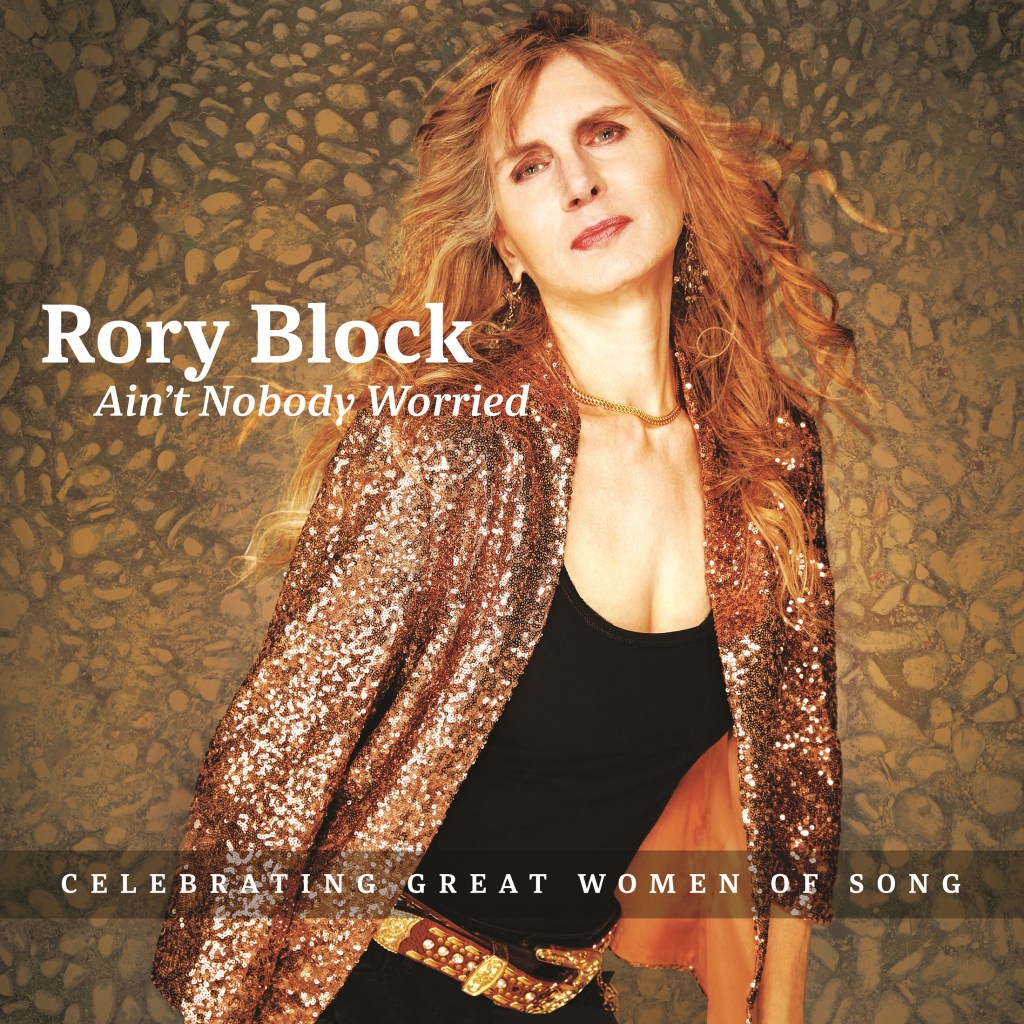
She does all of those things on her latest album, “Ain’t Nobody Worried,” but with a twist. This is the third album in her Power Women of the Blues series, and the first two — “A Woman’s Soul: A Tribute to Bessie Smith” and “Prove It On Me” — were pretty much traditional blues, all expertly done.
This time out, Block pays tribute to more contemporary women of American music, from Mavis Staples to Koko Taylor. Why? As she puts it: “I do these songs because I play the music I love the most.”
All are done with her distinctive acoustic guitar and vocal work. Where she wanted something extra, she recorded additional guitar and percussion herself. And did her own backup vocals.
She opens with a spirited version of the classic Staples Singers gospel-flavored “I’ll Take You There,” then turn sensuously secular with “Midnight Train to Georgia,” the soulful Gladys Knight hit, and then layers her distinctive style onto “My Guy,” the Smokey Robinson opus given wings by Mary Wells.
Then she adds eight more tracks that range from Tracy Chapman’s groundbreaking “Fast Car” to the Etta James masterpiece “I’d Rather Go Blind” to Bonnie Raitt’s glorious “Love Has No Pride” to Koko Taylor’s deeply tough blues, “Cried Like a Baby” to some serious Motown on “Dancing ln The Streets” by Martha and The Vandellas.
Block also includes her own “Lovin’ Whiskey,” the song she says launched her career, plus a cover of “Freight Train,” by the very talented and influential guitarist Elizabeth Cotton.
(You can find the complete track list, with Rory’s comment on how and why she chose each song below the video at the end of the post.)
Those few paragraphs above don’t really do justice to this excellent Rory Block album. You know, “words can’t begin to describe,” and all that. The results are impressively imaginative, highly creative and, best of all, thoroughly enjoyable.
Here’s “Cried Like a Baby”
Track Listing and Comments by Rory Block “I’ll Take You There” — The Staple Singers (featuring Mavis Staples) Not much explanation needed. This is one of the all-time great and powerful crossover gospel songs with an immense rhythm track, graced by the matchless voice of Mavis Staples. Mavis proved that gospel is a force in pop music. “I’ll Take You There” was the first track we recorded and is the first track on this CD. It just felt right.
“Midnight Train To Georgia” — Gladys Knight and The Pips Who can say “Midnight Train to Georgia” wasn’t one of the most soulful songs of its time, and who didn’t try to learn to sing listening to Gladys Knight’s superlative rich vocals? Who didn’t try to learn backup vocals and dance moves from the Pips? This song was a must-do, and the second track we recorded.
“My Guy” — Mary Wells Mary Wells nailed this perfectly crafted song by Smokey Robinson, giving it passion, charm, and a wry sense of humor. I recorded it in the same key as the original, but then was dismayed to find my natural vocal range was deeper, so I thought about slowing the track or re-recording it. In the end,I sang it in a somewhat jazzy head voice and went with it. I could have given it a bit of growl in a deeper key, but maybe it didn’t need growl. After all, it is a spirited and fun song, and I had a great time singing, especially on the outro.
“Fast Car” — Tracy Chapman Remember when this song came on the radio and blew our minds? lt was a trendsetter, with a stereotype busting, cutting edge approach that was almost unheard of at the time. It was, however, (if I can pat myself on the back), an idea I had always cherished -taking an acoustic song and suddenly applying an earth shaking drum track when least expected, taking the song, with its emotionally honest and arresting story, to another level altogether. Tracy was one of the first to really turn this approach into pure gold.
“Cried Like A Baby” — Koko Taylor I met Koko Taylor on the road in Germany. I opened for her and her tighter-than-ever band for several shows on that tour, including a TV show that ended up as a laser disk (remember those)? She dubbed me `’Little Miss Dynamite,” a name I deeply appreciate and cherish. No one could nail the power of a sexy full-out blues wail like Koko. On the outro,I ad lib one of my conversations with her, including her worldly wisdom and advice.
“Love Has No Pride” — Bonnie Raitt Greenwich Village in the `60s was a hotbed of immense musical talent, with the likes of Bob Dylan living just two doors away from The Allan Block sandal shop, Joan Baez performing in local venues, Bonnie Raitt making waves with her heart wrenching blues, and the list goes on and on. My first boyfriend, Stefan Grossman, was friends with many of the pivotal players in the burgeoning scene. One of his good friends was a great songwriter and musician named Eric Kaz, who, together with Libby Titus, wrote “Love Has No Pride.” We always thought it was the best song ever written, performed by Bonnie, the best singer on earth.
“I’d Rather Go Blind” — Etta James This song led the way for the concept of this recording, establishing the theme celebrating great women of song. I just kept saying, “I can’t wait to sing `l’d Rather Go Blind.” This song is one of the most haunting and moving portrayals of heartbreak ever written, sung by the amazingly gutsy blues voice of a woman who meant every word she sang. Etta, we got the tissues out.
“Lovin’ Whiskey” — Rory BIock This is the song I thought no one would care about. This is the song that got me on an airplane. This is the song that launched my career. This is the song I didn’t want to put on the record. This is the song that earned me a gold record and has remained my most popular and requested song for over 3 decades. I have heard repeatedly that it’s because it’s about the hidden struggles of the heart, and knowing we are not alone. More people say that it helped them through the hardest times of their lives than any other I have written. Murphy’s Law, you never know. Oh yes, great guitar player Bud Rizzo played the original heart-wrenching solo. I decided to follow it note for note, for better or worse, on my acoustic version. I also stuck with the original drum pattern that I somehow constructed on one of the first drum machines ever invented. It made no sense in that it wrapped around so the “one” beat was in a different place every verse, but it somehow worked… and you know, if it ain’t broke, don’t fix it!
“Dancing ln The Streets” — Martha and The Vandellas Great song, great performance from Martha and her Vandellas, great groove, solid gold, what’s not to love? Had to do this one for the pure joy of it.
“You’ve Got A Friend” — Carole King This song came on the radio in one of the hardest periods of my life. Waking me from a deep sleep in a state of despair, hearing the vulnerable and unpretentious voice of Carole King made me sit up straight in bed and say “Maybe I can do this!” lt was a life changing moment. She was the voice of every woman
“Freight Train” — Elizabeth Cotton This could be the most influential guitar style ever created. Libba Cotton once was Nanny to the Seeger children, until she was overheard sitting in another room singing this haunting tune. I celebrate her, not because this song became gold, but because in the most unassuming way, quietly and without a lot of fanfare, her guitar picking became one of the most influential guitar styles of all times.
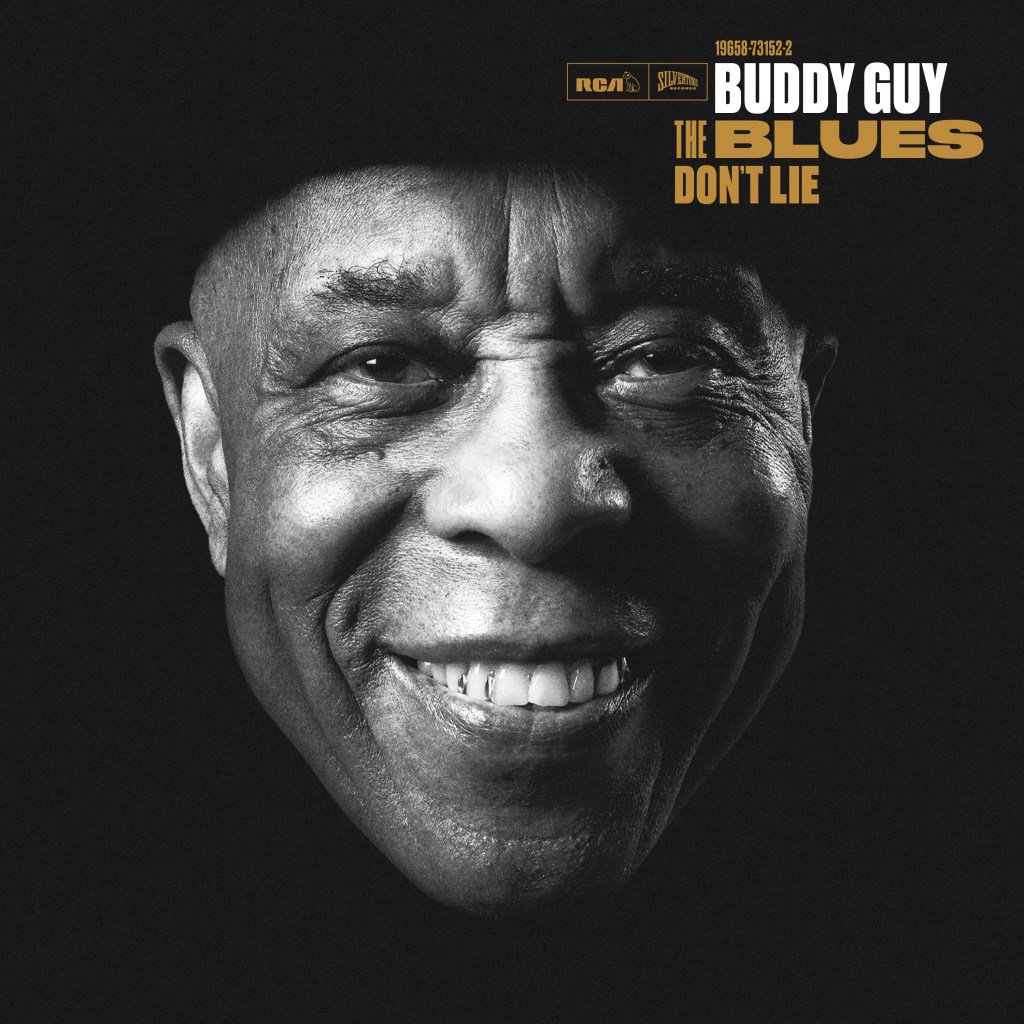
What can you say about George “Buddy” Guy that hasn’t been said many times over? Even saying that he has a fine new album isn’t exactly big news. He’s created plenty, if you think 50 is plenty.
Except:
The living legend turned 86 this year, and he still sounds great at the peak of his blues powers. (Okay, the album was probably recorded when he was a mere 85 or so.)
An abbreviated list of his accomplishments: The recipient of the 2015 Grammy Lifetime achievement Award, Buddy Guy’s incredible career spans over 50 years with just as many albums released. Career highlights include 8 Grammy Awards, 38 Blues Music Awards, the most any artist has had, a Kennedy Center Honors, NARM Chairman’s Award for Sustained Creative Achievement, Billboard Music Awards’ Century Award for distinguished artistic development, Presidential National Medal of Arts, and induction into the Rock and Roll Hall of Fame, plus, more.
And that doesn’t include his status as a major influence; as one of the last of the great bluesmen still standing.
And also, this is a magnificent album of 16 songs (yes, that’s 16 — finally, someone fills a CD with great new music, thank you very much).
It all kicks off with the rich and powerful sound of “I Let My Guitar Do The Talking,” which probably sums up his entire career. Then the title track continues that thought with the philosophical “Blues Don’t Lie” (“Life is gonna happen, whether you’re ready or not….”). “The World Needs Love” follows, the only track written by Guy alone; it’s a scorcher with a wicked guitar solo and a heartfelt vocal pleading of his case.
The next tracks bring in some of the supporting cast assembled here. “We Go Back” is a haunting reminiscence featuring Mavis Staples; the churning rhythms of “Symptoms of Love” adds Elvis Costello and producer Tom Hambridge (much more on him later) on background vocals, and “Follow the Money” adds James Taylor in a sly critique of dollar daze.
The songs here seem to dig deeper into the blues as they move along. “Well Enough Alone” evokes the mojo hand and a black cat bone smothered in stinging guitar, and “What’s Wrong With That” brings in Bobby Rush for a playful look at their good old days: “I like my bacon crispy, my pancakes cooked up right….”
The music takes a topical turn with the plaintive “Gunsmoke Blues,” featuring Jason Isbell, in an anthem to a litany of shootings (“A million thoughts and prayers won’t bring back anyone….”). Then the mood shifts back to a rocking “House Party” with Wendy Moten joining in the vocals as the band shuffles into a traditional blues groove.
The album closes with a few covers and more tough blues. (“Sweet Thing” is classic B.B. King, “I’ve Got a Feeling” is a bluesy take on the Beatles chestnut, “Backdoor Scratchin’,” “Rabbitt Blood” and “Last Call” add even more down-home feel, until Buddy closes with a deep blue cover of the Slim Harpo classic, “King Bee.”
Put all of that together, and it makes for a truly excellent Buddy Guy outing. The original songs, mostly co-written by the ridiculously talented Tom Hambridge are sharp and incisive, contemporary and timeless, and just plain good blues. (Hambridge also plays some drums. Check the full credits below to get the complete picture.)
When the songs are topical, they’re not oppressive. When they are solid blues, they are the real deal. It’s hard enough to write this kind of music, it’s even harder to make it feel like it’s been dredged from the depths of the blues — and having Guy sing and play guitar doesn’t hurt either.
Sure, there are many, many fine Buddy Guy albums that you can listen to. But this is one of the finest — traditional and contemporary, surrounded by choice Buddy licks.
“The Blues Don’t Lie” is living proof that the blues still don’t lie.
Here’s the leadoff track:
TRACKLIST:
I Let My Guitar Do The Talking
Blues Don’tLie
The World Needs Love
We Go Back (featuring Mavis Staples)
Symptoms Of Love (featuring Elvis Costello)
Follow The Money (featuring James Taylor)
Well Enough Alone
What’s Wrong With That (featuring Bobby Rush)
Gunsmoke Blues (featuring Jason Isbell)
House Party (featuring Wendy Moten)
Sweet Thing
Backdoor Scratchin’
I’ve Got A Feeling
Rabbit Blood
Last Call
King Bee
If you’re interested in the complete track credits, with all those crack musicians, down to which guitar Buddy played, here they are:
I LET MY GUITAR DO THE TALKING (4:27) (Tom Hambridge, Buddy Guy) Published by Tom Hambridge Tunes (ASCAP), Mic Shau Music/adm. By BUG Music (BMI) Buddy Guy – BG Signature Blonde Strat, Vocals Tom Hambridge – Drums Reese Wynans – B3 Michael Rhodes – Bass Rob McNelley – Electric Guitar Max Abrams & Steve Patrick – Horns
BLUES DON’T LIE (3:54) (Tom Hambridge) Published by Tom Hambridge Tunes (ASCAP) Buddy Guy – BG Signature Blonde Strat, BG Sunburst Strat, Vocals Tom Hambridge – Drums, Tambourine, Background Vocals Reese Wynans – B3 Michael Rhodes – Bass Rob McNelley – Electric Guitar Michael Saint-Leon – Low End Guitar Mike Hicks – Background Vocals Max Abrams & Steve Patrick – Horns
THE WORLD NEEDS LOVE (5:30) (Buddy Guy) Published by Mic Shau Music/adm. By BUG Music (BMI) Buddy Guy – BG Blonde Strat, Vocals Tom Hambridge – Drums Glenn Worf – Bass Kevin McKendree – Piano Rob McNelley – Electric Guitar
WE GO BACK (featuring Mavis Staples) (4:40) (Tom Hambridge, Richard Fleming) Published by Tom Hambridge Tunes (ASCAP), Richard Fleming Music (BMI) Buddy Guy – BG Blonde Strat, Vocals Mavis Staples – Vocals Tom Hambridge – Drums, Percussion Glenn Worf – Bass Kevin McKendree – Wurlitzer, B3 Rob McNelley – Electric Guitar
SYMPTOMS OF LOVE (featuring Elvis Costello) (3:37)
(Tom Hambridge, Richard Fleming) Published by Tom Hambridge Tunes (ASCAP), Richard Fleming Music (BMI) Buddy Guy – BG Blonde Strat, Vocals Elvis Costello – Background Vocals Tom Hambridge – Drums, Percussion, Background Vocals Glenn Worf – Bass Kevin McKendree – B3 Rob McNelley – Electric Guitar
FOLLOW THE MONEY (featuring James Taylor) (3:42) (Tom Hambridge, Gary Nicholson) Published by Tom Hambridge Tunes (ASCAP), Sony-ATV Cross Keys Publishing/Gary Nicholson Music (ASCAP) Buddy Guy – Martin Acoustic Guitar, Gibson J-200 Acoustic Guitar, Vocals James Taylor – Vocals Tom Hambridge – Drums Reese Wynans – Wurlitzer Michael Rhodes – Bass Rob McNelley – Electric Guitar
WELL ENOUGH ALONE (4:13) (Tom Hambridge, Richard Fleming) Published by Tom Hambridge Tunes (ASCAP), Richard Fleming Music (BMI) Buddy Guy – BG Signature Blonde Strat, BG Signature Blue Polka Dot Strat, Vocals Tom Hambridge – Drums, Background Vocals Reese Wynans – B3 Michael Rhodes – Bass Rob McNelley – Electric Guitar
WHAT’S WRONG WITH THAT? (featuring Bobby Rush) (5:26) (Tom Hambridge, Richard Fleming) Published by Tom Hambridge Tunes (ASCAP), Richard Fleming Music (BMI) Buddy Guy – BG Blonde Strat, BG Signature Blue Polka Dot Strat Bobby Rush – Vocals, Harmonica Tom Hambridge – Drums, Tambourine Reese Wynans – B3 Michael Rhodes – Bass Rob McNelley – Electric Guitar
GUNSMOKE BLUES (featuring Jason Isbell) (3:09) (Tom Hambridge, Richard Fleming) Published by Tom Hambridge Tunes (ASCAP), Richard Fleming Music (BMI) Buddy Guy – BG Signature Blonde Strat, BG Signature Blue Polka Dot Strat, Vocals Jason Isbell – Vocals, Electric Guitar Tom Hambridge – Drums Reese Wynans – Piano, Wurlitzer Michael Rhodes – Bass Rob McNelley – Electric Guitar
HOUSE PARTY (featuring Wendy Moten) (3:00) (Tom Hambridge, Richard Fleming) Published by Tom Hambridge Tunes (ASCAP), Richard Fleming Music (BMI) Buddy Guy – Guild Starfire, Vocals Wendy Moten – Vocals Tom Hambridge – Drums Reese Wynans – B3 Michael Rhodes – Bass Rob McNelley – Electric Guitar
SWEET THING (3:00) (BB King, Joe Josea) Published by Universal Music Careers (BMI) Buddy Guy – BG Signature Blue Polka Dot Strat, Vocals Tom Hambridge – Drums Glenn Worf – Bass Kevin McKendree – Piano Rob McNelley – Electric Guitar
BACK DOOR SCRATCHIN’ (3:54) (Tom Hambridge, Gary Nicholson) Published by Tom Hambridge Tunes (ASCAP), Sony-ATV Cross Keys Publishing/Gary Nicholson Music (ASCAP) Buddy Guy – BG Blonde Strat, Vocals Tom Hambridge – Drums Glenn Worf – Bass Kevin McKendree – B3 Rob McNelley – Electric Guitar
I’VE GOT A FEELING (4:02) (John Lennon, Paul McCartney) Published by Sony/ATV LLC (ASCAP) Buddy Guy – ’58 Sunburst Strat, Sitar Guitar, Vocals Tom Hambridge – Drums, Percussion Reese Wynans – Fender Rhodes Michael Rhodes – Bass Rob McNelley – Electric Guitar
RABBIT BLOOD (4:43) (Tom Hambridge, Richard Fleming) Published by Tom Hambridge Tunes (ASCAP), Richard Fleming Music (BMI) Buddy Guy – BG Blonde Strat, Vocals Tom Hambridge – Drums Glenn Worf – Upright Bass Kevin McKendree – Piano Rob McNelley – Electric Guitar
LAST CALL (3:33) (Tom Hambridge, Bill Sweeney) Published by Tom Hambridge Tunes (ASCAP), Bill Sweens Music (ASCAP) Buddy Guy – BG Blonde Strat, Vocals Tom Hambridge – Drums Glenn Worf – Upright Bass Kevin McKendree – Piano, B3 Rob McNelley – Electric Guitar
I’M A KING BEE (2:44) (James Moore) Published by Embassy Music Corporation (BMI) Buddy Guy – Martin Acoustic Guitar, Vocals
Doug MacLeod is, simply put, one of the best at what he does — a masterful storyteller and an elegant picker and singer of the blues.
This fine little album is just six songs long, but that’s a lot of blues storytelling from MacLeod, who writes all of his own material (with a minor exception on this session).
It also doesn’t seem to be available as a “real” album, but as a collection released Sept. 9 by the Sledgehammer Blues label, found on streaming services. I recently ran across it on my Amazon Prime Music Unlimited service, gave it a listen,
If you’re familiar with his work, these songs will be instantly recognizable. Doug’s style is uniquely and unmistakably his own — from the folksy drama of his lyrics to the eloquence of his acoustic guitar work.
The songs are: The deeply hopeful despair of “Mystery Woman,” and “Come to Find,” “Bring it On Home,” the slyly salacious “One Good Woman,” the wistful “Old Country Road,” and the loving memory-driven “Norfolk County Line.”
Digression: MacLeod’s cover of Willie Dixon’s “Bring It On Home,” is an exception here to his preference for his own songs. But it’s an excellent take on the old Sonny Boy Williamson II version. (Just for the record, and because it’s one of my blues pet peeves, Sonny Boy was actually born Aleck Miller, and later took the name of John Lee “Sonny Boy” Williamson as his own. I’ve always thought that this was deeply unfair to the real Williamson, as his harp work was prolific and influential.)
But no matter. This is a fine sampling of Doug MacLeod’s literate, painfully honest approach to music. For more, there are many other albums available, and he’ll be sailing and singing on the Legendary Rhythm & Blues cruise next January (#38). See you there.
Sometimes, when you want to hear some blues, you want to hear some blues.
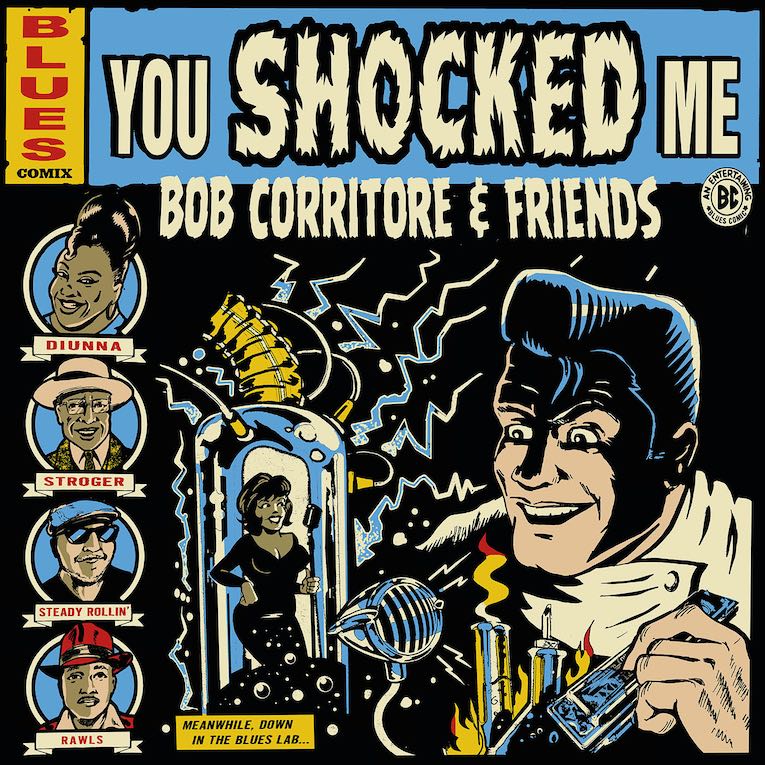
That’s when musicians like harpmeister Bob Corritore and some of his old-school friends come in handy. Corritore has spent decades recording some of the best traditional blues artists, and often pulls those sides from his copious musical vaults to produce excellent albums.
For his latest release, “You Shocked Me,” Corritore put together the best of 12 recording sessions between 2018 and 2022, featuring 10 stalwart blues talents on 17 tracks (Yes, 17 songs on a CD! Too often, CDs don’t have much more music than two sides of an LP).
Corritore underlines the music of all these fine artists with his considerable harp talents, blending magically into every song and style.
The album kicks off with John Primer’s tough “Hiding Place,” with fierce guitar and deep-blue vocals. That’s followed by another scorcher, “Squeeze Me Baby,” from Alabama Mike. The title track follows, a bluesy explosion from a supercharged vocal by Diunna Greanleaf.
Johhny Rawls offers a soulful take on the socially prescient “The World’s In A Bad Situation,” and a couple of softer blues offer a respite from the raw toughness on many tracks: “That Ain’t Enough” by Willie Buck and “Blue Blue Water,” a plaintive slow blues from Oscar Wilson a,re good examples.
One of my favorites is a lyrical play on the “down at the crossroads” and hellhound on my trail” themes: “Back to the Crossroads” from Bill “Howl-N-Madd” Perry turns it all around as he hunts for relief — “Goin’ back to the crossroads to try to reverse my deal, you can never be happy when hellhounds are on your heels….”
That’s just a handful of the fine tracks included here. There’s more of the same throughout. Gritty blues, soulful vocals, tough music-making all around.
The words “real deal” are overused to the point of being trite — but I think they apply here. If this isn’t a satisfying package of real-deal blues, I don’t know what is.
“The World’s in a bad Situation” by Johnny Rawls:
Tracklist:
1 Hiding Place (feat. John Primer) 2 Squeeze Me Baby (feat. Alabama Mike) 3 You Shocked Me (feat. Diunna Greenleaf) 4 The World’s In A Bad Situation (feat. Johnny Rawls) 6 Somebody Stole My Love From Me (feat. Alabama Mike) 7 Blinded (feat. Jimi “Primetime” Smith) 8 Josephine (feat. Sugaray Rayford) 9 Blue Blue Water (feat. Oscar Wilson) 10 Train Fare (feat. Bob Stroger) 11 Don’t Need Your Permission (feat. Francine Reed) 12 That Ain’t Enough (feat. Willie Buck) 13 Soul Food (feat. Jimi “Primetime” Smith) 14 Back To The Crossroads (feat. Bill “Howl-N-Madd” Perry”) 15 Work To Be Done (feat. Alabama Mike) 16 Sunny Day Friends (feat. Diunna Greenleaf) 17 Blues For Hippies (feat. Alabama Mike)
I’m traveling back in time a couple of months again for another album I don’t want to overlook.
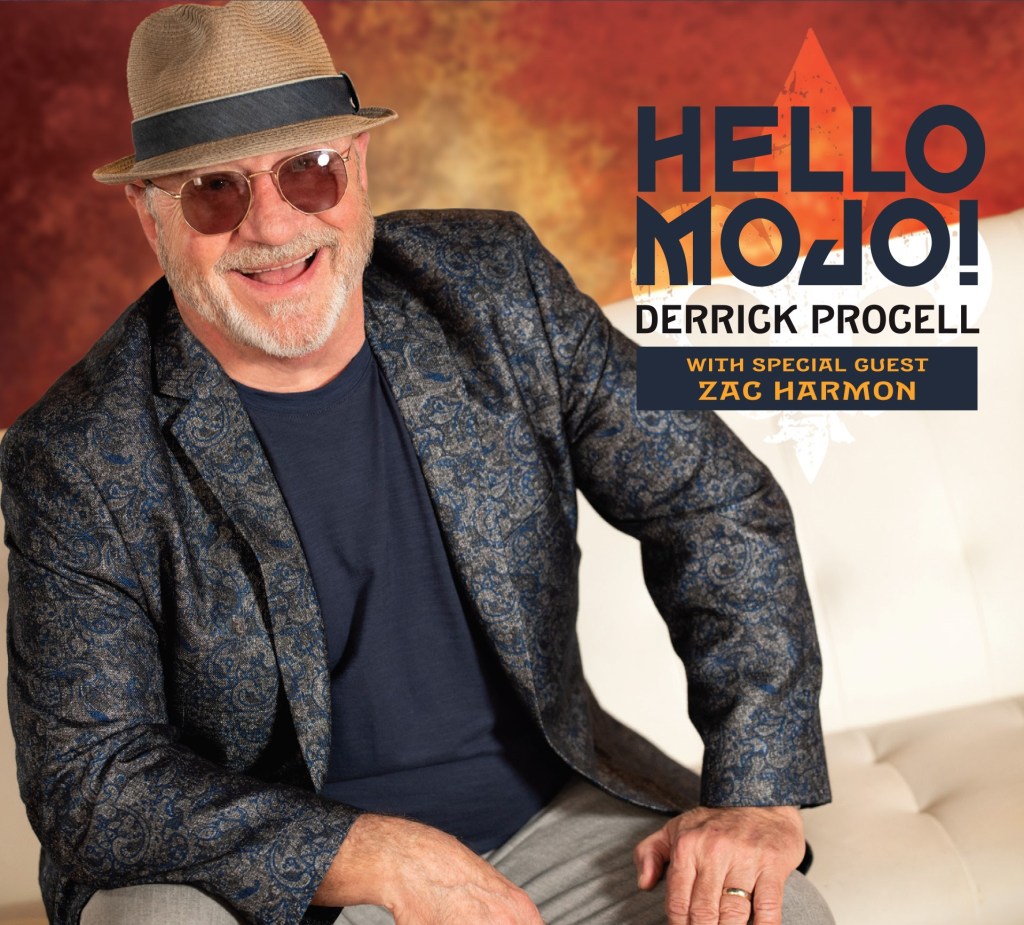
It’s from a veteran musician (singer, songwriter, harp and piano player) who spent decades creating music for others, and with the launch of his “Why I Choose to Sing the Blues” album in 2016, has returned to remind us of his special talents.
Procell is a soulful, big-voiced singer who knows his way around a lyric (he wrote or co-wrote all the original songs here), surrounded himself with excellent musicians, and turned over the producing pleasures to talented bluesman Zac Harmon, who also calls Catfood Records his musical home, and who contributes tough guitar work.
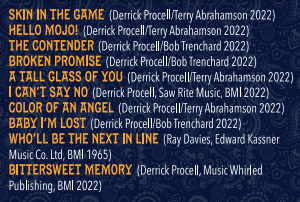
Not incidentally, Catfood owner and bassist Bob Trenchard wrote three of the songs with Purcell. Four were written with Grammy winner Terry Abrahamson, who’s known for his work with Muddy Waters, and has been Procell’s writing partner for the last 10 years.
The result of all this talent is a very tasty album, filled with exuberant music, even in its more tender moments (“Color of an Angel” and the passionate closer “Bittersweet Memory” are fine examples of that combination).
From the lyrically delicious up-tempo opener, “Skin in the Game,” through the sharp, horn-laced title track and the toughness of “The Contender,” the yearning of Procell-harp led “Broken Promises,” and the slyness of “A Tall Glass of You” (“I’ll have tall glass of you, and leave the bottle…”), this album offers a thoroughly satisfying session filled with soulful vocals, fine-tuned lyricism, and precise musical production that pulls it all together.
Give Derrick Procell a listen. You’ll be glad you did.
More than 10,000 Blues Blast Magazine readers and blues fans voted in the 2022 Blues Blast Music Awards. The winners in the fan voting, with the nominees, are listed below.
Winners are shown in bold.
Contemporary Blues Album Christone “Kingfish” Ingram – 662 Anthony Geraci – Blues Called My Name Ronnie Earl and the Broadcasters – Mercy Me Tommy Castro – A Bluesman Came To Town Altered Five Blues Band – Holler If You Hear Me Carolyn Wonderland – Tempting Fate Dave Weld & The Imperial Flames – Nightwalk
Traditional Blues Album Diunna Greenleaf – I Ain’t Playin’ Duke Robillard – They Called it Rhythm and Blues Kenny Neal – Straight From The Heart Sue Foley – Pinky’s Blues Louisiana Red & Bob Corritore – Tell Me ‘Bout It Bob Stroger & The Headcutters – That’s My Name
Soul Blues Album Sugaray Rayford – In Too Deep The Love Light Orchestra – Leave The Light On Wee Willie Walker & Anthony Paule Soul Orchestra – Not In My Lifetime Trudy Lynn – Golden Girl Zac Harmon – Long As I Got My Guitar Robbin Kapsalis and Vintage#18 – Soul Shaker
Rock Blues Album Tinsley Ellis – Devil May Care Beth Hart – A Tribute To Led Zeppelin Eric Gales – Crown Levee Town – Trying to Keep my Head Above Water Big Al & the Heavyweights – Love One Another Chickenbone Slim – Serve It To Me Hot
Acoustic Blues Album Eric Bibb – Dear America Corey Harris – The Insurrection Blues Hector Anchondo – Let Loose Those Chains Catfish Keith – Land of the Sky Big Creek Slim & Rodrigo Mantovani- Stone In My Heart Tas Cru – Broke Down Busted Up
Live Blues Recording Rodd Bland and the Members Only Band – Live on Beale Street Hurricane Ruth – Hurricane Ruth Live at 3rd and Lindsley The BC Combo – The Garage Sessions Ann Peebles and The Hi Rhythm Section – Live In Memphis Peer Gynt – Live In Hell The James Harman Band – Sparks Flying Live In 1992
Historical Or Vintage Recording Mark Hummel Presents East Bay Blues Vaults 1976-1988 Paul Oscher – Rough Stuff Lowell Fulson with Jeff Dale & The Blue Wave Band – Lowell Fulson Live! Big Jack Johnson – Stripped Down in Memphis Bob Corritore & Friends – Down Home Blues Revue Dave Specter – Six String Soul
New Artist Debut Album Hogtown Allstars – Hog Wild Memphissippi Sounds – Welcome To The Land Malcolm Wells and the Two Timers – Hollerin’ Out Loud Horojo Trio – Set The Record John Winkler – Juke’s Blues Buckmiller Schwager Band – To Memphis and Back
Blues Band The Love Light Orchestra Tommy Castro & The Painkillers Altered Five Blues Band Wee Willie Walker & Anthony Paule Soul Orchestra Kilborn Alley Blues Band
Male Blues Artist Sugaray Rayford John Németh Eric Gales Tommy Castro Christone “Kingfish” Ingram Tinsley Ellis
Female Blues Artist Diunna Greenleeaf Sue Foley Carolyn Wonderland Vaneese Thomas Beth Hart Trudy Lynn
Sean Costello Rising Star Award Gabe Stillman Ben Levin Jose Ramirez Memphissippi Sounds Robbin Kapsalis and Vintage#18 Kat Riggins
Producer Of The Year Tom Hambridge Kid Andersen Tony Braunagel Mike Zito Jim Gaines Eric Corne
Electric Guitarist Of The Year Eric Gales Ronnie Earl Duke Robillard Christone “Kingfish” Ingram Chris Cain Albert Castiglia
Acoustic Guitarist Of The Year Doug MacLeod Eric Bibb Guy Davis Hector Anchondo Catfish Keith Corey Harris
Slide Guitarist Of The Year Sonny Landreth Derek Trucks Gabe Stillman Dave Weld Michael van Merwyk Catfish Keith
Bass Guitarist Of The Year Bob Stroger Rodrigo Mantovani Danielle Nicole Willie J. Campbell Scot Sutherland Jerry Jemmott
Keyboard Player Of The Year Anthony Geraci Kenny “Blues Boss Wayne Ben Levin Jim Pugh Victor Wainwright Kevin McKendree
Percussionist Of The Year Derrick D’Mar Martin Tom Hambridge Tony Braunagel Kenny Smith Alan Arber June Core Cedric Burnside
Harmonica Player Of The Year Bob Corritore Jason Ricci Dennis Gruenling Kim Wilson Billy Branch Pierre Lacocque
Horn Player Of The Year Jimmy Carpenter Vanessa Collier Marc Franklin Vince Salerno Doug Woolverton Terry Hanck
Vocalist Of The Year John Németh Sugaray Rayford Diunna Greenleaf Beth Hart Vanesse Thomas
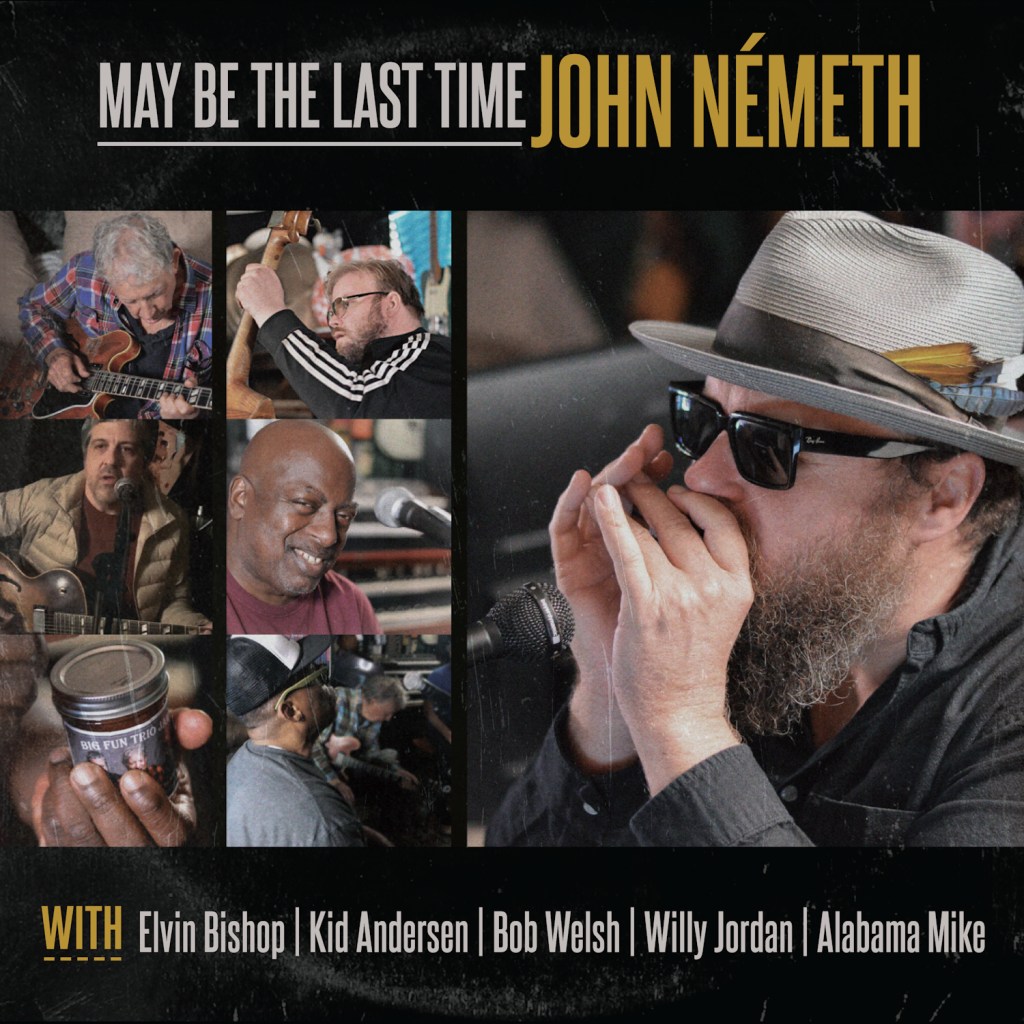
“I recorded this album before my jaw amputation surgery, which took place in late May. It’s called “May Be The Last Time” because I didn’t know then and I still don’t know, if I will ever sing or play again like I used to. I have to say the magic of this performance is beyond this world and maybe the greatest of my life.”— John Németh
John is correct. There is a magic about this album that you can feel in every track. In the passionate vocals, in the sparkling musicality — the joyous spirit of life that infuses the entire session.
It’s ironic that all this musical pleasure is rooted deep in the unfortunate circumstance of a medical condition known as ameloblastoma (a benign but aggressive tumor in the jaw) in John’s Jaw, as he’s whimsically called it in his GoFundMe campaign to help raise funds for treatment. But that’s typical of the blues — music that can turn bad luck into good times.
John makes the opening and title track, “The Last Time,” a personal statement. He reworks the classic gospel tune, already handily reworked by the Staple Singers and the Rolling Stones, as an enthusiastic counterpoint to the poignancy of his predicament.
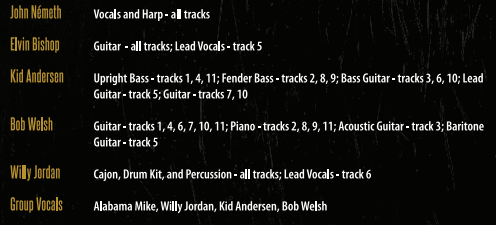
Elvin Bishop is one of John’s guests here, and they combine on “Rock Bottom,” a Bishop song from 1972. “Sooner or Later” is a Németh original, from his “Memphis Grease” album, and the first taste here of his considerable songwriting skills. “Feeling Good” reaches back to 1966 and J.B. Lenoir with a tough bass line.
Bishop not only contributes another song, 1974’s “Stealin’ Watermelons,” but handles the vocals, perhaps to give John’s Jaw a little rest. “I Found a Love” is a stunningly soulful duet with Willy Jordan and a splendid take on Wilson Pickett’s 1962 chestnut.
One of my favorite tracks, since it is one of my favorite songs from one of my favorite R&B groups, is the salaciously delicious “Sexy Ways,” from Hank Ballard and the Midnighters in 1954.
One of John’s earliest influences was Junior Wells, and his rendition of 1960’s “Come On in This House” is steamy and soulful, with magical harp work. “Elbows on the Wheel” is another John original from “Memphis Grease.” If you listen closely, there’s a throwback reference to “Junior’s Hoodoo Man.”
“Shake Your Hips” is vintage Slim Harpo from 1965, and John gives his voice and harp a workout.
Notice the trend here: John has picked older songs to cover with the classic feel that has been his musical trademark since he stormed out of Boise, Idaho, with his harp and a fine sense of older blues and soul that had been his sweet inspiration.
The closer is “I’ll Be Glad,” another Bishop song with chunky rhythms and a raucous old-timey feel, and a message appropriate for the motivation behind this excellent album: “I’ll be glad when I get my groove back again.”
So yes, John is right. This is a great album. Filled with wonderful music, expertly done by John and the Kid Anderson (who also produced) studio band, plus friends. John’s vocals are their usual potent self, his harp work razor-sharp. If musicians can be loose and tight at the same time, here’s how. It’s also filled with the enthusiasm and spirit generated by fine music.
And yes, I love this album. You should, too. It just may be John’s greatest.
As a sign of John’s sometimes whimsical approach to his surgery, here’s an illustration from the album cover. My only question is, “Where are the shades, man?
Demetria Taylor — “Doin’ What I’m Supposed to Do” — Delmark
After a tough and slinky guitar intro from Billy Flynn, Demetria Taylor’s voice slides into the bluesy “83 Highway,” written by her father, Eddie Taylor Sr.
It’s just the right opening for this album of covers and originals from Taylor, who moves effortlessly through some blues, funk and R&B styles.
That’s followed by a pair of funkified tunes — “Baby Be Good” and “Bad Girl Day” — by the songwriting duo of guitarist Mike Wheeler and bassist Larry Williams, who created six of the crackling good tracks here.
“Blues Early This Morning” is a swinging duet with multi-talented soulstress Deitra Farr, written by Demetria’s mother, Vera Taylor, who was also a singer/songwriter. “Welfare Blues,” written by Eddie Taylor Jr., drives along in an uptempo blues, followed by the title track, a musical roadmap of her journey into blues with her family heritage. Most of the songs have a rhythmic R&B flavor, and Taylor’s vocals swing joyously along. And she gives tough credit to Magic Sam’s rocking “You Belong to Me” (with a tasty organ solo midway).
Taylor herself contributes two originals, the whimsically delicious romp of “Nursing My Kitty Cat,” and the autobiographical album closer, “Young Gun Taylor,” — “kicking out the rhythm and blues . . . the torch been passed down to me. . . .”
Indeed the musical torch has been passed. Taylor is not only keeping the family blues flame burning, she’s doing it with considerable style, lyrical and musical sensibility. You owe yourself a listen.
Taylor recently received the KoKo Taylor (no relation) “Queen of the Blues” Award in 2022 given by the Jus’ Blues Foundation.
Here’s the title track:
Tracklist 1 “83 Highway” 5:25, Eddie Taylor Sr. 2 “Baby Be Good” 4:23, Mike Wheeler/Larry Williams 3 “Bad Girl Day” 4:01, Mike Wheeler/Larry Williams 4 “Blues Early This Morning” 3:08, Vera Taylor 5 “Welfare Blues” 4:49, Eddie Taylor Jr. 6 “Doin’ What I’m Supposed To Do” 3:40, Mike Wheeler/Larry Williams 7 “Done” 5:49, Mike Wheeler/Larry Williams 8 “I’m Gonna Tell It” 4:27, Mike Wheeler/Larry Williams 9 Nursing My Kitty Cat 4:45, Demetria Taylor 10 “Stay Gone” 3:59, Mike Wheeler/Larry Williams 1 1 “You Belong To Me” 3:11, Samuel Maghett (“Magic Sam”) 12 “Young Gun Taylor” 3:26, Demetria Taylor
Credits Demetria Taylor vocals Deitra Farr vocals (4) Mike Wheeler guitar Billy Flynn guitar (1, 4) Carlos Showers guitar (all except 1, 4) Larry Williams bass Brian James keyboards Melvin Carlisle “Pookie Styx” drums
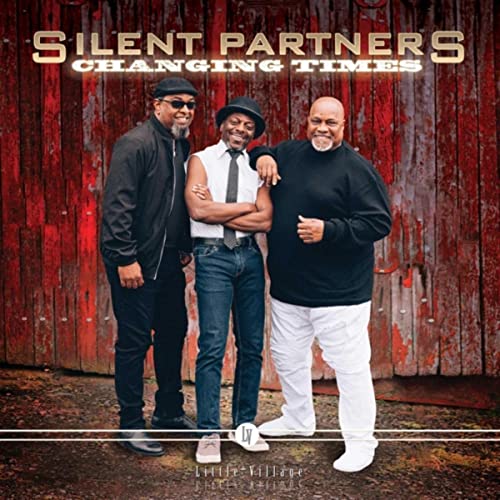
The three soulful veterans who make up the Silent Partners are the renowned Tony Coleman (drums and vocals), Russell Jackson (bass and vocals) and Jonathan Ellison (guitar and vocals). They’ve all got decades of musical experience with some of the biggest names in blues — including B.B. King, Albert King, Bobby “Blue” Bland, Johnnie Taylor, Otis Clay, Denise LaSalle, Matt “Guitar” Murphy — and it all shines brightly throughout.
The group itself isn’t exactly brand new. Coleman and Jackson recorded the Silent Partners’ first album, “If It’s All Night, It’s All Right” on the Antone’s Label in 1989. They had gotten together to back up swamp boogie piano queen Katie Webster, but broke up in 1990.
Then, almost 35 years later, Jim Pugh, who runs the Little Village Foundation persuaded the original Silent Partners Coleman and Jackson to get together again to record, and they added Ellison as the third man to their Silent Partner theme.
They’re joined here by Little Village musical team – producer and keyboardist Pugh, guitarist Kid Andersen, backing vocalist Lisa Lueschner Andersen, percussionist Vicki Randle, and adding violinist Don Dally, with string arrangements by Aaron Lington. The album was produced at Andersen’s Greaseland studio.
The result of all this veteran professionalism from sidemen who were silent partners to much great music is a finely tuned album of nine originals and one cover of B.B. King and The Crusaders’ “Never Make Your Move Too Soon,” written by Stix Hooper, the drummer in The Crusaders, and lyricist Will Jennings.
The originals run a soulful spectrum from the opening track, the slow and bluesy “Ain’t No Right Way To Do Wrong,” to the shuffling rhythms and stinging guitar of the wry social comment of “Post Traumatic Blues Syndrome,” to the extremely torchy and soulful “Road to Love,” and the group’s sorta-biographical take on the spirited version of “Never Make Your Move Too Soon.”
There’s a lot of great music after that, concluding with the tough “Beale Street Shuffle,” a romping sideways glance at the anthem-like “Sweet Home Chicago.”
This is an excellent album from these polished blues veterans, who, along with this crackling studio band, sound like they haven’t missed a beat since their 1989 effort. Let’s hope we don’t have to wait that long for the next one.
If you’re a Legendary Rhythm & Blues cruiser in January 2023, you’ll get to see them up close and personal. And where I’ll be in the audience with you.
A live performance from Silent Partners (with Stanton Moore of New Orleans funk masters Galactic on drums) at the Waterfront Blues Festival in Portland, July 1, 2022.
Track Listing
Ain’t No Right Way To Do Wrong
Post Traumatic Blues Syndrome
Road To Love
Never Make Your Move Too Soon
Dancin’ Shoes
Love Affair With The Blues
Proving Ground
Teasing Woman
Good To Myself
Beale Street Shuffle
Tony Coleman – drums, vocals (1, 2, 4, 9) all originals written by Tony Coleman, except 9 the lyrics are rewritten, original but music is written by Joe Sample & The Crusaders. Russell Jackson – bass, vocals (5, 6, 7) all originals written by Russell Jackson. Jonathan Ellison –guitar, vocals (3, 8, 10) all originals written by Jonathan Ellison.




 Blues Roadhouse