Roadhouse album review: Taj Mahal and Ry Cooder revisit great old blues with the joyful “Get On Board”

Taj Mahal and Ry Cooder — “Get On Board” — Nonesuch Records
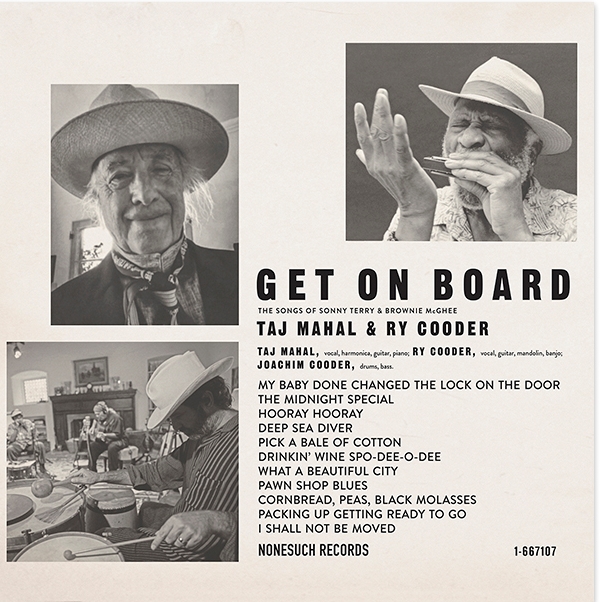
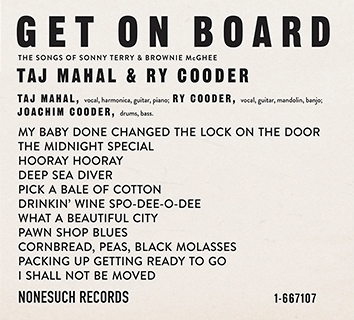
The album cover of the new release, above, with the original from 1952, below. Note the different songs.

Ry Cooder and Taj Mahal have finally created their second album together. Their first was in 1968, when Cooder played on Mahal’s solo debut, “Taj Mahal.”

This time, it’s a joyous tribute to some of their roots, which are deeply embedded in Americana, world music, folk and blues. They’ve re-created (with a few changes) the 1952 “Get On Board” album by the legendary folk-blues duo of Sonny Terry and Brownie McGhee, purveyors of the classic Piedmont blues style.
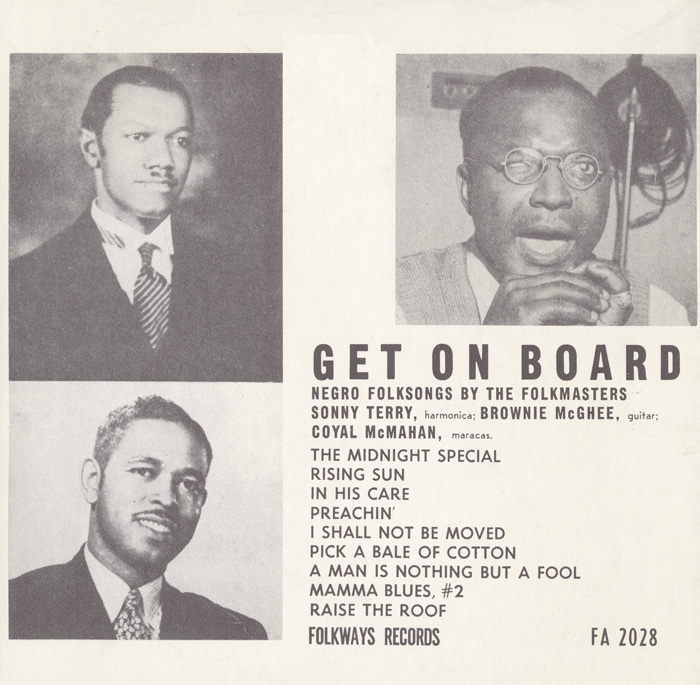
They’ve recorded a few of the original songs, but then they dip into the Terry-McGhee catalogue for a fresh selection. This album has more of a joyous house party vibe, with just Taj and Ry holding forth in Cooder’s son Joachim’s house (he added bass and drums.)

Mahal, nearly 80, and Cooder, 75, are seasoned veterans, and they show their age and experience in the best possible way — with a relaxed confidence and exuberance that makes for an album of pure musical enjoyment.

Cooder plays guitar, mandolin and banjo; Mahal plays harp, guitar and piano, while they share the vocals, trading leads and background encouragement. Their enjoyment is contagious. Aside from a few overdubs, each song was done in “just one take, with live vocals”, Cooder says. That live approach makes for great listening.

Their style here is a little tougher than the originals, but just as fine in their own way. And you get the advantage of more modern recording, which, coupled with the living room setting, adds an essential and rewarding spontaneity.

One raucous take is the addition of the delightful, ever-popular, rock ‘n’ roll-flavored “Drinkin’ Wine Spo-Dee-O-Dee,” not incidentally written by Granville Henry “Stick” McGhee, or Stick McGhee, Brownie’s younger brother.

My favorite track is the opener, not on the original, the hard-driving “My Baby Done Changed the Lock on the Door.” But every cut is good old-fashioned blues at its best. Cooder and Mahal are definitely showing their age with the talents it takes to make this kind of exuberant music.

Here’s an interview on “The Making of ‘Get On Board'”

Here’s a video of the song “Hooray Hooray”

Tracklist:
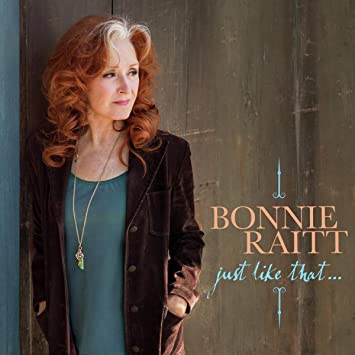
Roadhouse album review: Bonnie Raitt is back, and “Just Like That…” stronger than ever

Bonnie Raitt — “Just Like That …” — Redwing Records

I’ve been a fan of Bonnie Raitt since I heard her first album, “Bonnie Raitt,” in 1971, a wonderful pastiche of blues, folk, rock and Raitt’s own musical persona, plus a bunch of her talented friends. (Her eclectic and talented supporting cast, for you blues fans, included A.C. Reed on sax and Junior Wells on harp on several songs.)

But just like that, just a tick over a half-century later, Raitt is still making magical music virtually undimmed by time with her 21st album, “Just Like That …” her first in six years.

This one is also eclectic, drawing strength from Raitt’s four original songs among the ten thoughtfully written and played compositions on this beautifully crafted, self-produced album. If anything, her vocals are stronger than ever, filled with passion and compassion for the subject at hand, whether it’s sweet love or sorrowful loss.

The haunting title track is one of those originals, the story of a woman comforted by the man who received her son’s transplanted heart. It’s a powerful acoustic gem.

The album is filled with songs of love, longing and loss, but it’s never trite or maudlin, thanks to skillful songwriting, and Raitt’s knowledge as a vocalist, finding hope and optimism in the humanity of her outlook. She’s also pulled together a group of her long-time bandmates, who contribute a spare but pulsive backdrop for every mood.

I don’t mean to make this sound like a dark and depressing album. Quite contrary. Raitt has taken thoughtful topics — losses to Covid, for example — and created joyful remembrances. In the hard-rocking “Livin’ for the Ones,” she sings: “I’m livin’ for the ones who didn’t make it, cut down through no fault of their own….” amid the punchy rhythms.

There are some more traditional touches of heartache and heartbreak in tracks like “”Here Comes Love,” “Something’s Got a Hold of My Heart, “the album opener “Made Up Mind,” and “Something’s Got Ahold of My Heart.”

Then there’s one of my favorites, the gorgeously torchy “Blame It on Me,” (“Truth is love’s first casualty….”) with what sounds like her signature slide work and one long, pure note she holds near the end that should make your heart ache with pain and pleasure.

This is an outstanding album, 50 years out, full of great songs, music and Raitt’s still compelling vocals.

Enjoy it soon and often.

Here’s a live performance of “Made Up Mind” on the Kelly Clarkson TV show:

Here’s an excellent interview. It’s worth watching.

Tracklist

  1. Made Up Mind
  2. Something’s Got a Hold of My Heart
  3. Livin’ for the Ones
  4. Just Like That
  5. When We Say Goodnight
  6. Waitin’ For You to Blow
  7. Blame it On Me
  8. Love So Strong
  9. Here Comes Love
  10. Down The Hall

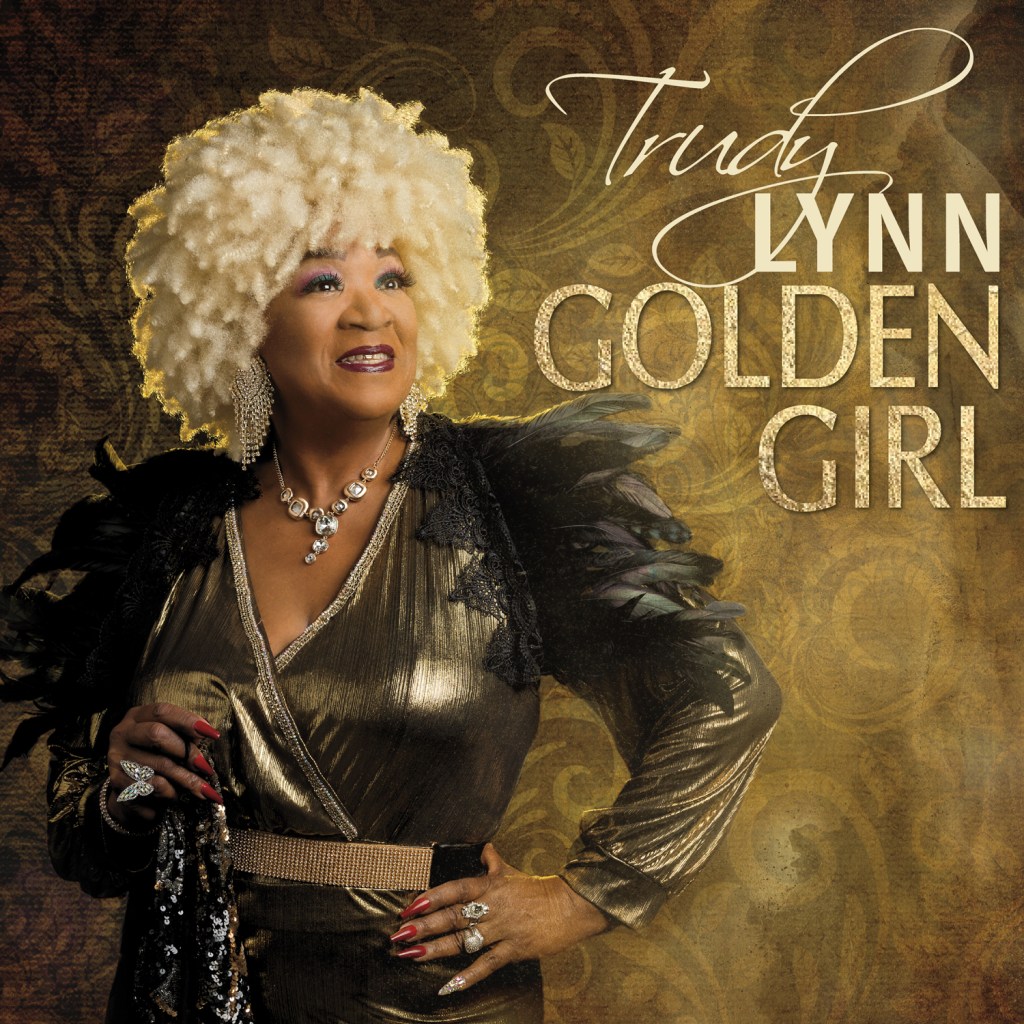
Roadhouse Album Review: Trudy Lynn’s blues toughness shines in “Golden Girl”

Trudy Lynn — “Golden Girl” — Nola Blue Records

One word comes to mind when I listen to Trudy Lynn burn her way through her delicious new album, “Golden Girl” — tough. In the best sense of the word.

The crackling band is tough, especially the lead guitar work; the songwriting is tough, and most of all, Lynn’s searing vocals are tough.

All that toughness has been honed by more than 55 years of performing blues and soul, and just possibly by growing through the Houston music scene, part of a larger, tougher, Texas music world.

Lynn’s first recording came in 1973 with Sinett Records single, “Long Live the Blues” and a soul ballad “What A Waste.” Since then, she’s been a thirteen-time Blues Music Award nominee, and received two career-defining awards in 2019: the Living Legend Blues Award from the Houston Blues Society and the Jus’ Blues Music Foundation’s Willie Mitchell Lifetime Artist Award.

She’s also been making a lot of terrific music.

Time and age — she’s coming up on 75 — seem to have made her vocals sound only more full and rich, lending an authenticity that’s better described as the “real deal.” Her name is on seven of the eleven songs here; her writing skills reflect her musical wisdom.

You can feel the “real” from the opening bars of “Tell Me,” the first track here: It’s a fiery intro from guitarist Yates McKendree that trades punches with Lynn’s tough vocals throughout. Then there’s the title track, sort of, “Golden Girl Blues,” with guest axman Anson Funderburgh joining McKendree on guitar and pushing the backers to keep up with Lynn’s vocals on how to “keep on livin'” with the golden girl blues.

The toughness continues with “If Your Phone Don’t Ring” and “I’m Just Saying,” then takes a break for the tender soulfulness of the lovely “Is It Cold In Here.”

Steve Krase’s soulful harp kicks open “Trouble In Love,” which brings back Funderburgh and McKendree, with some nice piano fills by Kevin McKendree, all rocking along into the next track, “Take Me Back,” in which I can hear a subtle reference to some great old R&B with a dollop of doo-wop. (Doo-wop, for you youngsters, was an R&B-related musical style from the late 1940s and ’50s, mostly four or five vocalists who gave the music its nickname by sing a lot of doo-wop, doo-wop, doo-wop rhythms in the background.)

Speaking of oldies, another track, “Heartache Is A One-Way Street,” updates what sounds an awful lot like the Bo Diddley beat. Much fun!

But the closer is my favorite song, musically and philosophically — “Life Goes On.” Funderburgh leans into it with a scorching blues solo, and Lynn puts the torch to it all with power and passion. A great song.

This is a very fine album, packed with good, old-fashioned blues and soul. The excellent musicians here provide a perfect backdrop for Lynn’s majestic vocals. Listen to it a lot. It’s worth every musical minute.


Trudy Lynn sings “Golden Girl Blues”

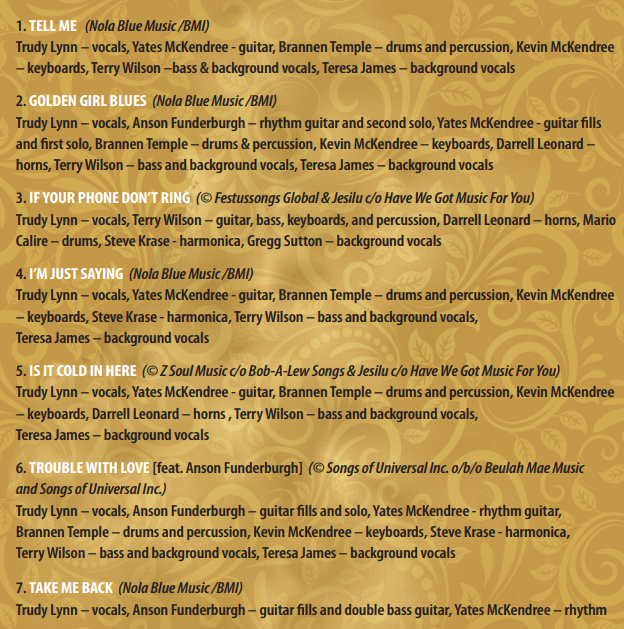
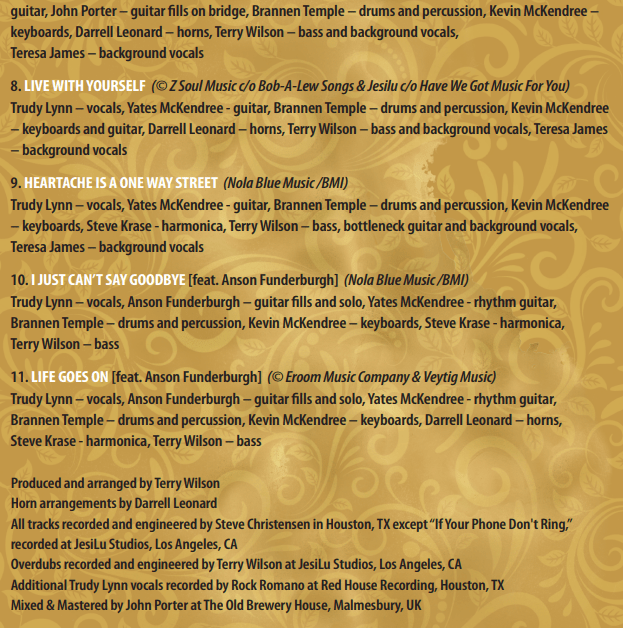
Tracklist and credits:

Just for fun: Even more toughness in “Tuff Enuff” from the Fabulous Thunderbirds, in 1986.

Blues Roadhouse News: Burnside, Ingram win 2022 blues Grammys

There are just two pure blues categories in the Grammys these days, with sort of related categories in gospel, Americana, roots and folk music. But since this is the BLUES Roadhouse, we’ll just list those two.

Both categories had worthwhile nominees, but it’s hard to disagree with the winners. Both Cedric Burnside and “Kingfish” Ingram produced excellent albums. In a bit of shameless self-promotion, here’s my review of each: Burnside’s “I Be Trying” and Ingram”s “662.”

Videos of their acceptance speeches are below.

And here’s a list of all the Grammys (the page is being updated throughout the evening).

Best Traditional Blues Album
For albums containing at least 51% playing time of new vocal or instrumental traditional blues recordings.

  • 100 Years Of Blues
    Elvin Bishop & Charlie Musselwhite
  • Traveler’s Blues
    Blues Traveler
  • I Be Trying – WINNER
    Cedric Burnside
  • Be Ready When I Call You
    Guy Davis
  • Take Me Back
    Kim Wilson

Best Contemporary Blues Album
For albums containing at least 51% playing time of new vocal or instrumental contemporary blues recordings.

  • Delta Kream
    The Black Keys Featuring Eric Deaton & Kenny Brown
  • Royal Tea
    Joe Bonamassa
  • Uncivil War
    Shemekia Copeland
  • Fire It Up
    Steve Cropper
  • 662 – WINNER
    Christone “Kingfish” Ingram

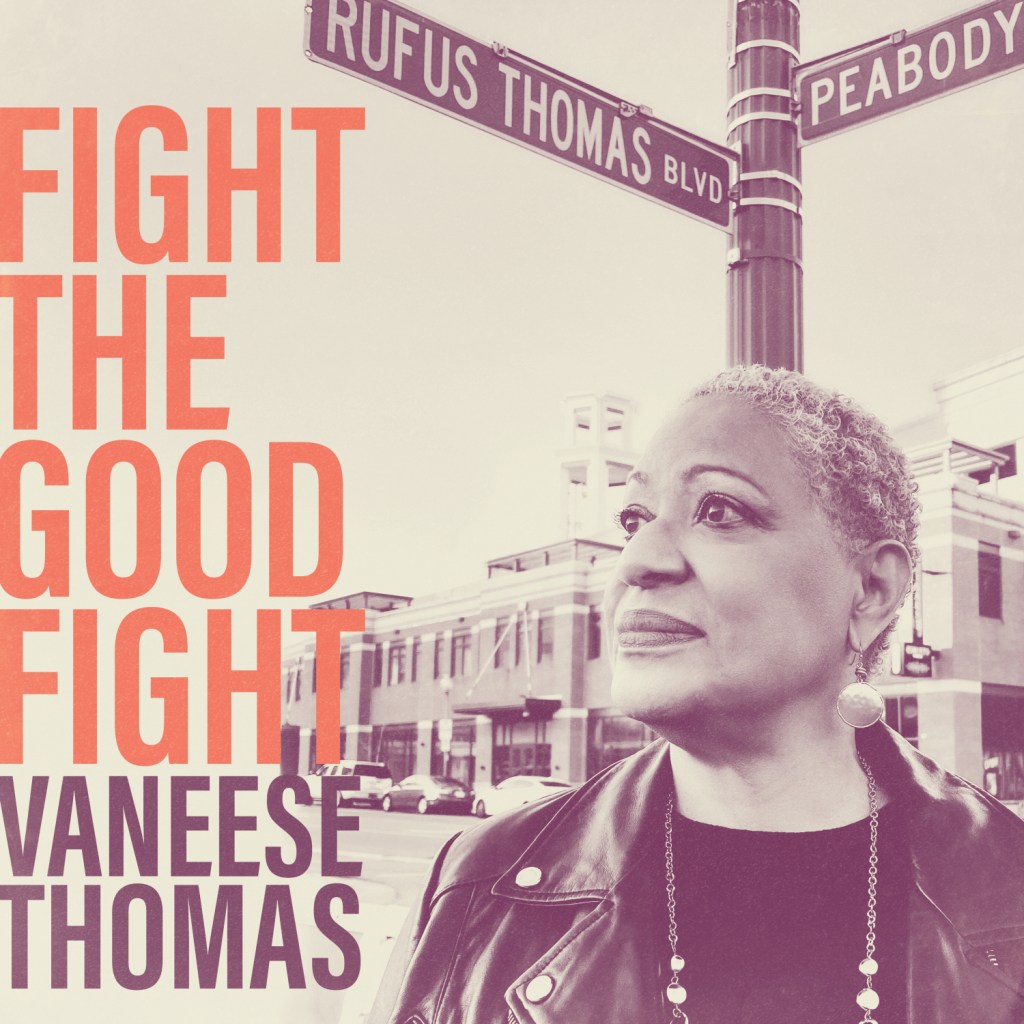
Roadhouse Album Review: Vaneese Thomas soars in gorgeous album, “Fight the Good Fight”

Vaneese Thomas — Fight the Good Fight” — Blue Heart Records (April 15)

There are powerful singers with great voices in the world of music — and then there is the majestic voice of Vaneese Thomas.

The written word is often inadequate to describe the emotional qualities of music, and this exuberant album filled with powerful music and gorgeous vocals is one of those times. (But I have to try, otherwise this post would end here!)

It’s tough enough to find just one of those qualities in a musical performance, but Thomas and a stellar group of musicians wrap it up and bring it all home with power and passion on this outstanding album, her ninth.

The powerful arrangements on every song weave an undulating tapestry of pulsating sound that urge Thomas’s rich vocals both higher and deeper. Maybe it helps that she wrote or co-wrote all 12 songs, which can only add to the heightened sense of emotional purpose in each one. I should note here, in case you didn’t realize, Thomas is the daughter of the legendary Memphis singer, songwriter, dancer, disc jockey Rufus Thomas.

The songs themselves? They’re a heady mix of blues, R&B, soul, country and other classic roots music. To her credit, Thomas makes each one sound as though it’s her first musical language.

In order to create this great sound, Thomas enlisted many special guests, including Scott Sharrard (Gregg Allman’s musical director), Bo Mitchell, Lisa Fischer, Tash Neal, along with the Memphis Horns – trumpeter Marc Franklin and saxophonist Kirk Smothers (Drive By Truckers) – and harmonica from Corrin Huddleston, plus banjo by Peter Calo. Bassist Will Lee, drummer Shawn Pelton and more worked on special sessions in Brooklyn, Nevada, and the Royal Studios in Memphis.

Warnecke and guitarist Al Orlo hold down the rhythm section for most of the songs, beginning with the potent opener, “Raise The Alarm,” which does just that for the excellent music that follows.

Next, Thomas’s soaring vocals highlight “Same Blood Same Bone” (a video is below), an emotional ode to the soulful heritage of her hometown, Memphis. After that, Calo’s banjo adds a country flair to “Rosalie,” and that’s followed by the driving “I’m Moving On,” ridden hard and put away wet with Thomas on piano.

There’s not a bad note here, or a lyric out of place. Every song is worth a listen — many listens, in fact. The sheer lyricism is word-perfect. 

A few of my other favorites include the hopeful anthem of the title track, with plaintive fiddle by Katie Jacoby and finger-pickin’ good guitar by Paul Guzzone; “Bad Man” is a tough but victorious blues message. The spiritual-like closer, “Lost in the Wilderness,” is simply beautiful, with that gorgeous Thomas voice soaring in front of a choir that adds even more power and passion.

Like I said at the beginning, words can’t really do justice to this level of musical excellence. You’ve got to hear it, absorb it and make Vaneese Thomas’s soulful performance part of your own musical experience.


Here’s “Same Blood Same Bone”:

Tracklist:

  1. Raise the Alarm
  2. Same Blood Same Bone
  3. Rosalee
  4. I’m Movin’ On
  5. Time to Go Home
  6. When I’ve Had a Few
  7. Bad Man
  8. Blue
  9. ‘Til I See You Again
  10. He’s a Winner
  11. Fight the Good Fight
  12. Lost in the Wilderness

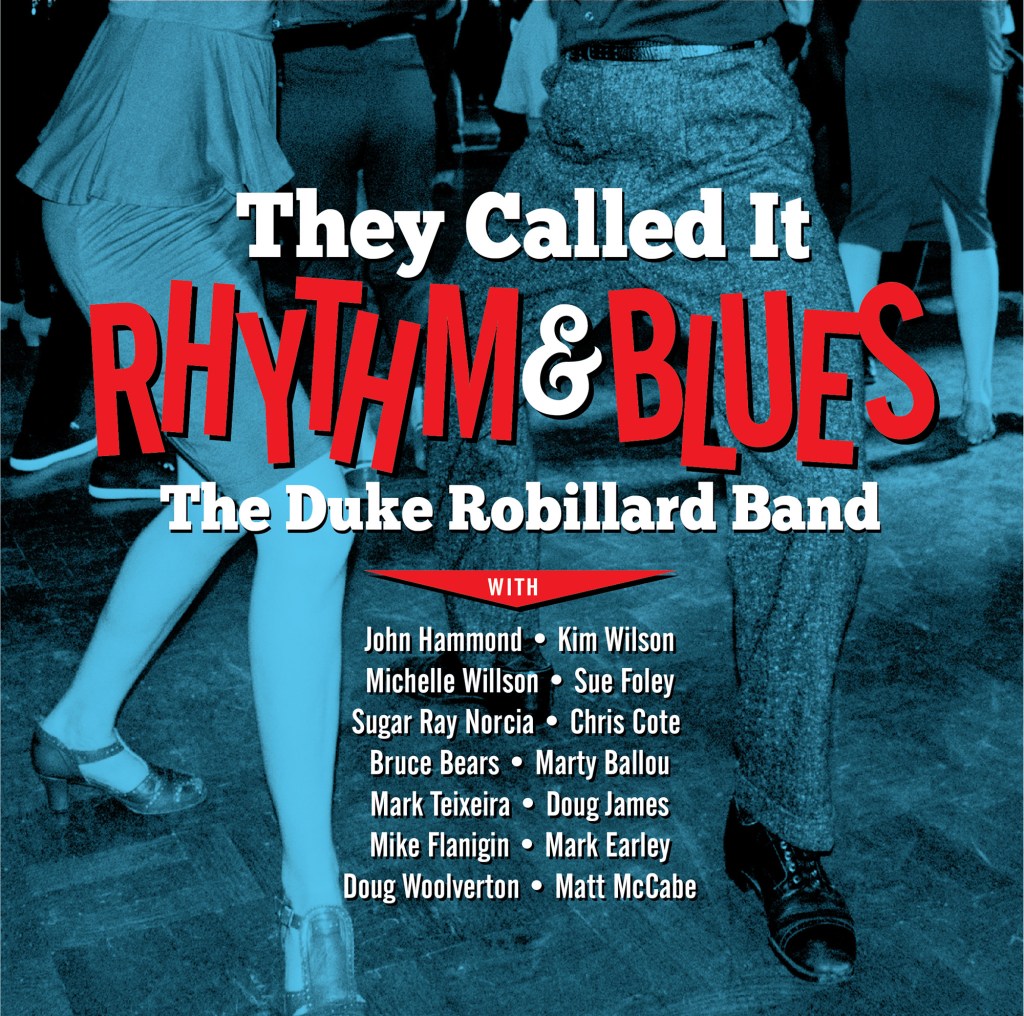
Roadhouse Album Review: Duke Robillard comes out swinging with excellent “They Called It Rhythm & Blues”

Duke Robillard — “They Called It Rhythm & Blues” — Stony Plain Records

The great music of rhythm & blues — music that blew in on the strains of jump blues and big band music through the 1940s and ’50s, and then became its own fine self, doesn’t always get the credit it deserves as a vital slice of American music history.

It was, after all, laying the groundwork for soul music, rock ‘n’ roll, and a huge amount of American popular music.

R&B is supposed to have gotten its name in 1948 from Jerry Wexler, a Billboard magazine writer who in 1953 became a partner in Atlantic Records, although the phrase rhythm and blues was actually used in Billboard as early as 1943. It replaced the term “race music.” In June 1949, at Wexlers’s suggestion, Billboard changed the name of its Race Records chart to Rhythm & Blues Records.

But I digress. I just wanted to note that by 1948, rhythm and blues had earned its name.

Robillard reaches back into that era for much of the music here, including “Fools Are Getting Scarcer,” a Roy Milton swinger from 1955, and Hammond’s deep, dark takes on Lil Son Jackson’s 1949 “Homeless Blues” and Howlin’ Wolf’s 1954 “No Place To Go” (both done in more of a classic blues style).

But the album actually kicks off in traditional R&B fashion with the easy rocking “Here I’m Is” by Chuck Higgins, one of six tracks featuring the band’s big-voiced singer, Chris Cote. This is the stylish music that Robillard has been creating since 1967, when he and pianist Al Copley started what would become the great jump blues band, Roomful of Blues.

By the way, this is an unusually long album, with 18 songs — an hour and seven minutes of swinging musical pleasure.

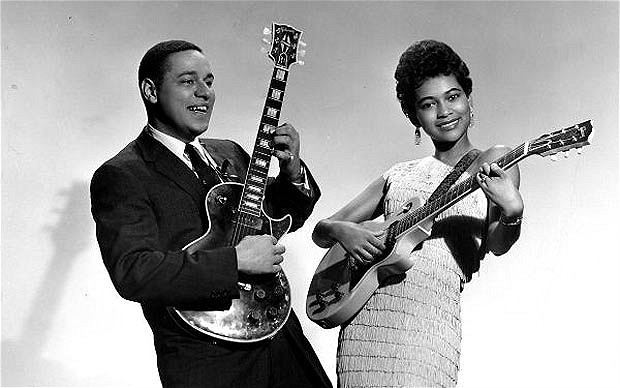
Mickey and Slyvia in 1956.

Following on the rhythmic heels of the opener is a rollicking version of “No Good Lover,” with Duke and Sue Foley reprising the work of Mickey (Baker) and Sylvia (Vanterpool) from 1956. Ahhh, 1956, with great musical memories of LaVern Baker, Ruth Brown, Clyde McPhatter, The Clovers, Shirley & Lee — many more R&B stars, and some great cars, too.

Robillard himself steps up with an original song, “Outta Here,” cut with a touch of horn and organ-laced soul that swung in after R&B. It also shows that the Duke can still make excellent use of his guitar skills, as he does all through the album.

One of my favorite tracks is Cote’s scorching version of Freddie King’s “Someday After Awhile,” but everything here is very worth your while. There are tasty turns by all the vocal guests: John Hammond, Kim Wilson, Sue Foley, Sugar Ray Norcia, Michelle Willson and Chris Cote.

The album ends with, “Swingin’ for Four Bills,” an original instrumental by Robillard as a tribute to Bill Jennings, Billy Butler, Bill Doggett and Wild Bill Davis. And it is a swinging affair.

This is a truly enjoyable album, enthusiastically executed — for its music, its singers and its musicians. It all makes for a delicious trip down memory lane, making great old music new again.


A video of “No Good Lover”

Cast and credits:

John Hammond, Kim Wilson, Sue Foley, Sugar Ray Norcia, Michelle Willson, Chris Cote, Bruce Bears, Marty Ballou, Mark Teixeira, Doug James, Mike Flanigin, Mark Earley, Doug Woolverton and Matt McCabe.

Duke Robillard – guitars, vocals
Chris Cote – vocals
Bruce Bears – piano, organ
Marty Ballou – acoustic and electric bass
Mark Teixeira – drums
Doug James – baritone and tenor sax

Track list:

Here I’m Is – Chris Cote – vocal 

No Good Lover – Duke Robillard – vocal; Sue Foley – vocal and guitar; Mike Flanigin – organ

Fools Are Getting Scarcer – Chris Cote – vocal 

Tell Me Why – Kim Wilson – vocal and harmonica; Matt McCabe – piano

Rambler Blues – Sugar Ray Norcia – vocal and harmonica

The Way You Do – Chris Cote – vocal 

Champagne Mind – Michelle Willson – vocal

Homeless Blues – John Hammond – vocal and guitar

Outta Here – Duke Robillard – vocal, Anita Suhanin – vocals

In The Wee Wee Hours – Chris Cote – vocal

Someday After Awhile – Chris Cote – vocal 

She’s My Baby – Sugar Ray Norcia – vocals and harmonica

Trouble In Mind – Michelle Willson – vocal

No Place To Go – John Hammond – vocal and guitar

The Things I Forgot To Do – Kim Wilson – vocal 

I Can’t Understand It – Chris Cote – vocal 

Eat Where You Slept Last Night – Duke Robillard – vocal

Swingin’ For Four Bills – Duke Robillard, Sue Foley – guitar; Mike Flanigin – organ

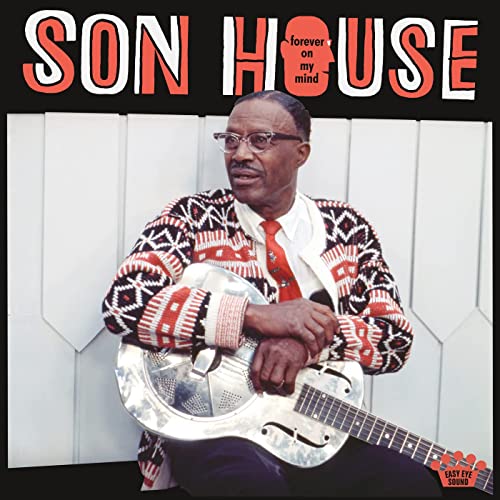
Roadhouse Album Reviews: Great old blues are new again – “Forever on My Mind” from Son House; “Down Home Blues Revue” from the vaults of Bob Corritore

If you enjoy listening to the historic roots of the blues we hear today, here are a couple of recent releases that should give you an earful of some great music.

Son House — “Forever on My Mind” — Easy Eye Sound

Edward James “Son” House Jr., or Son House, was a unique figure in blues history. His highly emotional vocals and slide guitar playing combined to give him a powerful, sometimes almost otherworldly, sound.

After a stint as a preacher in his early 20s, House performed and recorded from the mid-1920s to the mid-’40s, when he gave up music and moved to Rochester, N.Y. He was rediscovered in 1964 and enjoyed a revival of his career during the ongoing folk-blues years until he retired again in 1974 for health reasons.

After he was rediscovered in 1964, he recorded what would become his seminal album, “The Legendary Son House: Father of Folk Blues,” in 1965 on Columbia Records.

But, as it turns out, he was recorded earlier, at a November 1964 performance at Wabash College in Crawfordsville, Ind., by Dick Waterman. who has had tapes of that show stashed away for the past 60 years. Waterman was one of three blues fans who tracked House to his Rochester home and then helped to revive his career.

Now, material from the Wabash concert has been released by Dan Auerbach’s Easy Eye Sound record label.

The recordings come from a Nov. 23, 1964 performance Son House gave at Wabash in Crawfordsville. Five months later, the blues legend cut the Columbia album, which introduced him to a new, wider audience.

The album contains new versions of seven songs House later recorded for Columbia — including a new rendition of “Preachin’ Blues.” The title track had never been recorded, but was played at his live performances.


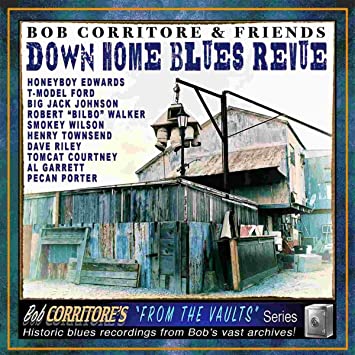
Down Home Blues Revue — Various Artists — VizzTone Label Group

Here’s a fine album of tracks recorded by Bob Corritore between 1995 and 2012 in Phoenix, Ariz., at Corritore’s club, the Rhythm Room.

This is another one of the excellent classic blues recordings in Corritore’s “From the Vault” series, recorded as performers passed through his club.

This 13-track album includes some great blues by Honeyboy Edwards, T-Model Ford, Henry Townsend, Big Jack Johnson, Robert “Bilbo” Walker, Smokey Wilson, Tomcat Courtney, Dave Riley, Pecan Porter, and Al Garrett.

If classic blues is your thing, give these albums a listen.


Here’s a Rolling Stone article about the Son House album.


A video of “Preachin’ Blues.”

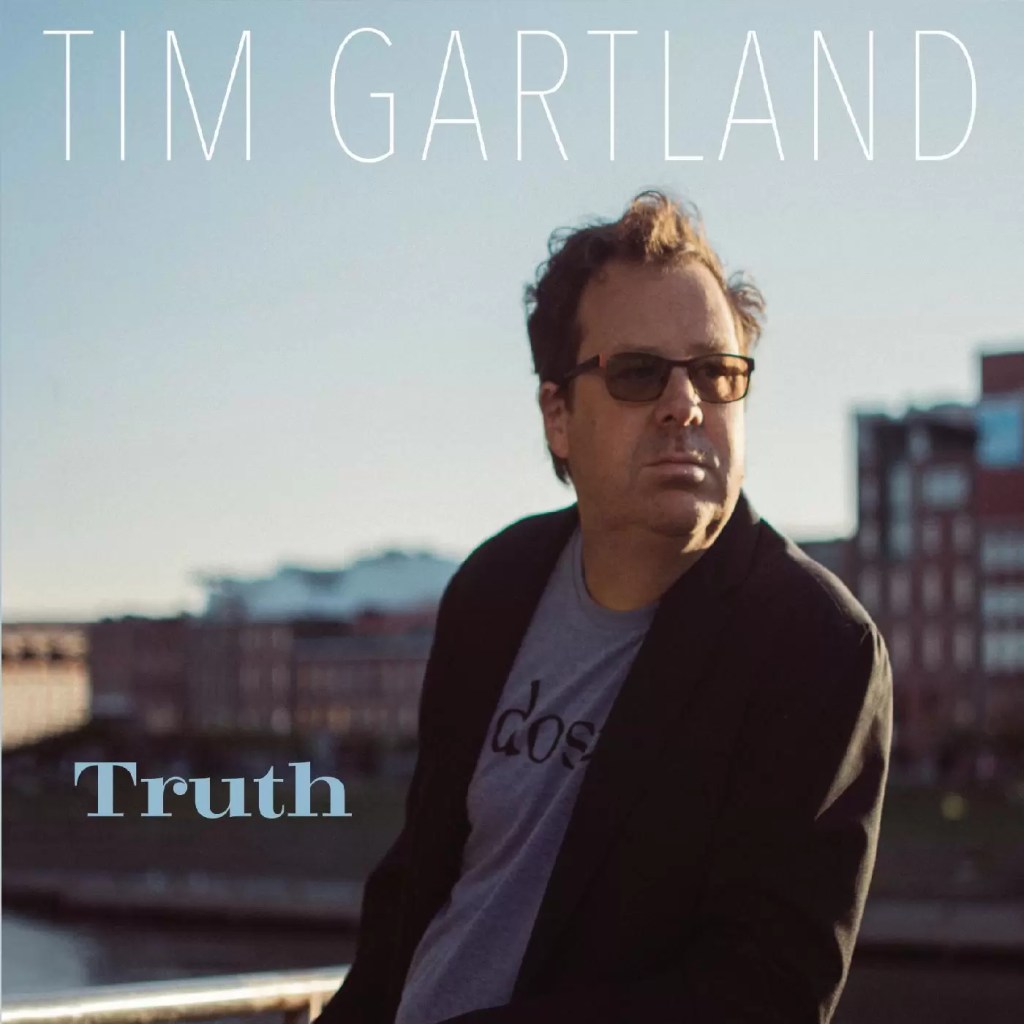
Roadhouse Album Review: Tim Gartland spins refreshingly honest music on “Truth”

Tim Gartland — “Truth” — Taste Good Music (March 18)

For his fifth solo album, singer/songwriter/harp player Tim Gartland brings up an intriguing musical concept — the truth.

Maybe it comes from his perspective on songwriting, and the blues:

“The blues is essentially a genre in which the singer is having a cathartic experience. If you write about themes that are meaningful to your experience, you will create something new,” Gartland says.

And that’s definitely the vibe coming from all of the 11 original songs on this smartly written and produced album. It’s full of razor-sharp lyrics and crisp music. The creative writing comes from Gartland, whose name is on every track, with a capable assist here and there from some talented partners in song.

Then there’s the style. It starts with Gartland’s world-weary, hint of late-night whiskey baritone that he uses to frame all these finely crafted lyrics. Then there’s the music: “Truth” was produced by Grammy winner and keyboardist Kevin McKendree, a Delbert McClinton veteran, with Kenneth Blevins on drums, Steve Mackey on bass, Robert Frahm on guitar and Ray Desilvis on acoustic slide. Bryan Brock provides percussion and Top Ten finalist on “The Voice”, Wendy Moten offers background vocals. 

And here’s the thing: This band is tight, but the music rolls as loose as it should, rocking with purpose on the opener with Gartland’s strong harp work out front (“Don’t Mess With My Heart,” written with Pat Gartland) or swinging with ease (“Leave Well Enough Alone”). Gartland’s harp, by the way, digs deep into every arrangement. Another favorite is “Cloudy with a Chance of the Blues,” written with McKendree, pushed along by his piano, coupled with Gartland’s harp. “Outta Sight Outta Mind” shares the same pairing, but with a sparkling, jazzy vibe.

Then there’s the title track, “The Thing About the Truth,” written with Karen Leipziger, which neatly sums up the philosophy here of the value of truth, with the following observation that really pulled me in:

“A world that’s lit by gaslight casts a shadow of doubt….”

And there’s a lot more, all equally worthy of filling that hole in your soul with honest, rootsy, bluesy music. It’s an excellent, finely crafted album that effortlessly pulls together intelligent songwriting, smooth vocals and inspired musicality.

You want the truth? You should check out “Truth.” Honest.


Video of “The Thing About The Truth”:

Tracklist:

  1. Don’t Mess With My Heart
  2. Leave Well Enough Alone
  3. The Thing About The Truth
  4. Cloudy With a Chance of the Blues
  5. Outta Sight Outta Mind
  6. One Love Away
  7. Love Knocks Once
  8. Probably Nothing
  9. Wish I Could Go Back
  10. Mind Your Own Business
  11. Save Sammy Some

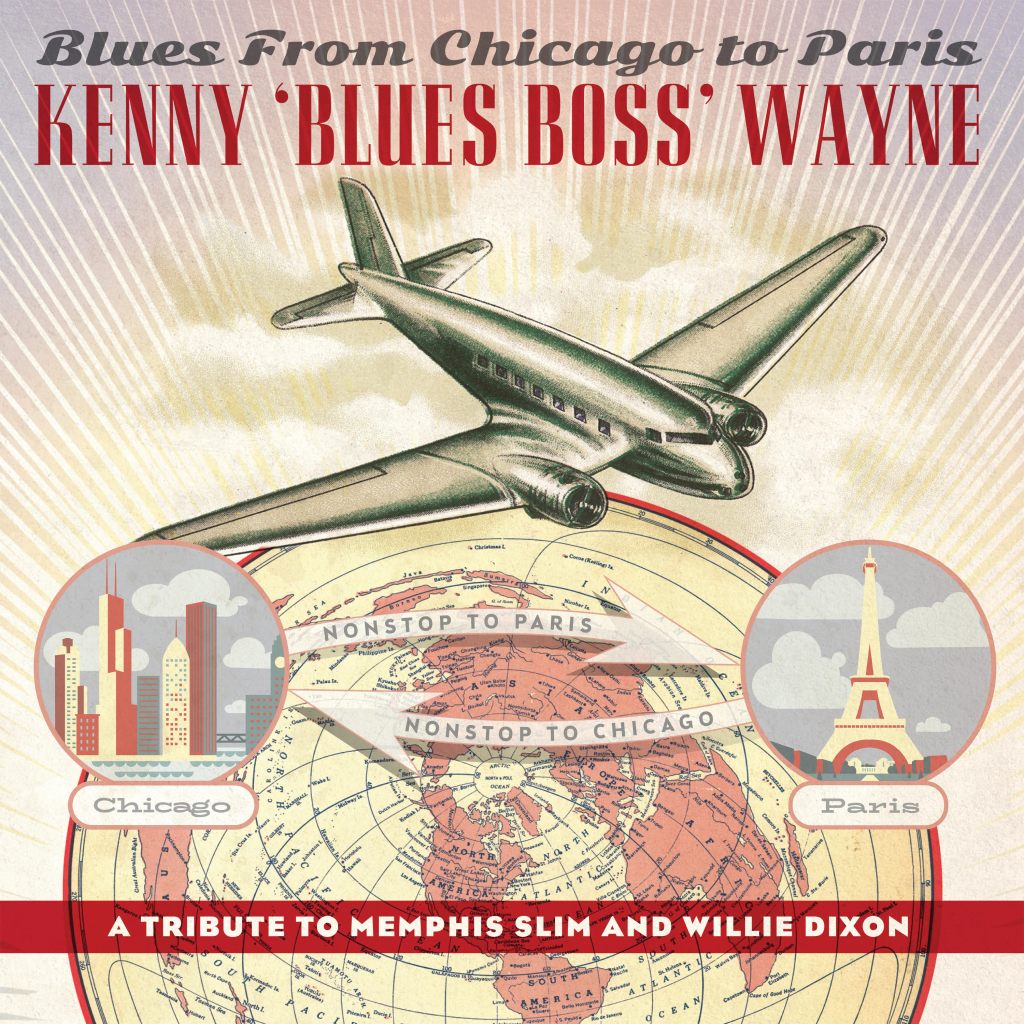
Roadhouse Album Review: “Blues From Chicago to Paris” a tasty piano treat from Kenny ‘Blues Boss’ Wayne

Kenny “Blues Boss” Wayne — “Blues From Chicago to Paris” — Stony Plain Records

If you love piano blues (I’ll admit to my own crush), here’s a new album from an old piano master that should satisfy any craving you might have.

Wayne has been one of the premier boogie-woogie practitioners for years — he’s 77 and still tormenting the ivories here with considerable pleasure.

For this set, however, Wayne decided to focus more on some standard blues. Or as he put it:

“Many of my friends, around the world, have told me that they miss the sound of piano blues and this album will feature just that….”

These tracks are focused on the late 1950s and early ’60s, specifically on the music created when the great blues singer-songwriter Willie Dixon joined with piano great Memphis Slim (Peter Chatman) on a world tour. Thus the title, “Blues from Chicago to Paris.”

Wayne explains: “Memphis Slim and Willie Dixon were a team, and their styles worked great together.” “Out of many other blues piano players I’ve listened to, I found a unique playfulness between these two men, unlike the many other great blues pianists.” This inspiration was based on Dixon’s early years when he was Willie Dixon and the Big Three Trio.

The result is the 17 songs on this smartly conceived and enthusiastically executed album by Wayne and players he calls his “two buddies,” Russell Jackson on acoustic bass and Joey DiMarco on drums.

Yes, there’s some tasty boogie woogie here (“Rock and Rolling This House,” “Just You and I”), but Wayne’s piano work is mostly more subtly attuned to the flavor of the songs he’s chosen, and the result is sensual and bluesy (“Messin’ With the Blues,” “Got You On My Mind,” “Pigalle Love,” “Stewball”).

Every song is a minor gem of blues piano work, with Wayne’s husky vocals (Jackson adds some, too) adding depth and well-aged smokiness.

The is a fine and fun album by one of remaining giants of blues piano. Goes down smooth late at night with the proper adult beverage. Enjoy it soon and often.

“Stewball” from the album:

Tracklist and credits:

1, Rock and Rolling This House, Peter Chatman, Memphis Slim Music

2, The Way She Loves A Man, Willie Dixon, Helios Music Company

3, New Way To Love, Willie Dixon, Hoochie Coochie Music

4, Reno Blues, Willie Dixon

5, African Hunch, Willie Dixon, Helios Music Company

6, Just You and I, Willie Dixon, Helios Music Company

7, Messin’ Round (With The Blues), Peter Chatman, Conrad Music

8, One More Time, Willie Dixon, Hoochie Coochie Music

9, Somebody Tell That Woman, Willie Dixon, Hoochie Coochie Music

10, Stewball, Peter Chatman, Arc Music

11, After While, Willie Dixon, Hoochie Coochie Music

12, Got You On My Mind, Willie Dixon, Hoochie Coochie Music

13, Don’t Let The Music Die, Willie Dixon, Hoochie Coochie Music

14, Pigalle Love, Peter Chatman, Sony / ATV Songs LLC

15, I Aint Gonna Be No Monkey Man, Willie Dixon/Leonard Caston, Hoochie Coochie Music

16, I Got A Razor, Willie Dixon, Hoochie Coochie Music

17. Wish Me Well, Peter Chatman, Memphis Slim Music

All Tracks:

Kenny Blues Boss Wayne – Piano/Vocals

Russell Jackson – Acoustic Bass/Vocals

Joey DiMarco – Drums

Producer – Kenny Wayne

Engineers – Adam Wittke & Peter Kilgour

Liner Notes – Bill Dahl (Yes, I know you can’t read them here, but the man writes great liner notes.)

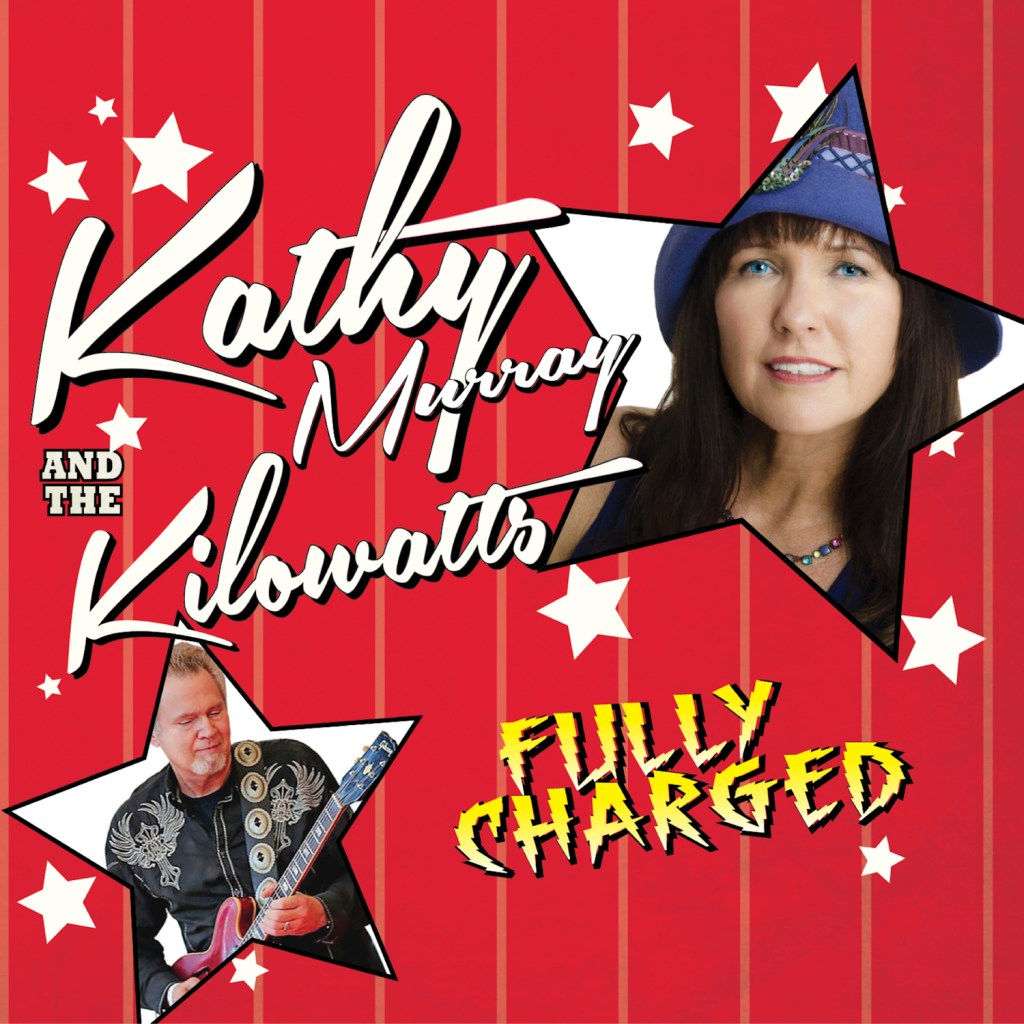
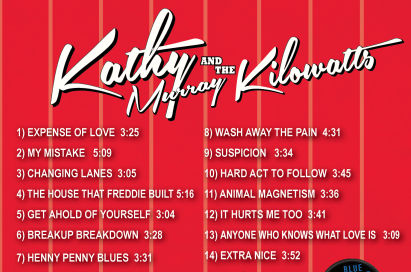
Roadhouse Album Review: Kathy Murray & The Kilowatts turned on with current “Fully Charged” album

Kathy Murray & The Kilowatts — “Fully Charged” — Blue Heart Records

At the top of the first page of this band’s website, it says their new album is “showcasing Murray at the peak of her mastery of American roadhouse music.”

Well. If an album of fine roadhouse music doesn’t deserve mention here in the Roadhouse, where else?

Roadhouse music, by the way, is a catchphrase that describes an assortment of musical styles good for things like listening, drinking or dancing (or all three) — and it can put its lovin’ arms around country, blues, ballads, and just about any music that could also be called rootsy, or maybe Americana.

But that’s just all a bunch of words. Maybe it’s better to describe the music by its performers. And that’s where Kathy Murray comes in.

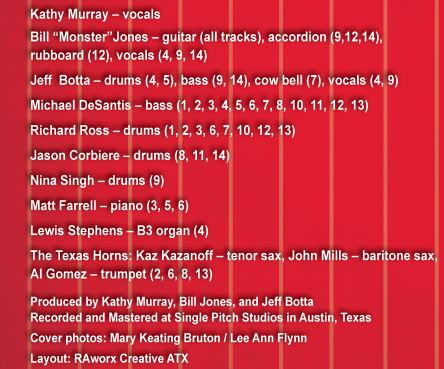
At first glance, Kathy, plus the Kilowatts, is a bluesy Texas songbird, backed by a crisp combo making fine music. Well, they are that. But they are much more. Murray is a talented singer-songwriter with an expressive honey-layered Southern voice (must be a Texas thang!). Her bandleader and partner, Bill Jones, leads the way with expressive guitar that matches the many moods of the music and Murray’s vocals.

Since this is very much a Texas band, the opener is a traditional Texas shuffle, “Expense of Love.” That’s followed by “My Mistake,” a torchy blues with appropriate guitar and the Texas Horns for good measure. The road (and roadhouse) song “Changing Lanes” revs things into a higher gear.

“The House That Freddie Built” is a tribute to the “Texas Cannonball,” the great Freddie King, and the years he spent on the musically vital Austin scene at The Armadillo World Headquarters.

There is much more. All excellent listening. Murray’s vocals shift gently from song to song, but never lose their essential expressiveness — she pulls you into each song, especially more thoughtful musings such as “Wash Away The Pain” and one of my favorites, the melancholy country-flavored “Breakup Breakdown.” And she casts her own sultry vocal spell on the old Irma Thomas track, “Anyone Who Knows What Love
Is.” And can rock out hard and fast, as in “Get Ahold of Yourself,” behind a pounding piano.

Another favorite is her effortless sensuality on the classic Tampa Red version of “It Hurts Me Too.” If you want to take an interesting side trip into the blues, both Red (Hudson Whittaker or Woodbridge) and the song itself have long and colorful histories. After you’ve listened to Murray’s music, come back and check those links. After all, they’re included free of charge, along with this blog, also free of charge.

This is an excellent album by a talented singer and songwriter, with impressive credentials: Along with co-songwriters Christoffer ‘Kid” Andersen, Rick Estrin and Frank Bey, Murray
wrote the title cut on Frank Bey’s album, “All My Dues Are Paid,” posthumously nominated for
“Best Traditional Blues Album” in the 63rd Grammy Awards, and for “Song of the Year” in the
2021 Blues Music Awards. Murray received the 2003 “Songwriter of the Year” award from the
Australian Blues Music Awards and two Silver Medals from the 2018 Global Music Awards.

So have a listen. It’s cool, smart and smooth Texas music from cool, smart and smooth Texan Kathy Murray.

Here’s a video of “The House That Freddie Built” from the album:


Another libation tip (yes, I actually do this): It’s Famous Grouse Smoky Black blended Scotch.