It’s always great musical fun to hear an artist for the first time, and then not be able to get enough.
That’s what happened a while back when I got an email from Bigtone Records, promoting a single from an upcoming album by singer Mara Kaye and pianist Carl Sonny Leyland.
The song, the classic “It Had To Be You,” is the title track from the as-yet-unreleased album. Kaye and Leyland do a superb job of offering a bright new version of this old standard, first published in 1924, written by Isham Jones, with lyrics by Gus Kahn.
I’m familiar with Leyland’s stellar keyboard work, but Mara Kaye’s name was new to me. Fortunately, Bigtone was kind enough to release an audio version of this splendid track (listen below), and that sent me hustling to find more of Ms. Kaye.
I haven’t found a lot of biographical information, except that she was born in Brooklyn (not that there’s anything wrong with that!). There are, however, a number of clips on YouTube that focus on her interpretation of old blues and jazz songs. Which, after all, is the most important.
Ms. Kaye is, in a word, terrific.
She breathes new life into old music, and does it with tremendous talent and obviously, a lot of respect for the genre. By dipping in to this somewhat esoteric old songbook, she’s giving us another look at some great music.
Nothing makes me happier (well, to be honest, there may be a few other things) than when new blues music turns up sounding like old blues music. Or, the way I think blues music should sound.
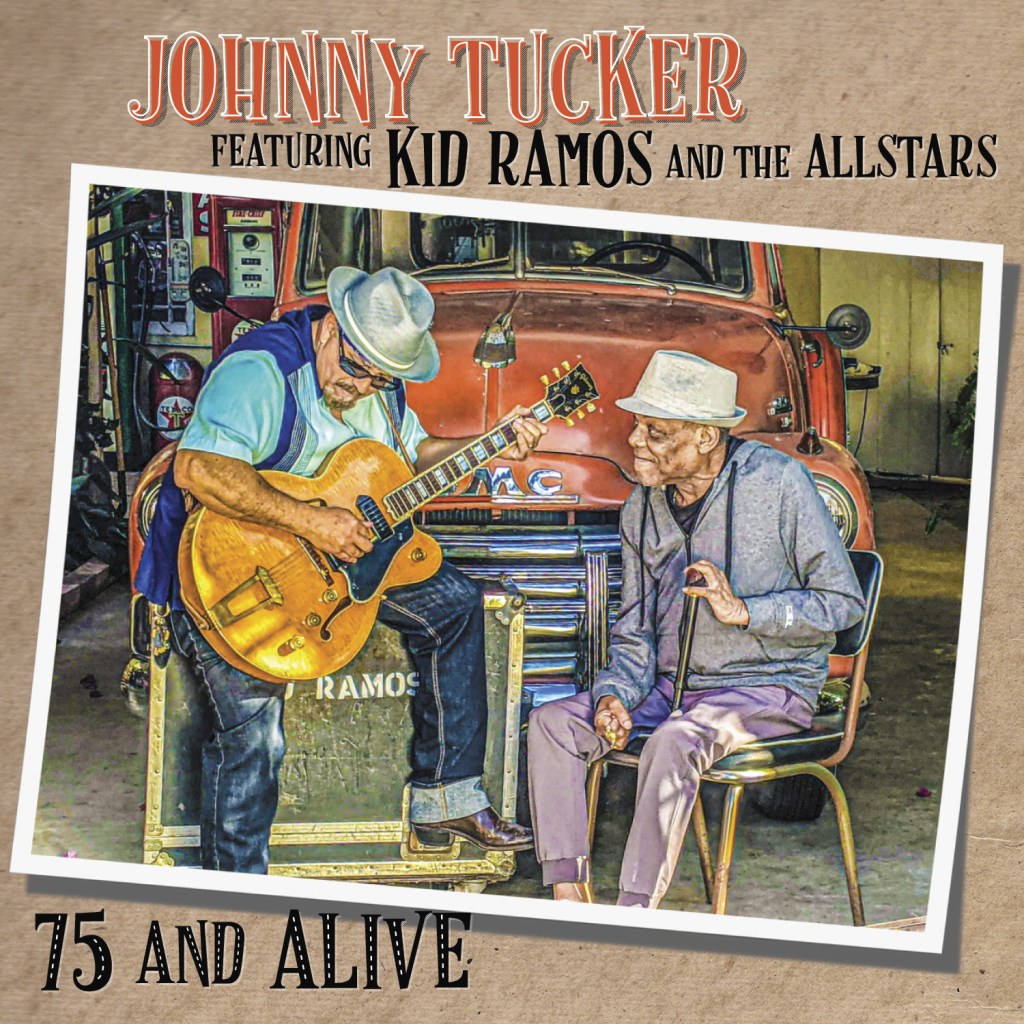
Now, I realize this has a lot to do with the ear of the beholder. But my ears tell me that there’s real-deal, old-school blues in the latest album from soulful veteran singer (and songwriter) Johnny Tucker (he’s the “75 and alive” part), with a razor-sharp band passionately fronted by L.A.’s David “Kid” Ramos.
Tucker has one of those powerful, gritty voices that defines soulful blues. His vocals are deep and gravelly, polished by the river of blues that rolls them along. He often composes his songs as he records them, creating them in the moment. The results speak eloquently of a powerful old blues style that gets harder and harder to find in contemporary performances.
There’s a fine blend of styles on the album — some sparkling West Coast swing, some tough down-home blues, some torchy soul, and a touch of funk.
The album kicks off with a swinging groove on “All Night Long, All Night Wrong,” a classic jump blues; then softens into the torchy ballad, “There’s A Time For Love,” then continues the passion with “If You Ever Love Me,” with Bob Corritore’s harp and Carl Sonny Leyland’s piano driving the music.
“Can’t You See” chugs along with a wicked rhythm, “What’s The Matter” adds a Latin flair, and “Treat Me Good” is filled with sinuous guitar lines. “Snowplow” and “Hookline” are two jumping instrumentals, separated by “What’s On My Mind,” with some boogie-inspired piano.
The set closes out with three tough sounds: “Dance Like I Should” is a fiercely guitar-driven blues, “Have A Good Time Tonight – Play Your Soul, Johnny” and “Gotta Do It One Time” are more soul-drenched tracks, with the latter driven hard by kick-ass horns.
Besides Ramos and Corritore, the Allstars include John Bazz on electric and standup bass, drummer Jason Lozano and saxman Ron Dziubla.
The blues glue that holds all of this together, is of course, Tucker’s passionate vocals. He pleads, he begs, he swoops and swings; his voice simmering with the pleasure and pain of his music, delivered with a heartful of soul. This is the good old days, in blues.
Here’s a video of the song “Have A Good Time Tonight – Play Your Soul, Johnny”
Track Listing: All Night Long, All Night Wrong There’s A Time For Love If You Ever Love Me Can’t You See What’s The Matter Treat Me Good Snowplow What’s On My Mind Hookline Dance Like I Should Have A Good Time Tonight – Play Your Soul, Johnny Gotta Do It One Time
When James Byfield decided to give up his day job to march to a real drummer in 2008, he thought it would be fun to create an album of blues designed to be shared with family and friends. To increase the fun, he created a performance character he thought would be in keeping with his love of old-time blues.
That was the birth of Blind Lemon Pledge.
Here’s how Byfield/Pledge (should I call him Mr. Pledge?) explained that fortuitous creation as part of an extensive interview with Michael Limnios last year:
“I invented the persona of an old bluesman, patterned after the greats like Son House, Skip James, Bukka White, and of course Blind Lemon Jefferson. I thought the character was somebody I could “inhabit” to create a setting for doing the old style blues I love so much.
“When I was thinking what to name this character I remembered a routine by the comedian Martin Mull who invented the character Blind Lemon Pledge (a pun on Blind Lemon Jefferson) who was specifically a white bluesman. It was both and homage and a satire on bluesmen, which fit my music perfectly. So for the project, which I originally conceived as a “one-off”, I adopted the name and invented a whole back story with I included on the album and on the website I created.”
Now, 13 years and nine albums later, the prolific San Francisco Bay-area singer/songwriter and roots-music maestro offers up “A Satchel Full of Blues,” a delightful set of eleven originals and one old-gold standard (“Alberta”), all filled with the spirit of great old blues, and all delivered by the now 13-year-old prodigy, Blind Lemon Pledge. (I have to assume that in blues years, Pledge is actually much, much older.)
But the main thing here is not the character, but the music — which has plenty of character. It’s kind of a laid-back session, not entirely acoustic, but with a similar feel. Byfield’s vocal style tends toward the soft-spoken, as in the two opening tracks — “Wrong Side of the Blues” and “If Beale Street Was a Woman” (which is where you’ll find the line that became the album title — “a satchel full of blues.”) But if you listen to the lyrical content, you’ll find that his words carry their own intensity, a nice counterpoint to his deceptively soft voice.
“Heart So Cruel,” “Teacher, Teacher” and “Detour Blues” lope along with a rhythmic, meet-me-on-the-highway feel, each with its own story to tell.
“Black-Eyed Susie” turns up the musical intensity a level or two with some crackling interplay between slide and harp, and slightly salacious wordplay about Susie herself.
“I Killed the King of the Blues” is a novel exploration of the stories surrounding the death of the legendary Robert Johnson.
The hoarsely whispered, starkly styled closer, “Death Don’t Ask Permission,” is a slide-driven ode that echoes Son House but with Byfield’s own fatalism at its dark heart. Its grimly drawn sentiment demands the burn of some 100 proof whiskey, neat, because “death don’t come convenient when he comes….”
There’s much more fine music than that, of course. Listen to it all. Then go back into Byfield’s catalog and check out some of his uniquely styled earlier music. It’s well worth the journey. Blind Lemon Pledge is more than a cute nom de blues.
Leftover thoughts:
In the album notes, Byfield thanks an intriguing shortlist of songwriters he admires. Imagine the variety of inspiration they offered: Gene Autry, Willie Dixon, Randy Newman, Mose Allison and Hoagy Carmichael.
My apologies for the headline pun. I’m sure it’s not all that original, but I was completely unable to resist. It’s the exact opposite of writer’s block.
Here’s a live video of one of the more unusual tracks, “I Killed the King of the Blues”:
Debbie Bond – “Blues Without Borders” (Blues Root Productions, July 9)
I’m a little late coming to Alabama blueswoman Debbie Bond’s fine new release, “Blues Without Borders,” but that has just given its tasty blues and soulful musings more time to marinate in my mind.
The album title is intriguing — blues has always soared beyond borders. But this special production was put together during the 2020 pandemic months using 10 guest musicians in five studios in the U.S. and the United Kingdom, all connecting over the internet.
The result is this set of tough and tender tracks, all written or co-written by Bond, that blend thoughtful songwriting with a variety of musical styles that take in some blues, soul, country — and more.
The whole thing kicks off with a crisp “High Rider Blues,” featuring the trio of Wood’s guitar and fierce vocals, husband Rick Asherson on swampy harp and Micky Barker on chunky drums. It’s a bluesy keeper.
What follows immediately is the title track, co-written and co-sung by singer/activist Lea Gilmore in a heartfelt plea for peace, love and understanding. This, probably more than any other song, characterizes what Bond is trying to do on this album.
Bond puts that feeling into words in an excellent interview with Michael Limnios on his blog:
“So, the title track has this sentiment of unity,” she says. “It’s a taste of world blues music. Along with the song “Winds of Change,” which is more about the climate crisis and our sad greedy relationship with nature. Another way the title is appropriate is because our songwriting is so influenced by many threads in the American blues song book. I truly love soul music – from Memphis, to Muscle Shoals, to the current soul blues lifeblood streaming through the veins of contemporary blues. I love and listen to a wide range of music, and it has affected our music, of course, and my blues is a bit borderless.”
Other tracks I especially enjoyed include the smooth R&B flavor of “Let Me Be,” the torchy blues of “Blue Rain,” the playful story of her attraction to “Radiator” Rick Asherson with a pleasantly raunchy sax turn from Brad Guin, and the roadhouse rocking “Road Song” as a closer.
There’s a lot more excellent music in “Blues Without Borders.” Bond and her bandmates chosen for this unusual international effort create a seamless flow of lyrically and musically satisfying tracks.
It’s also worth noting those who contributed their far-flung talents: The aforementioned vocalist Gilmore, Jamaican saxman Ray Carless, a member of the Muscle Shoals Studios Horn section, Brad Guin, and percussionists Joelle Barker and Dave Crenshaw, plus background vocals from Meshon Omoregie, Gabrielle Semoine, and Carla Don and Rachel Edwards (Aka AfroUnicorn).
This is world music in the best sense of the word, all pulled together by Bond and her roughly 40-plus years of music-making in Alabama, where, among other ambitious work, she founded the Alabama Blues Project. The rest of her background is equally impressive.
A video of the song “Winds of Change”:
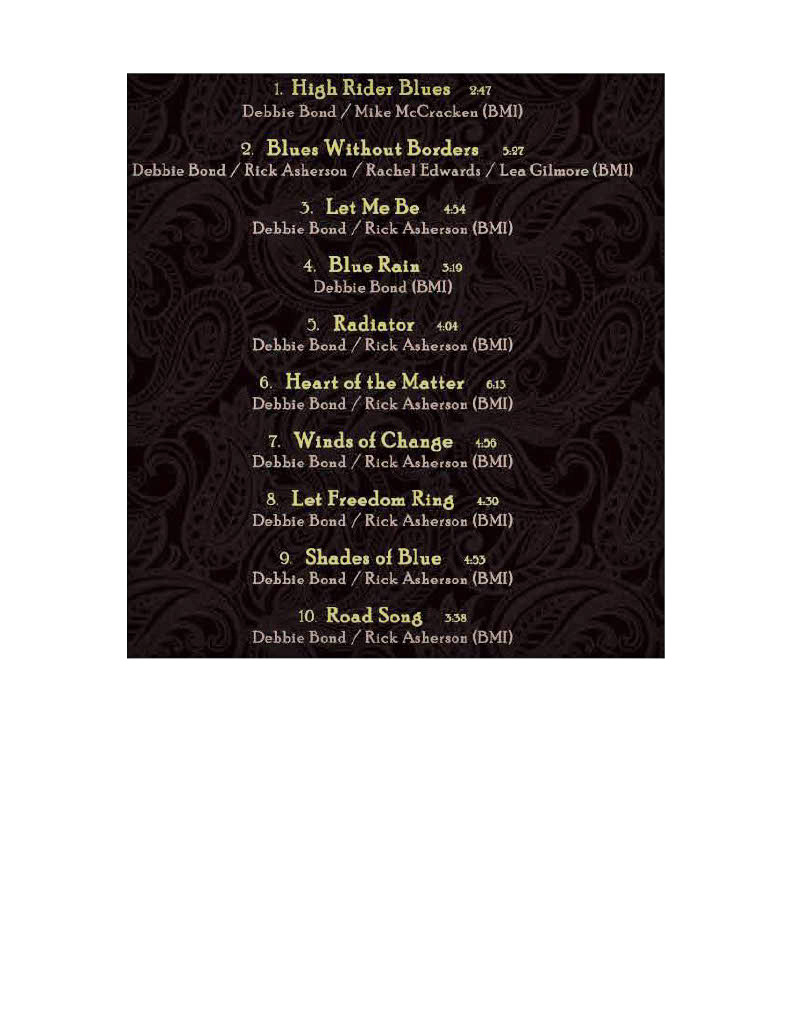
Here are the track list and credits from the CD cover:
There’s a great old blues song with the title “Wild Women Don’t Get the Blues.” I love that sentiment, but I’m not sure if it’s always true.
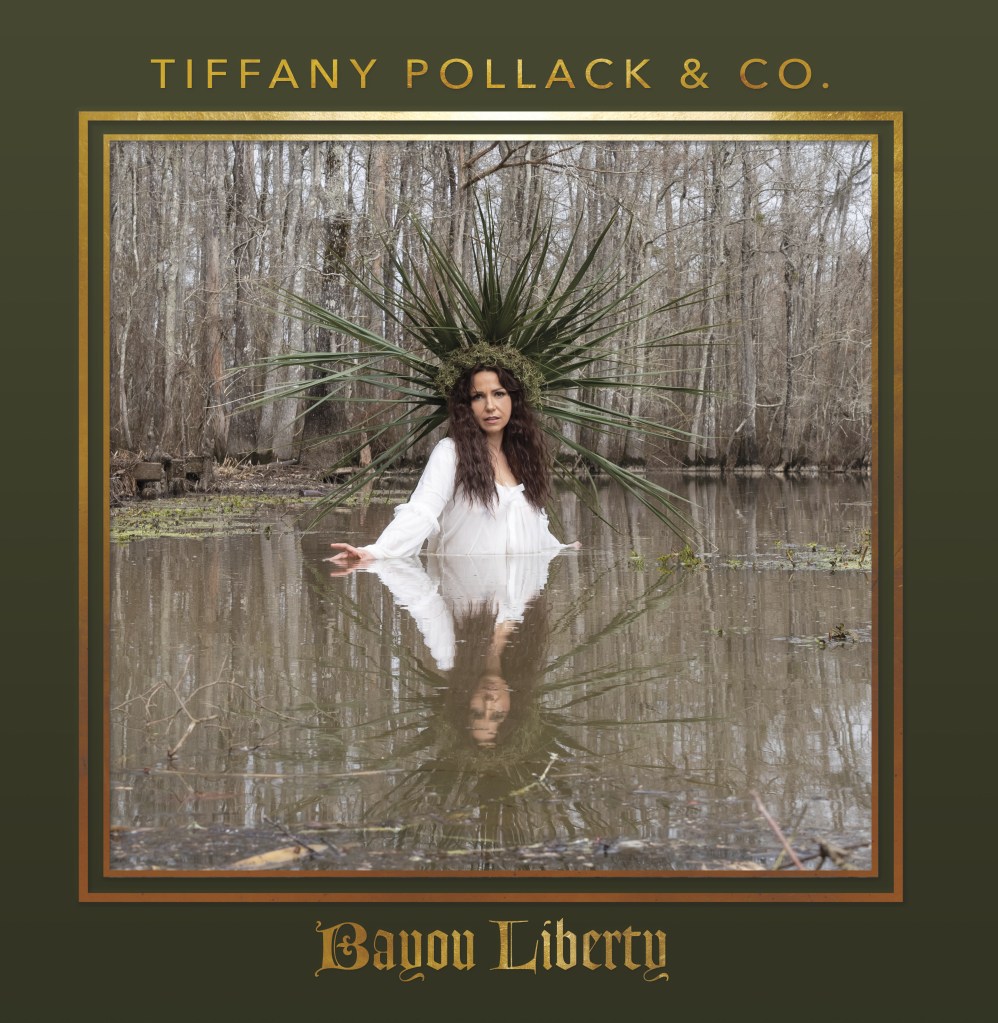
In fact, I think this latest album of all original songs from the very talented New Orleans songstress Tiffany Pollack shows a wild kind of blues streak with songs like “Spit On Your Grave,” “Sassy Bitch,” “Devil and the Darkness” (with Tiffany on slide guitar) and “Crawfish and Beer,” all appropriately sung in her swampy evil-gal blues voice.
Or maybe she did get the blues, but now she’s dishing them out to get rid of them? But I digress.
There are some ballsy blues in those songs, but there are also some more lyrical moments, including gentler tracks like “Colors” and “Hourglasses.”
“Mountain” has a plaintiff country feel, and “My Soul My Choice” is laced with some crisp horns for a shot of rhythm and blues.
Of course there’s more, as Pollack glides in and out of the dozen original tracks with stylish authenticity. There’s also a comfortable, down-home feel to the musical production. It feels both polished and spontaneous, a tribute to the direct-to-tape recording.
Talking about the real-deal feel of the music on the album, Pollack says: “We recorded everything on tape…like the legends of times gone by. There’s no pitch correction. Almost every single song, with the exception of one or two, is a complete live performance from beginning to end.” she says. “It was a very new and challenging recording experience because I had to be cool with some imperfection….”
That vintage style no doubt comes from album producer John Németh, one of my favorite people and performers, who also adds delicious harp on “Spit on Your Grave.” John is a big fan of getting his music real. And so is Electraphonic Studios in Memphis, where the album was recorded. The result is a pleasantly swampy clarity, if that’s not too much of a contradiction.
“I was asked to produce an album for Tiffany Pollack,” Németh says. “She’s a fantastic singer and songwriter from Louisiana …. She’s bonafide and so is her band, recording all these cuts live to tape.”
The band, not incidentally, provides a perfectly unobtrusive yet essential musical framework in harmony with Pollack’s shifting moods and styles. The members include Brandon Bunious, guitar; Stu Odom, bass,; Ian Pettillo, drums; Christopher Johnson, saxophone, and Eric Lewis, pedal steel.
“Bayou Liberty” is as easy to recommend as it is to listen to.
And by the way, “Wild Women Don’t Get the Blues” is a great song. It was first recorded by Ida Cox withLovie Austin‘s Blues Serenaders in 1924. One of my favorite versions was at a Lyle Lovett Large Band concert, and Francine Reed pretty much raised the hair on the back of my neck with her electrifying take.
Here’s a video of the track “Crawfish and Beer”:
Tracklist:
1. Spit on Your Grave (feat. John Németh) (3:44) 2. Colors (3:31) 3. Crawfish and Beer (3:23) 4. Mountain (4:16) 5. My Soul My Choice (2:56) 6. Devil and the Darkness (3:56) 7. Sassy Bitch (3:52) 8. I’m Gonna Make You Love Me (2:42) 9. Hourglasses (4:34) 10. Baby Boys (4:05) 11. Livin’ for Me (4:22) 12. Do It Yourself (2:58)
This is just the second album by the “Kingfish,” Christone Ingram, but that’s okay; he just turned 22 earlier this year. It’s also okay because it’s full of great music — hard-driving blues wrapped in a polished production overflowing with personal lyrics, stinging guitar and Kingfish himself.
The album title, “662” is area code for six counties in northern Mississippi. As Kingfish explains: “The code started in 1999, which was the year I was born, so I definitely feel connected to that.”
And as he explains in the title track lyrics — “Sound oozin’ from the ground, and it cuts right through; you can only find it here in the 662.”
That sound also oozes from the fertile blues that Ingram creates here — only one of the 14 cuts does not list him as writer or co-writer. That means you’re getting a view of the blues filtered though Ingram’s personal experiences, as a Clarksdale native who grew up in the 662.
We also can’t ignore Ingram’s co-writer and album producer here — Tom Hambridge, the award-winning singer, songwriter and producer whose name seems to turn up every few minutes when great, rootsy, bluesy, Americana music is mentioned.
This album kicks of with the title track, a rocking ode to his birthplace, and rolls along into the “mighty, mighty river” of “She Calls Me Kingfish,” a blues ode to lost love, with a crackling guitar solo that Ingram rolls out with his usual relentless energy. Both are album standouts. “Another Life Goes By” and “You’re Already Gone” are almost painfully poignant and gentle. “That’s All It Takes” is as fine a piece of soulful blues as you’ll find in our post-real-honest-to-goodness-soul-music world. “Your Time Is Gonna Come” is a torchy blues with a sinuous guitar solo that not-quite-gently weeps for us all.
There are more songs, of course, eminently listenable, including the touching bonus track “Rock & Roll,” a tribute to his late mother, Princess Latrell Pride Ingram. “My mom passed, and it changed me;” he says. “I learned to look at life and accept it for what it is, and just be happy for what you have …. I’ve grown a lot as a musician, since that time—I’ve been learning a lot and trying to slowly seep into the jazz world, and even incorporate some of those elements in the blues world.” This album is a testament that musical growth.
In addition to his articulate guitar work, Ingram’s vocals are always on track. He has a deep, rich voice that adds depth and passion to all his songs. This is contemporary and rootsy music brought together in a blues framework that makes for powerful listening.
Here’s a video of the title track, “662”
Track list and credits
1.662 (Tom Hambridge & Christone Ingram, Tom Hambridge Tunes, ASCAP/Christone Ingram for Sound Sculpture, BMI) 2. She Calls Me Kingfish (Tom Hambridge & Richard Fleming, Tom Hambridge Tunes, ASCAP/Richard Fleming Music, BMI) 3. Long Distance Woman (Tom Hambridge & Christone Ingram, Tom Hambridge Tunes, ASCAP/Christone Ingram for Sound Sculpture, BMI) 4. Another Life Goes By (Tom Hambridge & Christone Ingram, Tom Hambridge Tunes, ASCAP/Christone Ingram for Sound Sculpture, BMI) 5. Not Gonna Lie (Tom Hambridge, Christone Ingram & Richard Fleming, Tom Hambridge Tunes, ASCAP/Christone Ingram for Sound Sculpture, BMI/Richard Fleming Music, BMI) 6. Too Young To Remember (Tom Hambridge, Christone Ingram & Richard Fleming, Tom Hambridge Tunes, ASCAP/Christone Ingram for Sound Sculpture, BMI/Richard Fleming Music, BMI) 7. You’re Already Gone (Tom Hambridge & Christone Ingram, Tom Hambridge Tunes, ASCAP/Christone Ingram for Sound Sculpture, BMI) 8. My Bad (Tom Hambridge, Christone Ingram & Richard Fleming, Tom Hambridge Tunes, ASCAP/Christone Ingram for Sound Sculpture, BMI/Richard Fleming Music, BMI) 9. That’s All It Takes (Tom Hambridge & Christone Ingram, Tom Hambridge Tunes, ASCAP/Christone Ingram for Sound Sculpture, BMI) 10. I Got To See You (Tom Hambridge, Christone Ingram & Richard Fleming, Tom Hambridge Tunes, ASCAP/Christone Ingram for Sound Sculpture, BMI/Richard Fleming Music, BMI) 11. Your Time Is Gonna Come(Tom Hambridge & Christone Ingram, Tom Hambridge Tunes, ASCAP/Christone Ingram for Sound Sculpture, BMI) 12. That’s What You Do (Tom Hambridge & Christone Ingram, Tom Hambridge Tunes, ASCAP/Christone Ingram for Sound Sculpture, BMI) 13. Something In The Dirt (Tom Hambridge, Christone Ingram & Richard Fleming, Tom Hambridge Tunes, ASCAP/Christone Ingram for Sound Sculpture, BMI/Richard Fleming Music, BMI) 14. Rock & Roll (bonus track) (Christone Ingram, Ashley Ray & Sean McConnell, Christone Ingram for Sound Sculpture/BMG Platinum Songs obo Smashtwang Publ./Silent Desert Music admin. by Razor and Tie Publ. c/o Concord Music, BMI)
This is a terrific album. It’s a tribute to the legendary blues singer Bobby “Blue” Bland by his son, Rodd Bland, a drummer from his father’s band, and other musicians who had taken their turns in Bland’s unit.
It’s full of great music — excellent song choices that aren’t just a greatest hits collection. There’s exceptional vocal work from keyboardist Chris Stephenson, Ashton Riker and Jerome Chism.
And the Members Only Band (MOB), a tower of soulful blues power with not a false note anywhere, with plenty of fine ones. Plus a crackling horn section that kicks ass and takes names — their names being: Marc Franklin and Scott Thompson, trumpet; Kirk Smothers, saxophone.
The swinging “Up And Down World” kicks off the six-song live album with Stephenson’s smooth, soulful voice in command. It’s laced with those effervescent horns, rhythmically driven by Bland’s pulsing beat. Riker takes over the vocals on the classic “St. James Infirmary” with dirge-like horns adding to the mystery and darkness of this traditional jazz/blues story. Stephenson resumes the vocals on the soulful “Sittin’ On A Poor Man’s Throne,” a funky treat. Chism takes a sly vocal turn on “I Wouldn’t Treat A Dog (The Way You Treated Me),” wrapping himself in soaring horns. He keeps it up with the torchy blue “Soon As The Weather Breaks,” with a righteous guitar solo from Harold Smith. Then he wraps up the session with the funky blues “Get Your Money Where You Spend Your Time.”
Each track on this excellent album is a master class in musicianship, vocal styling and sparkling arrangement. It’s soulful blues done with the soulful part fully intact. As the title says, it’s a live album, and it captures the feeling of a performance pushed along by happy fans. It’s also tough to accomplish this kind of quality production in a live setting, but it’s all here.
My only complaint? There are only six songs. Play it twice. At least.
“Sittin’ on a Poor Man’s Throne”:
Tracklist: 1. Up And Down World 2. St. James Infirmary 3. Sittin’ On A Poor Man’s Throne 4. I Wouldn’t Treat A Dog (The Way You Treated Me) 5. Soon As The Weather Breaks 6. Get Your Money Where You Spend Your Time
Libation tip: This review was partially fueled by a Dragon’s Milk White beer aged in bourbon barrels. Smooth as soul and just as bold.
It’s hard to know where to start praising this excellent, bluesy, soulful and smartly crafted album.
Probably with the major contributions of the artist whose name is on the cover — Adam Schultz, an 18-year-old guitar wizard and songwriter, who, collaborated with with Clarence Spady, Schultz’s mentor. Spady had released his own album, “Surrender,,” in May that featured Schultz on three tracks, “If Life Was a Book”, “Down Home Blues” and “Good Conversation,” written by Schultz.
But back to Schultz.
His smooth guitar work underpins this album — there are a variety of seasonings from jazz, rock, blues and soul to bring out the full flavor of the music.
A couple of blues chestnuts kick things off — “A Real Mother For Ya” by Johnny Watson, and Louis Jordan’s “Early in The Mornin’,” both featuring Spady’s gritty vocals and some nifty sax. Schultz’s original “Good Conversation,” also on Spady’s “Surrender,” takes gentler tone and a funkier little beat, adding a vocal turn by Michael Angelo.
A chunky Little Walter tune, “Who (Who Told You),” follows, again with Spady’s bluesy pipes. Then there’s a smoky jazz-club-sounding track written by Schultz and Aviva Verbitsky, “Have Some Faith,” with Russian-born songstress Ekat Pereyra taking a sweet lyrical turn amid some cool guitar licks. And the closer is another classic, “44 Blues,” toughening up the guitar work a little behind more Spady vocals.
There’s a lot more great music here, but you get the idea. This is a fine album full of music that’s not content to sit in one genre or style all the way through, and that can be hard to pull off, but these talented folks and their crack studio musicians do just that. And don’t forget, Schultz is just 18 — with a depth and musicianship well beyond his years.
1. A Real Mother For Ya 4:33 (Johnny Watson, Songs of Universal, Inc. o/b/o Vrijon Music — feat. Clarence Spady) 2. Early in The Mornin’ 4:55 (Louis Jordan, Cherio Corporation, Ocheri Publishing Corp. — feat. Clarence Spady) 3. Good Conversation 5:03 (Adam Schultz, Bluescope Music — feat. Michael Angelo) 4. Harlem Tonight 3:58 (Adam Schultz, Bluescope Music — feat. Michael Angelo) 5. Who (Who Told You) 3:43 (Bernard Roth, Sunflower Music Inc. — feat. Clarence Spady ) 6. Have Some Faith 4:27 (Adam Schultz & Aviva Verbitsky, Bluescope Music — feat. Ekat Pereyra) 7. Cure For The Blues 4:52 (Adam Schultz, Bluescope Music — feat. Michael Angelo) 8. Toxic Medicine 4:17 (Adam Schultz, Bluescope Music — feat. Michael Angelo) 9. Can I Change My Mind 4:14 (Barry Despenza and Carl Wolfolk, Warner-Tamerlane Pub Corp. — feat. Clarence Spady ) 10. Cut You Loose 4:46 (Mel London, Bug Music o/b/o Lonmel Publishing, Inc. and Conrad Music — feat. Clarence Spady ) 11. 44 Blues 5:08 (Roosevelt Sykes, BMG Bumblebee — feat. Clarence Spady)
It seems like Guy Davis has been around forever, playing music, writing music, telling stories, acting (he’s the son of noted actors Ruby Dee and Ossie Davis) and teaching. And that short list doesn’t do his many and varied musical and theatrical accomplishments justice.
With his latest album, Davis has combined almost all of his skillset into a set of songs with a lot of serious social commentary, some sly humor, a little emphasis on the devil’s music, plus a fine musicality. They’re all originals, except for his elegant cover of the classic “Spoonful.”
Social commentary is tricky. It can come in gentle, subtle forms or it can smack you in the forehead with its bluntness. Davis finds a powerful compromise on tracks like “God’s Gonna Make Things Over” (the Tulsa race massacre of 1921) and “Flint River Blues” (lead in the drinking water). In what at times feels like a throwback to ’60s folk and protest music, he adds songs about immigration, unemployment, and the Mideast.
And yes, there are a few more traditional songs besides “Spoonful.” A poignant “Got Your Letter in My Pocket” is a good example.
Although he is often a solo performer, Davis plays here with a regular quintet that includes Professor Louie (keyboards), Gary Burke (drums), John Platania (guitar), and Mark Murphy (bass and cello). Helping out are Jeff Haynes (percussion), Christopher James (guitar, banjo, mandolin) and David Bernz, Timothy Hill, and Casey Erdman (background vocals).
In addition to being a finely crafted musical effort, “Be Ready When I Call You” is a very interesting, reflective album. Davis has chosen to tackle large societal issues
Live performance of the title track, “Be Ready When I call You”:
Rob Stone is a down-home-style Chicago blues harp player, with some West Coast swing flavor added since he relocated there. But his latest album is a swinging departure, featuring an acoustic trio of his harp and vocals, Elena Kato on piano and Hiroshi Eguchi on bass, on a creative selection of classic blues tunes, recorded in Tokyo.
The project, initially intended for release in Japan only, was inspired by the late Big Jay McNeely, wwith whom Stone had been working at the time..
The album has a relaxed vibe, something you might not expect from a fine blues set, but it works here, thanks to the intimacy of the connection between harp, piano and bass. Stone’s vocals and harp solo highlight tracks like a gently swinging “Got to Get You Off My Mind,” with sparkling piano highlights. “Come Back Baby” digs a little deeper into the blues, and “There is Something On Your Mind” and “What Am I Living For?” are soulful delights. The album wraps up with a sensitive reading of the old Lead Belly tune, “Goodnight Irene,” but there’s much more good stuff inside.
Give this a spin late at night with some smooth bourbon. They should go down well together.
If you’ve been sitting around waiting for some fine new soul music to come your way, your wait is over. By “new,” I mean new recordings, but old sensibilities. You know — that classic, old-school, full-flavored soul music. Think Otis Clay, Tyrone Davis, Johnny Taylor, and on and on.
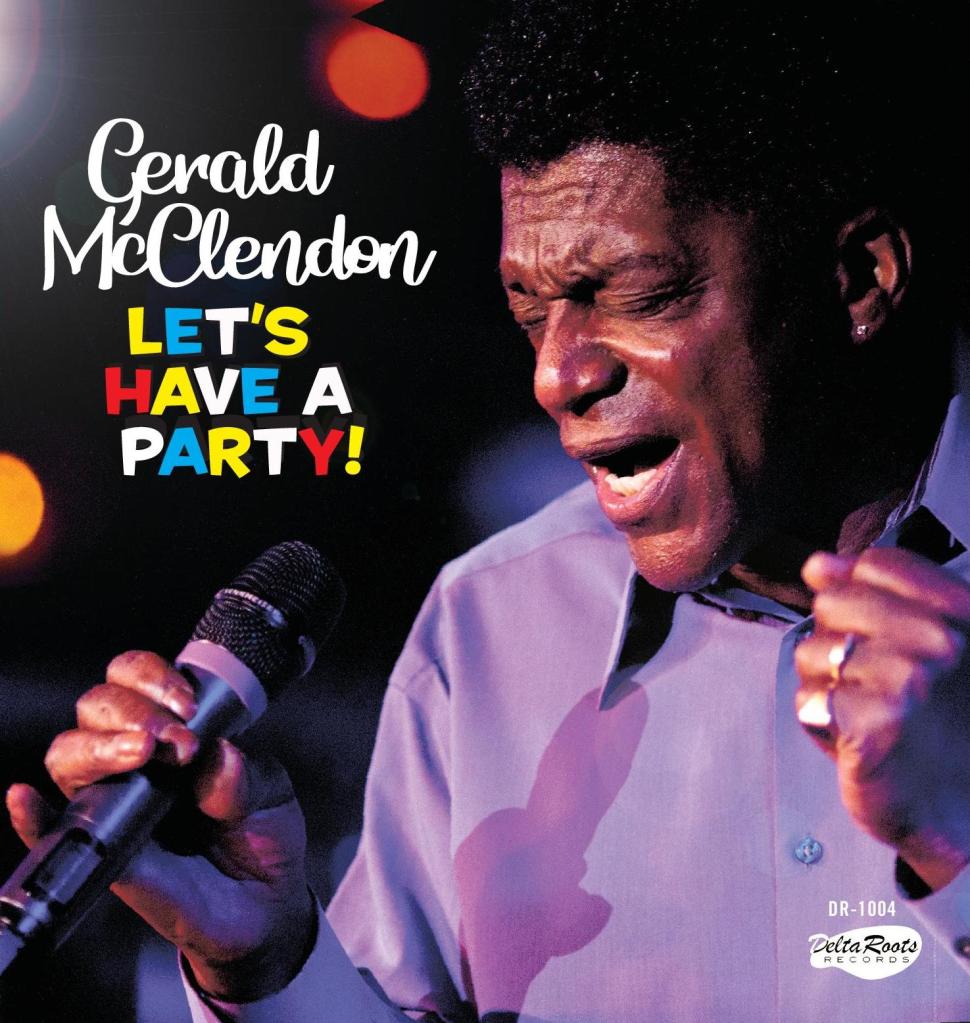
If that’s your desire, then check out this new release by Chicago’s Gerald McClendon, whose velvet pipes have earned him the nickname, “The Soul Keeper.” It’s a follow to last year’s excellent “Can’t Nobody Stop Me Now.” And it’s no coincidence that those two excellent albums have been produced and all the songs written by the insanely talented Twist Turner. He’s also the drummer on both. But it all works because it’s piped through McClendon’s superior sound system.
From the opening bars of the first cut, “Keep On Keepin’ On,” with McClendon’s soulful pipework, through a sensuous sax break, you know you’re headed for a tasty dish of sweet soul music.
The next song, “If That Ain’t the Blues,” adds some soul blues to the mix, and quickly becomes my favorite of these 12 delicious songs. It’s one thing to be able to cover classic soul sounds with some precision, but to be able to faithfully reproduce the entire process and create this masterful album is a work of art.
“If That Ain’t The Blues,” from “Let’s Have A Party”:
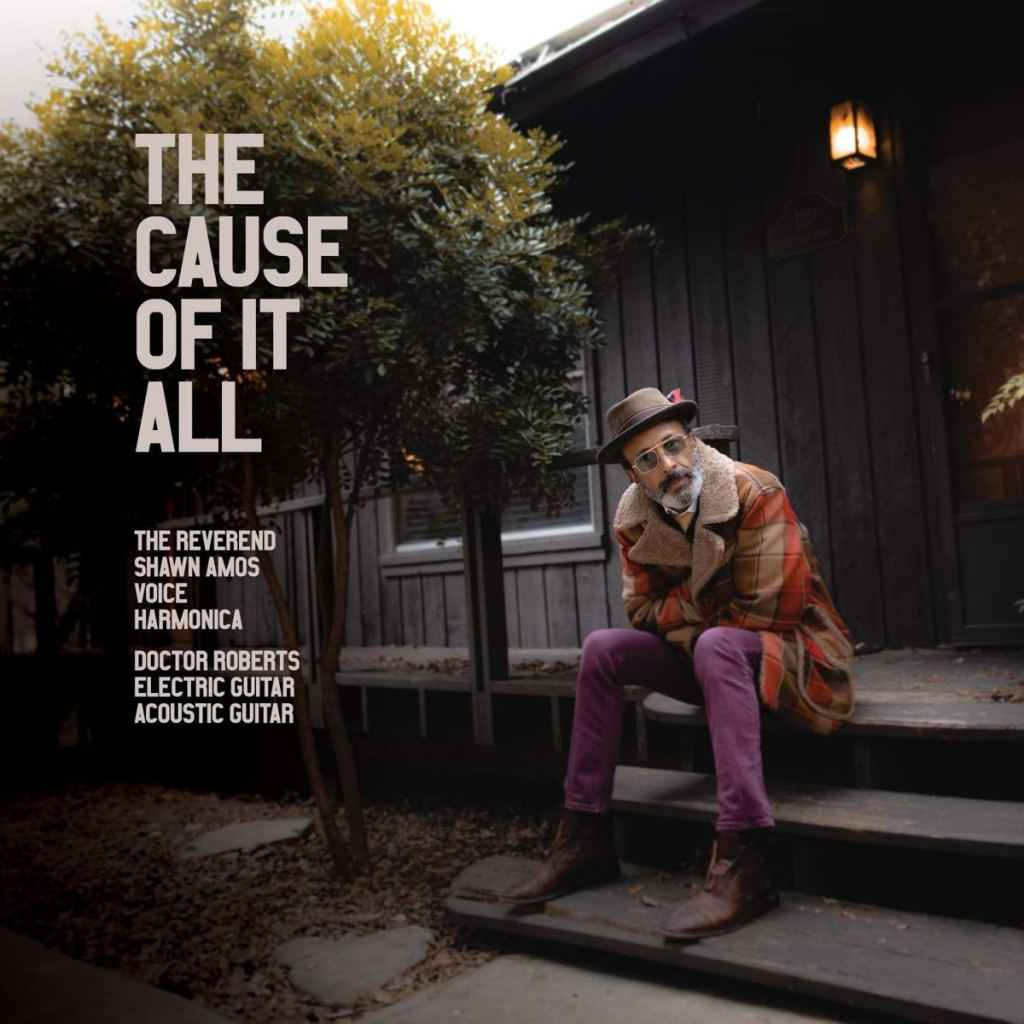
The cause of it all, for the purpose of this terrific album, is some raw blues from a handful of the greats, taken apart and put back together in his own powerful way by harpman/vocalist Shawn Amos and guitarist Chris “Doctor” Roberts.
There are ten tracks, the first five with primitive electricity by Roberts’ guitar and the second five an acoustic effort — both making maximum use of Amos’ considerable harp skills. Some of the songs are classics, but a few are lesser-known blues gems that get a fresh look here. More than a fresh look, they get reincarnated into their primeval blues selves with wicked interpretations by this dynamic duo.
The complete track list is worth noting: “Spoonful” (Willie Dixon), “Goin’ To The Church” (Lester Butler), “Still A Fool” (Muddy Waters), “Color And Kind” (Howlin’ Wolf), “Serves Me Right To Suffer” (John Lee Hooker), “I’m Ready” (Willie Dixon), “Baby Please Don’t Go” (Traditional), “Can’t Hold Out Much Longer” (Little Walter), “Hoochie Coochie Man” (Muddy Waters), “Little Anna Mae” (Muddy Waters).
Amos’ background is as fascinating as it is multi-faceted (read a fine interview here) He is an ordained minister with the Universal Life Church. And he is the son of chocolate chip cookie founderWally “Famous” Amos.
You’ve probably heard most of these songs a million times, but never quite like this. Treat yourself to a listen. Or several.








 Blues Roadhouse