Roadhouse Album Review: “Let’s Get Happy Together” is a bright, rootsy album from Maria Muldaur, Tuba Skinny

I suppose you’re wondering why I haven’t posted here for a while (You’re probably not, but it makes me feel good to think so). Well, life intruded for a while, but now I’m back with some blues. As it should be.

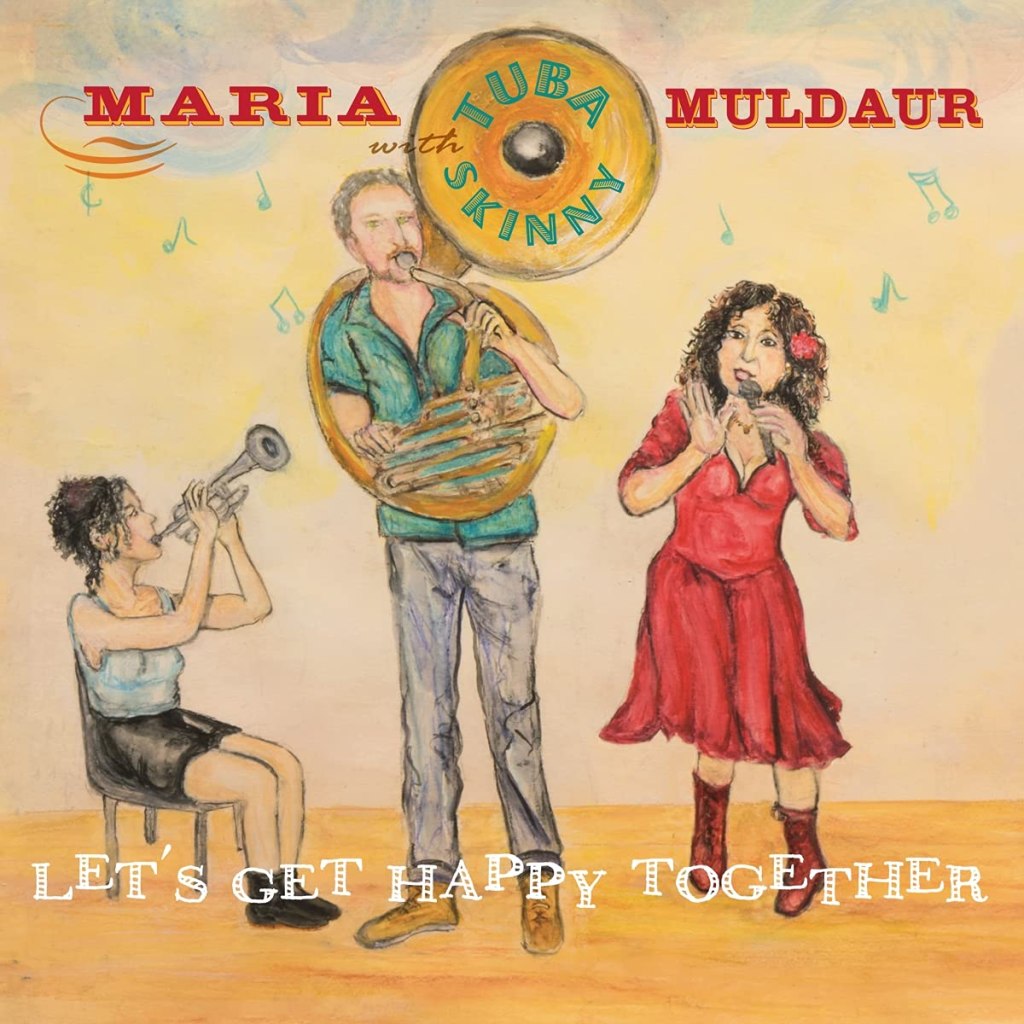
And I have a new album by an old favorite to talk about — “Let’s Get Happy Together” from Maria Muldaur, with Tuba Skinny, released May 7 by Stony Plain Records.

I’m pretty sure you’ve heard of Maria, but the funky New Orleans musicians who call themselves Tuba Skinny are probably not yet a household word, although this album should move them right along in that direction.
When I say old favorite, that’s exactly what I mean. I have fond memories of Muldaur’s folksy, bluesy music with the Jim Kweskin Jug Band in the 1960s, and the start of her solo career in 1972, followed in ’73 by the release of her first effort, “Maria Muldaur.” That album contained the sensual little ditty, “Midnight at the Oasis,” that won Grammy nominations for Record of the Year and Song of the Year, and supposedly sparked a mini-population boom among repeat listeners..

And Tuba Skinny could well be a new favorite. Their brand new and sparkling arrangements of vintage music are thoroughly enjoyable re-creations of great old American music.

Of course, Maria has done a lot since her1973 debut. This is her 43rd album, most of which have focused on her love of old blues, jazz and roots music, and especially old-time jazz and blues women.

This combination of Muldaur and Tuba Skinny seems a match made in roots-music heaven (if there’s not yet such a place, it’s just a matter of time). Music from the 1920s and ’30s rolls out here with all the old-time goodness of the originals. It’s not all toe-tapping happiness, though. “Got the South in My Soul,” and “Some Sweet Day,” for example, are more sweet and soulful. But still great songs.

Muldaur, at the age of 77 (1943 was a vintage year), sounds simply great. Her vocals bring just the right amount of sass or sweetness to this fine old music, which sounds just as fresh as it must have 80 or 90 years ago.

Tuba Skinny is equally marvelous. It’s a tasty blend of old blues, jazz and Dixieland, mixed with the spirit of these young musicians and the sheer enthusiasm of their playing. The band consists of Shaye Cohn – cornet; Todd Burdick – tuba; Barnabus Jones – trombone; Jason Lawrence – banjo; Craig Flory – clarinet; Greg Sherman – guitar; Max Bien-Kahn – guitar; and Robin Rapuzzi – washboard.

I’m especially fond of this kind collaboration. Cohn’s cornet and Flory’s clarinet along with Jones’ trombone, and of course, tuba by Burdick, weave in and out of the melodies with magical results. And I do love that clarinet. That’s not to ignore the rest. I just happen to have a thing for the licorice stick — it has a storied history in jazz, and even classical music. But in the right hands, it speaks eloquently of the blues.

All in all, this another fine session from Maria Muldaur, this time with her talented accomplices, Tuba Skinny. Try hard not to miss it.

Here’s a list of the songs on the album, with notes from Maria about the their origins. The titles have links to the original recordings, except for the final song by Victoria Spivey’s sister, Addie “Sweet Pea” Spivey.

1. I Like You Best of All. – originally done by the Goofus Five,  a popular band in the ‘20s~The minute I heard it I knew it would be a perfect vehicle for Tuba Skinny!

2. Let’s Get Happy Together originally written & recorded by Lil Hardin Armstrong, a perky happy song with hip lyrics.

3. Be Your Natural Self – originally sung by a vocalist named Frankie “Half Pint” Jaxon, who sometimes sang and entertained as a man and sometimes as a woman, one of the first openly “gender benders” of the era! I’m sure this song had special significance for him!

4. Delta Bound – originally recorded by Ivy Anderson & the Duke Ellington Orchestra, it’s always been one of my favorites and I’m so glad I had the opportunity to finally record this song with the right band!

5. Swing You Sinners recorded in 1935 by one of the most delightful discoveries of my research… an amazingly talented woman named Valaida Snowa virtuoso American jazz musician and entertainer who became an internationally celebrated talent. She was known as “Little Louis,” “Queen of the Trumpet,” and was referred to by Louis Armstrong as “the second best trumpet player in the world.” How could I have studied this music for so long and never heard of her??….That’s the beauty of our rich musical legacy….  the more you delve into it, the more there is to discover and enjoy!

6. He Ain’t Got RhythmI just love Irving Berlin’s droll, clever lyrics! Recorded by many artists in the 1930s…Billie Holiday’s rendition with Teddy Wilson, Lester Young, Benny Goodman, et al, is the one that informs our version.

7. Got the South in My Souloriginally recorded by New Orleans natives, The Boswell Sisters … fabulous singers with incredible musicianship who sang and swung with all the best big bands of the day. Connie Boswellwho so soulfully sang lead, is one of my favorite singers.

8. I Go for ThatDorothy Lamour, another New Orleans native, was married to a big bandleader and sang with his band before she became the exotic sultry Hollywood movie star we all remember. I was delighted to discover what a cool singer she was and to find this droll, witty song – “You play the ‘uke, you’re from Dubuque”… hilarious lyrics!

 9. Patience & Fortitude – another song originally done by the incomparable Valaida Snow…An uplifting little sermonette with a useful, positive message.

10. Some Sweet Daya sweet, wistful song originally done by Frankie “Half Pint” Jaxon.

11. Big City Blues – an all-too-true tale of loneliness, originally recorded by a wonderful singer I greatly admire, Annette Henshaw, who recorded over 250 sides and was one of the most popular radio stars of the 1930s.

12. Road of Stone – This raw, soulful, plaintive blues was recorded in the 1920s by Sweet Pea Spivey…. sister of famous classic blues queen, Victoria Spivey, who actually “discovered” me and mentored me in my youth. (BR: I can’t find any audio of this song, but here’s another by Addie “Sweet Pea” Spivey)

And now for some videos:

A quickie of a 1966 or ’68 version of “Big Fat Woman Blues” with the Kweskin band:

“Midnight at the Oasis” from 1974:

The title track from “Let’s Get Happy Together” (alas, audio only):

Shemekia Copeland named International Blues Artist of the Year by UK Blues Awards

The 2021 UK Blues Awards winners have been announced, and the reason I know that is that Shemekia Copeland was named International Blues Artist of the Year. Check out the Brits who won here.

Here’s the announcement from Alligator Records:
“On Sunday, May 9, award-winning vocalist Shemekia Copeland received the coveted UK Blues Award for International Blues Artist Of The Year. The award was presented in a virtual ceremony hosted by BBC radio personality, actor and musician Paul Jones.

“The UK Blues Awards were created by the UK Blues Federation to give the blues community in the UK the opportunity to recognize and applaud those actively involved with the music.”


Copeland’s latest album, “Uncivil War,” brought her consider musical talents to bear on contemporary social issues. Here’s my review from last October.

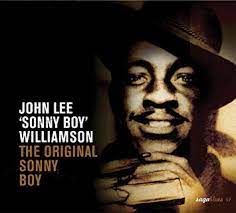
Looking back at the first, but not the only, “Sonny Boy” Williamson

I was listening to some music by Aleck Miller the other day, and I got to thinking about his stage name — you know: Sonny Boy Williamson, usually followed by II. And how he just plain stole another man’s name and reputation to help his own fame and reputation.

So I thought I might pass along this odd little piece of blues history, and encourage you to find some of Williamson’s music and enjoy it.

That reminded me that I ought to revisit the work of the original Sonny Boy — John Lee Curtis “Sonny Boy” Williamson — not nearly as well-known today as Miller, but very influential in helping to turn the blues harp into a featured solo instrument in blues bands.

Williamson, who started to record in 1937, was a prolific songwriter, bandleader and sideman until his death in 1948. The two harp players’ careers overlapped, and in 1941, Miller was hired to play the on the King Biscuit Time radio show in Helena, Ark., advertising the King Biscuit brand of baking flour. He appeared with Robert Jr. Lockwood.

The main theory about Millers’ name change says that the Biscuit Time sponsor, Max Moore, began billing Miller as Sonny Boy Williamson in an attempt to capitalize on the fame of Williamson, who was a more well-known performer in Chicago blues and recording circles. I’ve read various ambiguous accounts of whether the two men met, and whether Williamson ever acknowledged or approved of Miller’s name change, but Miller himself seemed to have no objection to building his prodigious career on the taking of another man’s name. Although to be fair, he would often claim that he was the first to use the Sonny Boy moniker, but there doesn’t seem to be much evidence to support this.

Sonny Boy Williamson II, or Aleck (or sometimes Alex) “Rice” Miller (originally Ford).

Before he became Sonny Boy II, Miller performed as “Rice” Miller — a childhood nickname because he loved his rice and milk, or as “Little Boy Blue.” Incidentally, Miller’s mother was named Millie Ford, but he apparently took the last name of his stepfather, Jim Miller.

Williamson’s blues output was immense. He played on hundreds of recordings by many pre–World War II blues artists. Under his own name, he was one of the most recorded blues musicians of the 1930s and 1940s and is closely associated with Chicago producer Lester Melrose and Bluebird Records.

His popular songs, original or adapted, include “Good Morning, School Girl“, “Sugar Mama,” “Early in the Morning“, and “Stop Breaking Down.”

Here’s a web site put together by Stefan Wirz, with a comprehensive list of Williamson’s recordings.

You can find some audio of his work on YouTube, and streaming services. And there are still some of albums around, if the prices haven’t been inflated too much. Interestingly, on a few of the compilations albums of his work, his name is turned around, apparently to capitalize on the Sonny Boy part instead of the John Lee part, as in “The Blues: Chicago 1937-1945 by Sonny Boy ‘John Lee’ Williamson”

So you should give the original Sonny Boy a listen. His harp work is sharp and strong and his vocals full of life. His original songs often the precursors of later blues, like his “Good Morning School Girl,” which, with the addition of the word “Little,” has become a blues classic.

Miller’s music is easy to find. There’s plenty of audio and video of him performing. Williamson’s work is there, but not quite as visible. It’s worth the search.

Here’s a sampling of some audio found on YouTube:

Here’s “Sugar Mama Blues”:

Roadhouse Ramblings: Even cowboys get the blues

I was looking through some of my very old country blues music the other day, and came upon a CD collection of vintage songs titled “Booger Rooger Saturday Night!” by Orvon Grover Autry. You probably know him better as Gene Autry. The rest of the album title is “Gene Autry Blues Singer 1929 – 1931”

You also probably know him better as a movie star (93 films), TV star, recording artist (640 recordings), and baseball team owner. But at the very beginning of his career, Autry was considered the second most important country artist after Jimmie Rodgers.

The songs in this collection are among his first recordings, and some of them are among the 300 songs that he wrote or co-wrote. The photo on the album cover was taken about 1927, and this CD compilation was released in 1996 by Sony Legacy.

His first actual recording hit was in 1932 with “That Silver-Haired Daddy of Mine,” a duet with fellow railroad man Jimmy Long that Autry and Long co-wrote. In 1932, Autry married Ina Mae Spivey, Long’s niece. But during this marriage he also had a lengthy affair with Gail Davis, the actress who played Annie Oakley in the television series of the same name that Autry executive produced.

I thought it was interesting that Autry — probably most remembered for two things: “Rudolph the Red-Nosed Reindeer” (which he didn’t write), and his movie roles in the 1930s and 1940s, when he was the all-American cowboy hero — started out recording these little blues tunes.

Autry was a man with many interests. He was the original owner of Challenge Records. The label’s biggest hit was “Tequila” by The Champs in 1958.

He was the owner of the new Los Angeles Angels team in 1961, which moved to suburban Anaheim and became the California Angels in 1966, then the Anaheim Angels from 1997 until 2005, when it became the Los Angeles Angels.

And he did a lot of other things, too — WWII pilot, rodeo involvement, Melody Ranch — all of which you can read about here.

This was how it was all summed up on his tombstone:

“America’s Favorite Cowboy … American Hero, Philanthropist, Patriot and Veteran, Movie Star, Singer, Composer, Baseball Fan and Owner, 33rd Degree Mason, Media Entrepreneur, Loving Husband, Gentleman”

But they didn’t mention blues singer.

Here’s his original song, “Rheumatism Blues” from the album:

Track List (Album information here)

  • 01. Birmingham Daddy (02:43)
  • 02. Rheumatism Blues, The (02:26)
  • 03. Dallas County Jail Blues (03:01)
  • 04. Jail-House Blues (02:39)
  • 05. I’m Atlanta Bound (02:39)
  • 06. In the Jailhouse Now, No. 2 (02:43)
  • 07. Bear Cat Papa Blues (02:49)
  • 08. Wildcat Mama Blues (02:22)
  • 09. High Steppin’ Mama Blues (02:41)
  • 10. Yodeling Hobo, A (03:00)
  • 11. T.B. Blues (02:56)
  • 12. California Blues (02:33)
  • 13. Slu-Foot Lou (02:41)
  • 14. Stay Away from My Chicken House (02:43)
  • 15. Waiting for a Train (02:38)
  • 16. Frankie and Johnny (02:41)
  • 17. Do Right Daddy Blues (02:44)
  • 18. Blue Yodel No. 5 (02:36)
  • 19. My Rough and Rowdy Ways (02:44)
  • 20. Left My Gal in the Mountains (02:36)
  • 21. I’ve Always Been a Rambler (02:32)
  • 22. Dust Pan Blues (02:44)
  • 23. That’s Why I Left the Mountains (03:09)

Roadhouse Album Review: “West Texas Blues” a fine album of … West Texas blues, in forgotten formats

Since I opened the Blues Roadhouse late last year, I’ve written about a bunch of new albums that I’ve heard and enjoyed. I’ve resisted the occasional temptation to reach back beyond my start date for new releases, simply because there would be so many. And, you know, so little tiime.

But then I got my April newsletter from Sue Foley the other day, in which she mentioned shooting a video for an album she cut with Mike Flanigin last July, the album being titled “West Texas Blues.”

Available now on Compact Disc, Reel-To-Reel Tape, 8-Track Tape & Cassette from the Store! 180-gram vinyl available now through Experience Vinyl here. Also available on all digital platforms.

Well. I do love some fine B3. Likewise, Foley’s vocals and crisp guitar (plus, my very first girlfriend was a redhead, too). And West Texas itself, always a kind of mysterious place full of folklore, tough music, and tougher hombres (at least that’s how it seemed in the old cowboy movies I saw).

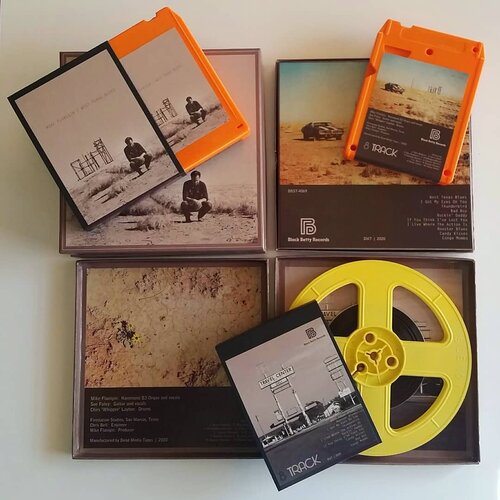
But what really caught my eye here was an image on Flanigin’s web site, promoting the formats in which this new album is available. Normally, you can get a CD, and digital downloads. And usually, streaming platforms. And sometimes, a vinyl version.

But “West Texas Blues” is not only available on CD and online, it’s available on cassettes! And 8-tracks!! And, wait for it, REEL-TO-REEL!!! All right here. I mean, I once knew someone who had a reel-to-reel player, but that was about a half-century ago. It did sound quite good, though.

But you say you only have a turntable, because that’s the only way that recorded music can possibly sound good? There’s also a 180-gram vinyl version available from Experience Vinyl.

The idea of a 21st-century 8-track is somewhat mind-boggling, but I think it was the reel-to-reel that got me. How could I not write about this album?

And, given the talent, and the resulting music, how could I not like it?

“West Texas Blues” is stripped-down, bare-bones blues. No frills. No fancy production gimmicks. It features just three stellar musicians: Flanigin, a Hammond B3 wizard, Foley, a Canadian-born but nonetheless Texas guitar wizardress, and Chris ‘Whipper’ Layton, holding it all together on drums.

It’s a “live” in-studio production that flows effortlessly. The haunting title track opens the album with guitar and organ riffs sensuously entwined around a rock-solid beat.

There’s a pair of sweet-sounding duets between Foley and Flanigin — “If You Think I’ve Lost You” and “Candy Kisses,” but they never lose the underlying toughness of the sound.

It’s not all haunting melodies: “Rooster Blues,” “Congo Mombo,” “I Live Where the Action Is” and “Bad Boy” all kick up the right amount of desert dust for dancing – real or mirage.

So yes, it’s a thoroughly enjoyable effort. Three talented musicians getting together to make some very personal blues to share. It sounds like the album cover looks.

Even if you don’t have an 8-track or reel-to-reel player, you should give it a listen.

Here’s the opening track, “West Texas Blues”

Track List:
West Texas Blues
I Got My Eyes on You
I Live Where the Action Is
Bad Boy
If You Think I’ve Lost You (Secret Weapon)
ThunderBird
Rockin’ Daddy
Candy Kisses
Rooster Blues
Congo Mombo

“Raisin’ Cain” is blistering new blues from Chris Cain

Chris Cain is one of those gifted blues musicians whose fame doesn’t extend quite as far as his prodigious talents.

His terrific new album, “Raisin’ Cain,” drops tomorrow (April 9). It’s his first for Alligator Records. Both of those factors — a terrific album, and Alligator’s prominence in the blues recording business — should go a long way toward moving Cain even higher in the blues guitarist pyramid.

I’m not trying to say that Chris Cain has been hidden in the blues witness protection program. He’s been playing his strings off for three decades. He’s a star in his West Coast stomping grounds in the San Francisco Bay area. This is his 15th album. His guitar work, like his vocals, is big, bold and relentless.

On this album, Cain delivers a set of 12 originals that highlight his songwriting skills, his tough and gruff vocal style, and his versatile guitar work.

His entire skill set comes together for me here on two blazing tracks — the scorching “Down on the Ground” and the autobiographical “Born to Play.” They’re filled with lyrical grit and seriously ferocious guitar; the kind of music that should immediately come to mind whenever you hear the word “blues.”

And if those two songs aren’t enough for you, there are 10 more, all just as fine in their own way.

Some highlights: “Can’t Find a Good Reason” finds Cain lamenting a lost love (relationships being a recurring theme here), but with a lighter touch with more liquid, guitar runs; “Found a Way to Make Me Say Goodbye” struts along with muscular vocals out front; “Hush Money” has a funky vibe; “I Don’t Know Exactly What’s Wrong With My Baby” is quieter, looser jazz-infused; “Space Force” wraps up the album with a quirky, jazz-like turn on the ARP Soloist synthesizer. And just to show that’s no fluke, Cain takes a keyboard turn on several songs with piano, Wurlitzer Electric Piano, and the clavinet (think Stevie Wonder on “Superstition.”

“Raisin’ Cain” was recorded in San Jose, Calif., at the prolific Kid Andersen’s Greaseland Studio. Andersen, as he often does, contributes some guitar and even background vocals. Cain’s backer’s here are bassist Steve Evans, keyboardist/organist Greg Rahn, and Chris’ touring drummer Sky Garcia and veteran D’mar Martin sharing those duties.

Cain says “I want my songs to tell universal stories,” and they do. That story-telling, a key to all good blues, lends a cohesive quality to the album that underlies the passion of the music. If you’ve never had the pleasure, or haven’t heard him for a while, check out “Raisin’ Cain.” It’s Chris Cain at the top of his already winning game.


And now for something a little different:

It has occurred to me (yes, sometimes things do) that in today’s world of music, a huge amount is heard through streaming services and is bought online, sometimes a track at a time. This means that today’s music consumer is deprived of one of the physical pleasures of music ownership that was once commonplace to dinosaurs like myself — the record album cover. Or CD booklet. Or cassette label. Or 45 sleeve. I don’t know what eight-tracks had.

You usually get to see the album cover (pictured above, at no extra cost), but you may rarely see the liner notes. It’s true, those notes are infallibly high praise for the contents, but quite often they include biographical or other information of interest to the fan who sometimes enjoys words with her music.

And so (again, completely free and with no obligation on your part), here are the interesting and informative liner notes from “Raisin’ Cain” by the illustrious Dick Shurman . Let me know if this is worth the time it takes me to copy and paste.

Take some influence from B.B. King, Albert King, Ray Charles, and a pinch of Albert Collins. Add in dazzling blues and jazz guitar chops, a rich soulful baritone vocal delivering original, often wry and beleaguered lyrics with sophisticated chord changes and instrumentation, and skills on various horns and keyboards, all delivered with an uptown cool that never lacks searing passion. It all adds up to the one and only Chris Cain, who has gone from being a newcomer phenomenon bursting onto the blues scene in 1987 with a classic debut release, to being a legend, inspiration and long-established member of the blues pantheon. His fifteenth CD, Raisin’ Cain, ranks among his best.

The San Francisco Bay Area has nurtured an illustrious coterie of blues guitar greats, including Chicago transplant Mike Bloomfield and Robben Ford. So blues fans took notice when word started coming from the South Bay in the late ’80s that a serious new contender was stepping into the ring, with major league string bends, a fluid touch, a soaring tone and a master’s approach to composition. Chris’ first CD, Late Night City Blues, was issued on Robben Ford’s brother Pat’s Blue Rock’It label. Containing all the essential elements of Chris’ excellence, conveyed via shuffles, slow blues, swing and funk, framed by keys and horns, it garnered raves. The album received four W.C. Handy nominations including Band Of The Year and Guitarist Of The Year.

Chris was born in San Jose on November 19, 1955, as he recounts in “Born To Play.” Both his parents were blues-enlightened, especially his Memphis-raised, African-American father but also his Greek mother. He was taken to concerts by blues and jazz immortals from the get-go; he remembers attending a B.B. King show when he was three. His father gave Chris a guitar at age eight; by the time he was 18 he was playing professionally (and had also taught himself piano). His mother introduced Chris to Mike Bloomfield’s music early on; it served as an affirmation that someone like him could achieve what he was chasing. Vocal inspirations came from Curtis Salgado, Gary Smith, and big-voiced jazzy blues singers like Jimmy Witherspoon and Big Joe Turner. Chris has described his efforts to sing in a voice like his speaking voice, and his vocals reflect a conversational quality as well as a full quotient of melodicism. He studied music at San Jose City College (where he also took up saxophone); soon he was teaching jazz improvisation there. Eventually, to help him get jobs, he recorded the songs that became Late Night City Blues. Chris says, “Today that record is still a favorite. It was me doing it my way.” It sent him into the blues public consciousness and onto the touring circuit. He made an immediate splash, earning the respect of his fellow musicians, including that of his heroes Albert King and Albert Collins, who invited Chris onstage to jam with them.

Since then Chris has cut a dozen CDs on Blue Rock’It, Blind Pig, Little Village, his own label and a 2015 release fronting a New Zealand big band. It is a sign of the esteem from his peers that he has been in demand for recorded cameos, with Mighty Mike Schermer, Luca Giordano, Sista Monica, E.C. Scott, the Ford Blues Band, Robben Ford, Chester Thompson and Nancy Wright, plus many others. His previous album, Chris Cain, on the Little Village label, was produced by Kid Andersen and recorded at Kid Andersen’s Greaseland studio in San Jose in 2017. Things went so well that the principals returned to the scene of the crime. Raisin’ Cain is the happy result.

Chris’ path to Alligator has been the proverbial long and winding road. Early on, Chris sent some of his music to Alligator; the label took a pass. After all these years, it’s extremely gratifying to see that the stars finally lined up, and Raisin’ Cain more than justifies the mutual faith between Chris and Alligator that should benefit both parties and blues fandom. The program is all originals, with Chris stinging and swinging over mellow but insistent grooves in well-crafted settings and on top of his game, even venturing to an Arp Soloist synthesizer for the concluding “Space Force.” The autobiographical “Born To Play” reiterates that few can or could dig as deeply into a slow blues as Chris. But it’s his versatility as well as his musical mastery that continues to mark Chris as special. Chris continues his globetrotting (he’s performed in Argentina, Uruguay, Italy, Spain, France, Belgium, The Netherlands, Sweden, Norway, Switzerland, Australia, New Zealand, Russia, Ukraine and more) and racking up highway miles in the U.S.. He retains his reputation as one of the tastiest and most powerful artists on the scene and a musician’s musician. He’s a beloved cult figure in the Bay Area, and his licks resound through the playing of many locals. But there was never a hit song and he never sustained visibility on the national scene. Now he has an opportunity with a label which has proven to be a major asset for its roster.

For all his booming voice, Chris will never be known for the imposing physical stature its depth suggests. But that’s the only lack of stature about Chris. When a lucky listener enjoys his music, there is absolutely no doubt that Chris Cain is a giant.

Dick Shurman
Dick Shurman is a blues producer and historian. He has produced over 60 albums and been published worldwide. He has been inducted into the Blues Hall Of Fame and the Chicago Blues Hall Of Fame.

“Raisin’ Cain” tracklist:

1. Hush Money
2. You Won’t Have A Problem When I’m Gone
3. Too Many Problems
4. Down On The Ground
5. I Believe I Got Off Cheap
6. Can’t Find A Good Reason
7. Found A Way To Make Me Say Goodbye
8. Born To Play
9. I Don’t Know Exactly What’s Wrong With My Baby
10. Out Of My Head
11. As Long As You Get What You Want
12. Space Force

Damon Fowler’s new album “Alafia Moon” is perfectly moody blues

Multi-talented roots and blues guitarist/singer/songwriter Damon Fowler has just launched his eighth solo album into the sultry swamp of “Alafia Moon” (Landslide Records).

One look at the moody riverscape of the album cover hints at the musical earthiness of its contents. Fowler, a Florida native, sets his lyrical sights here on the Alafia River, near Tampa, where he collected youthful memories of fishing trips and moonlit boat rides. (It also makes you wish for a vinyl-sized version, suitable for framing and wall hanging.)

The blue landscape of Damon Fowler.

But it’s Fowler’s guitar work, ranging from ethereal to swampy to rootsy rocking, that delivers the album. He knows how to create the spaces between the notes that let the music speak as forcefully as his vocals.

Everything here except “The Guitar” is original, a tribute to Fowler’s evolving skill as a songwriter, where music and lyric blend seamlessly, neither overwhelming the other. There are echoes of Mississippi Hill Country blues here, southern rock, country, a little R&B, all filled with soulful undertones.

On the two uptempo opening tracks, “Leave It Alone” and “I’ve Been Low” Fowler uses his considerable guitar skills (fierce slide and lap steel among them) to create a relentlessly rhythmic and hypnotic effect.

Then, with the poignant title track, you can smell the mossy Alafia riverbanks, feel the humid air, and inhale the haunting lyrics imbued with the sensuousness of a full moon. It’s a personal journey to revisit youthful memories, floating on the currents of Fowler’s liquid guitar.

“Make the Best of Your Time” shuffles through a little day-to-day philosphy; “The Guitar,” the album’s only cover, is a touching acoustic tale of an old guitar in a pawnshop; “Hip To Your Trip” uses a magical slide to make the tasty journey; “Some Things Change” rocks a little harder with T.C. Carr’s harp and Betty Fox’s backing vocals for support; “Taxman” is not the Beatles’ whimsical tune, but a tough blues about a tough date with the taxman; “Wanda,” however, is a bit of whimsical barstool philosophizing about the lady sitting nearby with a gun in her purse and bottle of pills. The album closes with Fowler telling the story (“The Umbrella”) of a very early road gig with just one customer, followed by a song dedicated to that moment, “Kicked His Ass Out.”

“Alafia Moon” is a an excellent outing, filled with creative songwriting, gritty vocals, sublime guitar work, and crackling backers Chuck Riley (bass), Justin Headley (drums), T.C. Carr (harmonica), Mike Kach (keyboards), and Betty Fox (backing vocals). 

This is honest music, intense and impassioned, meant to be savored and absorbed.

Here’s an interview with Fowler in American Songwriter.

Here’s the video of the title track, “Alafia Moon”

Tracklist:

  1. Leave It Alone
  2. I’ve Been Low
  3. Alafia Moon
  4. Make The Best Of Your Time
  5. The Guitar
  6. Hip To Your Trip
  7. Some Things Change
  8. Taxman
  9. Wanda
  10. The Umbrella
  11. Kicked His Ass Out

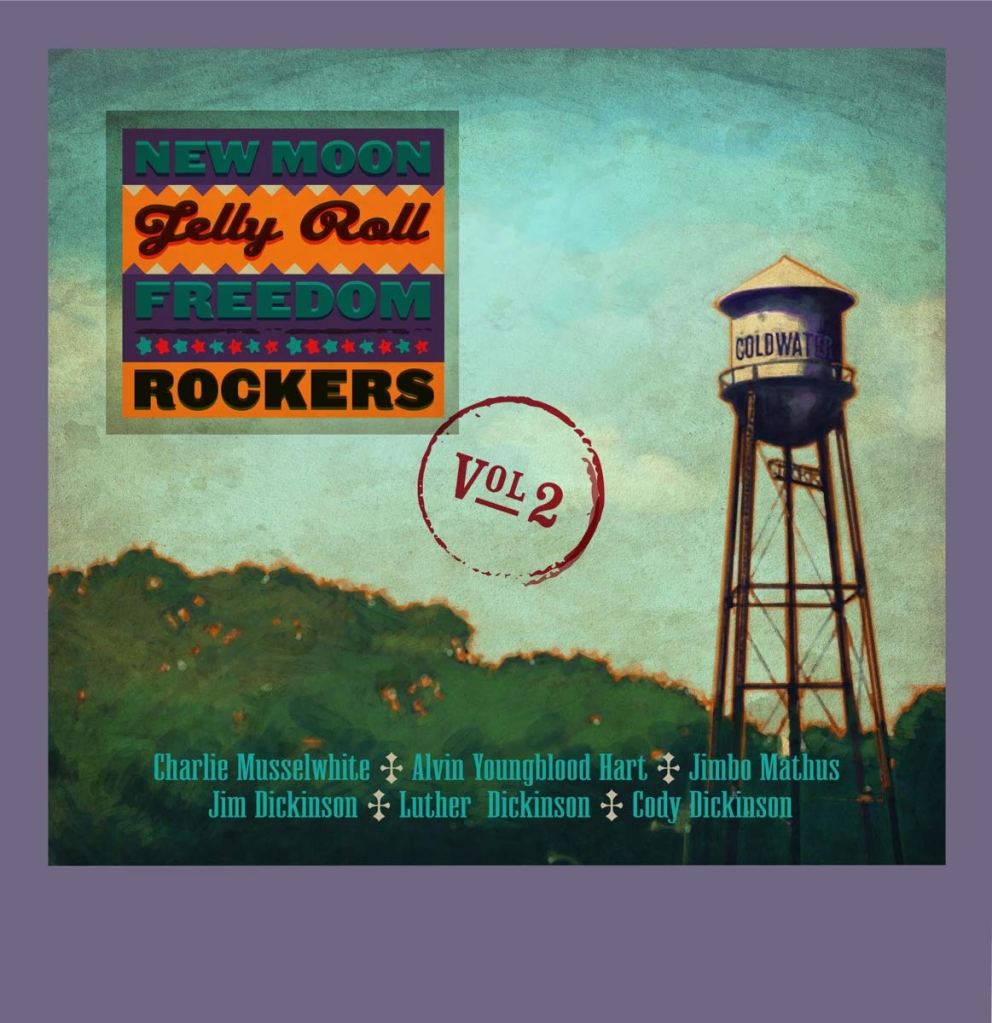
New Moon Jelly Roll Freedom Rockers rolling again with Volume 2

This is the second volume of fine blues and roots music from a gathering of musicians in 2007, jamming just for fun, and who gave themselves one of the best band names since the “? and the Mysterians.”

I’m talking, of course, about the New Moon Jelly Roll Freedom Rockers, who, after the music simmered about 14 years until it was good and tasty, released Volume 1 last September.

Now, Volume 2 of that sparkling, creative music has dropped from Stony Plain Records. It’s just as fine. These are not warmed-up leftovers, these are tracks cut from the original cloth of their musical sessions.

The musicians, a generation-spanning group musicians, are Grammy-winning harpist Charlie Musselwhite, guitarist Alvin Youngblood Hart, ex Squirrel Nut Zippers’ frontman Jimbo Mathus, the late Jim Dickinson and North Mississippi Allstars members Luther Dickinson and Cody Dickinson (Jim Dickinson’s sons and recent Grammy nominees).

Their music is as fresh as it is timeless; moving from the pure down-home blues of Musselwhite’s laconic “Blues for Yesterday” to 1965’s rockish “She’s About a Mover,” from Doug Sahm and the Sir Douglas Quintet and given new life here by Hart.

Mathus puts together a strong, straight-ahead blues on “Searchlight,” and Jim Dickinson gets deep and rootsy with “Blues Is A Mighty Bad Feeling.”  He also adds some blues classics on Junior Wells’ “Messin’ with the Kid” and Jimmy Reed’s “Can’t Stand to See You Go.” And of course, there are more, just waiting for your ears to listen up.

But these guys are not a cover band, and they’re not just bluesy impressionists. They’re bringing their own considerable strengths and musical visions into the mix, churning out fresh and original takes on timeless music.

Even though these recordings took place in 2007, Jim Dickinson’s death in 2009 put the production into limbo, and it was basically forgotten until 2019 when Stony Plain founder Holger Petersen heard about the sessions from Musselwhite, and turned over the production to Luther Dickinson and his engineer Kevin Houston, who finished the project.

This is good music-making at its best — full of energy and spontaneity. Put both volumes together for double the fun.

Here’s the opening track, “Blues for Yesterday,” by Charlie Musselwhite:

Here’s the tracklist:

1. Blues for Yesterday (featuring Charlie Musselwhite)
2. She’s About a Mover (featuring Alvin Youngblood Hart)
3. Searchlight (featuring Jimbo Mathus)
4. Oh Lord, Don’t Let Them Drop That Atom Bomb on Me (featuring Jim Dickinson)
5. Greens and Ham (featuring Jimbo Mathus)
6. Messin’ with the Kid (featuring Jim Dickinson)
7. Black Water (featuring Charlie Musselwhite)
8. Millionaire Blues (featuring Alvin Youngblood Hart)
9. Can’t Stand to See You Go (featuring Jim Dickinson)
10. Blue Guitar (featuring Luther Dickinson)
11. Blues Is a Mighty Bad Feeling (featuring Jim Dickinson)

Virtual concert trying to keep Moondog’s music alive in Pittsburgh (well, Blawnox, actually)

“Keeping the blues alive” has been a catchphrase for years. And among other things, it’s also a cruise, a musicians relief program, and an annual award. But no matter where you find them, the words have the same purpose: Trying to make sure that the great music of the blues never dies.

That phrase has taken on new meaning in the past year, with a pandemic shutting down music venues, turning off the music, and creating financial strain for club owners, concert promoters and the musicians themselves. Many of them have taken to the internet with virtual shows on Facebook and other media. A Facebook group called Can’t Stop the Blues has provided a forum for dozens of performers. I’ve also seen John Nemeth on his front porch, Rory Block in her living room, and Ronnie Baker Brooks in his basement.

But that’s not quite the same experience as live music, shared with friends and fans, and feeling the musicians feed on a roomful of enthusiastic fans.

That’s what you got at Moondog’s.

I know, because I spent a lot of nights there, enjoying gin and tonic (and cigars, before we started to care about our health), and some of the best blues talent in the world.

Moondog’s is small, intimate bar (maybe 250 people, elbow to elbow at its most intimate) whose purpose is mainly music — no kitchen, no ferns, no valet parking — in the tiny Pittsburgh suburb of Blawnox, where it has lived for its past 31 Moondog years.

There’s nothing fancy about the place, just the musical magic that comes from musicians up close, filling that hole in your soul. I can remember nights when the audience dwindled down to 10 or 20 at the end of the closing set, but the musicians never let up.

Like many such blues joints, a year without business hasn’t helped. It’s run by Ron “Moondog” Esser, who has been a fixture on the Pittsburgh area music scene a few notes short of forever, with his club long a nexus for the local blues scene, and making his own music before that. Here’s a Q&A with Ron by a Scott Mervis, a former colleague at a former employer, The Pittsburgh Post-Gazette, that will tell you a little about Ron.

So, because of Ron’s background, his help for area musicians and his devotion to music, Mark Byars and Cheryl Rinovato, a couple of musicians who think Moondog’s should be kept alive, are producing three nights of music online this weekend (March 26-28), to help keep the dog and the music going. When it returns live, of course.

Ron is humble about this unexpected help. In the Post-Gazette interview, he says: “This fundraiser, I really didn’t want them to do it, but they’re doing it anyway, and I’m grateful. I’m eternally grateful.”

In addition, there’s a GoFundMe campaign that has raised $4,100 toward a $30,000 goal, and a Save Moondog’s Facebook page. And here’s more information about viewing.

Ron “Moondog” Esser, and and some of this weekend’s performers.

And we haven’t even mentioned his shepherding of the Pittsburgh Blues Festival for many years.

The National Blues Foundation honored Ron Esser with the “Keeping the Blues Alive” award in 2005. 

Seventy artists are booked for the weekend’s virtual festival, including national acts Tommy Castro, Barbara Blue, Joanna Connor, Selwyn Birchwood, Mike Zito, Vanessa Collier, Jerry Cortez (from Tower of Power) and Jason Ricci, and Pittsburgh acts such as Joe Grushecky, Bill Toms, Billy Price, Norm Nardini, Soulful Femme, Bobby Thompson, the Granati Bros., Charlie Barath, Matt Barranti, Ms. Freddye and the Neids Hotel Band.

A few of the national acts Moondog’s has hosted:
Susan Tedeschi, Keb’ Mo’, Derek Trucks, Koko Taylor, Luther Allison,Junior Wells, Jimmy Vaughn, Tommy Castro, the Nighthawks, Jimmy Thackery, Maria Muldaur, Pat Travers, Candy Kane, Ana Popovic, former Beatle Pete Best, Johnny “Clyde” Copeland, Walter Trout, Tinsley Ellis, Shemekia Copela, Lil Ed and the Imperials, Long John Hunter, James Cotton, Chris Duarte, Johnny Clyde Copeland, Rod Piazza, Corey Harris, Monster Mike Welch, Luther Allison, Shemekia Copeland, Brian Auger and Jim Croce’s son, A.J. Croce.

Plus several generations of Pittsburgh area musicians, including Norman Nardini, Bill Toms, Guitar Zack, Glen Pavone, Billy Price, Gary Belloma and the Blue Bombers, Jill West and the Blues Attack, the Jimmy Alder Band, Patty Spadero, the SPUDS, Nieds Hotel Band, Good Brother Earl, Bill Deasy and more.

None of this means that there isn’t a multitude of similar clubs across the country undergoing similar hard times. I just happened to know about Moondog’s because I used to live and work nearby. In fact, performers at Moondog’s often wound up on my previous blog, BlueNotes. So I jumped at the chance to highlight a national condition with this local connection.

Here are a few of those artists (and a chance to show off some of my favorite photo work), most with a view of Moondog’s stage wall, painted with caricatures of well-known artists, but with a dog’s head.

John Nemeth working harp magic.
A cheerful Magic Slim toasts happy fans.
Bill Wharton, the Sauce Boss, with a gumbo pot simmering.
Ana Popovic and Jason Ricci just simmering.
Guitar Shorty and Moondog’s wall.

More on Kenny Wayne Shepherd and the Blues Foundation

Here’s a follow-up to the Kenny Wayne Shepherd story by Variety, the entertainment publication:

Kenny Wayne Shepherd’s Blues Awards Nomination Rescinded Over ‘Dukes’ Confederate Imagery; Guitarist Says He Retired It