Blues Foundation rescinds music award nomination for Kenny Wayne Shepherd over Confederate flag display

Here’s a news release from the Blues Foundation, issued this afternoon, about an ongoing issue in the Foundation.

THE BLUES FOUNDATION RESCINDS 
KENNY WAYNE SHEPHERD’S 2021 

BLUES MUSIC AWARD NOMINATION
The Blues Foundation (the Foundation) has rescinded Kenny Wayne Shepherd’s 2021 Blues Music Awards (BMA) nomination for Best Blues/Rock Artist. The BMAs will be presented virtually on June 6, 2021.

The decision to rescind the nomination is in keeping with the Foundation’s statement Against Racism (March 15, 2021) https://blues.org/the-blues-foundations-statement-against-racism/ which asserts “The Blues Foundation unequivocally condemns all forms and expressions of racism, including all symbols associated with white supremacy and the degradation of people of color.  We will hold ourselves as well as all blues musicians, fans, organizations, and members of the music industry accountable for racist actions and encourage concrete commitments to acknowledge and redress the resulting pain.” 

The decision to rescind the nomination was based upon continuing revelations of representations of the Confederate flag on Shepherd’s “General Lee” car, guitars and elsewhere.  The Blues Foundation has also asked Ken Shepherd, father of Kenny Wayne Shepherd, to step down as a member of its Board of Directors.  The Blues Foundation states that it is resolute in its commitment to purposefully address racism and contribute to a more equitable blues community. The Blues Foundation is widely acknowledged as the foremost non-profit blues organization with more than 4,000 members and nearly 200 affiliated blues societies across the globe. 

The Foundation preserves blues heritage, celebrates blues recording and performance, expands worldwide awareness of the blues, and ensures the future of the uniquely American art form.  The BMAs are generally recognized as the highest honor given to blues musicians. The Best Blues/Rock Artist is one of 25 BMA categories that are awarded by vote of Blues Foundation members.  In addition to the BMAs, the Foundation also presents the International Blues Challenge, as well as Blues in the Schools, the HART Fund which provides grants to cover the medical needs of blues artists and, most recently, the COVID-19 Blues Musician Emergency Relief Fund which has distributed more than $250,000 to address the urgent needs of blues musicians impacted by the COVID-19 pandemic.

Here are the 2021 Blues Grammy winners

Just another public service from your Blues Roadhouse.

The award for Best Traditional Blues Album or Best Traditional Blues Recording, went to Bobby Rush for “Rawer Than Raw.”

The other nominees were:

  • “All My Dues Are Paid”
    Frank Bey
  • “You Make Me Feel”
    Don Bryant
  • “That’s What I Heard”
    Robert Cray Band
  • “Cypress Grove”
    Jimmy “Duck” Holmes

The award for Best Contemporary Blues Album or Contemporary Blues Recording, went to Fantastic Negrito for “Have you Lost Your Mind Yet? .”

The other nominees were:

  • “Live at the Paramount”
    Ruthie Foster Big Band
  • “The Juice”
    G. Love
  • “Blackbirds”
    Bettye LaVette
  • “Up and Rolling”
    North Mississippi Allstars

Reviews in brief: Robert Connely Farr, Big Harp George, Joanna Connor, Trevor B. Power

It’s time once again to catch up on some recent album releases with a few mini-reviews. This doesn’t mean that they are mini-important, mini-albums, mini-artists, or that sometimes I have mini-thoughts (well… ). It’s just that I like to maximize my priorities and obfuscate the realities, thereby diminishing my returns.

But enough philosophy. let’s get to work. Here are a few albums that deserve your ears.

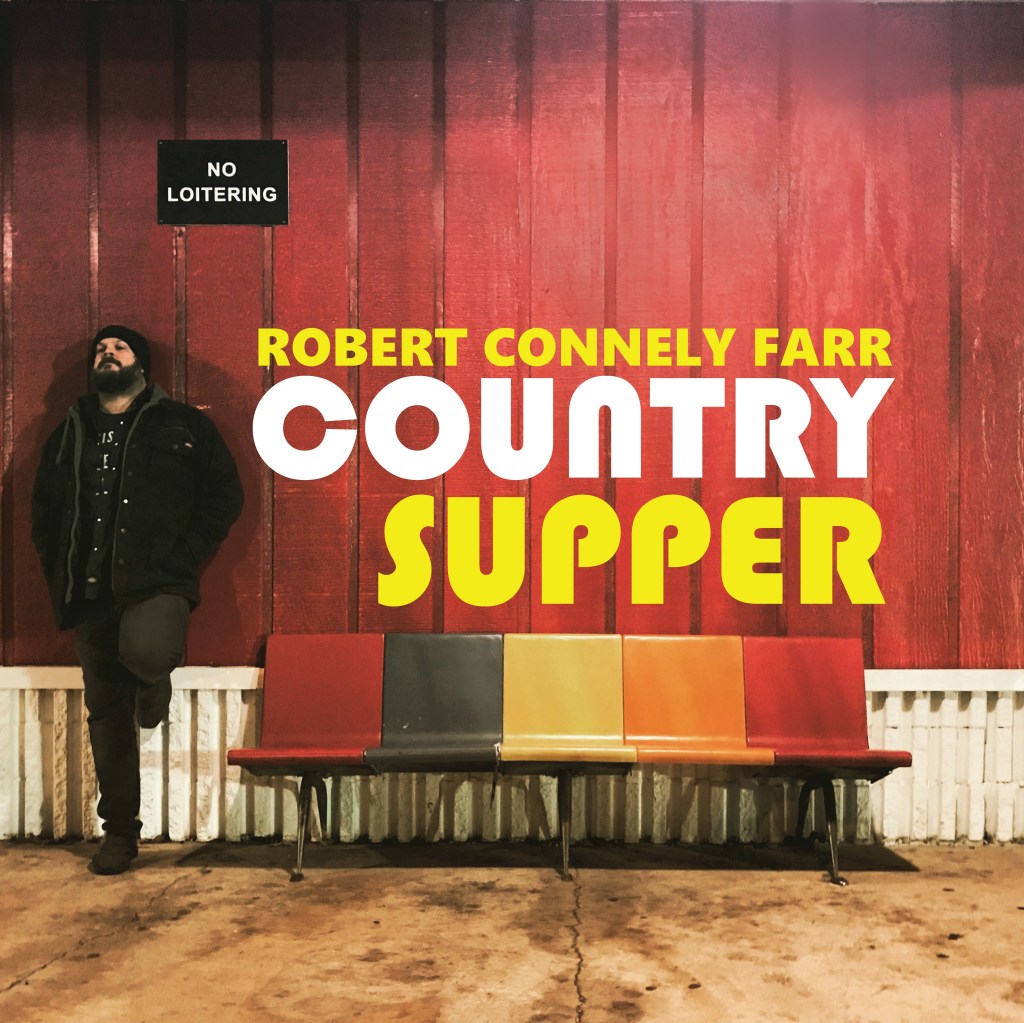
“Country Supper” by Robert Connely Farr

This is a very unusual, very intense, very good album.

Robert Connely Farr is a modern-day practitioner of the Bentonia, Miss., school of blues, which is unique among blues styles. Skip James gets most of the credit for this droning, hypnotic music, but Henry Stuckey and Jack Owens were primary, with Stuckey claiming that he taught James the tunings and the other-worldly sounds that Farr has absorbed from his Bolton, Miss., roots, and his tutoring at the primeval knee of Jimmy “Duck” Holmes, who still runs the Blue Front juke in Bentonia.

Farr, now a Vancouver, Canada, resident, has created a powerful album of 16 covers and originals in the Bentonian style. His guitar style is the deepest of deep blues, rhythmic and trance-like, and his dark vocals plumb those same mysterious depths. It’s all very raw and primitive sounding, sort of what you’d expect to hear at the crossroads at midnight. Here is the best of the deepest, darkest blues.

The song “Cyprus Grove” opens the album and sets the pace for what’s to come. Give it a listen:

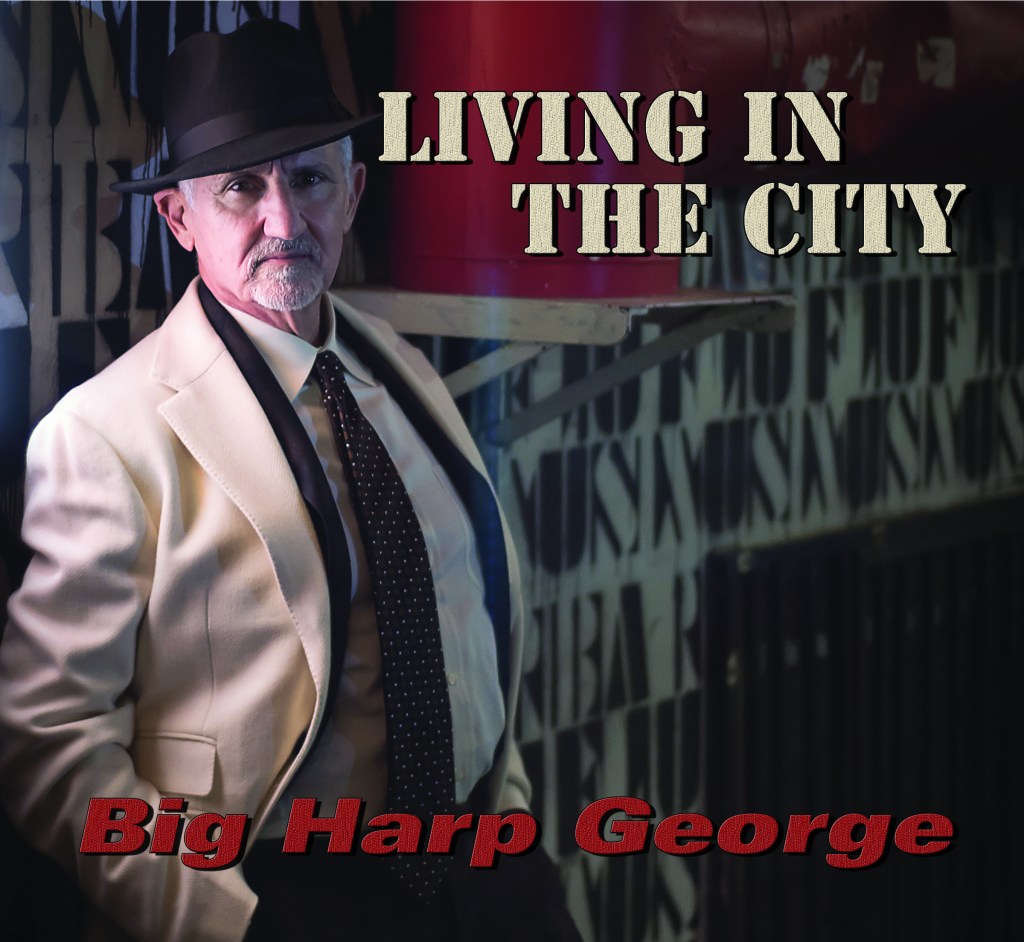
“Living in the Cityby Big Harp George

This is a fine effort by Big Harp George (George Bisharat), a SanFrancisco-area singer, songwriter, and harp player known for his lyrically clever, jazz-inflected bluesy style, wrapped around his chromatic harmonica.

Bisharat weaves his way through 13 originals, with lyrical themes ranging from whimsical app-making to mysterious medical bills, and music that twists and turns from funky to jazzy to horn-kicked blues. Some have a little Latin seasoning. He’s not the only bluesman to pursue the chromatic, but he adds arrangements with his seven-piece outfit that have a big-band flair. He also earned nominations for Best New Artist Album from The Blues Foundation and Blues Blast Magazine for his 2014 debut album, “Chromaticism.” and for the 21st century. As if that isn’t enough of a life, Bisharat was a criminal defense attorney, and award-winning professor of law at UC Hastings College of the Law.

Give him a hearing. And start with “Build Myself an App”

“4801 South Indiana Avenue” by Joanna Connor

Joanna Connor is a blues powerhouse, the queen of blues-rock guitar, with tough vocals and tougher guitar work that she’s been spreading around Chicago for almost 30 years.

She’s joined on this new release by Joe Bonamassa, who co-produced, plays second guitar, and uses some of his own band in the production. Connor tackles a set of old blues covers here, with plenty of authority, gritty vocals, and razor-sharp guitar licks. The title is, of course, the one-time address of the legendary Chicago blues joint, Theresa’s Lounge. This is a great set for fans who like their blues with a punch.

“For the Love of a Man”

“What is Real” by Trevor B. Power

Trevor B. Power is what tends to be called these days, a roots musician. That means a couple of things — that he’s comfortable and authentic in blues, country, folk, rock, and also that he’s very good at what he does.

His eclectic music ranges from the plaintive folksiness of “I’m Still In,” to the grinding bluesy “Easier Way.” All in a whiskey-flavored voice that alternately cuts and croons. This fully original session focuses his sharp-eyed songwriting skills on the year 2020, which he views with clear 20-20 musical vision in all its messy repercussions. Even though he’s been performing for several decades, based in his native New Jersey, this is just his second album. There should be more.

Here’s the song “Pandemic (2020)” from the album, with overtones of another Jersey guy:

Roadhouse Album Review: Curtis Salgado has another winner with sparkling, creative “Damage Control”

It’s very tempting to review “Damage Control,” (Alligator Records) the latest album from Curtis Salgado, by saying simply: It’s great! Get it now!

That would certainly be accurate. But it wouldn’t be quite fair not to talk about all the parts that make it great.

The first and main part is Salgado himself. He sings with great soul and passion, his harp swoops and soars, he writes, he produces — and the result is carefully crafted music that sounds spontaneous, original and fresh.

Salgado, at 67, has created what he calls “a rock ’n’ roll record with lyrics that hit.” That’s true enough, but it’s a lot more than rock ‘n’ roll (not that there’s anything wrong with that!). There’s imaginative and personal storytelling and sparkling musicianship from three groups of crackling backups recorded in three different studios. And it’s also kind of neat that someone still calls it a record.

He’s created (with a little help from some very musical friends) 12 songs for the album, which sound very much like they are reflections of his own life.

And that sentiment is soulfully stated in the opening track (my favorite), “The Longer That I Live — (The Older I Wanna Get”), with spunky musical support that includes Kid Andersen on guitar, Mike Finnigan, organ, and Jim Pugh, piano. It’s a joyous anthem to “keep on keepin’ on.” And that’s quickly followed by “What Did Me in Did Me Well,” an ode to learning life’s lessons and coming out the wiser, laced with Salgado’s subtle harp.

Speaking of favorites, Salgado said in an interview with Forbes that his favorite song, and the first song he wrote for the album, is “You’re Going To Miss My Sorry Ass,” a heartfelt little story told after he watched two people argue on a blues cruise, “and the wife walked away, and the husband turned around and said, ‘Oh, yeah, when I’m dead and gone, you’re going to miss my sorry ass!'”  Life is just full of songs waiting to be written. 

There are other moods as well: “The Fix Is In” is what might be called a cynical look at human nature, or a realistic one, depending on your point of view.

The title track is a more somber look at life, and how to deal with its slings and arrows, of which he says, “Life is all about damage control … trouble and then some. It’s about dealing with what gets thrown at you and saying, ‘I ain’t finished yet.’”

But there’s some whimsical fun in “Hail Mighty Caesar,” a historical romp with Julius and Cleopatra and, of course, Mark Antony. And there’s a zydeco party with Wayne Toups on squeezebox and sharing the vocals on “Truth Be Told.” Plus a rollicking cover of Larry Williams’ frenetic 1957 rocker “Slow Down.” I haven’t listed every song here, but each one in a minor gem of musical craftsmanship, with its own story to tell. There’s not a wasted word or note on the album — I mean record!

During his career, a lot has been thrown at him requiring much damage control, including multiple health challenges, battling back from liver cancer in 2006 and lung cancer in 2008 and 2012. In March 2017 he underwent quadruple bypass surgery.

But, as Salgado said in that Forbes interview, “Music has kept me alive. It’s protected me, it’s my life. It’s a connection and music is the most positive thing that we do as a species on this planet.”

This is Salgado’s fourth Alligator album, and the relationship seems to be working. There was “Soul Shot” in 2012, “The Beautiful Lowdown” in 2016 and “Rough Cut” (an acoustic album with guitarist Alan Hager) in 2018. These albums earned Salgado multiple Blues Music awards.

“Damage Control” is the best yet — a polished, playful and personal musical journey that sparkles with great music, and creative lyrical storytelling that ranges from serious to silly (in the best sense of the word). Salgado has always possessed gritty, soulful pipes, and they serve him well here. If anything, he sounds more soulful than ever. And the musicians – it almost reads like a cast of thousands – bring out the best in his vocals no matter whether it’s playful or profound.

Here are some videos (and audio). I’ve added a couple of others, just for fun.

Th official video of “The Longer That I Live”

I thought this was a very playful little ditty, with great music behind it:

Which somehow reminded me of this:

Or maybe this:

“Damage Control” tracks: The Longer That I Live / What Did Me In Did Me Well / You’re Going To Miss My Sorry Ass / Precious Time / Count Of Three / Always Say I Love You (At The End Of Your Goodbyes) / Hail Mighty Caesar / I Don’t Do That No More / Oh For The Cry Eye / Damage Control / Truth Be Told / The Fix Is In / Slow Down

A nice history of Arhoolie Records

Here’s a great article about Chris Strachwitz and Arhoolie Records, the label he founded in 1960, and which has provided a home for roots music of all kinds ever since.

There’s a ton of audio and video material here, and at the Arhoolie site as well, if you’re interested and follow the links.

Bon appetit.

Let’s take a little swing into some West Coast blues

A while back, I wrote a couple of posts about two documentary films that looked at the history of blues music in Oakland, Calif., a history that helped shape the origins of West Coast blues.

There were two documentary films involved, “Evolutionary Blues” and “Long Train Running,” and they offered some tantalizing looks at some of the artists from this prolific blues era that saw blues music migrate from places like Texas and Louisiana, add some horns and create a sauciness that older Delta and country blues lacked. Those horn sections were what helped birth R&B and jump blues, two extremely joyous, rhythmic and very danceable blues offspring.

That got me thinking (thank you for not smirking) that I needed to find some of this music and give it an extended listen. Also, there were a few names in those films that had me searching to find some of their music. It had been a while since I had heard anything by guitarist Sonny Rhodes, for example. And I wasn’t very familiar with the soulful pipes of singer Freddie Hughes.

The big names were easier. After all, the West Coast scene resonated with greats like T-Bone Walker, Lowell Fulson, Jimmy McCracklin, Johnny Otis, Floyd Dixon, Sugar Pie DeSanto, Big Joe Turner and Esther Phillips (the artist formerly known as Little Esther), to cherry-pick a few of the biggest names. There’s quite a list of artists who migrated to the Left Coast permanently, or who came for a few years, and then moved on. Check out that list, if you’re in the mood, and give them the digital equivalent of a spin.

And I’d like to recommend a few blues bites of these artists for you to chew on, either to refresh your memory or introduce you to some classic music. I’m sure the Google will help you find a lot more, and your favorite online music store or streaming service will help.

One of the first artists I looked up, because he was featured in “Long Train Running,” was Lowell Fulson. I’d recommend starting with a two volume set, “The Complete Chess Masters.” And I would add another great, Jimmy McCracklin.

Another fine talent from those films is guitarist/singer Sonny Rhodes (“I’m what you call a self-proclaimed Disciple of the Blues!”). He was a masterful lap steel player, a fine songwriter, with tough vocals.

Yet another, somewhat lesser known for mysterious reasons, is Freddie Hughes, with soulful pipes that should have brought him greater acclaim.

And of course you shouldn’t overlook the influential Aaron “T-Bone” Walker, whose exciting guitar talents and vocals helped originate both electric blues and jump blues. His music came out of Texas with him, but he took it to Los Angeles, and then to Chicago, and beyond. He’s credited with pioneering electric blues by becoming the first artist to make the electric guitar a solo instrument.

Check out the list of artists already mentioned, and enjoy.

Meanwhile, here are a few clips of some great West Coast blues.

Here’s Lowell Fulson with the classic “Reconsider Baby”

Here’s an audio clip of Sonny Rhodes, with his lap steel in fine form.

Here’s a clip of Johnny Otis in Monterey in 1970, with Esther Phillips and Eddie “Cleanhead” Vinson. Vinson wasn’t exactly a California player, but his sensual sax and gritty vocals should have made him an honorary member.

A Roadhouse extra: Finding good blues stuff so that you don’t have to

I keep running across good blues things on the Interwebs, and some it cries out to be shared. Some of you may have seem some of it, but I hope it’s good reading (and viewing) for most.

I love blues history. Stories about how the music developed and then how it shaped so much other American music. It’s a story that bears telling, and then repeating. It’s more than one story, though; it’s a wide variety of stories, told from many perspectives about many people and many places. And that brings me to the first item here:

Muddy Waters
ILLUSTRATION: BRIAN GRAY, USA TODAY NETWORK

This is a series of stories from USA TODAY Network journalists nationwide on how black artists and black music have contributed to American culture. It’s a lot of material, but it can be read in sections, plus it’s what the people in the newspaper biz call “a good read.”

The article describes itself modestly:

“The stories that follow are not an exhaustive or definitive picture of the indelible contributions of Black musical artists to American culture. We hope rather, in the spirit of Black History Month, to illuminate a few stories, a few places and some of the people who helped make music what it is today.”

But don’t let that fool you. It’s excellent writing and reading.


Festival updates: I’ve notice that some clubs are scheduling live dates, and some festivals are being announced for this year. Here’s hoping that it’s the beginning of the rebirth of blues shows. Here’s a link to the Blues Festival Guide for 2021, to give you a look at some dates that are on the books. Let’s hope they stay there.


And now, some music: Finally, a video from NPR radio station KNKX in Seattle, featuring an interview with and music by Marcia Ball. She joins NPR’s John Kessler in a virtual visit from her home near Austin, where she talks music and shares a few songs.

“You Ain’t Unlucky” a dazzling debut for piano wizard Veronica Lewis

I’ve always been a sucker for passionate piano-pounding performers (and for excessive alliteration, too, but that’s another story).

From Jelly Roll Morton to Pete Johnson to Errol Garner to Otis Spann to Leon Blue to Pinetop Perkins to Jerry Lee Lewis to Little Richard to Victor Wainwright — and beyond — keyboard wizards never fail to activate my pleasure molecules and stimulate my dancing neurons.

So it’s always exciting to find a new and exciting talent to add to my personal piano playlist, and recommend for yours.

I’m talking, of course, about the sparkling debut album by Veronica Lewis, “You Ain’t Unlucky,” due Feb. 19 on Blue Heart Records.

It’s a thoroughly enjoyable and powerful first effort. Veronica’s dynamic keyboard work is not for the faint of heart, with fiery vocals to match. It’s almost hard to tell what drives the music more: her raucous piano or her quicksilver vocals.

Lewis takes eight songs here, including six originals that you would swear were written back when boogie was king, and launches a set of muscular, rootsy music that jumps, swings, rocks and pulsates with thunderous authenticity. It’s tough, percussive, bluesy piano with vocals to match. It’s throwback music with its foot on the pedal and its eye on the future.

But here’s the thing: Veronica Lewis is 17 years old. What crossroads did she have to sit at and wait to learn to sound like this? To create music like this? Her left hand works the bass lines with devilish authority. Her right hand floats like a butterfly and stings like a fistful of bees. And she works in a trio with just drums and sax, which is more than enough – it’s hard to beat the way the raunchy sax shouts the chorus against the piano in Katie Webster’s “Whoo Whee Sweet Daddy.”

The only other cover on the album, the great Louis Jordan’s “Is You Is Or Is You Ain’t My Baby” gets the Veronica treatment with expressive vocals powered by a giant handful of torchy blues keyboard.

The title track, “You Ain’t Unlucky,” opens the album with New Orleans rhythms and a vocal shout that makes you sit up and listen to her personal message of resiliency. “When I was writing the song,” Lewis told an interviewer, “I reflected on my own experiences and I wanted to share how I deal with tough things in my life.” If she deals with all of her experiences with a similar musical insight and prowess, I hope she shares them, as well.

“Fool Me Twice” injects throwback powerhouse piano between bittersweet lyrical verses. These injections pump straight-ahead, jumpin’ and jivin’, ’56 Chevy rock ‘n’ roll, with all of its primeval power, directly into the soul. How can we mere mortals sit still? “Put Your Wig On Mama” is a rocking old-school blues thang with swampy undertones and sweaty sax behind her sparkling right hand.

There’s more music here, of course, which I will leave for you to discover. My only complaint about this album is that there’s not enough of it. But I shouldn’t complain about having this much fine music to enjoy.

Lewis is astonishingly good at creating all of this music. Her piano style, lyrical sensibilities and vocal authority speak to a passion for the music and talent for its expression that mysteriously inhabit this young soul. It’s too easy to make comparisons to Jerry Lee, or any other rocking keyboard whiz, and not quite fair, either. Veronica Lewis owns her talent. Now you can share it, too.

These talents have not gone unrecognized. Among other things, Lewis was the 2020 Boston Music Awards’ Artist of the Year and was named 2020’s Best Young Artist by the New England Music Hall of Fame. She can expect a bunch more of that.

Did I mention that she is 17 years old?

Here’s a fine interview with Veronica at the Americana Highways website.

And her excellent musical companions need to be credited. Mike Walsh, Ben Rogers, and Chris Anzalone shared drumming duties. Don Davis and Joel Edinberg lit up the saxophone.

Here’s one of the songs from the album:

Here’s the tracklist, and a bonus photo from the album art:

“Jimmy Carter – Rock & Roll President” film documents music-loving president

If I were to tell you that there is a movie that includes all the following people:

President Jimmy Carter, Bob Dylan, Gregg Allman, Willie Nelson, Madeleine Albright, Garth Brooks, Rosanne Cash, Bono, Jimmy Buffett, Michael Curry, Chuck Leavel, Nile Rodgers, Paul Simon, George Wein, Jann Wenner, Trisha Yearwood, Andrew Young and Hunter S. Thompson.

And if I were to add that the movie’s score was written by Bill Wharton, and directed by his daughter, internationally known documentary director, Mary Wharton.

Would it help if I mentioned that Bill Wharton is also known as the Sauce Boss, a steamy-gumbo-cooking blues player who over the years has given new meaning to the phrase “a tasty performance” because he stirs up a big pot of gumbo while performing and then feeds the audience?

Well, if you put that all together, and then, having read the headline and seen the image at right, you’ll know I’m talking about “Jimmy Carter – Rock & Roll President,” the smart and lovingly-made film that documents Carter’s love of all kinds of music, his unlikely friendships with many musicians of his day, and how they all came together when he was running for the presidency in 1976. Some of you were probably even there when it happened.

This enjoyable 1 hour-36 minute effort doesn’t ignore, but doesn’t dive too deeply, into all the politics of the Carter years, instead focusing on his fondness for the music of Dylan, the Allman Brothers, Willie Nelson, and more. In fact, director Wharton has described this as a music documentary, and not a historical or political one. One of the the film’s major accomplishments here might have been in persuading the usually reticent Dylan into talking about his relationship with Carter.

Another major accomplishment is the film’s ability to convey the sharpness of Carter, who was nearing 94 when he was interviewed. It’s fun to watch him remember with obvious pleasure some of the musical memories involved, and to watch him interact with many of the artists during his campaign and his presidency.

And there are entertaining stories to tell: Nelson recalls smoking marijuana at the White House, provided, he says, by Carter’s son, who is also interviewed. Aides tell how musicians, such as Crosby, Still & Nash, would just show up at the gates, hoping to get to talk to him. Which they usually did.

And the film nicely documents how he astutely wove his musical favorites into campaigning with him, the better to draw out young voters. And they weren’t always rock performers. Carter often dipped into the world of jazz, where he seemed just as knowledgeable and comfortable.

The movie was rewarded at the Los Angeles Film Awards last August with Best Picture, Best Documentary Feature, Best Editing, and Best Score awards. It’s easy to see why. Director Wharton has pulled together archival news and music footage, added interviews with some of those remaining musicians, like Dylan, for a lively, interesting and informative piece of filmmaking.

Here’s an interview with Mary Wharton on some of the hows and whys of the film.

And here’s where you can find out how to watch the film. It doesn’t seem to be available yet on streaming services, so it will probably cost you a few dollars to rent or buy. I happily gave Amazon $9.99 to own it. (Alas, I don’t get anything from Amazon for that plug.)

“Rock & Roll President” trailer:

As I mentioned, Bill Wharton did the musical score for the movie (but there’s still a fair amount of fine music from the Friends of Jimmy). And he’s just recently released that score as an album called “Peanuts.”

The Sauce Boss is a fine singer-songwriter-guitarist on his own, and the album reflects that nicely.

“Smile in a Basket,” from the Sauce Boss “Peanuts” CD:

Worthy albums in brief: Victor Wainwright’s” WildRoots Sessions,” Andy Cohen’s “Tryin’ to Get Home,” Dave Thomas’ “One More Mile”

I’ve been remiss lately in keeping up with some new albums I wanted to write about. I’d like to be able to say that it was all due to circumstances beyond my control, and tell you just how hard I’ve been working on more meaningful projects, but that would be a lie. Or an alternative fact. Basically, I’ve just been lazy.

In order to catch up, I’m going to write this post about the three albums in the headline, which means they’ll all be a little shorter than usual. So there’s a timesaver benefit for you. Use that extra time wisely (I suggest mixing a well-chilled Tanqueray martini). I wish I could say that this format would save some trees, but that would also be a lie.

Anyway. I used fewer words, but these albums are all worth a listen.

WildRoots Sessions, Volume 1 (WildRoots Records)

When he isn’t performing his passionate piano-pounding duties, Victor Wainwright also serves as the co-founder of WildRoots Records, a blues, roots, folk and Americana label he formed in 2005 with Stephen Dees and Patricia Ann Dees, after Stephen co-wrote and produced Wainwright’s solo debut album, “Piana’ From Savannah.”

In this “Sessions” album, the producers wanted to feature artists from past projects, along with the variety of styles they represent. And so you get everything from the opener, the Wilson Pickett classic “634-5789,” to the torchy and soulful “Our Last Goodbye,” with John Oates, to the glorious gospel of “Cradled in the Bosom of Jerusalem.” with Wainwright and Beth McKee (who I once happily wrote about and then saw, here and here).

This is a wonderful session, lovingly conceived and produced, full of sometimes lively, sometimes poignant music that crisscrosses blues, soul, folk, and gospel, with the many voices and musicians who have been part of the WildRoots family over the years.

Andy Cohen – “Tryin’ to Get Home” (Earwig Music)

Andy Cohen is one of those rare country blues artists who specializes in old-timey, finger-picked acoustic blues. And he’s one of the best I’ve heard. He plays mostly Southeastern music, from the 1920s to the ’50s, including blues, gospel, country dance music, fiddle tunes, monologues, ballads, classic rags, ditties, country songs and boogies.

He lists the Rev. Gary Davis as a prime influence and guru, and has produced a tribute album to him (“Gary Davis Style”). Cohen seems to be a musical encyclopedia, performing the works of, among many others, John Hurt, Big Bill, Gus Cannon, Frank Stokes, Memphis Minnie, Bukka White, Barbecue Bob, and Charlie Patton. Just a few of the tracks here are “Pea Vine Blues,” Step It Up and Go,” and “One Monkey Don’t STop the Show.”

Here’s an experimental link to this album’s cover information, including song titles and descriptions.

Dave Thomas – “One More Mile” (Blonde on Blonde Direct Music)

Dave Thomas is a blues singer/songwriter/guitarist from South Wales (that’s across the pond, and not the New South Wales, in Australia). Which means he’s not exactly a household word here in the former colonies. He’s not exactly a newcomer, either, with over a half-century having passed since he signed on as a singer/guitarist with progressive rock pioneers Blonde On Blonde (named after the great 1966 Bob Dylan album) in 1969.

In more recent years, the Dave Thomas Blues Band has explored blues and other roots material with a penchant for personal introspection. He’s been working on this release, his first in five years, for about 10 years, with two more releases to come.

The music here is original, including diverse material connected by Thomas’ personal sensibilities, including songs with a down-home touch like “I Want the Blues,” a harder rocking “Eccentric Man” and the sweetly ephemeral “You Danced in My Kitchen.”

Here are some videos of each of the above artists:

It might be slightly out of season, but it’s on the album: Victor Wainwright and “Santa Claus is Back in Town”

Andy Cohen’s “Puffin’ That Stuff”

The title track, “One More Mile,” by Dave Thomas