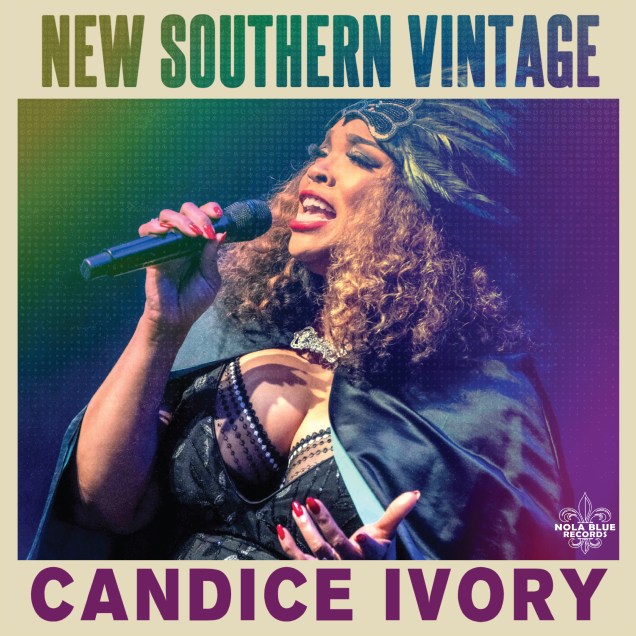
“New Southern Vintage,” the title of Candice Ivory’s magnificently ambitious new album, is the perfect description of its contents — and its soul.
Ivory, dubbed the Queen of Avant Soul, has pulled together a band of splendid musicians to explore new and traditional blues themes, adding her own vocal passion to this heady blend.
“Today, blues is a global music, known and cherished by people all over the world,” Ivory writes in the album’s liner notes. “But its roots are in the American South – in places like Memphis and Mississippi, where I first met the blues, and in nearby outposts like St. Louis, where I now live. ‘New Southern Vintage’ pays homage to this iconic Southern folk form as well as the heroines and heroes who created it, including my greatest inspirations: blueswoman Memphis Minnie (“World of Trouble,” “Shout the Boogie”) and my own great-uncle Will Roy Sanders (“I’m in Trouble”), who fronted the Fieldstones, the best Memphis blues band of the 1970s and 1980s.”
Ivory is accompanied here by her band, the Blue Bloods: Robert Allen Parker on guitar, Adam Hill on guitar, Khari Wynn on bass and Donnon R. Johnson on drums. She’s added a variety of other artists for the session. In her words:
The album also features several living legends, from Jimmy “Duck” Holmes (caretaker of the Bentonia, Mississippi school of blues guitar) to folk-blues éminences grises David Evans and Andrew Cohen. And because blues is an ancient-to-the-future music – vintage and new – I invited a number of brilliant younger artists to join me on “New Southern Vintage.” My longtime collaborator Robert Allen Parker, Public Enemy’s Khari Wynn, and the other members of my Memphis-based band the Blue Bloods appear on several tracks, as do Ben Levin, Damian “Yella P” Pearson, and Chris Stephenson. There are also some special international guests – Jan Hartmann, Antonio Vergara, Takuto Asano, and Yubu Kazungu – who hail from around the globe and nonetheless fit right into the Southern sounds of “New Southern Vintage,” showing that no matter how far we travel down the blues highway, we can always go back home to the land where the blues began.”
The “new” part of the album — its first eight original songs — focuses on an eclectic mix of electric blues styles featuring the Blue Bloods plus guests. While the new material is often drawn from deep blue roots, Ivory and her mates add freshness and vitality to their spirit. The last five tracks shift the energy more to the “vintage” roots of the blues, with an emphasis on acoustic material, primarily featuring guest artists behind Ivory’s always stunning vocals — the musical glue for the entire album. (You can find the entire musical cast list at the end of this post.)
The opener “Ain’t So Blind” lifts John Lee Hooker’s classic “Boom, Boom, Boom” rhythm into the future, adding furious harp by Hartmann. “Blue Blood” conjures similar magic with a hypnotic Mississippi Hill Country vibe. The Fieldstones song, “I’m in Trouble,” is a more traditional blues that crackles with electric intensity, ridden hard by Ivory’s powerful voice. The eloquent “Foolish Pleasure” adds Kazungu on vocals, Stephenson’s moody Wurlitzer and Hartmann’s elegant harp behind another splendid Ivory vocal.
The fiercely upbeat “Lookin’ for My Baby” pulsates with Levin’s roadhouse piano in a joyous mood shift. Ivory’s “Strong Black Mattie” revives an R.L. Burnside theme with a throbbing rhythm and a lyrical update: “Can’t a girl have some fun?” The ethereal ballad, “Let Your Love Shine On” was recorded in Ecuador, with Vergara on lap steel, electric guitar, and background vocals behind Ivory’s sensitive lyrical reading. The final “new” track is the steamy blues of “Look Away” with Ivory’s vocal soaring, and a razor-sharp Parker guitar solo.
The transition to the “vintage” tracks is a narration by blues musician and preservationist Andrew Cohen titled “Folk Traditions,” a brief explanation of musical traditions, specifically the roots of the blues.
Opening this segment is “Catfish Blues” by the somewhat mysterious Robert Petway, who recorded only 16 songs, but was considered a substantial influence on subsequent blues and rock performers. Holmes plays acoustic guitar and sings with Ivory, while Levin adds a rolling piano background. It’s splendid version, with Holmes highlighting the track.
Ivory offers a gorgeous rendition of “Corrina” (not the 1920s classic “Corrine, Corrina”), a blues standard credited to Clyde Maxwell and famously recorded by Alan Lomax at Maxwell’s farm in 1978. Spare accompaniment from Levin and Evans make this an instant classic of its own. “Crown Royal Bag Blues” is an original Ivory song that captures the spirit of a vintage blues, with guitars from Pearson and Asano, with more sassy piano from Levin.
Ivory closes with interpretations of two songs from one of her blues inspirations, Memphis Minnie: “World of Trouble” and “Shout the Boogie.” Her vocals ache with the despair of “Trouble,” and proclaim the joy of “Shout.” Levin adds piano to both, with his boogie-woogie touch driving hard on the latter with Andy Cohen, who provided the “Folk Traditions” narration introducing this segment, on guitar.
“New Southern Vintage” is an excellent album from Candice Ivory. As its prime mover vocally, and as its producer, she dives deep into the history of the blues while urging it into the future, all while emphasizing the worldwide appeal of this classic American music. It demands the attention, and the enjoyment, of deep blues lovers everywhere.
Produced by Candice Ivory Tracks 1-8 recorded by Adam Hill at Electraphonic Recording, Memphis Additional recording for track 7 by Claudia Correa at AVA Recording Studios, Guayaquil, Ecuador Tracks 9-14 recorded by Till Palmer at Ecko Records, Memphis
The Blue Bloods: Robert Allen Parker: guitar Adam Hill: guitar (except Ain’t So Blind) Khari Wynn: bass Donnon R. Johnson: drums
The mystical origins of rock ‘n’ roll music are likely buried deep in the blues and R&B of the 1930s, ’40s and ’50s.
You can point to the influences of the raucous boogie-woogie piano of Pete Johnson, the guitar work of Tampa Red or Sister Rosetta Tharpe, the flashy R&B of Louis Jordan or the imposing vocal wizardry of blues shouters Wynonie Harris and Big Joe Turner.
You could also point to Chuck Berry’s giant legacy opening the doorway to what would become bigtime rock ‘n’ roll. But then you would also need to point to the too-often unheralded piano player who gave Berry his start and partnered in creating his early, groundbreaking music — Rock and Roll Hall of Famer Johnnie Johnson.
Johnson, from Fairmont, W.Va. (where they still hold an annual Johnnie Johnson Festival every July), was a keyboard prodigy, teaching himself to play piano when he was 5, copying piano songs he heard on the radio. He’s said to have developed his sense of rhythm listening to trains that ran past the family home.
Johnson began making appearances on local radio stations when he was 9 and started a band, the Blue Rhythm Swingers, at 13. By age 17, at the start of U.S. entry in World War II, he worked for the Ford Motor Co. in Detroit. Johnson enlisted in the Marines, becoming one of the first African Americans in that branch, and later played in the Special Service Band for USO shows.
After his discharge in 1946, he moved to Chicago to work in an auto factory, and became part of the Chicago blues scene, working with the likes of Muddy Waters and Little Walter. He moved to St. Louis in 1952 and with a day job in a steel mill, formed the Sir John Trio. On New Year’s Eve 1952, Johnson needed an emergency replacement for his sax player and called on an inexperienced (and therefore not working on New Year’s Eve) guitar player named Chuck Berry. Berry’s vocals and flair for performing earned him a permanent spot, and his newfound popularity led to the Sir John Trio being renamed the Chuck Berry Trio.
The rest — to recoin a trite phrase — turned out to be rock ‘n’ roll history.
Berry’s “Maybelline,” a reworking of Bob Wills’ western swing classic “Ida Red,” landed him a deal with Chess Records in 1955. The B-side of that debut single was “Wee Wee Hours,” an instrumental that Johnson had played for years, adding lyrics by Berry.
Johnson’s bold, percussive piano continued to add inventive rhythmic heft to many more Berry classics, including “Roll Over Beethoven,” “Brown-Eyed Handsome Man,” “School Days,” “Almost Grown,” “Back in the USA,” “Carol,” and “Too Much Monkey Business.”
In 1998, Johnson told Doug Donnelly of Monroenews.com that “Johnny B. Goode” was a tribute to Johnson himself. “I played no part in nothing of ‘Johnny B. Goode,'” Johnson said. “On other songs, Chuck and I worked together, but not that one. We were playing one night, I think it was Chicago, and he played it. Afterward, he told me it was a tribute to me. He did it on his own. I didn’t know nothing about it. It was never discussed.”
In 2000, Johnson sued Berry for co-composer credits and royalties for dozens of songs which credit Berry alone. The case was eventually dismissed because of the length of time since the songs were written. But Johnson’s piano work was clearly a vital, integral part of Berry’s early recordings.
Johnson left the group in 1973 and returned to become a fixture on the St. Louis blues scene. In the early and mid-1980s he was a member of The Sounds of The City, with vocalist Larry Thurston, bassist Gus Thornton, and guitarist Tom Maloney. Johnson performed all over St. Louis with Tommy Bankhead, Oliver Sain, and many significant blues artists throughout their lives. The 1987 Chuck Berry documentary, “Hail! Hail! Rock ‘n’ Roll” renewed interest in Johnson’s music and formed a musical bond between him and documentary participants Keith Richards, Eric Clapton, and Steve Jordan. Johnson emerged from those years with his first solo album, “Blue Hand Johnnie,” in 1987.
A return to performing worldwide followed, both as a solo artist and working with, among others, the Kentucky Headhunters, Clapton and Richards. He released albums produced by Richards, Jimmy Vivino, and Al Kooper. He later performed with Richards, Clapton, Buddy Guy, John Lee Hooker, Bo Diddley, George Thorogood and Bob Weir. Johnson was also the leader of Albert King’s rhythm section. For some years, Johnson was known to have a serious drinking problem. He quit drinking in 1991, after nearly suffering a stroke on stage with Clapton.
Johnson continued to perform, and his final album, “Johnnie Be Eighty. And Still Bad!,” was recorded in St. Louis in late 2004. It was released the same week he died in April 2005, at the age of 80.
A Los Angeles Times obituary quoted the prominent blues-rock keyboardist Barry Goldberg on Johnson’s death: “When I heard he’d died, I put on the record of ‘Sweet Little Sixteen,’ and when I listened to his solo, I just began to weep,” Goldberg said. “What he did was so mind-blowing for that time.”
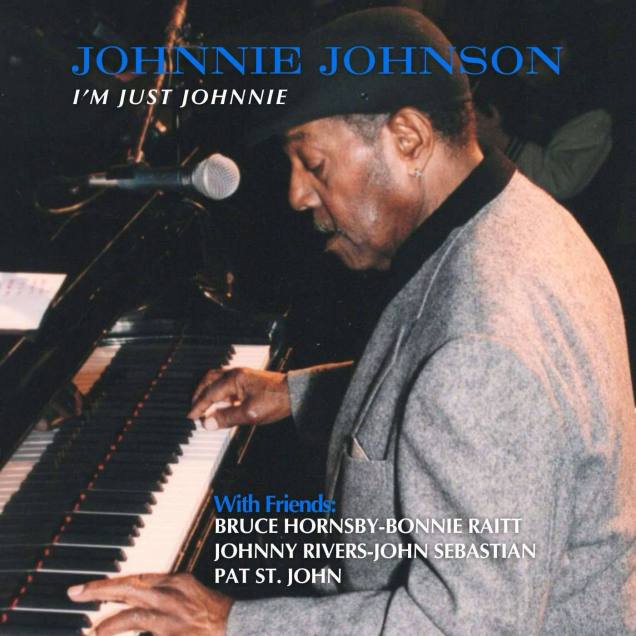
This gorgeous session, “I’m Just Johnnie,” turns back the clock to 2003 and the sessions that Johnson recorded for what would be his final project. Producer Gene Ackmann describes how it came about:
“Johnnie Johnson and I had been friends since 1979, when I saw him playing in a small blues club in St. Louis,” Ackmann says. “We struck up a friendship and over the years he would come out and play with my band often. That was always a big thrill for all of us in the band. He recorded on some of our band CDs and played on my St. Louis sports team’s songs that I wrote for the Cardinals, Blues, and Rams when they were in St. Louis.
“Johnnie loved his St. Louis sports,” Ackmann says. “My band always played for the Cardinals home opener and Johnnie would come down and play with us there too. He came down one last time and played at the opener with us in front of thousands at Busch Stadium on April 8, 2005, and got a huge ovation from the crowd. Just five days later, he died and that was his last public performance – at a Cardinals game.
“The other thing Johnnie was really fond of was fishing. He knew I had a lake at my house in the country, and it was pretty much a Friday routine for us to fish together . . . He would tell fantastic stories about the old days, and it was like getting to spend the day with my grandpa one more time.
“One day we were fishing and it was nice and quiet and birds were singing. The sun was shining and Johnnie said, ‘This is almost as good as playing blues in the key of G.’ I loved that! Everyone knows Johnnie could tear it up in G – check out Johnnie and Eric Clapton and Chuck Berry on ‘Wee Wee Hours’ in the key of G from the “Hail! Hail! Rock and Roll” movie when Eric gives Johnnie that piano solo.
“On our drive home that day, Johnnie said to me, ‘You are one of the most creative people I know. I want to do a new CD but don’t know how to go about it or have the money to do it. Would you help me?’ I said, ‘sure I would love to,’ and that was how it came about. I told him I’d help him write some songs for it and we began our project in 2003. The first person to come to St. Louis to record was Johnny Rivers. Bruce Hornsby, Bonnie Raitt and John Sebastian also played on it. This music was all recorded in St. Louis when Johnnie was 80 years old and the last stuff he recorded. Johnnie and I would sit in my music room overlooking the lake and work out our music for the project.”
There’s one CD of that great music in this set, and a second disc of interviews with Radio Hall of Fame and SiriusXM DJ Pat St. John discussing Johnson’s career in one of his last interviews before his death. Raitt is also featured on the interview disc.
Other musicians on the album include former Mama’s Pride band members Max Baker (guitar), Dickie Steltenpohl (bass), Paul Willett (Hammond B3 organ) and Pat Liston (backing vocals); plus Henry Lawrence, former Oakland Raiders All-Pro offensive tackle, who does lead vocals on two songs with Johnnie – “Lo Down” and “Stagger Lee;” and Charles Glenn, best-known as the St. Louis Hockey Blues anthem singer of 19 years, who sings lead vocals on two songs with Johnnie – “I Get Weary” and “Heebie Jeebies.” Kenny Rice (drums) and Gus Thornton (bass), long-time members of Johnnie’s band, also play on the album. Rice and Thornton were both in Albert King’s band with Johnson. Rice also does the lead vocals on “Let the Good Times Roll.” (The full list of credits by song is included after the videos below.)
But what about this music? It’s simply wonderful.
Johnson’s still vital piano rolls effortlessly across all twelve tracks. Two are instrumentals, including the classic “Blues in G.” Johnson’s svelte vocals on five songs are full of life, soulfully seasoned with age and the wisdom of his musical life.
The title track, “I’m Just Johnnie,” is Johnson singing a sprightly reminder of his presence. “I Get Weary” is a delicious slow blues with Johnson backing Charles Glenn’s soulful vocal, including a gorgeous piano solo. “Every Day I Have the Blues” features Bruce Hornsby sharing piano and vocals in their rollicking version of this blues chestnut.
“Lo Down” is a Johnny Rivers song featuring Rivers on guitar with Henry Lawrence on vocals, while Johnson rolls merrily behind it all. “Let the Good Times Roll” is another classic with Kenny Rice shouting the blues while Johnson’s piano illuminates the high-rolling proceedings. “Three Handed Woman” gets Johnson’s two-fisted treatment on vocals and the keys, bemoaning the lady’s underhanded ways.
“Broke the Bank” adds John Sebastian on harmonica behind another Johnson vocal turn, with an upbeat big band sound and furiously melodic piano solo that sticks the landing. “Blues in G” reprises this classic, with Johnson leading a quartet in this elegant blues instrumental. “Stagger Lee” brings back Lawrence for a rocking vocal turn and Johnson returns with a world-weary vocal on “Johnnie Johnson Blues,” another Rivers tune that neatly sums up Johnson’s life work: “They call me Johnnie J, and I sure like to play.”
“Heebie Jeebies” returns Glenn to handle the vocals on this bright New Orleans-flavored romp. The closer is the instrumental “Long Gone,” as Johnson stretches out with a glorious run on his magical keyboard in a fitting farewell.
“I’m Just Johnnie” is an unnecessarily modest title for this tribute to Johnnie Johnson and the music that he played and helped to create as part of the rock ‘n’ roll juggernaut of the 1950s. His piano playing is infused with the blues, a little R&B, and a whole lotta rock. He was a helluva lot more than “just Johnnie.”
Enjoy this piece of musical history that also just happens to be great music.
I”m Just Johnnie” from the album:
Here’s “Sweet Little Sixteen” and that piano solo mentioned above:
Tracklist and credits
1. I’M JUST JOHNNIE (J. Johnson-G. Ackmann) Lead Vocal: Johnnie Johnson, Piano: Johnnie Johnson, Guitar: Tony T, Bass: Gus Thornton, Drums: Kenny Rice, Trumpet: Jim Manley, Sax: Ray Vollmar, Backing Vocals: Liz Henderson Produced by: Gene Ackmann
2. I GET WEARY (J. Johnson-D.Steltenpohl-G. Ackmann) Lead Vocal: Charles Glenn, Piano: Johnnie Johnson, B3 Organ: Paul Willett. Guitar: Max Baker, Bass: Dickie Steltenpohl, Drums: Andy O’Connor Produced By: Gene Ackmann & Dickie Steltenpohl
3. EVERY DAY I HAVE THE BLUES (J. Chatman) Lead Vocal: Johnnie Johnson, Lead Vocal 2: Bruce Hornsby, Piano: Johnnie Johnson, Piano 2: Bruce Hornsby, Slide Guitar: Bonnie Raitt, Guitar: Bob Hammett, Organ: Greg Trampe, Bass: Gus Thornton, Drums: Kenny Rice Backing Vocals: Bonnie Raitt, Bruce Hornsby, Pat Liston Produced By: Gene Ackmann
4. LO DOWN (J. Rivers) Lead Vocal: Henry Lawrence, Piano: Johnnie Johnson, Guitar: Johnny Rivers, Bass: Gus Thornton, Drums: Mark Kersten, Bari Sax: Larry Smith Produced By: Gene Ackmann
5. LET THE GOOD TIMES ROLL (F. Moore-S.Thread) Lead Vocal: Kenny Rice, Piano: Johnnie Johnson, Slide Guitar: Bonnie Raitt, Guitar: Tom Maloney, Bass: Gus Thornton, Drums: Kenny Rice, Trumpet: Elliot Doc Simpson, Tenor Sax: Tom O’Brien, Trombone: Ray McAnallen Backing Vocals: Bob Hammett, Bonnie Raitt, Cindy Ankelman, Elliot Doc Simpson, Gene Ackmann, Laura Hanson, Seth Hutcherson Produced By: Gene Ackmann
6. THREE HANDED WOMAN (B.Raleigh-I.Taylor) Lead Vocal: Johnnie Johnson, Piano: Johnnie Johnson, Guitar: Tony T, Bass: Gus Thornton, Drums: Richard Hunt Produced By: Gene Ackmann
7. BROKE THE BANK (J. Johnson-D. Hommes-G. Ackmann) Lead Vocal: Johnnie Johnson, Harmonica: John Sebastian, Guitar: Tom Maloney, Bass: Gus Thornton, Drums: Kenny Rice, Tenor Sax: Ray Vollmar, Trumpet: Bill Sextro Backing Vocals: Amy Thorn, Bob Hammett, Gene Ackmann Produced By: Gene Ackmann
8. BLUES IN G (Instrumental) Piano: Johnnie Johnson, Guitar: Tom Maloney, Bass: Gus Thornton, Drums: Kenny Rice Produced By: Gene Ackmann
9. STAGGER LEE (R. Hunter-J. Hurt) Lead Vocal: Henry Lawrence, Piano: Johnnie Johnson, Guitar: Bob Hammett, Bass: Gus Thornton, Drums: Kenny Rice, Tenor Sax: Ray Vollmar, Trumpet: Bill Sextro Backing Vocals: Bob Hammett, Gene Ackmann, Laura Hanson, Liz Henderson, Pat Liston Produced By: Gene Ackmann
10. JOHNNIE JOHNSON BLUES (J. Rivers) Lead Vocal: Johnnie Johnson, Piano: Johnnie Johnson, Guitar: Johnny Rivers, Bass: Gus Thornton, Drums: Kenny Rice Produced By: Gene Ackmann
11. HEEBIE JEEBIES (J. Johnson-D.Steltenpohl-G. Ackmann) Lead Vocal: Charles Glenn, Piano: Johnnie Johnson, Guitar: Max Baker, Bass: Dickie Steltenpohl, Drums: Andy O’Connor, Percussion: Charles Glenn, Trumpet: Elliot Doc Simpson, Tenor Sax: Tom O’Brien, Bari Sax: Larry Smith, Trombone: Ray McAnallen Backing Vocals: Laura Hanson Produced By: Gene Ackmann & Dickie Steltenpohl
12. LONG GONE (Instrumental S. Thompson-Simpkins) Piano: Johnnie Johnson, Guitar: Tom Maloney, Bass: Gus Thornton, Drums: Kenny Rice Produced By: Gene Ackmann
2nd Disc — Johnnie Johnson interviews
I’m Just Johnnie Track Listing and Credits
1. I’M JUST JOHNNIE
(J. Johnson-G. Ackmann)
Lead Vocal: Johnnie Johnson
Piano: Johnnie Johnson
Guitar: Tony T
Bass: Gus Thornton
Drums: Kenny Rice
Trumpet: Jim Manley
Sax: Ray Vollmar
Backing Vocals: Liz Henderson
Produced by: Gene Ackmann
Published by: Gene Ackmann Music, BMI
2. I GET WEARY
(J. Johnson-D.Steltenpohl-G. Ackmann)
Lead Vocal: Charles Glenn
Piano: Johnnie Johnson
B3 Organ: Paul Willett
Guitar: Max Baker
Bass: Dickie Steltenpohl
Drums: Andy O’Connor
Produced By: Gene Ackmann & Dickie Steltenpohl
Published By: Gene Ackmann Music, BMI
3. EVERY DAY I HAVE THE BLUES
(J.Chatman)
Lead Vocal: Johnnie Johnson
Lead Vocal 2: Bruce Hornsby
Piano: Johnnie Johnson
Piano 2: Bruce Hornsby
Slide Guitar: Bonnie Raitt
Guitar: Bob Hammett
Organ: Greg Trampe
Bass: Gus Thornton
Drums: Kenny Rice
Backing Vocals: Bonnie Raitt, Bruce Hornsby, Pat Liston
Produced By: Gene Ackmann
Published By: BMG Music, Inc
4. LO DOWN
(J. Rivers)
Lead Vocal: Henry Lawrence
Piano: Johnnie Johnson
Guitar: Johnny Rivers
Bass: Gus Thornton
Drums: Mark Kersten
Bari Sax: Larry Smith
Produced By: Gene Ackmann
Published By: Rivers Music, BMI
(Johnny Rivers appears courtesy of Soul City Records, Inc)
5. LET THE GOOD TIMES ROLL
(F. Moore-S.Thread)
Lead Vocal: Kenny Rice
Piano: Johnnie Johnson
Slide Guitar: Bonnie Raitt
Guitar: Tom Maloney
Bass: Gus Thornton
Drums: Kenny Rice
Trumpet: Elliot Doc Simpson
Tenor Sax: Tom O’Brien
Trombone: Ray McAnallen
Backing Vocals: Bob Hammett, Bonnie Raitt, Cindy Ankelman ,
Elliot Doc Simpson, Gene Ackmann,
Laura Hanson, Seth Hutcherson
Produced By: Gene Ackmann
Published By: RYTVOC Inc
6. THREE HANDED WOMAN
(B.Raleigh-I.Taylor)
Lead Vocal: Johnnie Johnson
Piano: Johnnie Johnson
Guitar: Tony T
Bass: Gus Thornton
Drums: Richard Hunt
Produced By: Gene Ackmann
Published By: Marks Music Corp
7. BROKE THE BANK
(J. Johnson-D. Hommes-G. Ackmann)
Lead Vocal: Johnnie Johnson
Harmonica: John Sebastian
Guitar: Tom Maloney
Bass: Gus Thornton
Drums: Kenny Rice
Tenor Sax: Ray Vollmar
Trumpet: Bill Sextro
Backing Vocals: Amy Thorn, Bob Hammett,
Gene Ackmann,
Produced By: Gene Ackmann
Published By: Gene Ackmann Music, BMI
8. BLUES IN G
(Instrumental)
Piano: Johnnie Johnson
Guitar: Tom Maloney
Bass: Gus Thornton
Drums: Kenny Rice
Produced By: Gene Ackmann
Published By: Gene Ackmann Music, BMI
9. STAGGER LEE
(R. Hunter-J. Hurt)
Lead Vocal: Henry Lawrence
Piano: Johnnie Johnson
Guitar: Bob Hammett
Bass: Gus Thornton
Drums: Kenny Rice
Tenor Sax: Ray Vollmar
Trumpet: Bill Sextro
Backing Vocals: Bob Hammett, Gene Ackmann,
Laura Hanson, Liz Henderson,
Pat Liston
Produced By: Gene Ackmann
Published By: Irving Music, Inc
10. JOHNNIE JOHNSON BLUES
(J. Rivers)
Lead Vocal: Johnnie Johnson
Piano: Johnnie Johnson
Guitar: Johnny Rivers
Bass: Gus Thornton
Drums: Kenny Rice
Produced By: Gene Ackmann
Published By: Rivers Music, BMI
(Johnny Rivers appears courtesy of Soul City Records, Inc)
I’m late coming to this thoroughly enjoyable album by Kip London, but I can’t ignore it, since he was a product of Western Pennsylvania, as was I. But I can’t ignore it mainly because he created the brilliant music that graces this posthumous release.
Since London was a regional artist, primarily in the Pittsburgh and Boston areas, it’s useful to have a bit of personal history from his website to detail London’s musical journey.
“Kip London chose his craft at the young age of 11, got his first guitar, and never looked back, carving out a career as a talented artist with a phenomenal range and a gift for rhythmic improvisation in addition to his prolific songwriting. His early life in Western Pennsylvania in Braddock, McKeesport and Greensburg was filled with his mother’s love and the sounds of big band and swing orchestras in the background from the restaurant and bars where his Ma worked. He would sit nights listening from their upstairs apartments, babysat by his dog Scout. He was orphaned at the young age of 12, and life remained tough, with music providing purpose and solace. Music was his world, and the blues his vocation.
“He began playing in various Pittsburgh Rock ‘N’ Roll bands throughout the 70’s and 80’s before moving to Boston and immersing himself in its active music scene. Inspired by the folk music of Bob Dylan, Kip created a unique blues style that was eclectic and authentic. From solo artist to frontman to over half a decade as lead vocalist for a 15-piece orchestra in Boston, Kip’s raw and real style was his own in every incarnation. The Boston Globe called his work “straight ahead cool.” In March 1998, one of Kip’s earlier CD’s, Jump City, took its spot among music greats when it was listed along with B.B.King’s, Deuces Wild, and Bob Dylan’s, Time out of Mind as “the top ten most often listened to recordings in Blues Revue’s offices.”
“Returning to the “Burgh” in 2017 with his sweetheart and beloved bull terrier in tow, Kip brought his distinctive renditions and solos back to the rich legacy of his hometown music scene. He was the winner of the Blues Society of Western Pennsylvania’s annual Blues Challenge in the Solo/Duo category in 2021 and represented Western PA in the 37th Annual International Blues Challenge, held in May 2022 in Memphis. More than the accolades, though, it was always the music that satisfied his soul.“
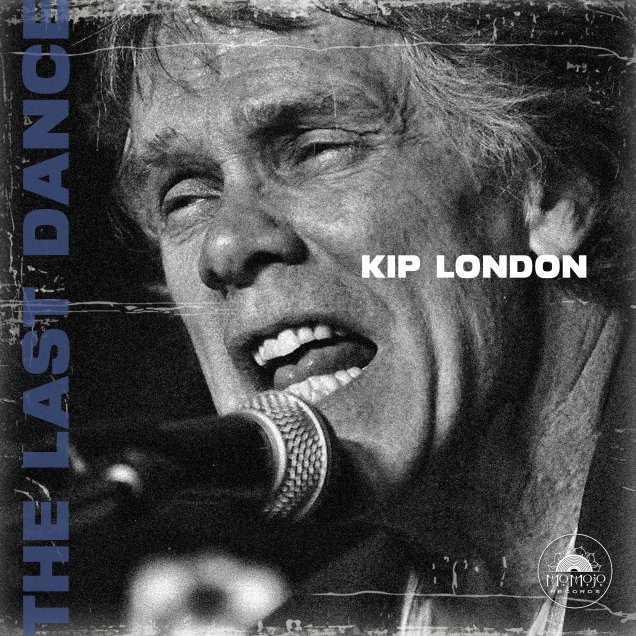
“The Last Dance” grew from a series of sessions with veteran Pittsburgh rocker Norman Nardini at his East Side Sound Studio just before London’s death in 2022. Three-time Grammy winner Kirk Yano of Brooklyn, a recording engineer with well over 30 platinum and gold records among his credits, took those sessions and brought London’s final project to life.
Yano brought together a select group of musicians for the album. In addition to his own guitar and bass tracks, the musicians include 2021 Blues Music Award winner Solomon Hicks and Pittsburgh’s Cheryl Rinovato on guitar, Don Krueger and Tommy Rich on drums, Tony Paoletta on steel guitar, and six-time Blues Music Award winner John Németh on harp. The album was officially released at the 2025 Pittsburgh Blues and Roots Festival in July.
London’s music is filtered through the eclectic influences of artists like Dylan, blues, jump blues and swing bands. He combined that with sharp songwriting, expressive vocals somewhere between Dylan and Tom Waits, and impressive resonator guitar work to create a passionate musical voice.
These mostly original tracks open with the rocking “Hurricane,” driven hard by Németh on harp behind a fierce London vocal. It’s filled with the promise of the great music yet to come. “Drinking Tonight” is a thoughtful, folky tale of the false promises of “drinking tonight.”
“What’s the Matter Now” is a resonator-fueled, easy-swinging rhythmic delight: “One thing I like to know honey, why am I always to blame….” There’s more resonator on the delightfully sassy “Jitterbug Swing” with a sparkling guitar solo. The whimsical storytelling and style of “What Am I Doing Here” reminds me of Dylan’s “Leopard Skin Pillbox Hat,” and that’s a good thing.
“Time Goes On” is a gentle ballad that reflects on the passage of time: “Young and bolder, warm or colder, what’s the difference when you’re older.” “Up Jumps the Devil” and “he’s laughin’ at me” resonates with the authenticity of countless blues themes on yielding to temptation at the hands of the prince of darkness. “Useless” is a gently swinging ode to the futility of love with a delicate harp embroidery. “Roll Me Right” is an energetic bluesy shuffle that hits just like its title.
The closer is a powerfully raw version of the classic “Death Letter Blues” by the legendary Son House. London growls the lyrics behind wicked resonator licks and Németh’s unearthly harp moans. After a dramatic pause, London offers a hoarse whisper: “You can’t take it with you, you gotta face it on your own; I hope I get to see you when I finally get home.” It’s a finale that leaves you waiting for more.
Ron “Moondog” Esser, owner of Moondog’s house of blues music club in Blawnox, Pa, says, “I met Kip nearly four decades ago. I watched and admired his talents as he grew from a good singer/songwriter to one of the best I ever heard. He has written and performed dozens of songs ranging from folk to rock to swing. He is and will always be my best friend. See ya when I get there, Kip.”
“The Last Dance” is a marvelous tribute to an artist whose work should have been more widely known. There’s inspiration not just in his music, but in the life that led him through that music. Give Kip London a serious listen. You’ll be glad you did.
Here’s “Up Jumps the Devil” from the album:
Here’s London’s winning performance at the Blues Society of Western Pennsylvania’s annual Blues Challenge in the Solo/Duo category in 2021:
Tracklist: 1. Hurricane 2. Drinking Tonight 3. What’s the Matter Now 4. Jitterbug Swing 5. What Am I Doing Here 6. Time Goes On 7. Up Jumps the Devil 8. Useless 9. Roll Me Right 10. Death Letter Blues
“Rock and roll was in my head, the blues was in my heart.”
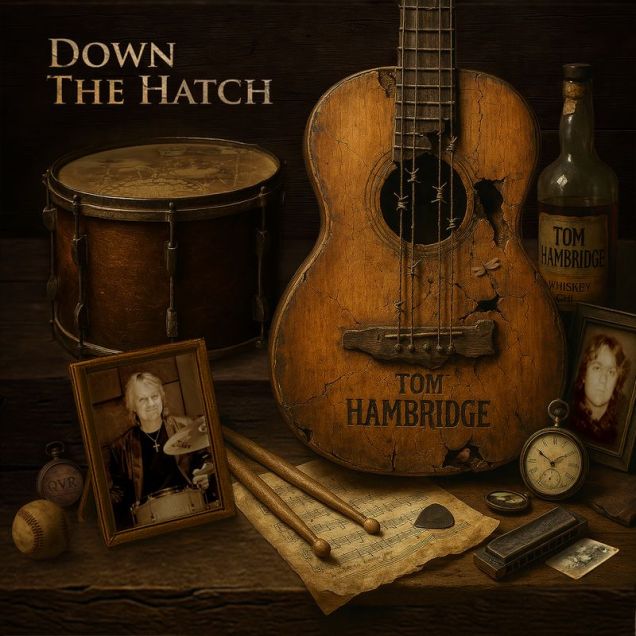
That line from the song “Willie Dixon’s Gone,” from his latest album, “Down the Hatch,” perfectly sums up the musical whirlwind that is Tom Hambridge.
Or, as he describes this rousing session:
“It is me being me. I love the blues, I love rock ‘n roll, I love Willie Dixon, I love Buddy Guy; this album is me doing what I love. It’s what I do; it’s in my blood.”
That helps explain Hambridge’s extensive career as a songwriter, singer and drummer, writing 1,000 songs, producing 100 albums, and working with everyone from Bo Diddley to Buddy Guy, including Guy’s most recent, “Ain’t Done With the Blues.” And just for a minute here, he’s enjoying the personal satisfaction of making music for himself.
Hambridge chose these songs because, “I wanted to do my version — the way I heard them in my head while writing them.” Some of the songs on this album were originally songs written or co-written by Hambridge for others, like “Every Time I Sing The Blues,” “Willie Dixon’s Gone” and “Believe These Blues.”
“Down the Hatch” follows Hambridge’s critically acclaimed 2023 album, “Blu Ja Vu.” His backers here include guitarists Rob McNelley, Bob Britt, and Tom Bukovac; keyboardists John Lancaster, Mike Rojas, Jimmy Wallace, Noah Forbes, and Kevin McKendree; bassists Tommy MacDonald, Anton Nesbitt, or Glenn Worf; Tim Lauer, accordion; and special guest Buddy Guy. (Full list of songs and credits at end of post.)
Hambridge opens by rocking out with “Willie Dixon’s Gone,” originally written with George Thorogood for an album that Hambridge produced. It’s a hard-driving ode to Dixon, the legendary singer, songwriter and producer who helped define Chicago blues and beyond. “Every Time I Sing The Blues” follows, a more traditional blues originally recorded by Eric Clapton and Buddy Guy. The lyrics reflect Hambridge’s philosophy: “I find my inspiration in tears and desperation. / Sad, sad stories we all know so well; / There’s always one more story to tell.”
“I Want You Bad” is a tough blues shuffle filled with descriptions of just how bad: “Doctor wants a patient, actor wants a line, judge wants a jury, the police want a crime.” The toughness continues relentlessly in “How Blues Is That”: “Went to Chicago tried to get a break, had lots of doors slammed in my face, sang on the corner, poured out my heart – how blues is that?”
“Hard Times” is more solemn, pounding out its mournful message: “Children of the future, better find a better way, doomsday’s ‘round the corner, gonna be some hell to pay.” Another straight-ahead rocker turns up on “What Does That Tell You,” with a deliciously rollicking piano: “I’d Like to call you sometime, but I’ve got my doubts. What does that tell you, baby? We both got things we need to figure out.”
“Believe These Blues” is a slow blues-rocker with a touch of blues philosophy: “I see bad things happening everyday … I see children going hungry, nothing on their plate, I believe these blues will always be around.” The explosive “Making Lemonade” squeezes the last drop out of his message: “I’m making lemonade, no money in the bank, no gas in my tank…I’m making lemonade, fifty cents a cup…I just laugh it up,”
“What Might Have Been” is a gently sung love song: “Thinkin’ ’bout what might have been, it hurts me seeing you with him, I’m deep into the blues again, thinkin’ ’bout what might have been.” It’s a nice changeup that lets you catch your breath before “You Gotta Go Through St. Louis,” a sparkling instrumental tribute to Chuck Berry (from St. Louis), with whom Hambridge played drums. Buddy Guy contributes furious guitar while Kevin McKendree rocks the keys like Johnnie Johnson did for Berry, all highlighting the road to the origins to rock ‘n’ roll.
“Start Drinking Early Day” is a whimsical lament on the quest to keep the whiskey river from running dry. The upbeat closer takes him on a more personal quest — “I Wanna Know About You”: “Are your stars aligned, is your head on straight, do you hide your dreams when you’re wide awake?”
Tom Hambridge’s says this is the music that comes from his heart (the blues) and his head (rock ‘n’ roll). That exhilarating musical blend creates the rousing soul of “Down the Hatch.” You’ll want more than one dose!
“Willie Dixon’s Gone” from the album:
Tracks & credits:
01 WILLIE DIXON’S GONE Written By Tom Hambridge, George Thorogood, Richard Fleming. | Published By Tom Hambridge Tunes (ASCAP),Dell Sound Publishing (BMI), Richard Fleming Music (BMI) Drums, Vocals Tom Hambridge – Guitars, Rob McNelley – Bass, Tommy MacDonald. 02 EVERY TIME I SING THE BLUES Written By Tom Hambridge, Gary Nicholson. | Published By Tom Hambridge Tunes (ASCAP), Gary Nicholson Music Admin. by Sony/ATV Cross Keys Publishing) (ASCAP) Drums, Vocals Tom Hambridge | Guitars Rob McNelley | Bass Tommy MacDonald | Keys John Lancaster
03 I WANT YOU BAD Written By Tom Hambridge, Richard.Fleming | Published By Tom Hambridge Tunes (ASCAP), Richard Fleming Music (BMI) Drums, Vocals Tom Hambridge – Guitars, Rob McNelley – Bass, Tommy MacDonald – Keys, John Lancaster.
04 HOW BLUES IS THAT Written By Tom Hambridge and Richard Fleming. | Tom Hambridge Tunes (ASCAP), Richard Fleming Music (BMI) Drums, Vocals Tom Hambridge | Guitars Rob McNelley | Bass Tommy MacDonald 05 HARD TIMES Written By Tom Hambridge and Richard Fleming | Published By Tom Hambridge Tunes (ASCAP), Richard Fleming Music (BMI) Drums, Vocals Tom Hambridge – Guitars, Rob McNelley – Bass, Tommy MacDonald – Keys, John Lancaster. 06 WHAT DOES THAT TELL YOU Written By Tom Hambridge, Richard Fleming. | Published By Tom Hambridge Tunes (ASCAP), Richard Fleming Music (BMI) Drums, VocalsTom Hambridge – Guitars, Bob Britt – Bass, Anton Nesbitt – Keys, Mike Rojas – Keys. 07 BELIEVE THESE BLUES Written By Tom Hambridge, Richard Fleming. | Published By Tom Hambridge Tunes (ASCAP), Richard Fleming Music (BMI) Drums, Vocals Tom Hambridge | Guitars Rob McNelley | Bass Tommy MacDonald | Keys Jimmy Wallace 08 MAKING LEMONADE Written By Tom Hambridge | Published By Tom Hambridge Tunes (ASCAP) Drums, Vocals Tom Hambridge | Guitars Tom Bukovac | Accordion Tim Lauer | Bass Tommy MacDonald 09 WHAT MIGHT HAVE BEEN Written By Tom Hambridge, Richard Fleming. | Published By Tom Hambridge Tunes (ASCAP), Richard Fleming Music (BMI) Drums, Vocals, Triangle, Tambourine Tom Hambridge – Guitars, Bob Britt – Keys, Noah Forbes – Bass, Tommy MacDonald. 10 YOU GOTTA GO THROUGH ST. LOUIS Written By Tom Hambridge | Published By Tom Hambridge Tunes (ASCAP) Drums, Tom Hambridge – Guitar, Buddy Guy – Guitar, Rob McNelley – Piano, Kevin McKendree – Upright Bass, Glenn Worf 11 START DRINKING EARLY DAY Written ByTom Hambridge, Richard Fleming. | Published By Tom Hambridge Tunes (ASCAP), Richard Fleming Music (BMI) Drums, Vocals Tom Hambridge | Guitars Rob McNelley | Bass Tommy MacDonald 12 I WANNA KNOW ABOUT YOU Written By Tom Hambridge, Richard Fleming. | Published By Tom Hambridge Tunes (ASCAP), Richard Fleming Music (BMI) Drums, Vocals Tom Hambridge – Guitars, Bob Britt – Bass, Tommy MacDonald – Keys, Noah Forbes
Somewhere in time and space (the last couple of years, anyway), I picked up on the seriously delightful music of Lil’ Red and the Rooster — Jen Milligan (Lil’ Red) and Pascal Fouquet (Rooster). Now it’s time to share that experience, with the release of their latest album, “7.”
Lil’ Red and the Rooster are a happy international union of Milligan (Columbus, Ohio), and Fouquet (France), and a delicious blend of their considerable musical talents.
That blend combines blues, soul, jazz and gospel with smart, thematic songwriting — or as Milligan has described it: “Mix what’s pissing you off with some bounce and swing, sprinkle a pinch of blue notes and bend it all together on six strings and you’re guaranteed a feel-good satisfaction.”
And there’s a big bunch of satisfaction in the seven original songs here. The music swings easily, bending genres and strings behind Milligan’s sweet, sassy and sultry vocals, floating on her sharp and sensitive lyrics. Fouquet’s guitar work is a masterwork of nuance, never overpowering, making elegant statements, always saying more with less — a talent that seems sadly overlooked these days. Grammy-nominee Bobby Floyd’s finely tuned piano and B3 work complete this joyous ensemble.
The additional cast behind all this effervescent music includes what they describe as their “Parisian rhythm section” — Jean-Marc Despeignes on bass and Pascal Mucci on drums, plus Jeff Morrow (Empire) as Mr. Saboteur, The Governor on bongos, Colin John on lap steel guitar, Bobbi Townes on vocals & tambourine, with Quan Howell and Kara Brooks on vocals. One of the album’s strong points is its fresh, vital sound, having been recorded live in the studio. Everybody sounds like they’re enjoying themselves, and that openness shines through.
The opening track is the magnificently conceived, gospel-drenched optimism of “Wild’s Rising,“ with its rollicking spirituality driven hard by Milligan’s vocals and backup choral tapestry preaching personal freedom. Fouquet’s guitar solo is inspired and inspiring. “Stack ‘Em Up Baby” is a lilting jazz tune with Fouquet’s lyrical guitar and Floyd’s tasty piano filigrees embellishing Milligan’s satin-smooth vocals — all with a smoky late-night club vibe.
“Is This Heart Taken” is a sultry love song with a funky blues flair that allows the group to stretch out midway. The “Melancholy Mood” sounds just like its title; it’s introduced with a gorgeously extended Fouquet solo, punctuated by a rolling B3 solo that drives away with the blues.
The instrumental “Midnight On the Rocks” delivers another gently swinging melody as Fouquet and Floyd play off each other’s tasty grooves. Milligan delivers a delicate, jazzy “Between the Lines,” showing off her meticulous phrasing and delivery. “Mr. Saboteur (aka Do the Donut)” opens with layered Latin rhythm leading into a whimsical tale of swapping a donut addiction for other pleasures that might make your eyes glaze over.
The closer is a deep blue version of the Freddie King classic, “Same Old Blues,” with Milligan’s torchy vocal lamenting its pain and pleasure. Floyd’s piano solo is a highlight, followed by Fouquet’s mood-perfect guitar. It’s a heartfelt tribute that preserves the original while making it their own.
It’s fair to say that Lil’ Red and the Rooster are not exactly household names in today’s blues world, despite their worldwide travels and performances. But it’s very fair to say that they should be. Their consummate musicianship, coupled with their ability to bend new life and style into their music, should put them on everybody’s (I’m looking at you!) short list to hear and thoroughly enjoy.
“7” is simply a gorgeous album, filled with great music, created by these talented artists to deliver their eloquent message of freedom and self-empowerment. Milligan’s philosophy bears repeating: “Mix what’s pissing you off with some bounce and swing, sprinkle a pinch of blue notes and bend it all together on six strings and you’re guaranteed a feel-good satisfaction.”
I’m feeling very satisfied!
Some closing notes: The CD versions of the album are only available at their live shows. Check their website for ordering a digital version, and just possibly scoring a CD, plus it’s available on all streaming platforms. The title? Not Mickey Mantle’s Number 7, as George Costanza demanded for a newborn’s name. Fouquet initially suggested it, but Milligan relates it to the dominant seventh chords that give blues its distinctive sound.
Here’s “Stack ‘Em Up Baby” from the album;
Tracklist: 1. Wild’s Rising 05:48 2. Stack ‘Em Up Baby 04:42 3. Is This Heart Taken 03:27 4. Melancholy Mood 06:34 5. Midnight On the Rocks 03:18 6. Between the Lines 05:47 7. Mr. Saboteur (aka Do the Donut) 03.48 8. Same Old Blues (Bonus track) 05.28
Musicians: Jen “Lil’ Red” Milligan – vocals, washboard, claps Pascal Fouquet – guitars Bobby Floyd – B3 organ, piano, tambourine, claps Jean-Marc Despeignes – bass Pascal Mucci – drums The Governor – percussion – Tracks 3, 5, 7 Colin John – lap steel guitar – Track 3 Jeff Morrow – vocals – Track 3 Bobbi Townes – vocals, tambourine, claps, – Track 1 Quan Howell – vocals – Track 1 Kara Brooks – vocals – Track 1 Producer – Lil’ Red, Lil’ Red Records Vocal Arrangements – Bobby Floyd (Track 1), Jeff Morrow (Tracks 3 & Lil’ Red)
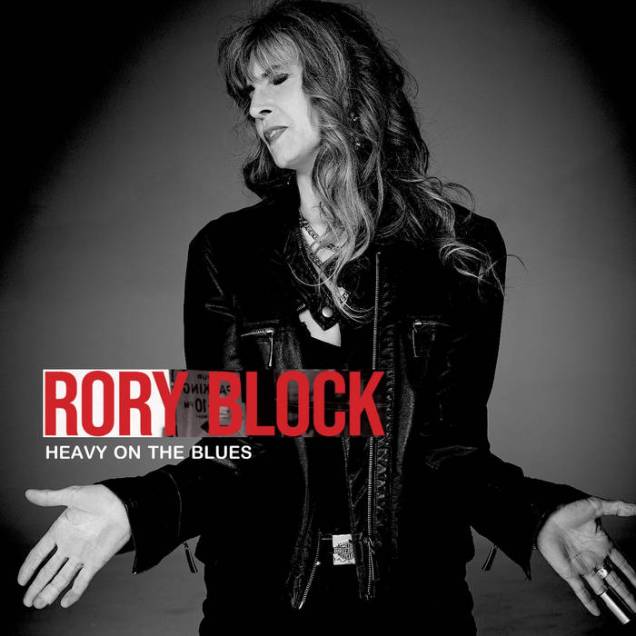
Rory Block — and her magnificent mastery of the country blues idiom — have long placed her in the elite tier of acoustic blues interpreters. But that description doesn’t begin to do her, or her massive recorded output, justice.
She’s paid faithful tribute to the male and female originators in dozens of excellent albums, won awards too countless to list, and performed relentlessly for years, after leaving home at 14 to track down the old blues masters and inhale their essence.
Not that she’s a cover artist. Far from it. Block has absorbed the music, the styles, the vocabulary, and filters it through her own sharply honed sensibilities, often creating new music with its roots deep in her own experience. Her music sounds as though it’s been ripped from the primeval mists that shroud the origins of this great American songbook; her vocals ethereal and haunting. All done while retaining the soulful, emotional integrity and raw beauty of the blues.
“Heavy on the Blues” is Block’s latest effort, and while it’s filled with her traditional soulful stylings, its emphasis is on the work of a handful of electric blues pioneers — Little Milton, Buddy Guy, Koko Taylor and a slice of Jimi Hendrix. This splendid session is filled with nine interpretations, plus one original, and features three great contemporary guitarists who bring extra life to the mix — Ronnie Earl, Jimmy Vivino, and Joanna Connor. The album still includes her powerful trademark acoustic work on several tracks.
I’m going to depart from my usual comments and instead, use Block’s words lifted from the liner notes to describe the songs, the singers and the reasons behind their selection. Her words are better than mine. However, the quotes I’ve used are only a fraction of what she writes, and those complete insights are easily worth the price of admission to her performance here.
“High Heel Sneakers” by Tommy Tucker “This great little song is one of my all time favs. I think it suits my personality. I sing first about personal experiences — sometimes sorrow, loss and pain. But I can turn suddenly to lighthearted and silly. I love fun, and have a whacky sense of humor. You gotta laugh (just to keep from)…”
“Walking The Back Streets” by Little Milton, featuring Ronnie Earl on guitar “My inspiration always begins with an overwhelming desire to sing a specific song — this one a killer blues song I first heard performed by Koko Taylor.”
“What Kind Of Woman Is This” by Buddy Guy, featuring Jimmy Vivino on guitar “So deep, so cool, so slammin’! If it hits hard like this, if it rockets through to the core, it would be wrong not to record it.”
“Hold To His Hand” – Traditional “I encountered great gospel music at the same time I heard early blues. It was simply the best singing I’d ever heard, pared with spiritual passion that could change a life.”
“The Wind Cries Mary” by Jimi Hendrix, featuring Joanna Connor on guitar “Jimi Hendrix walked the streets of Greenwich Village when I was growing up — a stunning presence, handsome and incredibly charismatic. Walking past him meant trying not to stare for too long. He always dressed impressively — often brass buttons glinted on his jacket. Hendrix was part of the mystique of the times, the presence of musical greatness at a pivotal time.”
“Down The Dirt Road Blues” by Charley Patton “Country Blues was my first love, an obsession that has lasted a lifetime. It will never leave me. Charley Patton exemplified the deepest possible soul and power. His music rocked my world. I can’t listen to Charley Patton without getting overwhelmed with emotion.”
“Mississippi Blues” by Willie Brown “ ‘Mississippi Blues’ is one of the most stunning and beautiful Country Blues songs ever written. While I have recorded it several times before, it is deeply sentimental for me to record it again. It symbolizes the musical energy and inspiration of my formative years.”
“Me And My Chauffeur” by Memphis Minnie “Memphis Minnie is one of the greats, a classic, and one of the most outstanding Country Blues guitar players as well. As usual the Country Blues women were outspoken and clear about just about everything.”
“Can’t Quit That Stuff” by Rory Block “The guitar parts were initially inspired by Bukka White’s “Jitterbug Swing,” but then the lyrics veered off totally and the guitar parts were also altered by my rogue slide playing. I found myself telling the story of my backstage conversation with the great Hubert Sumlin, iconic guitar player for Howlin’ Wolf, Muddy Waters and others.”
“Stay Around A Little Longer” by Buddy Guy “You know how it goes. You’re listening to music online and then one artist pops up front and center, and that’s how I came across “Stay Around A Little Longer.” BB King and Buddy Guy were sitting together trading lyrics and solos on this deeply moving song. I knew at once I had to record it. They say tomorrow is not promised, and as we all know you don’t have to be old to leave this world, which just underscores the beauty of being grateful for every minute. I resonate with this song because I can hardly believe I’m still here, and still making music. What a great gift, to be able to do what I love!”
The powerful statement of “Heavy on the Blues” is a compelling choice for Block, who is primarily an acoustic artist, but fits comfortably into this mixed groove. Her previous album, though, was also a departure — the elegant Bob Dylan tribute, “Positively Fourth Street.” Both show alternative sides of Block’s talent; both are ambitious and welcome additions to her already impressive body of work.
If you’re not already a Rory Block fan (although that’s hard to imagine!), consider this album a starting point for your exploration of her life’s work of breathing new life into this classic American music. Her depth of feeling and emotional commitment to her music is nothing short of extraordinary.
Here’s an older, live performance of “Mississippi Blues,” reprised on this album:
Tracklist:
High Heel Sneakers 3:33 | TOMMY TUCKER
Walking The Back Streets W/Ronnie Earl 6:07 | LITTLE MILTON
What Kind Of Woman Is This W/Jimmy Vivino 3:55 | BUDDY GUY
Hold To His Hand 4:25 | TRADITIONAL
The Wind Cries Mary W/Joanna Connor 3:33 | JIMI HENDRIX
His philosophy lies in his unique musical storytelling built for listening and thinking. It’s poetry set to music. Soul music in the best sense. Music that nourishes the soul with its often-mystical meanderings. And most of all, it’s damn good music.
MacLeod’s music is filled with humor, love and personal vision. All done through his own heartfelt, eloquent lyrics, driven by his elegant acoustic guitar work. All colored with the many shades of the blues.
He credits his highly personal music to his first mentor, Ernest Banks of Toano, Va., of whom he says: “He instilled in me the honesty. He told me ‘Never write or sing about what you don’t know about and never play a note you don’t believe.'” And you only have to listen to a few verses of any of his more than 400 songs to find that personal vision.
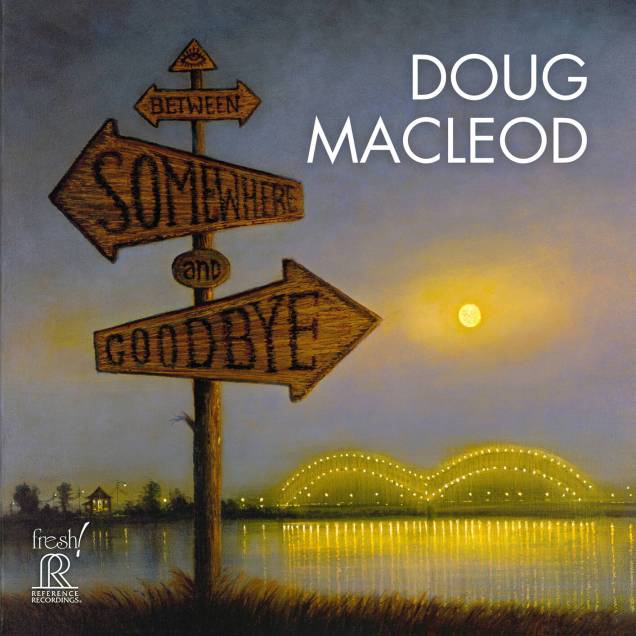
It’s that vision you find in the enigmatic title of his latest album, “Between Somewhere and Goodbye, “and the quiet mystery in the lyric of that song: “There’s a place between somewhere and goodbye …. it’s only seen with the unseen eye.” And then: “You take nothing more from this life than you take from a dream.” Combine that with the fluid intensity of his almost otherworldly acoustic picking, and you have music that’s poignant and passionate, whether it’s filled with personal mysteries or sharply tuned humor.
MacLeod’s acoustic work alone provides a rich backup for his vocals — but for this album he’s added some musical heft with the Funky Chester Rhythm Section: Lynn Williams on drums, Mark T. Jordan on piano, Wurlitzer electric piano and B3 organ, and Paul Ossola on bass, plus the vocal harmonies of The Shoals Sisters — Cindy Richardson Walker, Marie Tomlinson Lewey and Carla Russell. Producer Andreas Werner adds rhythm guitar.
The opening song here is “Memphis In Your Soul,” about the city — and the river — that has apparently captured MacLeod’s soul since he moved there in 2019: “Go to the river and watch it flow … Then no matter where your life will take you, you’ll have some Memphis in your soul.”
That lyricism continues to flow throughout, whether it’s the moody title track, the hopeful “Keep On Walkin’ On,” the down-home flavored, downhearted ”Hard Times,” or the latest version of “Roll Like A River (2025),” with its melodic insistence: “I’m gonna’ roll like the river ’til I’m gone.” The Shoals Sisters backup adds considerably to its eloquence. “I Ain’t No Stranger” takes an ethereal journey: “I know this road will lead me to my soul … I’ve been a witness to the unseen light.”
Delicious shots of wry lubricate the biblical wordplay of “One Rib Short” (Adam and Eve and all those begats) and the whimsical marital warning of “I Don’t Like Your Chances.” The mystical journey continues with the visions of “The Seen And The Unseen,” and the need to let go in “Even Angels Get Too Sad To Fly.” The closer is, fittingly, a quiet gem of haunting memories, “Watching The Sun Go Down.”
Let’s hope the sun is nowhere near setting on Doug MacLeod’s talent that produces this kind of elegant, eloquent music.
And another very thoughtful interview, with Dominic Hartley of Fanfare, in which Doug waxes thoughtfully about his music and some of the inspiration for this album.
Here’s the title song from the album:
Tracklist: 01. Memphis In Your Soul 02. Between Somewhere And Goodbye 03. Keep On Walking On 04. Hard Times 05. Roll Like A River 2025 06. I Ain’t No Stranger 07. One Rib Short 08. The Seen And The Unseen 09. Even Angels Get Too Sad To Fly 10. I Don’t Like Your Chances 11. Watching The Sun Go Down
What would be the best name for a band whose members fondly drop the names of the artists they’ve been mentored by and worked with over the years? The Name Droppers, of course!
Back in the 1980s, that band was Charlie Karp and the Name Droppers, with Connecticut-based Karp being a seasoned guitarist, a prolific songwriter and an Emmy-winning producer. Karp earned the right to namedrop as he left high school to work with Buddy Miles, then got to know Jimi Hendrix and Keith Richards and wrote songs for Joan Jett and Joe Perry. After Karp’s death in 2019, the remaining Name Droppers stuck together: songwriter/guitarist Rafe Klein, Ron Rifkin on piano, Bobby “T” Torello on drums and Scott Spray on bass. Torello and Spray can drop impressive names as well, including the likes of Johnny Winter, Edgar Winter, Michael Bolton, Grace Slick, Felix Cavalier and the Rascals — and many more.
Those names they’ve dropped are more than just names they’ve dropped. They represent a decades-long road of talent and experience the Name Droppers have traveled and are now manifesting in their music, showing off the quartet’s high-octane blend of blues, R&B, soul and good old-fashioned rock ‘n’ roll.
“Cool Blue Shoes” is the current Name Droppers’ fifth album, tightly packed with their energetic style that drives seven smartly crafted original songs and three creative covers. The opener, a full-throttle version of Howlin’ Wolf’s classic “Killing Floor,” fuels the fire to come with its ageless blues lament about his woman: “I should’a quit you long time ago / And I wouldn’t have been down here on the killin’ floor.” “Cool Blue Shoes” by Torello and Klein steps out next, with Klein leading the bluesy vocals with a message designed to put a hole in your sole: “I’ve walked a mile and slept alone in these blue shoes / They’ve carried all my dreams, walked away my blues.” Rifkin then vocalizes his own melodic charmer, “Be Alright,” filled with optimism: “I gave you all I had from me to you / Never again will you and I be blue.”
“Keep Pushin’” by Klein, with angry Rifkin vocals, is a furiously styled rocker about keeping on when the keeping on gets tough: “Most of my friends have died from the war / They never found what they were searching for / Sobriety ain’t always what it seems to be / Keep on pushin’ like my friends told me.” Klein returns for the vocal on the stirring “That’s The Way My Love Is,” dusting off the Foreigner track from Mick Jones: “There are the things I cannot say to you / That’s the way my love is / But in my heart you’ll always stay with me.” Klein’s tough and spirited “Hard Way” puts Torello out front with the whole band as a backup chorus for a man on the run: “I think she’s gone, she left him in the dirt / She said he lies and that her feelings were hurt / But he’s on the run don’t give a damn.”
Klein, Torello and Rifkin swap vocals on their rocking version of Willie Dixon’s mournful blues on “I Cry For You,” and the lighthearted bluesy shuffle “Think Yiddish” from Klein and Torello gives Torello a vocal turn at some whimsical wordplay: “Well I went to the doctor, the doctor said / Too much pizza and American bread / Too many Budweisers give you a sleepy head / Think Yiddish, dress British that’s what he said.” Rifkin’s vocal soars on Klein’s “Yes I Will,” driven by the band’s call and response and Klein ‘s razor-sharp guitar solo midway: “I’ll be the one you talk to, yes I will / I will ease your worried mind, yes I will.” For the closer, Klein partners with Simone Brown on his torchy “Out of This Blue,” a gorgeous duet wrapped in Rifkin’s roiling B3 and caressed by Bill Holloman’s sensuous sax: “I was such a lonely man with a heart torn in two / Out of this blue I found you.” Their passionate pairing ends the album elegantly tangled up in blue.
The Name Droppers sport their brand new “Cool Blue Shoes” with considerable style and class, laced with true blues grit. Take a walk in those cool blue shoes now!
Sweet soul music – It’s that magical music whose classic sounds made history with such legendary artists as Ray Charles, Bobby “Blue” Bland, Aretha Franklin and Al Green.
Those greats, and most of their contemporaries, have disappeared, leaving only the echoes of their soulful essence.
But there’s one soul stirrer whose voice still caresses a lyric with a lover’s passion – Chicago’s Gerald McClendon. He’s a classic stylist with a voice so smooth and a feeling so deep that he’s known as the “soul keeper.”
McClendon’s been a stalwart keeper of soul for so long, breathing new life into it with every song, that he’s being honored this year by the Jus’ Blues Music Foundation with its Bobby Blue Bland Award for “Outstanding Blues Vocal Stylist and performer in the blues arena.” It’s the 25th anniversary of Jus’ Blues, an organization dedicated to “preserving and promoting the legacy of the Blues.”
In the spirit of that award, McClendon is celebrating the 20th anniversary of one of his early, groundbreaking albums, “Sleeping While the River Runs,” recorded in 2005 on Sleeping Dog Records with a band of Chicago music veterans called Mother Blues, led by songwriter and guitarist Steve Bramer. The album is packed with 14 songs sung by McClendon, mostly written by Bramer, plus two instrumentals and a gorgeous choral finale. The music shapeshifts effortlessly through a variety of musical styles, all brought vividly to life by the soul keeper’s passionate pipes.
The superbly soulful first track, “Pass You By,” launches with McClendon’s pleading vocal, soaring against a melody that builds to a powerful climax, testifying about letting go and moving on: “Time gets the best of most things / And in time this too will pass.” The easy rhythm and smooth vocal of “Smokescreen” combines a stinging guitar solo with lyrical philosophy: “Two things you can count on / You live and then you die.”
Bramer wrote the gentle blues “(Let Daddy) Keep You From Harm” as a lullaby while awaiting the birth of his first child; McClendon’s rendition is beautifully sensitive. “Leaves Tremble on the Tree” turns a harp intro into an R&B tune on deliverance from hardship on the road. “Going Down for the Last Time” is a soulfully sung ballad about a romantic dilemma. “Common Ground” flashes an uptempo R&B delivery: “We’ve had a lifetime to learn / What it means to make the best of things,” then McClendon turns on an achingly passionate vocal in the languorous slow blues of “Bed Down.”
The gorgeous lyrical imagery of the title track, “Sleeping While the River Runs,” floats on an emotional gospel-hued wave that hints at the despair of giving up, but with an undercurrent of constant hope. McClendon’s vocal builds with an elegant chorus behind him: “Find the edge of the shoreline / Under the haze of the Memphis sun / Feel the drift of the water … / sleeping while the river runs.”
“Come To Me” is an easygoing blues shuffle with a sparkling guitar intro. “Thin Line” is smooth, torchy slow blues: “When you toy with affection, you walk a thin line.” “Me & Ian” is the first instrumental, an eloquent jazz-inflected interlude. On “Glory Train,” McClendon’s gospel-infused call-and-response hints at universal deliverance: “And when my time has come, I’m gonna hop that train and ride.”
“Habit of the Heart” is a straight-ahead rocker, leading into the deep-blue darkness of “Chalk Line”: Put your chalk line around him / He’s no longer sleeping with my wife / He was a low-down dirty snake, and it cost him his natural life.” The final McClendon cut is “Walk With Me,” another hard-driving blues, demonstrating his effortless ability to make any song his own. The second Mother Blues instrumental is “Where’s the Fire,” fueled by the majestic harp of Hurtin’ Burt. The perfectly chosen closer is a beautiful choral version of “Sleeping While the River Runs” by the Halsted Street National Uptown Choir, with churchlike organ rolling along behind them.
Gerald McClendon’s breathtaking vocal depth and emotional range on “Sleeping While the River Runs” may be 20 years old, but his sweet soul music is still vital, earning this year’s Jus’ Blues honor. The soul keeper is still keeping on!
Here’s the title track from the album:
Tracklist: 01. Pass You By (3:11) 02. Smokescreen (2:34) 03. Keep You from Harm (3:29) 04. Leaves Tremble on the Tree (3:04) 05. Going Down for the Last Time (4:24) 07. Bed Down (4:47) 08. Sleeping While the River Runs (3:35) 09. Come to Me (2:48) 10. Thin Line (3:32) 11. Me & Ian (2:37) 13. Habit of the Heart (3:30) 14. Chalk Line (5:24) 15. Walk with Me (2:31) 16. Where’s the Fire (2:58) 17. Sleeping (Reprise) (1:34)
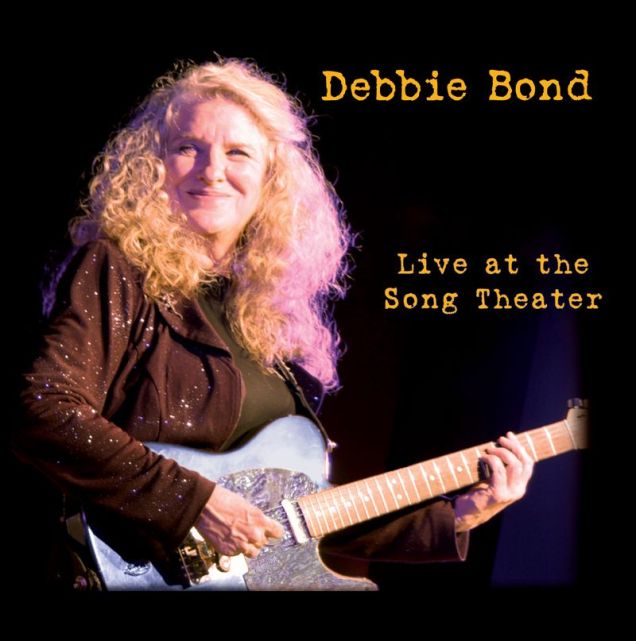
It’s been a long and winding blues road for Debbie Bond, from her first solo guitar performance in Sierra Leone, West Africa, at age 13, to her present-day deep blues musical life in her sweet home Alabama,
Since moving to Alabama and joining forces with legendary bluesman Johnny Shines in the early1980s until his death a decade later, Bond has immersed herself in the raw power of the blues, and absorbed the influences of Alabama’s famed Muscle Shoals sound. She’s an award-winning blues activist and founder of the Alabama Blues Project, dedicated to promoting and preserving the state’s blues heritage. As if that isn’t enough, Bond also makes memorable music with her band: British-born husband “Radiator” Rick Asherson on keyboards and harp, Marcus Lee on drums, Sam Williams on sax, and Bond adding vocals and her own guitar work.
This album, “Live at the Song Theatre,” was recorded live at the intimate Song Theatre in Columbiana, Ala., and shows off the joyful lyrical and musical interplay of Bond, Asherson and their bandmates on nine of their original songs, with three smartly done covers. This concert performance works the magic of all live blues shows, bringing fresh vitality to the essence of Bond’s music. Bond and Asherson write gorgeous love songs, often with a personal twist, and they tackle social issues with straight-ahead sensitivity. And they do it all with great music.
They open here with “That Thing Called Love,” the title track from an earlier album, an eloquent ode to that thing called love: “Love is a power, you just can’t explain / A mystery and magic, so simple and plain.” Bond’s vocal is supple and soulful, with elegant sax from Sam Williams. “Road Song” shifts into a tough road-warrior vibe, with Asherson echoing the vocals and soaring on harp: “This old road don’t own me / Still got a long way to go.”
“Watch Out for Your Heart” is a torchy blues layered over sensuous sax: “He’ll tell you that he loves you / Swear his love is true / But don’t you turn your back on him / I know what he’ll do.”
The upbeat R&B feel of “Let Me Be” is stirring search for personal freedom: “The path to freedom / Ain’t down this road / Got to leave you far behind / Lighten up my load.” Bond’s stirring vocal turn highlights her version of “Some Kind of Wonderful,” while a Motown vibe and raunchy sax complete the thought: “Me and my baby were so tight / Don’t you know that he is / He’s some kind of wonderful?” The anthemic “Winds of Change” is a larger look at life: “Don’t you feel the winds of change / blowin’ in the wrong direction.” The ageless philosophy of Delbert McClinton’s “Been Around a Long Time” gets a fresh look from Bond, with Asherville’s backup vocals, sharp harp filigrees and tasty honky-tonk piano: “I ain’t old, but I’ve been around a long time.” Bond offers an achingly soulful version of “I’m Gonna Tear Your Playhouse Down,” the Ann Peebles staple from 1972: “You’ve been playing playboy / A little bit too long / Gonna tear your playhouse down.”
Asherson takes the lead on the rollicking New Orleans gumbo of “Going Back,” with Bond on backup, and the band kicking up its Big Easy heels: “We’re gonna dance all night long / To a zydeco beat and a two-stepping Cajun song.” Bond steps out next on the profoundly thoughtful “Nothing But The Blues,” and the contradictions of life: “You claim you’re killing for peace, to set people free / But people are dying is all we can see.” The whimsical, bluesy shuffle of “Wishbone” spotlights Asherson wailing on harp, as Bond laments her emotional condition: “Don’t take extra vision it’s plain to see / Got a wishbone where my back bone should be.” The set closer, the title track from Bond’s 2021 album, is “Blues Without Borders,” an appropriately heartfelt plea for peace, love and understanding, as valid now as it was then: “The whole round world’s in trouble, got to find our common ground / Come together people or we won’t even be around.”
Debbie Bond’s sparkling “Live at the Song Theatre” is testimony that there are many joyful miles ahead on her long and winding musical road through the land of the blues.

 Blues Roadhouse