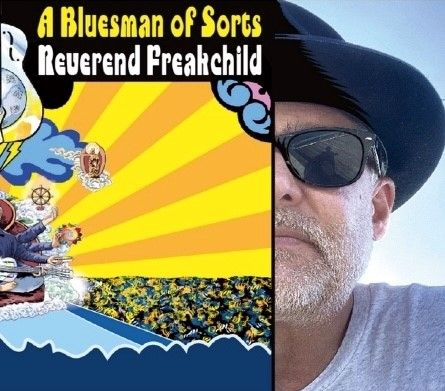
Roadhouse Album Review: Rev. Freakchild may (or may not) be gone, but his fine vintage blues live on in “A Bluesman of Sorts”

Rev. Freakchild (Or maybe not) — “A Bluesman of Sorts” — Treated and Released Records
Does the musically devout trafficker in fine vintage blues known, or perhaps formerly known, as the Rev. Freakchild still play and sing among us? The simplest answer to that question is yes. And no.

Although that contradiction is just the kind of paradoxical dichotomy the Rev. would likely revel in, it may explain the parallel existence of his two self-penned “obituaries,” written 12 years apart as album liner notes. The first proclaimed the Rev.’s demise on 2013’s “Chaos & Country Blues.” Apparently ineffective, that obituary gets new life on Freakchild’s latest release, “A Bluesman of Sorts,” that he describes as a “posthumous retrospective collection.” The album lists its producer as Sal Paradise, who was Jack Kerouac’s narrator in Kerouac’s trippy novel “On The Road,” and is apparently one of Freakchild’s alternate realities, as he refuses to limit himself to merely one on this cosmic plane.

So, yes and no can both be correct, as Freakchild or his blues doppelganger offers up this two-album set of 19 songs – a few previously unreleased originals, some old favorites, some classics and some remixes of previously released material. For all of his other-worldliness as a Buddhist bodhisattva, the Rev. is a righteous singer, songwriter and guitarist who works in the traditional country blues format and beyond, to “capture the chaotic coherence and the spirit of a tune,” he says.

The Rev.’s music often defies description when it explores other astral modes, but his blues are a solidly down-to-earth musical vision with vocals rich in historic tradition. The opener on Disc 1 is the gently rhythmic “Green and Brown Blues,” previously unreleased, with Freakchild adding lyrical harp to a stripped-down trio of John Robinson on bass and Patrick Carmichael on drums with a plaintive message: “Yeah I got a million things on my mind, but I still don’t know what to do.”

The furious drive of “Chevrolet” shifts the mood with another unreleased track fueled by rolling organ riffs, adapted by Lonnie and Ed Young in 1959 from the 1930 Memphis Minnie song, “Can I Do It For You.” – “I buy you a ’57 Chevrolet… just to do somethin’ for you.” The Robert Johnson pleading “Come On In My Kitchen,” gets a masterful guitar solo from the Rev., who channels Johnson’s eerie vocals to match the thunderstorm sound effects intro. Muddy Waters’ “I Can’t Be Satisfied” gets a hard-driving Stones-like update. “Roll and Tumble Blues” is another classic blues by Hambone Willie Newbern from 1929 that gets the Freakchild treatment. The starkly gospel-tinted “Jesus Just Left Chicago” finds The Rev. testifying with his National Steel guitar and irreverent lyrics, followed by the sly testimony of “Everybody Wants to Go to Heaven” — “Everybody wanna go to heaven but nobody wanna die.”

The Freakchild original “A Day Late and A Dollar Short” finds him bemoaning his financial plight to a rollicking backbeat, while a world-weary vocal on the slow blues of “Rattling Cages” finds him locked up for being one toke over the line.“Dust Radio,” previously unreleased, is a throbbing version of a Chris Whitley tune that closes out Disc 1.

Disc 2 opens with a rousing version of Jimmy Reed’s “Big Boss Man,” complete with razor-sharp harp by Hugh Pool. The Rev. then pumps a little bit of funk and a lot of vocal energy into Bobbie Gentry’s countrified “Ode to Billie Joe” in another unreleased cut. Robert Johnson turns up again as the fearsome “Hellhound On My Trail,” materializes with a haunting vocal.

The traditional “I Know You Rider” gets a tough Southern rocker treatment in this rousing remixed version.“Yer Blues” is the Rev.’s one-man version of the Lennon/McCartney down-and-dirty blues for the Beatles, with the Freakchilds rocking it hard and tight. “Wish I Was In Heaven” is a riveting trance-like version of the hypnotic Mississippi Hill Country blues by R.L. Burnside, and “Death Bells” is a solo country blues, with Freakchild’s sparsely authentic version of the Lightnin’ Hopkins song.

Two live tracks wrap up this bluesified package: An enthusiastic a cappella version of Son House’s “Grinnin’ In Your Face,” with a rhythm section of audience hand-clapping, and the previously unreleased finale is an achingly soulful version of “As the Years Go Passing By,” by Peppermint Harris.

With this new set, the Rev. Freakchild may have (or may not have) escaped his own karmic cycle, but his blues definitely live on. A frivolous approach to the Freakchild persona masks a serious appreciation for his music.

“A Bluesman of Sorts” is a far-too-modest title for this joyful collection of music that the Rev. obviously loves and creates with unbridled passion and authenticity. Join him on his journey through this blues-filled astral plane, while you share his mantra: “Music is my religion. Through song I seek transcendence!”


Here’s “Green and Brown Blues” from the album:

Tracks and credits:

CD1 

1 – Green and Brown Blues (2:49)
Reverend Freakchild – Vocals, Guitar and Harmonica / John ‘Bones Ritchie’ Robinson – Bass / Patrick Carmichael – Drums / Recorded at M&I Studios, NYC, circa 2001 (Written by Reverend Freakchild © Citizen of the Universe Music) Previously Unreleased Track from the Lucky Devils Sessions

2 – Chevrolet (4:57)
Reverend Freakchild – Vocals and Guitar / Matt Rae – Lead Guitar / Other Personnel Unknown / Arrangement by Matt Rae / Recorded at Next Door Studios, CT, circa 1998 (Written by Lonnie and Ed Young) Previously Unreleased Track from the Soul Miners Sessions

3 – Come On In My Kitchen (3:20)
Reverend Freakchild – Vocals and Guitar / Recorded at Uptown Studios, NYC, circa 2002 (Written by Robert Johnson) Previously Released Track from the Album Chaos & Country Blues

4 – I Can’t Be Satisfied (4:41)
Reverend Freakchild – Vocals and National Steel Guitar / Chris Parker – Drums / Recorded at Excello Studios, Brooklyn, NY, circa 2019 / additional overdubs by Aki Kumar – Harmonica / Nick Amodeo – Bass / Steve Sirockin – Organ / Recorded and Mixed at Altitude Recording, Boulder, CO 2024/25 (Written by McKinley Morganfield) Previously Released Track from the Album Bodhisattva Blues, Now with New Overdubs and Remixed

5 – Roll and Tumble Blues (2:34)
Reverend Freakchild – Vocals and Guitar / Recorded at Uptown Studios, NYC, circa 2003 / with additional overdubs by Hugh Pool – Harmonica / Recorded at Excello Studios, Brooklyn, NY, circa 2008 / Jason Hann – percussion / Mixed at Altitude Recording, Boulder, CO circa 2024 (Written by Hambone Willie Newbern) Previously Released Track as Rollin’ and Tumblin’ from the Album Chaos & Country Blues, Now with New Overdubs and Remixed

6 – Jesus Just Left Chicago (3:26)
Reverend Freakchild – Vocals and National Steel Guitar / Recorded live On Air at WWOZ studios, New Orleans, LA circa 2019 / additional overdubs by Nick Amodeo – Bass / Chris Parker – Drums / Jason Hann – percussion / Recorded and Mixed at Altitude Recording, Boulder, CO 2024 (Written by Billy Gibbons, Dusty Hill and Frank Beard) Previously Released Track from the Album Road Dog Dharma, Now with New Overdubs and Remixed

7 – Everybody Wants to Go to Heaven (2:49)
Reverend Freakchild – Vocals and Guitar / Recorded at Peloton Studios, circa 2020 / additional overdubs by Malcolm the Minister of Bass / Jason Hann – percussion / Mark Karan- 12 String lead Guitar / Mixed at Altitude Recording, Boulder, CO circa 2022 (Written by Don Nix) Previously Released Track from the Album Supramundane Blues, Now Remixed

8 – A Day Late and A Dollar Short (3:09)
Reverend Freakchild – Vocals and Guitar / John ‘Bones Ritchie’ Robinson – Bass / Patrick Carmichael – Drums / Organ – Unknown / CC – Additional Vocals / Recorded at Uptown Studios, NYC, circa 2003 (Written by Reverend Freakchild © Citizen of the Universe Music) Previously Released Track from the Album God Shaped Hole, Now Remixed

9 – Rattling Cages (8:11)
Reverend Freakchild – Vocals, Guitar and Harmonica / Recorded at Uptown Studios, NYC, circa 2004 / additional overdubs by Chris Parker – Drums / Jason Hann – percussion / Recorded and Mixed at Altitude Recording, Boulder, CO circa 2024 (Written by Reverend Freakchild © Citizen of the Universe Music) Previously Unreleased Track

10 – Dust Radio (4:03)
Reverend Freakchild – Vocals and National Steel Guitar / Recorded at Peloton Studios, circa 2020 / additional over dubs by Nick Amodeo – Bass / Steve Sirockin – Drums / Recorded and Mixed at Altitude Recording, Boulder, CO, 2024 (Written by Chris Whitley) Previously Unreleased Track

CD2

1 – Big Boss Man (4:12)
Reverend Freakchild – Vocals and National Steel Guitar / Hugh Pool – Harmonica / Mark Karan – Lead Guitar / Melvin Seals – Organ / Chris Parker – Drums / Recorded at Excello Studios, Brooklyn, NY, circa 2019 / additional overdubs by Jason Hann – percussion / Remixed at Altitude Recording, Boulder, CO 2024 (Written By Jimmy Reed) Previously Released Track from the Album Bodhisattva Blues, Now with New Overdubs and Remixed

2 – Ode to Billie Joe (6:53)
Reverend Freakchild – Vocals and Guitar / Matt Rae – Lead Guitar / Other Personnel Unknown / Arrangement by Matt Rae / Recorded at Next Door Studios, CT, circa 1998 (Written by Bobbie Gentry) Previously Unreleased Track from the Soul Miners Sessions

3 – Hellhound On My Trail (5:42)
Reverend Freakchild – Vocals and National Steel Guitar / Chris Parker – Drums / Recorded at Excello Studios, Brooklyn, NY, circa 2016 / additional overdubs by Jason Hann – percussion / Mixed at Altitude Recording, Boulder, CO 2024 (Written by Robert Johnson) Previously Released Track from the Album Illogical Optimism, Now with New Overdubs and Remixed

4 – I Know You Rider (3:11)
Reverend Freakchild – Vocals and Guitar / Malcolm the Minister of Bass / Jason Hann – percussion / AJ Fullerton – lead Guitar / Recorded and Mixed at Altitude Recording, Boulder, CO circa 2019 / Remixed 2024 (Traditional) Previously Released Track from the Album Bodhisattva Blues, Now Remixed

5 – Yer Blues (5:41)
Reverend Freakchild – Vocals and National Steel Guitar / Hugh Pool – Harmonica / Mark Karan – Lead Guitar / Melvin Seals – Organ / Chris Parker – Drums / Recorded at Excello Studios, Brooklyn, NY, circa 2019 / additional overdubs by  Nick Amodeo – Mandolin / Remixed at Altitude Recording, Boulder, CO 2024 (Written by Lennon/ McCartney) Previously Released Track from the Album Bodhisattva Blues, Now with New Overdubs and Remixed

6 – Wish I Was In Heaven (3:36)
Reverend Freakchild – Vocals and National Steel Guitar / Chris Parker – Drums / Recorded at Excello Studios, Brooklyn, NY, circa 2014 / Remixed at Altitude Recording, Boulder, CO 2024 (Written by R. L. Burnside) Previously Released Track from the Album Hillbilly Zen-Punk Blues, Original Session without Overdubs

7 – Death Bells (3:14)
Reverend Freakchild – Vocals and Guitar / Recorded at Uptown Studios, NYC, circa 2005 (Written by Sam ‘Lightnin’ Hopkins) Previously Released Track from the Album Chaos & Country Blues

   Bonus Live Tracks –

8 – Grinnin’ In Your Face (2:43)
Reverend Freakchild – Vocals / Recorded Llive at Yorckschlosschen Jazz Cub – Berlin, Germany 2015 (Written by Eddie ‘Son’ House) Previously Released Track from the Album Preachin’ Blues

9 – As the Years Go Passing By (5:30)
Reverend Freakchild – Vocals, Lead and Rhythm Guitar / Hugh Pool – Rhythm and Lead Guitar / Malcolm the Minister of Bass / Chris Parker – Drums / Recorded Live at The Cutting Room – NYC 2023 (Written by Peppermint Harris) Previously Unreleased Track

All Tracks Mastered at Airshow by David Glasser / Produced by Sal Paradise 
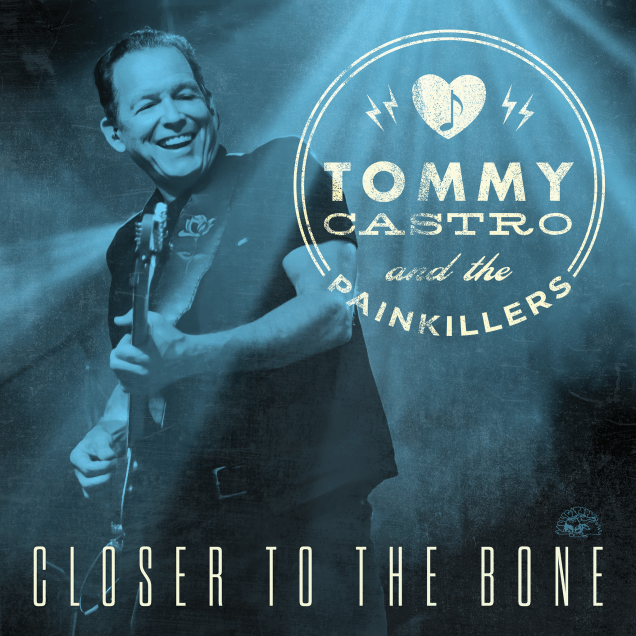
Roadhouse Album Review: “Closer to the Bone” is Tommy Castro at his “real blues” best

Tommy Castro — Closer to the Bone” — Alligator Records

Tommy Castro has been around the blues block a few times.

He’s been making his high energy brand of blues for four decades, covering 17 albums (including this one), thousands of gigs, and he’s won ten Blues Music awards, including the B.B. King Entertainer of the Year Award in 2023. And he and his band, the Painkillers, pretty much serve as the house band on the semi-annual Legendary Rhythm & Blues Cruise.

The Painkillers are at full strength for this new, closer-to-the-blues-bone release, including guitarist Castro on vocals and resonator guitar, Mike Emerson on keyboards, Randy McDonald on bass and vocals, with Bowen Brown on drums. A few high-powered guests include Chris Cain on guitar, Rick Estrin and Billy Branch on harp, Deanna Bogart on sax and vocals, Jim Pugh on keyboards, and the criminally talented Christoffer “Kid” Andersen, on bass, piano, rhythm guitar, organ and upright bass as well as producer at his Greaseland Studios.

“This is a real blues record, the way they would have made them back in the day,” Castro says. Almost all the tracks were recorded live in the studio, filled with spontaneous performances that evoke a personal, down-home, juke-joint vibe.

Castro uses the session to pay tribute to some of his influences, including songs by contemporary California blues guitar greats like Johnny Nitro, Ron Thompson and Chris Cain. And he dips back into blues past for songs from Magic Slim, Eddie Taylor, Johnny “Guitar” Watson, Jimmy Nolen and Wynonie Harris. It’s an impressive list.

The rollicking original opener, “Can’t Catch a Break,” is a traditionally themed blues shuffle with Castro full-throatedly bemoaning how “bad luck and trouble is the story of my life,” with a stinging guitar solo and fadeout. Nolan’s 1956 rocking blues “The Way You Do” follows with Estrin on harp, and Nitro’s loping blues, “One More Night” is next — Nitro was another California musician from ’70s and ’80s, who, like Castro and McDonald, was a member of The Dynatones.

The original “Crazy Woman Blues” is a slow-burning, churning urn of burning blues, with Castro’s pleading vocals about being “a fool for misery” are tangled up in fierce fretwork. A cover of Rick Cain’s “Woke Up and Smelled the Coffee” struts in with another crisp guitar solo (they’re becoming a feature throughout as Castro shines on every take). A sly cover of Gary Michael Duke and Joe New’s lively “Keep Your Dog Inside” features Deanna Bogart sharing the vocals. Emerson adds tasty barrelhouse piano.

Watson’s “She Moves Me” is the next cover, an upbeat R&B-flavored track with Bogart on tenor sax. The original “Ain’t Worth the Heartache” features Branch swinging hard on harp, leading into the sensuous strains of Ray Charles early hit, “A Fool for You,” with another scorching guitar solo. Castro’s steamy slide and tough vocals drive Thompson’s “Freight Train (Let Me Ride).”

Painkiller bass player McDonald rocks hard on his own composition, “Everywhere I Go,” followed by the classic, “Bloodshot Eyes,” a country song probably best known for the Wynonie Harris jump blues version. Estrin adds his harp to Taylor’s shuffling “Stroll Out West.” Everything wraps up with Jim Pugh’s organ licks kicking Hole in the Wall,” recorded by Magic Slim, and ridden hard by Castro’s vocals. It’s tough, swelling rhythms punctuate the climax to this terrific blues album.

“Closer to the Bone” is filled with Castro’s authentic vocals and steamy guitar licks. His backers are razor sharp and the arrangements are first class. It’s music blues that is exactly what it says it is — closer to the bone, but still meaty enough to satisfy the blusiest appetite. Don’t wait till the next blues ship gets into port — enjoy it now.


Here’s “Can’t Catch a Break” from the album:

Tracklist:
1. Can’t Catch A Break
2. One More Night
3. The Way You Do
4. Woke Up And Smelled The Coffee
5. Crazy Woman Blues
6. She Moves Me
7. Keep Your Dog Inside
8. A Fool For You
9. Ain’t Worth The Heartache
10. Bloodshot Eyes
11. Everywhere I Go
12. Freight Train (Let Me Ride)
13. Hole In The Wall
14. Stroll Out West

Roadhouse Blues News: Here’s the 2025 group of inductees into the Blues Hall of Fame

The Blues Foundation has announced its inductees for the 2025 class of the Blues Hall of Fame.

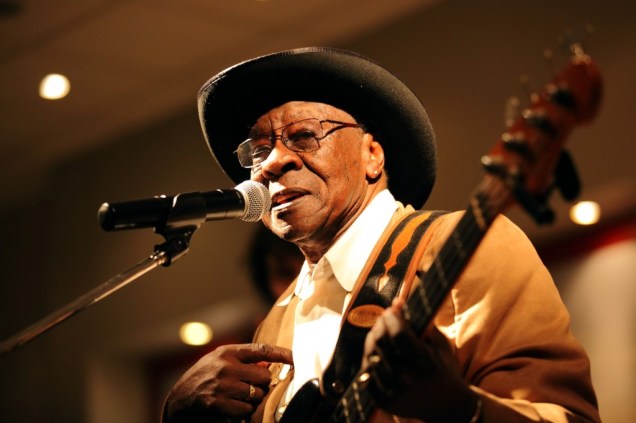
Bob Stroger

Since 1980, The Blues Foundation has inducted new members annually into its Blues Hall of Fame, based on their historical contribution, impact, and overall influence on the blues, or, as the Foundation states: “Those who have made the blues timeless.”

Members are inducted in five categories: Performers, Individuals, Classic of Blues Literature, Classic of Blues Recording (Song), and Classic of Blues Recording (Album). Since its founding, the Foundation has inducted over four hundred industry professionals, recordings, and literature into the Blues Hall of Fame. The Foundation has inducted over 400 industry professionals, recordings, and literature into the Hall of Fame.

The Blues Hall Of Fame Class Of 2025 inductees include Bob Stroger, William Bell, Blind Willie Johnson, Henry Townsend, and Jessie Mae Hemphill.

Entering the Hall for Classic of Blues Recording – Album is Lightnin’ Hopkins, for the Gold Star Sessions. Classic of Blues Recording – Singles recipients include Irma Thomas, Sylvester Weaver, Bessie Smith, Blind Lemon Jefferson, and B.B. King. For Classic of Blues Literature its Woman With Guitar: Memphis Minnie’s Blues. Individuals – Business/Production/Media/Academic honors go to Bob Geddins.

The Blues Foundation honors The Blues Hall Of Fame Class Of 2025 (45th class) with an Induction Ceremony taking place May 7, 2025, at the Cannon Center For The Performing Arts, Memphis, the night before the annual Blues Music Awards.

This year the inductees include:

Landmark recordings by: 
Lightnin’ Hopkins, Irma Thomas, Sylvester Weaver, Bessie Smith, Blind Lemon Jefferson, and B.B. King
Individuals – Business, Production, Media, Academic:
Bob Geddins
Classic of Blues Literature:
Woman with Guitar: Memphis Minnie’s Blues by Beth and Paul Garon (1992)
Classic of Blues Literature:
Woman with Guitar: Memphis Minnie’s Blues by Beth and Paul Garon (1992)
Classic of Blues Recording – Album:
Lightnin’ Hopkins: Gold Star Sessions (Arhoolie CDs, 1990-91, originally released on Arhoolie LPs as Early Recordings, 1963, and Early Recordings Vol 2, 1971)
Classics of Blues Recording – Single or Album Track
Bessie Smith: “Nobody Knows You When You’re Down And Out” (Columbia, 1923)
Sylvester Weaver: “Guitar Rag” (OKeh, 1923)
Irma Thomas: “Don’t Mess With My Man” (Ron, 1959)
B.B. King: “Why I Sing The Blues” (ABC BluesWay, 1969)
Blind Lemon Jefferson: “See That My Grave’s Kept Clean” (Paramount, 1927)

More Information:

Bob Geddins:
Robert Lee Geddins was born on February 6, 1913, in Highbank, Texas, near Marlin (the onetime home of fellow 2025 Blues Hall of Fame inductee Blind Willie Johnson). He had heard the blues on records and at Saturday night suppers before he hopped a westbound train in the 1930s. He saw an opportunity to market music in the Bay Area after starting out in Los Angeles, where he worked at a drug store and for the city’s streets department before opening a record store.  

Bob Geddins produced a treasure trove of records that defined the down-home blues and gospel sounds of the San Francisco/Oakland area in the post-World War II years. While West Coast blues is often associated with smoother, polished urban styles, Geddins’ most memorable records often were raw excursions into desolation and gloom — “Tin Pan Alley” by Roy Hawkins being a prime example. His productions reflected the influences and tastes of many Black workers and musicians who migrated to the Bay Area for jobs during and after the war from Texas, Oklahoma, Arkansas, and Louisiana.

Most of Lowell Fulson’s early records were cut for Geddins, who also recorded Jimmy McCracklin, Roy Hawkins, K.C. Douglas, Johnny Fuller, L.C. “Good Rockin’” Robinson, Mercy Dee Walton, Juke Boy Bonner, Saunders King, Sugar Pie DeSanto, Big Mama Thornton, and many gospel groups. The records often spotlighted the guitar exploits of Lafayette Thomas, Ulysses James, or Johnny Heartsman.


Woman with Guitar: Memphis Minnie’s Blues by Beth and Paul Garon (1992)
Paul and Beth Garon saluted Memphis Minnie’s iconic status as a premier blues artist and symbolic feminist figure in the initial publication of “Woman With Guitar: Memphis Minnie’s Blues” in 1992 by Da Capo Press. A revised edition from City Lights Books in 2014 added considerably to the chapters on her life and career that begin the book, with a foreword by Jim O’Neal and more detailed appendices and documentation based largely on various contributors’ online research into sources not available in 1992.

The biographical section brought research up to date on Lizzie Douglas, whose nom du disque became Memphis Minnie when she began recording in 1929. Often teamed with her first husband, Kansas Joe McCoy, or her second, Ernest “Little Son Joe” Lawlars, in Memphis and Chicago, she became one of the most prolific and accomplished blues artists of the 1930s and ‘40s. Famed both for her skills on guitar and her song lyrics, she was a tough, pugnacious, and independent force who held her own in the very male-dominated blues world of her time.

Lightnin’ Hopkins: Gold Star Sessions (Arhoolie CDs, 1990-91, originally released on Arhoolie LPs as Early Recordings, 1963, and Early Recordings Vol 2, 1971)
Lightnin’ Hopkins was recording at a furious pace for various companies in the early 1960s, utilizing his uncanny ability to improvise new songs and adapt old ones on the spot. He had no bigger fan than Chris Strachwitz, owner of Arhoolie Records, who joined the fray, not only recording Hopkins anew but reissuing classic sides recorded for Bill Quinn’s Gold Star label in Houston from 1947 to 1950.

Most of the sides, featuring Hopkins alone on guitar, were first issued on Gold Star 78s but several tracks on the 1963 “Early Recordings” LP and the second 1971 volume had never been released before. Hopkins also took a seat at the organ in one session. Each volume contained 16 tracks, expanded to 24 when later issued on CD (now available from Smithsonian Folkways). Strachwitz’s liner notes illuminated Hopkins’ music and his ways, which included going to Quinn’s studio to cut a few sides when he needed cash.
Bessie Smith: “Nobody Knows You When You’re Down And Out” (Columbia, 1923)
Blues empress Bessie Smith delivered one of her finest, most expressive performances on “Nobody Knows You When You’re Down and Out,” a classic hard times blues recorded for Columbia in New York on May 15, 1929. Smith evocatively hummed some of the lines with a band including cornetist Ed Allen and pianist Clarence Williams. The song had been recorded earlier by Pine Top Smith and Bobby Leecan, but it was Smith’s rendition that became an influential classic.

Sylvester Weaver: “Guitar Rag” (OKeh, 1923)
Sylvester Weaver was the Louisville musician who introduced the guitar to blues recording in 1923, first accompanying singer Sara Martin and then on his own solo sides, promoted with a flurry of fanfare about his innovative technique from OKeh Records. He recorded “Guitar Rag” at his first session on November 2, 1923, and again on April 1, 1927, for OKeh in Chicago. Martin received a co-writer credit.
The smooth bottleneck/slide number has lived on as a Western swing and country music standard, “Steel Guitar Rag,” after Bob Wills & the Texas Playboys recorded it in 1936 with Leon McAuliffe on steel guitar.

Irma Thomas: “Don’t Mess With My Man” (Ron, 1959)
“Don’t Mess With My Man,” Irma Thomas’ first record, hit the “Billboard” R&B charts in 1960 and not only established her but also provided plenty of women singers with a song to spice up their repertoire in the years to come. Recorded in 1959 for Joe Ruffino and Ron Records in New Orleans, the song was written by Dorothy LaBostrie, who wrote “Tutti Frutti” for Little Richard. Crescent City stalwarts Justin Adams, Robert Parker, and Eddie Bo played in the session.  The song has been recorded also known by its opening line, “You Can Have My Husband.”

B.B. King: “Why I Sing The Blues” (ABC BluesWay, 1969)
Under the production of Bill Szymczyk, B.B. King updated his blues in both style and subject matter on his March 5, 1969, rendering of “Why I Sing the Blues.”  In the pulsating performance, propelled by Gerry Jemmott’s bass, King traced the blues and African-American life back to slave ships and up through ghetto conditions and welfare. Dave Clark, better known for his promotional work with Malaco and other labels but a veteran journalist and songwriter as well, contributed to the opus as co-writer. The New York session band consisted of Jemmott, Paul Harris (piano), Hugh McCracken (rhythm guitar), and Herbie Lovelle (drums). King had recorded an unreleased version in Chicago in 1968 and did a different song with the same title in Los Angeles in 1956. His ABC BluesWay single spent 14 weeks on the “Billboard” R&B charts (15 on “Cash Box”) and generated some crossover pop action as well. The version of King’s “Live & Well” was five minutes longer than the three-and-a-half-minute 45 and featured additional verses and guitar solos by an inspired king of the blues.

Blind Lemon Jefferson: “See That My Grave’s Kept Clean” (Paramount, 1927)
Blind Lemon Jefferson recorded  “See That My Grave’s Kept Clean” for Paramount in Chicago in 1928, following up an earlier version that was issued under a religious pseudonym, Deacon L.J. Bates, 1927 “See That My Grave’s Kept Clean.” His moving performances affected both the secular and the sacred worlds for generations to come. Adding to the lyrical imagery of two white horses, a silver spade, and a golden chain, on one take the Texas blues master plucked a guitar string in imitation of a church bell.

Sometimes titled “One Kind Favor,” the song drew from an old folk spiritual and has been recorded by Bob Dylan, Lightnin’ Hopkins, Furry Lewis, Hank Williams Jr., B.B. King, the Grateful Dead, John Lee Hooker, Mavis Staples (who won a GRAMMY for her rendition), and many more.

In keeping with the favor Jefferson asked in the song, his grave is kept clean in Wortham, Texas. The first verse is engraved on his headstone and the graveyard is now known as Blind Lemon Memorial Cemetery. B.B. King felt so connected to the song that, per his wishes, his casket was drawn by two white horses.
 

Roadhouse Ramblings: Tampa Red deserves your consideration as one of America’s great blues artists

Let’s talk about Tampa Red.

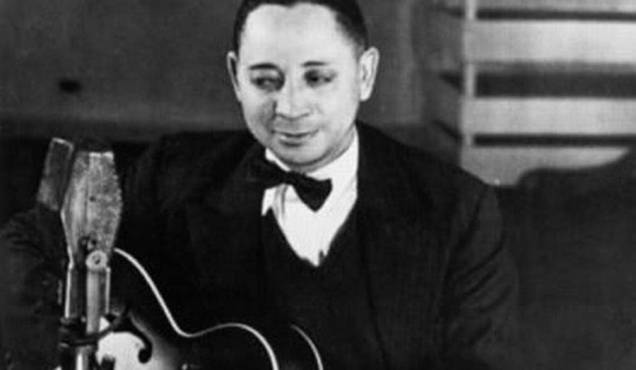
This prolific, innovative and influential bluesman had a career that began as a Chicago street musician around 1925 and lasted more than three decades.

Because he was so innovative and influential, Tampa Red deserves much more general recognition than he usually gets, even though his name might not be a household word, like some of his contemporaries.

Although Red is commonly referred to as Hudson Whittaker, he was born Hudson Woodbridge in Smithville, Ga., sometime between 1900 and 1908, according to his own conflicting claims, although the date of birth on his death certificate is Jan. 8, 1904. His parents, John and Elizabeth Woodbridge, died when he was a child, and he moved to Tampa, Fla., to be raised by his aunt and grandmother and where he adopted their family name, Whittaker. By the time he moved to Chicago, Tampa had become part of his name, as had Red, usually attributed to his light skin color.

And so, Tampa Red was born.

He is said to have taken after his older brother, Eddie, who played the guitar around the Tampa area, and he was especially taken with an old street musician called Piccolo Pete, who first taught him to play blues licks on the guitar. Red also picked up on early recordings of female blues singers. He told interviewer Martin Williams “That [1920] record of “Crazy Blues” by Mamie Smith, it was one of the first blues records ever made. I said to myself, ‘I don’t know any music, but I can play that’.”[

And play he did.

In 1928, Red became the first black musician to play a National steel-bodied resonator guitar, the loudest and showiest guitar available before amplification, acquiring one in the first year in which they were available. This allowed him to develop his proficiency on bottleneck style, playing single-string runs instead of block chords, the forerunner of later blues and rock guitar solo work.

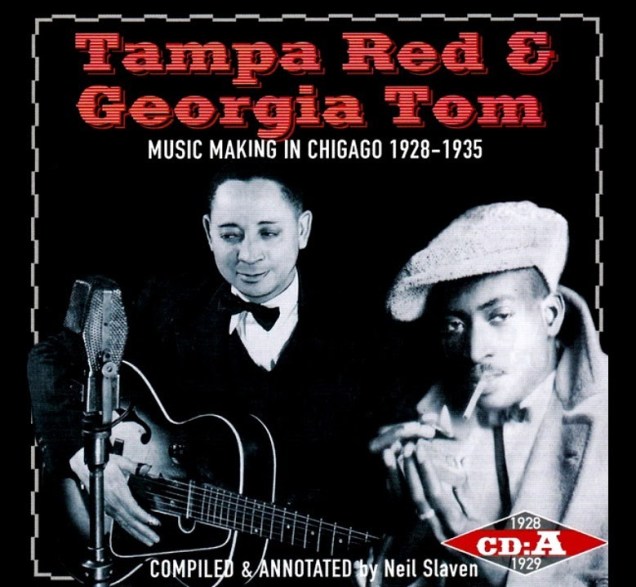
While in Chicago, he met Thomas A. Dorsey, also known as Georgia Tom, who was an accomplished pianist, composer and arranger who got Red his first Paramount Records session in 1928. Dorsey recorded with Red for a few years, performing rollicking little tunes known as hokum music, sometimes called the dirty blues, which favored humorous and risqué tunes like “It’s Tight Like That,” recorded in 1928. Dorsey left secular music for the church in 1932 to become a legendary gospel composer and often was called the father of modern gospel music. But that’s another story.

Red soon became known as the “guitar wizard” — the title of a later package of recordings on the Bluebird label. Bluebird was a subsidiary of RCA Victor, known for its blues, jazz and swing in the 1930s and 1940s. Red formed the Chicago Five, a group of session musicians who created what became known as the Bluebird sound, a precursor of small-group jump blues, R&B and rock ‘n’ roll. But that’s also another story.

Red was a friend of many of his contemporaries, including Big Bill Broonzy and Big Maceo Merriweather, with whom he also recorded. His Chicago home was a center for the blues community, providing rehearsal space, bookings, and lodgings for musicians who arrived in Chicago from the Mississippi Delta.

By the 1940s, Red was playing an electric guitar. In 1942, his “Let Me Play with Your Poodle”, was a number 4 hit on Billboard’s new “Harlem Hit Parade”, a forerunner of the R&B chart. His 1949 recording “When Things Go Wrong with You (It Hurts Me Too)” which was really early R&B, was covered by Elmore James, among others.

Red was one of the most prolific blues recording artists of his era. It has been estimated that he recorded 335 songs, with 251 recorded between 1928 and 1942, making him the blues artist with the most recordings during that period. He had four singles that placed in the R&B top ten between 1942 and 1951. Among his best-known recordings are “Anna Lou Blues”, “Black Angel Blues”, “Crying Won’t Help You”, “It Hurts Me Too”, and “Love Her with a Feeling”.

Tampa Red’s influence extended beyond his lifetime. His innovative guitar playing and pioneering use of the electric guitar laid the groundwork for later blues artists like Muddy Waters, B.B. King, and Jimmy Reed. As one of the first blues musicians to incorporate jazz elements into his work, he also had a lasting impact on the crossover between blues and jazz, influencing musicians in both genres. In 1959, Tampa Red was inducted into the Blues Hall of Fame. If you listen to some of his later recordings, you can hear the beginnings of what would much later be called rock ‘n’ roll. For example, listen to the pounding rhythms of “Evalina,” with Big Walter Horton (see sample below).

Like many early bluesmen, Red’s later life was filled with loss and pain. His wife, Frances died in 1953, and the loss began his decline into alcoholism. When Jim O’Neal, co-founded of Living Blues Magazine, discovered him living in Chicago in 1974, Red was reportedly in a much worse shape than in his earlier years. By January 1975, he was at a state hospital in Chicago. Red lived out his final years in Central Nursing Home, where he died from a heart attack on March 19, 1981. Red was 77.

The next time you think of great early blues artists, remember Hudson “Tampa Red” Whittaker. His legacy deserves much wider appreciation.


Note: I’ve culled most of this post from a variety of what I believe are reliable internet sources, adding my own thoughts.


Here’s a very small selection of Tampa Red’s music. You can find much more on YouTube and streaming services. It’ll be worth your time.

Roadhouse Album Review: The Fabulous Thunderbirds are still ‘tuff enuff’ after 50 years with “Struck Down”

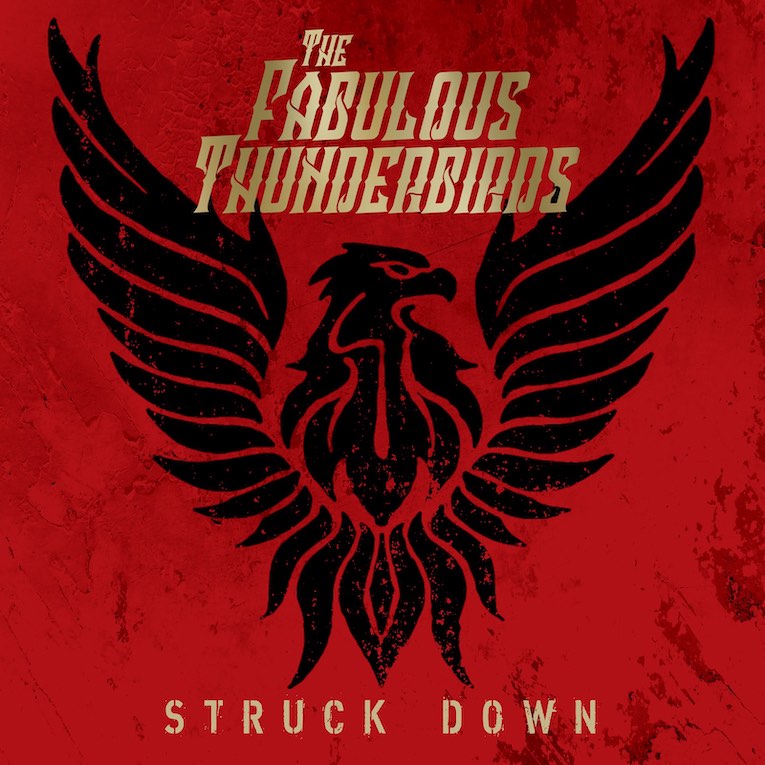
The Fabulous Thunderbirds — “Struck Down” — Stony Plain Records

“Struck Down” is not only the first album in eight years by the Fabulous Thunderbirds, it also celebrates the 50th anniversary of the band’s founding in 1974.

Band members over the years includes big blues names like Duke Robillard, Jimmie Vaughan, Fran Christina, Kid Ramos, Gene Taylor, and Nick Curran, among others. The current band is Kim Wilson on vocals and harmonica, Johnny Moeller on guitar, Bob Welsh on keyboards and guitar, Rudy Albin on drums and Steve Kirsty on bass. 

And co-founder Wilson, the only original T-Bird still in the band, says, “I think “Struck Down” is my best album with The Fabulous Thunderbirds…by far.” It’s hard to disagree. It’s filled with great songs, fine performances and a stellar musical cast.

Special guests include Bonnie Raitt, Taj Mahal, Keb’ Mo’ and Mick Fleetwood on the album’s lone cover song, Memphis Minnie’s “Nothing in Rambling.” Other guests are Elvin Bishop, Terrance Simien and Canadian guitar whiz Steve Strongman, who with Wilson wrote nine of the album’s ten tracks.

Strongman leads off the opener, “Struck Down With the Blues,” wrapping a torrid guitar around Wilson’s vocals, which after 50 years are as strong as ever, having aged to vintage quality. Simien leads with his accordion on “Don’t Make No Sense,” adding a Cajun flair, with a little help from Wilson’s harp.

“Payback Time” is tough, rocking blues with Gibbons on guitar and backup vocals. That’s followed by the gorgeous acoustic cover version of the Memphis Minnie classic, “Nothing in Rambling,” on which Bonnie Raitt, Taj Mahal and Keb’ Mo’ trade vocals, with Mick Fleetwood handling drums and percussion. It’s a classic in its own way and an album highlight.

“Won’t Give Up” is another tough rocker with Wilson adding furious harp lines, and lyrical nod to one of his first big hits: “Don’t tell me I’m not tough enough.” A gently swinging harp opens the acoustic ballad, “The Hard Way,” with a soulful Wilson vocal turn. “Whatcha Do To Me” shuffles in with Elvin Bishop on guitar and more fine Wilson harp.

“I’ve Got Eyes” opens with a percussive beat charged with the blues, and a stinging guitar solo chasing Wilson’s razor-sharp harp. “That’s Cold” keeps the tempo high in a frantic tale of a lover’s distress. The closer is another highlight, the luxurious ballad “Sideline,” with Chris Ayries’ eloquent harmonizing, and a sensuous sax solo from Kirsty.

“Struck Down” is an excellent album. It’s just the right mix of styles and tempos, showing off Wilson’s accumulated musical wisdom and lyrical strength, a half-century into the Thunderbirds’ long and spirited career. They are still tuff enuff!


A live performance of the T-Birds big 1986 hit, “Tuff Enuff”:


“Payback Time” from the album:

Track Listing
1. Struck Down By The Blues (featuring Steve Strongman), 3:41
2. Don’t Make No Sense (featuring Terrance Simien), 2:47
3. Payback Time (featuring Billy Gibbons), 3:35
4. Nothing in Rambling (featuring Bonnie Raitt, Keb’ Mo’, Taj Mahal & Mick Fleetwood), 3:55
5. Won’t Give Up, 3:35
6. The Hard Way, 4:06
7. Whatcha Do To Me (featuring Elvin Bishop), 3:09
8. I’ve Got Eyes, 4:07
9. That’s Cold, 2:18
10. Sideline, 4:03

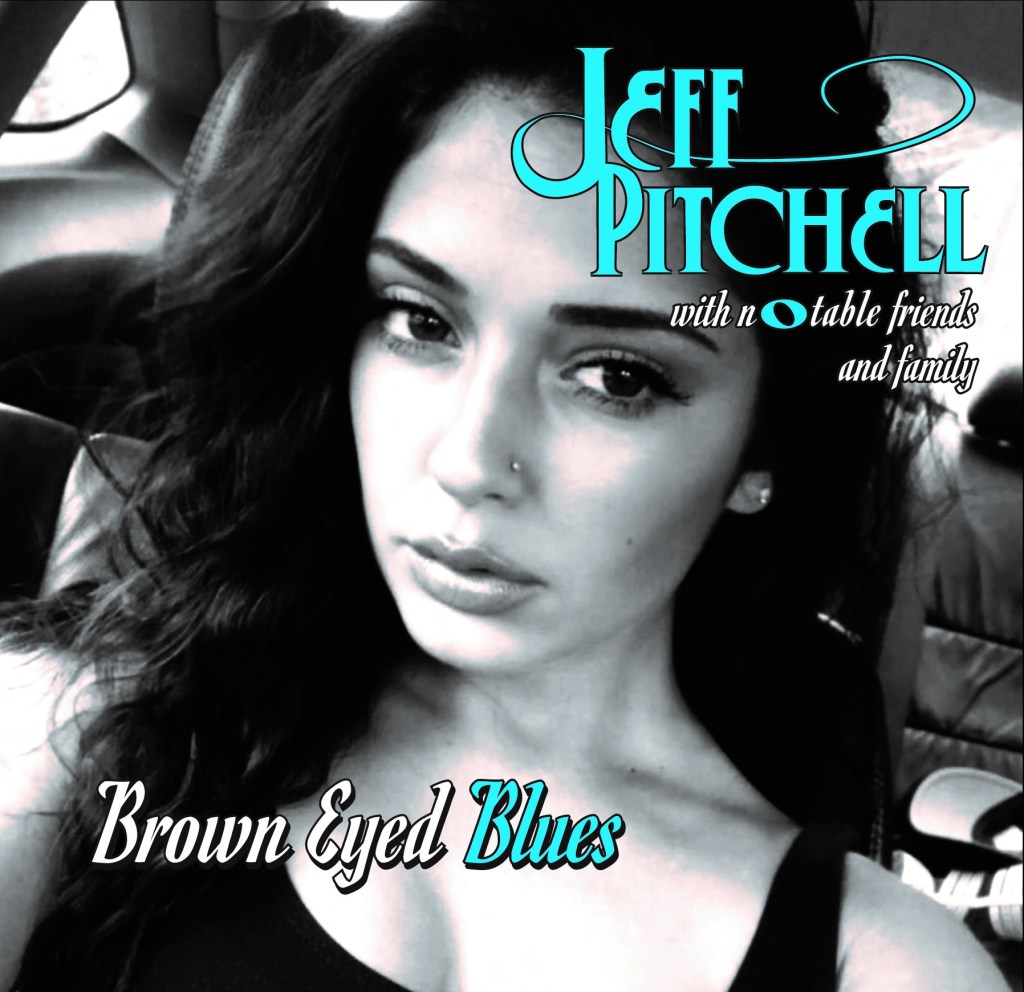
Roadhouse Album Review: “Brown Eyed Blues” is a crackling fine album from Jeff Pitchell

Jeff Pitchell — “Brown Eyed Blues” — Deguello Records

Jeff Pitchell is, among other things, a talented singer/songwriter from Connecticut whose eclectic musical style revolves around the blues, in all of its myriad shapes and sizes.

When he was just 15, Pitchell won a Best Guitarist contest in his home state. In the four decades since, he’s been making the kind of music that fills his latest album, “Brown Eyed Blues.”

Pitchell, with his band Texas Flood, is talented enough to hold his own here, but a stellar musical cast adds considerable punch to these sixteen tracks (yes, that’s sixteen, a few more than your average album these days.) That lineup includes the criminally talented Tom Hambridge (co-composer, co-producer and drummer), Reese Wynans, Duane Betts, Rick Derringer, and Charles Neville.

The tough, rocking opener, “Now You Know,” emphasizes Pitchell’s robust vocals surrounded by fierce guitar lines, leading into the driving rhythms of the title track, “Brown Eyed Blues,” ridden hard by honky-tonk roadhouse piano from Dan Fontanella. “Wait” steps it up next with jitterbug dance-floor rhythms fueled by Pitchell’s hot lead guitar.

Rock-steady drumming from Hambridge kicks in with the call and response behind the strong vocal on “Caught Up In The Wave,” followed by the smooth R&B groove of the philosophically optimistic “Every Day.”

More highlights include:

The sweetly sung shuffle “Do Right Girl,” co-written by Hambridge, the pulsating B3 by Bruce Feiner on “Beg, Steal And Rob,” the first of two tracks featuring Charles Neville on sax on the blues chestnut, “Meet Me (With Your Black Drawers On)” by Jim and Jeannie Cheatham.

The mournful harp of the great James Cotton opens a funky trip down an easy-rolling “Whiskey River,” the Willie Nelson classic. “When It All Comes Down” is another sturdy shuffle, then the torchy ballad “Soulshine” features Michael Allman on vocals. The closer and bonus track is the Latin-flavored “Welcome To The Beat,” a Tex-Mex styling that adds its own seasoning to this fine collection.

Every track here is crisp and clean, with the backers razor sharp. “Brown Eyed Blues” is a joyous, full-throated exploration of blues themes from a veteran singer/songwriter/guitarman whose talents deserve a much wider audience. Treat yourself to a listen. Then repeat.


Here’s a live performance of “Brown Eyed Blues”

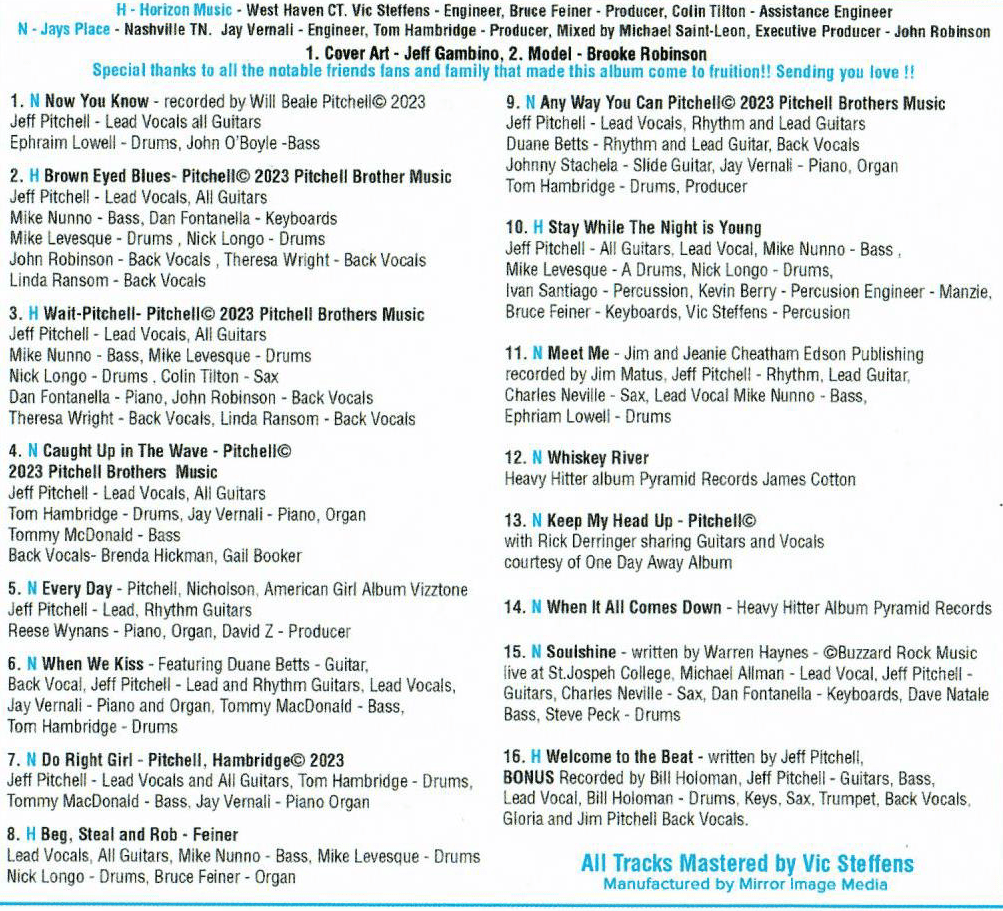
Track list & credits from the album cover:

Roadhouse Album Review: Sue Foley’s “One Guitar Woman” pays a loving tribute to her musical inspirations

Sue Foley — “One Guitar Woman” — Stony Plain Records

Sue Foley’s latest, “One Guitar Woman,” is a magical expression of traditional songwriting, compelling guitar work and vocal prowess by — one guitar woman.

Foley has shifted from her usual potent electric blues work to just a single acoustic nylon-strung guitar for this ambitious project, allowing her to transform it into a platform for these vital songs honoring women folk and blues artists.

The album’s twelve cuts (eleven thoughtful covers and one original) range from the pure folk of Elizabeth Cotton’s “Oh Babe It Ain’t No Lie” through the sensual blues of Memphis Minnie’s “In My Girlish Days” to the authentic rendering of the classic Spanish instrumental, “La Malaguena.”

Foley’s finger-picking guitar technique sparkles throughout, and her vocals provide the perfect complement to the variety of musical styles. She’s accomplished the difficult task of remaining faithful to the originals while seasoning them with her own voice.

“Girlish Days” and “Nothing in Rambling” are Foley’s two stellar tributes to the incomparable Memphis Minnie, born Lizzie Douglas. Minnie’s husband, Ernest Lawler, adapted the traditional “Days” for her and Foley’s grit evokes the spirit of that classic version. “Rambling” is another classic Minnie blues, faithfully executed.

Foley honors Maybelle Carter, the most influential female country music artist of the 20th century, with two songs — Carter’s “Lonesome Homesick Blues” and Foley’s own “Maybelle’s Guitar” — the latter written about Carter, whose unique guitar playing was called the “Carter scratch” and turned that rhythm instrument into a lead guitar.

Foley displays the virtuosity and elegance of her guitar work on “Romance In A Minor,” an instrumental classical composition by Niccolo Paganini originally written for the violin, but later adapted for the guitar. It’s a delicately beautiful, lyrical interpretation.

Equally faithful to their classic sources are Foley’s renditions of “My Journey to the Sky,” “Freight Train,” “Last Kind Words Blues,” “Mal Hombre” and “Motherless Child Blues,” songs that round out this

“One Guitar Woman” is an excellent album that puts Sue Foley’s wide-ranging talent and skills on full display, with a smart collection of musical styles. Of her inspiration here, Foley says:

“From the time I decided to be a professional guitar player, I’ve always looked for female role models. These are the women who were expressing themselves through the instrument as far back as the 1920’s, at the inception of radio and recorded music. They are the trailblazers and visionaries whose footsteps I walk in.” 

With this fine album, Sue Foley shows that she is absolutely worthy of those footsteps.


Here’s the video for “Nothing in Rambling”

Tracklist & credits:
1. Oh Babe It Ain’t No Lie (4:15) (Elizabeth Cotten, Vestopol Music, BMI)
2: In My Girlish Days (3:55) (Ernest Lawler, Songs of Universal Inc, Wabash Music Company, BMI)
3: Lonesome Homesick Blues (3:53) (Maybelle Carter, APRS, BMI)
4: Mal Hombre (4:27) Lydia Mendoza / Sue Foley, San Antonio Music Publishers Inc, BMI, Mechanicsville Music, SOCAN, ASCAP)
5: Motherless Child Blues (4:33) (Elvie Thomas, Boathouse of Tunes, BMI)
6: Romance In A Minor (4:24) (Niccolo Paganini, Arranged by Sue Foley, Mechanicsville Music ASCAP SOCAN)
7: My Journey To the Sky (2:50) (Rosetta Tharpe, PW 3 ASCAP SONGS, ASCAP)
 8: Nothing In Rambling (3:05) (Minnie Lawlers, Memphis Minnie Music Company ASCAP)
9: Maybelle’s Guitar (3:05) (Written by Sue Foley, Mechanicsville Music, SOCAN, ASCAP, Wildwood Flower, AP Carter, APRS, BMI)
10: Freight Train (3:37) (Elizabeth Cotten, Figs D Music, BMI)
11: Last Kind Words Blues (4:04) (Geeshie Wiley, BMG RIGHTS MANAGEMENT (UK) LIMITED, PRS, BMG PLATINUM SONGS US, BMI)
12: La Malagueña (4:35) (Ernesto Lecuona, Arranged by Sue Foley, Mechanicsville Music SOCAN, ASCAP)