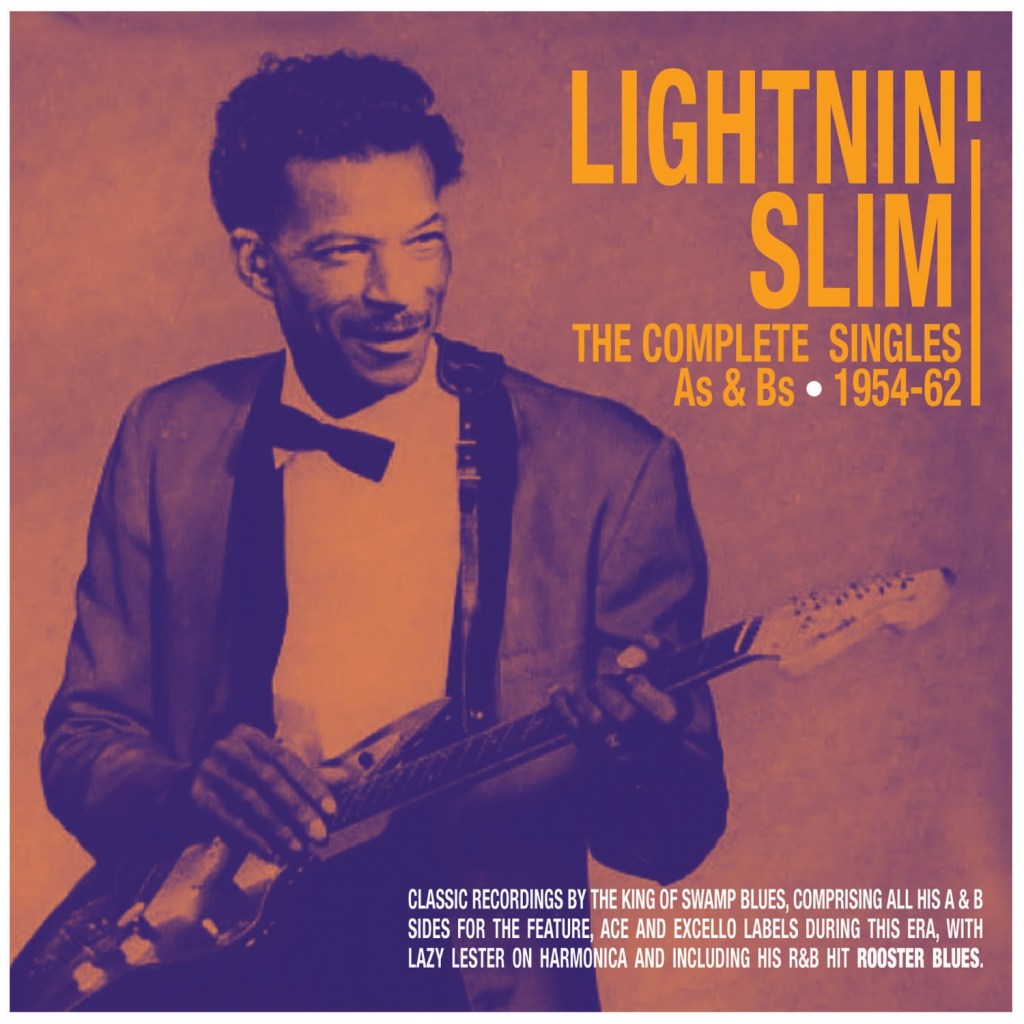
You may know him better as Lightnin’ Slim, whose laconic vocal and guitar style helped to define the haunting, laid-back rhythms of Louisiana swamp blues in the 1950s. It’s often served with a side of snaky harmonica.
If you know him at all, that is. He’s one of the legions of fine blues players who tends to be largely unknown outside of certain regions, or outside the interests of mainstream blues fans.
Although there is some difference of opinion, Slim seems to have been born Good Pine, La., and moved to Baton Rouge at thirteen. Taught guitar by his older brother Layfield, Slim was playing in bars in Baton Rouge by the late 1940s.
I have to confess that even though I have some of his music in my collection, I hadn’t listened to it for years. And then, while I was listening to some music recently on the radio, as I wrote about a while back — on The Rhythm Revival with the musically precocious and loquacious Rev. Billy C. Wirtz — I heard some Lightnin’ Slim.
So, I dug back into his music. I found a bunch on my streaming service — Amazon Prime Music (no, I don’t get anything for mentioning it!). Slim has a substantial catalogue of his unique music. And it makes it clear that he was one of the best bluesmen of his time — mainly the 1950s, and mainly on the Nashville-based Excello label which specialized in this special, Louisiana-flavored blues.
Slim’s deep rich vocals and hypnotic guitar rhythms are earthy and sinuous, with a sense of urgency driving it all along. He often performed with a harp-playing partner, and one of the most frequent was Moses “Whispering” Smith, another Louisiana-style bluesman.
Slim basically had two careers, one in the 1940s and ’50s, and another in the 1970s, after he was rediscovered in Pontiac, Mich. In the 1950s, he had a number of regional hits, and his “Rooster Blues,” hit the national R&B charts in 1959.
In the ’70s, Slim performed on European tours, in the United Kingdom and at the Montreux Jazz Festival in Switzerland. He last toured the UK in 1973 with the American Blues Legends package.
If you have never heard him, this might be a good time to grab some of his fine blues. If you have, take a refresher course.
In July 1974, Slim died of stomach cancer in Detroit, Mich. He was 61.
Lightnin’ Slim and Whispering Smith in a 1972 performance:
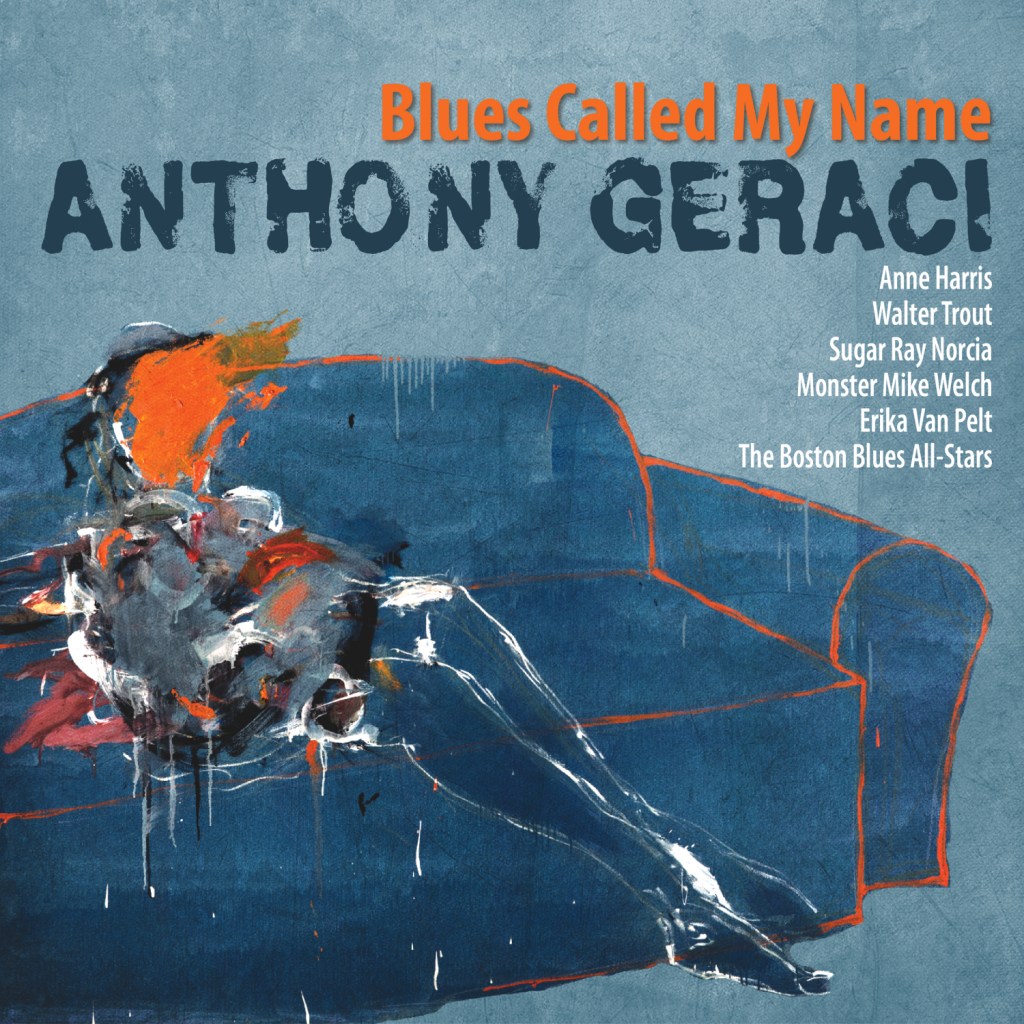
Anthony Geraci has been tickling the ivories since he was about four years old, and we should be tickled blues (not pink) that he is still going strong. (Okay, maybe the tickling metaphor is a bit lame. But there it is.)
With more than 40 years of keyboard performing to his credit, Geraci is an original member of Sugar Ray and the Bluetones and Ronnie Earl and the Broadcasters. For this outing, he fronts the Boston Blues All-Stars on piano and Hammond, with a bunch of talented guests who help make this a special recording.
The album is a sparkling set of 10 original, self-produced songs, half of them instrumental, but all showcases for Geraci and some talented friends.
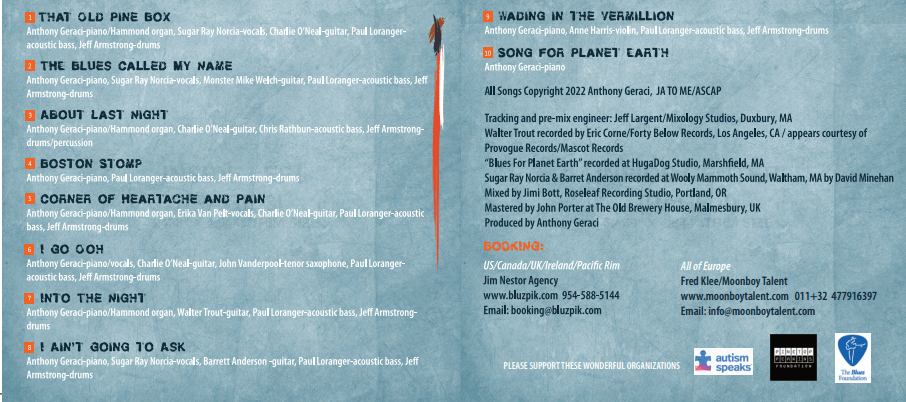
The album kicks off with “Old Pine Box,” a whimsical little ditty, with Sugar Ray Norcia easily handling the vocals. This is the same Norcia whose Bluestones once featured Geraci on keyboards.
Next is the title track, one of my favorites here, again featuring Norcia on vocals, adding plaintive guitar by Monster Mike Welch and insistent piano from Geraci. A splendid blend of talents for some straight-ahead blues.
The first instrumentals follow: a jazzy, Latinesque “About Last Night” features Geraci’s impeccable Hammond styling, and “Boston Stomp” does exactly what it says. The torchy “Corner of Heartbreak and Pain” is up next, with a passionate vocal by Erika Van Pelt, embraced by Geraci’s eloquent piano. Geraci adds his own voice to the mix as he romps through the upbeat “I Go Ooh,” with more sturdy keyboards.
Norcia returns for the final vocal number with “I Ain’t Going to Ask” (for your love no more….), with another piano romp driving the proceedings.
The other instrumentals are “Into the Night,” as Walter Trout leads with pleading guitar; “Wading in the Vermillion,” with Anne Harris on violin and finally, “Song for Planet Earth,” an old-fashioned piano solo that allows Geraci to demonstrate his considerable mastery.
This is a thoroughly enjoyable, finely crafted session that moves elegantly through an eclectic set of excellent music.
By the way, Geraci and the Boston Blues All-Stars were a 2021 Blues Music Award nominee in the ‘Band of the Year’ category, while Geraci was nominated for the sixth consecutive time in the ‘Instrumentalist Piano (Pinetop Perkins Piano Player Award) category. That was the year that Geraci finally won that award.
It seems like every time you turn around, there’s some new blues music coming out of Canada.
This time it’s from an unusually named quartet of guys that calls itself Jim Dan Dee.
Why? The band’s bio puts it this way:
The name “Jim Dan Dee” comes from the expression “Everything is just Jim Dandy”, an old cliché often used with expletives inserted. Jim Dan Dee (affectionately known as ‘J.D.D.’ by their fans) is not only a blues band, but also a character; an idea that embodies the spirit of the music and Jim Stefanuk’s frontman persona.
*More on the name later.
For now, let’s just say that the band makes tough blues that is, in fact, just jim dandy. Guitarist/vocalist Stefanuk’s partners in northern blues are drummer Shawn Royal, bassist Dwayne Lau, and saxman Jason Sewerynek (a little unusual for a traditional blues combo, but a honking sax always loves the blues).
The opening track is Guitar Slim’s classic “The Things That I Used To Do,” the album’s only cover, which sets a scorching pace with Stefanuk’s razor-sharp guitar and searing vocals.
The rocking “Weep For Me,” follows, with a great honking sax solo; the title track comes up next, slow and scorching with emotional intensity; “Two Timing Woman” takes on that subject with a deadly groove; “The Doctor” offers up a fierce guitar prescription with vocals to match. Other favorites include the Stones-reminiscent “Bleed Me Dry,” with guitar and sax carnally entwined, and the rousing closer, “Money Don’t Work On The Devil.” There are plenty more in between to keep the blues juices flowing. It’s a well-chosen set of smartly written blues tracks.
All in all, Jim Dan Dee has a swaggering, hard-driving approach with a stripped-down style and rough-around-the-edges vibe. Just right for great roadhouse listening. Mix well with an adult beverage and give them a shot.
*Now, about that band name. It immediately took me back into my dark and distant musical past, and the urgent R&B of the 1956 song “Jim Dandy” by the joyously inimitable LaVern Baker. I’ve added her classic version below, following the Jim Dan Dee video.
TRACK LIST 1.The Things That I Used To Do 3:10 2.Weep For Me 3:02 3.Real Blues 3:44 4.Two Timing Woman 2:22 5.The Doctor 4:29 6.Two Shakes Of A Lamb’s Tail 2:58 7.Bleed Me Dry 2:16 8.Hang’Em High 4:19 9.T For Trouble 3:39 10.Lost In The Dark 2:56 11.Money Don’t Work On The Devil 3:08
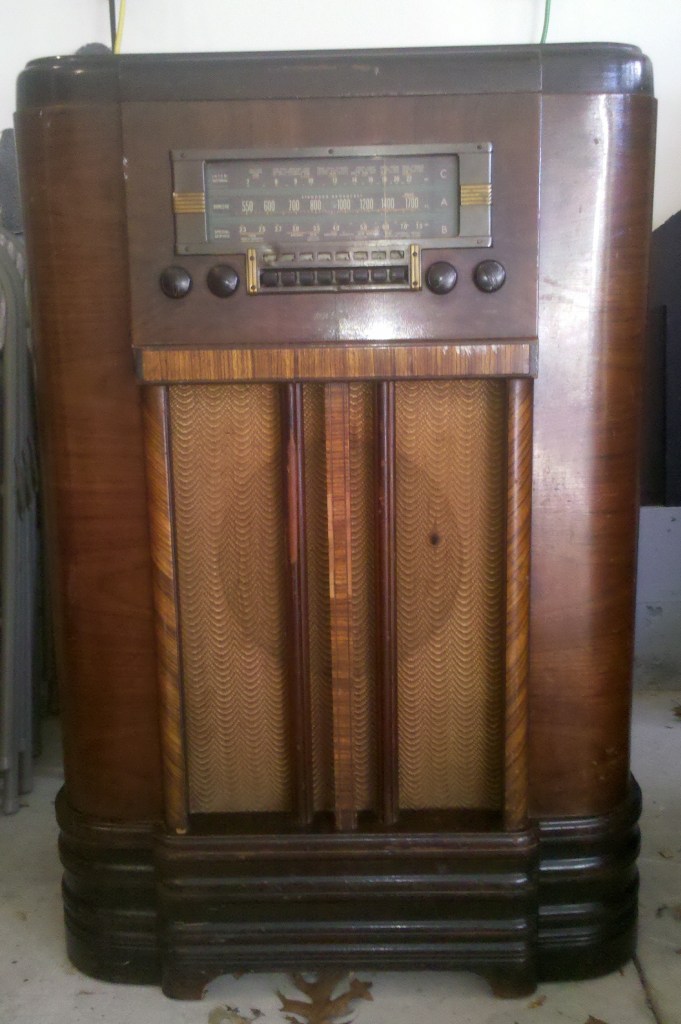
I’m not talking about satellite radio, Sirius radio, or any such modern wizardry. I’m talking about that magical time when the Lone Ranger, Jack Benny and Boston Blackie came pouring out of that big box in your living room. I’m talking real radio.
With music.
Music came pounding out of the one in my parents’ house, much to their chagrin, as soon as I discovered that the primeval sounds of doo-wop, rhythm & blues, blues and rock ‘n’ roll and my teenage hormones went together, as the Moonglows sing, “like two straws in a Coke.”
That music was irresistible. It shaped my youthful musical tastes, and later my somewhat grownup ones. It was also quite often pressed into service as an aid in very close, very slow dancing, another hormonal force that shaped my early years. But I digress.
As technology moved on, so did I. Soon most of my music came on record (vinyl, if you prefer), first 45s and then LPs. Then cassettes (I never did like eight-tracks), then CDs, and now, digital, when the sounds again flow magically out of the clouds.
But radio never gave up. There is still a lot of music to be found on that dial, but much of it is repetitive and unsatisfying — formatted to a particular genre or style, with little thought to the more interesting aspects of musical enjoyment. I’m talking about its rich history, its broad roots, its interwoven cultural tapestries. Who made it, and when, and how. Especially all that music that was descended from the blues that captured my young imagination.
My original hormonal source is long gone — the golden oldies and dusty discs of Porky Chedwick, the Platter Pushin’ Poppa, the Daddio of the Raddio, Pork the Tork, at a tiny Pittsburgh, Pa., radio station, where he began spinning those sounds in 1948. It’s where I began to absorb and unwrap the mysteries of all this classic American music that seemed to be waiting just for me.
The Rev. Billy C. Wirtz.
All of that is just a long-winded way of saying that these days I listen to a radio program that gives me what I used to get, many years ago. I guess if you live long enough, your life comes around again. Or something.
My hormonal uptake station now is mainlined through WMNF public radio in Tampa, Fla. My main squeeze there (although there’s loads of fine programming) is The Rhythm Revival from 3-6 p.m. Fridays, hosted by the inimitable, irrepressible and extremely musically knowledgeable Rev. Billy C. Wirtz and his equally inimitable musical partner, Marvelous Marvin Boone.
Together they spin out a musical history that includes gospel, blues, R&B, country, rock ‘n’ roll, and just about anything that feels right to them.
They talk about how all this music fits together, tell tales about the performers, relive their own experiences (Wirtz seems to have had multitudinous exotic experiences of his own) in the musical world, and just generally seem to enjoy themselves, playing music they love. Often, it’s obscure music from their own collections. And quite often, it’s music on a record. Yes!
Billy and Marvin, lifted from Facebook.
As they’re fond of saying, you will not likely hear much of this music anywhere else. That’s kind of sad, but true.
And, as it happens, it’s also music that I love. So my teen genes are happy again, despite having aged considerably. Music like this is better than the Fountain of Youth (especially since the music actually exists).
Now, however, because the pipes of the internet run far and wide, you are no longer required to move to the Tampa Bay area to hear this great music. And you can pump it through whatever speaker system you’ve built to produce the sparkling sound it deserves.
So how do you find this great stuff, no matter where you are?
Every once in a while, an album comes along so filled with such wonderful music-making that it’s difficult finding the words to do it justice.
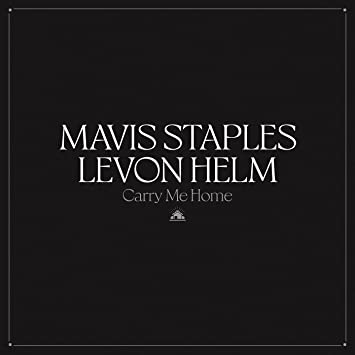
“Carry Me Home” by Levon Helm and Mavis Staples is one of those albums.
It’s a joyously live album, released on May 20, and recorded in the summer of 2011 at one of Helm’s live shows dubbed the Midnight Rambles, held at his home in Woodstock, N.Y. Sadly, less than a year later, in April 2012, Helm succumbed to the throat cancer he had battled since 1998.
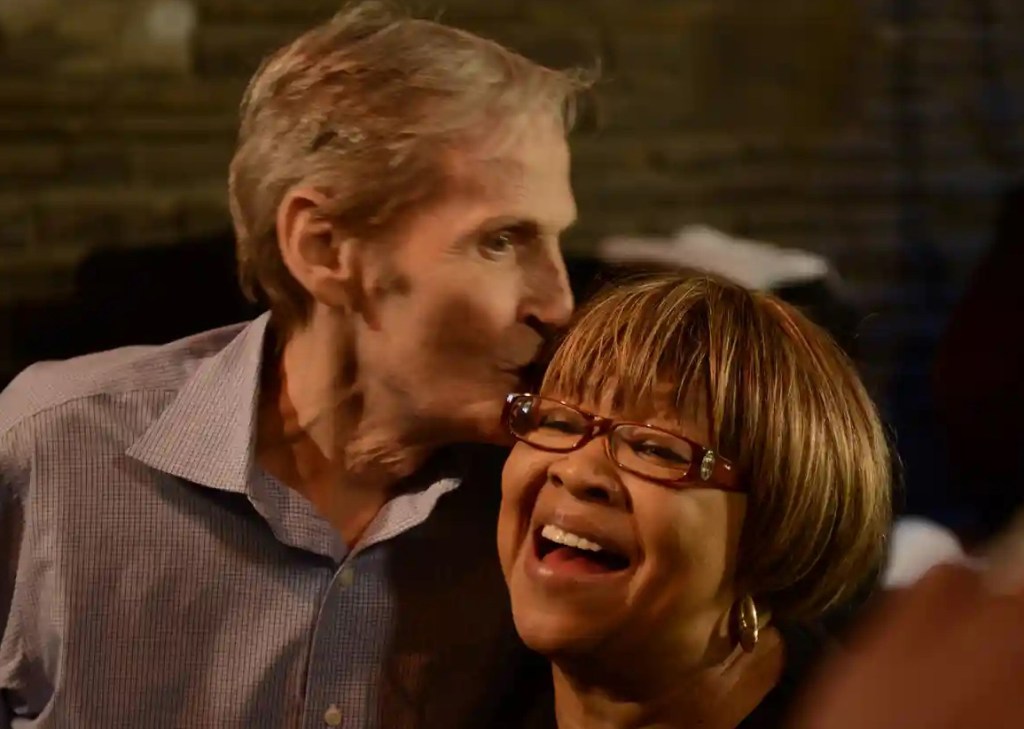
Staples is the sole survivor of the Staples Singers; drummer/vocalist Helm was a staple in creating the timeless music of The Band. They became friends during the production of “The Last Waltz,” The Band’s glorious farewell concert in 1976 (still one of the best music concert films, ever, by the way).
Both represent heartfelt musical excellence in their not-so-disparate styles — Helm brought a driving sense of rootsy Americana tinged with Southern soul; Staples lifted gospel music beyond its sanctified limits into soulful secular territory. Both infuse their music with a sense of contagious joy that lifts every song beyond the ordinary. With band members from both camps, including a well-polished horn section, plus backup singers whose voices seem to pull everything together.
From the opening of the first track, Curtis Mayfield’s classic anthem, “This Is My Country,” the music feels loose and easy, even with the most serious of subjects, and you get the immediate sense of great music being committed. They update this 1968 musical statement with some 2011 political sentiments.
“Trouble In My Mind” follows, a 1924 standard that dates to the origins of recorded blues, a song that despite its title, promises hope and optimism: “Trouble in mind, I’m blue; But I won’t be blue always; ‘Cause I know the sun’s gonna shine in my back door someday.” This celebratory arrangement has Helm loping along on drums, pushing horns, guitar and keys that feel almost Dixieland, while Staples rides its crest with a tough vocal turn.
Levon and Mavis at the Ramble. Photo Credit: Greg McKean
“Farther Along” is an a cappella version of an old gospel sung, beautifully done with backup harmonies from backup singers that include Amy Helm, Levon’s daughter.
Joyous music resumes with “Hand Writing On The Wall” and continues throughout, and that uplifting tone keeps the faith with the spirit of this music.
Each bluesy, gospel, soulful song that follows is a gem: A strong version of Nina Simone’s “I Wish I Knew How It Would Feel To Be Free;” the traditional gospel of “This May Be The Last Time;” two Helm favorites, “When I Go Away” and “Wide River To Cross,” and the soulful gospel of “You Got To Move.”
The final two songs are worth special mention. Staples adds her own take to Bob Dylan’s “You Got To Serve Somebody,” giving it perhaps the majestic vocals it needs to interpret Dylan’s vibrant lyricism.
The closer is fittingly Helm’s only real vocal turn, The Band’s evergreen “The Weight,” joining Staples as they did in “The Last Waltz, except here, Staples yields the main vocals to Helm. His world-weary voice, scarred by his battles with throat cancer, sounds entirely appropriate. It’s such a bittersweet conclusion when you realize that Levon was less than a year away from his own final curtain.
I realize that I may be overusing a few words here, such as joyful, glorious, celebratory — but the sheer exuberance of this powerful music and the people making it, is hard to overstate. “Carry Me Home” is a profoundly gorgeous work of musical art.
I found two videos made from this concert and both are below to help give you a better feeling for the vibrancy of the music and musicians in these sessions.
Here’s “I Wish I Knew How It Would Feel To Be Free”
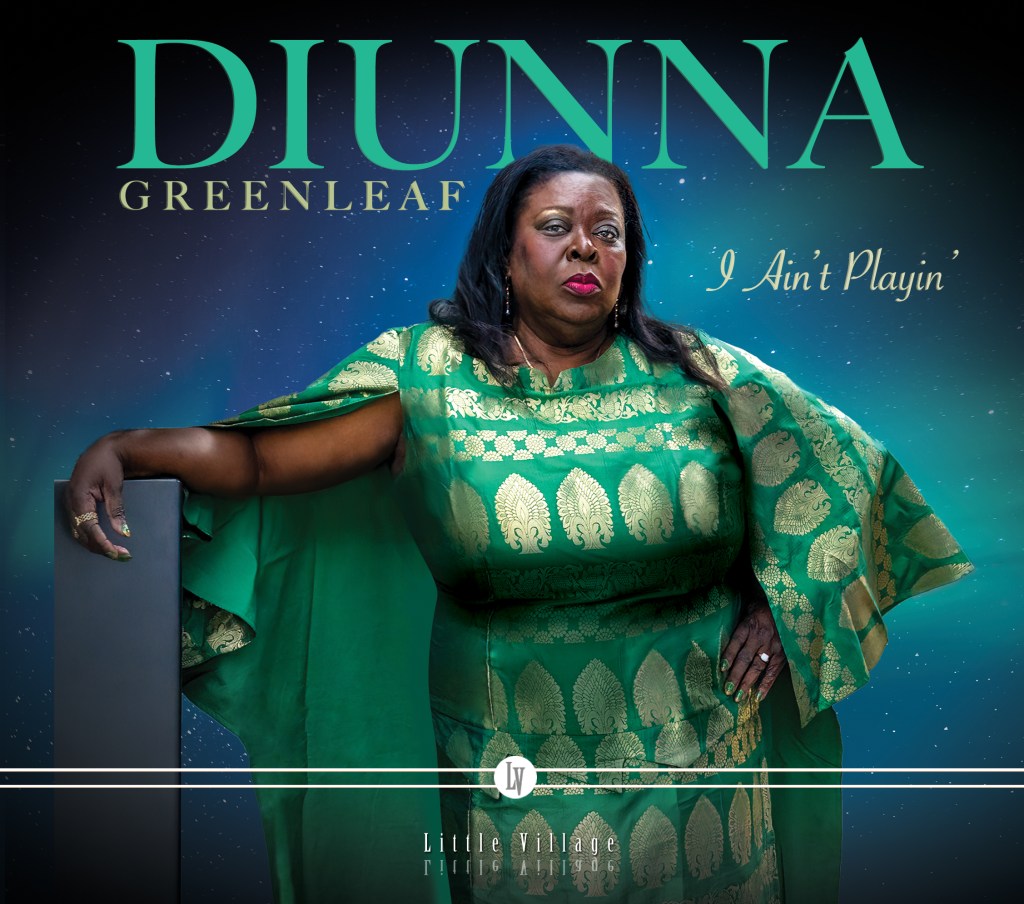
You can tell as soon as you see the album cover photo and read the title, that Diunna Greenleaf means what she says. She ain’t playin’.
But when you actually hear her powerful voice and feel her commanding presence as the first song, “Never Trust a Man,” opens with: “Mama told me, girl don’t ever trust no man….,” you know that you’re listening to the real deal. And she ain’t playin’. (Just a sidelight, that song was a fine Koko Taylor staple.)
This is another in a series of fine recordings produced at Christoffer “Kid” Andersen’s Greaseland studio, where he seems to bring out the artist’s best.
Of this session, and Greenleaf, Andersen says: “Her voice tells you she is free to be herself,” Andersen says. “You just don’t find many voices like that. I think that’s something people will discover just listening to her album for the first time.”
Greenleaf’s voice is indeed the star here. This only the fifth album for the veteran Houston blues singer. But it’s been 11 years since her last, and this session will make you wonder why she waited so long. Her seemingly effortless vocals are deep and rich with the emotional content of the songs, all smartly chosen covers or originals.
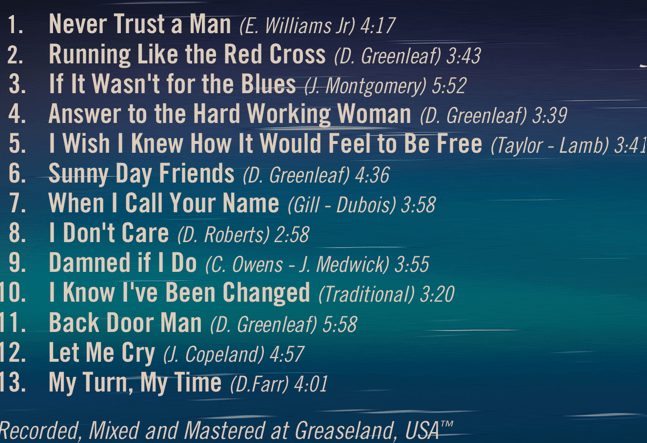
There’s the rhythmic original “Running With the Red Cross;” there’s a full-throated, soaring take on The Staples Singers gospel classic, “I Know I’ve Been Changed;” a passionate working of Nina Simone’s version of “I Wish I Knew How It Would Feel To Be Free;” there’s even a plaintive version of Vince Gill’s “When I Call Your Name,” a rousing duet with Alabama Mike; there’s Greenleaf’s own snappy “Back Door Man;” a scorching take on Johnny Clyde Copeland’s “Let Me Cry,” and it’s all wrapped up with the prescient “My Turn, My Time.” And much, much more.
But that final cut sums up this sparkling renewal of Greenleaf’s recording career — it’s her turn, her time again, and she’s making the most of it with this excellent album.
A word about Little Village, from the Little Village people:
Since 2015, the non-profit Little Village record label has been ferreting out the sounds of American roots music from communities throughout the nation. It produces albums in a wide swath of styles, believing that the music can speak to other cultures far from the small communities where it resides. It has produced four-dozen collections of gospel, blues, mariachi, cowboy, spoken-word, Mississippi Hill Country, steel-guitar workouts and soul music to introduce to new audiences.
And not incidentally, Jim Pugh, the main man at Little Village, contributes great keyboard throughout.
Recording “Never Trust A Man” in the Greaseland studios. That’s Greaseland’s Kid Andersen on guitar:
This blogging software I use, WordPress, is wonderful. It’s easy to use, and it has a lot of cool features. For example, it tells me how many views each post gets, and what country they come from.
I’ve been surprised at how many viewers come from all over the world. I’d like to think that’s not entirely accidental, so I pay attention.
Lately I’ve noticed an older post that seems to get one or more page views almost every day. So I did some counting.
My June 20, 2021, post about a Swiss boogie-woogie piano pounder who calls herself Ladyva (but born Vanessa Sabrina Gnaegi), has totaled 531 views in about a year. That’s a whole bunch more than anyone else I’ve written about — and I’ve written about some fairly well-known artists, if I do say so. I hope it’s not just one of you viewing every day!
With that in mind, I checked her web site to see what she’s been up to lately, and found a delicious new (at least to me) single she’s released, titled simply, “Stomp.” Which it does. Which she does.
Ladyva is simply a great piano player, songwriter, and sometimes, singer. She doesn’t seem to have done much on this side of the big pond, but check her bio for an impressive list of accomplishments.
And then listen to some more of her irrepressible music.
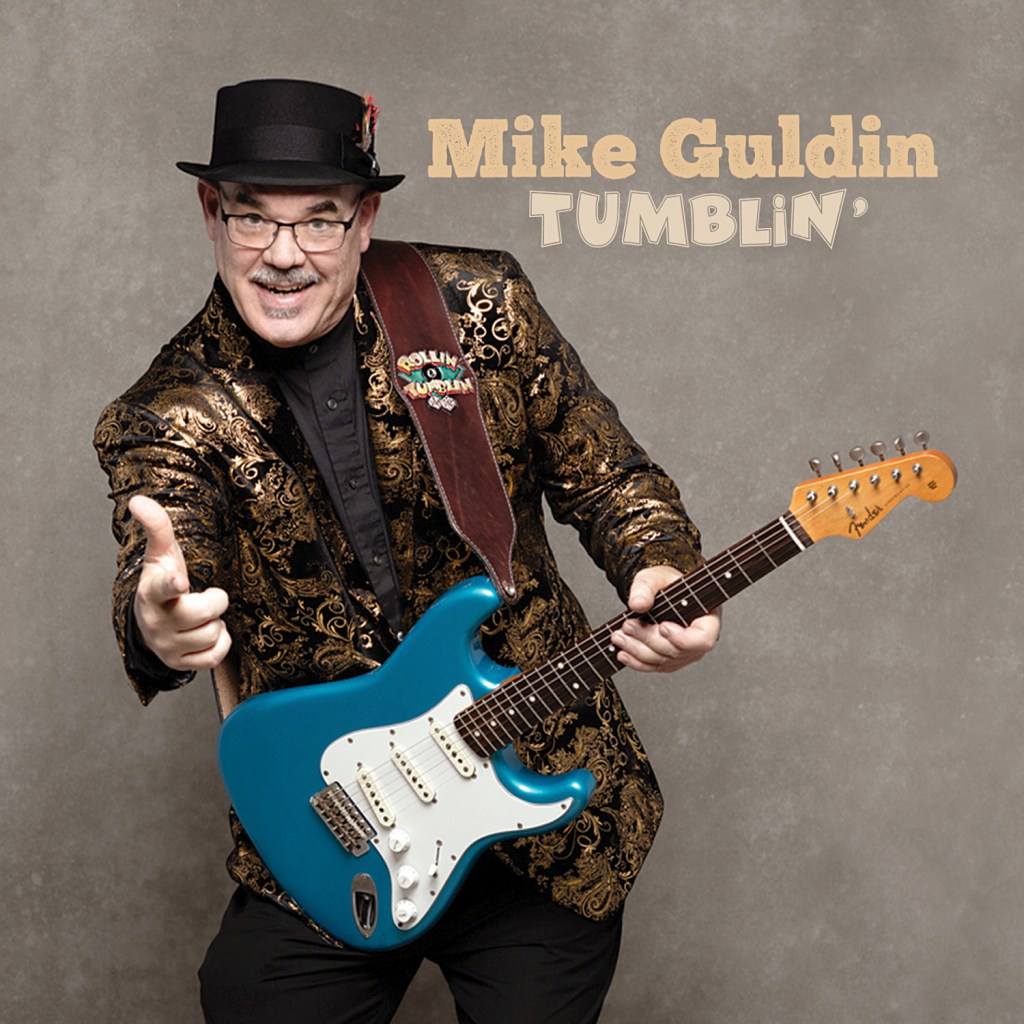
If I had to pick one word to describe the rollicking music of Mike Guldin on his latest fine album, “Tumblin’,” it would be “a lot of fun.” (I know, I know, that’s four words. But there’s just no counting out this kind of enjoyment!)
This Bucks County, Pa., singer/songwriter, guitar man has been riding his enthusiastic brand of bluesy and rootsy music for 45 years. He and his band of Philadelphia sidekicks have garnered a pair of appearances at the International Blues Challenge, plus decades of appearances in clubs, concerts and festivals.
Sitting in here are some more Philly area artists — Mikey Junior, Roger Girke, Will Hodgson, Craig Thatcher and Kevin Vannoy, plus some stellar guests, including Kevin McKendree, James Pennebaker, Lewis Stephens and Luis Mora.
Put them all together, and they produce this rousing roadhouse set of 13 crisp originals and a pair of well-chosen covers. Their music roams a musical road with many on-ramps — country, blues, swing, southern rock, all with a little Bucks County swamp tossed in.
The title track opens things up, and it’s a pleasantly unusual choice — a swinging instrumental that rocks you into the rest of the album with a rhythmic roll. And next is “Sad and Lonely,” with honky-tonk piano from McKendree that sounds like anything but its title.
Another original, “Twisted Tail,” follows, with Mikey Junior digging into harp and vocals with this tale of the Philly nightspot, where, purely by coincidence, you have often hear Mikey at work. “Alabama Pines” offers hints of southern comfort with some fine pedal steel from Pennebaker.
There is much more, all in the same eclectic vein, if that’s possible, all designed for maximum listening and dancing pleasure. No doubt because of all this original style, Guldin has chosen to cover only two songs, but has chosen wisely.
Big Bill Broonzy’s classic “Key to the Highway” road ode is one of those songs that to me has always defined the essence of the blues. The guys give it a great roadhouse sound here — Guldin growls the vocals and Mikey Jr, romps midway with some sharp harp. The other cover is another classic, from Taj Mahal, “She Caught the Katy,” that gets more of a southern rock treatment, with snaky slide guitar from Thatcher. Guldin makes each his own.
By the way, this thoroughly enjoyable album has been out for almost three months, so I’m a little late to this party. But you shouldn’t be. Enjoy it soon.
Another look back: Jon Spear Band
Before I get to the track list and sample of “”Tumblin’,” here’s a quick bite on another album from too many months ago that I should pass along:
The B-side, as I’m sure all you 45rpm collectors remember, is the side of the unknown, but still possibly great, song backing up the expected hit. Jon Spear turns that idea on its head with an excellent and eclectic collection of his work, “B-Side of My Life.” He fills it with often bluesy, sometimes rocking, thoughtfully mellow and almost always kind of quirky music. He’s an excellent performer; check him out.
Charlie Musselwhite is indeed a Mississippi son. He was born there, but his family took him to Memphis when he was three.
That move put him in just the right place for his teen genes to soak up the hormonal surge of vital American music simmering through Memphis in the ’50s. There was rockabilly, R&B, western swing, blues and the adolescent stirrings of rock ‘n’ roll.
One of the results of that experience was the fine singer, songwriter, harp and guitar player here, who graces this album with his rich blues heritage.
Charlie is back in Mississippi now, having moved from northern California, and he recorded these deep blues sides in Clarksdale. And they feel just like that’s where they belong.
Eight of the 14 acoustic tracks here are original gems that kick off with the smooth, loping “Blues Up the River,” and of course he’s singing about the Mississippi. Musselwhite creates an intimate, back-porch feel with just his smooth vocals, harp and guitar, with a few assists from Ricky “Quicksand” Martin on drums and Barry Bays on standup bass. You can almost feel the big river flow and smell the muddy water.
“In Your Darkest Hour” is a hypnotic little lost-love song filled with poignant lyricism and sweetly melodic harp refrains.
“When The Frisco Left The Shed” is another “daydream put to words,” as Charlie calls it, and it reflects that dreamy quality that underlies all the blues storytelling on this excellent album. “The Dark” is another moody blues from a late-night back-porch setting.
Another standout is the traditional “Crawling King Snake,” which gets Musselwhite’s laconic treatment as well, his finely aged voice crawling with feeling.
Another lyrical standout, “Blues Gave Me A Ride,” adds this fine line to the pantheon of blues lyrics: “Blues tells the truth in a world that’s full of lies….” You could easily make the case for that sentiment being the foundation for every song on this excellent album.
Those are a just a few of my favorite cuts. Musselwhite has pulled all of his deep, rich blues history into this eloquently crafted and elegantly performed collection. Serve it up with some whiskey neat for maximum late-night blues pleasure.
“Blues Gave Me a Ride”
Tracklist with notes from Charlie:
All the tunes I wrote on Mississippi Son are based on things I think about and/or witnessed. They all somehow are extensions of me.
Blues Up the River: Growing up by the Mississippi I spent a lot of time watching that ol’ river flow and thinking.
Hobo Blues & Crawling King Snake: At night on my little clock radio I would listen to WLAC because they played a lot of great blues. Hearing John Lee Hooker with just his foot tapping and guitar and singing Hobo Blues and Crawling King Snake late in the night had this sinister sound that appealed to me so much that I just had to learn those tunes.
In Your Darkest Hour: is an eight-bar blues I just made up one day.
Stingaree: is about a girl I was thinking about.
When The Frisco Left The Shed: I often make up a song based on a vision I have and this is one. Like a daydream put to words.
Remembering Big Joe: I roomed with Big Joe Williams in Chicago; it was only natural that we spent a LOT of time together. Sometimes just talking and other times jamming together, I became fascinated with his stories and the way he played which I picked up from watching him, and that’s where Remembering Big Joe comes from. I played one of his old guitars on this song.
The Dark: I heard Guy Clark do The Dark and loved the words, but he did it in a folk style. I changed it to a blues because that just seemed to make sense to me. I met Guy a couple of times and he was a real likable fellow.
Pea Vine Blues: I had an uncle who worked on the Pea Vine railroad and I remember him talking about it when I was a kid. Once when he’d come up from Clarksdale to Memphis to visit, I played Pea Vine for him on guitar and that’s when he told me he’d worked on that train. I wish I’d written down what he said about the Pea Vine.
Blues Gave Me A Ride: I made this up thinking about how blues can affect people.
My Road Lies In Darkness: This tune is played in an open tuning I call Spanish.
Drifting From Town To Town: Since most of my life I have drifted from town to town, it just makes sense to write about something I know.
Rank Strangers: Besides blues, I’ve always been a fan of all music that seems to me to be “from the heart.” For this reason I’ve long been a fan of The Stanley Brothers. Their version of Rank Strangers resonated with me so much I felt like I had to play it for myself. I love the lyrics. I’ve Blues’d it up for y’all.
A Voice Foretold: I’ve performed A Voice Foretold many times with The Blind Boys of Alabama. This seems like a good place to share that song. I use the same guitar style as with Rank Strangers playing the melody on the bass strings along with the chords. I don’t know where I got this style from and maybe I made it up.
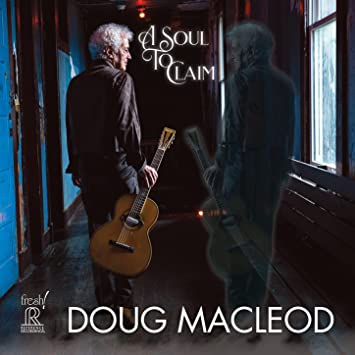
Doug MacLeod is one of those singer/songwriters of the blues who pulls his inspiration from deep within himself and turns it into music that aims deep within you.
And it works.
It especially works in person, where MacLeod’s boyish charm, sly humor and soulful sincerity blend perfectly to produce music that roams from joyous to solemn, from playful to passionate. Music that’s personal to him and becomes personal to you.
But if you can’t find his personal music in person, you can hear all of those qualities on his latest album, “A Soul to Claim.”
The album, an acoustic production that echoes the intimate feel of his shows, runs an emotional gamut from the title track’s theme of “beating addiction and abuse,” as MacLeod describes it, to the salacious whimsy of “Dubb’s Talking Disappointment Blues.” (Just as an interesting sidelight, the title track opens the album, something that’s not too common, but a welcome way to set the tone.)
The second song, “Be What You Is,” is a bit of whimsical advice for those who are having a tough time being themselves, saying that they should follow the rest of the animal kingdom in just accepting “who they is.”
Next is the joyously philosophical “Money Talks,” filled with typical MacLeod wordplay, producing this memorable line “Me and my money jus’ conversated; my money jus’ said goodbye….”
Doug up close and personal in 2020. (Jim White photo)
There’s also a tribute to MacLeod’s new home in Memphis, where he moved recently from Los Angeles, a change that seems to have made an impact on his life.
The place is Mud Island in Memphis, and song is “Mud Island Morning,” and in the liner notes he says of the place: “We live on Mud Island, a sand bar in the Mississippi River. There’s a feeling that rolls along with that river. I’ve tried to capture that feeling the best I could with this song.” Which he does, quite nicely.
Another favorite is the electric rhythm of “Smokey Nights and Faded Blues,” and lyrics by Danny Jesser evoking late-night barroom memories.
There is plenty of great music in between, but he saves the emotional “There Is Always Love” for a closer. It’s an ode to the love inherent in his lonely struggle to understand his son Jesse’s eventually successful battle with cancer. It’s beautifully constructed and eloquently performed. What more can you ask of any song?
MacLeod’s lyrical wordplay is on display throughout; his literate storytelling fills each song. His vocals crackle with humor or simmer with emotion. Musically, his usual impeccable solo acoustic style is enhanced by a trio of unobtrusive backers — Dave Smith on bass, Rick Steff on keyboards and Steve Potts on drums.
Put all of this together and it’s more thoroughly enjoyable music from a true troubadour of the blues.
Here’s the title track, “A Soul to Claim”:
Here’s the track list, with comments by MacLeod:
1. A Soul To Claim This song is about beating addiction and abuse. Those of us who have been abused or have been addicted know that we come from hurt. We have ways of repeating the same mistakes and perpetuating the negative cycle. This song talks about finally stopping that negative cycle.
2. Be What You Is After all my years on this planet I’ve been noticing that many human beings have a hard time being themselves. In fact some are having a hard time finding and accepting who they are. Well, I got to thinking animals don’t have that problem. Animals are happy just being what they is. I see a lesson in that, so I wrote this song.
3. Money Talks It sure does.
4. Where Are You? As you might know I am a veteran, albeit not a combat veteran. But like so many vets I’ve known combat vets. It breaks my heart to see homeless vets begging for their lives while waiting for our government to be there for them like they promised. And it breaks my heart even more when I think of my vet friend who just couldn’t wait any more and left this world on their own. I hope one day we will finally take care of them. They protected us, it’s time for us to protect them.
5. Dodge City Dodge City, Kansas? Nope. Washington DC, or Washington-Dodge City, or Washington D-Ceive if you will. I am fed up with politicians who simply lie to my face with no shame. Politicians who will not give a direct answer to a direct question. They make a flim-flamming used car salesman with one eye not trusting the other look honest.
6. Smokey Nights And Faded Blues Danny Jesser wrote the lyrics and I wrote the music on this one. Danny got the idea for this song back in the early 80’s when my electric band was playing at a club called Ruebens in Redondo Beach where George “Harmonica” Smith and Pee Wee Crayton often dropped by to sit in.
7. Only Porter At The Station Sometimes we can fall in love with a person who comes to us with alot of hurt and pain. A lot of baggage if you will. They arrive at the station with all that baggage. You look around for some help, but you are the only porter at the station. So you help with the bags. Love will make you do that.
8. Mud Island Morning We live on Mud Island, a sand bar in the Mississippi River. There’s a feeling that rolls along with that river. I’ve tried to capture that felling the best I could with this song. A lagniappe for you – some ’Bonus Tones’. You’ll hear the chair creaking and my rear end sliding across it.
9. Dubb’s Talking Disappointment Blues Back in my lady trolling days, I found myself in some rather interesting situations. Now, of course, they weren’t quite as interesting as this song depicts… but I got a feeling you’ll get the point. As George “Harmonica” Smith would say, ”Sometimes things don’t always appear to seem as they might be.”
10. Grease The Wheel This song comes from a simple truth that can take some of us a long time to get a handle on. If you want or need things to change in your life you got to take charge of your life. You got to grease the wheel.
11. Somewhere Down A Mississippi Highway Years ago when I was in the Navy I was stationed in Millington, TN which is just north of Memphis. I couldn’t get the gals in Memphis to go for me so I decided to head down to Mississippi and give that a shot. I had no luck there either. But one night I fell into a place down around Tunica. I had a great time with some good music and good food. Heck I didn’t even miss the gals! In fact I had such a good time I still can’t recall exactly where it was.
12. There Is Always Love After a first battle with cancer, our son Jesse was diagnosed with stage IV melanoma. His only hope, and a slim one at that, was a clinical trial in Los Angeles. I was on tour staying with friends in the Philadelphia area. The Sunday night before my wife Patti Joy and Jesse saw the doctor to see if he even had a chance of survival was the toughest night of my life. I couldn’t sleep. My friends lived in the country and there was a deck outside the room where I was staying. I went out to that deck that night and talked to the night. What I learned is in this song. The next day they saw the doctor and the doctor said not only did we have a chance, but a good chance. Now as I’m writing this, nearly two years later, I can tell you he has beaten cancer for the second time. So I want you to know that, no matter how dark things are for you – remember, There Is Always Love.
Credits: Doug MacLeod, guitars, vocals Dave Smith, bass Rick Steff, keyboards Steve Potts, drums Recorded January 13 and 14, 2020, at Bessie Blue Studio, Tennessee, USA Producer and engineer: Jim Gaines






 Blues Roadhouse