I thought it might be appropriate for Friday the 13th to offer a blues song in that tradition.
I had a number of fine choices … the blues are full of the imagery of mystery and superstition, of bad luck and broken dreams.
I passed on some of the more obvious — Screamin’ Jay Hawkins’ “I Put a Spell on You,” Jimi Hendrix’ “Voodoo Chile,” Albert King’s “Born Under a Bad Sign,” and bunch more.
I’ve always been especially fond of the black cat symbolism — reportedly stemming from the Middle Ages, when black cats became associated with devils (you know, the devil’s music) witches, and witchcraft. Some people apparently believed that black cats were witches who had taken on another form.
With that in mind, here’s my 13th choice. It follows some beliefs as explained in Wikipedia: “A black cat bone is a type of lucky charm used in the magical tradition of hoodoo. It is thought to ensure a variety of positive effects, such as invisibility, good luck, protection from malevolent magic, rebirth after death, and romantic success.”
So here’s “My Woman Has a Black Cat Bone,” as performed by its composer, Harding “Hop” Wilson:
Chris Yakopcic — “Live at the Hidden Gem” — Yako Records
I’m a big fan of acoustic guitar blues.
It’s a guitar style that’s buried deep in the primeval origins of the blues and carries with it the mystique of those beginnings.
The guitar was no mystery to those who used it to make their music and accompany their lyrics. But to the outside world, it was a little different.
It took the bandleader W.C. Handy to help popularize, or maybe commercialize is a better word, the unique sounds he first heard at a train station in Tutwiler, Miss., about 1903. He heard a man playing slide guitar with a knife and singing a refrain he called “Goin’ Where the Southern Cross the Dog.” Much later, in his autobiography, Handy would call it “the weirdest music I had ever heard.” Handy published an adaptation of this song as “Yellow Dog Blues,” and he would become known as the “father of the blues” after he based many of his popular compositions on that primitive guitar music he heard in Tutwiler.
So to me, acoustic guitar blues evokes that kind of imagery, along with the music that followed from players like Charlie Patton, Furry Lewis, Tampa Red, Memphis Minnie, Son House, Robert Johnson — and many, many more.
All of that brief history was just my long-winded way of saying how much I enjoy this new (third) album of finely crafted originals and intelligent covers and by acoustic guitarist, singer and songwriter Chris Yakopcic from Dayton, Ohio.
Yakopcic isn’t a newcomer. He’s been playing his music for years now, and has accumulated his share of honors and awards. Last year he was a winner in the Blues Society of Northeast Ohio Blues Challenge; in 2018 he won the Jim Weber Memorial Award for the Best Guitarist from the Blues Society of Western Pa., and also won their Blues Challenge; he was then a semi-finalist in the 2018 International Blues Challenge in Memphis. To list just a few.
But mostly his magic is in his music. His fingerstyle playing and crisp vocals make for a sparkling contemporary take on this classic blues style.
He gives a solid introduction to all his talents with this live-session opener, his original “Gotta Get Goodbye Somehow,” an upbeat foot-tapper with crackling guitar work highlighting the lyrics. Next is a cover of another of those great old-timers, Blind Blake, whose ragtime picking gets an update on Yakopcic’s subtly infectious “Chumpman Blues.”
“When It All Goes Wrong At Once” is a cleverly penned original whose philosophy is its title, played in a righteously snappy groove. “Traveling Riverside Blues” is a formidable take on the Robert Johnson classic, building from a slow and bluesy start to a wickedly frenetic midpoint before easing back into the drama of the final bars.
“The Hangover” offers another original, gently crafted to avoid headaches on the morning after. Next, Yakopcic reshapes Leonard Cohen’s tale of songwriting, “Tower Of Song,” into a track that he’s absorbed and reintroduced in his own rhythmic structure.
“Kind Hearted Woman” is another Robert Johnson song, elegantly repicked and vocalized in Yakopcic’s very personal style. This is probably a good time to point out just how well Chris’s vocals work here, on every song, whether he’s ripping off in a raucous tempo or eloquently shaping the lyrics to his needs.
The original “Sounds Of The Highway,” is a poignant tale of the wandering life, with still more picturesque picking. Next, Chris switches Tom Waits’ train song”2:19″ onto his own track. His own “Sweet Time Blues” is a sweet blues with down-home flavor and a touch of “St. Louis Blues” midway.
In his final original, “My Last Three Strings,” Chris sings gently of times past. His originals are all precisely crafted to speak in the voice of the blues masters, framed by his own special sensibilities. The rousing closer is the high drama of Robert Johnson’s “Preachin’ Blues,” combining lead and rhythm guitar into one winning hand, as Yakopcic wields wicked chops on the devil’s music.
If you haven’t already guessed, I think this is an excellent album. It’s filled with fine blues interpretations of great musicians, and originals that reflect the impressive talents of their creator. Chris Yakopcic makes this music his own, and owns the music he makes.
Do yourself a favor and give it a listen.
Here’s the opening track from the album, “Gotta Get Goodbye Somehow” (Live at the Hidden Gem):
Tracklist: 1. Gotta Get Goodbye Somehow (3:52) 2. Chump Man Blues (3:07) 3. When It All Goes Wrong At Once (2:37) 4. Traveling Riverside Blues (4:57) 5. The Hangover (4:26) 6. Tower Of Song (3:09) 7. Kind Hearted Woman (4:35) 8. Sounds Of The Highway (3:55) 9. 2:19 (3:45) 10. Sweet Time Blues (4:49) 11. My Last Three Strings (4:01) 12. Preachin’ Blues (3:59)
If you, like me, really enjoy great blues music that sounds just like — well, great blues music — then Bob Corritore’s latest release will be great blues music to your ears.
Corritore is a master at pulling together vintage music on his finely executed series “From the Vaults,” which digs deep into the blues past from a diverse group of artists.
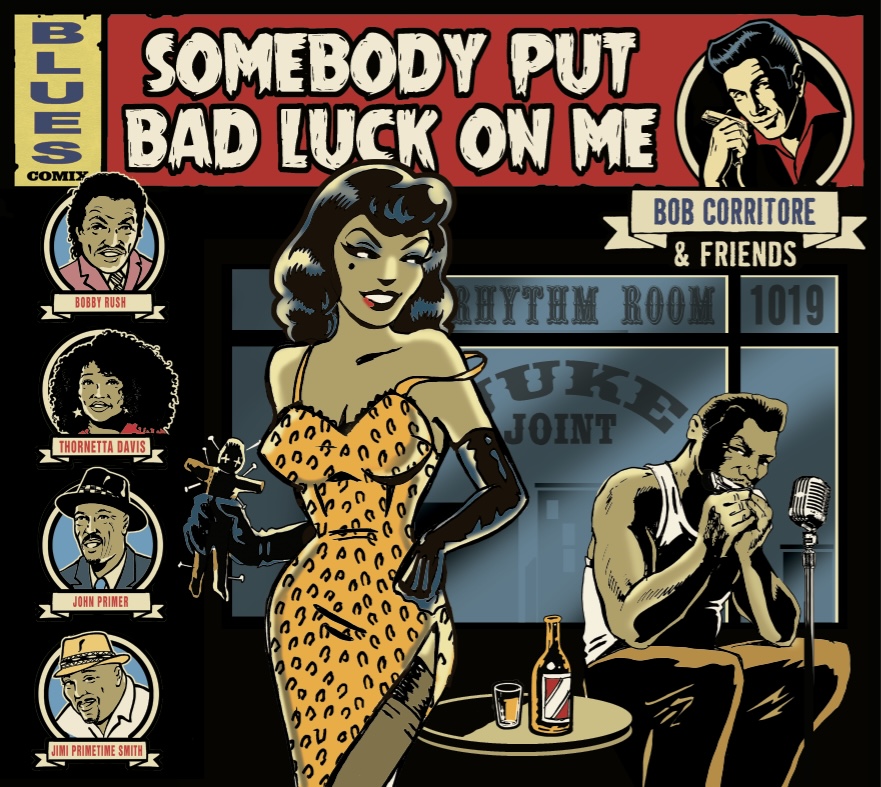
This time, however, the treats are freshly cooked. And do they ever cook. For his latest and fourth release of 2023, the joyously tough “Somebody Put Bad Luck On Me,” Corritore shifts his focus to the present with 16 newly recorded tracks from a sparkling lineup of current blues artists.
Guest artists who add their powerful voices in this diverse session include ageless wonder Bobby Rush, Thornetta Davis, John Primer, Carl Weathersby, Johnny Rawls, Francine Reed, Oscar Wilson, Eugene Hideaway Bridges, Tia Carroll, Diunna Greenleaf, Willie Buck, Jimi Primetime Smith, Sugaray Rayford, and Lurrie Bell.
The one artist who shines throughout is Corritore, whose solid harp work weaves knowingly on every song, creating sharp down-home solos, or floating eloquently in support of his bandmates and vocalists. That’s not to neglect the band here; the music, especially the guitar work. Every note is consistently razor sharp blues.
The album opens with the deep blues of John Primer on the gritty “This Little Voice,” with Corritore soaring on harp. This track alone is worth the price of admission; it’s a testimony to the heat and drive of traditional blues, complete with a razor-sharp guitar solo midway. Primer is a longtime Corritore partner and together they make real-deal blues more than just a memory.
That’s followed by the rough and tumble “I Need A Whole Lotta Lovin’,” featuring the big voice of Thornetta Davis proclaiming her lovin’ needs. Then Johnny Rawls turns the album soulward with his magical pipes on the searing “Midnight Love.”
Oscar Wilson follows on the title track, his vocals wrapped in Corritore harp for another tough outing. (I know I sometimes overuse words like rough and tough, but that’s how this music rolls. They’re the backbone of this enthusiastic blues. Just listen to Jimi Primetime Smith on the track “Tough Enough.”)
Bobby Rush talks his way into the next cut, “I’m As Good As Gone,” then creates Bobby Rush magic with his still-potent vocals amid Corritore’s passionate harp moans. Carl Weathersby shuffles along next with the hard-driving “Stranded.”
The album continues mining its deep blues vein for ten more delicious cuts. It’s hard to omit the fine remaining musical contributions, but I’ll leave them to you to listen and enjoy. They’re well worth your effort. This is as close to contemporary blues perfection as you would want. The session is immaculately produced, excitingly performed and thoroughly satisfying.
I don’t know who to credit for the clever cover art (and that of many previous albums), but it deserves to be mentioned. It’s a theme that Corritore has carried though many releases, and adds a distinctive touch that illustrates the musical attitude inside.
Yes, in case you haven’t noticed, I love this album. It’s pure blues joy.
If it wasn’t for this Bad Luck, we wouldn’t have no luck at all.
Corritore’s personal musical journey and his dedication to the blues are the stuff of history in the making. Here’s an excellent summary.
Here’s the title track, featuring Oscar Wilson:
Tracklist:
1. This Little Voice (feat. John Primer)
2. I Need A Whole Lotta Lovin (feat. Thornetta Davis)
3. Midnight Love (feat. Johnny Rawls)
4. Somebody Put Bad Luck On Me (feat. Oscar Wilson)
5. I’m Good As Gone (feat. Bobby Rush)
6. Stranded (feat. Carl Weathersby)
7. Remember Me (feat. Thornetta Davis)
8. I Want To Be Loved (feat. Tia Carroll)
9. If You Don’t Want To Love Me (feat. Eugene Hideaway Bridges)
Blues music has a rich history that’s full of great music and musicians.
It has a future, too, but sometimes it’s hard to know where this classical American music will go next.
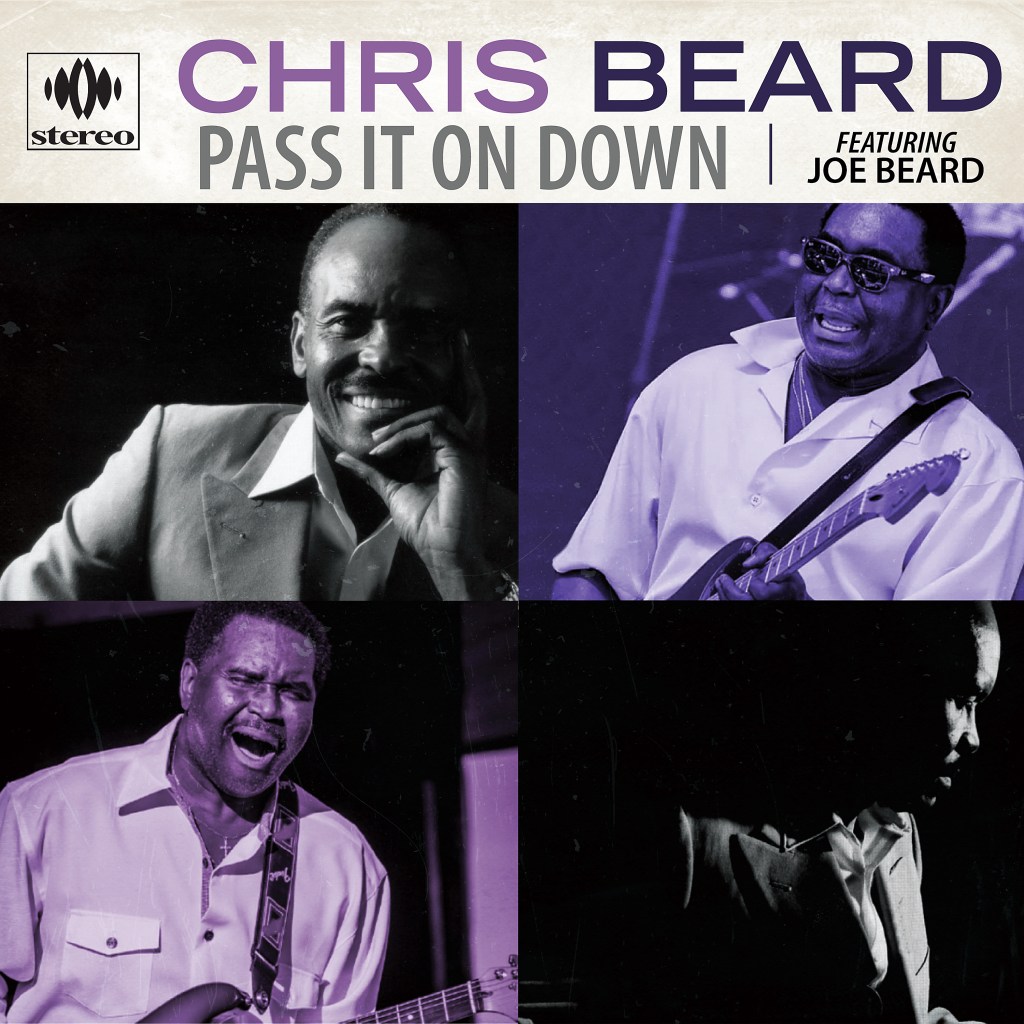
Chris Beard’s strong new album “Pass It On Down” gives us a clear-eyed look at the music from both sides now — where the music has been and where it just might be going.
Chris is the son of veteran Rochester, N.Y., bluesman Joe Beard, who grew up on Beale Street in the 1950s. With family friends like Matt “Guitar” Murphy and Buddy Guy, it didn’t take long for the younger Beard to learn to love and play the blues. With years of club work on his resume, Chris released his debut recording, “Barwalkin,” in 1998, which earned him a W.C. Handy nomination as the Best New Blues Artist.
“Pass It On Down” is his seventh album since then, each one increasing his foothold in the blues, as well as moving him in his own musical direction. This latest session includes his father, in a tribute to his roots, as he also works his way into a bluesy future.
Chris gets plenty of help along the way from his band — guitarist Brother Wilson and Marvin Parker on bass, drummer Carlton Campbell, keyboardists John Tucker and Jonathan Curry with special guest appearances by Johnny Rawls, Mary Ellen Haden, Richard Rodolph, Kenny Neal and his band. Nine of the ten tracks are originals by Beard and include previously released, remixed and remastered songs, plus one cover. This is his debut on Blue Heart Records.
The album opener is a funky-tough “Let The Chips Fall,” kicking in with drums and ripped with a horn attack followed by fierce guitar riffs — it’s a strong statement that this music is now his own, and let the chips fall where they may. “One More Cry For Love” follows, slowing the tempo but not the contemporary mood. “Big Girl” rides a steady beat of frustration over a woman so near but yet so far.
The moving title track pairs father and son Beard in a heartfelt blues-filled duet with a plea to keep the music flowing — to “pass it on down.” That’s followed by Chris returning with the powerful slow-blues “House Of Shame.” A heady organ intro pushes “When Love Comes Knocking” into another funk-filled treat. Chris Beard traveled to Baton Rouge to record the torchy “Son I Never Knew,” that turns blues into soulful sorrow.
“Keeps Me Believing” is a gentle and powerfully soulful love song, followed by the upbeat invitation to dance “Who Do You Think You’re Foolin’.” Beard goes down home for the closer, with gritty guitar work and vocals that bite on “Bitter Baby.”
Blues giant Willie Dixon was fond of the phrase, “The blues are the roots, the rest are the fruits.” Chris Beard’s solid efforts here dig deep for the roots and provide a tasty sample of the fruits. It’s an album well worth enjoying for all of its musical rewards.
Here’s the album’s opening track, “Let The Chips Fall.”
Tracklist:
1. Let the Chips Fall (3:18) 2. One More Cry for Love (4:21) 3. Big Girl (4:27) 4. Pass It on Down (feat. Joe Beard) (4:18) 5. House of Shame (5:22) 6. When Love Comes Knocking (4:01) 7. Son I Never Knew (5:13) 8. Keeps Me Believing (4:44) 9. Who Do You Think You’re Foolin’ (2:37) 10. Bitter Baby (5:29)
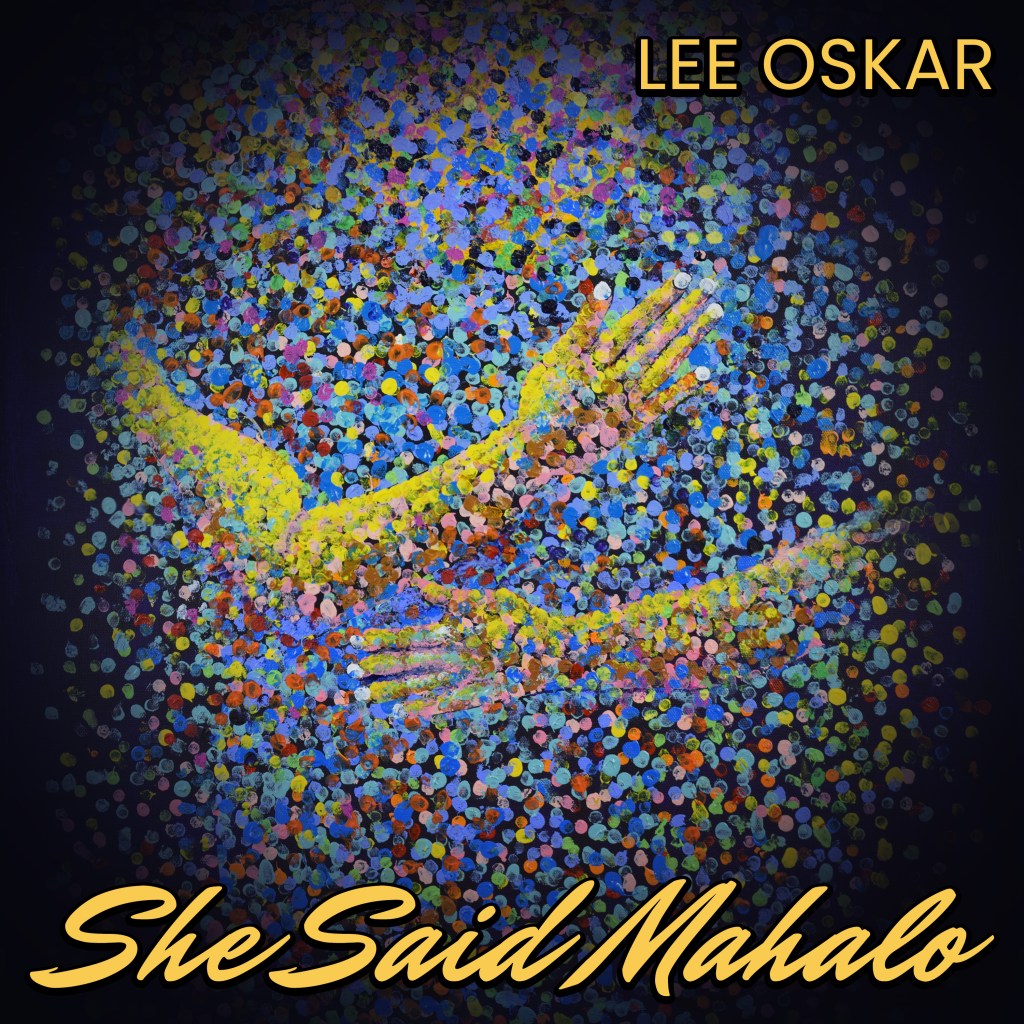
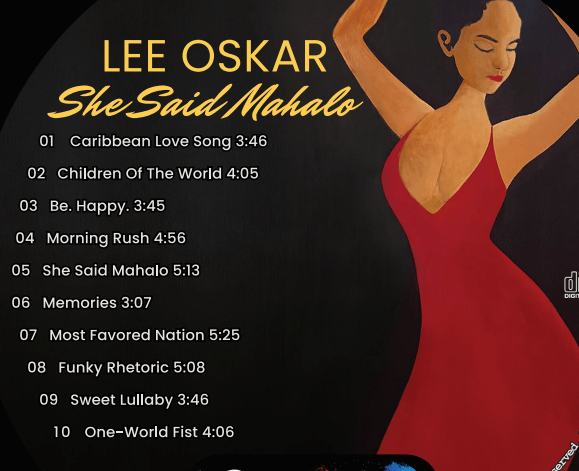
Lee Oskar’s latest musical project, “She Said Mahalo,” is as much a philosophy as it is an album.
Oskar is, of course, a harmonica virtuoso, a harmonica innovator and manufacturer, composer, producer and visual artist.
His musical resume is impressive: The Danish-born Oskar was a founding member, co-composer and lead harmonica player of the pioneering funk/jazz band War that composed and recorded such hits as “Low Rider,” “Spill the Wine,” “Cisco Kid,” “The World is a Ghetto,” “Slippin’ into Darkness,” “Why Can’t Be Friends,” from 1969-1993. Since then, Oskar and his original bandmates from that era perform as the LowRider Band.
For this session, Oskar is offering an ambitious — and completely gorgeous — instrumental view of life with ten originals that he has written or cowritten. Oskar’s flowing harp lines lead a subtle but compelling musical vision that speaks volumes without words.
But because words are often necessary so the music doesn’t get lost in translation, Oskar has generously provided a brief commentary on each song in the album booklet.
Here’s some of what he has to say about each track:
“Caribbean Love Song” “Ah, to be stuck on an island! The rhythm of the waves slapping the sand beneath whispering palm trees makes for a persuasive soundtrack to falling in love.”
“Children of the World” “Empowered, children are ambassadors of hope and two-legged conveyors of joy. They are our teachers. They are our treasures”
“Be. Happy.” “No one can make you happy. It’s an inside job. There are always challenges to be had. Soulful people who move through hard times with grace and dignity inspire me. Then, when times are right, they celebrate with all they’ve got. It’s a balance. It’s a choice.”
“Morning Rush” “Whenever you get up, feel the rush. Whatever you do, create your day with joy and pride. Each and every one of you is needed and appreciated!”
“She Said Mahalo” (Mahalo is a Hawaiian word for thanks, gratitude) “Thanks” is the outward expression of gratitude. We were born to love. The heart is a precious muscle that responds favorably to exercise — physically, emotionally, spiritually.”
“Memories” “I am fortunate. The brightest moments in my life have been spotlighted by so many outstanding people. Those who have moved on from my day-to-day experience continue to be cherished, enshrined in miraculous bubbles called “memories.”
“Most Favored Nation” “‘I love the thought that what is fair to the majority sets the standard to apply to the minority as well. Each of us matters as much as any one of us. It pays to be kind, to be fair.”
“Funky Rhetoric” “Few things under our control are as powerful as words. They can be weaponized like propaganda or as soothing as a mother’s whisper. We must choose our words carefully. Remember opinios are subject to change without notice and that’s okay. No matter what, speak your truth … and keep it funky.”
“Sweet Lullaby” “Our children must grow into their own selves. As parents we can’t hold them back nor should we. We always remember the little child within, the angel whose wings have spread and carried them away. Wherever they are, we love them. We wish only for their safety and happiness. We try out best and hope we’ve said the right words, made the right decisions. If we are very fortunate, our children come back … close enough for us to embrace for just a moment.”
“One-World Fist” “This jam is a musical meditation on how incredibly powerful we are when we stand together. As more and more of us merge on the side of harmony, we slowly tilt the world and its trajectory towards a greater good. Maybe that sounds like a bunch of moonbeams and butterflies, but this I believe.”
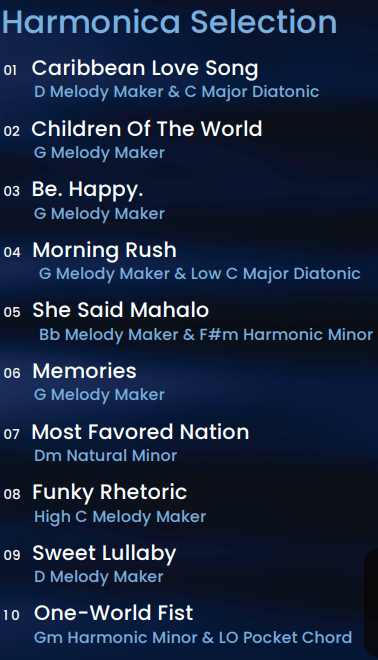
It’s not just Oskar and his harmonica creating this musical voyage. There’s an orchestral effect and musical tapestry that’s woven by many other outstanding musicians, including those who perform with Oskar regularly as Lee Oskar & Friends: Darian Asplund (Saxophone); Andrew Cloutier (Drums); Denali Williams (Percussion); Dean Schmidt (Bass); Brian Monroney (Guitar); Alex Mortland (Guitar); Andrew Joslyn (Strings); and Mack Grout (Keys and Piano); as well as special guest artists: Takahiro Miyazaki (Saxophone and flute); Paul Hanson (Bassoon); Randy Oxford (Trombone) Harold Brown (Drums, Percussion); Thione Diop (Percussion); Joe Doria (Organ); Phil Peterson (Strings); “Sancho” Youichrou Suzuki (Shakuhachi) and Mayo Higa (Shamisen). Oskar plays various harmonica models in altered tunings and keys on this album, as specified in the liner notes (below). And he created the accompanying artwork.
As you listen to his music, and if you read his words, Oskar’s message becomes perfectly clear. So sit back, maybe with an island-style beverage topped by a tiny umbrella, and enjoy this spiritual voyage.
Apologetic note: This post replaces an earlier version which accidentally published an incorrect list of nominees and winners.
Winners were announced at the Blues Blast Music Awards ceremonies on Sept. 23, 2023 in Peoria, Illinois. More than 6,600 Blues Blast Magazine readers and blues fans voted in the 2023 Blues Blast Music Awards.
Contemporary Blues Album Taj Mahal – Savoy Traditional Blues Album John Primer – Hard Times Soul Blues Album Annika Chambers & Paul DesLauriers – Good Trouble Rock Blues Album Mike Zito & Albert Castiglia – Blood Brothers Acoustic Blues Album Charlie Musselwhite – Mississippi Son Live Blues Album John Primer – Teardrops for Magic Slim Historical Or Vintage Recording Bob Corritore & Friends – Women in Blues Showcase New Artist Debut Album Lady J Huston – Groove Me Baby Blues Band Cash Box Kings Male Blues Artist Taj Mahal Female Blues Artist Shemekia Copeland Sean Costello Rising Star Award Dylan Triplett Producer Of The Year Mike Zito Electric Guitarist Of the Year Christone “Kingfish” Ingram Acoustic Guitarist of the Year Rory Block Slide Guitarist of the Year Sonny Landreth Bass Guitarist of the Year Bob Stroger Keyboard Player of the Year Kenny “Blues Boss” Wayne Percussionist of the Year Kenny “Beedy Eyes” Smith Harmonica Player of the Year Charlie Musselwhite Horn Player of the Year Vanessa Collier Vocalist of the Year Shemekia Copeland Blues Video Of the Year Jimmy Hall – Jump for Joy
Blues and jazz have always been musical siblings, their origins swirling mysteriously in the mists of musical history. I have read, somewhere, that the blues is “the mother’s milk of jazz.” That sounds good to me.
They have both gone their separate ways, and at the same time shared their DNA in all that they have done.
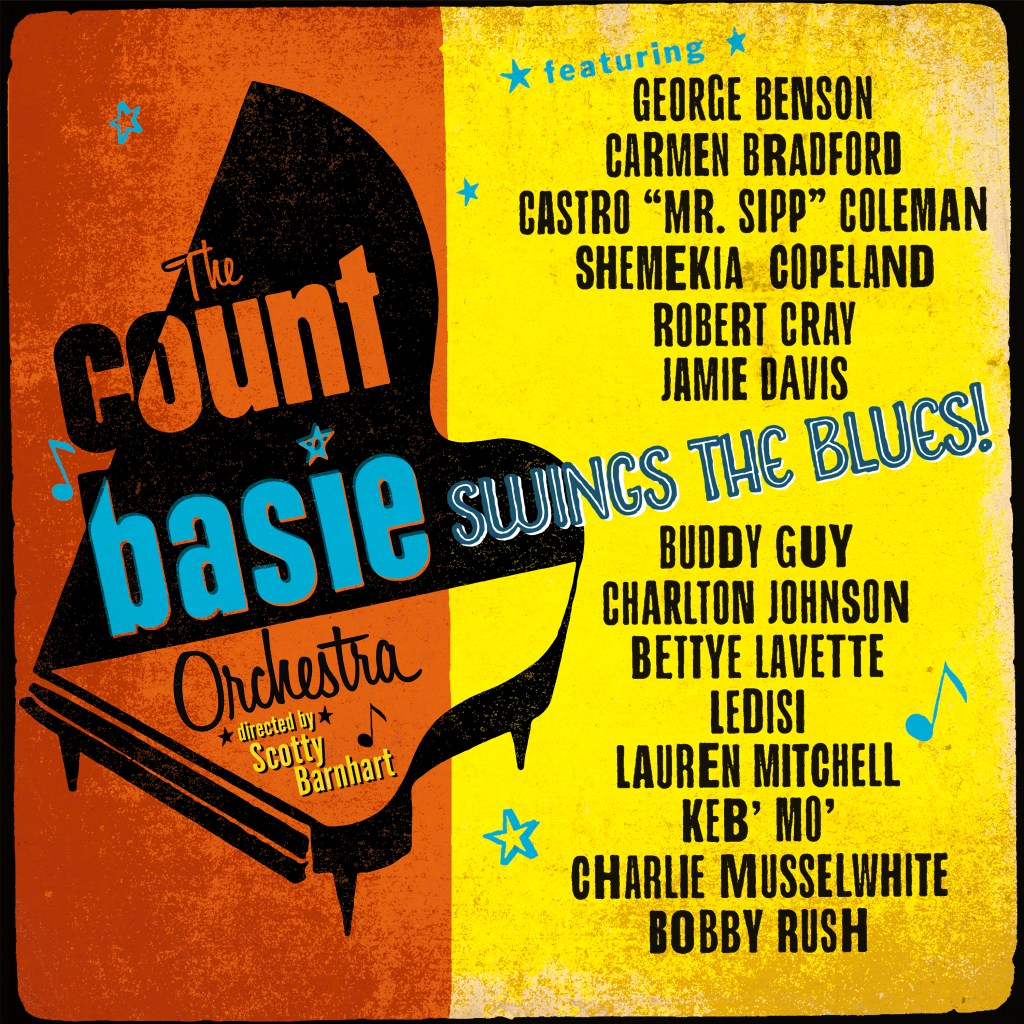
Every once in a while, they get together again to celebrate their relationship, and when they do, the results are as splendid as they are here, in this outstanding session, “The Count Basie Orchestra Swings the Blues,” featuring a stellar group of blues vocalists that brings and swings the best of both worlds.
Scotty Barnhart, the leader and keeper of the Basie band flame (also professor of jazz trumpet at Florida State University), says the idea for this album came to him in 2019 as he sat next to Bobby Rush at a Blues Foundation Blues Hall of Fame induction ceremony Count Basie.
“I knew The Count Basie Orchestra’s next recording should be one that had at its root, the sound of the Delta Blues. Of course, the orchestra has demonstrated time and time again its unique ability to play and express the blues at many different tempos with unparalleled precision. The Count Basie Orchestra is a blues-based orchestra and everything that it has ever played or will ever play has that particular inflection in it. It’s a blues that makes you want to dance, snap your fingers, tap your toes, and feel good. Mr. Basie said, “our blues will make your blues go away.”
And all of that is precisely what’s going on in this delicious album.
It all swings to life with “Let’s Have A Good Time,” with Castro “Mr. Sipp” Coleman shouting an original blues as the band struts exuberantly behind him. The ageless Bobby Rush takes the band deeper into the Delta with his harmonica intro on “Boogie in the Dark,” gradually bringing the full orchestral sound up behind his vocals.
Shemekia Copeland delivers a fiery take of the Koko Taylor classic, “I’m A Woman” as the band vamps along, adding Buddy Guy’s tough guitar and Charlie Musselwhite’s solid blue harp. The soulful swing of “Down Home Blues” pairs Keb’ Mo’ and Lauren Mitchell in a slinky duet. The blues classic “Stormy Monday” adds Bettye LaVette’s terrific voice to a fresh and swinging arrangement.
Robert Cray takes the spotlight with a gently swinging, soulful turn on “The Midnight Hour.” Mr. Sipp returns with a big-voiced “Dirty Mississippi Blues” while the band churns those muddy down-home waters. “The Patton Basie Shuffle” follows, an instrumental that gives the big Basie sound its head, with a flurry of sparkling solos.
The vocals resume with Ledisi warning about her own bad self in “Evil Gal Blues.” Jamie Davis brings back echoes of shouter Joe Williams with “What You’ve Done,” and then Carmen Bradford lights a slow-burning fuse with “Just For A Thrill.” The final track adds George Benson’s swinging guitar on the jazzy instrumental “Rock Candy,” as the orchestra swings hard to bring the curtain down much too soon.
Scotty Barnhart was correct. This was great musical idea. The Basie orchestra and the chosen blues singers blend effortlessly into a session that’s as timeless as the band’s music. Let’s have an encore presentation.
There is, of course, a large amount of Count Basie music available, both audio and video. One of my favorites is the somewhat obscure 1979 film, “Last of the Blue Devils,” in which Basie appears at a reunion of some of the surviving members of the Oklahoma City Blue Devils, one of the first of the big bands, later known as the Walter Page Blue Devils. Basie joined the band in 1928, before forming his own. If you can find the film anywhere, it’s pure musical joy to watch.
Here’s “I’m A Woman” from the album:
Tracklist: 1. Let’s Have A Good Time – Featuring Mr. Sipp 2. Boogie In The Dark – Featuring Bobby Rush 3. I’m A Woman – Featuring Buddy Guy, Shemekia Copeland, Charlie Musselwhite 4. Down Home Blues – Featuring Keb’ Mo’, Lauren Mitchell 5. Stormy Monday – Featuring Bettye LaVette 6. The Midnight Hour – Featuring Robert Cray 7. Dirty Mississippi Blues – Featuring Mr. Sipp 8. The Patton Basie Shuffle 9. Evil Gal Blues – Featuring Ledisi 10. Look What You’ve Done – Featuring Jamie Davis 11. Just For A Thrill – Featuring Carmen Bradford 12. Rock Candy – Featuring George Benson
When you have a musical career as a singer and drummer that includes writing over 1000 songs, producing 100 albums, and working with everyone from Chuck Berry and Bo Diddley to Buddy Guy – two things come to mind.
You must be exceptionally talented.
You must be Tom Hambridge.
Hambridge is the four-time Grammy-winning whirlwind talent behind – among many other projects – three of blues legend Buddy Guy’s most critically acclaimed albums: “Living Proof” (2011), “Born To Play Guitar” (2016), “The Blues Is Alive And Well” (2018), Keb Mo’s “Good To Be” (2022) and for his work on rising blues star Christone “Kingfish” Ingram’s albums “662” (2022) and “Kingfish” (2020).
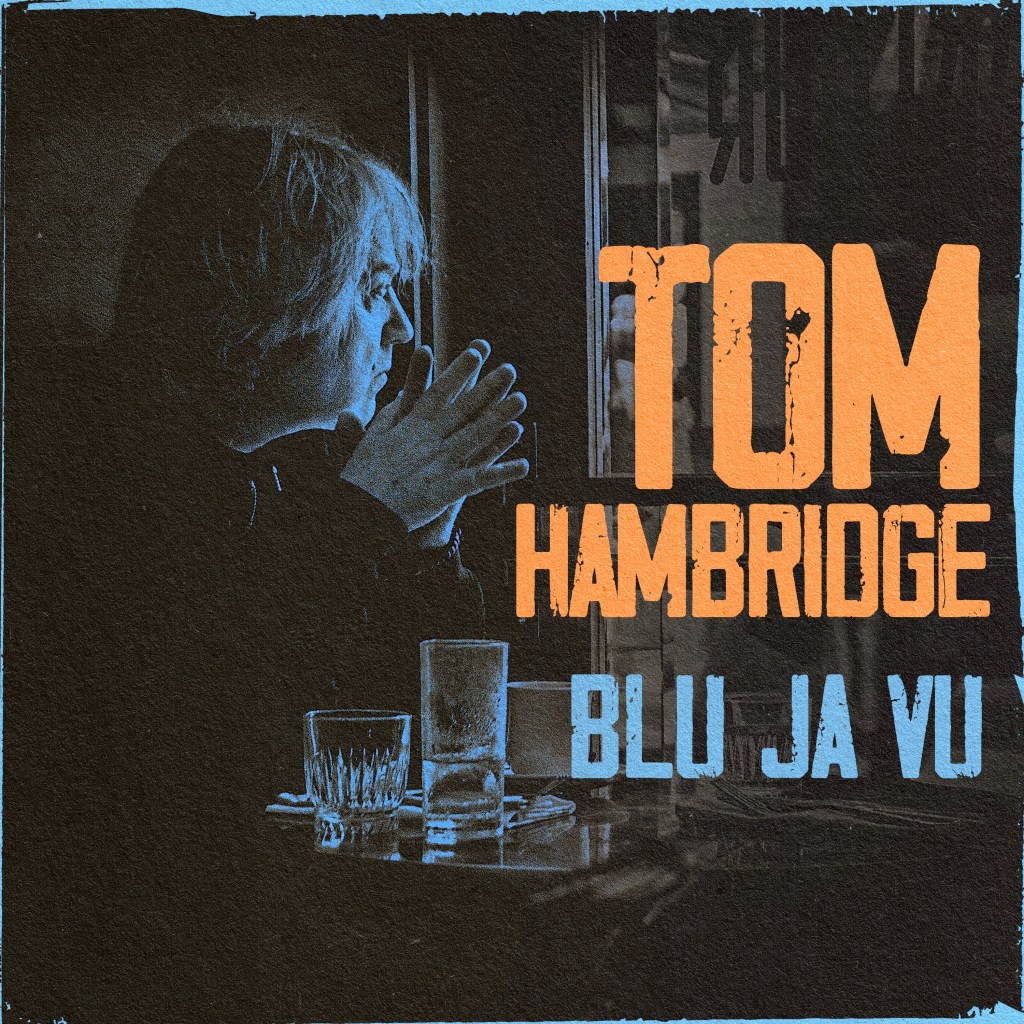
Hambridge has been such a prodigious creator and producer of music that Guy says of him: “Someone like that comes along only once in a lifetime. I call him the white Willie Dixon.” But every once in a while, Hambridge takes time out to make an album just for himself. His latest, “Blu Ja Vu,” is his first since the 2018 “The NOLA Sessions,” a sparkling tribute to New Orleans music.
“Blu Ja Vu” is a look back at some of the songs Hambridge has written or co-written – usually with Richard Fleming — and produced for his musical friends. A few of them return the favor here, so it’s bluesy déjà vu all over again.
Hambridge launches this set with one of his most famous partners, Buddy Guy, featuring a vocal duet on the raucous, hard driving “Ain’t It Just Like Love” with a rollicking honky-tonk piano break from Kevin McKendree, followed by a fierce Guy guitar explosion. Joe Bonamassa joins in next for “That’s My Home,” adding his powerful vocals and more wicked guitar work behind a restless refrain, “Where I put down my guitar, that’s my home.”
“Wear You Out,” cowritten with Gary Nicholson, is a testament to a ’54 Stratocaster, a seventy-something Eldorado, and a woman who “couldn’t be satisfied” so “I ain’t slowing down till I wear you out.”
“Blues Don’t Care” brings in Christone “Kingfish” Ingram on guitar and vocals for a tough blues lecture on just how little the blues cares “You try to run, but there’s no escape, it’s the middle finger on the hand of fate.” Rob McNelley adds feverish guitar licks to express the chills of “Sick With Love,” then “Automatic” drives hard with some auto-erotic lyricism: “I got a T-Bird Ford, 1965, 4-barrel V8, I’d like to give you a ride – it’s automatic.”
“Symptoms of Love” is another Hambridge solo effort, which pairs nicely with the musical diagnosis of “Sick With Love.” “Brother John Boogie” is a rousing boogie-woogie instrumental featuring harmonica legend James Cotton (R.I.P.) leading the band and ending in a joyous shout. “Get Out Of Town” is a boisterous roadhouse two-stepper filled with barrelhouse piano.
Josh Smith provides ethereal guitar tension behind the new awareness found in “Smarter Than I Was” – “She took my soul to a darker side, but halfway there I got wise.” “Johnny Winter” is a blues-rock protest song that asks the very real question: “How come Johnny Winter, he ain’t in the hall of fame?” – that’s the Rock & Roll Hall of Fame. “Meet Me In Chicago” is co-written by Robert Randolph, and again features the furious razor-sharp guitar of Rob McNelley, drenched in a desire to get back to sweet home Chicago.
The very fitting album closer, “End Of The Line,” is an eloquently phrased little blues, gently offered for our thoughtful consideration: “So many of my friends have gone, maybe my time ain’t long, but I promise ‘til the day I die, I’m gonna keep the blues alive. But I feel sometimes like I’m the end of the line.”
If “Blu Ja Vu” shows us anything, it’s that Tom Hambridge can be counted on to create exceptionally enjoyable music … again … and again … and again.
Tracklist: 01. Ain’t It Just Like Love (Featuring Buddy Guy) 02. That’s My Home (Featuring Joe Bonamassa) 03. Wear You Out 04. Blues Don’t Care (Featuring Christone Kingfish Ingram) 05. Sick With Love (Featuring Rob McNelley) 06. Automatic 07. Symptoms Of Love 08. Brother John Boogie (Featuring James Cotton) 09. Get Out Of Town 10. Smarter Than I Was (Featuring Josh Smith) 11. Johnny Winter 12. Meet Me In Chicago (Featuring Rob McNelly) 13. End Of The Line
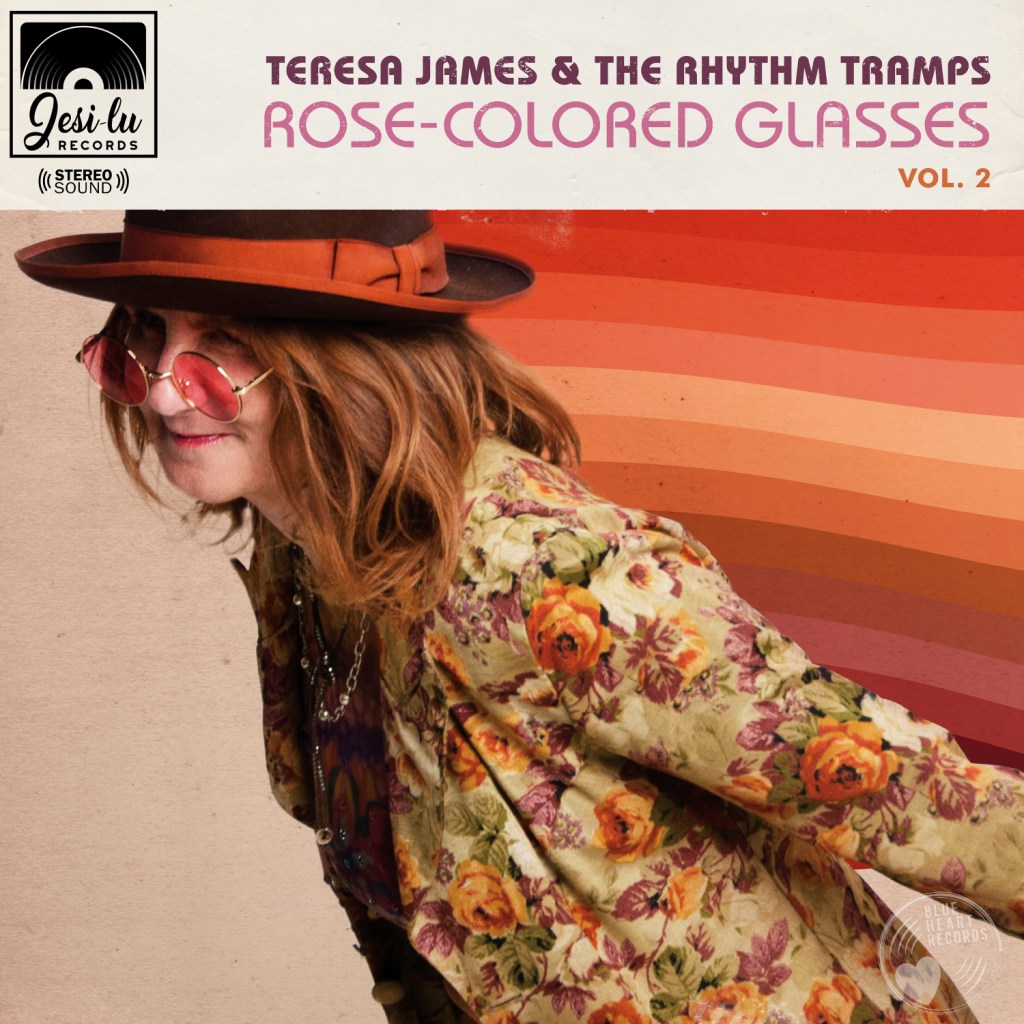
Those rose-colored glasses that Teresa James sports on the album cover of her latest release, “Rose-Colored Glasses Vol. 2,” are much more than just a clever prop and title.
They represent the continuation of a vision that began almost exactly two years ago, when James and her musically exuberant Rhythm Tramps – fronted by her warmly soulful vocals – released “Rose-Colored Glasses Vol. 1,” finding the joys of love and life through the lens of their rose-colored musical outlook.
In addition to being awarded two silver medals from the Global Music Awards and a Libera Award nomination for Best Blues Record, James also received her second Blues Music Award nomination (Contemporary Blues Female Artist) following the release of Vol 1.
Since those glasses were overflowing with that vision, those ingredients are back in place for Vol. 2, another dozen expressive songs hand-crafted by producer/bassist/songwriter/ husband Terry Wilson along with James and caressed into existence by James’ honeyed voice that treats every song as an emotional rescue.
Wilson notes, “So many times I thought I’d be finished with a tune, and then Teresa would come in, hear it, and teach me how it should be done, especially melodically and dynamically.”
The Tramps plus a few friends are their usual crackling good selves here, allowing James to blend her Texas roots with their present Los Angeles environs into crisp, swinging, countrified Southern California soul. James’s expressive vocals are smooth and sensuous, with just a hint of romantic grit, and always right in tune with her message. The icing on the cake for the project was a trip to Malmsbury, England where James and Wilson had the opportunity to visit with and learn from their friend, Grammy-winning producer and engineer, John Porter, while he completed the mixing and mastering of the album.
This adventure begins with the sultry opener’s promise, “I’d Do It For You,” with the vow: “I’d take care of your bills, I’d give you your pills, I’d cure your ills….” “Better Angels” is an easy-rolling search for better angels with some honky-tonk undertones from keyboard wizard Kevin McKendree. “Lean On Love” is percussive, rock-steady advice on the emotional support available when leaning in the proper direction – toward love, of course.
“The Idea Of You” is a softly soulful ballad in a smaller combo setting that puts the emphasis on James’ haunting vocal turn. “That’s What I’m Talking About” is a gently swinging affair with a lovely liquid guitar run followed by a sensuous sax solo by Paulie Cerra. “I Don’t Need Another Reason To Fall In Love” bounces to life with a touch of R&B driving James toward her man.
James gets a co-writing credit on “Flip Flop,” with clever wordplay that highlights the dilemma of a love that’s “got me in a hot spot … catch you on the flip-flop….” “The Heart Wants What It Wants” is an eloquent lyrical gem as Wilson blends keys, guitar, and bass behind a poignant vocal turn. “Ain’t Nothing For Certain,” another track with James’ name and style on it, highlights the will to survive: “Ain’t nothin’ for certain in the world we’re livin’ in, never give up, never give in….” “Just Don’t Think About It” is a lighthearted ode to heartache. “Brand New Flame” serves as a torchy invitation: “I ain’t lookin’ for no one night stand, and I don’t want no come and go man …. if you’re lookin’ for a brand-new flame, well I’m a hot one….”
The closer, an upbeat “Second Chances,” throbs with the promise of rose-colored optimism: “I believe in second chances, I believe in love at first glance, I believe in true romance….“
Indeed. And that’s the promise of this sparkling Teresa James & the Rhythm Tramps session, created with warmth and passion and musical genius. It’s simply a great album, filled with thoroughly enjoyable music from the Tramps, embracing the soul-stirring voice of Teresa James.
Those rose-colored glasses seem to be working just fine.
“I Don’t Need Another Reason to Fall in Love” from the album:
Track Listing: 1. I’d Do it For You 2. Better Angels 3. Lean On Love 4. The Idea of You 5. That’s What I’m Talking About 6. I Don’t Need Another Reason to Fall in Love 7. Flip Flop 8. The Heart Wants What it Wants 9. Ain’t Nothing for Certain 10. Just Don’t Think About It 11. Brand New Flame 12. Second Chances
There aren’t too many soulmen left who make Rawls’ kind of music — sensuous, soulful music, richly flavored by the blues.
He’s been making his music for more than 50 years, after learning to play guitar in his teens. Rawls’ schoolteacher in Purvis, Miss., got him gigs backing musicians who were touring the area, such as Z. Z. Hill and Joe Tex. In the mid 1970s, Rawls joined soul great O. V. Wright’s band, later became his music director and played with him until Wright’s death in 1980. The band then continued as the Ace of Spades Band for another 13 years.
Rawl’s career since then is the stuff from which legends are born: The Blues Music Awards, Blues Blast Awards, Living Blues Awards, and the W. C. Handy Awards have all acknowledged Rawls with multiple awards and nominations, including Soul Blues Album of the Year and Soul Blues Artist of the Year. Living Blues magazine described him as a “soul-blues renaissance man” when he was featured on the cover in 2002. Three of his albums have made the DownBeat Magazine Critics’ Choice Best of the Year List. He is on two markers along the Mississippi Blues Trail – one in Hattiesburg, Miss., and another, of all places, at Marker 110 in Rockland, Maine, testifying to the migration of blues from Mississippi to Maine (check out this bit of blues history here). Rawls’ first recorded with other musicians, but his first solo album, “Here We Go,” was released in 1996, and since then he’s released an album almost every year.
For his latest session, Rawls is backed by his regular group: The Rays: Johnny McGhee – guitar; Bob Trenchard (he’s head of Catfood Records and wrote a pair of songs here with Rawls) – bass; Richy Puga – drums; Dan Ferguson – keyboards; Andy Roman – sax solos; Mike Middleton – trumpet; Nick Flood – baritone/tenor/alto sax; Frank Otero – trombone; with Jon Olazabal – percussion; and backing vocals by Janelle Thompson and Shakara Weston.
Of course, none of that matters much unless you actually sound good. And Johnny Rawls sounds just great.
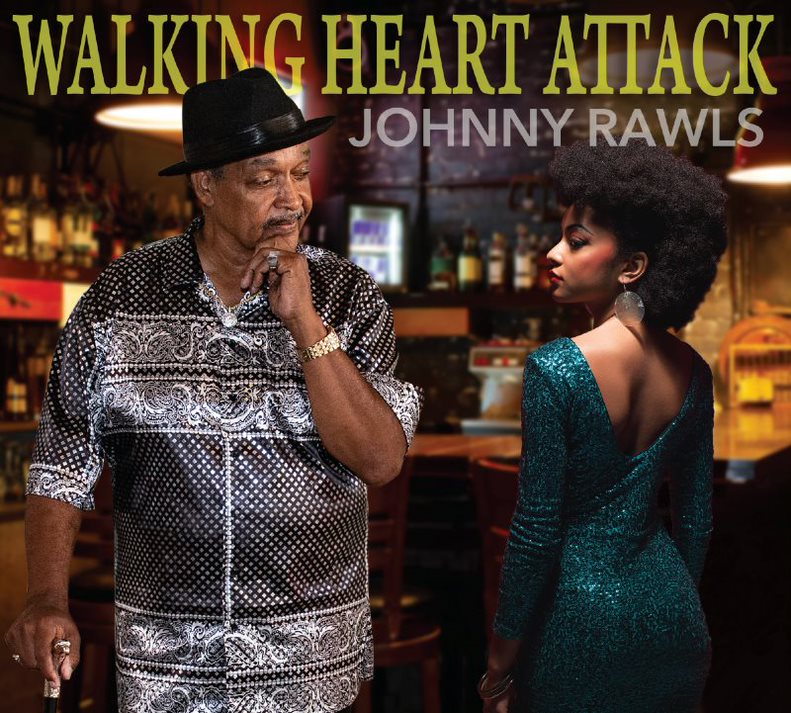
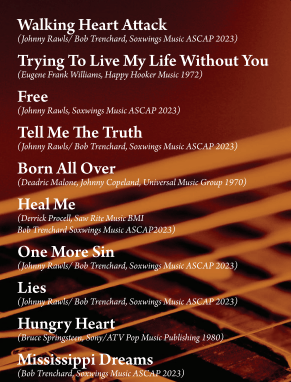
That becomes pretty obvious as the album “Walking Heart Attack” opens crisply to horns and backup singers with the song, “Walking Heart Attack,” a funky workout that makes a powerful opening statement. “Trying to Live My Life Without You” is a tribute to Otis Clay, the late soul legend, with whom Rawls recorded 2014’s “Soul Brothers.” “Free” is a Rawls original with gospel undertones and a pleading vocal. “Tell Me the Truth” turns to the blues for its driving wheel, sparked by crackling horns.
“Born All Over” is gloriously pure soul, as Rawls delivers musical testimony from the O.V. Wright songbook, from which he draws a song for every album. “Heal Me” is more strong soul with an orchestral sound punched along by some eloquent B3. A pair of songs by Rawls and Trenchard follows, the horn-driven, easy-swinging rhythms of “One More Sin,” — “If loving you is a sin then I ask for forgiveness again and again…,” with that B3 romping again. Then a soulful vocal take advances “Lies” as one of the album’s strongest cuts.
In what seems an unusual cover choice for a lifelong soulman, Rawls turns Bruce Springsteen’s mythic “Hungry Heart” into a brightly rhythmic bit of soul. The closer “Mississippi Dreams,” is another Trenchard original that reaches back home for Rawls in a sentimental journey spiced with a soaring sax solo.
It makes for a perfect ending to an elegantly soulful journey, at least for this thoroughly enjoyable album. Rawls sounds like he’s got a lot more soul to give. I know I’ll be waiting.

 Blues Roadhouse