Roadhouse Album Review: “Blue Diamonds” is a gem for the Name Droppers

Name Droppers — “Blue Diamonds” — Horizon Music Group
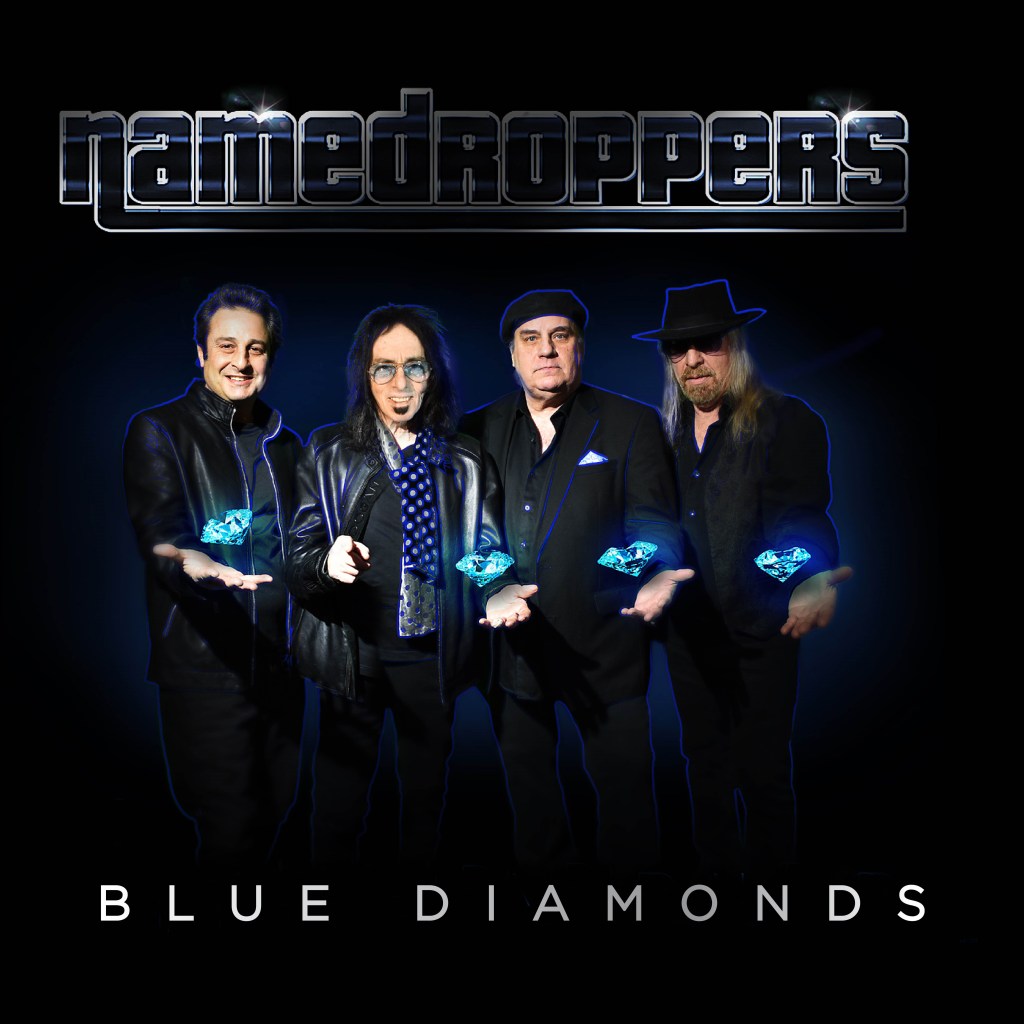
The Name Droppers (very cool name) are four veteran musicians out of Connecticut with deep roots in blues and rock, and a history of making fine music separately until they joined forces in 2019.

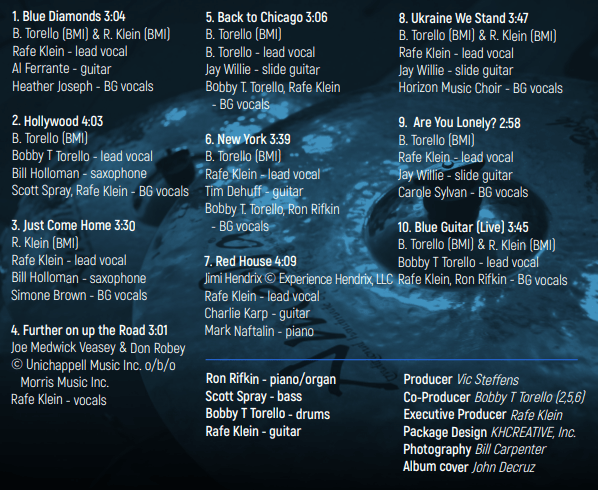
This is just the third album for the group, which includes guitarist Rafe Klein, New England Music Hall of Fame drummer Bobby “T” Torello, Grammy-winning bassist Scott Spray (also in the New England Music Hall of Fame) and keyboardist Ron Rifkin.

They’ve also brought in a few guests here, including guitarists Al Ferrante and Jay Willie, vocalists Heather Joseph, Simone Brown, Carol Sylvan, and the
entire Horizon Music Choir, with Bill Holloman on sax, and original Paul Butterfield Blues Band keyboardist Mark Naftalin on piano.

They’ve created seven new songs for this session, added a pair of blues covers and thrown in a live performance — all of which make this a hard-driving set that combines some good old-fashioned rock ‘n’ roll, some sharp blues and a few shades of music in between.

Everything begins with “Blue Diamond,” as the pulsating title track sets up a tough groove that hints at the musical strength of what’s to come. It’s a sad lament of love lost due to drug use, but it rocks hard with Klein’s vocals, and backup singer Heather Joseph chanting “blue diamonds” throughout adds a bright counterpoint. It’s a great song, and for some reason it reminds me a little of Robert Palmer’s classic “Addicted to Love.”

Torello’s gruff vocals lead the way on “Hollywood,” a blues-flavored rocker, followed by
“Just Come Home” with Klein’s plaintiff vocals following a doo-wop style intro. The first cover is Bobby “Blue” Bland’s “Further On Up The Road,” with Klein’s vocals pushed along by tasty organ riffs.

Torello brings his world-weary vocals to the front on “Back To Chicago,” highlighted by Willie’s sharp slide, and driven by an enthusiastic version of Bo Diddley’s trademark beat. “New York” features a soulful vocal turn by Klein, and then guitar legend Charlie Karp is honored with the inclusion of the blues chestnut “Red House,” a stirring track released posthumously in tribute to a departed friend.

The anthem-like “Ukraine We Stand” is a musically and lyrically eloquent salute to that beleaguered nation (also released as a single with proceeds going to Ukrainian charities to aid refugees). Then Carole Sylvan’s backing vocals add heartfelt depth to Klein’s rousing “Are You Lonely?”
The closer shows off Torello’s vocals again in the fierce blues-rocker “Blue Guitar,” with a Chuck Berry-style intro that turns into a rollicking finale.

“Blue Diamonds” is indeed a gem. The Name Droppers are tough enough for their hard rock, and tender enough to polish this gem until it gleams.


“Blue Diamonds,” the title track:

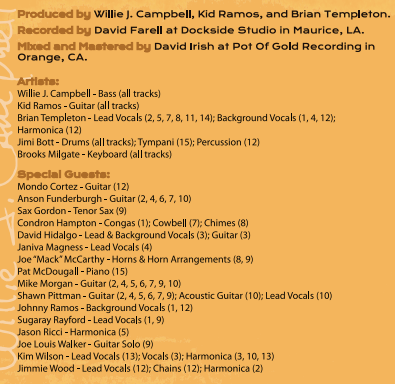
Tracks and credits:
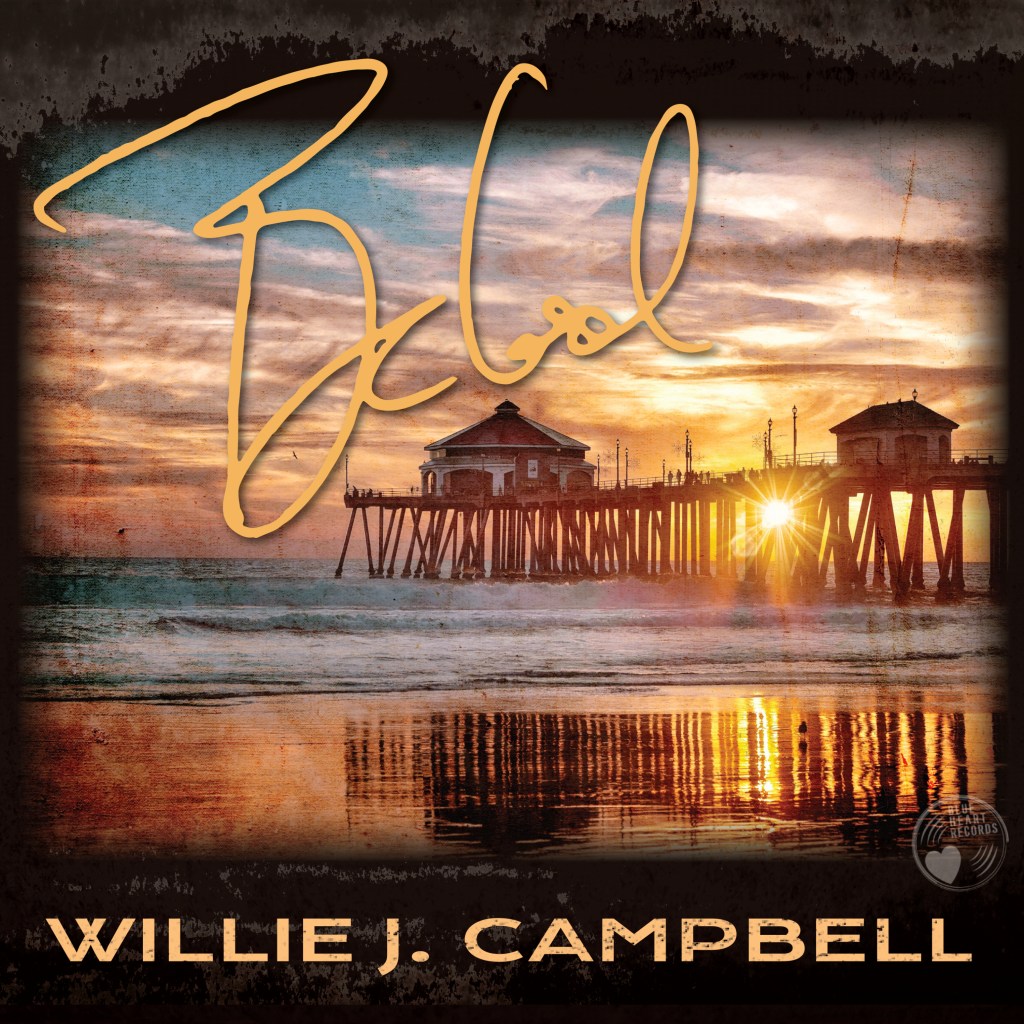
Roadhouse Album Review: “Be Cool” is an eloquent musical tribute to the many talents of Willie J. Campbell

Willie J.Campbell — “Be Cool” — Blue Heart Records

Willie J. Campbell was one of those all-purpose musicians who was a bass player, singer, songwriter — and in his 50-year career he became an essential ingredient of several great bands, including the James Harman Band, The Fabulous Thunderbirds, the Mannish Boys and the Proven Ones.

That heady career was interrupted in March of 2022, when Campbell was diagnosed with ALS (amyotrophic lateral sclerosis, sometimes known as Lou Gehrig’s disease).

Knowing that his time was limited, Campbell planned a final album of the music he loved, created with the musical friends that he loved. And just eight weeks before he died, he recorded his final music.

That joyous final session is this album, “Be Cool,” whose title is based on words Campbell was fond of using, and includes as guests guitarist Kid Ramos, Campbells’s co-producer Brian Templeton, plus Fabulous Thunderbirds frontman Kim Wilson, Sugaray Rayford, Los Lobos’ David Hidalgo, Joe Louis Walker, Janiva Magness, Jimi Bott, Jimmie Wood, Jason Ricci, Anson Funderburgh, Mike Morgan, Shawn Pittman, Johnny Ramos, Condron Hampton, Mondo Cortez, Pat McDougall, and Brooks Milgate. Blue Heart Records worked with the Campbell family in preparing the release to ensure that this album accurately reflects the impact Campbell had on those around him.

The album opens with the funky-tough “You Better Let Go,” featuring Rayford on massive vocals, then Milgate’s piano sparks the rocking “No More,” featuring Funderburgh. Hidalgo provides vocals and guitar and joins Wilson on harmonica for a cover of Los Lobos’ easy-riding “This Time.”

“Can’t Stay Away” powers up next, with Magness soaring emotionally and vocally on the torchy blues. “Drone” evokes a Mississippi Hill Country trance with Ramos on guitar and swampy harp by Ricci. The rollicking instrumental “Docksidin’,” plays Cambell’s bass off Funderburgh’s guitar with tasty B3 licks.

“My Fault”, originally performed by Rod Stewart and written by Stewart, Ron Wood, and Ian McLagan, bursts its hard-rocking seams with Rolling Stone riffs, and “Forever Shall Be” is rich with soulful gospel tapestry. A snappy horn chorus welcomes Rayford back to the vocals on “Standby,” with an assist from Walker on guitar. Pittman gets down and swampy with vocals on “Devil on My Shoulder” featuring a stinging Funderburgh solo, and harp work from Wilson.

“She’s A Twister” is hard-driving, old-fashioned rock ‘n’ roll with guitar and Milgate’s barrelhouse piano. “One Man Chain Gang” features Wood on haunting vocals pleading for rescue. Wilson is back on vocals and harp for a sparkling cover of Huey P. Smith’s “You Can’t Stop Her”, a New Orleans classic. Templeton pours his heart out in the plaintiff love ballad, “Use as Needed.”

The closer belongs to Fleetwood Mac’s Peter Green, whose eloquent instrumental “Albatross” is a spirit-lifting finale, pointing to Campbell’s final thoughts in the liner notes: “Love fully in the moment. Enjoy everyone and everything that you can, while you can”.

“Be Cool” is an uplifting album, a fitting musical tribute to the great talents of Willie J. Campbell, overflowing with the music that filled his heart and his life.


“This Time,” from the album:

Tracklist:
01. Willie J. Campbell, Sugaray Rayford – You Better Let Go (feat. Sugaray Rayford)
02. Willie J. Campbell, Anson Funderburgh – No More (feat. Anson Funderburgh)
03. Willie J. Campbell, David Hidalgo, Kim Wilson – This Time (feat. David Hidalgo & Kim Wilson)
04. Willie J. Campbell, Janiva Magness, Anson Funderburgh – Can’t Stay Away (feat. Janiva Magness & Anson Funderburgh)
05. Willie J. Campbell, Jason Ricci – Drone (feat. Jason Ricci)
06. Willie J. Campbell, Anson Funderburgh – Docksidin’ (feat. Anson Funderburgh)
07. Willie J. Campbell, Anson Funderburgh – My Fault (feat. Anson Funderburgh)
08. Willie J. Campbell – Forever Shall Be
09. Willie J. Campbell, Joe Louis Walker, Sugaray Rayford – Standby (feat. Joe Louis Walker & Sugaray Rayford)
10. Willie J. Campbell, Kim Wilson, Anson Funderburgh, Shawn Pittman – Devil On My Shoulder (feat. Shawn Pittman, Kim Wilson, & Anson Funderburgh)
11. Willie J. Campbell – She’s a Twister
12. Willie J. Campbell, Jimmie Wood, Mondo Cortez – One Man Chain Gang (feat. Mondo Cortez & Jimmie Wood)
13. Willie J. Campbell, Kim Wilson – You Can’t Stop Her (feat. Kim Wilson)
14. Willie J. Campbell – Use As Needed
15. Willie J. Campbell – Albatross

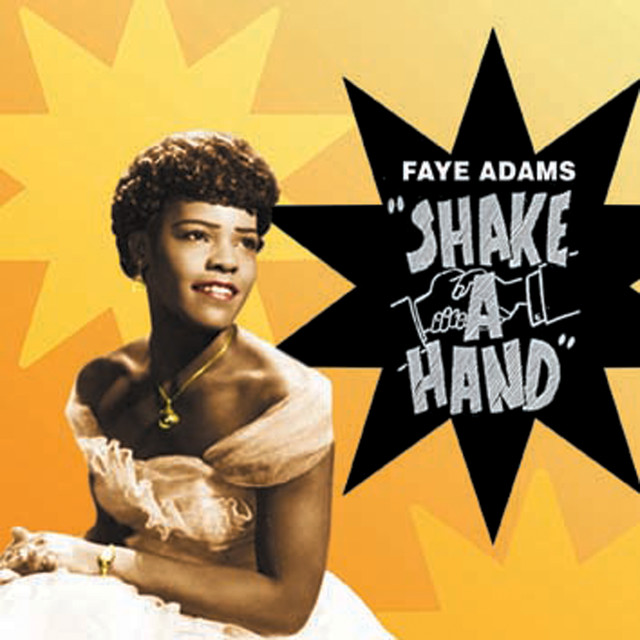
Roadhouse Ramblings: A look back at Faye Adams, whose 1953 recording of “Shake A Hand” is still a classic

I was listening to some older music in my collection recently — some fine old R&B and soul. One of the songs that turned up is one I’ve heard at least a million times (no, I haven’t really counted) since its 1953 release — “Shake A Hand” by Faye Adams.

Even though it’s been covered by everyone from Jackie Wilson to Tina Turner to Little Richard to Elvis Presley, Adams’ version is the one I find the most moving, powered by Adams’ soaring voice and gospel roots.

The song was a big hit. It topped the R&B charts and held that spot for a couple months, until it was replaced by the musically similar follow-up, “I’ll Be True.” Together they sold almost two million copies. Adams’ third single, “Every Day,” didn’t do much, but she returned to the number one spot in mid-1954 with “Hurts Me to My Heart.”

So I thought that perhaps it would be a good idea to revisit Faye Adams, born Fanny Tuell in 1923, and recommend her music.

Adams had an especially soulful quality on some of her recordings, probably a product of her gospel upbringing. She was the daughter of David Tuell, a gospel singer and one of the key figures behind the Church Of God In Christ movement that would later contribute performers such as Billy Preston and Edwin Hawkins. At the age of five, Adams joined her siblings to sing spirituals as the Tuell Sisters. After marrying her future manager Tommy Scruggs in 1942, Tuell shifted toward secular music.

Under her married name, Faye Scruggs, she became a regular performer in New York nightclubs in the late 1940s and early 1950s. While performing in Atlanta, she was discovered by the singer Ruth Brown, who won her an audition with the bandleader Joe Morris of Atlantic Records. Morris changed Scruggs’s name to Faye Adams, and signed her to Herald Records. Her first release was Morris’s song “Shake a Hand.”

Adams’ vocals remind me of Brown and LaVern Baker, two of the best R&B singers of their day — or even since. All of them seemed to be bridging the gap between R&B styles and what was about to be known as rock ‘n’ roll. They also had a great deal of what would soon come to be called “soul.”

Indeed, according to the Acoustic Music organization, the “first clear evidence of soul music shows up with The “5” Royales, an ex-gospel group that turned to R&B and in Faye Adams, whose “Shake A Hand” becomes an R&B standard.”

Following her hit singles, she left the Morris band and was billed as “Atomic Adams.” And you can find a fine compilation of 40 of her songs on a release called “The Very Best of Atomic Adams.” By the late 1950s, her career diminished, although she continued to record into the early ’60s.

By 1963 Adams had retired from pop music. She remarried in 1968 and, as Fannie Jones, returned to gospel music and family life in New Jersey. In the 1970s, she was credited as co-writer, with her husband Clarence E. Jones, of several gospel and secular songs, and released a single, “Sinner Man”, on Savoy Records.

There isn’t a lot of information about her on the interwebs, where this brief history has been found, and I couldn’t even find anything to indicate when she died.

But her music lives, and it’s worth a listen, as she contributed a powerful vocal style that sat astride the musical bridge between R&B, soul and rock.

Her singles shift between those styles, usually in front of what sounds like a full band, sometimes crisp with sultry sax solos, and sometimes soaring ballads.

Adams didn’t become as famous as Brown or Baker, both powerful and popular singer from that era, but her big voice — almost a blues shouter at times — and recordings reflect similar qualities. And on more soulful material, it’s easy to hear the influence of the gospel music that sparked her early years, and to which she eventually returned.

Give her music a hearing. It deserves to remain part of our musical story.

Here are a couple YouTube videos to get you started.

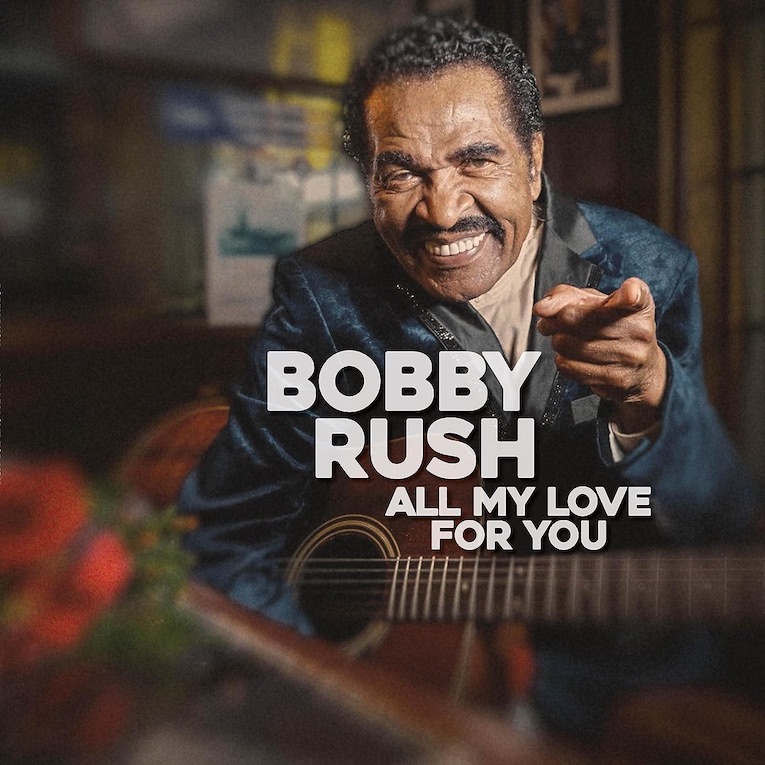
Roadhouse Album Review: Bobby Rush digs deep into his very long blues life for “All My Love for You”

Bobby Rush — “All My Love For You” — Deep Rush Records/Thirty Tigers

Bobby Rush cut his first single, “Someday,” over a half-century ago in 1964. His recording of “Chicken Heads” in 1971, still more than a half-century ago, gave him his first big musical break.

After many, many performances (he was a Chitlin Circuit star), recordings and years, and nearly a lifetime of blues, Rush won his first Grammy in 2017 for Best Traditional Blues Album for “Porcupine Meat.” He was 83. Four years later, he won again, the Best Traditional Blues Album for “Rawer Than Raw.”

It’s apparently never too late to crank out a new album, so of course Rush has released his latest, “All My Love For You,” a few months ahead of his 90th birthday in November.

The new album is a collection of original songs, as Rush says, “for how I got to where I am now.” In an interview with TheUrbanMusicScene.com, Rush says:

“I wanted to approach this album to be a collection of songs for how I got to where I am now. Sonically I made albums in different directions recently like the solo acoustic “Rawer than Raw” and full production album “Porcupine Meat.” I wanted to do something that had the rawness in it, the commercial side of it, and have the blackness and whiteness inside of it. I want to thank people for letting me be myself. Now I have crossed over but I haven’t crossed out. With the title, I wasn’t talking just about a woman, but everyone who has anything to do with Bobby Rush: the fans, the media, the promoters, the label and distributor, booking agents, management, and anyone else who has contributed to my life and career, this is All My Love For You.”

With all that in mind, this album opens with “I’m Free,” Rush’s personal story of leaving his harsh early years behind and becoming the consummate performer he is today: “I’m free, I’m free, look at me, can’t you see? / I’ve got the shackles off my feet and the chains off my mind.”

I’ve seen Rush perform a few times over the years, and in a way, this album reflects what he does on stage. There’s a bunch of muscular blues here, and even though the songs are freshly written, their tone and spirit reflect the rich history of the music on which Rush readily draws. There are also some soulful vocals, some expertly conjured harp musings and some trademark raunchy Rush humor.

It’s a splendid Bobby Rush performance, made even more meaningful when you realize just how much he has lived the blues life and how that experience has been expressed through his music. If you’re a deep blues fan, or a fan of those deep blues, you need to visit with him the musical places Rush has been.

In an interview with writer Steve Baltin  at Tidal, Rush sums up this album very neatly: “I’ve been wondering about this record, where it’s going to take me. I’m taking my chances, thinking this record is going to be one of the best records that I’ve ever recorded in my life.”

That may well be true. And if it is, considering what else he’s done with his blues life, that would be one helluva accomplishment.


An interview with Bobby Rush on NPR by Mary Louise Kelly

The full interview with Bobby Rush on Tidal by Steve Baltin 


The song “I’m Free”:

All My Love For You tracklist:
1) I’m Free
2) Running In and Out
3) I Want To
4) One Monkey Can Stop A Show
5) I Can’t Stand It
6) TV Mama
7) I’ll Do Anything For You
8) I’m the One
9) You’re Gonna Need A Man Like Me
10) I Got A Proposition For You

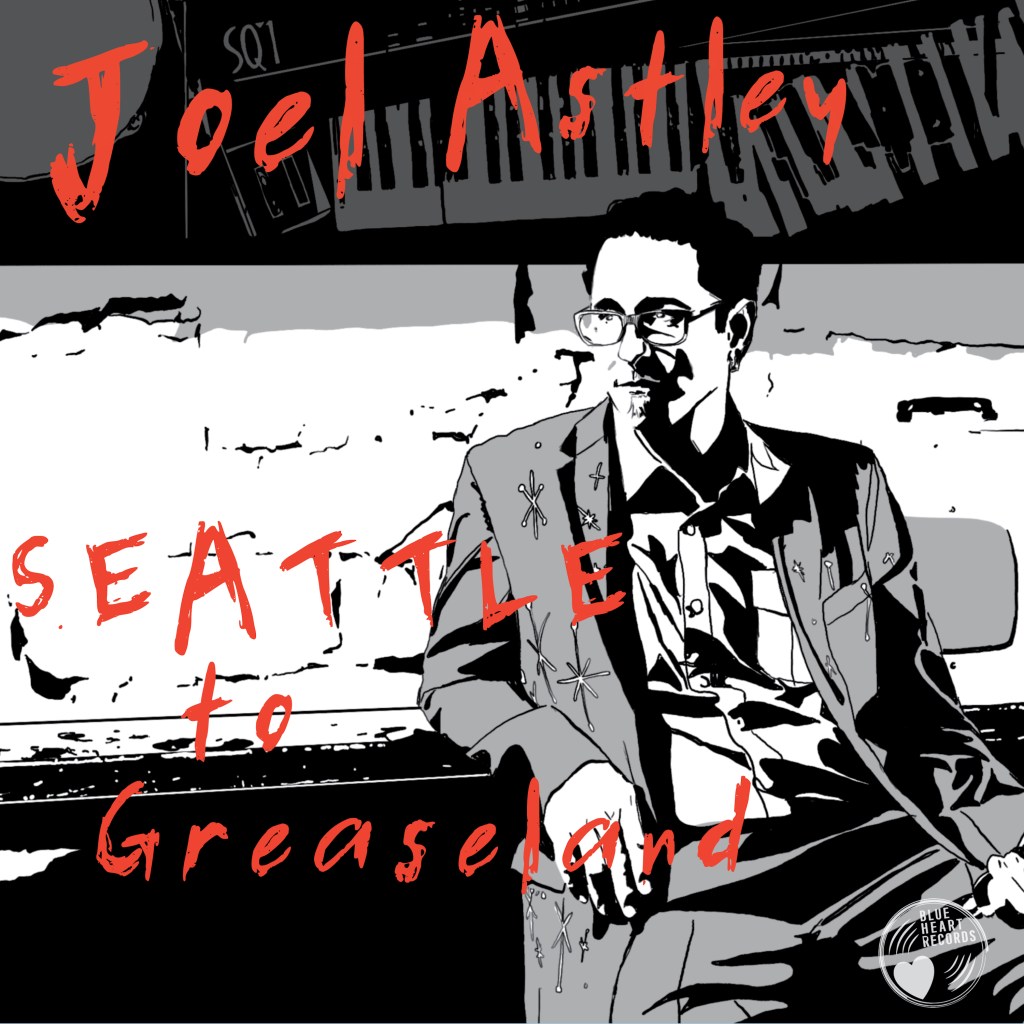
Roadhouse Album Review: “Seattle to Greaseland” is a sparkling debut by harp-wizard Joel Astley

Joel Astley — “Seattle to Greaseland” — Blue Heart Records (Aug. 18 release)

If a picture is worth a thousand words, what do you get when a visual artist trades his images for blue notes?

In this case, the answer is the very excellent, rocking debut album of Seattle singer / songwriter / harmonica-wizard Joel Astley.

It was only about 10 years ago that Joel Astley formed his first band, after working for years as a visual artist. He soon began to garner an impressive list of multiple “Best Of The Blues” awards over the last six years from the Washington Blues Society for Best Harmonica Player, Best Male Vocalist, Best Songwriter and Best Performer.

He’s in fine company for this sparkling session of 11 finely crafted originals — Chicago’s Johnny Burgin on guitar; Charlie Musselwhite’s rhythm section of drummer June Core and Randy Bermudes on bass, plus backup singers Marina Crouse and Jill Dineen. Kid Andersen, whose nearly omniscient Greaseland Studios produced, adds keyboards and electric guitar.

And maybe because of his artistic background, Anderson says: “Joel Astley is the Picasso of the Blues.”

Everything kicks off with one of album’s sharpest tracks, the bluesy “Born Cryin’,” — “The blues has been around from the dawn of time, that’s why everything that’s born was born cryin’,” featuring a deliciously swampy harp solo. Next is the furious fun of a little jump tune, “Candy Shop,” with sweet guitar licks and romping B3.

“Just Right” follows with a touch of roadhouse rockabilly, and then “Karma Wheel” takes a philosophical turn on revenge behind a stinging guitar. “Secondhand Kid” features slyly self-effacing lyrics highlighted by Burgin’s guitar work and Astley’s soaring harp. “Takin’ It With Me” swings easily in defiance of the traditional thinking of “you can’t take it with you.” The smoking “Hot as Hell” rocks hard in tribute to a young lady who’s caught his lyrical eye.

“Down To The Rims” is another tough rocker about getting the most out of life, and “Work With You Got” is musically self-explanatory with a little response from backup vocals. “Bobby’s Place” is an ode to the former 88 Keys, known as Bobby’s Place, a woodshed for Astley’s earlier years.

The closer is “No Brighter Gold,” a gospel-flavored call-and-response with backup singers joining in an enthusiastic finale that leaves your feet tapping and your hands clapping in a joyous celebration.
Astley says of his music: “Every work of art has its ideal vessel; some creative statements are rendered in clay or oils, some are pounded out on the keys of a typewriter, and some are belted out in tiny blues clubs through a cigarette haze. The aim is always the same: to forge a human connection.”

The human connection here is Astley’s creative songwriting, his swinging harp work, and the genuine musical joy from the entire cast. You should make that connection, and enjoy the excellent music of Joel Astley.


I couldn’t find anything from the album, but here are Joel Astley & Johnny Burgin at Blue Velvet Studios – Aug 7, 2021

Track list:
Born Cryin’
Candy Shop
Just Right
Karma Wheel
Secondhand Kid
Takin’ It With Me
Down To The Rims
Work With You Got
Bobby’s Place

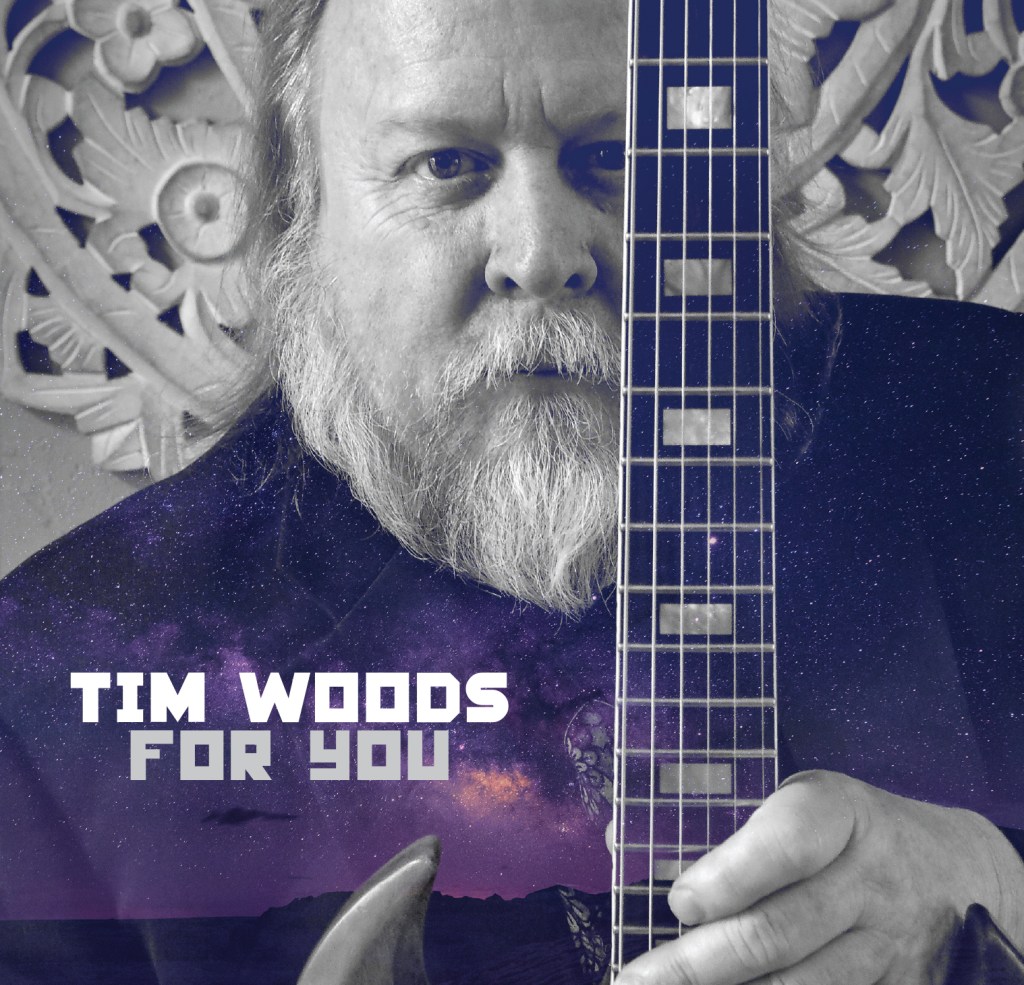
Roadhouse Album Review: Tim Woods creates musically imaginative “For You”

Tim Woods — “For You” — Self-release

The talents and the musical styles of guitarist / singer / songwriter Tim Woods are hard to characterize. Let’s just say they never fail to impress with their creativity, eclecticism and musical exploration. And it’s fine listening as well!

It’s also worth noting that I’m influenced by the fact that we are both Western Pennsylvania natives — Woods hailing from Sardis, a small town east of Pittsburgh in the Murrysville area, for those of you with a specific geographical interest.

Also, for Pittsburgh and blues guitar fans, Woods was influenced by his guitar instructor, Ernie Hawkins, a notable Pittsburgh blues musician and master of the complicated finger-picking style of the Reverend Gary Davis, with whom Hawkins had studied. So it’s not hard to see, and hear, the historic blues DNA in Woods’ background.

That background may well have led to Woods’ excellent first album in 2010, “The Blues Sessions,” recorded during a six-month studio tour of Clarksdale, Atlanta, and Chicago. It featured 16 guest musicians, including such legendary artists as David “Honeyboy ” Edwards, Big Jack Johnson, John Primer, Bob Stroger, Bobby Lee Rodgers, and Jeff Sipe.

Here’s what I wrote about that album:

“Woods has put together an amazing set of tracks featuring some classic and some not-so-classic blues, in which he displays serious guitar chops (he plays and picks with his thumb, allowing him to play lead and rhythm), and a nice gritty voice for the music he’s selected. It’s not enough that Woods sounds like he found Chicago and the Delta somewhere in the depths of Western Pennsylvania, but he’s surrounded here by musicians who bring a powerful blues history to the music.”

To illustrate how Woods has indulged his musical creativity, his album “Vortex,” which came just before this one, was an exercise in sonic experimentation. Here’s what I wrote about “Vortex”:

“The first words on the first track, “Ready” are “I’m always dreaming…” and lure you right into this dreamy-blue landscape of music and lyrics. It’s sometimes a trippy throwback to ’60s psychedelia, moody blues and new-age rock, if there is such a thing. It’s enchantingly tough, inspired by a vortex of feelings, and, maybe, just one toke over the line. Pay close attention to Woods’ creative guitar work and his lyrical wordsmithing.”

All of this is to make the point that Woods’ music never stops moving. This session was recorded in Georgia with producer and multi-instrumentalist Bobby Lee Rodgers, with Paul Hornsby on organ and saxophonist Erik Lawrence.

“For You” is filled with a variety of original songs and styles that kick off with the tough rocker “Can’t Stop Rockin’,” whose sound reminds me of the Doors for some reason, but nonetheless stands all on its own. The title track follows, a swinging love song filled with a rich instrumental tapestry.

“Are You Kind?” contains one of those ’60s-style odes to peace, love and guitar. “It’s True” is a gentle ballad full of mystical lyricism and energy. The funky instrumental “Mimic” draws on Woods’ jam-band youth, and “Low Down Blues” gets down with a strong vocal turn (“looking for peace in this madness … get rid of these lowdown blues.”)

“Believe” pays lyrical homage to the strength of quiet perseverance, “Reaching Out” throbs a near-hypnotic energy that could well have roots in North Mississippi Hill Country trance music, “The Story” is an ethereal journey with an other-worldly message that rocks with worldly persistence. The exotic closer, “Within,” adds an introspective note of mystical-sounding harmonies, sort of its own magical mystery tour of a special night.

“For You” is a magical mystery tour of music and lyricism from the musical imagination of Tim Woods. Take the trip with him.


Here’s a fine interview with Tim Woods by Michael Limnios on the Blues Gr blog.


I couldn’t find any video from this album, but here’s a 2020 video of a live performance by the Woods Family Band.

“For You” Tracklist:
1. I Can’t Stop Rockin’ (3:48)
2. For You (2:41)
3. Are You Kind? (4:37)
4. It’s True (3:49)
5. Mimic (2:48)
6. Low Down Blues (3:35)
7. Believe (4:49)
8. Reaching Out (3:48)
9. The Story (5:28)
10. Within (4:38)

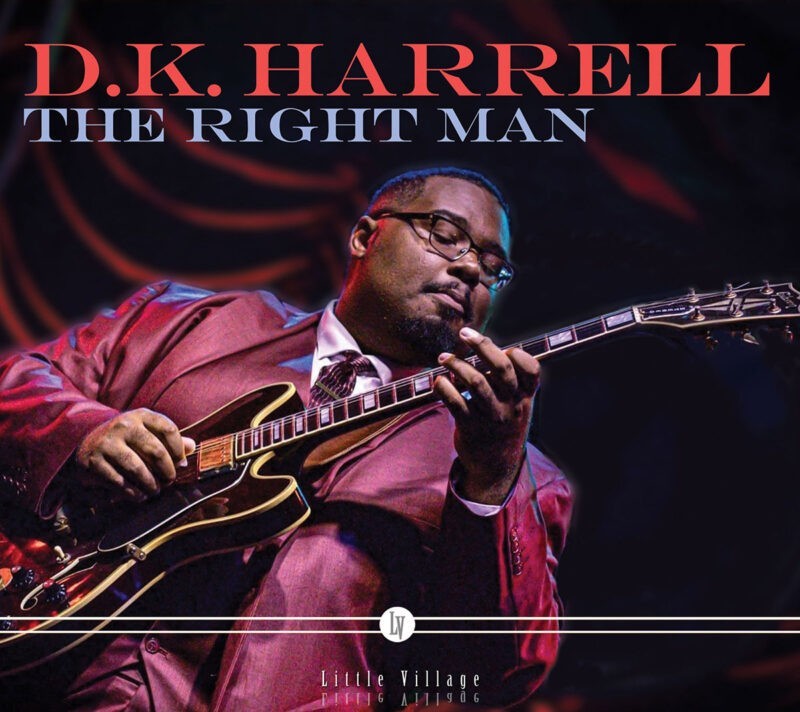
Roadhouse Album Review: D.K. Harrell offers a dazzling blues debut with “The Right Man”

D.K. Harrell — “The Right One” — Little Village

D.K. Harrell’s new album is full of self-assured, musically astute and lyrically confident original blues music.

And it’s just his first album. And … he’s just 25.

Harrell’s sound isn’t entirely original, though, which makes it like so much of the blues, built on the layers of the music that has come before him.

“My sound now is a gumbo of Guitar Slim, BB King, Buddy Guy, Magic Sam, Freddie King, Grant Green, Django Reinhardt, and a few others,” Harrell says in an interview on the Michael Limnios Blues Network. “The foundation of my playing and tone is BB King style, I feel many players can hit B.B. King licks but getting that warm but bright tone and vibrato can be a challenge even for myself.”

It’s not too much of a challenge, though, as his music on this album so aptly demonstrates. Harrell shows a finesse beyond his years; his songwriting is sharp, his vocals are strong and mature, and his guitar work is dazzling.

From the first track, the title song “The Right Man,” Harrell takes command on a sturdy shuffle with tough vocals and guitar work that’s a pure joy to hear. “You’re A Queen” follows and adds background vocals that add another dimension to his own vocals.

“Get These Blues Out Of Me” offers up a slow blues that simmers with down-home flavor. “You’d Be Amazed” struts with a funky beat behind vocal shouts and stinging guitar licks. “While I’m Young” rocks ever so tightly in what might well be a very personal statement of musical purpose.

“Not Here For A Long Time Pts. 1 and 2” says he’s just “here for a good time” and introduces band members who make their own musical statements in a delicious romp. The two parts are separated by “Hello Trouble,” (“Trouble comes with a smile and real short dress…”), another deep blues kicked into high gear by razor-sharp horns, exuberant vocals and fierce guitar work.

“Honey Ain’t So Sweet” opens with a strong guitar flourish and combines a rich blend of instrumental backup with sly lyrics delivered in style. “Leave It At The Door” (“Life’s just too short for wasted tears…”) features a backup chorus of bandmates, and the closer, “One For The Road” kicks off with a gorgeous organ-drenched intro, then shifts into an upbeat farewell that keeps the organ rocking up front, adding still more sizzling guitar.

Harrell’s first album sounds more like the work of an accomplished blues veteran than a first-time effort. With his world-wise songwriting, elegant guitar work, uncannily on-target vocals and the great band behind him (with a shoutout to Kid Andersen’s Greaseland studios), D.K. Harrell shows that he’s a major talent to be reckoned with on the blues stage.


Here’s a very thorough and informative interview with Harrell at Blues Gr, home of the Michael Limnios Blues Network.


Here’s the title track, “The Right Man”:

Track list:
01. The Right Man
02. You’re A Queen
03. Get These Blues Out Of Me
04. You’d Be Amazed
05. While I’m Young
06. Not Here For A Long Time Pt. 1
07. Hello Trouble
08. Not Here For A Long Time Pt. 2
09. Honey Ain’t So Sweet
10. Leave It At The Door
11. One For The Road

Roadhouse Ramblings: Discovering the 1920s and ’30s blues of Alger “Texas” Alexander

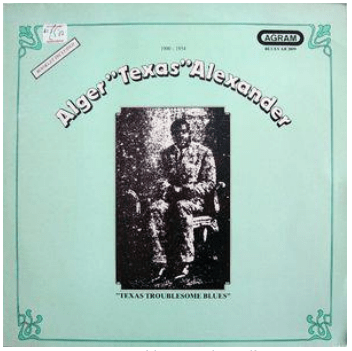
The album cover from a 2017 compilation of Alexander’s early recordings on the Agram Blues label.

It’s always a pleasure to find out about a slice of blues history that I haven’t known about, especially if there’s some music connected to it.

This new find (for me) comes from reading an article in the July 28 issue of Texas Monthly about a long-gone bluesman named Alger “Texas” Alexander. The article is part of the series, “Texans You Should Know” highlighting overlooked figures and events from Texas history.

It’s very possible that Alexander may be well known to some of you, and if so, I apologize for underestimating your blues knowledge. If not, his music should come as a pleasant surprise — he is regarded as quite an important figure in early blues history — the late 1920s and early ’30s.

Prather’s article is titled “The Myths and Melodies of Forgotten Bluesman Texas Alexander,” and I would paste it all in here, except it’s a long read, and also, I might be violating copyright law! The author of the piece is music historian Coy Prather, who published the book “A Tombstone for Texas: Texas Alexander and the Blues Pioneers of Texas,” in spring of 2023.

Here’s a summary of Alexander’s work from Prather’s article:

Alexander was “one of the major singers of Texas, and indeed of the blues as a whole,” blues historian Paul Oliver wrote, “one whose work, more than that of any other blues singer, was rooted in the vocal traditions of the plantation and the penitentiary.” Fulson, who got his start in music by touring with Alexander, was another of the few who never forgot him. “When he sang you could hear him a block away,” Fulson later recalled. “He really had that big voice. He had a big chest and he didn’t sing, he just roared. . . . He filled every place he went in.”

Alexander did not play an instrument but sang in a haunting voice to the accompaniment of some of best early musicians, including future guitar giants Lonnie Johnson and Eddie Lang. His vocals combined the eerily primitive yet sophisticated style often found in the best early blues singers. His songs were mostly slow and mournful stories that seemed to be drawn from his own personal travails.

Alexander’s was prolific, recording 66 singles, of which Paul Oliver wrote: “He might well be said to have been the quintessential blues [singer] for all but one of his sixty-six issued titles . . . were blues of the most rural kind.”

In 1927, he began a recording career that continued into the 1930s, recording sides for Okeh Records and Vocalion Records. Over the years he worked with a number of other artists, including Lang, Johnson, King Oliver, Little Hat Jones, the Mississippi Sheiks, J. T. Smith, and Lightnin’ Hopkins.

After 1945, Alexander returned to performing and recording. His last recording was made in 1950 with Benton’s Busy Bees, with Leon Benton on guitar and Buster Pickens on piano. Alexander died in 1954, at the age of 53. He was buried in Longstreet Cemetery, in Montgomery County, Texas.[2]

Here’s a list of his recordings, many of which were later issued in album form by a variety of labels. I found that my streaming service, Amazon Prime Music, will play many of his songs. YouTube offers choices as well.

Prather has also submitted to the Montgomery County, Texas, Historical Commission for a marker for Algernon “Texas” Alexander: Application for an Official Montgomery County Historical Marker.

If you’ve never heard Alexander, you should try his music, an important piece of early blues history.


Here are a few of Alexander’s recordings. The first three are from the late 1920s and early ’30s. The last one is from his final session in 1950.

From 1950

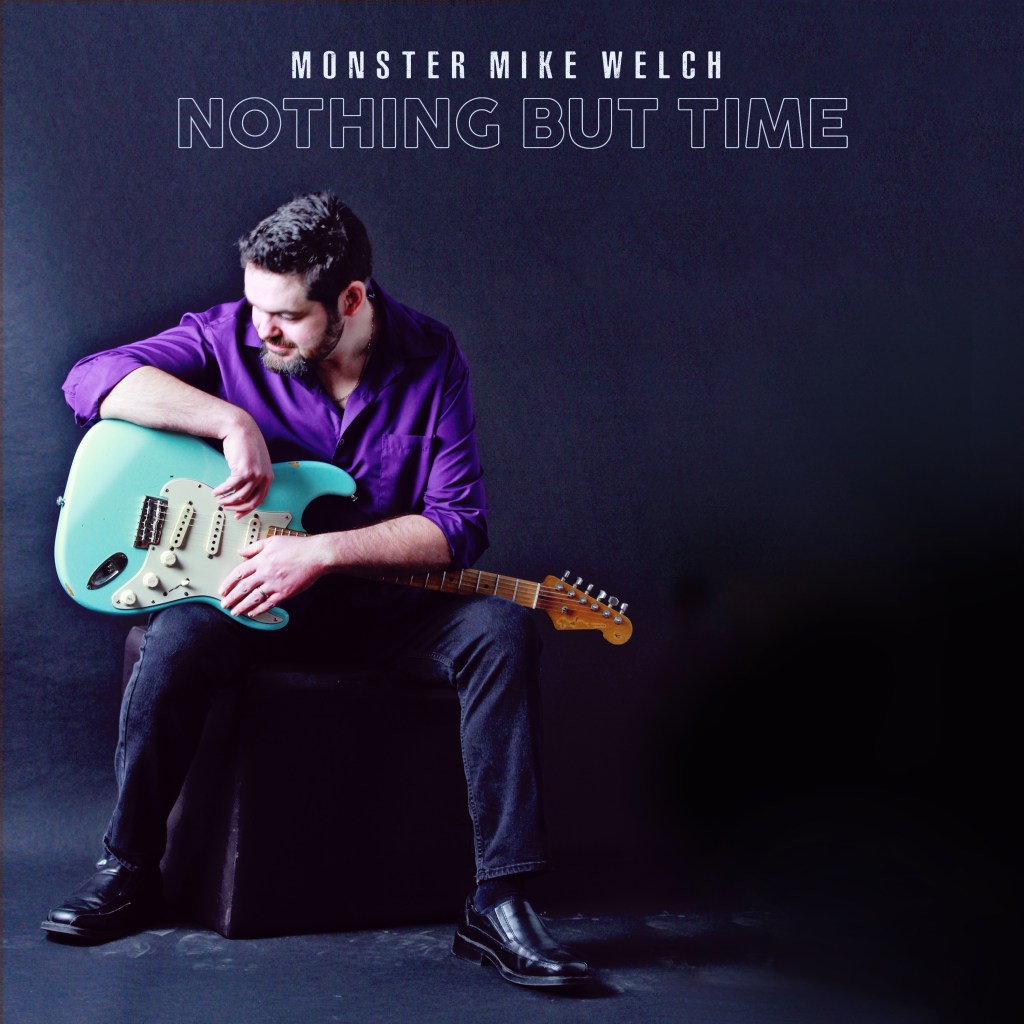
Roadhouse Album Review: Mike Welch’s “Nothing But Time” is one sizzling “monster” guitar session

Monster Mike Welch — “Nothing But Time” — Gulf Coast Records

Mike Welch, who became “Monster” Mike Welch when comedian/actor/”Blues Brother” Dan Aykroyd hung that nickname on him because of his guitar prowess when he was just 13 years old.

The name stuck, and fortunately for us, the prowess has just gotten better.

In 2001, the Boston-based Welch joined the fine New England blues band, Sugar Ray and the Bluetones, where he stayed until 2017. He left to focus on his partnership with vocalist Mike Ledbetter, which became the Welch Ledbetter Connection.

That led to seven Blues Music Award nominations, which resulted in winning Best Traditional album in 2018, and Welch won the BMA for Guitar (and Band ) in 2019. Welch has received three consecutive Blues Music Award nominations. Sadly, Ledbetter died unexpectedly in January of 2019. (Personal note: I was on the LRBC cruise that Ledbetter was to have been on with Welch later that month. There were many tearful tributes, all beautiful to witness.)

Welch then contracted COVID, which kept him out of pocket for a year and a half. “At its worst,” he says, “long Covid was completely debilitating, and I spent most of 2022 genuinely unsure whether I’d be able to play music full time ever again. Kid Andersen and Mike Zito inspired me to take a leap of faith and make a new start; they both had my back and gave me the support and freedom to make the most personal record of my career.”

That record, of course, is the superlative “Nothing But Time,” recorded at Andersen’s California Greaseland Studios and released on Zito’s Gulf Coast label.

The supporting cast here is drawn from Andersen’s outstanding studio players including two-time Grammy winner bassist Jerry Jemmott, pianist Bob Welch (no relation), drummer Fabrice Bessouat, plus horns and backup singers. The 14 tracks include ten originals, two Robert Johnson classics, one from Buddy Guy, and one from George Harrison. 

Welch opens the album with fierce guitar licks on “Walking to You Baby,” backing up a tough vocal turn that sets the tone for the entire session. Welch hasn’t been known for his singing, but this album shows off his considerable vocal chops. Robert Johnson’s powerful blues, “If I Had Possession Over Judgement Day,” switches gears and kicks in with Rick Estrin’s sharp harp work. The title track, “I’ve Got Nothing But Time,” shuffles in nicely, adds horns, backup singers in a little call and response, and a stinging guitar solo.

Harrison’s “I Me Mine” is an eloquent take on that familiar song, leading into “Offswitch Blues,” a hard-charging tune with wicked guitar, horns, and keys all leading the way. “I Ain’t Saying” powers into place, followed by the rugged group of “In Case You Care,” “Time to Move,” and “Losing Every Battle.”

“Hard to Get Along With” is pure straight-ahead blues, “Jump for Joy” makes jump blues more than just a name, and then Welch’s guitar soars on the scorching “Ten Years Ago.”

“Afraid of My Own Tears Parts 1&2″ is a simply gorgeous instrumental — eight-minutes-plus of razor-sharp guitar work leading a brilliant musical ensemble in an exuberant display of Welch’s “monster” talent. This one alone is worth the price of admission.

Welch then closes quietly but elegantly with another classic, Robert Johnson’s “Kind Hearted Woman Blues,” steeped in authenticity with acoustic guitar and falsetto, and giving it a personal touch by inserting his own name into the lyrics.

This is an outstanding album, bringing back to life the passionate guitar work of Mike Welch, and adding the revival of his considerable vocal skills. Enjoy it soon. And often. It’s great music.


Here’s “I’ve Got Nothing But Time”:

Tracklist:
1. Walking to You Baby – Mike Welch
2. If I Had Possession Over Judgement Day – Robert Johnson
3. I’ve Got Nothing But Time – Mike Welch
4. I Me Mine – George Harrison
5. Offswitch Blues – Mike Welch
6. I Ain’t Sayin’ – Mike Welch
7. In Case You Care – Mike Welch
8. Time to Move – Mike Welch
9. Losing Every Battle – Mike Welch
10. Hard to Get Along With – Mike Welch
11. Jump for Joy – Mike Welch
12. Ten Years Ago – Buddy Guy
13. Afraid of My Own Tears Parts 1 & 2 – Mike Welch/George Lewis
14. Kind Hearted Woman Blues – Robert Johnson

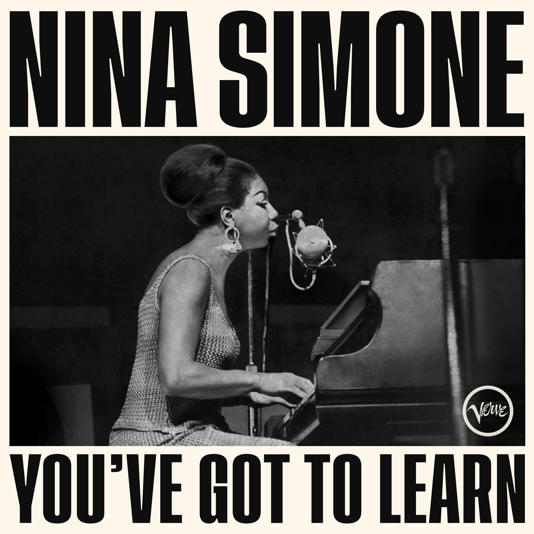
Roadhouse Album Review: Lost set by Nina Simone at 1966 Newport Jazz Festival released as “You’ve Got to Learn”

Nina Simone — “You’ve Got Learn” — Verve Records/UMe

On July 2, 1966, Nina Simone, often known as the high priestess of soul as well as a civil rights icon, performed a passionate 30-minute set at the Newport Jazz Festival.

That electrifying performance had been lost until this year, the 90th anniversary of her birth, when it was recovered and released as this album, which takes the title of the first song from the set, “You’ve Got to Learn.”

Simone plays piano in front of a small combo of drums, guitar and bass. There are occasional sounds problems with the live recording, but Simone’s power and passion shine through.

The set includes a swinging version (if that’s not too much of a contradiction) of Simone’s fiery protest song “Mississippi Goddam,” that she wrote in response to the 1963 Alabama church bombing that killed four little girls and the assassination of Medgar Evers in Mississippi that same year.

The set also includes “You’ve Got to Learn, ”‘I Loves You, Porgy,” “Blues For Mama,” “Be My Husband” and an encore, ”Music for Lovers.”

In a spoken introduction, Simone describes “Blues for Mama” as a “gutbucket blues. It is so because of its background. There’s an old porch, and there’s an old man, and there’s a beat-up guitar and a broken bottle. There are flies all around, there is molasses all around, and he is composing this tune on a hot afternoon. The lyrics are written by Abbey Lincoln, and I wrote the music. It will appeal to a certain type of woman who’ve had this kind of experience.” Midway, she tells the audience, “I guess you ain’t ready for that.”

Simone recorded nearly 40 albums between 1958 and 1973, with such songs as “I Put a Spell on You,” “Don’t Let Me Be Misunderstood” and “Feeling Good.” She died in 2003.

If you’re a fan, this is essential listening. If you’re not familiar, it’s even more essential that Nina Simone become part of your musical language.


Here’s “Mississippi Goddam” live from the album: