Roadhouse Album Review: Skylar Rogers looks at life “Among the Insanity”

Skylar Rogers — “Among the Insanity — Blue Heart Records
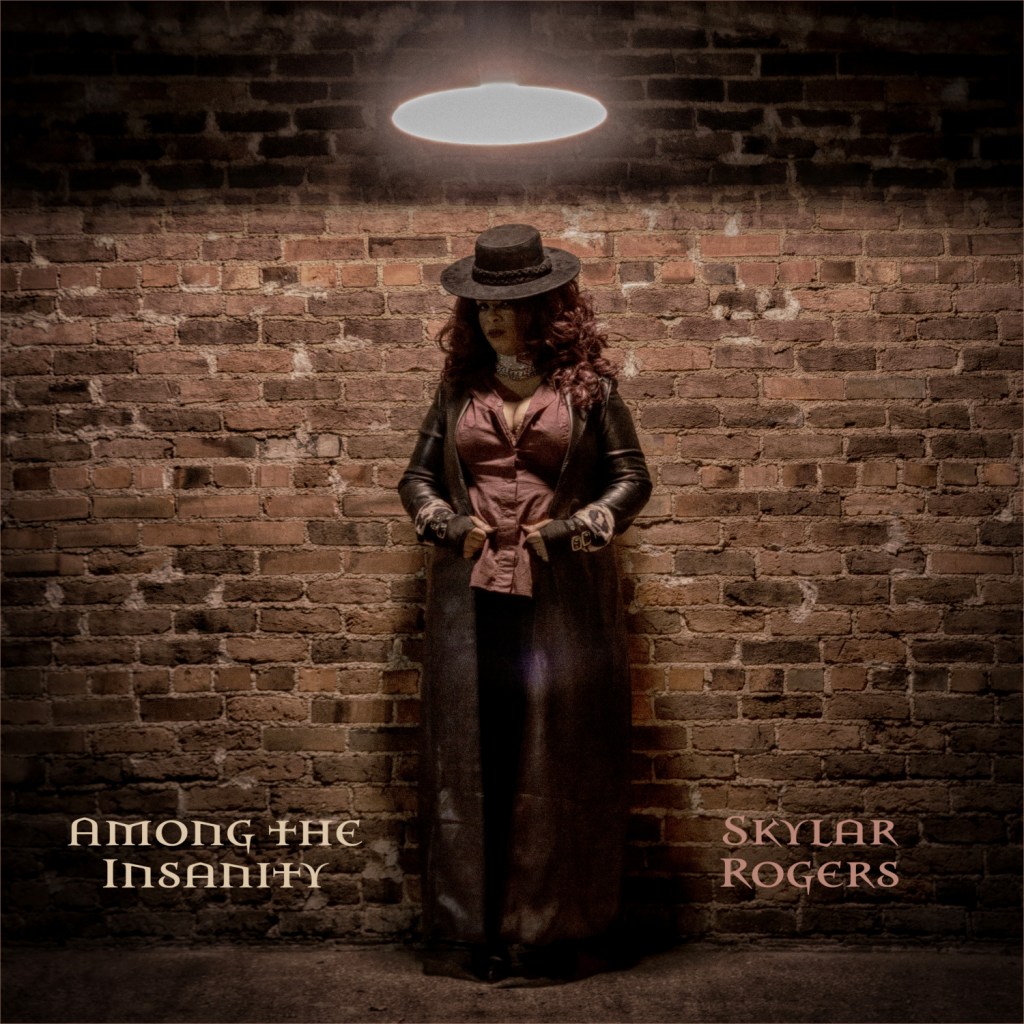
“Among the Insanity” is such a great name for a song, for an album, and for the thematic intensity that pervades this excellent musical session.

And it all works so well because it’s based on the vocal magic of Skylar Rogers on her third album, paired with the impressive emotional songwriting of Rogers and producer Terry Wilson on 12 new songs. In that vein, Rogers says that she “hopes the listener feels connected to the emotions that were put into these songs….”

The power of that emotional content begins with the opening cut, the sensuous “Love in the Left Lane,” as Rogers immediately takes charge with intense vocals and lyrics that define an independent woman’s perspective on love and life.

The pulsating “Among the Insanity” comes next, a hard-driving vocal on the R&B-laced philosophy of the broken relationship — “…ain’t no heroes here, we’re goin’ down in villainy….”

“One Last Kiss” is a beautifully sung, sadly gentle reminiscence of lost love. “Ride That Lightning” strikes with passion — “…ain’t no shelter from me baby, I’m as bad as they get…” Next, “Blame It On Rock & Roll” picks up the beat and rocks the lyric.

“When It’s Broken,” is a lyrical gem of romance over a lilting piano. “Step It Up” rocks hard again with a honky-tonk flavor and a tough message for a potential suitor. “Both Sides Of The Tale” means just what it says in life, and “Between Friends” is a soft lesson on a love triangle. “Femininity” proclaims a bluesy sensibility for its title, while the island-themed “The Water” provides an escape from all that’s gone before.

“Apology Not Accepted,” with just a stirring piano backing, is a fitting final dramatic statement of independence among the myriad insanities of life and love and the turmoil they bring.

The band that creates the framework here includes Bennett Salvay (keys), Billy Watts (guitar), Brannen Temple (percussion), Snuffy Walden (guitar), Darrell Leonard (horns), and Teresa James (background vocals).

This fine album is a life-affirming, soul-satisfying session rich with the imagery of life and love, powered by a sharp backing band, and brought to life by Rogers’ deeply soulful vocals. Her personal background, detailed in her bio, has brought this all into focus, but mainly, her music speaks eloquently for itself. An excellent album.


The title track, “Among the Insanity”:

Track List:

01. Love In The Left Lane
02. Among The Insanity
03. One Last Kiss
04. Ride That Lightning
05. Blame It On Rock & Roll
06. When It’s Broken
07. Step It Up
08. Both Sides Of The Tale
09. Between Friends
10. Femininity
11. The Water
12. Apology Not Accepted

Roadhouse Album Review: Big Shoes lace country and blues together to make great music in “Fresh Tracks”

Big Shoes — “Fresh Tracks — Qualified Records

Big Shoes is a band. I mention that mainly because, 1) it doesn’t sound like the name of a band, and 2) I had never heard them (my loss), and 3) you should definitely hear them.

Big Shoes describes itself as an “Americana Roots SuperGroup,” and it was formed as a tribute project to recreate the early music of that great American band, Little Feat. Big Shoes released its first album, “Shoes Blues” in 2015, and Step On It!” 2018. I’m not certain, but it’s worth assuming that the name “Big Shoes” may have been related to the “Little Feat” project. That would only be fitting.

The supergroup tag also turns out to be very fitting, as this criminally talented group of musicians creates a sparkling blend of country and blues, of Nashville and Memphis, of musicians eloquently in tune with their music.

Lead singer and guitarist Rick Huckaby gives smart, laid-back voice to songs that he’s mostly written or co-written, in front of a band that lopes along behind him, managing to make their crisp, tight backing sound effortless.

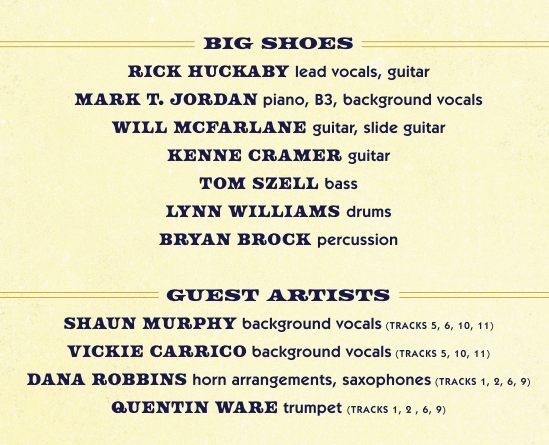
The rest of the Shoes include Mark T. Jordan on piano, B3 and background vocals; Will McFarlane on guitar and slide guitar; Kenne Cramer on guitar; Tom Szell on bass; Lynn Williams on drums; and Bryan Brock on percussion. Additional guests include: Shaun Murphy and Vickie Carrico on background vocals; Dana Robbins on horn arrangements and saxophones; and Quentin Ware on trumpet.

As a very, very brief example of their background: Big Shoes members have played and recorded with: Bonnie Raitt, Van Morrison, Delbert McClinton, Taj Mahal, Etta James, Bobby “Blue” Bland and more. Keyboardist Jordan played on Van Morrison’s classic “Tupelo Honey” album, and Bonnie Raitt’s “Road Tested.” Guitarist McFarlane has worked on albums by Levon Helm, Joss Stone, Bonnie Raitt and Bobby “Blue” Bland. He lives in Muscle Shoals, and works with the Muscle Shoals rhythm section, “The Swampers.” Huckaby is a session singer on Nashville’s Music Row.

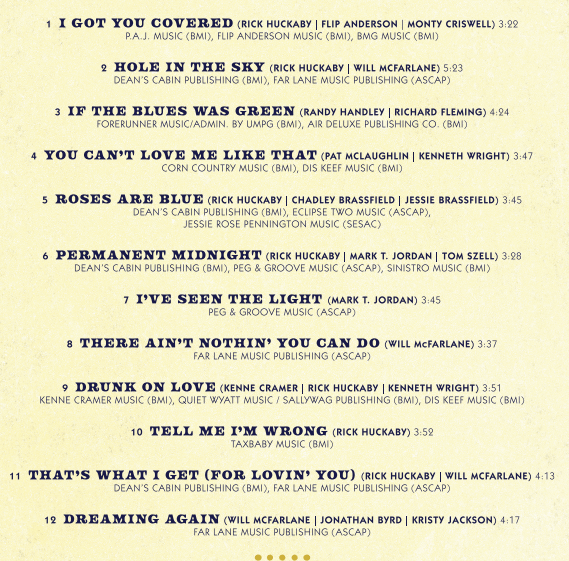
The Shoes kick off the album with the relaxed rhythms of “I Got You Covered” carrying Huckaby’s expressive vocals; “Hole in the Sky” is a tightly driven bluesy shuffle that gently swings; “If the Blues Was Green” is clever wordplay with a country two-step feel.

“You Can’t Love Me Like That” turns the music soft and thoughtful; “Roses Are Blue” continues the mood with lovely background harmonies; “Permanent Midnight” is a gorgeous ode to lost love, with the title an elegant description of the subject; “I’ve Seen the Light” offers a rocking duet with former Little Feat vocalist Shaun Murphy; “There Ain’t Nothing You Can Do” is a percussive Latinesque playground.

“Drunk on Love” opens with a discordant barroom flavor that compliments the title; “Tell Me I’m Wrong” gives Huckaby a lilting melody to float above; “That’s What I Get (For Lovin’ You)” is more bluesy country with delicious backup vocals; “Dreaming Again” wraps it all up with a hopeful love song.

One of the best things about this album is the quality of the music, and the sheer musical pleasure that it generates. The band creates a groove that runs through the entire session, no matter what style or tempo. They create just the right feel for Huckaby’s considerable vocal skills.

It all makes for great music that gets better with each listening. Try on these Big Shoes. Walk a musical mile in them. You’ll feel better.

I really didn’t want to say that Big Shoes makes some sweet sole music, but I just couldn’t help myself.


Here’s “A Hole in the Sky” from the album:

Tracklist & Credits:

Roadhouse Album Review: Cash Box Kings check in with the classic sounds of “Oscar’s Motel”

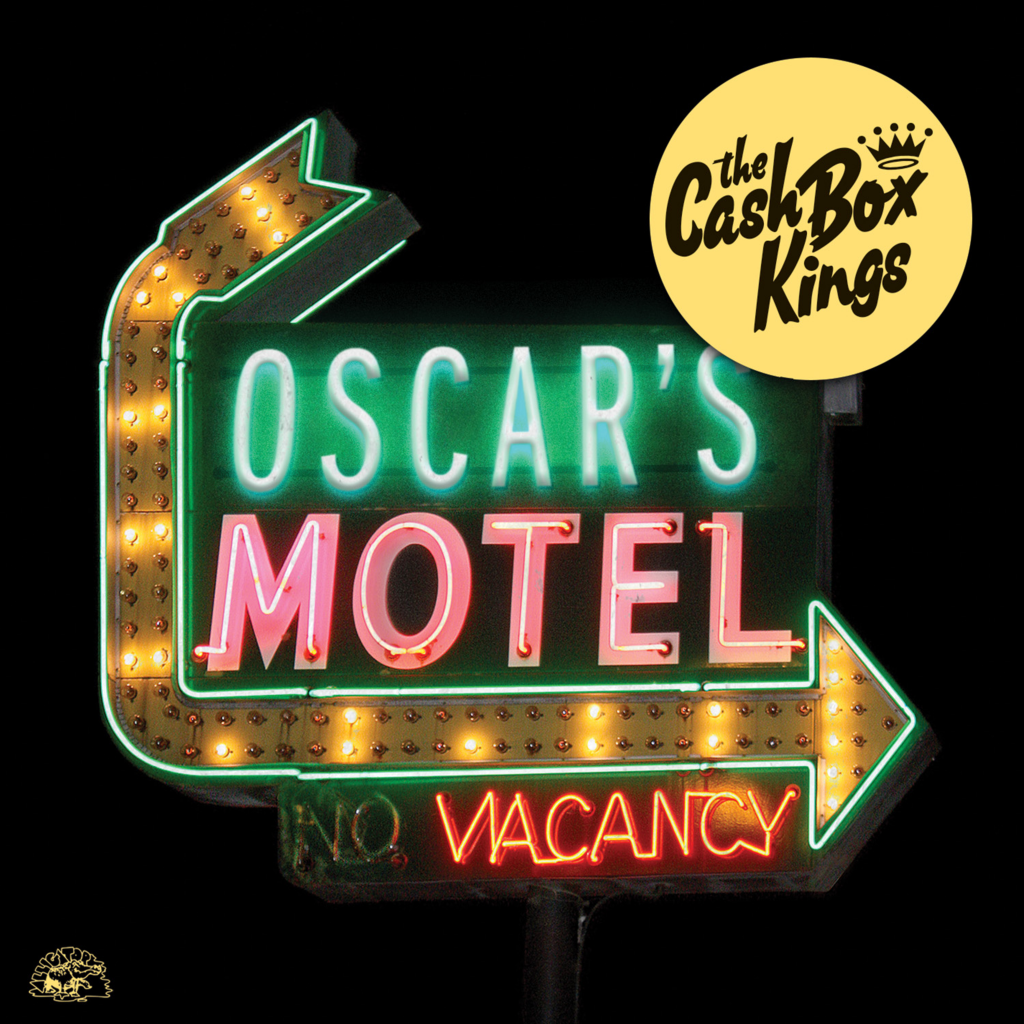
Cash Box Kings — “Oscar’s Motel” — Alligator Records

You want some tough, old-school-feel Chicago-style blues, but with a contemporary vibe?

Then you should check out the latest album from the Cash Box Kings, featuring the massive voice of Oscar Wilson, and the massive talents of everyone else involved.

Harp man, vocalist, songwriter and band founder Joe Nosek has brought together a razor-sharp ensemble of Wilson on lead vocals, Billy Flynn on lead and baritone guitar, Kenny “Beedy Eyes” Smith on drums, John W. Lauler on upright and electric bass, and Lee Kanehira on piano and organ. There is also a handful of special guests who add just the right amount of icing on the blues cake.

Special guests include vocalists Deitra Farr, Cameron Webb, and John Nemeth, guitarists Shoji Naito, Andrew Diehl, Xavier Lynn, and Jon McDonald, drummer Derek Hendrickson, and The C-Note Horns.

Most of the music on their eleventh album is original, with Wilson and Nosek sharing the writing and creating new blues in the same tough spirit as their spiritual predecessors. They also add rugged covers of a pair of blues chestnuts.

The session kicks off with the title track (imagine that, the title track comes first!), featuring Wilson’s gritty vocals, a little reminiscent of Howlin’ Wolf, in front of Nosek’s wicked harp, all shuffling in classic blues harmony. Next, “Down on the South Side” creates an image of a Chicago filled with the characters of the blues, plus one of the special guests, the C-Note horns, adding their own vivid color.

“Please Have Mercy” downshifts the mood, with a mournful harp intro fueling Wilson’s slow-burning vocal turn on the Muddy Waters song. “I Can’t Stand You” is a light-hearted pairing of the heavy-duty voices of Wilson and guest vocalist Deitra Farr. “Hot Little Mess” is pure Nosek, from the lyrics to the harp to the vocals.

The soulful Cameron Webb shares the vocals on the history lesson in “Nobody Called It the Blues,” and then Wilson relives the urgent driving rhythms of “Pontiac Blues,” the remaining cover track on the album (a footnote about the original below). “Trying So Hard” is another scorching slow blues, fueled by Nosek’s harp and Wilson’s potent pipes, with a stinging guitar adding fuel to the fire. “She Dropped The Axe On Me” is another solo Nosek effort. John Németh adds his considerable vocal chops and wry sensibilities to the envious “I Want What Chaz Has.”

The closer is a surprisingly out-of-season “Ride Santa Ride,” but a rocking good way to giftwrap the package.

“Oscar’s Motel” is the latest in a long run of outstanding music from the Cash Box Kings, who continue to create new music that remains faithful to its roots in style and substance. And it sounds great, too.


A “Pontiac Blues” footnote and a blues pet peeve: This song is credited here to “Williamson,” presumably meaning the man who wrote and recorded it, usually known as Sonny Boy Williamson II, but who was actually Alex or Aleck “Rice” Miller (or Ford, his mother’s name). In the early 1940s, a radio sponsor began referring to Miller as Sonny Boy Williamson to take advantage of the fame of the already well-known blues harpist, John Lee “Sonny Boy” Williamson, and the name stuck. For a long while, Miller was referred to as Sonny Boy Williamson II, but now even that small distinction seems to have become less used.

There’s no question that Miller had an extraordinary career as an artist. His talent was immense.

But so did John Lee Williamson, and I think it’s important that the blues record remembers that.


Here’s the album’s title track:

Track List:

1 Oscar’s Motel 2:46 (Wilson/Nosek, Eyeball Music, BMI)
2 Down On The South Side 3:41 (Nosek/Wilson, Eyeball Music, BMI)
3 Please Have Mercy 4:00 (Morganfield, Watertoons Music, BMI)
4 I Can’t Stand You 4:20 (Nosek/Wilson/Farr, Eyeball Music, BMI)
5 Hot Little Mess 3:29 (Nosek, Eyeball Music, BMI)
6 Nobody Called It The Blues 3:33 (Abrahamson/Procell/Nosek/Wilson, Throw Your Voice Music, Saw Rite Music, Eyeball Music, BMI)
7 Pontiac Blues 1:57 (Williamson, Arc Music, BMI)
8 Trying So Hard 5:17 (Flynn, Easy Baby Music, BMI)
9 She Dropped The Axe On Me 3:43 (Nosek, Eyeball Music, BMI)
10 I Want What Chaz Has 3:43 (Nosek/Wilson/Flynn, Eyeball Music, BMI)
11 Ride Santa Ride 3:15 (Nosek/Nosek/Wilson, Eyeball Music, BMI)

The Cash Box Kings are:

Joe Nosek: Harmonica, Vocals (5,9), Acoustic Guitar (9)
Oscar Wilson: Vocals
Billy Flynn: Lead Guitar, Baritone Guitar (5)
Kenny “Beedy Eyes” Smith: Drums (1,4,7,8)
John W. Lauler: Upright and Electric Bass
Lee Kanehira: Piano, Organ

With Special Guests:

Deitra Farr: Vocals (4)
John Nemeth: Vocals (10)
Shoji Naito: Rhythm Guitar (1,4,7,8), Kick Drum (3)
Andrew Diehl: Rhythm Guitar (5,6,9,10,11)
Derek Hendrickson: Drums (5,9,10,11)
Alex Hall: Drums (2,6)
Cameron Webb: Vocals (6)
Xavier Lynn: Rhythm Guitar (2)
Jon McDonald: Guitar (3)

The C-Note Horns:
Al Falaschi: Tenor and Baritone Saxophones (2,5)
Jim Doherty: Trumpet (2)

Roadhouse Album Review: Bob Corritore unlocks some great music from his vaults for “Women In Blues Showcase”

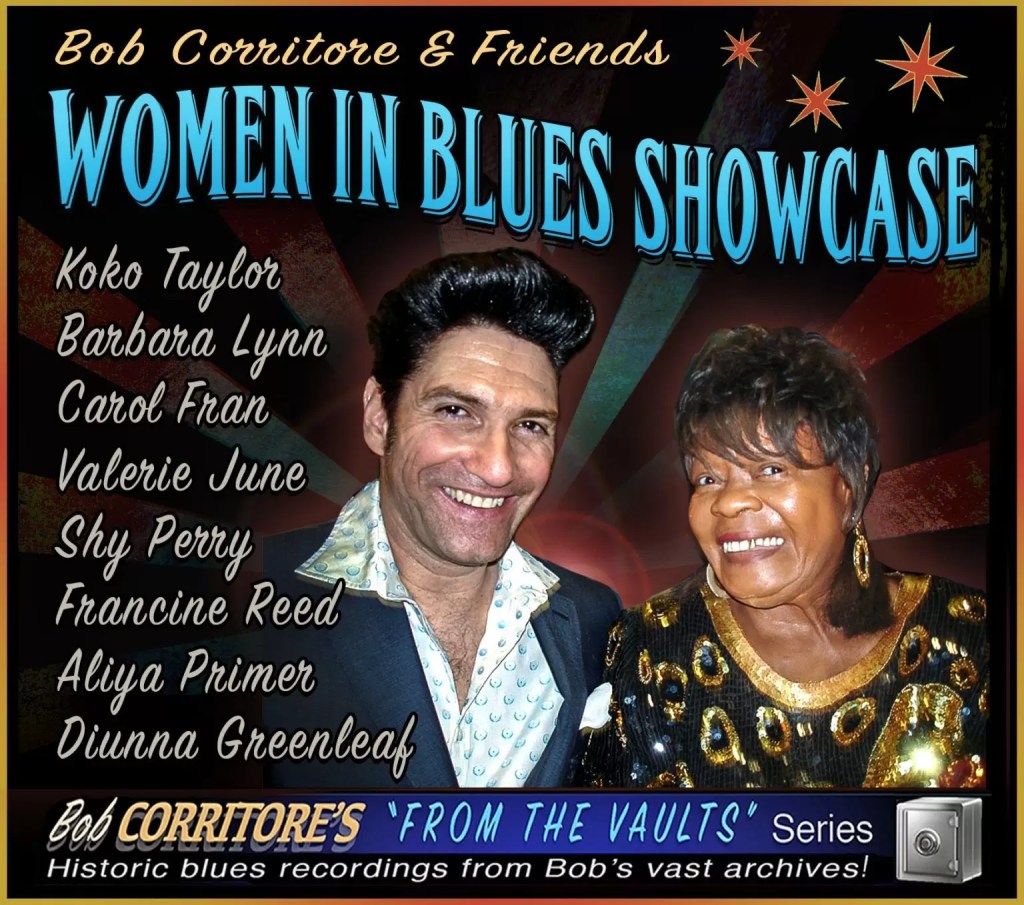
Various Artists — “Women In Blues Showcase — VizzTone

Blues harpmeister and archivist Bob Corritore seems to have everything in his musical vaults except Jimmy Hoffa.

He never seems to have any trouble finding enough fine music from his archives to put together an enjoyable album filled with outstanding blues by some of its best practitioners.

This time, it’s a very special “Women In Blues Showcase,” with a special variety of singers whose voices and songs cover a range of blues styles.

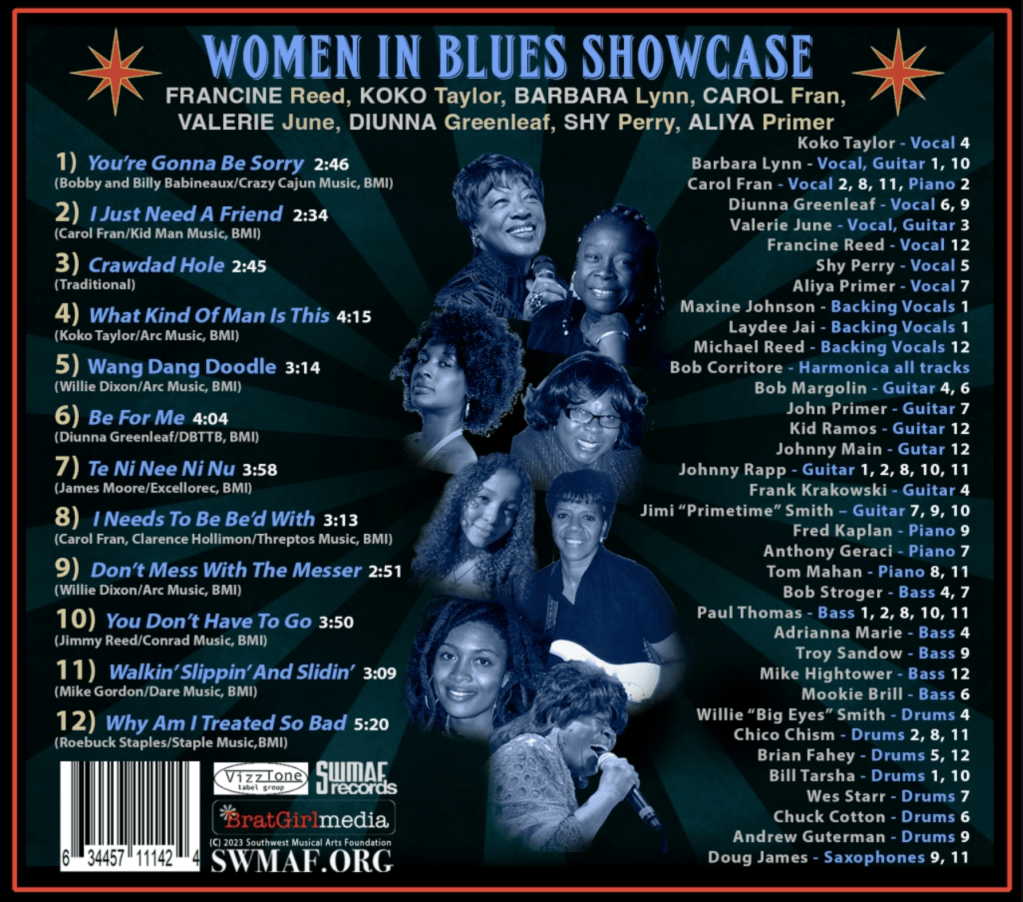
The eight women who contribute the 12 tracks are: Barbara Lynn, Carol Fran, Koko Taylor, Francine Reed, Diunna Greenleaf, Valerie June, Shy Perry, and Aliya Primer (John Primer’s daughter, 17, with her first recording).

The musicians on these songs are multitudinous (see the credits below) as well as magical. Corritore has a knack for capturing some of the best blues performers as they’ve passed through his Rhythm Room club in Phoenix since it opened in 1991. Those recordings make up the archives for his ambitious “From the Vaults” series.

The musicians, songs and styles in the archives are varied, but the constant musical theme is Chicago blues, underlined by Corritore’s tough, versatile harmonica work throughout. He manages to stand out musically, and at the same time, blend into a perfect background for each individual artist.

Those artists, and their songs here, are: Barbara Lynn, “You’re Gonna Be Sorry” — Carol Fran, “I Just Need A Friend” — Valerie June, “Crawdad Hole” — Koko Taylor, “What Kind Of Man Is This” — Shy Perry, “Wang Dang Doodle” — Diunna Greenleaf, “Be For Me” — Aliya Primer, “Te Ni Nee Ni Nu'” — Carol Fran, “I Needs To Be Be’d With” — Diunna Greenleaf, “Don’t Mess With The Messer” — Barbara Lynn, “You Don’t Have To Go” — Carol Fran, “Walkin’ Slipping’ And Slidin'” — Francine Reed, “Why Am I Treated So Bad.”

Each artist offers a unique style, and each song shows off that style, making for a terrific collection of good old-fashioned blues, leaning heavily on its Chicago roots.

Except for Aliya Primer, who is just 17 and making a sparkling recording debut with “Te Ni Nee Ni Nu,” the others are, or were, veteran performers. Sadly, Koko Taylor and Carol Fran are no longer with us, but their voices linger as testimony to their greatness. It’s not clear when each of these recordings was made, but the vocals are powerful blues statements.

In an interesting twist, Shy Perry shines on the raucous “Wang Dang Doodle,” which had become a signature song for Taylor, and Taylor makes her own powerful statement with “What Kind Of Man Is This.”

Diunna Greenleaf and Francine Reed are two big-voiced blueswomen and their traditionally tough vocals stand out here. Valerie June, a singer who is equally at home in folk and country, gives “Crawdad Hole” a delicious old-timey feel.

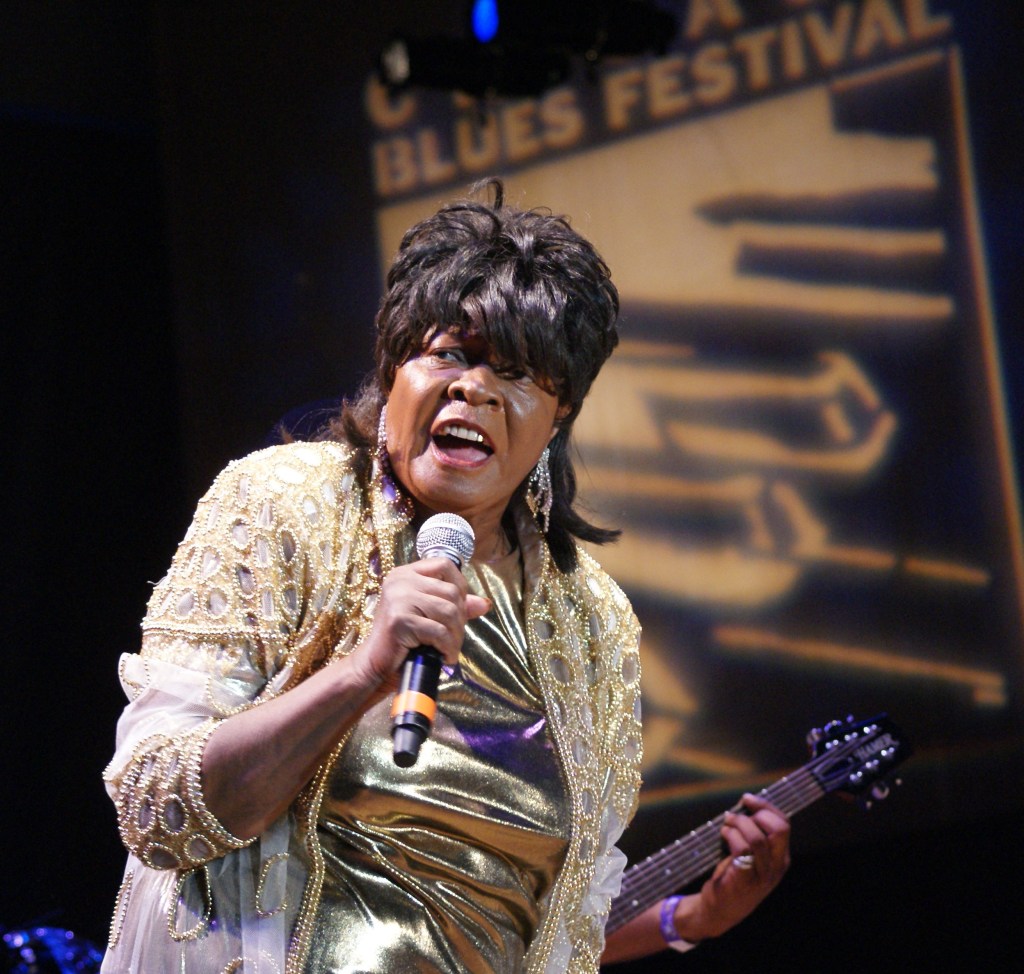
If I may digress for just a minute, I want to offer my own experiences with Taylor and Reed. Koko Taylor turned up at Pittsburgh-area clubs way back when, and you could always count on her to lift you out of your seats. My photo at left is from her 2008 Chicago Blues Festival appearance, about a year before her death.

I saw Francine Reed, once, in the summer of 1999 at Atlanta’s gorgeous Chastain Park amphitheater, when she was featured with Lyle Lovett’s Large Band. Her performance of the 1924 Ida Cox song, “Wild Women Don’t Get the Blues,” was one of those unforgettably hair-raising, spine-tingling musical moments that never quite dissolve in time.

But back to work. This is a thoughtfully produced, highly enjoyable selection of songs from a handful of great blues singers, some of whom may not have had the recognition that equals their talents. Put this on your playlist, and check out more of the great music from these women.


Here’s the track by Koko Taylor, “What Kind of Man Is This”

Here’s a nice big image of the album’s back cover, so you can find all the credits for these excellent songs.

Roadhouse Album Review: Gayle Harrod’s “Temptation” is a passionate affair

Gayle Harrod Band — “Temptation” — Self-Release

It’s one thing to wait until your 42nd year to begin a musical career. It’s still another to wait a dozen more years to cut your first album. And yet another to have it all sound thoroughly polished and professional — and best of all, have it sound so wondrously full of such passionate music.

Harrod, a native of Johnstown, Pa., but a Baltimorean since age 7, has spent those last dozen years sharpening her musical edge in a variety of bands and performances.

She began her public singing career in 2011 with the soul-blues band Triple Shot, then with classic rock-blues band Blues Deluxe, and the blues-R&B band Shakedown, before forming The Gayle Harrod Band.

The result of that lengthy woodshedding for Harrod is this dynamic album of 12 original songs that flow from rhythmic soul to fiery blues with a stylish ease that defies expectation for a debut effort.

Harrod boasts a powerful voice that commands your attention, whether she’s belting or pleading, and there’s plenty of both on this rousing session.

The driving rhythms of “Sweet Memphis Man” kick it all off to introduce the sweet toughness of Harrod’s vocals. “Come On People” punches out with Harrod urging us to “work to make things better.” “Baby We’re Through” is a scorching statement emphasizing its title theme with percussive urgency and fiery guitar.

The title track, “Temptation,” is a dark tale of devils and angels, told with Harrod’s brooding vocals. “In The Deep Dark Night,” is a bright romp that contradicts its title, including raucous horn work bringing some New Orleans flavor. “Bring Me Along” soars with gospel call and response, heavenly organ and rock-steady drumming.

Then Harrod shifts style and mood, with the plaintive blues, “Waiting In The Shadows,” sung with an eloquent vocal touch against elegant acoustic backing that’s just plain down-home gorgeous. A sparkling “Break” turns the mood around again with a jazzy Motown-infused ode to personal independence. “You’re Gonna Miss Me” is a tough rocker, followed by the gently lyrical “The In Between,” and then turned around into the sprightly “God Laughed.” The closer, “Beautiful Friend,” is another gorgeously introspective ballad, pulled from Harrod’s magic well of songwriting.

There are many excellent, enjoyable moments here, but the one element that stands out all the way through, no matter what the style or mood — Harrod’s voice. She swings, she rocks, she shouts, she whispers. There’s bluesy grit, smoldering soul and folksy innocence. She wears her musical heart on her sleeve. And all of it is surrounded with the riches of a remarkably versatile musical aggregation (see the full list below the video).

If this is just Gayle Harrod’s first album, I can’t wait to hear the next one.


An interview with Gayle Harrod on JazzBluesNews:

Tracklist:
Sweet Memphis Man (3:05)
Come On People (3:53)
Baby We’re Through (4:01)
Temptation (4:57)
In The Deep Dark Night (2:53)
Bring Me Along (3:44)
Waiting in the Shadows (3:55)
Break (4:03)
You’re Gonna Miss Me (3:37)
The In Between (4:55)
God Laughed (4:10)
Beautiful Friend (5:02)

The musicians:
The basic Gayle Harrod Band is guitarist Stan Turk and drummer Chuck Ferrell. Guest performers on the album include guitarists Jonathan Sloane, Sol Roots, and Bobby Thompson; bassist Christopher Brown; Rachelle Danto on harmonica, and Brian Simms on piano and organ. Producer Buddy Speir adds guitar, slide, organ, and Wurlitzer. The Beltway Horns are Greg Boyer on trombone, Brad Clements on trumpet, and Brent Birckhead on tenor sax. Background vocals are by Mary Ann Redmond, Dusty Rose, and The Voices of Faith of the First Baptist Church of Baltimore Choir.

Roadhouse Album Review: Jeff Pitchell and friends play very well together on “Playin’ With My Friends”

Jeff Pitchell — “Playin’ With My Friends” — Deguello Records

Jeff Pitchell is a Connecticut-based guitar slinger, songwriter, vocalist and, based on his ninth and latest album, damned good at all of them.

And, as if he needed any help, he’s picked a handful of capable friends to pitch in here, both on vocals and as bandmates.

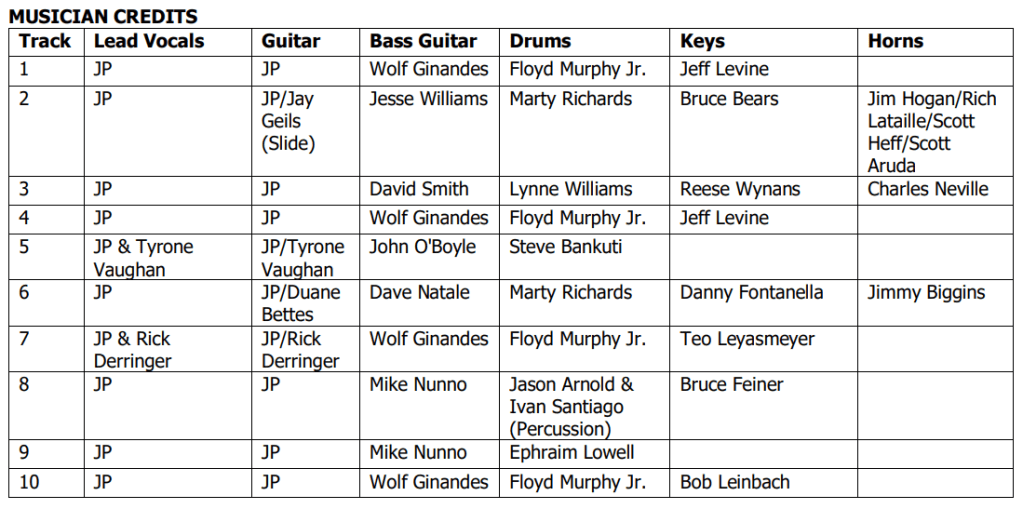
Included among those friends on duets and guest spots are Duane Betts, Charles Neville, Claudette King (B.B. King’s daughter, J. Geils, Rick Derringer, Christine Ohlman, and Tyrone Vaughan (Jimmie Vaughan’s son). His backers are, as they say, too numerous to mention, but a user-friendly chart at the end of this post will help you keep score.

The album shuffles joyfully into earshot with an original, the easy loping shuffle of “Eye For An Eye,” followed hard with a tough, rocking “Prisoner of Love,” highlighted by stinging guitar work from J. Geils. These two songs alone would send me home happy, showing off a sparkling blend of lyrical and musical chops.

But there’s a lot more, some of them reworked rom earlier sessions. “So Into You” turns down the tempo but not the mood, adding a sensual sax to the mix. Another original, “Your Magic Eyes” rocks with gentle fierceness highlighting the poetic imagery of the title. “Out In The Cold” is thoughtfully soulful, featuring Tyrone Vaughan on vocals and a guitar solo that speak the same language.

Duane Betts adds his guitar to “All Night Long,” a raucous boogie with raunchy sax that would rock any roadhouse (See what I did there?). Rick Derringer joins Pitchell in the swinging vocal and guitar duet, “Unsung Hero Of The Blues.” Lucky Peterson’s “Not Guilty” turns up with a little Latin flavor, followed with the rocky roughness “Blinded By Desire.”

“Fat Cigars,” the title track to Pitchell’s 1997 debut album that lit up his career, comes out smoking, and reminds me of one of my favorite personal vices. The R&B tinged “I Like The Rut” features Christine Ohlman (The lead vocalist for the Saturday Night Live Band from 1991 to 2022.).

Claudette King unleashes a tough vocal turn on the rocking blues of the title track, and Pitchell turns the soulful Bobby Bland lament, “I Wouldn’t Treat A Dog,” into a soul-stretching closer.

Pitchell has brought together a stellar cast for “Playin’ With My Friends,” and the results speak, or rather sing, well of themselves. There’s a big bunch of thoroughly enjoyable music here, on all levels, from the splendidly varied vocals, to the wicked guitar and sax work, to the entire musical effort.

Well played, Jeff and friends, well played.


Here’s a video medley of some of the music on “Playin’ With My Friends”:


Tracklist and credits:

Eye for an Eye
Prisoner of Love
So into You
Your Magic Eyes
Out in the Cold
All Night Long
Unsung Hero of the Blues
Not Guilty
Blinded by Desire
Fat Cigars
I Like the Rut
Playin’ with My Friends
I Wouldn’t Treat a Dog

Roadhouse Music Alert: A little Solomon Burke music should be good for your soul

A few months ago I wrote a post about sweet soul music and one of its primary practitioners, the very great Solomon Burke.

And today, as I was wandering the back roads of the internet, cruising YouTube for interesting music videos, I found this one of Burke at a concert that appears to be in Germany.

I don’t usually post links to this sort of thing — there is so much great music to be heard; so many great artists to be seen.

But I was moved by the power of this 30-minute video, and by the awesome magic of Burke’s magnificent voice and performance. I’m sure there are others, and maybe even better ones. But this one caught my eye and ear, and I was pretty much entranced for the duration.

So if you can, late one night, send this one through your TV set or appropriate speaker system, pour a nice double bourbon, and let this gorgeous voice fill that hole in your soul (not to mention some sensual sax work).

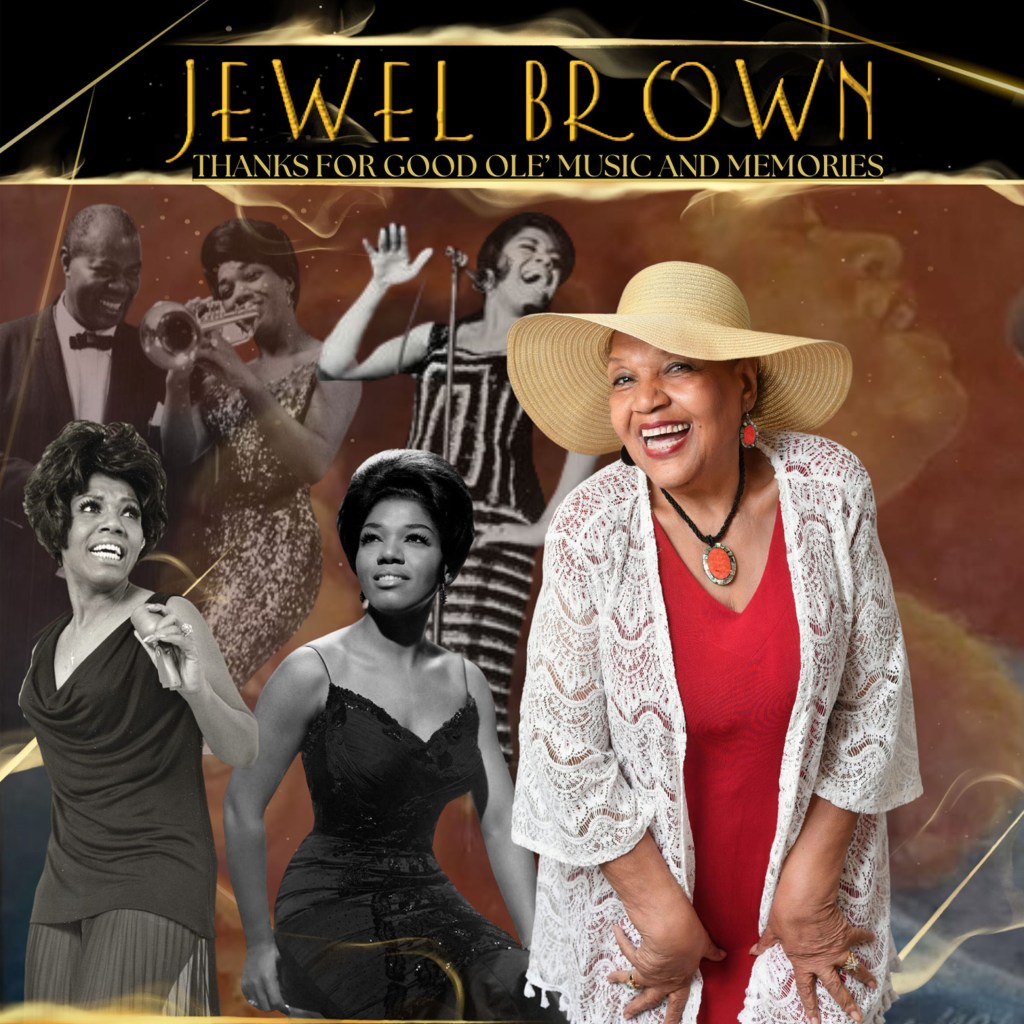
Roadhouse Album Review: Jewel Brown returns with a gem — “Thanks for Good Ole’ Music and Memories”

Jewel Brown — “Thanks for Good Ole’ Music and Memories” — Nic Allen Music Federation

Just as this recent album has lingered unnecessarily on my shelf for a while, superb songstress Jewel Bown has unnecessarily lingered outside the recording studio.

An electrifying jazz and blues singer in the 1950s and ’60s — best known as a stylish vocalist with Louis Armstrong and His All-Stars from 1961 until 1968 — she pretty much gave up the music business in the 1970s. In 2012 she recorded her first album in many years, “Milton Hopkins & Jewel Brown,” followed by a solo effort in 2014, “Roller Coaster Boogie.”

Now, at 85, Brown has decided to once again grace us with her eloquent vocals on this album, very appropriately titled “Thanks for Good Ole’ Music and Memories.” The idea of good ole’ music, however, is vastly understated here. It should be, and is, great ole’ music.

And now Brown also adds her name as composer, co-writing seven originals with producer Nic Allen, and performs three covers in her return to recording. She’s backed by an aggregation of swinging musicians, who are a perfect fit for her classy vocals, with all their moods and styles.

She opens the session with an updated version of the Latinesque Harry Belafonte song “Have You Heard About Jerry,” simply titled “Jerry” here. (There’s a video below featuring Brown and Armstrong performing the song in a 1962 TV broadcast.)

The brief acapella “Pain and Glory” follows, with a chorus of male gospel vocals, in a spoken-word ode to faith. A very jazzy “Why Did You Do That” adds strong, bluesy vocals, again with a rich vocal male chorus. The percussive “Which Way Is Up” gently rocks. “Nitches and Glitches” is a torchy expression of independence kicked along with sassy horns.

“Flatitude” rejects fake flattery with a healthy dose of scat singing. “I Love Sunshine, Even More Rainy Nights” is a splendidly orchestrated slow jazz where “rain puts her in the mood” with a sensuous vocal turn smothered in liquid sax. “Song of The Dreamer,” written by ex-husband Eddie Curtis, is another lilting love song. “On The Road” is a gently swinging lyrical reminiscence of Brown’s enjoyment of touring with Armstrong, again scatting her way home.

The closer “How Did It Go” is pumps up the swing and jumps out with a bluesy flavor, ending the set on an upbeat musical note with some smooth guitar accompaniment.

Someone, is supposed to have said — and I once heard that it was Lena Horne — that “blues is the mother’s milk of jazz.” This excellent album sips from that source, but it’s a heady brew of the kind of fine jazz arrangements and inspired singing creates a joy all of its own. You owe it to yourself to drink deeply.


A fascinating video of the Jewel Brown story:


A video of Jewel Brown singing “Jerry” with Louis Armstrong from 1962, plus a bonus — Armstrong does “Nobody Knows The Trouble I’ve Seen.”

The Goodyear Jazz Concert was broadcast live on television on April 2, 1962. The lineup includes Brown, Armstrong, Trummy Young (trombone), Joe Darensbourg (clarinet), Billy Kyle (piano), Bill Cronk (bass) and Danny Barcelona (drums).

Tracklist:
Jerry (3:54)
Pain and Glory (1:30)
Why Did You Do That (3:29)
Which Way Is Up (3:52)
Nitches and Glitches (4:29)
Flatitude (2:14)
I Love Sunshine, Even More Rainy Nights (4:52)
Song of the Dreamer (4:11)
On the Road (5:04)
How Did It Go (3:38)

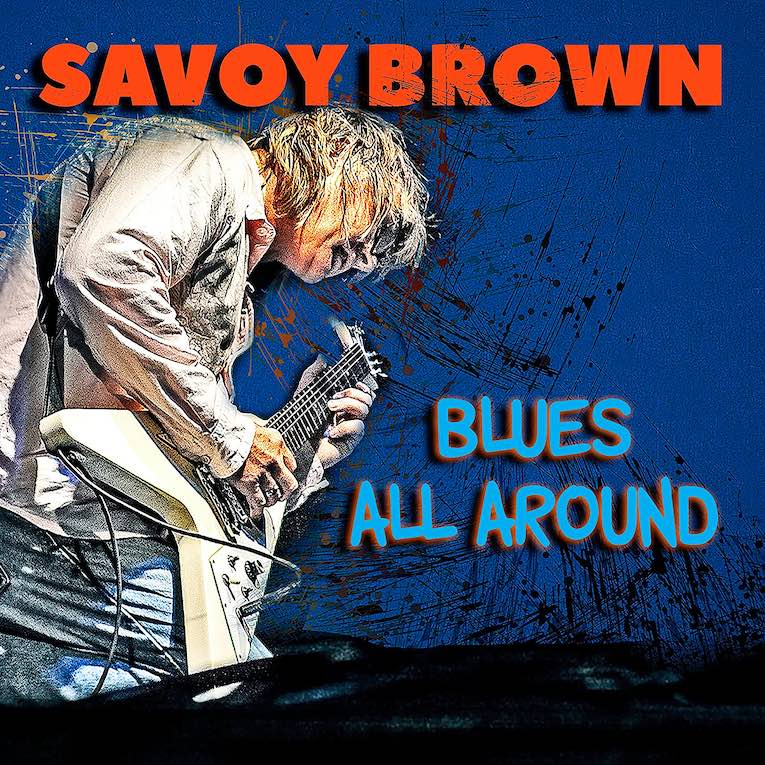
Roadhouse Album Review: Savoy Brown leaves a solid legacy with Kim Simmonds’ final session — “Blues All Around”

Savoy Brown — “Blues All Around” — Quarto Valley Records

Savoy Brown (originally the Savoy Brown Blues Band), one of the quintessential and most prolific of the British blues-rock bands, was formed in London by Kim Simmonds in 1965. That’s right. They’re older than many of us.

Simmonds was the founder, guitarist and primary songwriter of the band, and the only member who remained constant in its 57 years of existence. They came out of the British blues-rock tradition, but settled in New York state, and much of the band’s musical success came in the U.S.

This session, “Blues All Around,” the band’s 42nd album, was completed just before Simmonds died, in December of 2022. The Savoy Brown band for this album was the trio Simmonds formed in 2012 with bassist Pat DeSalvo and drummer Garnet Grimm. 

The dozen songs here, all Simmonds originals, were recorded a little differently this time, due to his illness. In order to make the recording process easier than their usual live in-studio work, Simmonds created his tracks, which were then overlaid by DeSalvo and Grimm. No problem. It’s still excellent music.

It all begins with a short, seductive vocal blues intro — “Falling Through” — less than a minute long, but it sets just the right mood for the music that follows. “Black Heart” shuffles into view next, with guitar and organ riding behind Simmonds’ gruff vocals.

Highlights for me include “Going Down South,” which adds haunting slide that enhances the stark poetry of the locals. The title track, “Blues All Around,” leads with eloquent guitar work that speaks volumes in its spareness. Simmonds lets his guitar do much of the talking without overwhelming the listener. “Texas Love” rides along hard on the back of some tough distorted guitar fuzz. “Winning Hand” churns hard and deep with a passionate guitar solo. “Can’t Go Back to My Hometown” takes a more lyrical, melodic approach and the closer, “Falling Through the Cracks,” puts Simmonds’ heartfelt, half-spoken vocals out in front of his striking solo guitar.

This excellent album is a solid testament to Simmonds’ long journey and legacy in the world of the blues, which are indeed all around.

Tracklist & credits

Falling Through 0:43
Black Heart 3:19
Going Down South 4:27
Gypsy Healer 4:25
Blues All Around 4:10
Texas Love 3:24
Winning Hand 4:50
Hurting Spell 3:59
Can’t Go Back To My Hometown 4:34
California Days Gone By 3:53
My Baby 3:26
Falling Through the Cracks 5:10

Kim Simmonds: Guitar, Vocals, Organ and Harmonica
Garnet Grimm: Drums and Percussion
Pat DeSalvo: Bass

Roadhouse Album Reviews: Some great old blues from Jimi “Primetime” Smith & Bob Corritore, John Primer & Magic Slim, and Floyd Dixon

Sometimes I just want to luxuriate in some good, old-fashioned, down-home blues. Especially when there’s a hole in my soul that needs … well, you know.

Lucky me, I just happen to have a few such new albums on hand to listen to, and that I also want to write about. So this will be a three-fer post, with capsule reviews, which also gives me a chance to catch up on the backlog of albums that are piling up on the Roadhouse bar. (Well, the albums don’t exactly pile up anymore as much as the digital files accumulate, possibly in the cloud, and who knows what kind of blues storm that might ignite.)

But I digress. Here are the albums, all filled some great new and old blues. Music samples from all three albums come at the bottom of this post, so please hold your applause till the end.

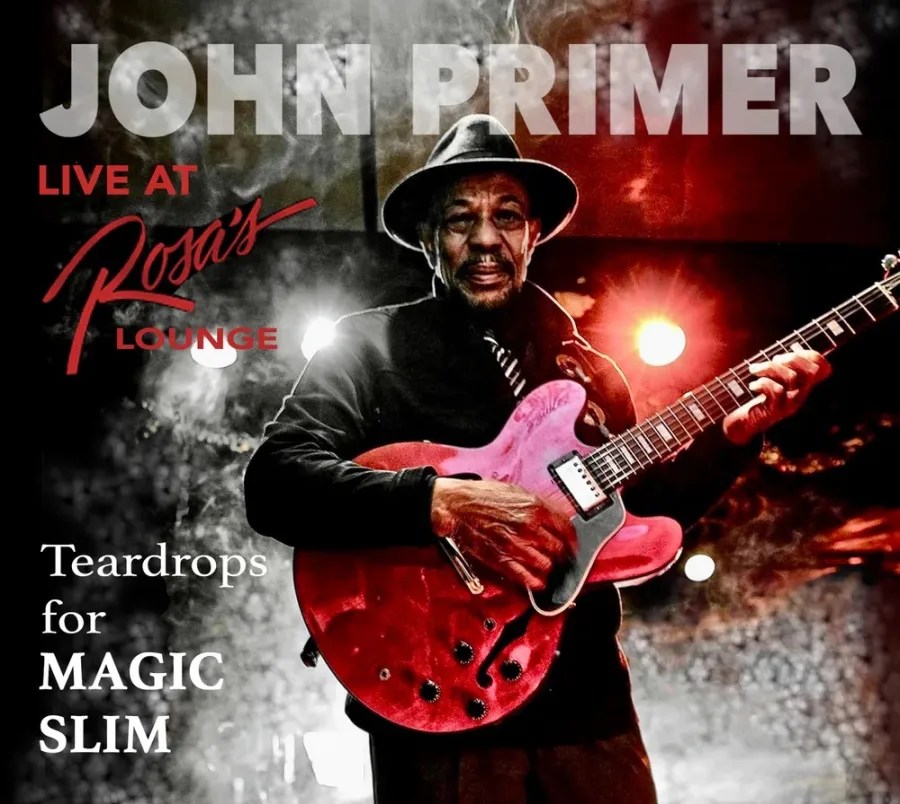
John Primer Live at Rosa’s Lounge — “Teardrops for Magic Slim” — Blues House Productions

Morris Holt, aka Magic Slim, was one of the great Magic men of Chicago blues guitar, larger than life in person, and larger than life’s soundtrack with his deep, churning, tough blues style with his band, the Teardrops.

John Primer is equally at home in these surroundings, and this tribute to Slim works both as a reminder of his distinctive sound and a showcase for Primer’s own talents (he played with the Teardrops for 13 years).

That distinctive sound is very much alive here, as Primer works with the Teardrops, including Slim’s son, Shawn, who shows off his vocals as well.

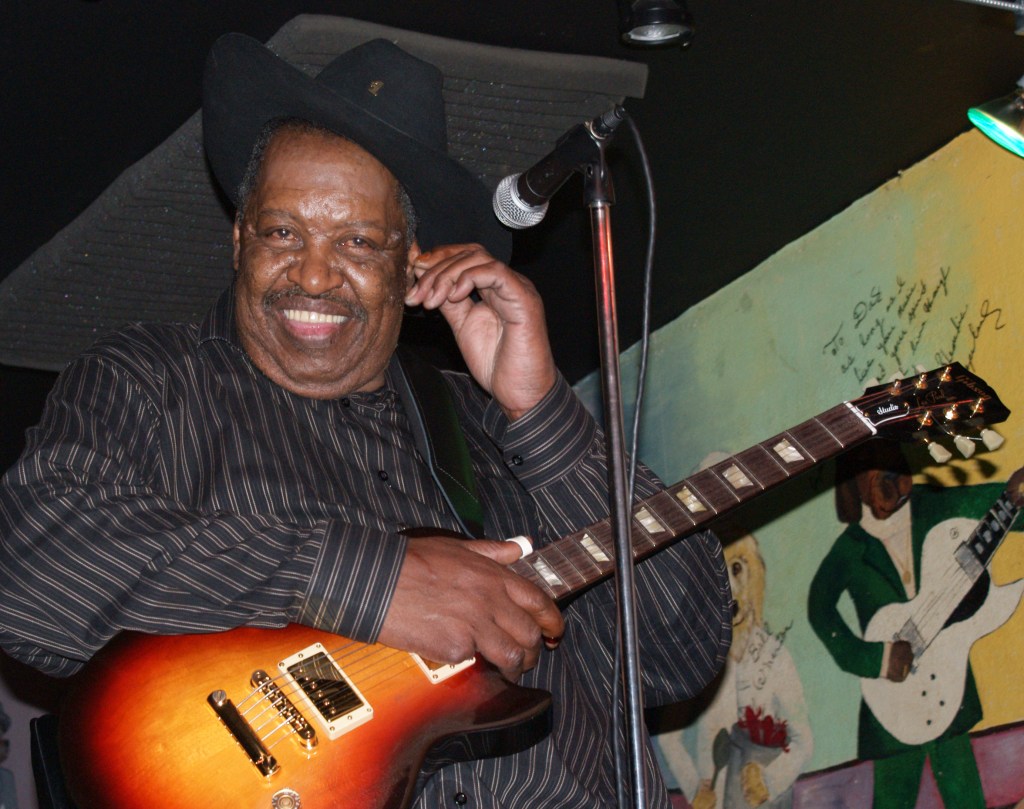
Magic Slim enjoys the blues.

This album drives along with the tough rhythms that defined Slim’s sound. A few tracks that especially caught my ear include the rocking “Mama Talk to Your Daughter,” the slow burning “Ain’t Doing Too Bad,” the classics ‘It Hurts Me Too” (with Shawn Holt) and “Look Over Yonder Wall,” and the rousing closer, “The Blues Is Alright.”

I saw Slim once, at Moondog’s, the fine little blues bar in Blawnox, Pa., just outside of Pittsburgh. It was 2008, and I think my photo here at left captures how much fun he had entertaining the crowd.

If you’re interested in watching this incarnation of the Teardrops, there will be a tribute concert at Blue Chicago to be broadcast live online on March 24, 2023. Get ticket information here.

Jimi “Primetime” Smith & Bob Corritore — “The World in a Jug” — VizzTone

You know that anytime Bob Corritore opens his music vaults, some great blues is waiting to be exhumed. This album by guitarist Jimi “Primetime” Smith plus Corritore is taken from four recording sessions between 2017 and 2020 — but still digs way back into the last century for its roots.

Smith plays guitar that stings behind his rich vocals, and Corritore’s harp adds deep blue texture. Among my favorites are the rollicking title track, a scorching Jimmy-Reed style “We Got To Stick Together” and “You For Me,” and the slightly salacious “Love Her With A Feeling.”

Just incidentally, the phrase captured in the title track “The World in a Jug,” has a history as old as the history of blues recording. The line, “I got the world in a jug, the stopper in my hand,” was added by Bessie Smith when she recorded “Downhearted Blues,” with lyrics by Alberta Hunter, in 1923.

Both Corritore and Smith have deep Chicago blues roots, and this session speaks well of its heritage.

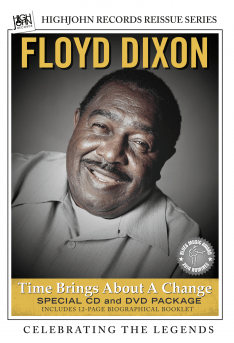
Floyd Dixon — “Time Brings About a Change” — HighJohn Records Reissue Series

Piano-man Floyd Dixon’s blues took a slightly different track, but were no less powerful than its Chicago cousins. Born in Texas, later from Los Angeles, Dixon’s style favored the West Coast jump blues tradition.

This album is a reissue of a concert recorded in June, 2006, hosted by Dixon, that featured fellow blues piano giants Pinetop Perkins and Henry Gray. The band was led by Kid Ramos and included Larry Taylor and Richard “Bigfoot” Innes. Kim Wilson, Fred Kaplan (from the Hollywood Blue Flames) and Lynwood Slim also performed.

Dixon died the following month, and this album was originally released shortly afterward.A DVD package was released in 2013. The CD and a three-DVD set are all part of this reissue. This package has been curated for this release by Blueheart Records.

The 17 songs on the album feature Dixon on piano and vocals, all shared with his costars. Sadly, his ill health at the time is reflected in some of his strained vocals, which still muster his passion for blues. But Dixon still manages to rock a full-throated piano, as do Perkins and Gray in their contributions.

I’m generally a fool for fine blues piano, and this reissue is no exception. This is a showcase for blues piano by three masters. If I were the blues czar, I’d make it required listening, even if it was just to pull back the curtain of time a minute for a glimpse of this great old music.

So, if you like your blues straight, with no chaser, try any — or better yet, all — of these excellent blues recordings.


Here’s “The World in a Jug” from Jimi “Primetime” Smith and Bob Corritore:

Here’s an excellent video of Slim’s magic on stage:

Here’s a 1996 performance of Floyd Dixon’s 1955 release, “Hey Bartender”: