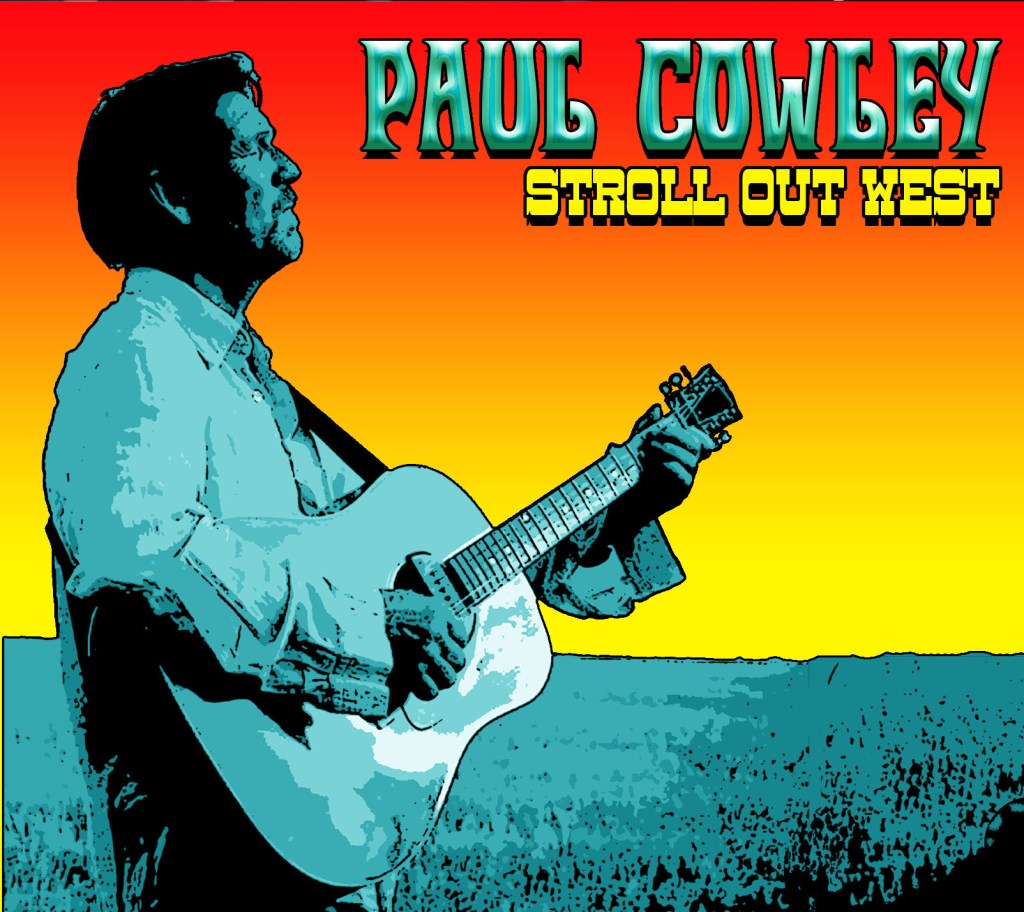
Roadhouse Album Review: “Stroll Out West” is Paul Cowley’s richly imagined vision of classic country blues — and beyond

Paul Cowley — “Stroll Out West” — LBM007 (Feb. 27 release)
The music of the blues is classically American, but its influence has been felt worldwide for many decades.

In fact, it was British bands who found their inspiration in this music in the 1950s and ’60s who helped to reinvigorate our passion for those sounds on this side of the pond.

So it’s no surprise then that there are still Brits who have been influenced by the blues and who are keenly interested in supporting and performing various styles of the music.

Paul Cowley is one of those performers.

He’s an Englishman now living in the Brittany region of France, where the pristine sound from his studio in an old granite block barn reflects the country-style blues he’s absorbed over the years.

Cowley has an uncanny talent for writing and performing one of the most basic and beautiful of all blues styles — acoustic country blues. Add to that a sense of traditional folk music, throw in some Americana, maybe a touch of Britannia, and you have his uniquely accessible approach.

“Stroll Out West” is Cowley’s seventh album, closely following the style of his last, “Long Time Comin’,” in June of 2021 (my review here). He’s primarily a solo acoustic performer, but here he’s very well accompanied on several tracks by Pascal Ferrari on bass, percussion and electric guitar.

Cowley’s finely articulated guitar work underlines his laid-back vocal style, never overpowering but always complementing the impact of each song. When he creates his little gem of a cover of Smokey Robinson’s “Tracks of My Tears,” Cowley’s interpretation makes you wonder how this Motown standard could have ever sounded any better.

His own material is just as impressive. It’s a combination of folk and blues storytelling, music created in the spirit of his sources, but filtered through his own creative sensibilities. The result is a thoroughly enjoyable ramble through the gently swinging lyricism of “My Kinda Girl,” to the richly conceived “On My Way,” to the playful lightness of “Nosey.” In “World Gone Crazy,” Cowley shares darker blue observations best described by the title itself.

A pair of covers follows: A spare, haunting reading of Skip James’ “Special Rider Blues,” and the already-mentioned uniquely flavored “Tracks of My Tears.”

“Songs Of Love” is another original blues that rolls gently along, floating on eloquent guitar work, and “Life Is Short” offers Cowley’s thoughtful musings on the transitory nature of our being. Next is Cowley’s version of the classic, traditional and tragic true-story-based blues, “Stagger Lee,” using the Mississippi John Hurt version of this tale, which dates back to the dawn of recorded music (first published in 1911 and first recorded in 1923 by Fred Waring’s Pennsylvanians, when it was titled “Stack O’ Lee Blues”).

“Whatever It Takes” is another Cowley song, with a percussive-driven philosophy of life, again accurately reflected in the title.

Two more fine old blues round out the set: “Catfish Blues” by the mysterious Robert Petway, enhanced by sensuous slide, hypnotic guitar and gruff vocals that pour new life into another classic, and the slide-driven “Preachin’ Blues,” one of Robert Johnson’s marvelous creations, done with considerable passion and justice here.

Paul Cowley’s richly imagined and thoughtfully executed music is a pleasure on multiple levels. He has successfully integrated classic blues styles into his own personal vision, and the results are the excellent musical creations of “Stroll Out West.” This is righteous late-night listening; pair it with “Long Time Comin'” and a fine Cognac for maximum effect!


You can find Paul Cowley’s comments on these songs in the tracklist below the video.

Here’s a live performance of “Stagger Lee,” which appears on the album:

Tracklist and Cowley comments:

My Kinda Girl (Cowley)
A song I wrote some years ago that has been in and out of my repertoire in various incarnations.

On My Way (Cowley)
New strings, different tunings often lead to fresh ideas. Not so much a tuning but being in dropped D led to this idea. One of the more recent songs.

Nosey (Cowley)
Mischevious not malicious song about a neighbour. He’s too busy to notice or contemplate the song might be about him!

World Gone Crazy (Cowley)
Observations of mankinds continued sleep walk into its own demise!

Special Rider Blues (Skip James)
My interpretation of a song I’ve been hot on for a while

Tracks Of My Tears (Smokey Robinson & The Miracles)
Streches the credibility of a bluesman. I’ve been moved by this song for decades!

Songs Of Love (Cowley)
An idea that arrived in a field en route to Belgium. Inspired by my friend Jim Crawford, a guitarist, singer/songwriter with a sublime touch, style & voice.

Life Is Short (Cowley)
My father died 8/5/21 & with his passing came the full realization of just how fleeting and precious life is.

Stagger Lee (John Hurt)
Mississippi John Hurt’s interpretation of a true story murder ballad.

Whatever It Takes (Cowley)
Choices. Pay your money, take your chance.

Catfish Blues (Robert Petway)
The album title “Stroll Out West” came from a line in the song.

Preachin Blues ( Robert Johnson)
Almost didn’t make the album but what the hell!
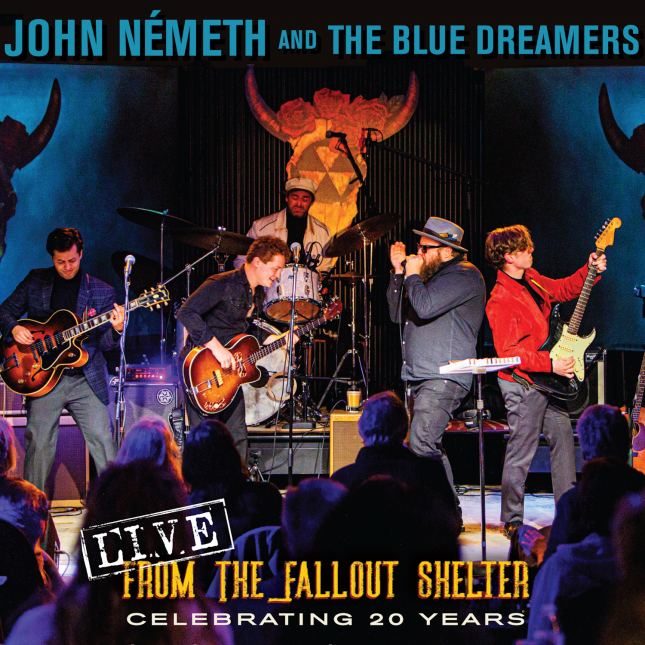
Roadhouse Album Review: John Németh blows up a storm with “Live from the Fallout Shelter”

John Németh  & the Blue Dreamers — “Live from the Fallout Shelter” — Nola Blue Records

It seems like only yesterday that John Németh came blowing out of Idaho with his wicked harp and soulful pipes, but as it turns out, it was a mere 20 years ago.

To celebrate those two decades as a recording artist, singer, songwriter, harmonica cat and all-around good guy, Németh has released a live album from the last show of his spring 2022 tour at The Fallout Shelter in Norwood, Mass.

The Fallout Shelter show also came just before John had jaw surgery in May, 2022, a medical event that prompted his outstanding studio album, “May Be The Last Time.” (You can read my review here, and read about this medical issue here.)

But if you put all that backstory aside for a blues minute, what you get here is a terrific live album from an exciting performer, cranking out the music for appreciative fans.

John is working here with his band, the Blue Dreamers — Jad Tariq, guitar; Jon Hay, guitar; Matthew Wilson, drums/acoustic guitar; and Max Kaplan, bass.

They all come together here for a set of lively tunes that are pure Németh — loaded with crafty songwriting, soulful delivery, eloquent harp work and crisp backup by the Dreamers.

The hard-working “Sweep the Shack” opens up on a funkified note, followed by the torchy “Work for Love,” featuring a terrific harp solo midway. “Come and Take It” is a hypnotic nod to Mississippi Hill Country blues, “Testify My Love” adds acoustic guitar and a background chorus to John’s eight minutes of almost-spoken-word testimony to love that aches with a touch of old-school testifying, highlighted by John’s pleading vocal.

“Elbows on the Wheel” is classic Németh — rocking harp and wry lyrics, “Chain Breaker” is tough blues, “Deprivin’ a Love” rocks hard, and the rest of the set keeps up the intensity — John knows how to build the energy and keep it flowing. “I Can See Your Love Light Shine,” “My Baby’s Gone,” “Feelin’ Freaky,” “Get Offa Dat Butt,” “Country Boy,” and the blazing nearly psychedelic finale, “Fountain of a Man.”

If you’re familiar with John Németh, these live tracks capture him doing what he does best — making exciting music. If you’re not, let this one turn you on.

Here’s a live performance of “Sweep the Shack”:

Track Listing:
1. Sweep the Shack
2. Work for Love
3. Come and Take It
4. Testify My Love
5. Elbows on the Wheel
6. Chain Breaker
7. Deprivin’ a Love
8. I Can See Your Love Light Shine
9. My Baby’s Gone
10. Feelin’ Freaky
11. Get Offa Dat Butt
12. Country Boy
13. Fountain of a Man

Personnel:
John Németh – Vocals/Harmonica
Jad Tariq – Guitar/Harmony Vocals
Jon Hay – Guitar/Harmony Vocals
Matthew Wilson – Drums/Acoustic Guitar/Harmony Vocals
Max Kaplan – Bass/Harmony Vocals

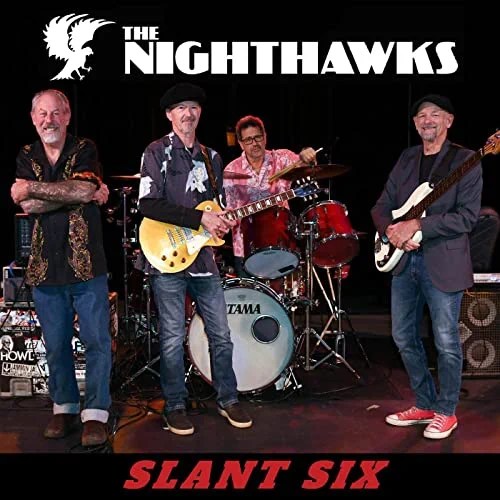
Roadhouse Album Review: Nighthawks hit the road again with hard-driving “Slant Six”

The Nighthawks — “Slant Six” — VizzTone

That terrifically tough quartet, the Nighthawks, have decided to kick off the second half of their first century of hard-driving blues with approximately half of a new album.

The band celebrated its first 50 years last April, with “Established 1972,” a hard-charging exit from the Covid shutdown that kept alive the “Hawks reputation for scorched-earth roadhouse blues. (Roadhouse review here.)

Their latest, “Slant Six,” is a mini-album, or EP, of six fine blues tracks that leave you wondering what became of the other half.

(Roadhouse Digression: For our younger readers, the EP refers to 45rpm records with two songs on each side, introduced in the U.S. in 1952 by RCA. They made good use of them with their superstar, Elvis Presley, releasing 28 Elvis EPs between 1956 and 1967.)

The six songs on this session are all covers, mostly from a handful of blues giants, that allow the band to deepen it musical roots in the blues.

Guitarist Dan Hovey takes the lead vocal on “Motor Head Baby,” originally recorded by Johnny “Guitar” Watson in 1953 when he called himself “Young John Watson.” Original Nighthawk Mark Wenner scorches through two Muddy Waters chestnuts, “Forty Days and Forty Nights” and “Standing Around Crying,” adding fierce harp solos.

Drummer Mark Stutso gives Little Milton’s “You’re Welcome to the Club” a soulful kick, and then shuffles nicely into NRBQ founder Al Anderson’s “Poor Me.” The album finale, “Don’t Know Where She Went,” pairs Hovey and Stutso with some tough Wenner harp. Bassist Paul Pisciotta doesn’t sing, but pours himself in to the deep end of the ‘Hawks’ rootsy effort.

The hard-working Nighthawks, who make Bob Dylan’s Never Ending Tour look like w weekend gig, are on the road again with their brand of tough, rootsy blues. Check them out when you can, and see just how tasty well-aged blues can be.


A brief history of the The Nighthawks


Here’s a video of “Don’t Know Where She Went”:

Tracklist:

1.    Motor Head Baby (John Watson-Mario S. De Lagarde)
2.  Forty Days And Forty Nights (Bernard Roth)
3.  Standing Around Crying (Muddy Waters)
4.  You’re Welcome To The Club (Sonny Thompson)
5.  Poor Me (Al Anderson-Bob Di Piero)
 6.  Don’t Know Where She Went (Robert Willie Egan)

Roadhouse Ramblings — The powerful music of great blues shouter Jimmy Witherspoon is worth a fresh look

Long ago, in the formative years of the Blues Roadhouse, I wrote about blues shouters, that category of big-voiced blues singers that has all but disappeared, but can still provide some of the best blues listening around.

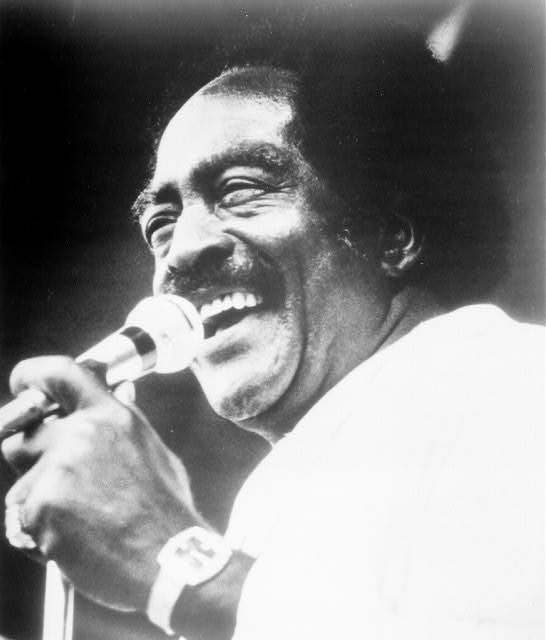
Jimmy Witherspoon

That early post focused on one of my very favorite musical personalities, Big Joe Turner, and his larger-than-life persona and vocal style. Since then, I’ve focused more on new album releases, with new music for blues and roots fans.

But it’s time to offer something old again. Yes, there are legions of younger artists on the stage, but it can be refreshing to revisit some of the great artists of the past, whose music is timeless in its emotional impact. There’s plenty of good music that’s waiting to be heard again.

Which brings me to another great blues shouter — Jimmy Witherspoon. He’s not exactly a household name when you think of the blues, but his rich and powerful voice dug deep into the music — it was smooth, silky and soulful. Just the first few notes of a song were enough to announce his vocal presence.

And for a time, his was one of the biggest voices in the blues — literally and figuratively.

Witherspoon was born in Gurdon, Ark., in 1920, and like so many blues and soul singers whose roots were in the church, he sang in the choir as a youngster. His mother, Eva Witherspoon, was a church pianist.

His singing first attracted attention on U.S. Armed Forces Radio during World War II. Witherspoon was serving in the Merchant Marines, and during shore leave in India, sang with Teddy Weatherford‘s band. He cut his first records with Jay McShann‘s band in 1945.

 In 1949, Witherspoon had his first hit — the now-classic “Ain’t Nobody’s Business,” which would become his signature tune. In 1950 he hit with “No Rollin’ Blues” and “Big Fine Girl,” songs that became standards in his body of work, along with another that he wrote — “Times Gettin’ Tougher Than Tough”.

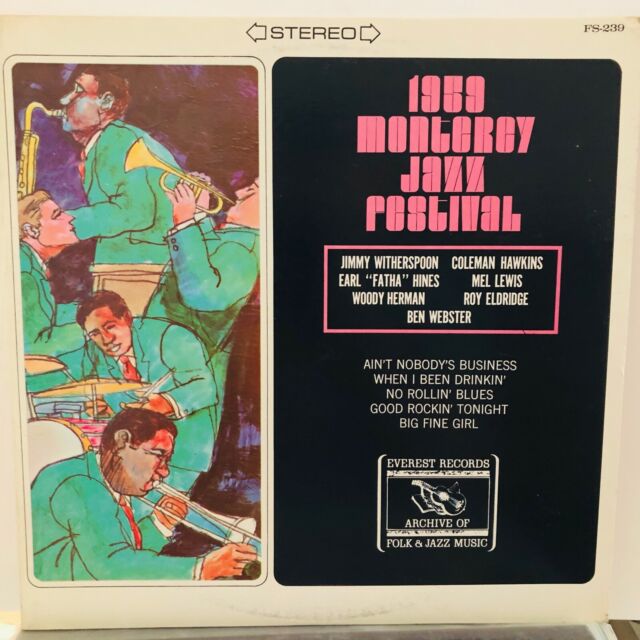
In the early post-war years, Witherspoon enjoyed tremendous popularity, but the style faded somewhat in the 1950s. Following a brief but dynamic appearance at the 1959 Monterey Jazz Festival, the resulting live LP — Jimmy Witherspoon at the Monterey Jazz Festival — gave his career new life.

That was the album that first brought him to my attention, and the music is just as powerful today — more than a half-century later. He was surrounded by a handful of great jazz musicians at that festival — trumpeter Roy Eldridge, both Ben Webster and Coleman Hawkins on tenor sax, clarinetist Woody Herman, pianist Earl “Fatha” Hines, bassist Vernon Alley, and drummer Mel Lewis.

Although that set only lasted 25 minutes with five songs, Witherspoon’s inspired performance was the hit of the festival.

That legendary album is usually now found paired with another exciting live concert two months later, “Jimmy Witherspoon at the Renaissance” packaged together as “The Concerts.” This second set features more stellar backers — Webster, baritonist Gerry Mulligan, pianist Jimmy Rowles, bassist Leroy Vinnegar, and drummer Lewis again.

‘Spoon has a pretty large body of work available, but if you can find only these two albums, you’ll treat yourself to some of the finest blues you’ll ever hear, from a singer who’s at the top of his game, driven hard by some of the finest musicians of the day. His voice was big and bold, but he could bring it down to a whisper or raise it to a falsetto for emphasis. He could work a lyric with impeccable diction and still take you down home with his passion.

His career rose and fell over the years, as tastes and audiences changed. But Jimmy Witherspoon never changed his ability to find the deepest of blues in his artistry. He died in 1997.

One quick note: I included his mother’s name up above because on of one of the songs on the Monterey album, Witherspoon introduces her. She was seeing him perform for the first time, and he introduces her by name during the set.

Another quick note: Witherspoon’s grandson, Ahkello Witherspoon, is an NFL football player, currently a cornerback on the Pittsburgh Steelers’ roster. No word on whether or not he sings.


Here are a few videos I could find that I think represent Witherspoon’s great talents. The first is a live performance of “Ain’t Nobody’s Business,” the second is “Nothing’s Changed,” featuring a young Robben Ford, and the third is a recording (audio only) of the classic blues “CC Rider” (first recorded in 1924 by Ma Rainey), featuring simply gorgeous trumpet work by a player I couldn’t identify. But it’s simply a terrific rendition, as the trumpet weaves in and out of the vocals, a deep blue counterpoint to ‘Spoon’s magnificent voice. Enjoy!

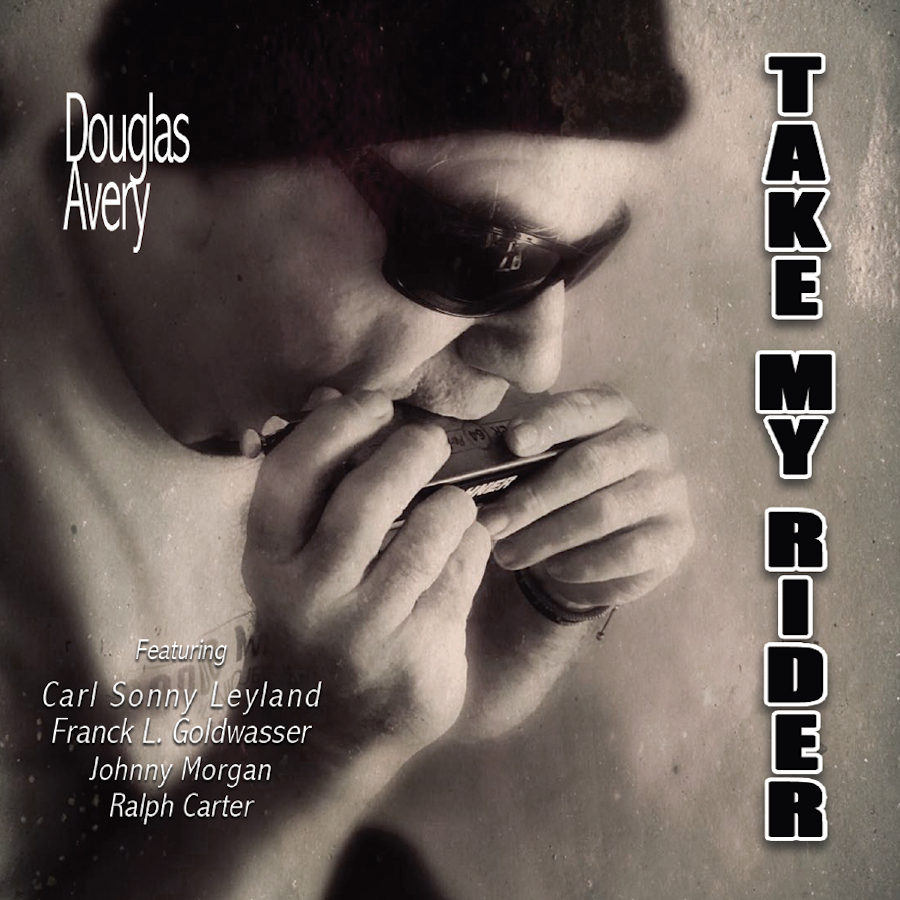
Roadhouse Album Review: Douglas Avery puts a lifetime of creativity into his excellent first album “Take My Rider”

Douglas Avery — “Take My Rider” — Greenwave Music

A few days ago, I realized that I had let another new album that I enjoyed slip through the cracks between the Roadhouse floorboards. Someday I’ll get them fixed.

So, my apologies to Douglas Avery for this delay in writing about his inspired debut album, “Take My Rider.”

Avery seems to be a very talented multitasker, since he has also earned substantial props as a surfer and as a photographer. This first album of finely tuned mostly original blues also shows him to be a creative songwriter and first-rate practitioner of the Mississippi saxophone.

All of this began in the 1960s, when Avery turned his childhood musical interests into a passion for the LA jazz scene.

The ’70s found him learning the blues harp, but also riding a new wave as a surfer and a stellar surf photographer, which led to a career as an internationally known fashion and sports photographer.

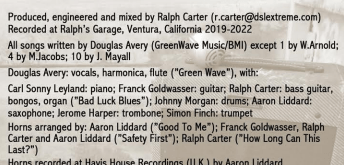
Those musical talents kept simmering, and finally, in 2019, after encouragement from fellow musicians, Avery pulled together the music and bandmates to make this album happen. Those mates include Carl Sonny Leyland on piano, Franck Goldwasser on guitar and Johnny Morgan on drums. A horn section of Aaron Liddard, saxophone; Jerome Harper, trombone; and Simon Finch, trumpet, adds a musical texture that complements Avery’s highly personal style. Avery even released the session on his own GreenWave record label.

But after all of that, what about the music?

It’s simply great. Avery knows how to create an evocative lyric, how to work his vocals, and how to add some greasy harp for just the right flavor.

The session opens with a steady rolling shuffle, “Bad Luck Blues,” an uptempo Billy Boy Arnold cover. The title track is next — a lyrical step into the dark side of the blues fueled by traditional guitar licks, snaky harp and an ominous vocal turn.

“Malibu Burnin'” takes a hook from recent fiery events and turns it into tough percussive blues with “ashes fallin’ like rain,” and “Just Keep Loving Her” is a jaunty, harp-fueled cover of the Little Walter tune. “Jelly Jelly” creates a delicious acoustic serving from the timeless menu of blues “jelly” lyrics. “Blind Owl Boogie” romps with harp and guitar challenging each other; “How Long Can This Last” rocks hard over a chorus of sharp horns, and a too-brief “Leaving Trunk” is just Avery caressing his harp with understated passion.

Avery takes a funky turn with some chromatic harp on “Good To Me;” Carl Sonny Leyland’s rollicking piano drives John Mayall’s “Sonny Boy, Blow!” with the urgency of a locomotive barreling down the tracks, and “Safety First” chugs along with horns, piano and harp as the hard-driving wheels. “Riding With The Devil” is another boogie on down to the moody blues, with a gorgeous acoustic guitar introduction.

The album wraps with the final two cuts offering a major shift in style and mood: The jazzy instrumental (with Avery’s spoken benediction) “Green Wave” features Avery waxing lyrically on flute, and the closer is some love and hope in the form of a lyrical ballad, “Looking Over A Rainbow,” with Avery romanticizing over Leyland’s elegant piano.

Douglas Avery is one of those rare musicians who creates a style and mood all his own and fulfills that vision in his music. “Take My Rider” is a splendid first album filled with finely crafted music that’s obviously been aged like good whiskey and served very neat. Give this one a careful listen. And let’s hope there’s more to come.


Here’s a thoughtful interview with Douglas Avery on the Michael Limnios Blues Network 


Here’s a video of “Take My Rider”:

Tracklist:
01. Bad Luck Blues (4:34)
02. Take My Rider (5:13)
03. Malibu Burnin’ (4:15)
04. Just Keep Lovin’ Her (2:01)
05. Jelly, Jelly (5:00)
06. Blind Owl Boogie (3:13)
07. How Long Can This Last? (6:03)
08. Leaving Trunk (1:59)
09. Good to Me (4:30)
10. Sonny Boy, Blow! (4:35)
11. Safety First (4:50)
12. Riding with the Devil (6:46)
13. Green Wave (3:38)
14. Looking over a Rainbow (6:03)

Roadhouse News: Here are the 2023 Grammy winners in blues and related categories

Here are the nominees and winners (in bold) for the 2023 Grammys in blues and some related categories:

Read more about the Grammys here.

Best Traditional Blues Album

Heavy Load Blues — Gov’t Mule

The Blues Don’t Lie — Buddy Guy

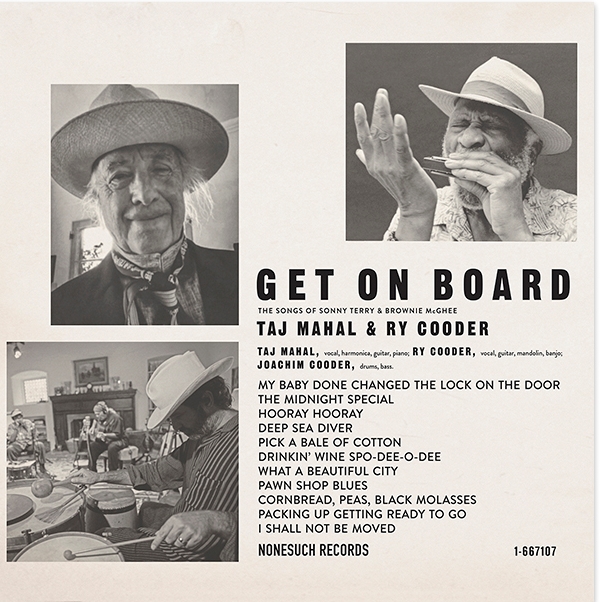
WINNER: Get on Board — Taj Mahal & Ry Cooder

The Sun Is Shining Down — John Mayall

Mississippi Son — Charlie Musselwhite

Best Contemporary Blues Album

Done Come Too Far — Shemekia Copeland

Crown — Eric Gales

Bloodline Maintenance — Ben Harper

Set Sail — North Mississippi Allstars

WINNER: Brother Johnny — Edgar Winter

Best American Roots Song

“Bright Star” — Anaïs Mitchell

“Forever” — Sheryl Crow

“High and Lonesome” — Robert Plant & Alison Krauss

WINNER: “Just Like That” — Bonnie Raitt

“Prodigal Daughter” — Aoife O’Donovan & Allison Russell

“You and Me on the Rock” — Brandi Carlile feat. Lucius

Best Americana Album

WINNER: In These Silent Days — Brandi Carlile

Things Happen That Way — Dr. John

Good to Be… — Keb’ Mo’

Raise the Roof — Robert Plant & Alison Krauss

Just Like That… — Bonnie Raitt

Best Bluegrass Album

Toward the Fray — The Infamous Stringdusters

Almost Proud — The Del McCoury Band

Calling You From My Mountain — Peter Rowan

WINNER: Crooked Tree — Molly Tuttle & Golden Highway

Get Yourself Outside — Yonder Mountain String Band

Best Folk Album

Spellbound — Judy Collins

WINNER: Revealer — Madison Cunningham

The Light at the End of the Line — Janis Ian

Age of Apathy — Aoife O’Donovan

Hell on Church Street — Punch Brothers

Best Regional Roots Music Album

Full Circle — Sean Ardoin and Kreole Rock and Soul feat. LSU Golden Band from Tigerland

Natalie Noelani — Natalie Ai Kamauu

Halau Hula Keali’i O Nalani (Live at the Getty Center) — Halau Hula Keali’i O Nalani

Lucky Man — Nathan & the Zydeco Cha Chas

WINNER: Live at the 2022 New Orleans Jazz & Heritage Festival — Ranky Tanky

Roadhouse Album Review: “Moon and the Stars” is a heavenly tribute to the piano wizardry of Moon Mullican

Various Artists — “Moon and the Stars” — Valcour Records

I have to confess that the music of honky-tonk piano wizard Aubrey “Moon” Mullican had not been on my playlist radar until I heard a preview of this excellent tribute album on the radio (yes, you heard that right – radio!).

Specifically, I heard it on my favorite (and pretty much only) radio show, The Rhythm Revival, hosted by the prodigiously musically knowledgeable Rev. Billy C. Wirtz on WMNF in Tampa, Fla.

The Rev was playing songs from this album a few months back, and singing the praises on Mullican, a honky-tonk / hillbilly / bluesy piano magician who, among many other things, was an inspiration for Jerry Lee Lewis.

Well, piano pounders of all stripes have always been a personal weakness. Mullican’s keyboard genius turned out to be no exception.

Mullican (1909-1967) played Western swing, rowdy honky-tonk, Cajun, rock ‘n’ roll, blues, sentimental ballads — sometimes all in one song. He described his eclectic style as “East Texas sock,” (he was born in Polk County), that could “make goddamn beer bottles jump on the tables!” His piano leads the way, but the songs are filled with fiddles, guitars, some accordion, and apparently whatever sound he wanted.

Billy Grammer, a country guitarist who recorded with Mullican, explained that “western swing is nothing but big-band music played on stringed instruments instead of horns.” His music is said to be a bridge between western swing and rockabilly.

Mullican’s song and style and songwriting were more than prolific, they were influential with country/rockers like Lewis and rockers like Chuck Berry (think “Maybelline”). He should have earned a co-writing credit for Hank Williams’ 1952 hit “Jambalaya.” His spirited recordings were seemingly endless — check out this list.

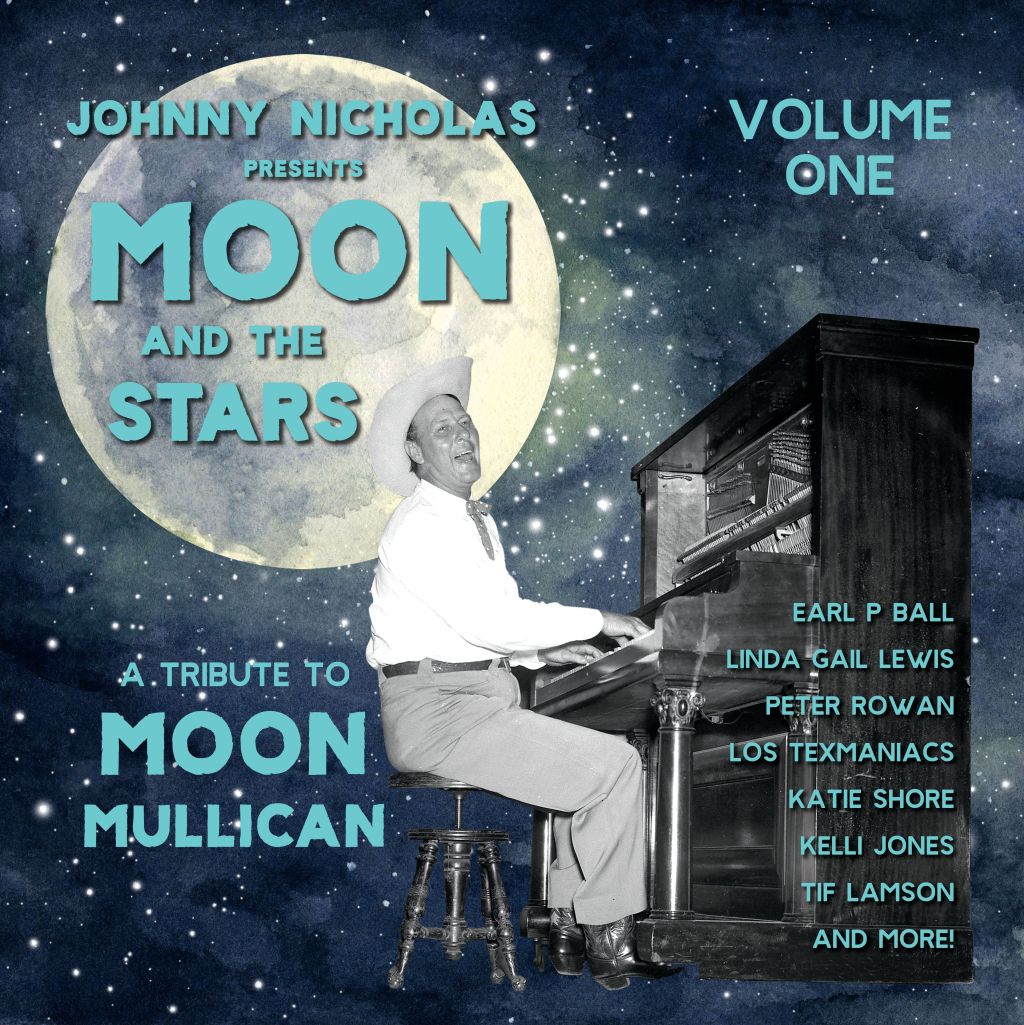
Which kind of brings us to this lively, well-polished gem of a session — more completely titled “Johnny Nicholas Presents Moon and the Stars: A Tribute to Moon Mullican,” — co-producers Joel Savoy (Pine Leaf Boys founder, Savoy Family Cajun Band) and Johnny Nicholas (Big Walter Horton, Asleep at the Wheel) created this double album with group of veterans and lesser-known artists. Nicholas said he became a fan of Mullican’s work in the early 1970s through referrals from Commander Cody and Asleep at the Wheel members.

The sterling vocal cast includes Nicholas, Marcia Ball, Linda Gail Lewis, Augie Meyers, Peter Rowan, Steve Riley, Earl P Ball, Los Texmaniacs, Floyd Domino, and Danny Levin, plus younger artists like Katie Shore, Tif Lamson, Emily Gimble and Kelli Jones. The backing band sparkles with Scrappy Jud Newcomb, Rusty Blake, Chris Maresh, Greg Piccolo, Joel Savoy and Trey Boudreaux.

I’m not gonna comment on every song (there are 20!). But it’s worth noting some standout cuts:

Linda Gail Lewis takes a tough vocal turn on the swinging “I’ll Sail My Ship Alone” and it’s more than worth noting that she is Jerry Lee’s younger sister. Jerry Lee recorded a country-style version in 1958, and Linda Gail cut another on 2015’s “Heartbreak Highway.” Nicholas backs her here with appropriate country-style guitar.

“Pipeliner Blues,” deftly handled by Augie Meyers on vocal, is another Mullican classic. The instrumental “Moonshine Polka” featuring Josh Baca on accordion is yet another facet of the Mullican style. “Seven Nights to Rock” lets Steve Riley on vocals and accordion does just what the title suggests. “Good Deal Lucille” offers some raucous piano plus vocals from Earl P Ball. Marcia Ball livens “Good Times Gonna Roll Again” with her piano and vocals. “Leavin’ You With a Worried Mind” is some pure country from Emily Gimble on piano and vocals with a little bluesy harp from Nicholas.

All of this barely scratches the surface of the many talents of Moon Mullican, his singing, songwriting and piano playing. Listen to this excellent album, look up Mullican himself, and listen to the man who made it all possible. You won’t be disappointed. In fact, you’ll have one helluva good time.


“I’ll Sail My Ship Alone” by Linda Gail Lewis on piano and vocals

Here’s the real deal: Moon Mullican with “I’ll Sail My Ship Alone”

Here is the tracklist. Vol 1 is 1-10, Vol 2 is 11-20:

  1. Good Deal Lucille (J.D. Miller, Al Terry, Bob Theriot)
    Earl P Ball- Piano and Vocal
    Kelli Jones- Tambourine
  2. When Love Dies (Redd Stewart)
    Kelli Jones and Tif Lamson- Vocals
  3. Moonshine Polka (Lou Wayne)
    Max Baca- Bajo Sexto
    Josh Baca- Accordion
    Noel Hernandez- Bass
    Chris Rivera-Drums
  4. I’m Waiting for Ships That Never Come In (Abe Olman, Jack Yellen)
    Peter Rowan- Vocal
    Danny Levin- Piano
    Greg Piccolo- Saxophone
  5. Big Big City (Jerry Foster, Bill Rice)
    Johnny Nicholas- Vocals and Resonator Guitar
  6. I’ll Sail My Ship Alone (L. Mann, M. Burns, H. Bernard, H. Thurston)
    Linda Gail Lewis- Piano and Vocals
    Johnny Nicholas- Electric Guitar
    Trey Boudreaux- Bass
  7. You Don’t Have to Be a Baby to Cry (Terry Shand, Bob Merrill)
    Johnny Nicholas- Vocal and Piano
    Katie Shore and Danny Levin- Fiddles
  8. There’s a Little Bit of Heaven (Moon Mullican, Lou Wayne)
    Katie Shore- Fiddle and Vocals
  9. So Long (Moon Mullican)
    Kelli Jones- Vocal
    Noel Hernandez- Bass
    Joel Savoy- Acoustic Guitar and Percussion
  10. Make Friends (Ed McGraw)
    Johnny Nicholas- Vocal and Piano
    Danny Levin- Piano
  11. Good Times Are Gonna Roll Again (Moon Mullican, Tommy Hill)
    Marcia Ball- Piano and Vocal
    Johnny Nicholas and Katie Shore- Harmony Vocals
    Kelli Jones- Tambourine
    Alex Goodrich- Sousaphone
  12. Leavin You With a Worried Mind (Moon Mullican, Arthur Smith)
    Emily Gimble- Piano and Vocal
    Mike Archer- Bass
    Johnny Nicholas- Harmonica
  13. What Have I Done (Lou Wayne, Morry Burns aka Moon Mullican)
    Katie Shore- Fiddle and Vocals
  14. I was sort of wondering (Moon Mullican, Dusty Ward, Bill Kearns)
    Tif Lamson- Vocal
    Johnny Nicholas- Piano and Vocal
    Kelli Jones- Acoustic Guitar
    Trey Boudreaux- Bass
  15. All I Need is You (Newt Richardson)
    Johnny Nicholas- Vocal and Piano
  16. Pipeliner Blues (Moon Mullican)
    Augie Meyers- Vocal
  17. Downstream (Redd Stewart, Sunny Dull)
    Peter Rowan- Vocals
    Katie Shore- Fiddle and vocals
    Kelli Jones- Vocals
    Joel Savoy- Electric Guitar
    Kelli Jones- Tambourine
  18. Seven Nights to Rock (Buck Trail, Henry Glover, Louis Innis)
    Steve Riley- Accordion and Vocals
    Johnny Nicholas- Piano
    Trey Boudreaux- Bass
    Tif Lamson, Katie Shore, Johnny Nicholas- Gang Vocals
    Joel Savoy- Electric Guitar
  19. Bottom of the Glass (Dick Flood, Eddie Hill)
    Tif Lamson- Vocal
    Kelli Jones- Acoustic Guitar
  20. Don’t Ever Take My Picture Down (Lou Wayne, Morry Burns aka Moon Mullican)
    Johnny Nicholas- Piano and Vocal

/

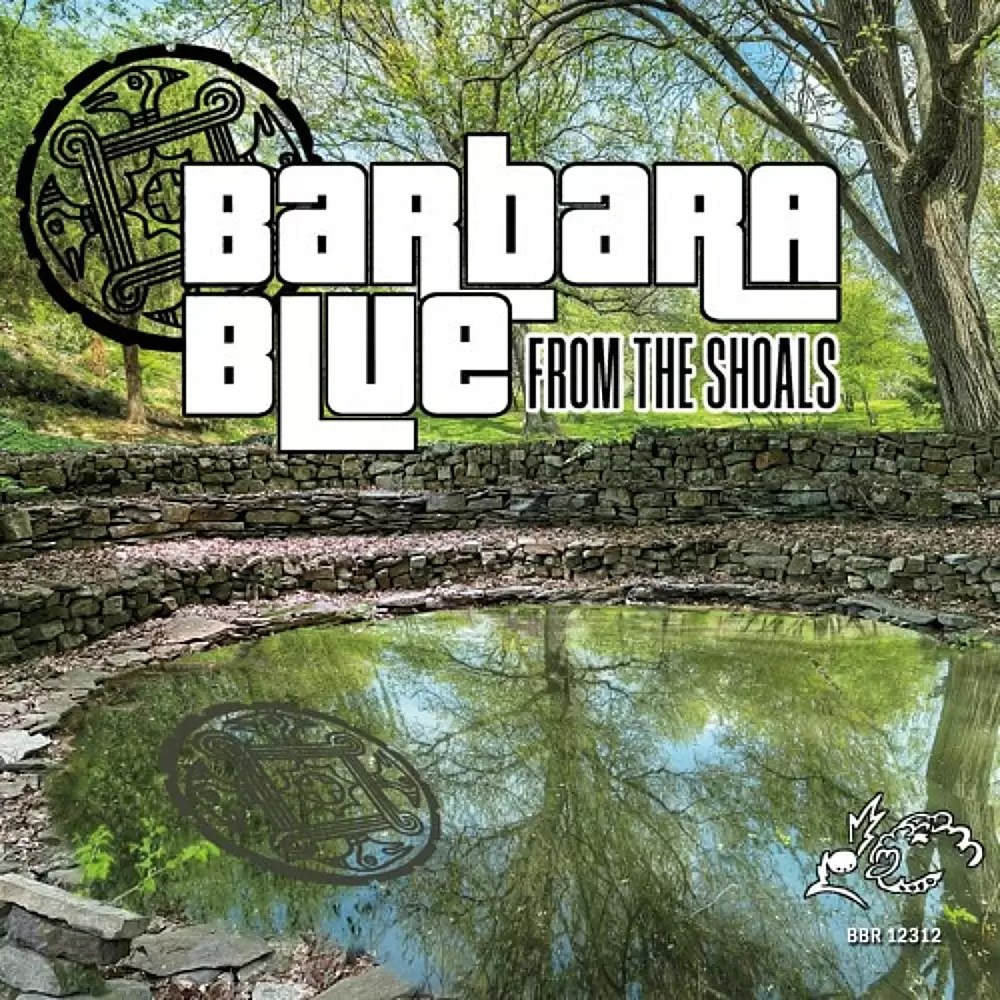
Roadhouse Album Review: Barbara Blue is a soulful presence on “From the Shoals”

Barbara Blue — “From the Shoals” — Big Blue Records (Jan. 27 release)

Barbara Blue opens her latest album in typical Barbara Blue fashion — with powerful vocals wrapped up in the tightly crafted music of her backers. She’s not known as the reigning queen of Beale Street for no reason.

Although she’s been reigning on Memphis for about 25 years at Silky O’Sullivan’s on Beale, where, Sullivan says, “Barbara Blue can make a glass eye cry.” 

Blue spent ten years before that working Pittsburgh clubs on a regular basis, where I’m pleased to say I enjoyed these powerful pipes myself. And before that, she kickstarted her professional career in Phoenix as a solo artist.

For this album, her thirteenth, she adds a little programming twist by focusing the first two tracks on where she’s recording — the legendary NuttHouse Recording Studio in Muscle Shoals.

“The Shoals” is the funky opener, a tribute to the “powerful magic” of the soulful music that’s been flowing from the Shoals for decades. “Nutthouse Blues” follows, a soulful tribute to the recording studio where Jimmy Nutt now holds the controls. Will McFarlane contributes wicked guitar riffs, and Clayton Ivey pumps tough organ into the mix. And we can’t ignore Bernard “Pretty” Purdie on drums.

Both cuts, of course, feature Blue’s fabulous tsunami of a Voice, rolling over the music. And the Voice never lets up. “Tell Mama” is next, written by Clarence Carter and made famous by Etta James. Blue breathes new life into the classic song.

Then comes the torchy ballad “Steal Away” (the Jimmy Hughes version), as Blue turns on the soul. “Severed” is another soul-drenched plea for “more healing;” then “Curse of Beauty,” a stirring piece with anthem-like chorus. (I should point out here that “Tell Mama” and “Steal Away” are the only two covers in this set — the rest are Blue originals, with her Croatian songwriting partner Davor “Hutch” Hačić (whom she met at 2019’s IBC in Memphis).

“Lost Young Love” is about just that — lost young love. “Slide Man” is a throwback to some classic slide, and some equally classic salacious double-entendre blues. “Too Far” is another gentle ballad, stirred deeply by with a sensuous vocal. “Nothing Lasts Forever” picks up the pace, and adds a little funk to the message “get it while you can.” “I Never Stopped Loving You” is another powerfully warm ballad with its roots in her hometown of Pittsburgh.

The album closes with two haunting tracks: “Song of the River,” a lyrical ode to a “mystical music river of song,” and “Trail of Tears,” a rhythmic track with a tearful Native American theme.

All these styles and this vocal passion represent Barbara Blue at her best. Her dynamic voice and command of a lyric make her a musical presence to be seen and heard. If you’ve never experienced her, check out this fine album. Even if you have, check it out anyway. Barbara Blue is what a masterful singer sounds like.

Just in case you’re not aware, here are just a few of her achievements:

In 2015 Barbara Blue was honored with a Brass note on The Beale Street Walk of Fame. She received the 2011 Emissary of Memphis Music Award. Both the Hard Rock Cafe Memphis, TN (2014) and Pittsburgh, PA (2010) honored her with a Memorabilia Case. She received a 2007 BMA Nomination for Best Contemporary Female Blues Artist. She was nominated for 2019 Independent Blues Music Award “Traditional Female Artist of the Year” and best Traditional CD (2018’s “Fish In Dirty H2O”), and was a 2019 BMA Nominee for  “Female Soul Blues Artist Of The Year”.

Here’s a video of Barbara live singing” Low Down Dirty Dog”:

Track List
1 The Shoals 3:20
2 Nutthouse Blues 7:10
3 Tell Mama 3:22
4 Steal Away 4:04
5 Severed 5:13
6 Curse of Beauty 4:43
7 Lost Young Love 4:40
8 Slide Man 3:15
9 Too Far 7:41
10 Nothing Last Forever 3:09
11 Never Stopped Loving You 5:12
12 Song Of The River 6:42
13 Trail Of Tears 6:25

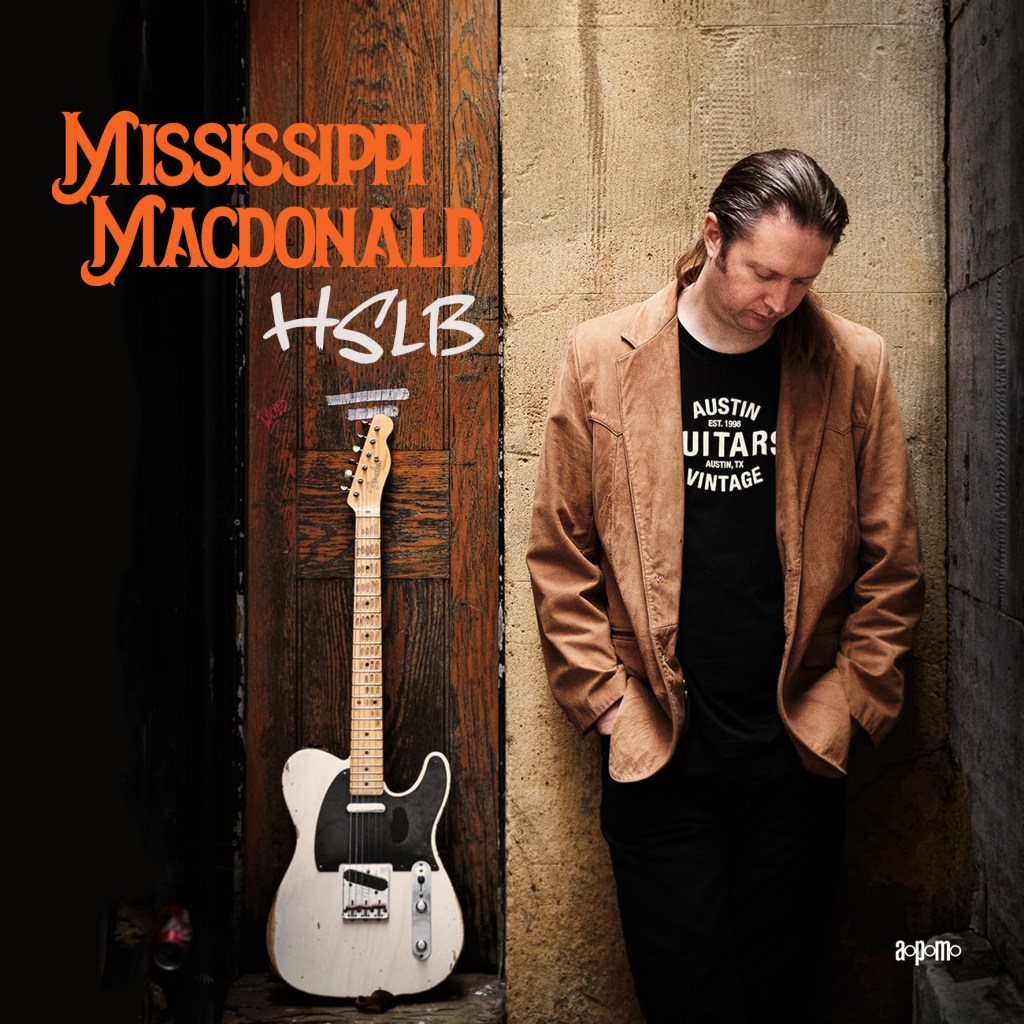
Roadhouse Album Review: Mississippi MacDonald offers a passionate “Heavy State Loving Blues”

Mississippi MacDonald — “Heavy State Loving Blues” — APM Records (Jan. 27 release)

When I first heard Mississippi MacDonald’s last album. “Do Right, Say Right” (my review here), I was very impressed with this Londoner’s grasp of American blues, his gritty vocals, and his sharp guitar work.

He’d been doing it for a while though (He’s a three-time UK Blues Awards nominee and three-time US Independent Blues Awards nominee), it’s just that “Do Right” was my first listen. My loss, of course. He’s an exciting blues talent.

His latest album, “Heavy State Loving Blues,” continues and amplifies his musical journey with ten more songs carved from the blues roots that MacDonald seems to tap with amazing skill and emotional intensity.

MacDonald’s blues ring with authenticity — quite an achievement considering it’s mostly original music. He’s a powerful, soulful vocalist, and his guitar work is stunningly simple — he lets the music breathe in between the notes.

This album, like the previous, was produced by Phil Dearing, adding Lucy Dearing on backing vocals for a richer sound.

He kicks off this session with “Howlin’ Wolf,” a funky, high-energy shoutout to pretenders in the music world, kind of a bluesy take on “something is happening / and you don’t know what it is / do you, Mister Jones?” heavily fueled by some crackling horns,

The title track is torchy and soulful, with MacDonald’s guitar lines inspiring the vocals, and Dearing’s backup adding emotional punch. “Blind Leading the Blind” is a gritty duet with Vaneese Thomas and her gorgeous Memphis musical attitude.

“Heading South” is more soulful pleading with MacDonald’s stinging guitar in a powerful call-and-response conversation. “(I Ain’t Gonna) Lie No More” follows, a softer but still soul-filled moment. The first cover is O.V. Wright’s “I’ve Been Searching,” with Mac following his horns into another soul-drenched side.

It’s here, for me, with “I’ll Understand,” that MacDonald starts to push the album deeper into the intensity of the blues. His voice aches for the hope of lost love returning, and a guitar solo midway echoes that beautiful pain with primal urgency. A haunting vocal background surrounds it all. Love this song.

Another cover, from Zack Logan, “Trouble Doing the Right Thing,” has a slight country tilt, and lopes along in the blues. “The Devil Wants Repayment” takes us down to the crossroads for what could be a visit from a midnight rider looking for payback.

The fiery closer is “Blues for Albert,” an instrumental with Mac’s spoken interlude explaining how his love of Albert Collins‘ blues first shaped his music. It’s a stinging, heartfelt, six-minute ode to the Master of the Telecaster and shows that MacDonald has absorbed his lessons well. (More about Albert Collins below.)

This is another fine album from the very talented Mississippi MacDonald, who continues to demonstrate his passion for the music and his ability to create authentic blues born from that passion. His songwriting rings true, his vocals are tough and tender, and his elegant guitar work says that he’s learned one of the basics of the blue notes — less indeed can be more.


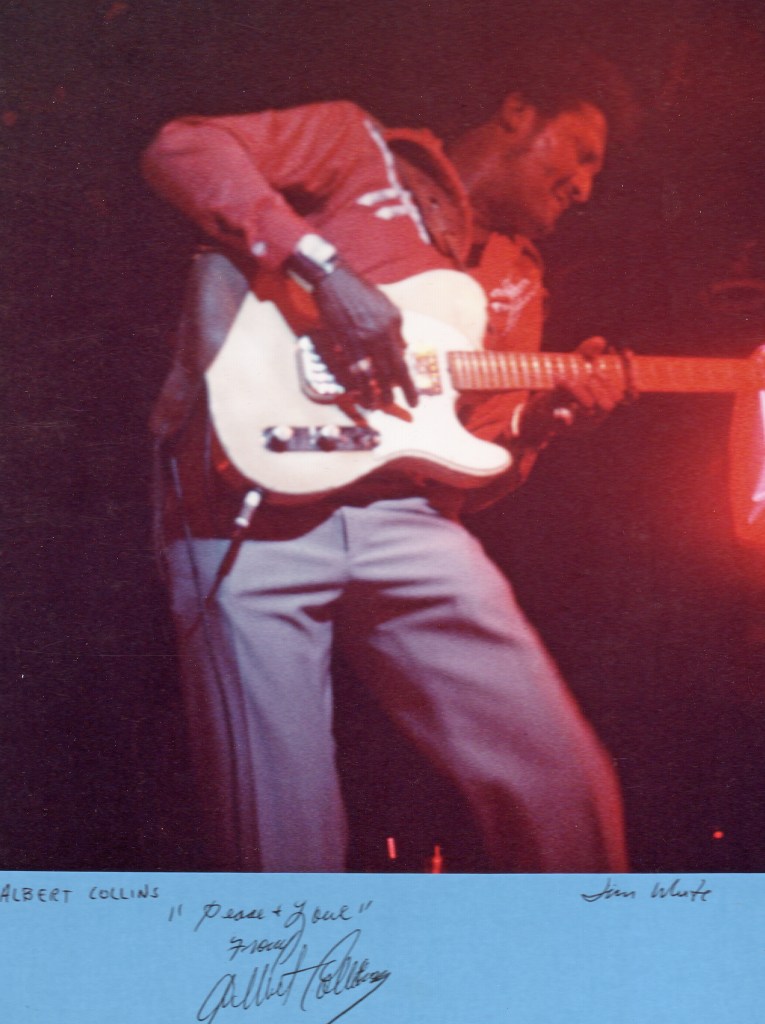
Here’s a Roadhouse digression with one of my own Albert Collins stories:

Collins appeared fairly often at Mancini’s Lounge in McKees Rocks, a Pittsburgh-area club that featured the blues in the late 1970s and early ’80s while I was still a Pittsburgher. We joked that he sometimes seemed to be the house band (although Muddy Waters put in four appearances in ’80 and ’81!).

Albert would piece together a guitar cord (long before wireless) and roam through the club and out onto the sidewalk. His band, the Icebreakers, featured the soaring sax of A.C. Reed. Albert’s guitar work was always passionate, innovative and exciting to watch.

Here’s a grainy picture I took at one of those shows, and later got autographed. It says “Peace & Love” From Albert Collins. Indeed.

Here’s a video of “(I Ain’t Gonna) Lie No More”:

Track list:

  1. Howlin’ Wolf (04:10)
  2. Heavy State Loving Blues (04:19)
  3. Blind Leading the Blind (04:08)
  4. Heading South (03:07)
  5. (I Ain’t Gonna) Lie No More (04:10)
  6. I’ve Been Searching (03:32)
  7. I’ll Understand (05:17)
  8. Trouble Doing the Right Thing (03:35)
  9. The Devil Wants Repayment (02:55)
  10. Blues for Albert (05:58)

And just for fun, here’s Albert Collins from the time that I remember him, including saxman A.C. Reed in his band:

Roadhouse Album Review: Teresa James & the Rhythm Tramps offer a magical Beatles tour on “With A Little Help From Her Friends”

Teresa James & the Rhythm Tramps — “With A Little Help From Her Friends” — Blue Heart Records (Jan. 20 release)

Did you ever wonder what the Beatles would sound like if they were born and raised in Houston (Texas, of course)? And had a honey-voiced, soulful female lead singer?

Neither did I.

However, this latest album from Teresa James and the Rhythm Tramps should finally answer that unasked question.

James, along with husband, producer and bassist, Terry Wilson, has put together a sweet and sassy album of 10 Beatles songs covered with her uniquely flavored vocals and the Tramps’ usual crisp backing.

Joining the band for this effort are keyboardist Kevin McKendree and drummer Richard Millsap, with backing vocals by Lucy Wilson and Nicki Bluhm, and special guest Yates McKendree, son of Kevin.

It’s an impressive lineup for an impressive outing tackling the works of the Fab Four. The results are just as impressive.

Everything kicks off on one of my favorite tracks, “Ticket to Ride,” with James’ vocals punching out a soulful rocking vibe, closing the final few bars by soaring over McKendree’s rollicking piano. Then comes “Taxman,” an unlikely but gorgeous pairing of James’ honeyed tones with a cloud of psychedelic herbal essence floating in the air. You can almost see the light show.

“Don’t Let Me Down” is next, as James turns it into a soul-drenched anthem rich with her pleading vocals. “Happy Just to Dance with You” adds a touch of funkiness to deliver it from pure Beatlemania into a guitar-laced bit of soul.

“Oh Darlin'” (another favorite cut) turns into a searing duet with Yates McKendree’s sharp guitar fueling a lusty vocal burn as James’ voice simply scorches the air. “You’ve Got To Hide Your Love Away,” originally an acoustic track, stirs in a taste of Motown, putting James in front of soulful backup vocals.

The band turns playful with the joyful “Everybody’s Got Something To Hide Except Me And My Monkey,” again adding tough, rhythmic backing. “You Won’t See Me” gives James a smooth vocal turn. “No Reply” adds a little Latin twist, again adding backup vocals for an extra dimension. A brightly swinging “Think For Yourself” wraps it up with the Tramps giving George Harrison’s tune a shuffling, thoughtful musical reappraisal.

“This was so much fun and such a labor of love,” says James. “I have been a Beatles fan since I was a little girl and having known all these songs inside and out for so many years, it was a real challenge to try and capture a bluesier, more Southern vibe but still retain the original spirit of the songs. And because we were doing it basically just for fun, I felt like I could stretch out just a little bit more and be a little looser with it.”

And it all works. This is a thoroughly enjoyable album, whether you’re a Beatles fan or a Teresa James fan. Or both. And I’m a big fan of the sassy, sultry voice of Teresa James. James and the Tramps plus friends don’t just cover these songs; they reimagine them in their own style and shape them into a delightful album that makes the music fresh — it’s just like a magical mystery tour.

Here’s the “Taxman”:

Tracklist:

Ticket to Ride
Taxman
Don’t Let Me Down
Happy Just to Dance With You
Oh Darlin’
You’ve Got to Hide Your Love Away
Everybody’s Got Something to Hide Except Me and My Monkey
You Won’t See Me
No Reply
Think for Yourself