Roadhouse Album Review: Tommy Castro takes a musical journey on “A Bluesman Came To Town”

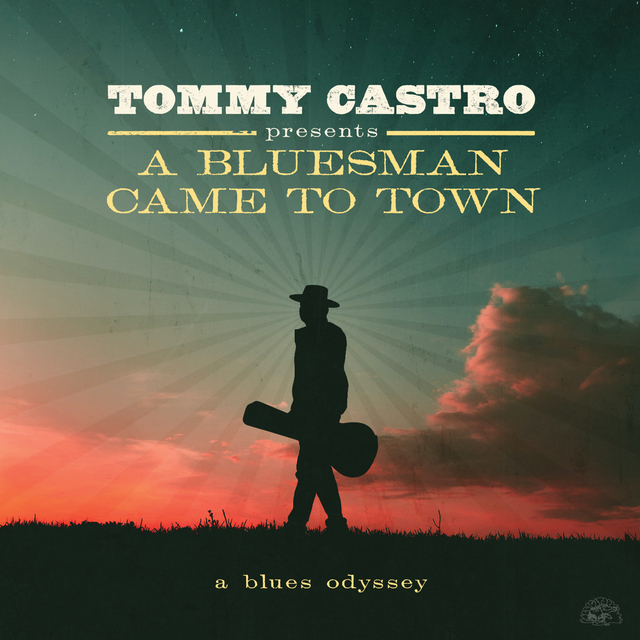
Tommy Castro and the Painkillers – “A Bluesman Came To Town” (Alligator Records, Sept. 17)

From the raw and throbbing opening track, “Somewhere,” where Tommy Castro lays down a primal blues, to its reprise and resolution on the final cut, Castro’s latest album overflows with tough, funky, rocking, soulful blues and rootsy music. The album tells the passionate tale of a young man drawn to the blues and its long and harrowing road, and his awakening to what the music teaches him.

It’s filled with evocative story-telling; feral guitar solos, risp backing from the Painkillers, and smartly themed original songs. Of course, it helps that the package was produced by ace blues and roots producer, Tom Hambridge.

“I like to keep things fresh and interesting,” Castro says, “Tom and I have talked about making a record together for a long time. Collaborating with him was even better than I imagined. I had an outline for the story and then Tom and I talked it out and the songs just started to organically grow out of each other.” Castro says.

“A Bluesman Came To Town” isn’t a story about me. It’s pulled from some of my friends’ and my experiences though. I’ve seen first-hand for a lot of years what it’s like out there on the road.”

That story tells of a young bluesman who needs to get away from the farm to make his mark, then finds that what he needs in life can be found back where he began.

Each track is carefully crafted as part of that journey, but each song also stands solidly on its own. The songs were written mainly by Castro and Hambridge, with help from Richard Fleming, Terry Wilson and Ron Alan Cohen.

“Somewhere” sets the opening mood of a blues journey about to begin, followed by the title track, where he “heard about a roadhouse a mile outside of town,” and hears the music beckon. The song titles that follow outline the bluesman’s odyssey and almost tell the story: “Child Don’t Go” (with a vocal boost from the powerful pipes of Terri Odabi), “You To Hold On To,” “Hustle,” “I Got Burned,” “Blues Prisoner,” “I Caught A Break,” “Women, Drugs and Alcohol,” “Draw The Line,” “I Want To Go Back Home” (a sensuously soulful, sax-fueled turning point in the journey), “Bring It Back,” and a starkly acoustic version of “Somewhere” that redefines what “somewhere” means.

Castro has always been a thoughtful creator of his music, preferring not to repeat himself, and flex his musical muscles in different directions. “Bluesman” is a perfect example of that philosophy, and shows considerable creativity within a unique concept. It’s a great album.

“Somewhere” (opening track) from “A Bluesman Came To Town”:

JUST FOR FUN: Found while looking up other stuff. Tommy Castro and Deanna Bogart stepping back in time to the 1970ish “Soul Shake” in a post-lockdown show:

JUST FOR FUN, Pt. 2: Soul Shake, as recorded by its creators, Peggy Scott and JoJo Benson, in 1969:

“Bluesman” track list and album information:

1. SOMEWHERE (3:30)
(Castro & Hambridge, Tommy Castro Music admin. by Eyeball Music, BMI/Tom Hambridge Tunes, ASCAP)
2. A BLUES MAN CAME TO TOWN (3:58)
(Castro, Hambridge & Fleming, Tommy Castro Music admin. by Eyeball Music, BMI) Tom Hambridge Tunes, ASCAP/Richard Fleming Music, BMI)
3. CHILD DON’T GO (2:50)
(Castro, Hambridge & Fleming, Tommy Castro Music admin. by Eyeball Music, BMI/Tom Hambridge Tunes, ASCAP/Richard Fleming Music, BMI)
4. YOU TO HOLD ON TO (3:54)
(Castro, Hambridge & Fleming, Tommy Castro Music admin. by Eyeball Music, BMI) Tom Hambridge Tunes, ASCAP/Richard Fleming Music, BMI)
5. HUSTLE (3:37)
(Castro, Wilson & Hambridge, Tommy Castro Music admin. by Eyeball Music, BMI/Jesilu Music, BMI/Tom Hambridge Tunes, ASCAP)
6. I GOT BURNED (3:37)
(Castro, Hambridge & Fleming, Tommy Castro Music admin. by Eyeball Music, BMI) Tom Hambridge Tunes, ASCAP/Richard Fleming Music, BMI)
7. BLUES PRISONER (5:15)
(Castro, Hambridge & Fleming, Tommy Castro Music admin. by Eyeball Music, BMI) Tom Hambridge Tunes, ASCAP/Richard Fleming Music, BMI)
8. I CAUGHT A BREAK (2:39)
(Castro, Hambridge & Fleming, Tommy Castro Music admin. by Eyeball Music, BMI) Tom Hambridge Tunes, ASCAP/Richard Fleming Music, BMI)
9. WOMEN, DRUGS AND ALCOHOL (4:20)
(Castro, Hambridge & Fleming, Tommy Castro Music admin. by Eyeball Music, BMI) Tom Hambridge Tunes, ASCAP/Richard Fleming Music, BMI)
10. DRAW THE LINE (4:15)
(Castro & Cohen, Tommy Castro Music admin. by Eyeball Music, BMI/Ron Alan Music, ASCAP)
11. I WANT TO GO BACK HOME (3:42)
(Castro, Hambridge & Fleming, Tommy Castro Music admin. by Eyeball Music, BMI) Tom Hambridge Tunes, ASCAP/Richard Fleming Music, BMI)
12. BRING IT BACK (3:43)
(Castro & Cohen, Tommy Castro Music admin. by Eyeball Music, BMI/Ron Alan Music, ASCAP)
13. SOMEWHERE (REPRISE) (2:41)
(Castro & Hambridge, Tommy Castro Music admin. by Eyeball Music, BMI/Tom Hambridge Tunes, ASCAP)

PRODUCED BY TOM HAMBRIDGE

Tommy Castro: Guitar and Vocals
Tom Hambridge: Drums, Percussion and Background Vocals
Rob McNelley: Guitar
Tommy MacDonald: Bass
Kevin McKendree: Keyboards
Randy Mc Donald: Bass on “Somewhere (Reprise)”
Bowen Brown: Drums on “Somewhere (Reprise)”
Mike Emerson: Keyboards on “Child Don’t Go” and “Draw The Line”
Keith Crossan: Saxes and horn arrangement on “Hustle”
Deanna Bogart: Saxes and horn arrangement on “I Want To Go Back Home”
Terri Odabi: Vocals on “Child Don’t Go”
Jimmy Hall: Harmonica on “Somewhere,” Background Vocals on “A Bluesman Came To Town”

Roadhuse album review: Tony Holiday’s excellent “Porch Sessions”

Tony Holiday — Porch Sessions Volume 2 (Blue Heart Records, Sept. 17)

It’s a pretty simple idea, really — get a bunch of good musicians together in informal settings — even front porches — record them, and turn that spontaneous music into a naturally fine album of blues.

So after the first splendid “Porch Sessions” appeared in 2019 and was nominated for a
Blues Blast Music Award in the Live Album category, Volume 2 was an easy choice.

“I’ve just been traveling around the country the last five years or so, recording bluesmen and women on their porches. It didn’t end with the first volume. It just had more life in it,” says harpman Holiday.

That “life” of 16 more songs recorded live means even more of this enthusiastic effort for our listening pleasure.

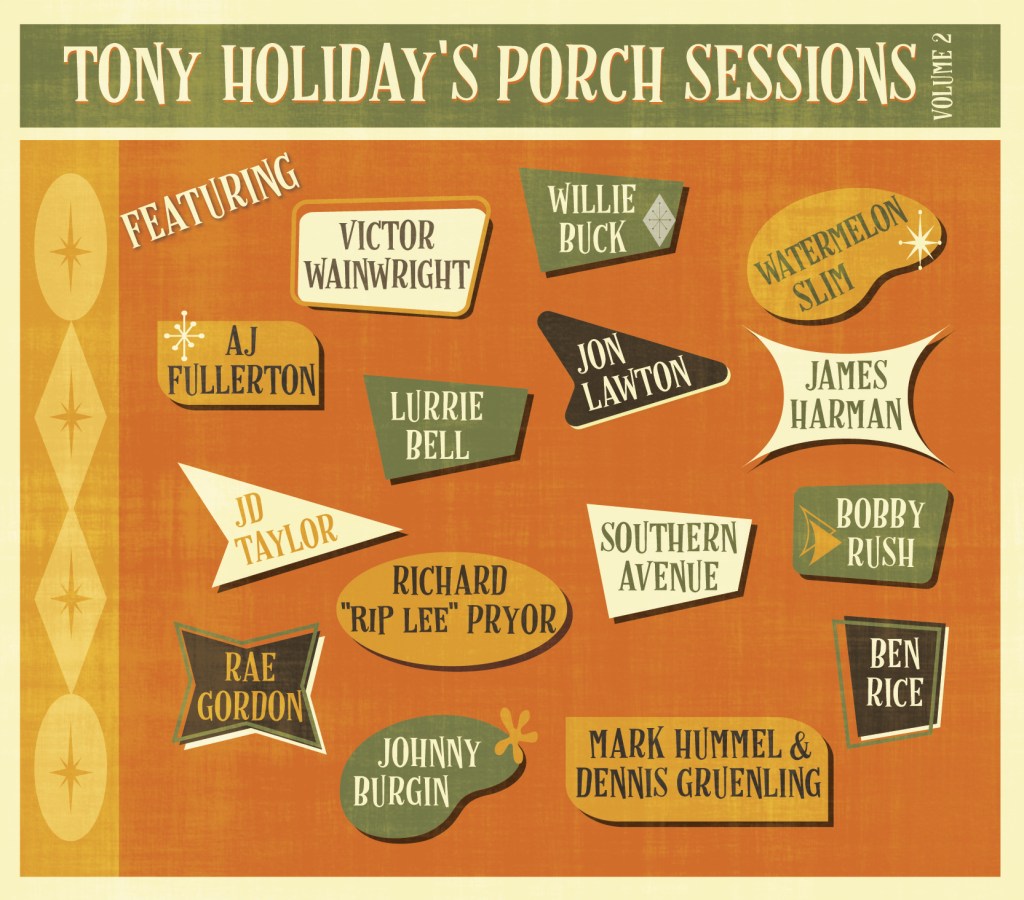
The guest artists on this recording are listed on the album cover, pictured here for your edification, and at no extra cost.

They run through a set of some old blues chestnuts and some lesser-known but still rewarding material, and they sound like they’re having a great time doing it.

Piano-pounding wizard Victor Wainwright opens the show with a tasty tribute to the classic rocking blues, “She’s Tuff,” written and first recorded in 1960 by Jerry McCain, but given new life about 20 years later by the Fabulous Thunderbirds as their signature song. It’s more than “tough enough.”

Some highlights: Willie Buck does a deep blue turn on “Honey Bee,” Bobby Rush reaches way back for the succulent “Recipe for Love” with Vasti Jackson’s understated guitar the perfect side dish. Watermelon Slim lends his unique chops to the classic “Smokestack Lightnin’.” In one of his last performances, James Hartman aces “Going to Court” with strong help from Kid Ramos and London Stone. Mark Hummel and Lurrie Bell bring some down-home flavor to “Everyday I Have the Blues,” and Rae Gordon sounds tough enough herself on the crackling “Find Me When The Sun Goes Down” with Holiday on harp.

Those are just a few of my preferences, but there’s not a false note here. Everyone is captured in a relaxed and natural setting, and they make great music to match. To make it an even better experience, add the first “Porch Sessions” into the mix and spend an evening with some of the best blues music and musicians.

And for some added enhancement, a libation of your choice. Mine was Jim Beam Black. Neat. I find bourbon and blues to always help with the hole in the soul.

Track Listing:
01 She’s Tuff Featuring Victor Wainwright
02 Honey Bee Featuring Willie Buck
03 Change Is Inevitable Featuring AJ Fullerton
04 Recipe For Love Featuring Bobby Rush
05 Smokestack Lightnin’ Featuring Watermelon Slim
06 Going To Court 2 Featuring James Harman
07 Go Featuring Jon Lawton
08 Every Day I Have The Blues Featuring Lurrie Bell
09 Brazilian Brothel Featuring Richard ‘Rip Lee’ Pryor
10 Bad Bad Girl Featuring Johnny Burgin
11 Find Me When The Sun Goes Down Featuring Rae Gordon
12 That’s How I Learned Featuring Ben Rice
13 Cake Walk Featuring Mark Hummel & Dennis Gruenling
14 Family Tree Featuring JD Taylor
15 Peace Will Come Featuring Southern Avenue
16 Get Outta Here (Dog Named Bo) Featuring Bobby Rush

Roadhouse album review: Altered Five Blues Band puts grit and soul into tough “Holler If You Hear Me”

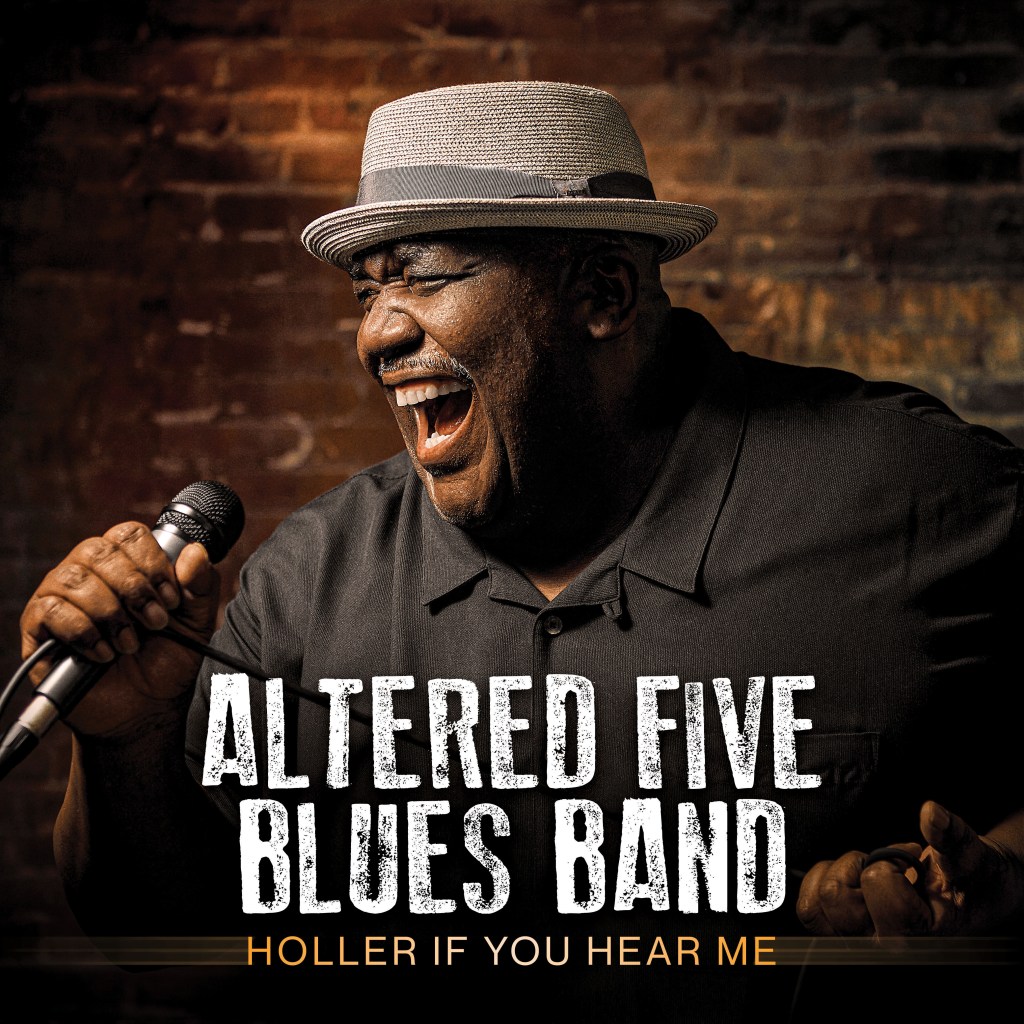
Altered Five Blues Band – “Holler If You Hear Me” (Blind Pig Records, Sept. 3)

“Holler If You Hear Me” is the sixth and latest album from this gritty Milwaukee band, whose bluesy, soulful sound is wrapped around the big, rich pipes of its vocalist, Jeff Taylor.

Then there’s the band itself, with a driving, old-school feel. Then there’s the songwriting — 13 finely crafted odes to life and love, each one with guitarist Jeff Schroedl’s name on it as writer or co-writer. Finally, there’s the classy, classic Tom Hambridge blues production.

It all kicks off with the title song, a romping invitation to the blues party that follows — “come join the party, let’s ramble and roll….” Jason Ricci adds wicked harp here and on four other cuts.

Next, Taylor switches gears into the slow-burning, churning funk of “Guilty of a Good Time,” with a lyric that hits me where I live — “”hand-rolled cigars, rhythm and blues….” It’s the first of a glorious handful of torchy blues that show the power of Taylor’s voice, driven by Schroedl’s fierce guitar and the tightness of the band: bassist Mark Solveson, drummer Alan Arber, and Raymond Tevich on keyboards.

“If You Go Away (She Might Come Back)” is another good-rockin’ blues, again with Ricci weaving in and out (and probably jumping up and down — yes, I’ve seen him!).

My flat-out favorite cut is the passionate “Holding On With One Hand,” with Schroedl’s stinging guitar intro and solo, plus Ricci’s harp, making this an achingly strong showpiece for Taylor. “Leave Before I Let You Down” is another piece of soulful magic, deftly lyrical and powerfully sung. “All Suit, No Soul” is a funky little putdown whose title says it all. Another favorite is the chunky “Clear Conscience, Bad Memory,” about how easy it is to slip through those bad memories.

Ricci returns to help kick in the closer, “Big Shout Out,” a rousing tribute to those who “built the blues.”

There’s lots more great stuff here. These guys know how to write, play and sing. They do it with great enthusiasm and tremendous talent. It’s hard to overstate the strength that a tough vocalist like Jeff Taylor brings to the blues — and when you add the rest of this excellent band, the result is … well, it’s what you’ll hear when you give this a listen.

Here’s a video of the scorching “Guilty of a Good Time’:

Track list

1. Holler If You Hear Me (3:33)
2. Guilty of a Good Time (3:26)
3. If You Go Away (She Might Come Back) (3:32)
4. Holding on with One Hand (3:56)
5. Full Moon, Half Crazy (3:22)
6. Where’s My Money? (3:14)
7. All Suit, No Soul (2:57)
8. I Got All I Need (5:38)
9. Clear Conscience, Bad Memory (5:29)
10. In the Name of No Good (3:30)
11. Leave Before I Let You Down (4:21)
12. Fifteen Minutes of Blame (4:09)
13. Big Shout Out (3:12)

Roadhouse album review: “Etta James – The Montreux Years” a live showpiece for her incomparable music

In my last post, I wrote about a new album series from BMG Records and the Montreux Jazz Festival, and I described the upcoming release (Sept. 17) of “Muddy Waters – Live at Montreux.” It’s an excellent look at the live music of one of the greatest blues performers.

But there are two of these magnificent sets already out there to gratify your ears and satisfy your soul, from Montreux performances by Etta James and Nina Simone. Today I’ll take a look at the James concerts.

Etta James – “Etta James: The Montreux Years” (BMG Records, June 2021)

“As you know, I am a blues singer,” Etta James told a Montreux Jazz Festival audience at the beginning of one of her songs, vibrantly captured on this journey through her festival years, covering six concert performances from 1975-1993. The ’75 festival was her first European performance, and is included in its entirety on one of the two-disc set.

She was indeed a powerful singer of blues, but James was also one of the most exciting and enduring musical voices in the second half of the 20th century. She could, and did, sing R&B, blues, soul, pop, funk, or any combination that the occasion demanded. And she did it with ease. The music always seemed to just flow out of her.

James came to music early in a tumultuous life. She was born Jamesetta Hawkins to her 14-year-old mother, Dorothy, and believed that pool player Rudolf “Minnesota Fats” Wanderone, was her father.

She released her first record in 1955, when she was 17. It was “The Wallflower,” with the title changed from “Roll With Me, Henry,” apparently to protect innocent young teenage minds, or possibly, people named Henry. It was one of several “answer songs” to  Hank Ballard and the Midnighters’ raucously salacious 1954 hit, “Work with Me Annie.” Etta even got credit as a co-writer, with Johnny Otis, who helped to discover her, and Ballard.

By the way, these songs, plus the Midnighters’ songbook and Otis’s, were all great, enthusiastic music, honking and jiving its way into the early days of rock ‘n’ roll.

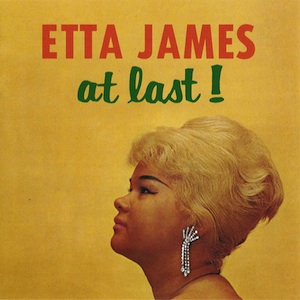
But Etta was on her way. Just five years later, her first album, “At Last,” debuted, along with a hint of the wide range of musical styles she would go on to master. There was also the title song, which would become her signature song, plus some blues, jazz and pop.

Sadly, her musical career was marred by drug and legal issues in the ’60s, ’70s and ’80s, but her music grew into an essential part of the American songbook.

The tracks on this Montreux album reflect that status with strong performances from 1975 to 1993. There are tough blues, painfully soulful moments, and striking pop ballads — all done live, with no chance to overdub, or fix any mistakes in the studio.

It’s all simply outstanding music, and should help Etta James find her place among the great women of American music.

Here’s the track list on the CD from multiple years:

Breakin’ Up Somebody’s Home (1990), I Got the Will (1989), A Lover Is Forever (1993), Damn Your Eyes (1989), Tell Mama (1977), Running and Hiding Blues (1990), Something’s Got a Hold On Me (1989), Beware (1993), Come to Mama (1990), Medley: At Last / Trust in Me / Sunday Kind of Love (1989), I Sing the Blues for You (1993), Baby What You Want Me to Do (1978 Encore)

Here’s the track list from the CD covering the 1975 show:

Respect Yourself, Drown in My Own Tears, W-O-M-A-N, Dust My Broom, I’d Rather Go Blind, All the Way Down, Baby What Do You Want Me to Do, Rock Me Baby, Stormy Monday

Here’s a video of Etta James at the 1975 Montreux festival, singing “I’d Rather Go Blind.” Great stuff!

Roadhouse Album Review: “The Montreux Years” a powerful look back at Muddy Waters live

Most people aren’t lucky enough to be in the audience whenever great artists have memorable shows. That’s partly why there is a recording industry. And that’s exactly why there is a new series of excellent live albums from BMG Records and the Montreux Jazz Festival — titled “The Montreux Years” for four artists so far, and presumably much more to come.

Already released this summer at two splendid sets by Nina Simone and Etta James: “Nina Simone – The Montreux Years” and “Etta James – The Montreux Years.” (If you’re a streamer, these can be found on Spotify.)

Coming up Sept. 17 are “Muddy Waters – The Montreux Years” and “Marianne Faithful – The Montreux Years.” (Both are already streaming on Amazon Prime Music and Spotify.)

I want to talk about Muddy’s session in this review, even though you can’t buy the CD or vinyl yet. I’ll get to the rest later.

These are not typical live albums, where a show is recorded and then replayed pretty much as is was performed. These sets consist of powerful performances from multiple festival appearances, arranged in a way that the producers hope will provide great listening.

And it works — splendidly.

What we get from all this is great blues from one of the greatest bluesmen, still powerful in his early 60s. Muddy’s bands, starting with the smaller ’72 combo, right through the nine-piece ’77 band, are razor-sharp on a group of classic Muddy blues.

The songs “Long Distance Call,” “Rollin’ And Tumblin’,” “Rosalie,” “County Jail” and “Rock Me Baby” are taken from the 1972 concert, his first at Montreux, with his basic band, the raw, stripped-down unit that represented the kind of tough, terse blues that was Muddy Waters. Just Waters and Louis Myers on guitar, David Myers on bass, Lafayette Leake on Piano, and Freddy Below on drum. Just enough to let the music say what you want, without saying too much.

The songs from the other years are no less formidable, but sound just a little different when guitar-slingers like Buddy Guy, Terry Taylor, Bob Margolin and Luther Johnson, plus harpmen Junior Wells and Jerry Portnoy are thrown into the mix.

This is an excellent selection of songs from the festival. You can probably hear most of them in other places, but the crackling Montreux vibe is clearly present, and everything sounds just right.

I’m sure Muddy and his bands gave great performances everywhere they went, but these live cuts have a joy and intensity kindled in this classic festival that’s hard to match. “I Can’t Be Satisfied” was an early Waters recording, and despite that sentiment, you can be with this outstanding recording.

Here’s the tracklist for Muddy’s album, showing the year of the performance:

Nobody Knows Chicago Like I Do (1977), Mannish Boy (1974), Long Distance Call (1972), Rollin’ and Tumblin’ (1972), County Jail (1972), Got My Mojo Working (1977), I’m Your Hoochie Coochie Man (1977), I’m Ready (1974), Still a Fool (1977), Trouble No More (1977), Rosalie (1972), Rock Me Baby (1972), Same Thing (1974), Howlin’ Wolf (1977), Can’t Get No Grindin’ (What’s the Matter With the Meal) (1977), Electric Man (1974)

You can check the impressive Montreux festival concerts database for the complete set list from the show, along with the band members. Here’s the lineup for Muddy’s bands:

1972 — Muddy Waters (g, vocal), Freddy Below (dr), David Myers (b), Louis Myers (g), Lafayette Leake (p)
1974 — Buddy Guy (g), Muddy Waters (g, voc), Junior Wells (hca), Terry Taylor (g), Bill Wyman (b), Dallas Taylor (dr), Pinetop Perkins (p)
1977 — Muddy Waters (g, voc), Bill Wyman (b), Dallas Taylor (dr), Pinetop Perkins (p), Luther Johnson (g, voc), Calvin Jones (b, voc), Robert Margolin (g), Jerry Portnoy (hca), Willie Smith (dr)

“Really the Blues” offers up a vintage blues archive

I thought I should pass along a great website for older blues videos and performances. A lot of you may be familiar with it already, but it’s worth promoting here because it’s such a great resource. With great music.

It’s called Really the Blues, and you can sign up to get some music every day to help fill that hole in your soul.

Here’s how they describe themselves:

“ReallytheBlues.com is an internet archive dedicated entirely to the blues and the men and women who create it.

“This site contains both video and audio performances by legendary figures of the genre, from it’s first appearance on record to the present.

“Inspired by jazz clarinetist Mezz Mezzro’s book of the same title, ReallytheBlues.com seemed the perfect name for this all inclusive blues site.

“As always our service is entirely free! Just subscribe and you will start to receive our daily e-mails containing film clips and vintage recordings featuring legendary blues artists.”

Enjoy!

Here’s a recent video they offer of Jesse Mae Hemphill, a guitarist in the Mississippi hill country tradition.

And here’s that video on YouTube:

Roadhouse news: Blues Blast Music Award winners

Here are the winners of the 2021 Blues Blast Music Awards. It’s the 14th annual readers’ poll conducted by Blues Blast Magazine. They report that more than 10,000 readers voted in the 2021 awards.

14th Annual Blues Blast Music Award Winners

Contemporary Blues Album

Shemekia Copeland – Uncivil War

Traditional Blues Album

Elvin Bishop and Charlie Musselwhite – 100 Years Of Blues

Soul Blues Album

Curtis Salgado – Damage Control

Rock Blues Album

Walter Trout – Ordinary Madness

Acoustic Blues Album

Catfish Keith – Blues at Midnight

Live Blues Album

Kenny Wayne Shepherd – Straight To You: Live

Historical Or Vintage Recording

Little Richard – Southern Child

New Artist Debut Album

Veronica Lewis – You Ain’t Unlucky

Blues Band

Sugar Ray & the Bluetones

Male Blues Artist

Bobby Rush

Female Blues Artist

Shemekia Copeland

Sean Costello Rising Star Award

Veronica Lewis

From the Roadhouse: Mara Kaye sings the great American (blues) songbook

It’s always great musical fun to hear an artist for the first time, and then not be able to get enough.

That’s what happened a while back when I got an email from Bigtone Records, promoting a single from an upcoming album by singer Mara Kaye and pianist Carl Sonny Leyland.

The song, the classic “It Had To Be You,” is the title track from the as-yet-unreleased album. Kaye and Leyland do a superb job of offering a bright new version of this old standard, first published in 1924, written by Isham Jones, with lyrics by Gus Kahn.

I’m familiar with Leyland’s stellar keyboard work, but Mara Kaye’s name was new to me. Fortunately, Bigtone was kind enough to release an audio version of this splendid track (listen below), and that sent me hustling to find more of Ms. Kaye.

I haven’t found a lot of biographical information, except that she was born in Brooklyn (not that there’s anything wrong with that!). There are, however, a number of clips on YouTube that focus on her interpretation of old blues and jazz songs. Which, after all, is the most important.

Ms. Kaye is, in a word, terrific.

She breathes new life into old music, and does it with tremendous talent and obviously, a lot of respect for the genre. By dipping in to this somewhat esoteric old songbook, she’s giving us another look at some great music.

I’m hoping the new album isn’t too far behind.

Here’s a great article about Mara Kaye from the San Diego Troubadour.

Here’s Ms. Kaye with pianist Clinton Davis in an extended set of great blues: “Going Crazy with the Blues” (J.C. Johnson & Andy Razaf) “New York Blues” (Victoria Spivey) “Dystopian Blues” (Alfred Howard) “Stop Lyin’ on Me” (Memphis Minnie) and “Ain’t No Tellin'” (Mississippi John Hurt)

Here’s “It Had To Be You”:

Roadhouse album review: Johnny Tucker’s soul thrives on “75 and Alive”

Johnny Tucker — “75 and Alive” (Blue Heart Records and HighJohn Records, Aug. 20)
Featuring Kid Ramos and the Allstars

Nothing makes me happier (well, to be honest, there may be a few other things) than when new blues music turns up sounding like old blues music. Or, the way I think blues music should sound.

Now, I realize this has a lot to do with the ear of the beholder. But my ears tell me that there’s real-deal, old-school blues in the latest album from soulful veteran singer (and songwriter) Johnny Tucker (he’s the “75 and alive” part), with a razor-sharp band passionately fronted by L.A.’s David “Kid” Ramos.

Tucker has one of those powerful, gritty voices that defines soulful blues. His vocals are deep and gravelly, polished by the river of blues that rolls them along. He often composes his songs as he records them, creating them in the moment. The results speak eloquently of a powerful old blues style that gets harder and harder to find in contemporary performances.

There’s a fine blend of styles on the album — some sparkling West Coast swing, some tough down-home blues, some torchy soul, and a touch of funk.

The album kicks off with a swinging groove on “All Night Long, All Night Wrong,” a classic jump blues; then softens into the torchy ballad, “There’s A Time For Love,” then continues the passion with “If You Ever Love Me,” with Bob Corritore’s harp and Carl Sonny Leyland’s piano driving the music.

“Can’t You See” chugs along with a wicked rhythm, “What’s The Matter” adds a Latin flair, and “Treat Me Good” is filled with sinuous guitar lines. “Snowplow” and “Hookline” are two jumping instrumentals, separated by “What’s On My Mind,” with some boogie-inspired piano.

The set closes out with three tough sounds: “Dance Like I Should” is a fiercely guitar-driven blues, “Have A Good Time Tonight – Play Your Soul, Johnny” and “Gotta Do It One Time” are more soul-drenched tracks, with the latter driven hard by kick-ass horns.

Besides Ramos and Corritore, the Allstars include John Bazz on electric and standup bass, drummer Jason Lozano and saxman Ron Dziubla.

The blues glue that holds all of this together, is of course, Tucker’s passionate vocals. He pleads, he begs, he swoops and swings; his voice simmering with the pleasure and pain of his music, delivered with a heartful of soul. This is the good old days, in blues.

Here’s a video of the song “Have A Good Time Tonight – Play Your Soul, Johnny”

Track Listing:
All Night Long, All Night Wrong
There’s A Time For Love
If You Ever Love Me
Can’t You See
What’s The Matter
Treat Me Good
Snowplow
What’s On My Mind
Hookline
Dance Like I Should
Have A Good Time Tonight – Play Your Soul, Johnny
Gotta Do It One Time

Roadhouse album review: Blind Lemon Pledge polishes off “A Satchel Full of Blues”

Blind Lemon Pledge“A Satchel Full of Blues” (OFEH Records, July 26)

When James Byfield decided to give up his day job to march to a real drummer in 2008, he thought it would be fun to create an album of blues designed to be shared with family and friends. To increase the fun, he created a performance character he thought would be in keeping with his love of old-time blues.

That was the birth of Blind Lemon Pledge.

Here’s how Byfield/Pledge (should I call him Mr. Pledge?) explained that fortuitous creation as part of an extensive interview with Michael Limnios last year:

“I invented the persona of an old bluesman, patterned after the greats like Son House, Skip James, Bukka White, and of course Blind Lemon Jefferson. I thought the character was somebody I could “inhabit” to create a setting for doing the old style blues I love so much.

“When I was thinking what to name this character I remembered a routine by the comedian Martin Mull who invented the character Blind Lemon Pledge (a pun on Blind Lemon Jefferson) who was specifically a white bluesman. It was both and homage and a satire on bluesmen, which fit my music perfectly. So for the project, which I originally conceived as a “one-off”, I adopted the name and invented a whole back story with I included on the album and on the website I created.”

Now, 13 years and nine albums later, the prolific San Francisco Bay-area singer/songwriter and roots-music maestro offers up “A Satchel Full of Blues,” a delightful set of eleven originals and one old-gold standard (“Alberta”), all filled with the spirit of great old blues, and all delivered by the now 13-year-old prodigy, Blind Lemon Pledge. (I have to assume that in blues years, Pledge is actually much, much older.)

But the main thing here is not the character, but the music — which has plenty of character. It’s kind of a laid-back session, not entirely acoustic, but with a similar feel. Byfield’s vocal style tends toward the soft-spoken, as in the two opening tracks — “Wrong Side of the Blues” and “If Beale Street Was a Woman” (which is where you’ll find the line that became the album title — “a satchel full of blues.”) But if you listen to the lyrical content, you’ll find that his words carry their own intensity, a nice counterpoint to his deceptively soft voice.

“Heart So Cruel,” “Teacher, Teacher” and “Detour Blues” lope along with a rhythmic, meet-me-on-the-highway feel, each with its own story to tell.

“Black-Eyed Susie” turns up the musical intensity a level or two with some crackling interplay between slide and harp, and slightly salacious wordplay about Susie herself.

“I Killed the King of the Blues” is a novel exploration of the stories surrounding the death of the legendary Robert Johnson.

The hoarsely whispered, starkly styled closer, “Death Don’t Ask Permission,” is a slide-driven ode that echoes Son House but with Byfield’s own fatalism at its dark heart. Its grimly drawn sentiment demands the burn of some 100 proof whiskey, neat, because “death don’t come convenient when he comes….”

There’s much more fine music than that, of course. Listen to it all. Then go back into Byfield’s catalog and check out some of his uniquely styled earlier music. It’s well worth the journey. Blind Lemon Pledge is more than a cute nom de blues.


Leftover thoughts:

In the album notes, Byfield thanks an intriguing shortlist of songwriters he admires. Imagine the variety of inspiration they offered: Gene Autry, Willie Dixon, Randy Newman, Mose Allison and Hoagy Carmichael.

My apologies for the headline pun. I’m sure it’s not all that original, but I was completely unable to resist. It’s the exact opposite of writer’s block.

Here’s a live video of one of the more unusual tracks, “I Killed the King of the Blues”:

Tracklist: