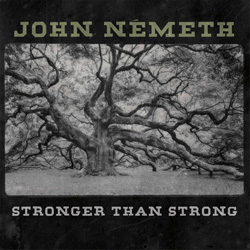
John Németh just gets “Stronger Than Strong” on excellent new album

The first time I had the privilege of watching John Németh perform was at a small club called the Thunderbird Cafe in Pittsburgh in July of 2008.

John was at the beginning of his young career, and touring on the release of his first album for Blind Pig Records, “Magic Touch.”
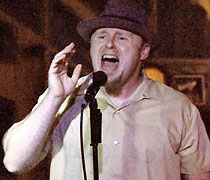
A beardless but fully hatted John Németh at the Thunderbird Cafe in 2008. (Jim White photo)

I had already been impressed by his recordings — here was a young guy out of Boise, Idaho, with incredible harp skills and a vocal range to match, who made music that sounded like it had been dredged from a Chicago blues cellar in the 1950s.

And his live show was all that and more. I was hooked.

But that was a dozen years ago. Németh has since become an accomplished, award-winning musician who is comfortable enough with his talents to move fluidly from sensual soul to greasy funk to big band singer to down-home blues. All with considerable style, wit and amazing skill.

Out of all of this has blossomed Németh’s 10th album, “Stronger Than Strong” (Nola Blue Records). It’s hard to say that this one tops all others, simply because they have all been so good. But his latest works hard at being that kind of creation that pulls together all that you have been up to this point, and says, this is who I am now.

All of which simply means that “Stronger Than Strong finds John at the top of his musical game.

The album is a mixed bag of styles and substance, flowing smoothly from Németh’s vocals and electrifying harp work, all wrapped up tightly by his crackling band, The Blue Dreamers — guitarist Jon Hay, drummer Danny Banks and Matt Wilson on bass.

The very first track, “Come and Take It,” is a burst of rhythmic and hypnotic energy, with the vocal and harp work sounding like it was recorded in the room next to Robert Johnson. It has a strong sense of Mississippi Hill Country blues.

From there, “Fountain of a Man” works in a similar vein, heavy with Hay’s guitar, filled with tough rhythms, and a fierce harp solo. Hay, by the way, is just 19, but an exciting and gifted guitar man.

“Sometimes,” an old Little Junior Parker song, is one of just two covers on the the album. The other is John’s romantic take on the Jesse Belvin slow-dancing-real-close-and-tight classic, “Guess Who.” That the remaining ten tunes come from Németh’s musically fertile imagination is a tribute to how well he creates new music that sounds as though it’s as vintage as a ’55 Chevy. His writing overflows with originality, wit and just the magic touch of feelings.
Part of this album’s unique down-and-dirty live sound has to be credited to producer Scott Bomar, who formed the Bo-Keys, and operates Electraphonic Recording in Memphis.

But it helps that Németh and his Dreamers crank out just the right attitude for every track.

“Throw Me in the Water” cruises along with a soulful vocal and Hay’s furious guitar, “Chain Breaker” is a funky shuffling little search for love, “Bars” is a slyly provocative and bluesy essay on life’s timeless contradictions, “I Can See Your Love Light Shine” sounds almost like big-band gospel, with sharp vocal work.

There are more tracks, of course, 12 in all (unless you buy the heavyweight vinyl, which has only ten), and they all add up to a masterful album. There’s not a false note anywhere — lyrically, musically, vocally, or instrumentally. If you’re a John Németh fan, you need this album. If you’ve never tasted this magic musical elixir, you need to.

I’ve often wondered if there was an easy answer as to why performers like Németh do what they do. What drives them. What makes them create — in this case, music to soothe our souls and ease our troubled minds.

I put that question to John once, in a email interview that we did, and his answer has always stuck with me as one of the most interesting answers to those questions.

“I do it,” he said, “to make my demons sing and dance.”

Here’s a video of one of the album’s best songs, “Bars,” that should make the demons extremely happy:

Track list:
01. Come and Take It (2:55)
02. Fountain of a Man (4:32)
03. Sometimes (3:36)
04. Throw Me in the Water (4:23)
05. Chain Breaker (4:30)
06. Bars (4:55)
07. I Can See Your Love Light Shine (3:17)
08. Depriving a Love (4:38)
09. Work for Love (6:12)
10. Guess Who (6:45)
11. She is My Punisher (3:20)
12. Sweep the Shack (3:46)
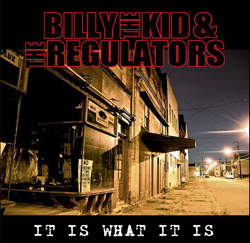

Roadhouse Album Review: Tough blues and social commentary define new album by Pittsburgh’s Billy the Kid and The Regulators

I may be just a little bit biased, but I think that, over the years, the city of Pittsburgh, Pa., has generated some of the best regional blues bands in the country.

I’m biased because the Pittsburgh area is where I was born, grew up (some might disagree), found my blue genes with legendary ‘Burgh DJ Porky Chedwick, and worked for many years.

I’ve also heard a lot of blues bands from the region, and today’s focus, Billy Evanochko, working as Billy the Kid and the Regulators (that’s right, just like the outlaw), is one of the best.

On “It Is What It Is,” his third and brand new album, Evanochko departs a little from his traditional heavy-duty blues work with some social commentary on several original songs.

Evanochko has been paying attention to the social and political upheaval that has defined 2020, and he opens the album with three hard-hitting personal statements, wrapped in some finely crafted music.

Disillusionment, with the hope of redemption, is a primary theme.

In a recent interview with Scott Mervis of the Pittsburgh Post-Gazette, Evanochko explains the origins of one of those songs, “Fall So Hard,” written immediately after hearing the news about the killing of George Floyd.

“All these years,” he says, “we’re all taught with this ideal to help your fellow man and be a good American. I’m also a veteran, so being a good American to me is whether you’re black, white, brown, red, yellow, whatever race, creed, you take care of each other. And that’s what that song is about.”

The funky title track is a similar adventure, describing how “Social media and corporate greed keep us blinded by the light…“ and then “…if we don’t stand and fight we’re just pawns in the game….”

The third original, “I Can’t Help Myself,” which kicks off with some soaring horns, is an ode to personal truth “…have to do what’s best for me, they’re gonna talk about me anyway….”

Then the Regulators take on a series of fine covers, ranging from The Rolling Stones’ “I Got the Blues” to Sly and the Family Stone’s “Everyday People“ to “House Party,” from the J. Geils Band.

Billy told me in an email: “I set out to make a good record not a blues record. My goal was to do a CD with a combination of new original material and choice covers that would start-to-finish tell a story, but more importantly, have a message.

“Making this CD was good for my soul. Joe Munroe was so great to work with as a producer. He let me be me but got me to try stuff I normally probably wouldn’t have.”

And that formula, or lack of formula, paid off. It all holds together with the crackling band of Regulators, featuring Evanochko’s fierce guitar. He’s comfortable with a tough blues, some funk, or a flat-out rocker. And he tops it all off with gritty vocal chops

The Regulators are Derek Redd, Ben Davis, John Bartholomay, Jake Werkmeister, Ublai Bey and Larry Estes. The album was produced by Studio Joe in Center Township, Pa., run by Joe Munroe.

This isn’t just another blues band making just another album. It’s a furiously proud musical statement.

Three generations of the blues: Sippie Wallace, Big Mama Thornton, Jeannie Cheatham

I’m a big fan of — among a few other things, bourbon included — the history of blues music, and the artists who helped create it and carry it through time so that we can still enjoy this uniquely American classical music.

In a couple of my first posts, I highlighted classic artists Billie Holiday and Big Joe Turner, two of my favorites.

While I was looking for material on Big Mama Thornton recently, I found a YouTube video of a 1983 TV show from PBS titled “Three Generations of the Blues,” featuring Sippie Wallace, Thornton and Jeannie Cheatham.

I was familiar with all three. I had rediscovered Wallace when Bonnie Raitt made some appearances with her in the 1970s. But her blues life began long before that.

Sippie Wallace, born in 1898, was one of the earliest blues singers, performing in tent shows as a teenager, and one of the first blues recording artists, beginning in 1923. She was known as a blues shouters, and wrote many of the songs she performed. She was one of many early blues singers who were women, a fact that often gets overlooked in favor of the more testosterone-powered music that came later.

Wallace pretty much dropped out of blues in the late ‘20s, and didn’t really record again until 1966, when she cut the album “Women Be Wise,” with Roosevelt Sykes and Little Brother Montgomery on piano. You may be most familiar with her when Bonnie Raitt began to perform with her in the 1970s. She was 86 when this show was filmed — still full of music, humor and vitality.

Two years after this film, in 1986, Wallace died on her 88th birthday.

Willie Mae “Big Mama” Thornton, born in 1926, and once billed as the “new Bessie Smith,” is probably best known for recording the R&B-flavored “Hound Dog” a few years before Elvis Presley turned it into a giant rock ‘n’ roll hit.

I’ll digress here for a minute to point out that “Hound Dog” was written especially for Thornton by the barely out-of-their-teens and soon-to-be songwriting wizards of blues, R&B and pop — Jerry Lieber and Mike Stiller. Their body of work is amazing.

Thornton is also known for writing and recording her unreleased “Ball ‘n’ Chain,” which was ultimately more associated with Janis Joplin. Thornton died just about a year after this show, at the age of 57.

Thornton performed off and on with Jeannie Cheatham, who with her Sweet Baby Blues Band, represented a more contemporary approach in terms of having a swinging, horn-fueled band, but gave no quarter in offering tough, down-home blues.

There are three short segments in this concert, with both Wallace and Thornton performing relatively short sets. Cheatham takes over for a rousing set, then brings out Wallace and Thornton for an enthusiastic finale. It was all filmed in Solano Beach, Calif., in 1983.

It’s a lot of fun to watch some fine blues history, especially when it’s filled with great voices and good times.

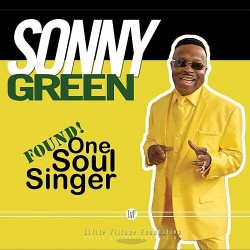
A soulful Sonny Green is truly a blast from the past

As much as I enjoy all the new and contemporary blues music floating around, I love finding “new” old artists whose work has gone unnoticed or unrecognized.

Soulful Sonny Green is one of those artists.

And thanks to the Little Village Foundation, we can hear the first album this exciting singer has recorded in his 77 years — “Found! One Soul Singer.”

That’s right. Even though he’s recorded a handful of singles over the years, he’s never recorded a full album. But he came out of Louisiana singing as a teen, and moved to the Los Angeles area, where he’s been showing off his soulful pipes for more than 40 years.

So he’s one of those “new” performers who’s bringing back some crackling old-school music. And it’s a master class.

Green delivers a soulful lesson, whether he’s delivering a chestnut like Little Milton’s “If Walls Could Talk,” Rick Estrin’s torchy “I Beg Your Pardon,” an old Willie Nelson ballad “Are You Sure,” or the funky “Cupid Must Be Stupid,” with a snappy sax solo by Terry Hanck, who shares songwriting on that track with Jojo Russo and guitarist/producer, the omnipresent Christoffer “Kid” Andersen.

“If You Want Me to Keep on Loving You” soars as Green updates his 1971 single, while Andersen turns in a fiery solo. Alabama Mike lends his tasty vocal chops to a duet with Green on “Trouble.” And there are even more cuts on the album, all designed to fill any hole that may exist in your soul.

Enjoy this one with a shot of nostalgia for music the way it used to be made.

Green hasn’t exactly been a household word during his long career, so not a lot has been written about him, but here’s a profile published in Living Blues magazine in 2015.

And similarly, there’s not a lot of performance video around, but here are two for your viewing pleasure. The first is a a 1991 performance, the second from a 2014 show. He’s still got some cool sartorial chops.

Here’s the track list for the album:

1. I’m So Tired

2. If Walls Could Talk

3. I Beg Your Pardon

4. Are You Sure

5. Cupid Must Be Stupid

6. Blind Man

7. Back For A Taste Of Your Love

8. If You Want Me To Keep Loving You

9. Trouble (w/ Alabama Mike)

10. I Got There

11. Be Ever Wonderful

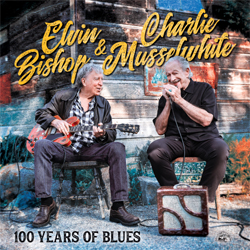
Elvin Bishop and Charlie Musselwhite celebrate “100 Years of Blues”

And it’s quite a celebration.

Two revered elder statesmen of the blues — guitarist Elvin Bishop, 77, and harpmaster Charlie Musselwhite, 76 — have joined their skills, experience and talents to celebrate a huge amount of blues. probably even more than 100 years worth.

Each one, on his own, could easily have contributed enough great blues to create an exceptional album. In fact, they already have. So once they realized a few years back that they needed to join musical forces, they were destined to produce an album worthy of their prodigious talents.

“100 Years of Blues” is that album.

Both Bishop and Musselwhite took similar routes out of their Southern roots to travel deep into the heart of Chicago blues in the early 1960s. Bishop made his early mark as a cofounder of the Paul Butterfield Blues Band. Musselwhite sat in with Muddy Waters, according to Charlie, because Muddy insisted.

These two young white musicians were encouraged by the veterans of the Chicago blues scene — “Elvin and I were not only welcomed but encouraged by the blues giants of the day,” Musselwhite says.

They then took their considerable young chops to California, where they became part of a new scene, turning rock audiences onto the history of their own music.

Their busy and productive careers flowed from those years into a body of work — nearly 40 albums from Musselwhite and 30 from Bishop — that sits atop the blues stage with that of the giants at whose feet they learned.

This set is filled with tough cuts loaded with the spirit of Chicago blues, swapping vocals and instrumental leads. They have a relaxed, front-porch or back-room vibe (take your pick; they both work) , but still come out sounding like they’ve been driven hard and put away wet.

They add a contemporary lyrical feel to ’60s Chicago with “What The Hell?” a sharp nod to 2020 politics. But in the main, they move through a sturdy blues set, from the furiously harp-laced “West Helena Blues,” stinging guitar-based “Old School,” the elegantly plaintiff “Midnight Hour Blues,” the shuffling “Blues, Why Do You Worry Me?” and concluding with a fitting “100 Years of Blues.” And there’s a lot more great music in between.

Musically, it’s an outstanding production by Christoffer “Kid” Andersen, featuring Bob Welsh on guitar and piano, and Andersen on upright bass. It all sounds like it’s fresh from a South Side basement. And not incidentally, it’s all available on Alligator Records.

Here’s a video interview with Charlie and Elvin, conducted by Andersen. It’s almost as much fun as the music.

Libation (and stogie) notes: In addition to the fine music, this post has been partially inspired by a smooth Cragganmore single malt Scotch, accompanied by a hearty Ave Maria Reconquista cigar.

Here’s the set list. There’s nothing here to disappoint.

  1. Birds Of A Feather
  2. West Helena Blues
  3. What The Hell?
  4. Good Times
  5. Old School
  6. If I Should Have Bad Luck
  7. Midnight Hour Blues
  8. Blues, Why Do You Worry Me?
  9. South Side Slide
  10. Blues For Yesterday
  11. Help Me
  12. 100 Years Of Blues

And just in case you missed them, the links in the first paragraph provide biographies of Bishop and Musselwhite.

A bunch of new blues (and near-blues) albums you should probably hear

When I started the Blues Roadhouse blog about a month ago, I figured that one of the topics I would write about would be new blues music, in the form of new album releases. Or streaming. Or the Vulcan mind meld. However you find your music.

And then, I thought, I would add my own ramblings on whatever crossed my mind, or caught my fancy, and hope that somebody besides me would like to read along.

What I didn’t expect was to be quickly overwhelmed with new music. This virus thing seems to have been a petri dish for new albums, and I’m not complaining. That’s a good thing. For fans. But the artists won’t have enough gigs to promote and sell their music.

I’ve already written about a few fine new releases (See below. Far below. Please), and there are more on the way. But I’d like to catch up a little with some releases overlooked in the excitement as the Roadhouse opened for business. Time and a generally slothful attitude prevent me from going back much further, so my apologies to anyone overlooked.

So here are a few mini-reviews of some recommended music, based on what I’ve found by wandering around the interwebs. But it’s probably not complete, because sometimes the tubes get clogged, or there’s a dead cat on the line.

Maybe this is a good time to remind you that there’s a comment section at the bottom (or the side, depending on your device) of this page, and that your comments are very welcome. Have a new album you like? Or artist? Or show? Let us know.

But I digress, once again.

Here are a few albums released in the past couple of months that I have enjoyed, and recommend for your listening pleasure.

Sugar Ray and the Bluetones — “Too Far From the Bar” (Severn)

A very lively blues session featuring the swinging harp of Sugar Ray Norcia and scorching guitar from Charlie Baty (including some interplay with producer Duke Robillard). There are some creative originals and some great covers. My favorite among the covers has got to be “Don’t Give No More Than You Can Take,” a swinging jump blues track first done by one of my all-time favorite R&B/doo-wop groups, The “5” Royales.

Ronnie Earl and the Broadcasters — “Rise Up” (Stony Plain)

It’s hard to write about Ronnie Earl’s music — his composing skills , his guitar artistry, the oneness of the Broadcasters — without running out of superlatives early on. Elegant and eloquent quickly come to mind. Soulful, smart and sensual also work. But after a few sentences, it sounds like no player could be this good. But he is. On “Rise Up,” his 27th album, Earl continues a long string of music that brings new meaning to the John Lee Hooker album title, “Blues is a Healer.” There are live cuts here, and some vocal tracks (Diane Blue is vivaciously torchy), but nothing interferes with the life force that is the timeless music of Ronnie Earl. “Blues for Lucky Peterson” is simply primal blues guitar at its most passionate. There’s not a note wasted on the entire album.

New Moon Jelly Roll Freedom Rockers — Vol. 1 (Stony Plain)

This is an unique little gem of an album that’s been gathering dust since it was recorded as a sort of jam session in 2008 by Luther Dickinson, Cody Dickinson, Jimbo Mathus, Charlie Musselwhite, Alvin Youngblood Hart and Jim Dickinson at the Zebra Ranch Recording Studio in Coldwater, Mississippi. They gave themselves that name, and this is Volume 1 from that session with Volume 2 planned for the spring of 2021. Musselwhite kicks it all off with a smooth, bluesy “Blues Why You Worry Me,” a reminder that you don’t need much more than a a man and a harp to make fine music. The whole thing sounds relaxed and spontaneous, but intensely fine blues music from a truly mixed bag of musicians.

Bettye LaVette — “Blackbirds” (Verve)

Bettye LaVette’s sensuously soulful music is among that most marvelous of musical creations that flows into a life force all its own. Here she speaks through songs inspired by icons such as Billie Holiday, Nina Simone and Dinah Washington. The title, though, is the seemingly unlikely choice of Paul McCartney’s “Blackbird,” which LaVette turns into a stunning and personal piece of musical art. Don’t ignore this one. This is music — of any kind — at its best, where the artist inhabits her work and bares her soul for us.

Vanessa Collier — “Heart On the Line” (Phoenix Fire Records”

Extremely versatile singer/songwriter/sax player Vanessa Collier doesn’t really seem like she’s been alive long enough to have collected all the well-deserved praise and awards she’s received. This latest album shows off her versatility with style, substance and exquisite musical chops. She flows through blues, funk, soul and delicate ballads, always sounding at home in her choice. She and her sax seemed to be everywhere, pleasing everyone on the February, 2019, Legendary Rhythm & Blues Cruise that I enjoyed. If you haven’t, check her out. If you have, you should love this album.

Johnny Iguana — “Johnny Iguana’s Chicago Spectacular” (Delmark)

Johnny Iguana plays all kinds of piano music. For example, check his work as part of his “garage cabaret” band, the Claudettes. But this is a stone cold blues album, with a lot of extremely capable help from friends like John Primer, Lil’ Ed and Billy Boy Arnold (and a bunch more). There’s some original music that sounds like it’s been dragged kicking and shouting from dusty blues vaults, and a great batch of covers from everyone from Roosevelt Sykes to Big Bill Broonzy. Much too often, the term “rollicking” is overused to describe heavy-duty piano-driven music. Not so here. This rollicking is tough and tenaciously blues that just happens to keep your body and soul rocking.

Ray Charles: Remembering the Genius

Ray Charles has always been one of my all-time favorite performers. And one of the all-time musical greats. Full stop.

Since Sept. 23 will the 90th anniversary of his birth, I was thinking about a little Roadhouse tribute to The Genius. But then I found an excellent article in this morning’s Wall Street Journal doing exactly that. It’s too long to insert here in the middle of all of my own fine posts, so I’ve put it on its own page, with a link below.

But first, I just can’t resist a few of my own pithy thoughts — this is my blog, after all.

I don’t really remember when I first heard Ray Charles’ music. It was probably sometime in the mid 1950s, when I was busy discovering that listening to music was a lot more fun if it was recorded by Ray or Elvis or Fats, and not Snooky or Gisele or Patti.

Ray’s music, that hypnotic and mesmerizing union of the scared and the secular, easily established itself as part of the soundtrack of my life.

I saw him a couple of times, the first time, if my fading memory is right, at the Holy Cross field house in Worcester, Mass., where I wrote a review for the Worcester Telegram, in the late ‘60s. I wish I could remember what I said. I’m sure it was awesome. I do remember that he got a standing ovation just for walking to the piano.

The next time was in Pittsburgh, at a now long-defunct nightclub. I did an interview with Ray in advance, a phone interview, but that sort of counts. I was pretty nervous, especially after his agent told he didn’t understand why the paper (The Pittsburgh Press) was letting its blues writer interview Mr. Charles. But it was great.. he was kind and talkative and funny. And I wish I hadn’t lost the tape I made of the conversation.

Ray died on June 10, 2004. President Ronald Reagan had died on June 5, just a few days earlier. On June 11, there was a state funeral for Reagan in Washington, D.C., where I just happened to be spending a few days.

I was sitting in a bar one afternoon, as large black vehicles raced around, shuttling dignitaries for the funeral, I watched a TV tribute to Ray upon his death.

I didn’t have much trouble deciding who I would miss the most

Here’s that link I promised you up above.

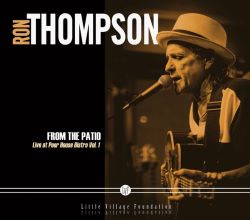
Roadhouse Album Review: Ron Thompson – The best blues guitarist you may never have heard

Ron Thompson was a fierce and exciting blues guitarist whose talents always seemed to extend beyond his fame.

But he had been around for years, honing his slide skills in West Coast clubs and shows, touring as John Lee Hooker’s guitarist, working with artists like Lowell Fulton, James Cotton, B.B. King, Elvin Bishop and Mick Fleetwood, and leading his band, the Resistors, through years of clubs and concerts and multiple album releases.

And in a fine tribute to Thompson, the San Jose Mercury News quotes San Francisco Blues Festival producer Tom Mazzolini as saying, “When I heard him play slide (guitar), I thought he was the reincarnation of Elmore James.”

All of this is written in the past tense, because, sadly, Thompson died in February at the age of 66.

Fortunately for us, including those who may not have had the chance to hear his music, he recorded a number of albums, including on the Takoma and Blind Pig labels. Since his death, another album has been released, featuring live performances at the Poor House Bistro in San Jose, where Thompson had been a Wednesday night feature for 14 years.

It is “From the Patio – Live at Poor House Bistro Vol. 1 (Vol 2 is promised early next year) on the Little Village Foundation label.

It is also, simply put, a fantastic album of powerfully raw music, sucked from the painful primordial soup of the blues just for your pleasure.

There are three Thompson originals on the live set, and a handful of covers from the minds of some blues greats. From the tough opening track of Willie Dixon’s “Meet Me in the Bottom,” Thompson’s guitar, harp and vocals fuel a set that’s down-home and gritty.

“Bring Me My Shotgun” turns the Lightnin’ Hopkins song into a steamy, slide-driven dirge. There’s the original “Marci Gras Boogie,” dredging up some NOLA mojo, a Gary Smith-harp-toned version of Little Walter’s “One More Chance With You,” and a mournful “Sinner’s Prayer” from Lowell Fulson and Lloyd Glenn.

Little Village label founder and keyboard man Jim Pugh takes soulful organ solos on “Sinner’s Prayer” and “Done Got Over It.”

Album producer, Greaseland studio honcho and Norwegian guitar wizard Christoffer “Kid” Andersen plays on the final cuts, “Doctor Brown” and When You Walk That Walk,”

There are other tracks, of course, all soaked in Thompson’s wickedly bent strings. And it would be a shame if I didn’t mention his vocals, which, sandpapered and seasoned with age, lend a world-weary touch of their own. Thompson, basically, just sounds like the blues. And that’s not easy.

Give this one a listen. If you’ve never heard Thompson’s string-slinging, you’re in for a blues treat. If you have, enjoy the ride again.

I couldn’t find a video of any of the album tracks, but this one should provide a fine sample of Thompson at work:

Track List

1 Meet Me in the Bottom (Live)
2 Bring Me My Shotgun (Live)
3 Mardis Gras Boogie (Live)
4 Tin Pan Alley (Live)
5 One More Chance with You (Live)
6 I Done Got Over (Live)
7 Sinner’s Prayer (Live)
8 The River Is Rising (Live)
9 That’s How I Feel (Live)
10 Doctor Brown (Live)
11 When You Walk That Walk (Live)

The Blues Blast Magazine Award winners

The Blues Blast Magazine Awards are in after more than 10,000 readers voted in the 2020 awards.

Here are the winners of the 13th annual awards.

Contemporary Blues Album

Traditional Blues Album

Soul Blues Album

Rock Blues Album

Acoustic Blues Album

Live Blues Album

Historical Or Vintage Recording

New Artist Debut Album

Blues Band

Male Blues Artist

Female Blues Artist

Sean Costello Rising Star Award

RIP Mr. Satan, aka Sterling Magee

Satan is dead.

Sterling Magee, the singer, songwriter, guitar player who recorded with legends, busked for change in New York City where he was known as Mr. Satan, and saw a revival of his musical fortunes in the little town of Gulfport, Fla. in the past decade, died Sept. 6 at the age of 84 in Gulfport.

Sterling Magee at the Peninsula Inn & Spa,
Gulfport, Fla., in 2009. (Jim White photo)


However you classify him, Magee was a guitar player out of Mississippi, raised in St. Pete, Fla., and was an Army paratrooper, songwriter, guitar-player with James Brown, King Curtis and Big Maybelle, among others.

He came to the attention of more contemporary blues fans in the 1990s, when a young white dude named Adam Gussow, who played blues harp, fell in with Magee (then called “Satan”) and they busked together on New York street corners as Satan and Adam.

The two went on to real concerts, record albums, and Gussow wrote a book in 1998, “Mr. Satan’s Apprentice,” which told the story of their life together.

Then Magee kind of dropped out of sight for a few years with health issues, but turned up later performing in the St. Pete area. He and Gussow reunited occasionally, performed nationally, and a documentary film — “Satan and Adam” — was made and is now available on Netflix. It’s worth a look.

I found him by accident on a winter’s vacation in St. Pete when I saw his name come up on the weekly list of blues shows published by the Tampa Bay, Fla., area blues society — the Suncoast Blues Society He was playing Tuesday nights at the Peninsula Inn & Spa in funky little Gulfport, not too far south of St. Pete, at the edge of the Gulf of Mexico.

It turned out that Magee had been showing up and playing his blues history on the inn’s fine little tree-shaded deck every Tuesday for a couple of years. And that’s where the photo above was taken.

Sterling Magee had a fascinating musical career. I’ve included a few links to more information, and there’s a lot more out there.

I’m going to have to go back to the Peninsula Inn one of these evenings, sit on the patio with the appropriate libation, and remember my nights with Satan.

In case you missed the link above, here is a fine summary of his life in the Tampa Bay Times.